Lenny.com
Explore
Create
ActivitiesNewMathEnglish Language ArtsScience & EngineeringSocial StudiesGlobal LanguagesHealth & Physical EducationSpecial EducationCounseling & Life SkillsArts & CreativityESL
Lenny.com
Lenny.com
Explore
Create
ActivitiesNewMathEnglish Language ArtsScience & EngineeringSocial StudiesGlobal LanguagesHealth & Physical EducationSpecial EducationCounseling & Life SkillsArts & CreativityESL
Lenny.com
Lenny.com

Solutions

Lenny for EducatorsLenny for SchoolsLenny for Districts

Product

ExploreSign inCreateSupportAbout

Resources

Getting startedMTSS Acceleration Program

© 2026 Lenny Learning Inc.

TermsPrivacyAccessibility
LinkedInInstagramX
Lenny

Reading Strategies

Phonemic awareness, decoding, and comprehension techniques for diverse texts. Targets fluency, vocabulary acquisition, and critical analysis skills.

English Language ArtsPhonics & Reading FoundationsLetter IdentificationLearn Letters A-ZLowercase and Uppercase LettersConsonants and VowelsLetter-Sound AssociationsLetter-Sound Associations: LowercaseLetter-Sound Associations: UppercaseBeginning and Ending SoundsRhymingBlending And SegmentingShort VowelsShort Vowel SoundsConsonant BlendsConsonant DigraphsBlends, Digraphs, and TrigraphsDigraphs, Blends, and Silent LettersLong Vowel SoundsLong Vowel PatternsShort and Long VowelsShort and Long Vowel PatternsSilent EVowel SoundsVowel TeamsR-Controlled VowelsDiphthongs: Oi, Oy, Ou, OwVariant VowelsVariant, Diphthong, And R Vowel PatternsSoft G And CSight WordsIrregular WordsWord RecognitionSyllablesSyllable TypesTwo-Syllable WordsMultisyllabic WordsPhoneme ManipulationDecodable TextsVocabularyAction WordsQuestion WordsNouns and AdjectivesClassify WordsCompound WordsSynonyms and AntonymsHomophonesHomophones and HomonymsShades of MeaningContext CluesPrefixes and SuffixesGreek and Latin RootsAnalogiesIdioms and AdagesForeign Words and ExpressionsWord Choice and UsageReference SkillsReading ComprehensionRead-Along Literary TextsRead-Along Informational TextsReality vs. FictionStory ElementsCharacterSequenceMain IdeaCause And EffectCompare And ContrastReading StrategiesText StructureAuthor's PurposeAuthor's Purpose And ToneAuthor's PerspectivePoint Of ViewThemeInference And ThemeInference And AnalysisPoetry ElementsLiterary DevicesAnalyzing LiteratureAnalyzing Informational TextsComparing TextsAudience, Purpose, And ToneBusiness DocumentsNovel StudyNonfiction Book StudyGrammar & MechanicsSentencesNounsVerbsAdjectivesPronounsCapitalizationPunctuationContractionsConjunctionsPrepositionsArticlesAdjectives And AdverbsVerb TypesVerb TensePronouns And AntecedentsPronoun TypesSubject-Verb AgreementDirect And Indirect ObjectsSentences, Fragments, And Run-OnsPhrases And ClausesCommasSemicolons, Colons, And CommasDashes, Hyphens, And EllipsesSpellingAbbreviationsFormattingVerb Tense And MoodMisplaced ModifiersWritingDescriptive DetailsCreative WritingOpinion WritingTopic SentencesOrganizing WritingLinking WordsSentence VarietyIntroductions And ConclusionsPersuasive And Opinion WritingExpository WritingPersuasive StrategiesDeveloping And Supporting ArgumentsTopic Sentences And Thesis StatementsSummarizingResearch SkillsEditing And RevisingActive And Passive Voice=Writing Clearly And ConciselyDebate & Public SpeakingPublic Speaking BasicsPersuasive TechniquesClaims and EvidenceTypes of ArgumentsReasoning TypesLogical FallaciesTopic ResearchOrganizing EvidenceDebate Speech OrganizationAttacking and Defending ArgumentsClash and EngagementImpact CalculusQuestioning and Cross-ExaminationCritical ThinkingInformal LogicFormal LogicInductive Reasoning

Videos

How to Find Multiple Main Ideas in a Text

How to Find Multiple Main Ideas in a Text

This educational video uses the unique analogy of Tuvan throat singing—where a singer produces two notes simultaneously—to explain how a single informational text can contain two or more main ideas. The narrator guides viewers through a specific strategy for identifying these ideas by asking two critical questions: "What is the topic?" and "What does the author want to teach me about the topic?" The video breaks down the process of distinguishing between supporting details and distinct main ideas. Through a guided practice session using a text about pasta (contrasting factory-made macaroni with homemade lasagna), the narrator demonstrates how to determine if one idea supports another or if they are equally important. This distinction is the key test for confirming the presence of multiple main ideas. Ideal for upper elementary and middle school English Language Arts classrooms, this resource clarifies a common point of confusion in reading comprehension. It provides a concrete, step-by-step framework that teachers can immediately apply to longer, more complex nonfiction texts, helping students move beyond simple summarization to deeper textual analysis.

Khan AcademyKhan Academy

4mins

How Word Choice Changes Meaning: Connotation Explained

How Word Choice Changes Meaning: Connotation Explained

This engaging instructional video explores the concept of connotation—the emotional and cultural associations words carry beyond their literal dictionary definitions (denotation). Through clear analogies, such as water flowing around a rock, and relatable examples like "companion" versus "buddy," the narrator illustrates how synonyms can mean the same thing factually while conveying entirely different feelings or levels of formality. The video delves into key literary concepts including tone, author's intent, and the spectrum of positive, negative, and neutral connotations. It uses a detailed example of a fictional character, Genevieve Jenkins, to demonstrate how specific word choices (like "flourished" and "roots") can build a thematic motif. The narrator also distinguishes between cultural connotations shared by many and personal connotations derived from individual experiences, using a humorous personal anecdote about basketball. For educators, this resource is an excellent tool for teaching vocabulary nuances, literary analysis, and creative writing. It helps students move beyond basic comprehension to understanding *why* authors choose specific words. The content directly supports standards related to analyzing the impact of specific word choices on meaning and tone, making it highly applicable for English Language Arts classrooms from upper elementary through high school.
Khan AcademyKhan Academy

5mins 22s

Identifying Cause and Effect in Texts

Identifying Cause and Effect in Texts

This educational video uses the whimsical machinery of Rube Goldberg to introduce and explain the concept of cause and effect in reading comprehension. The narrator begins by analyzing a complex cartoon machine where one action triggers a chain reaction, providing a concrete visual metaphor for how events are connected. This visual introduction seamlessly transitions into a lesson on identifying these relationships within written text, distinguishing between the 'cause' (why something happens) and the 'effect' (the result). The video covers key themes including logical sequencing, identifying signal words, and critical reading strategies. It explicitly lists common transition words that signal causes (e.g., because, since) and effects (e.g., therefore, consequently). The narrator also addresses the common misconception that cause and effect must follow the order of the sentence, demonstrating how sentence structure can be inverted without changing the logical relationship. For the classroom, this video is an excellent tool for scaffolding reading comprehension skills. It moves from a fun, low-stakes visual example to a rigorous close reading of a nonfiction passage about ballerina Michaela DePrince. By modeling how to annotate a text and ask 'why' questions to uncover hidden motivations and results, the video demonstrates practical strategies students can apply to any complex text to better understand narrative structure and character motivation.

Khan AcademyKhan Academy

7mins 30s

How to Master Close Reading and Literary Analysis

How to Master Close Reading and Literary Analysis

This engaging video introduces students to the concept of "Close Reading"—a critical strategy for literary analysis. Through a humorous narrative featuring a host who initially misunderstands the term literally, the video breaks down what it truly means to read actively. It explains that close reading involves re-reading, thinking critically while reading, and viewing a text with a "writer's eye" to understand word choice, structure, and patterns.

Miacademy & MiaPrep Learning ChannelMiacademy & MiaPrep Learning Channel

5mins 18s

Learning Vocabulary with Moon Goblin Detectives

Learning Vocabulary with Moon Goblin Detectives

In this engaging vocabulary lesson, the narrator, David, turns a moment of personal disappointment into a learning opportunity. After receiving a rejection letter from a publisher for his fictional novel, 'Moon Goblin Detectives: Life on the Dark Side,' David analyzes the editor's critique to teach three high-utility academic vocabulary words: concept, conflict, and realistic. The video uses a humorous narrative framework to contextualize these terms, making abstract definitions concrete and memorable for students. The video breaks down each word individually, exploring their parts of speech and specific meanings. It specifically highlights the nuance of the word 'conflict,' explaining how its pronunciation and meaning shift when functioning as a noun versus a verb (heteronyms). The lesson also defines 'concept' as a general idea and 'realistic' as an adjective describing things true to life. The definitions are reinforced through whimsical animated examples, including dinosaurs on Mars and an evil mailman named Mr. Bricks. Teachers can use this video to introduce essential literary and academic vocabulary. It is particularly useful for English Language Arts units focused on story elements, as it defines 'conflict' in a literary sense. The video also supports instruction on context clues, word usage, and the difference between fantasy and realistic fiction. The humorous tone and simple visual animations keep students engaged while effectively delivering direct vocabulary instruction.

Khan AcademyKhan Academy

3mins 43s

How to Use Text Evidence to Prove Your Point

How to Use Text Evidence to Prove Your Point

This educational video introduces students to the concept of text evidence, framing it as a "dangerous tool" that allows writers to convince others of their ideas. The narrator breaks down the process of using text evidence into three distinct steps: ensuring you understand the main idea, finding specific details that directly support that idea, and explaining the connection between the evidence and the claim. The video uses a digital whiteboard style with handwritten text appearing on a black background to visually guide learners through the concepts.

Khan AcademyKhan Academy

4mins

Materials

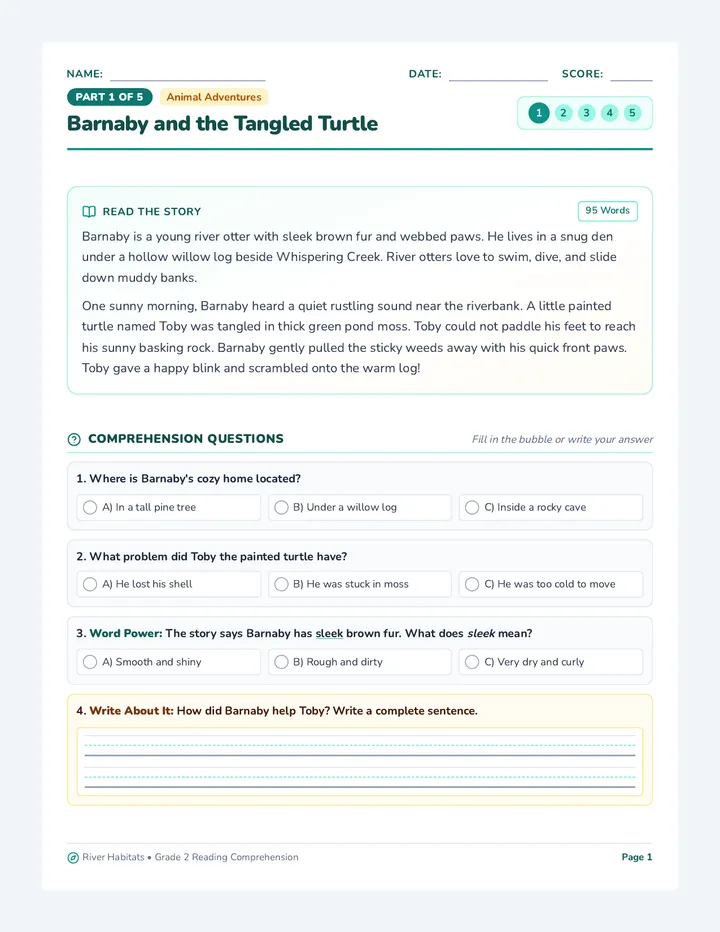
Otter Adventures Reading Packet

Otter Adventures Reading Packet

A five-part reading comprehension packet for 2nd grade featuring Barnaby the River Otter. Each page presents an engaging animal adventure passage followed by text-dependent multiple choice, vocabulary, and written response questions with handwriting guidelines.

SS

Shannalee Stephenson

Reading Launchpad Flyer

Reading Launchpad Flyer

A printable parent flyer featuring prominent QR codes on each reading resource card for instant smartphone scanning, paired with larger text and at-home reading habits.

T

tycorreia

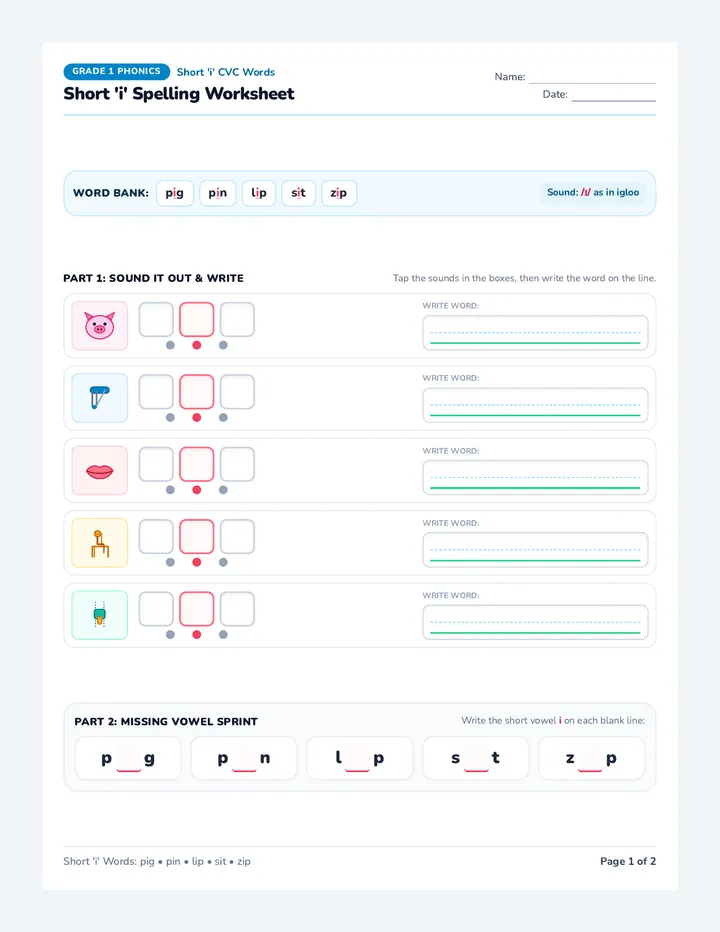
Short I Spelling Worksheet

Short I Spelling Worksheet

A two-page Grade 1 phonics and spelling worksheet focusing on 5 short I CVC words: pig, pin, lip, sit, and zip. Includes sound boxes, handwriting lines, word family sorting, cloze sentences, and a sentence writing challenge.

EA

Edith Asante

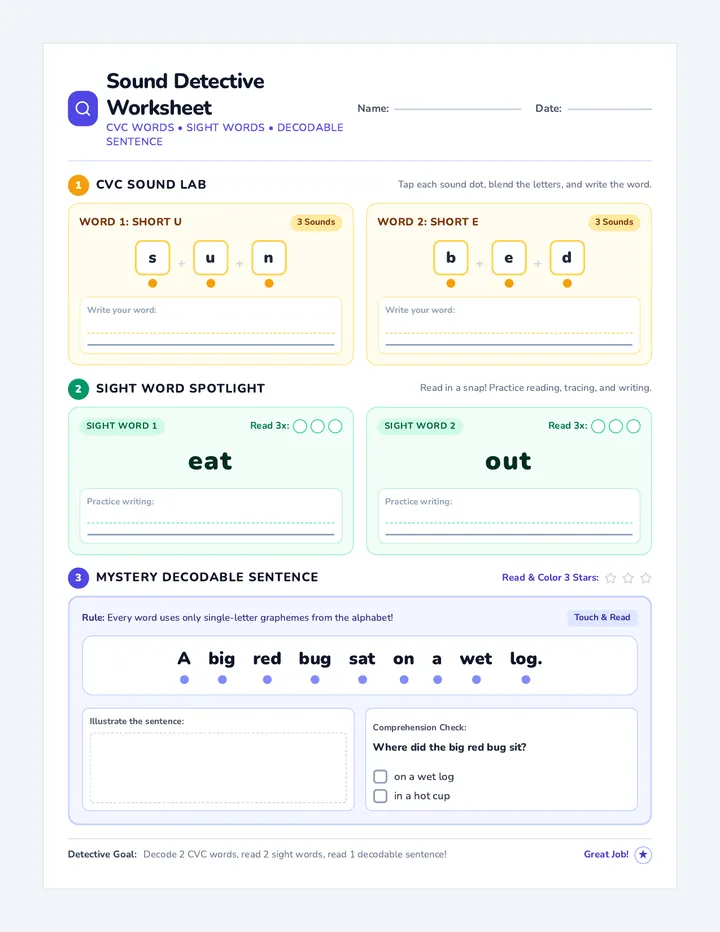
Sound Detective Worksheet

Sound Detective Worksheet

A 1st grade phonics worksheet featuring two CVC words (sun and bed) with Elkonin sound boxes, two high-frequency sight words (eat and out) in lowercase letters with handwriting practice, and an unfamiliar decodable sentence using single-letter graphemes with fluency tracking and comprehension.

AW

Arielle West

September 11 Heroes RACES Worksheet

September 11 Heroes RACES Worksheet

A middle school English Language Arts 20-minute writing assignment featuring an informational passage on September 11 first responders and everyday heroes. Includes a structured RACES graphic organizer, analytical prompt, and printable response area.

AC

Aimee Crosby

First Day Feelings Reading Worksheet

First Day Feelings Reading Worksheet

An adapted reading passage of Patty Hansen's 'The First Day of Middle School' with enlarged, readable text scaled to fit each page, complete with chunked passage text, comprehension check, and emoji reflection organizer.

PL

Patrick l

Sequences

Invention Quest Slides

Frindle Frenzy Novel Study

A 9-day novel study for 'Frindle' by Andrew Clements, aligned to 3rd Grade ELAR TEKS, focusing on character development, vocabulary, and plot analysis.

LH

Lucy Hellerman

56
Monday Sentences Worksheet

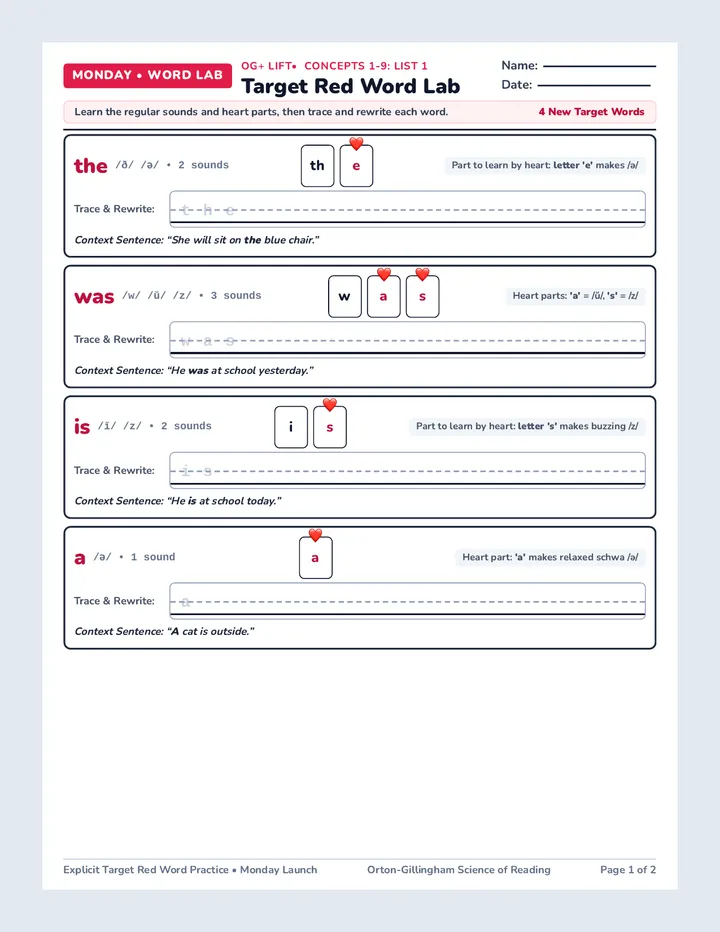
OG+ LIFT: Red word K-Concepts: Book 1

This comprehensive intervention unit features a weekly scope and sequence targeting high-frequency red words, sound-spelling correspondences, and reading comprehension, directly aligned with Orton-Gillingham Kindergarten Book 1 beginning concepts. Designed for self-contained or intervention settings, it pairs decodable readers and comprehension story mapping with explicit daily paraprofessional guides, fluency routines, scaffolded practice, and weekly assessments.

S

Sara

59
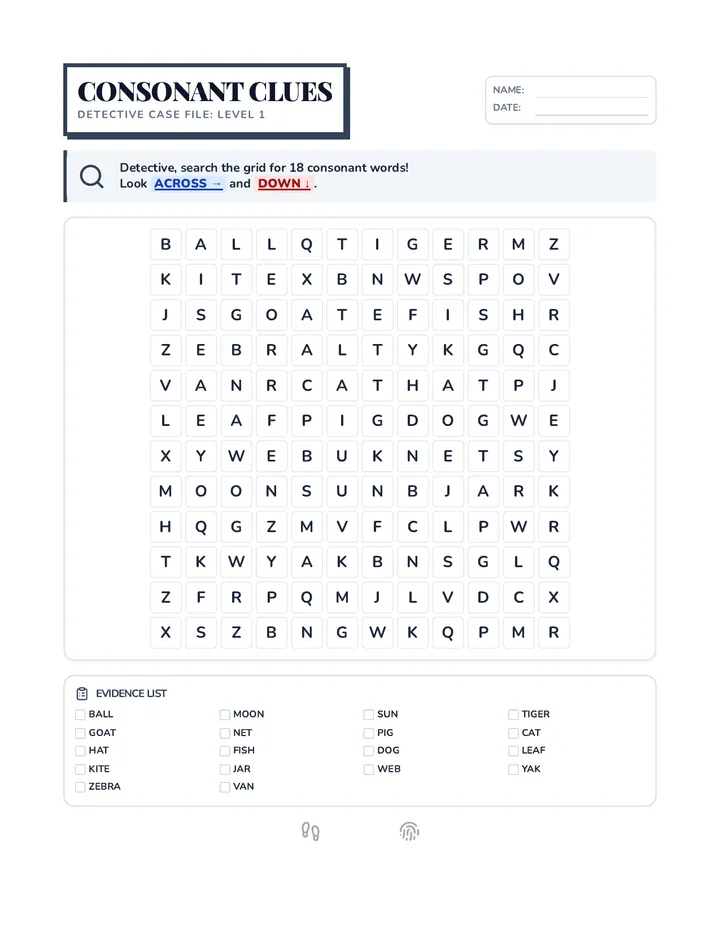
Consonant Clues Word Search

Sound Detective Workbook

A complete phonics journey covering letter-name alphabetic spelling stages, featuring randomized word sort practice through interactive sentence completion.

N

nmack

57
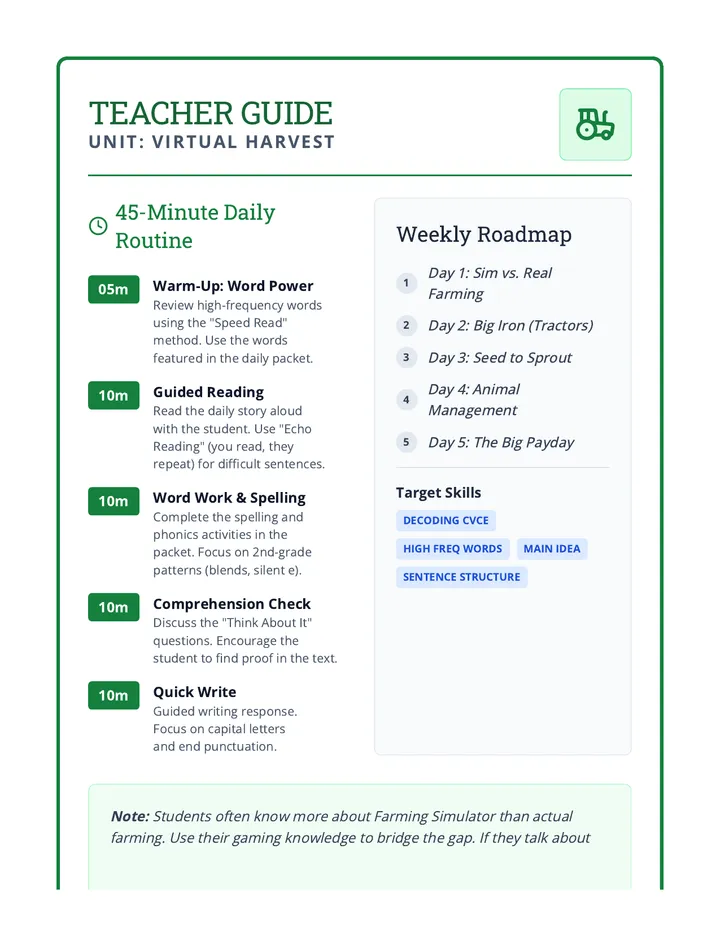
Virtual Harvest Teacher Guide

Digital Dirt

A 5-day reading comprehension and writing unit for struggling readers, blending the world of Farming Simulator with real-world agriculture. Focuses on 2nd-grade level literacy skills within a high-interest 5th-grade context.

CM

carley Martin

30
Fluency Fall Tracker Worksheet 56 WPM

Fluency Launchpad Toolkit

A comprehensive multi-grade level toolkit for reading intervention teachers to track and monitor student reading fluency benchmarks throughout the school year.

AS

Allison Smith

26
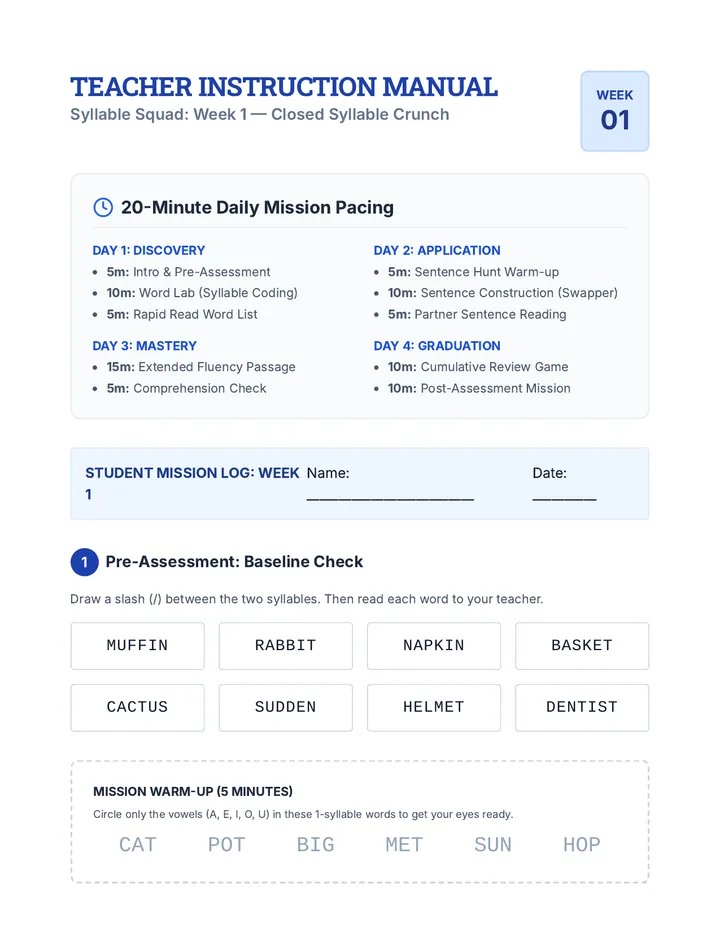
Week 1 Closed Syllable Manual

Syllable Squad Decoding Mission

A comprehensive 5-week phonics intervention focused on decoding two-syllable words across five major syllable types. Each week includes a pre-assessment, daily lessons with specific targets, student practice sheets, and a post-assessment.

KJ

Kelsey Jacobs

29