Lenny.com
Explore
Create
ActivitiesNewMathEnglish Language ArtsScience & EngineeringSocial StudiesGlobal LanguagesHealth & Physical EducationSpecial EducationCounseling & Life SkillsArts & CreativityESL
Lenny.com
Lenny.com
Explore
Create
ActivitiesNewMathEnglish Language ArtsScience & EngineeringSocial StudiesGlobal LanguagesHealth & Physical EducationSpecial EducationCounseling & Life SkillsArts & CreativityESL
Lenny.com
English Language ArtsPhonics & Reading FoundationsLetter IdentificationLearn Letters A-ZLowercase and Uppercase LettersConsonants and VowelsLetter-Sound AssociationsLetter-Sound Associations: LowercaseLetter-Sound Associations: UppercaseBeginning and Ending SoundsRhymingBlending And SegmentingShort VowelsShort Vowel SoundsConsonant BlendsConsonant DigraphsBlends, Digraphs, and TrigraphsDigraphs, Blends, and Silent LettersLong Vowel SoundsLong Vowel PatternsShort and Long VowelsShort and Long Vowel PatternsSilent EVowel SoundsVowel TeamsR-Controlled VowelsDiphthongs: Oi, Oy, Ou, OwVariant VowelsVariant, Diphthong, And R Vowel PatternsSoft G And CSight WordsIrregular WordsWord RecognitionSyllablesSyllable TypesTwo-Syllable WordsMultisyllabic WordsPhoneme ManipulationDecodable TextsVocabularyAction WordsQuestion WordsNouns and AdjectivesClassify WordsCompound WordsSynonyms and AntonymsHomophonesHomophones and HomonymsShades of MeaningContext CluesPrefixes and SuffixesGreek and Latin RootsAnalogiesIdioms and AdagesForeign Words and ExpressionsWord Choice and UsageReference SkillsReading ComprehensionRead-Along Literary TextsRead-Along Informational TextsReality vs. FictionStory ElementsCharacterSequenceMain IdeaCause And EffectCompare And ContrastReading StrategiesText StructureAuthor's PurposeAuthor's Purpose And ToneAuthor's PerspectivePoint Of ViewThemeInference And ThemeInference And AnalysisPoetry ElementsLiterary DevicesAnalyzing LiteratureAnalyzing Informational TextsComparing TextsAudience, Purpose, And ToneBusiness DocumentsNovel StudyNonfiction Book StudyGrammar & MechanicsSentencesNounsVerbsAdjectivesPronounsCapitalizationPunctuationContractionsConjunctionsPrepositionsArticlesAdjectives And AdverbsVerb TypesVerb TensePronouns And AntecedentsPronoun TypesSubject-Verb AgreementDirect And Indirect ObjectsSentences, Fragments, And Run-OnsPhrases And ClausesCommasSemicolons, Colons, And CommasDashes, Hyphens, And EllipsesSpellingAbbreviationsFormattingVerb Tense And MoodMisplaced ModifiersWritingDescriptive DetailsCreative WritingOpinion WritingTopic SentencesOrganizing WritingLinking WordsSentence VarietyIntroductions And ConclusionsPersuasive And Opinion WritingExpository WritingPersuasive StrategiesDeveloping And Supporting ArgumentsTopic Sentences And Thesis StatementsSummarizingResearch SkillsEditing And RevisingActive And Passive Voice=Writing Clearly And ConciselyDebate & Public SpeakingPublic Speaking BasicsPersuasive TechniquesClaims and EvidenceTypes of ArgumentsReasoning TypesLogical FallaciesTopic ResearchOrganizing EvidenceDebate Speech OrganizationAttacking and Defending ArgumentsClash and EngagementImpact CalculusQuestioning and Cross-ExaminationCritical ThinkingInformal LogicFormal LogicInductive Reasoning
Lenny.com

Solutions

Lenny for EducatorsLenny for SchoolsLenny for Districts

Product

ExploreSign inCreateSupportAbout

Resources

Getting startedMTSS Acceleration Program

© 2026 Lenny Learning Inc.

TermsPrivacyAccessibility
LinkedInInstagramX
Lenny

Point Of View

Distinction between first, second, and third-person perspectives in narrative and informational texts. Analyzes how the narrator's vantage point shapes character development and influences the reader's interpretation of events.

Videos

Understanding Point of View and Tone Through Text Messages

Understanding Point of View and Tone Through Text Messages

This video uses a relatable text message conversation between two friends to teach students about literary point of view, tone, and perspective-taking. A narrator guides viewers through an unfolding drama between Liz, who wants to hang out spontaneously, and Kim, who keeps saying no. By analyzing the word choice and brevity of the text messages, the narrator demonstrates how characters' differing situations influence their perspectives and communication styles. The video explores key themes of empathy, miscommunication in digital spaces, and the difference between explicit statements and implied meanings. It highlights how a lack of context can lead to false assumptions, as seen when Liz interprets Kim's refusal as dislike rather than an inability to be spontaneous due to family responsibilities. The resolution teaches students to look beyond surface-level reactions to understand the underlying reality of others. For the classroom, this is an excellent tool for English Language Arts lessons on analyzing character interactions and determining point of view. It also serves as a strong social-emotional learning resource regarding digital citizenship and empathy. Teachers can use the video to spark discussions about how text-based communication strips away tone, leading to conflicts that can only be resolved by understanding another person's "reality" or context.

Miacademy & MiaPrep Learning ChannelMiacademy & MiaPrep Learning Channel

5mins 35s

Building Your Essay Around a Strong Thesis Statement

Building Your Essay Around a Strong Thesis Statement

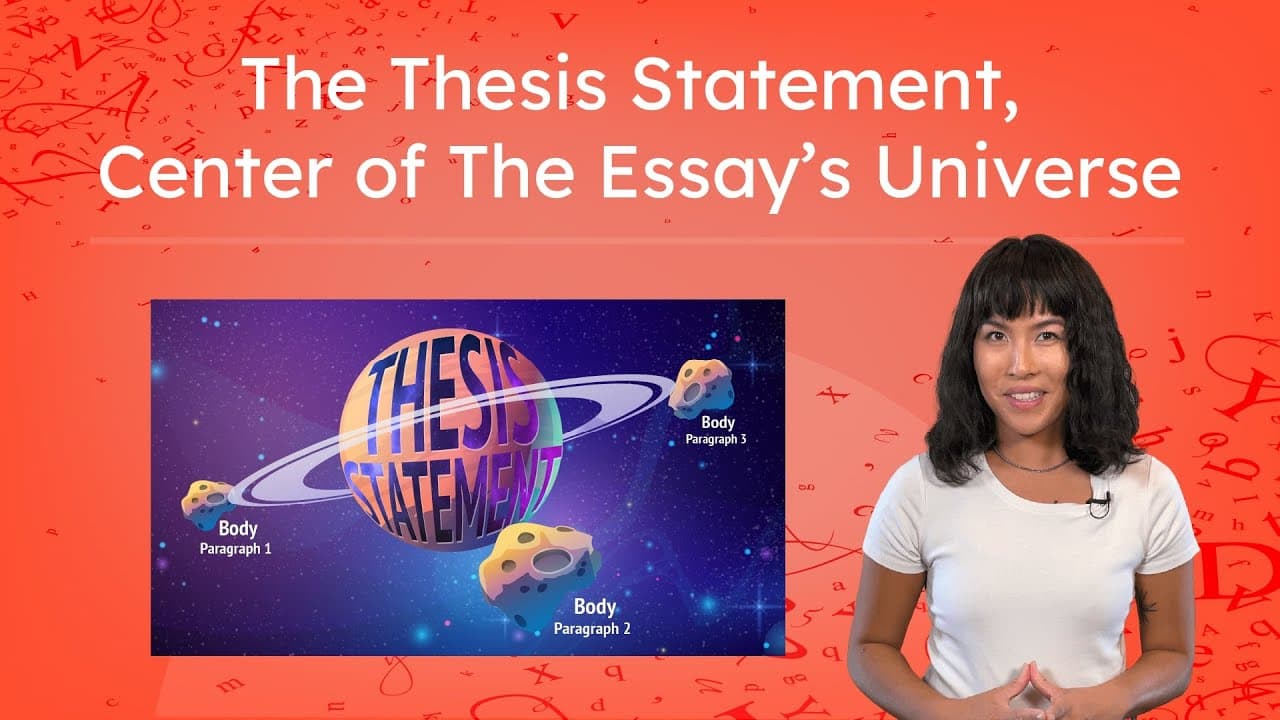
This engaging video lesson uses an extended metaphor of a solar system to explain the relationship between a thesis statement and the body paragraphs of an essay. The narrator guides students through the definition of a thesis statement, emphasizing that it must be the central argument around which the rest of the paper revolves. The video breaks down the criteria for a strong thesis—specifically that it must be arguable and specific—and demonstrates how to construct one using Sandra Cisneros's novel "The House on Mango Street" as a case study. The content dives deep into the structural mechanics of essay writing, showing how a thesis statement serves as a roadmap for the entire paper. It explicitly models how to extract key points from a thesis to create distinct topic sentences for body paragraphs. Through a step-by-step example, the host shows how specific experiences of the protagonist, Esperanza, translate into focused arguments for individual paragraphs, effectively teaching students how to outline their writing before they even begin drafting. This resource is highly valuable for high school English classrooms as it demystifies the abstract concept of "essay flow." By visualizing the thesis as a planet and body paragraphs as moons, it provides a concrete mental model for organization. The video includes built-in pause points for reflection, checks for understanding, and a "growth mindset" check-in, making it an excellent interactive tool for introducing literary analysis essays or argumentative writing units.

Miacademy & MiaPrep Learning ChannelMiacademy & MiaPrep Learning Channel

9mins 51s

Comparing Firsthand and Secondhand Accounts

Comparing Firsthand and Secondhand Accounts

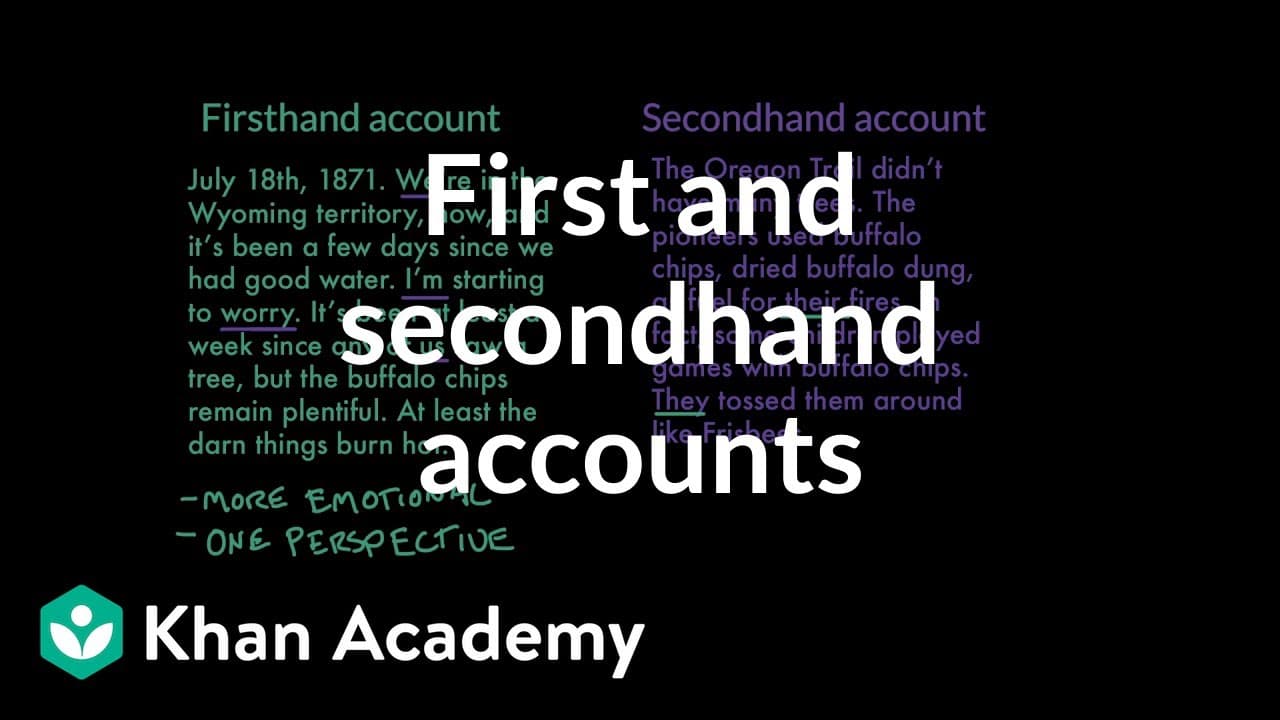
This engaging educational video clarifies the distinction between firsthand (primary) and secondhand (secondary) accounts using the historical context of the Oregon Trail. Narrator David introduces the concepts through two contrasting books: a fictional travel diary from 1871 and a modern history textbook. By analyzing how each text describes the use of "buffalo chips" (dried dung) for fuel, the video demonstrates the unique characteristics of each source type.

Khan AcademyKhan Academy

4mins 20s

How Perspective Shapes the Truth

How Perspective Shapes the Truth

This educational video explores the concept of perspective and how it influences our understanding of the truth. Using the famous example of the film 'Rashomon,' as well as relatable scenarios like the Titanic sinking, a baseball argument, and a car accident, the narrator demonstrates how different people can witness the exact same event yet perceive it in contradictory ways. The video breaks down the difference between firsthand and secondhand accounts, illustrating that even eyewitnesses (firsthand) can be unreliable due to their specific backgrounds, biases, and physical vantage points. The core themes include the definition of perspective (point of view + background + beliefs), the reliability of sources, and the distinction between objective facts and subjective interpretation. It emphasizes the importance of synthesizing multiple accounts to get closer to the 'full picture' of the truth. The video specifically highlights how social class (on the Titanic) or professional roles (umpire vs. player) create inherent biases that color how events are recorded and remembered. For educators, this video is an excellent tool for English Language Arts and History classrooms. It provides a visual and concrete framework for teaching students how to analyze authorial bias, evaluate primary sources, and understand the complexity of historical narratives. It serves as a perfect engaging hook for units on point of view in literature or historiography in social studies, encouraging critical thinking about the 'texts' students encounter in their daily lives.

Khan AcademyKhan Academy

3mins 33s

How Differences in Point of View Create Dramatic Irony

How Differences in Point of View Create Dramatic Irony

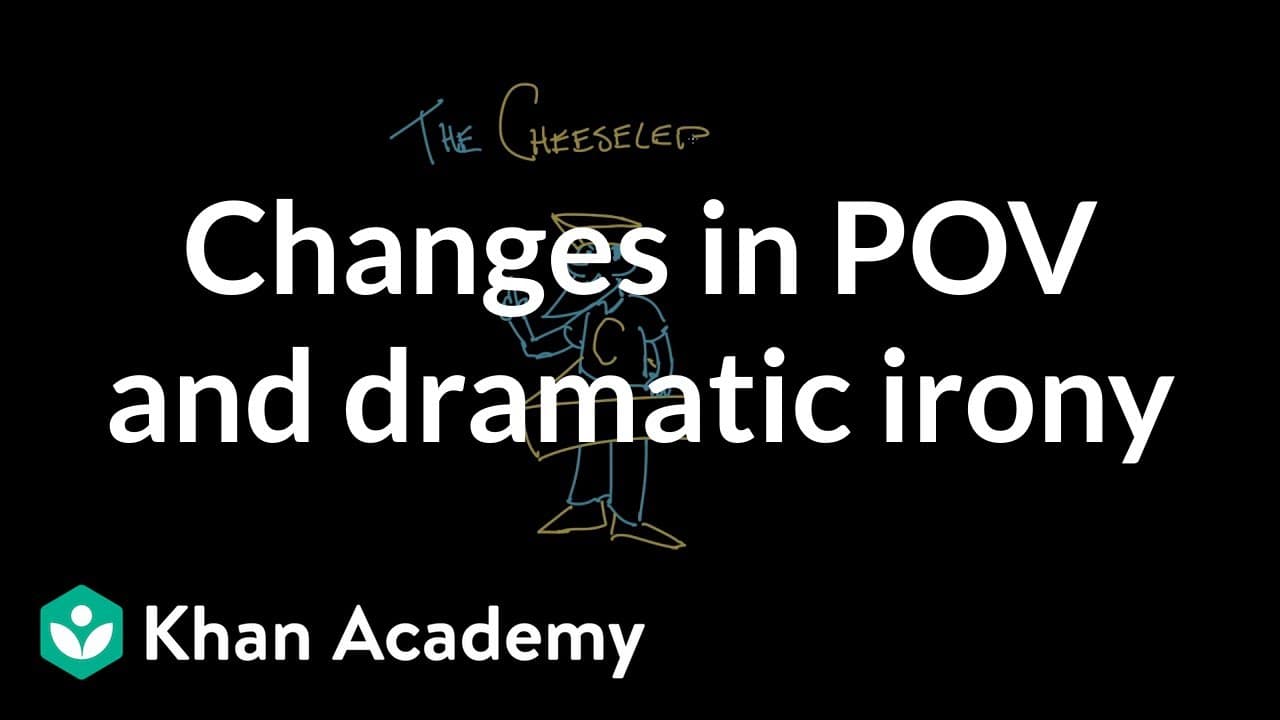
This video explores how differences in point of view between characters, narrators, and the audience shape narrative structure and create specific literary effects. It uses accessible examples, including characters from "Avatar: The Last Airbender" and a humorous original scenario involving a villain named "The Cheeseler," to demonstrate complex concepts. The narrator breaks down how authors control the flow of information to manipulate the reader's experience. The core themes include literary analysis of perspective, the definition and function of dramatic irony, and the creation of suspense through information asymmetry. It distinguishes between what characters know versus what the audience knows, explaining how this gap generates tension and how the closing of that gap leads to resolution. For educators, this resource provides a clear, engaging visual definition of dramatic irony that moves beyond the dictionary definition into practical application. It is an excellent tool for English Language Arts classrooms to help students move from simply identifying point of view (e.g., first person, third person) to analyzing *why* an author chose that perspective and how it impacts the story's emotional weight and conflict.

Khan AcademyKhan Academy

4mins 55s

Reading Characters' Minds: Understanding Thoughts and Feelings

Reading Characters' Minds: Understanding Thoughts and Feelings

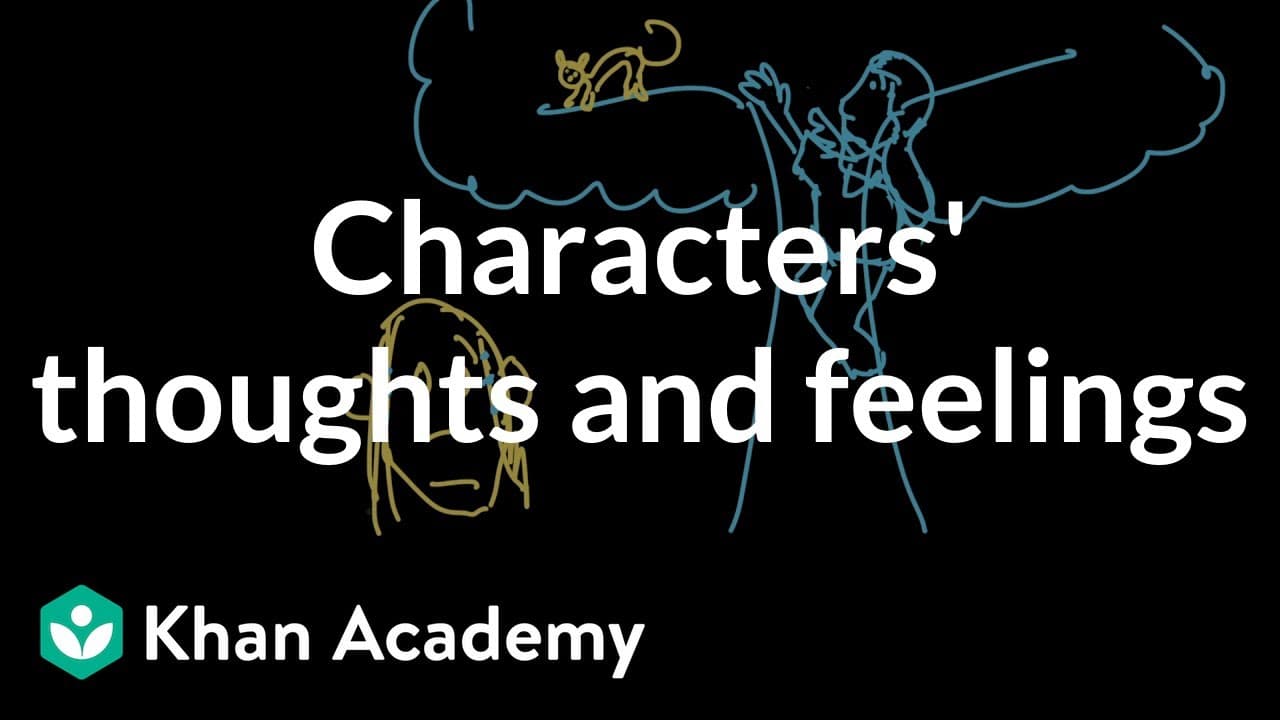
This engaging video lesson explores the literary concept of 'mind reading,' or how readers gain access to a character's internal world. Through simple animations and clear narration, it demonstrates how authors reveal character thoughts and feelings, distinguishing between first-person narration where a character speaks directly to the reader, and third-person narration where an outside voice reveals internal states. The video delves into complex emotional nuances, explaining that characters can experience conflicting emotions simultaneously or act in ways that contradict their internal feelings. It provides concrete examples, such as a character who climbs a tree despite fearing heights, or a sculptor who smiles politely while feeling frustrated by a friend's criticism. These scenarios illustrate the difference between internal traits (thoughts/feelings) and external traits (actions/dialogue). For educators, this resource is an excellent tool for teaching character analysis, point of view, and inference in English Language Arts. It moves students beyond basic plot comprehension to deeper analytical skills, helping them understand character motivation and the 'evidence' provided by text. The relatable examples serve as perfect anchors for classroom discussions about social-emotional cues and narrative structure.

Khan AcademyKhan Academy

3mins 21s

Materials

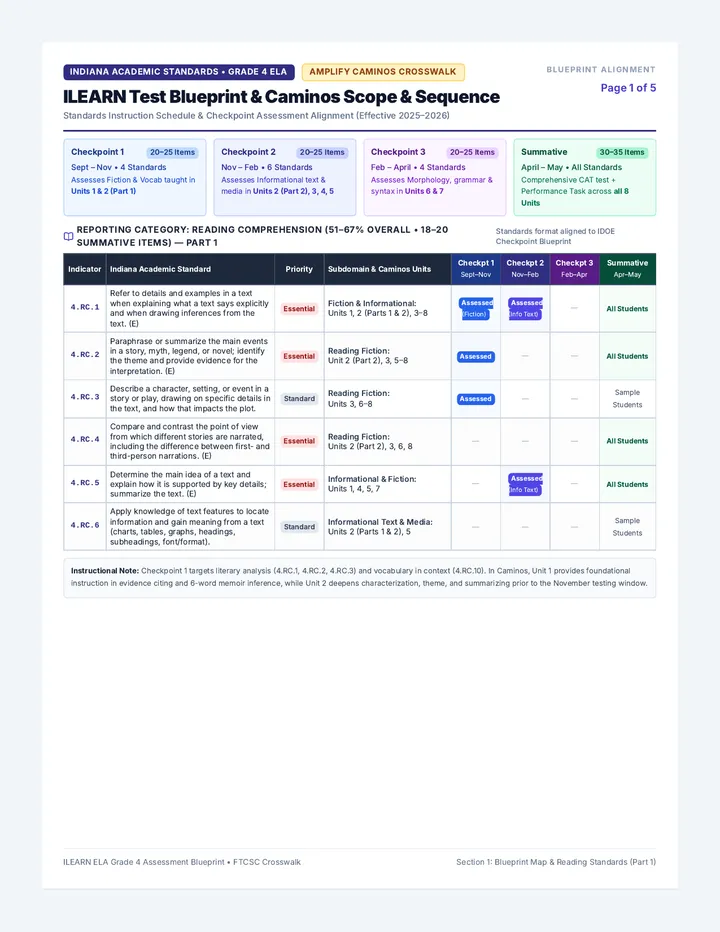
ILEARN Caminos Blueprint Guide

ILEARN Caminos Blueprint Guide

Comprehensive Grade 4 ILEARN Test Blueprint and Amplify Caminos Scope & Sequence crosswalk. Formatted to match the state ILEARN checkpoint blueprint, showing exactly when Indiana Academic Standards (Reading, Vocabulary, Writing, Grammar, and Communication) are taught across Units 1–8 and assessed in Checkpoints 1, 2, 3, and the Summative Assessment.

A

Amy.Hacker

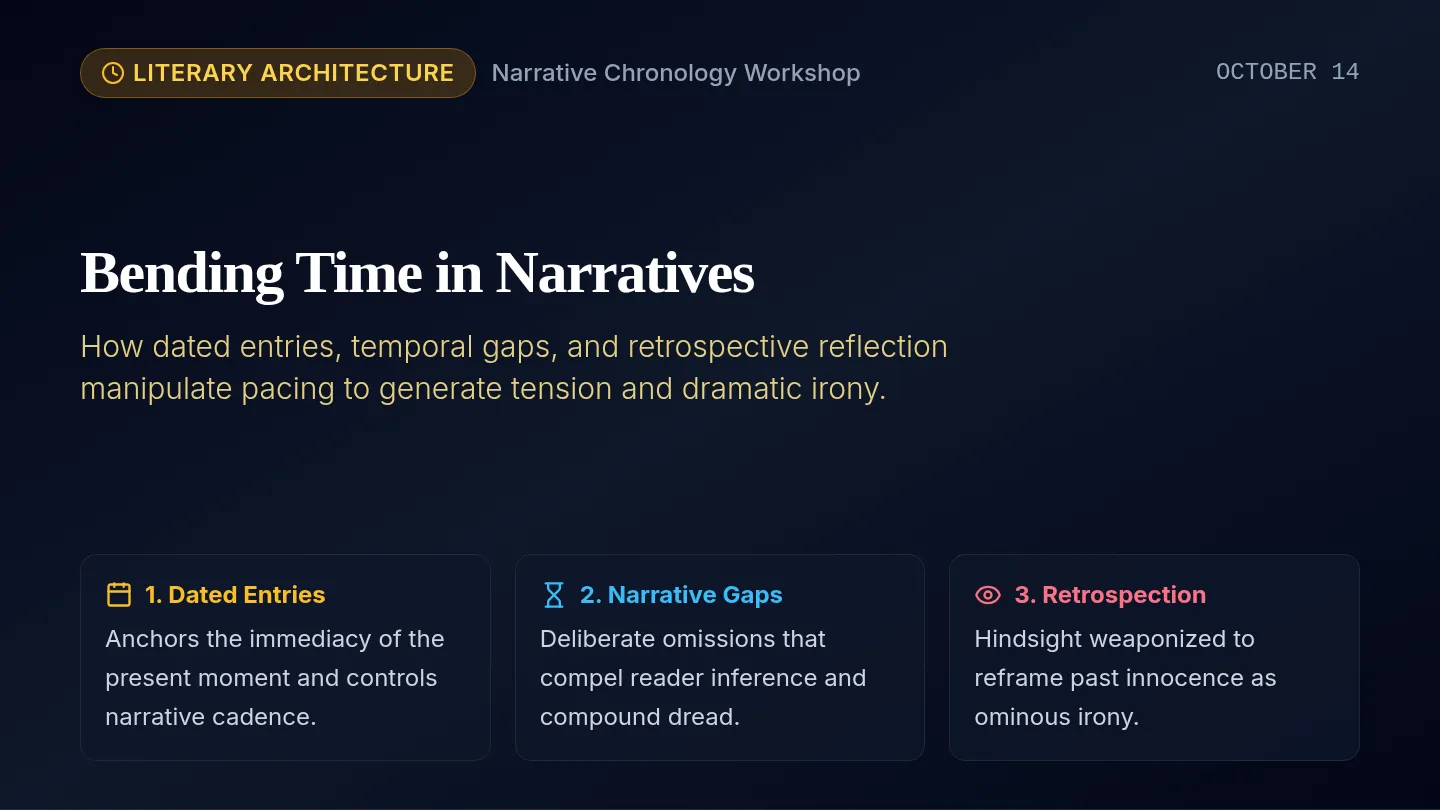
Temporal Structure Slides

Temporal Structure Slides

A comprehensive 9-slide instructional presentation guiding students through temporal analysis in epistolary texts. Features explicit teacher modeling of narrative gaps and retrospective reflection, partner chronological mapping tasks, group claim synthesis, independent analysis, and an exit ticket.

MT

Mercy Tan

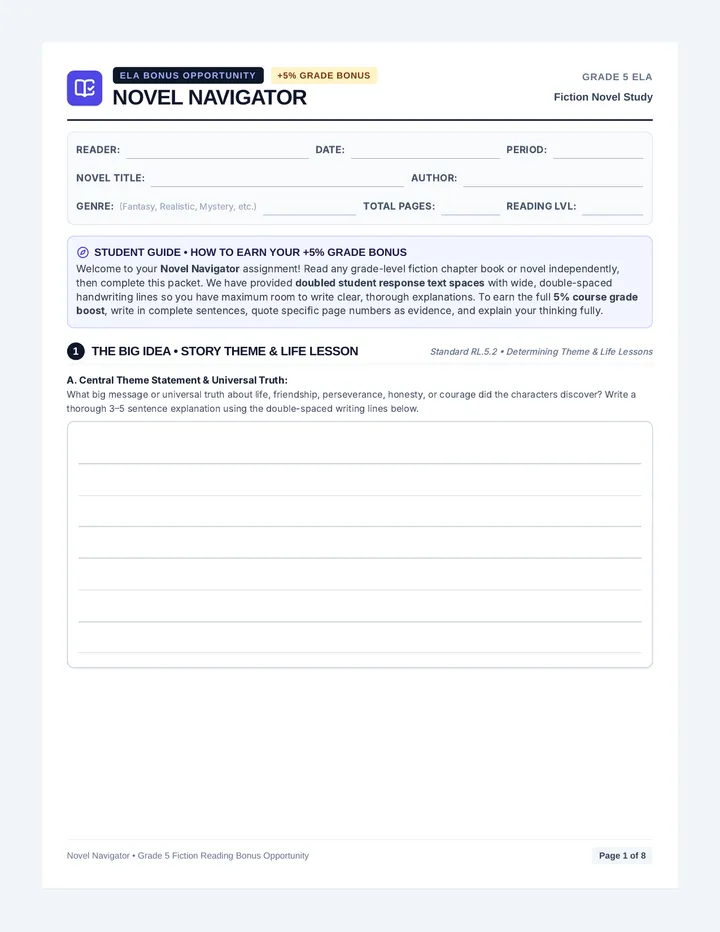
Novel Navigator Assignment Packet

Novel Navigator Assignment Packet

An 8-page comprehensive 5th-grade ELA fiction assignment packet for an ELA Bonus Opportunity, featuring doubled student response text spaces, generous double-spaced handwriting lines, student-friendly directions, story elements analysis, creative writing pitch, and a streamlined evaluation rubric.

TK

Tanya Kovac

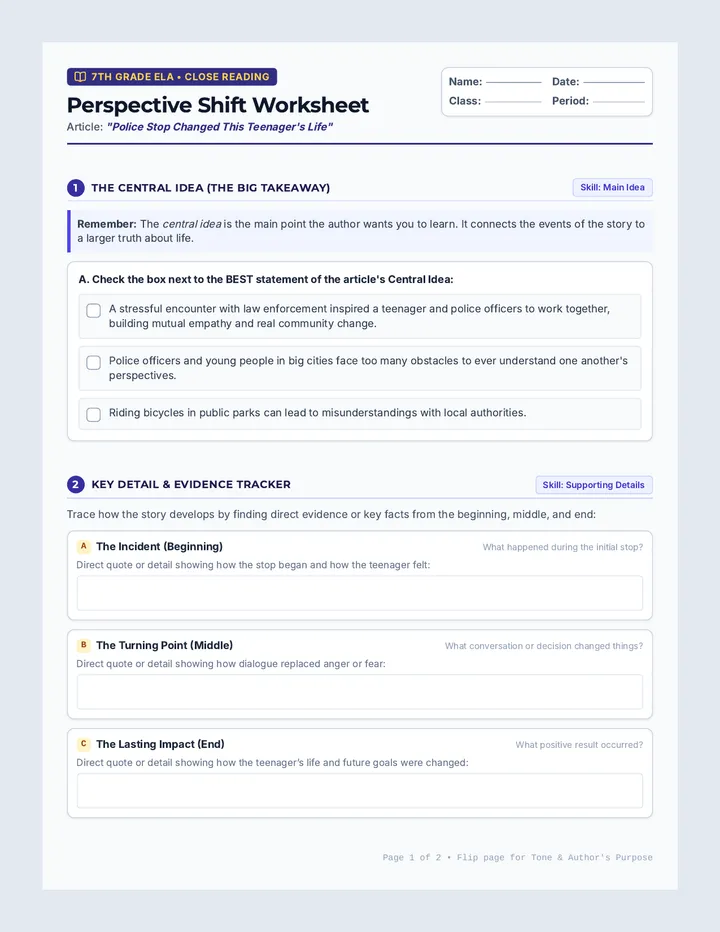
Perspective Shift Worksheet

Perspective Shift Worksheet

A simplified 7th-grade ELA close reading worksheet for 'Police Stop Changed This Teenager's Life', featuring scaffolded central idea practice, a sequential 3-part evidence tracker, tone word analysis with a word bank, and perspective shift charts.

TJ

Tasha Jaramillo

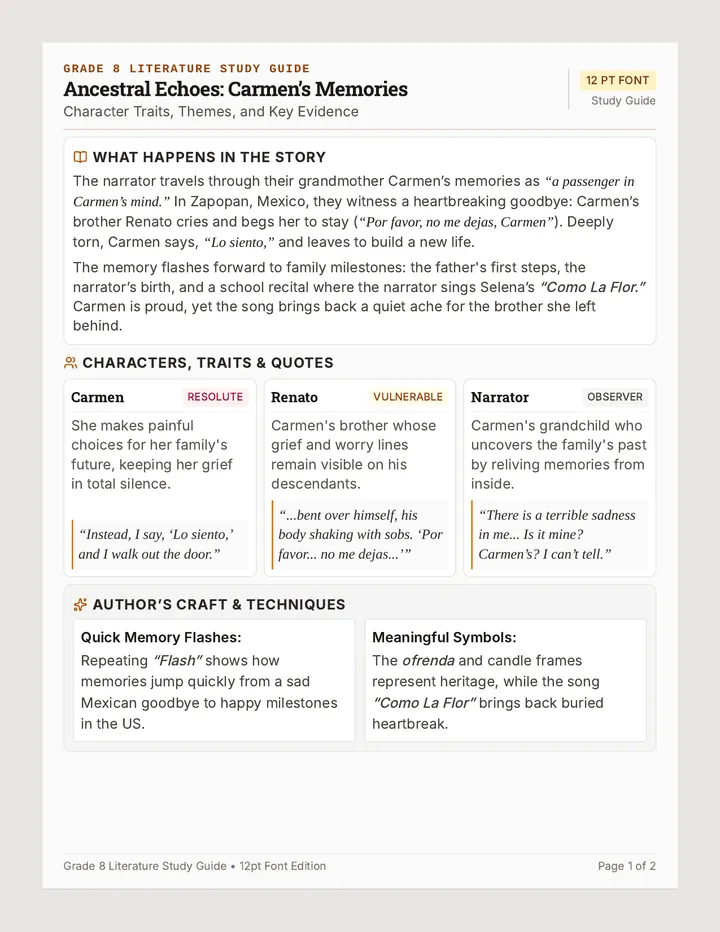
Ancestral Echoes Study Guide

Ancestral Echoes Study Guide

An 8th-grade accessible two-page literary analysis study guide formatted in 12pt font for optimal readability, summarizing Carmen's memory sequence with character analysis, thematic insights, and textual quote explanations.

MR

Mary Roche

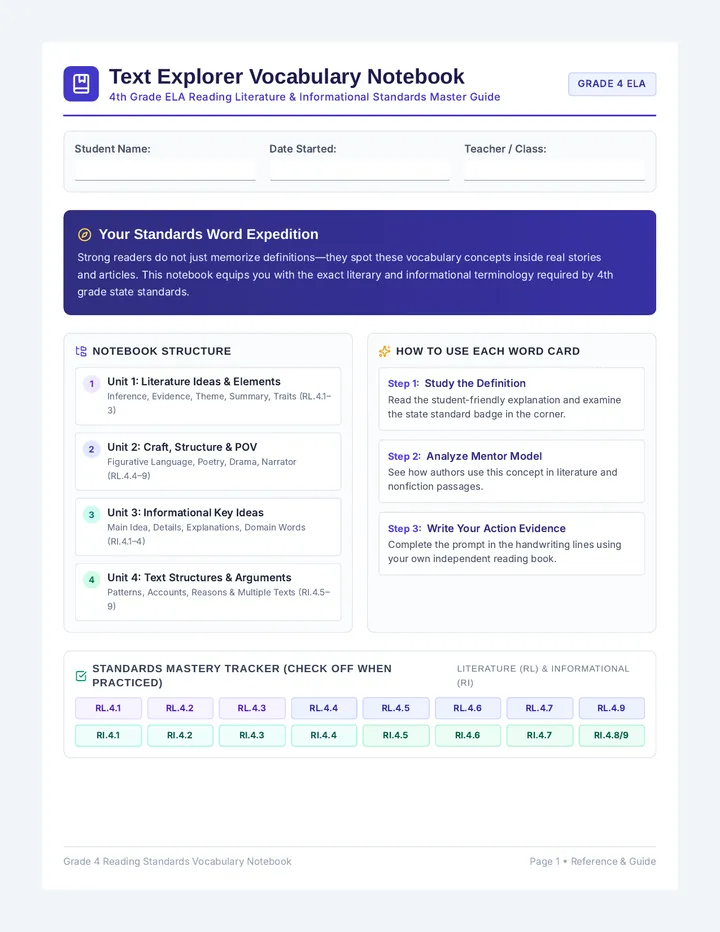
Text Explorer Vocabulary Notebook

Text Explorer Vocabulary Notebook

A comprehensive 6-page student vocabulary notebook covering all 4th Grade ELA Literature and Informational standards (RL.4.1–RL.4.9 and RI.4.1–RI.4.9). Features student-friendly definitions, authentic mentor text examples, standards alignment tags, handwriting application spaces, conceptual comparison matrices, and an independent reading word collector.

DG

Debra Golden

Sequences

Invention Quest Slides

Frindle Frenzy Novel Study

A 9-day novel study for 'Frindle' by Andrew Clements, aligned to 3rd Grade ELAR TEKS, focusing on character development, vocabulary, and plot analysis.

LH

Lucy Hellerman

56
Prophecy and Power Slides

Shadows and Crowns

A series of lessons exploring Shakespeare's Macbeth, specifically designed for 10th-grade emergent bilingual students to master complex characterization and thematic elements.

DC

Dylan Clark

30
Question Anatomy Slides

Insight Investigators

A 6-week reading intervention unit for 5th graders focused on making inferences, analyzing questions, and using text evidence. Themes include mysteries, sports (baseball and basketball), and dragons to engage high-interest readers.

MK

Meg Keene

48
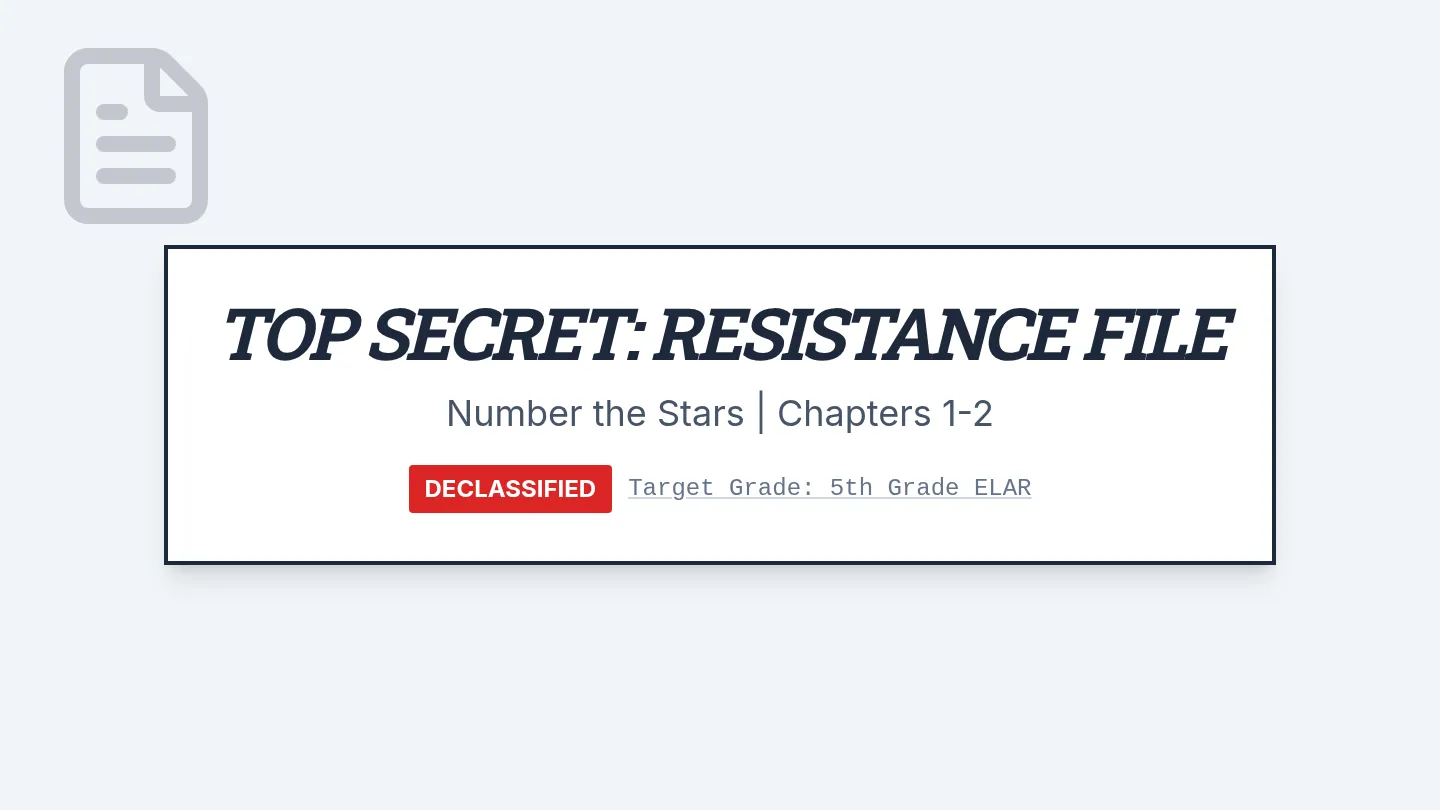
Copenhagen Clues Slides

Resistance Chronicles

A 9-day novel study for Number the Stars centered on 5th Grade ELAR TEKS, focusing on character development, plot analysis, and historical context through the lens of a Resistance Secret File.

LH

Lucy Hellerman

79
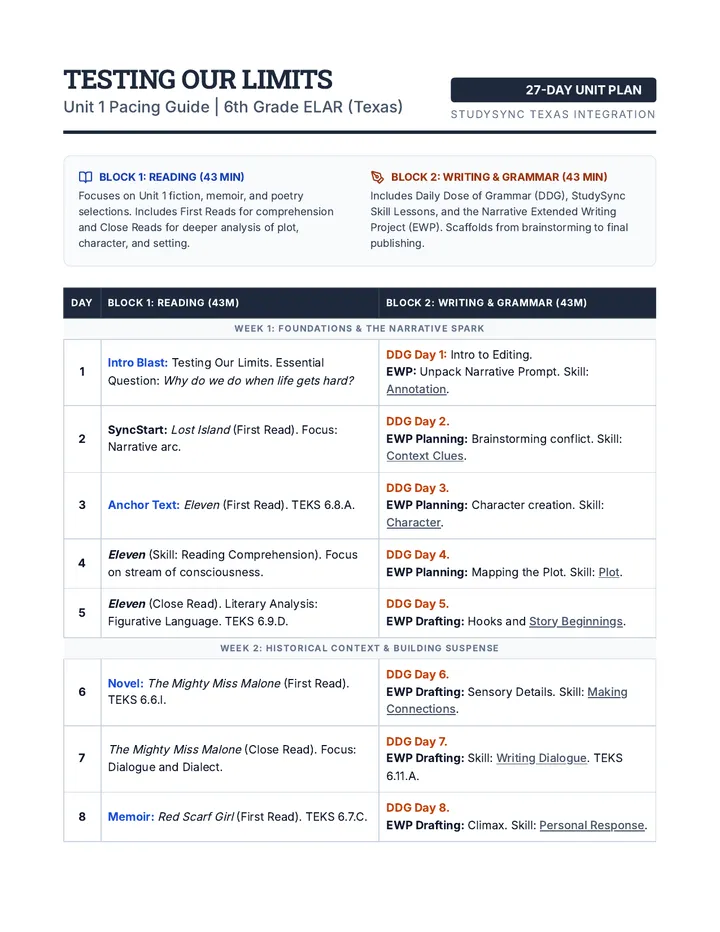
Unit 1 Pacing Guide Document

Testing Our Limits Unit Sequence

A 27-day instructional sequence for 6th Grade ELAR Unit 1: Testing Our Limits, featuring dual blocks for Reading and Writing with daily grammar and skill scaffolding.

DM

Dawn Mustian

81
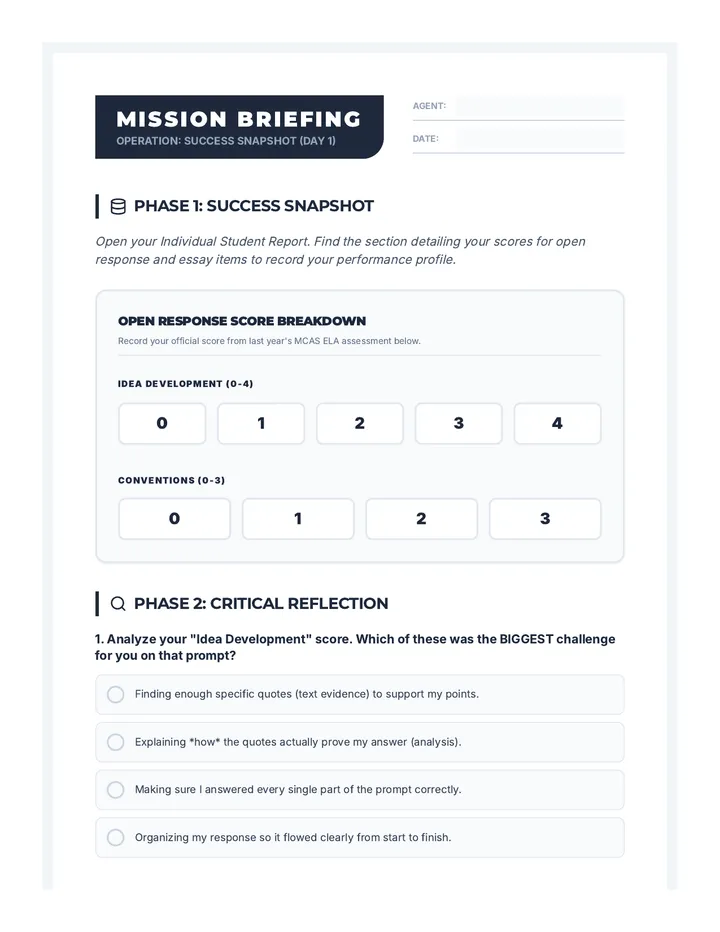
Mission Briefing Worksheet

Mastery Mission

A project-based learning unit designed to help middle school students analyze their past MCAS ELA performance, deconstruct scoring rubrics, and create a personalized strategy playbook for upcoming assessments. Students move from 'investigating' their scores to 'rebooting' their responses and 'finalizing' their test-taking toolkit.

M

mhbutterworth

18