Lenny.com
Explore
Create
ActivitiesNewCurriculumNewMathEnglish Language ArtsScience & EngineeringSocial StudiesGlobal LanguagesHealth & Physical EducationSpecial EducationCounseling & Life SkillsArts & CreativityESL
Lenny.com
Lenny.com
Explore
Create
ActivitiesNewCurriculumNewMathEnglish Language ArtsScience & EngineeringSocial StudiesGlobal LanguagesHealth & Physical EducationSpecial EducationCounseling & Life SkillsArts & CreativityESL
Lenny.com
Lenny.com

Solutions

Lenny for EducatorsLenny for SchoolsLenny for Districts

Product

ExploreSign inCreateSupportAbout

Resources

Getting startedMTSS Acceleration Program

Newsletters

School Funding Newsletter

© 2026 Lenny Learning Inc.

TermsPrivacyAccessibility
LinkedInInstagramX
Lenny
English Language ArtsPhonics & Reading FoundationsLetter IdentificationLearn Letters A-ZLowercase and Uppercase LettersConsonants and VowelsLetter-Sound AssociationsLetter-Sound Associations: LowercaseLetter-Sound Associations: UppercaseBeginning and Ending SoundsRhymingBlending And SegmentingShort VowelsShort Vowel SoundsConsonant BlendsConsonant DigraphsBlends, Digraphs, and TrigraphsDigraphs, Blends, and Silent LettersLong Vowel SoundsLong Vowel PatternsShort and Long VowelsShort and Long Vowel PatternsSilent EVowel SoundsVowel TeamsR-Controlled VowelsDiphthongs: Oi, Oy, Ou, OwVariant VowelsVariant, Diphthong, And R Vowel PatternsSoft G And CSight WordsIrregular WordsWord RecognitionSyllablesSyllable TypesTwo-Syllable WordsMultisyllabic WordsPhoneme ManipulationDecodable TextsVocabularyAction WordsQuestion WordsNouns and AdjectivesClassify WordsCompound WordsSynonyms and AntonymsHomophonesHomophones and HomonymsShades of MeaningContext CluesPrefixes and SuffixesGreek and Latin RootsAnalogiesIdioms and AdagesForeign Words and ExpressionsWord Choice and UsageReference SkillsReading ComprehensionRead-Along Literary TextsRead-Along Informational TextsReality vs. FictionStory ElementsCharacterSequenceMain IdeaCause And EffectCompare And ContrastReading StrategiesText StructureAuthor's PurposeAuthor's Purpose And ToneAuthor's PerspectivePoint Of ViewThemeInference And ThemeInference And AnalysisPoetry ElementsLiterary DevicesAnalyzing LiteratureAnalyzing Informational TextsComparing TextsAudience, Purpose, And ToneBusiness DocumentsNovel StudyNonfiction Book StudyGrammar & MechanicsSentencesNounsVerbsAdjectivesPronounsCapitalizationPunctuationContractionsConjunctionsPrepositionsArticlesAdjectives And AdverbsVerb TypesVerb TensePronouns And AntecedentsPronoun TypesSubject-Verb AgreementDirect And Indirect ObjectsSentences, Fragments, And Run-OnsPhrases And ClausesCommasSemicolons, Colons, And CommasDashes, Hyphens, And EllipsesSpellingAbbreviationsFormattingVerb Tense And MoodMisplaced ModifiersWritingDescriptive DetailsCreative WritingOpinion WritingTopic SentencesOrganizing WritingLinking WordsSentence VarietyIntroductions And ConclusionsPersuasive And Opinion WritingExpository WritingPersuasive StrategiesDeveloping And Supporting ArgumentsTopic Sentences And Thesis StatementsSummarizingResearch SkillsEditing And RevisingActive And Passive Voice=Writing Clearly And ConciselyDebate & Public SpeakingPublic Speaking BasicsPersuasive TechniquesClaims and EvidenceTypes of ArgumentsReasoning TypesLogical FallaciesTopic ResearchOrganizing EvidenceDebate Speech OrganizationAttacking and Defending ArgumentsClash and EngagementImpact CalculusQuestioning and Cross-ExaminationCritical ThinkingInformal LogicFormal LogicInductive Reasoning

Word Switch Worksheet

A half-page student practice worksheet featuring two identical half-sheet copies per printable page with a cut line, guiding students to use words (ring, running, water) for different everyday sentence functions without parts-of-speech terminology.

Jjeturner

Word Switch Worksheet

A half-page student practice worksheet featuring two identical half-sheet copies per printable page with a cut line, guiding students to use words (ring, running, water) for different everyday sentence functions without parts-of-speech terminology.

Jjeturner

You might also like

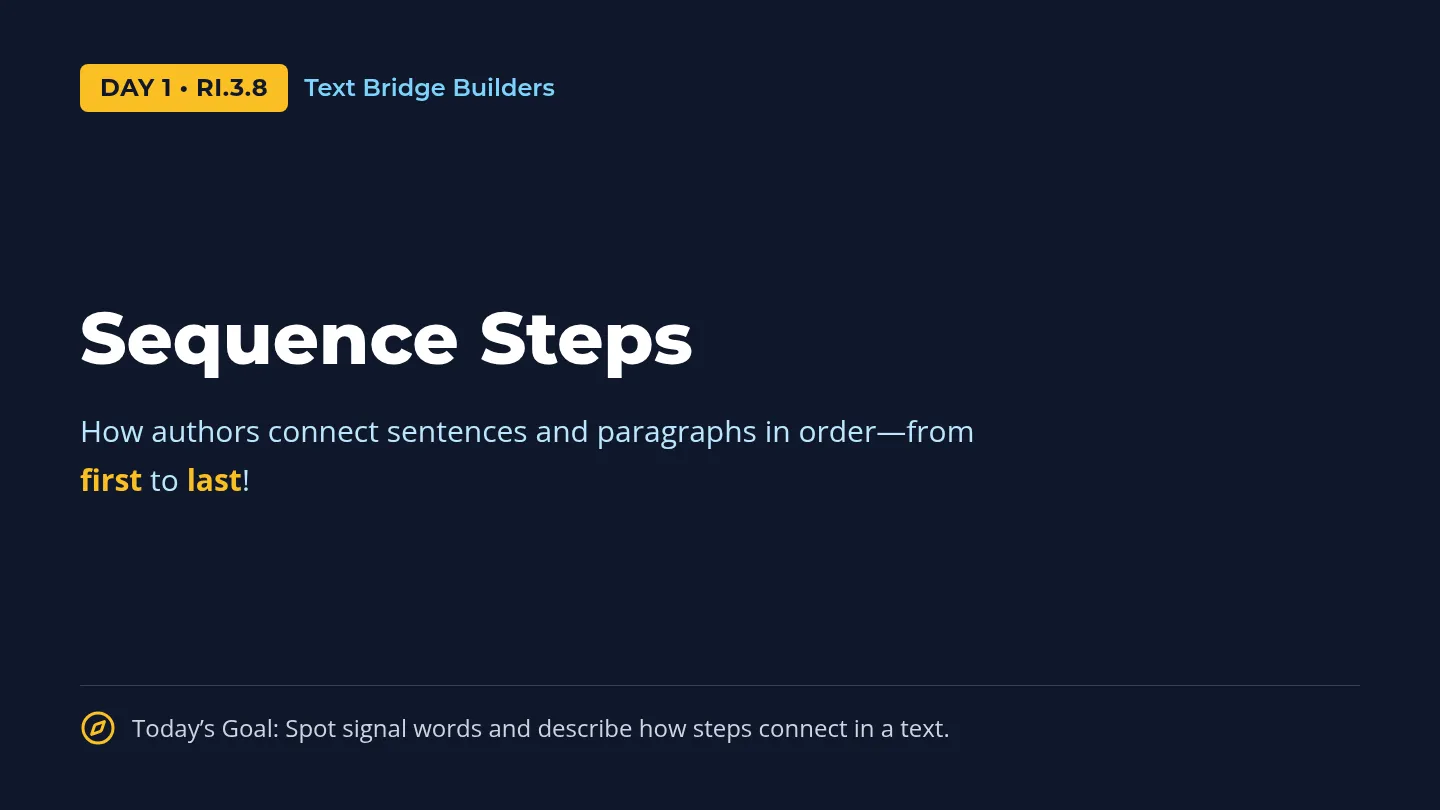
Sequence Steps Slides

Text Bridge Builders

A three-day third-grade ELA mini-lesson sequence introducing CCSS RI.3.8 (describing logical connections between sentences and paragraphs). Students act as Idea Bridge Builders to master sequence, cause and effect, and compare and contrast connections through interactive slides, guided reading, and scaffolded practice.

TB

Tabitha Brewer

12
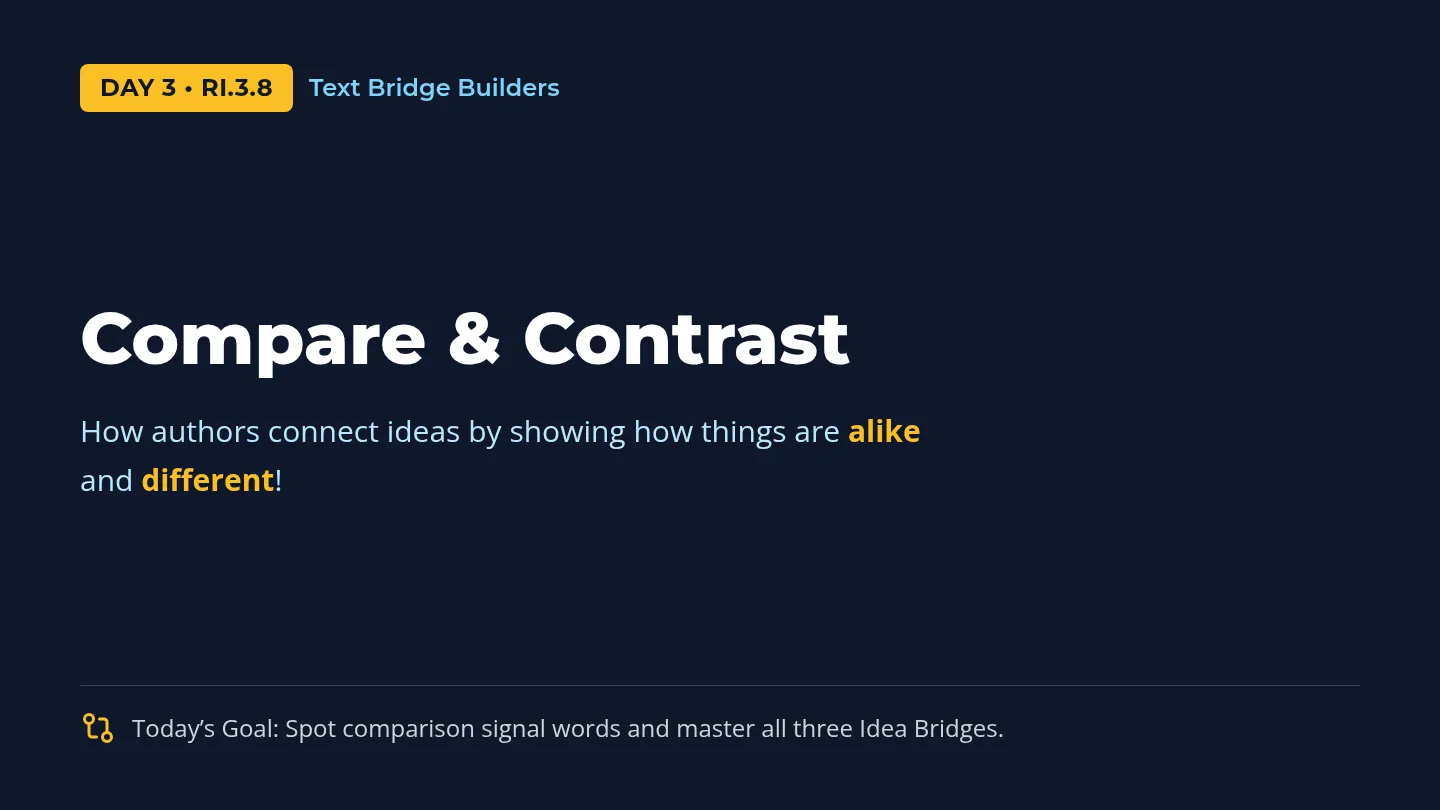
Compare Contrast Slides

Compare and Contrast

Day 3 completes the RI.3.8 introduction by teaching compare-and-contrast connections between sentences and paragraphs alongside a cumulative review of all three connection types. Includes instructional slides, a teacher lesson plan, a student worksheet, and an answer key.

TB

Tabitha Brewer

4
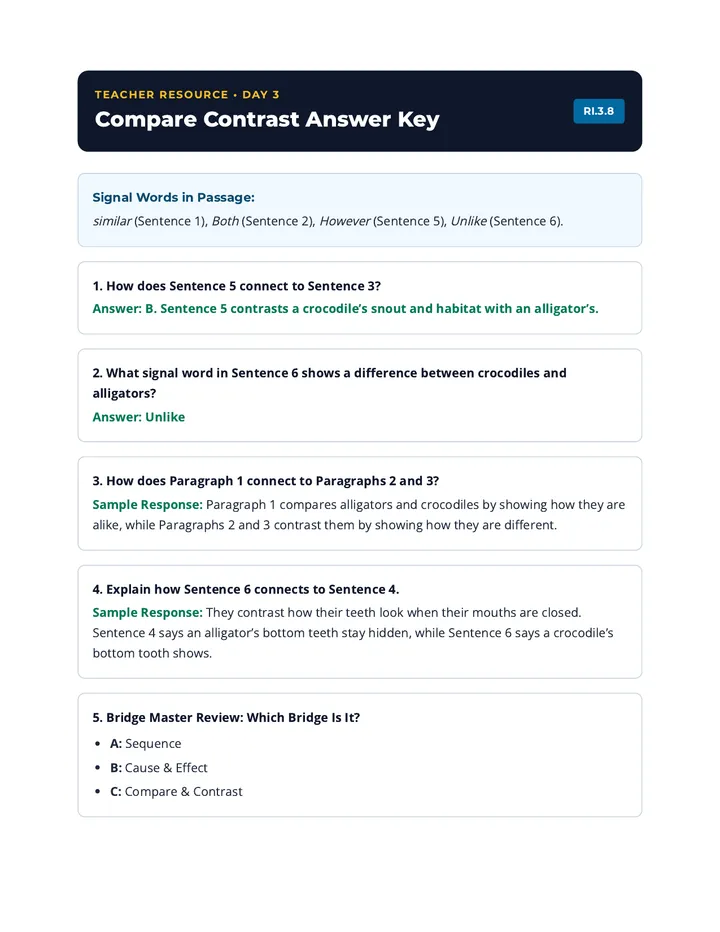
Compare Contrast Answer Key

Compare Contrast Answer Key

A 1-page answer key for the Day 3 Compare Contrast Worksheet, including correct answers for the passage questions and the cumulative 3-bridge review.

TB

Tabitha Brewer

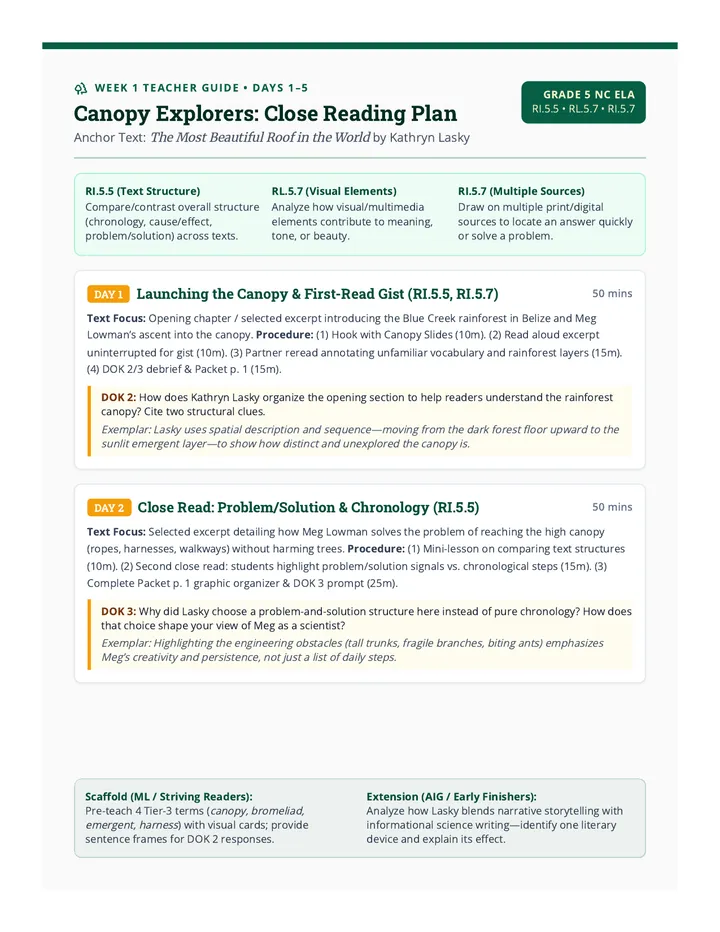
Canopy Explorers Teacher Guide

Rainforest Canopy Explorers

A 3-week (15-day) 5th grade North Carolina ELA unit centered on *The Most Beautiful Roof in the World* by Kathryn Lasky. Students master RL.5.7, RL.5.9, RI.5.5, RI.5.6, and RI.5.7 through explicit close reading, DOK 2 and DOK 3 questioning, visual analysis, and a summative assessment.

KM

Kelly Messer

11
Cause Effect Slides

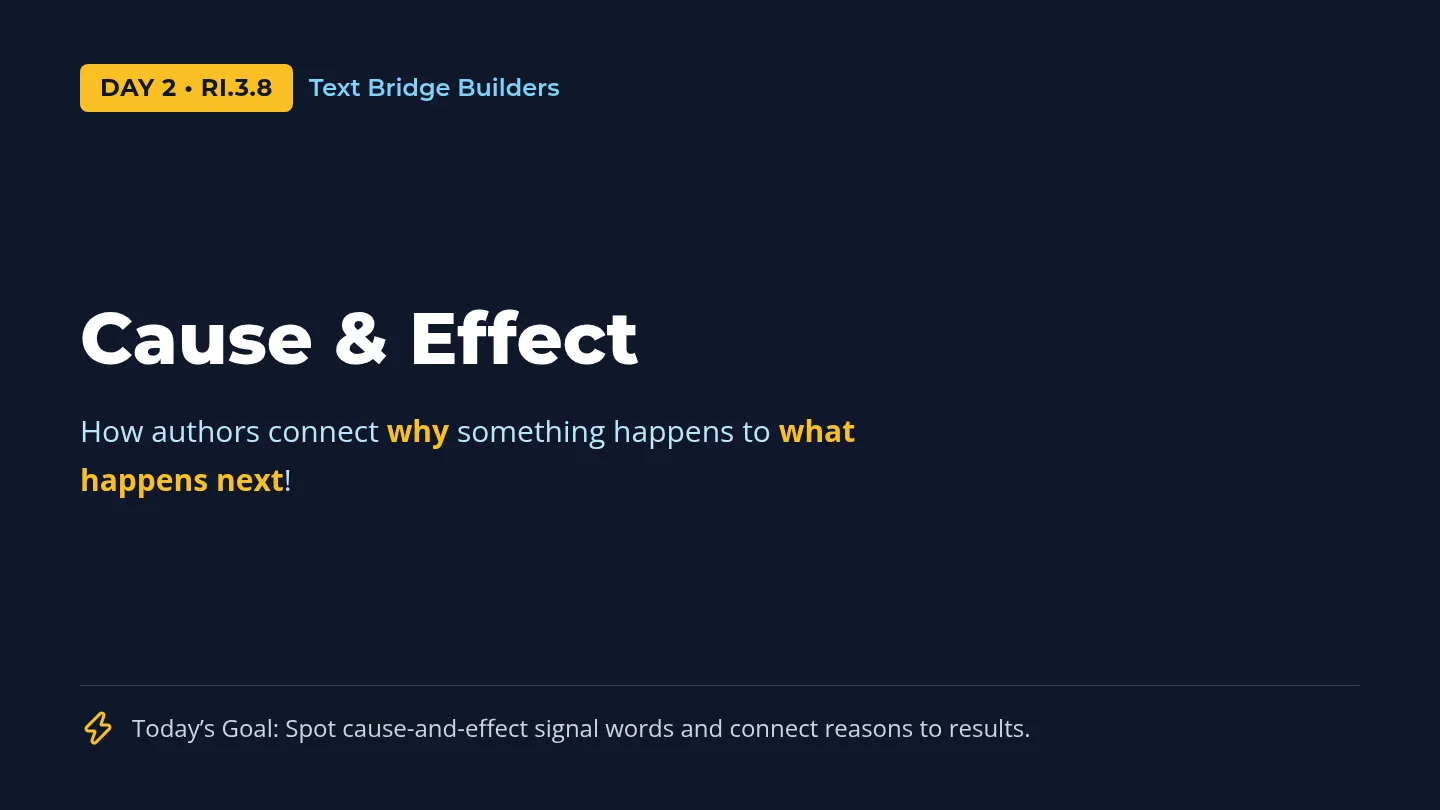
Cause and Effect

Day 2 builds on RI.3.8 by teaching students to identify cause-and-effect connections between sentences and paragraphs using signal words such as because, so, since, and as a result. Includes instructional slides, a teacher lesson plan, a student worksheet, and an answer key.

TB

Tabitha Brewer

4
Compare Contrast Worksheet

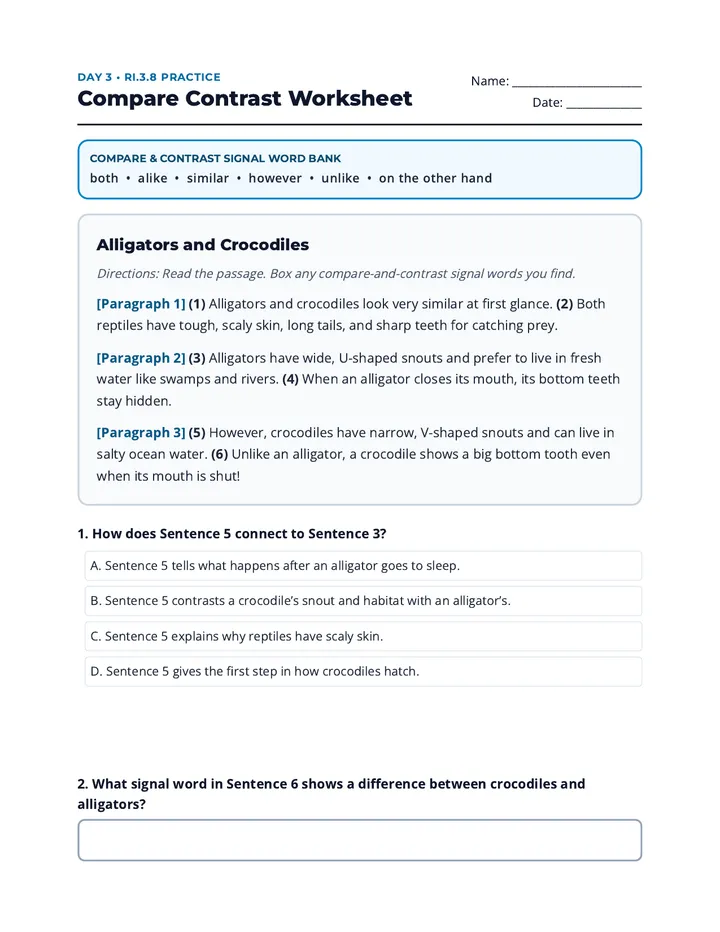
Compare Contrast Worksheet

A 2-page third-grade student worksheet for Day 3 (Compare and Contrast, CCSS RI.3.8). Features a numbered informational passage on alligators and crocodiles, a signal word bank, connection questions, and a cumulative 3-bridge spiral review.

TB

Tabitha Brewer

Week 1 Clue Hunters Worksheet

Skill Builder Weekly Pack

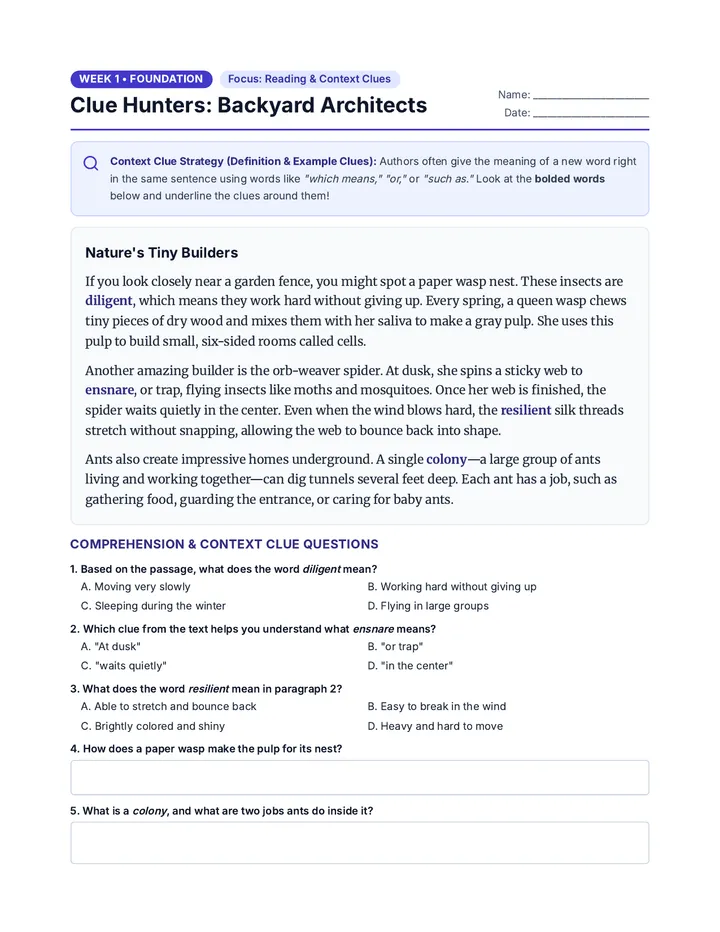
A 9-week printable practice sequence targeting 4th–6th grade reading comprehension with context clues, three-paragraph essay writing with self-editing, and identifying operations in multi-step equations. Each week rotates the primary focus skill while revisiting the other two skills, gradually increasing text complexity and reducing scaffolds across three 3-week cycles.

JF

Jessi Fazio Scott

18
Sequence Steps Slides

Sequence Steps

Day 1 introduces RI.3.8 by teaching students how authors connect sentences and paragraphs in chronological or step-by-step sequence using signal words like first, next, then, and finally. Includes instructional slides, a teacher lesson plan, a student worksheet, and an answer key.

TB

Tabitha Brewer

4
Compare Contrast Lesson Plan

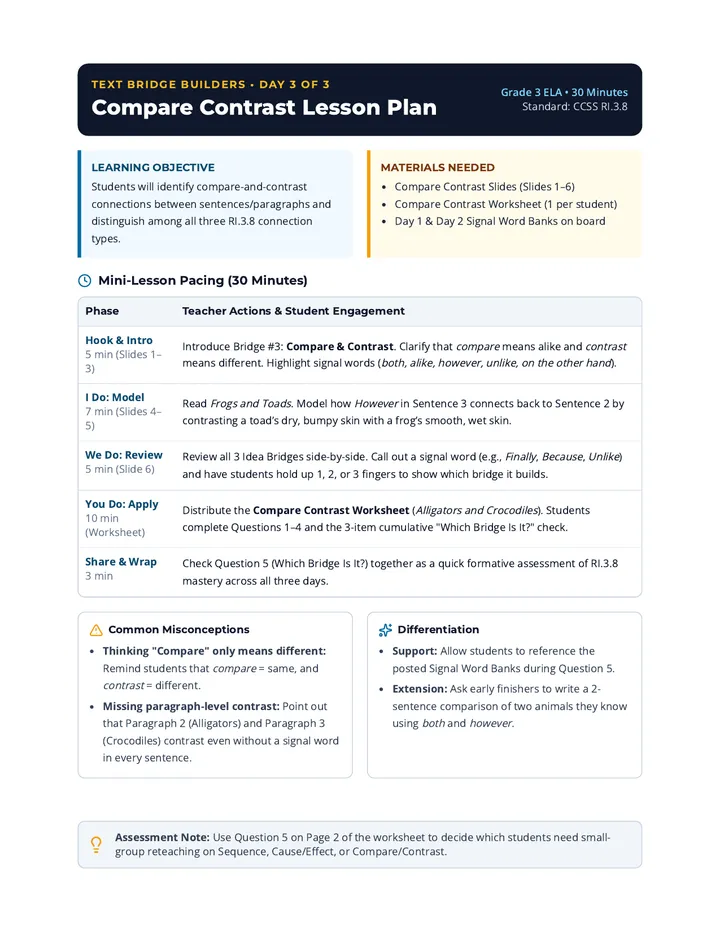
Compare Contrast Lesson Plan

A 1-page third-grade teacher lesson plan for Day 3 (Compare and Contrast, CCSS RI.3.8). Covers the 30-minute mini-lesson pacing, cumulative review of all three connection types, common misconceptions, and differentiation.

TB

Tabitha Brewer

Evidence Hunters Slides

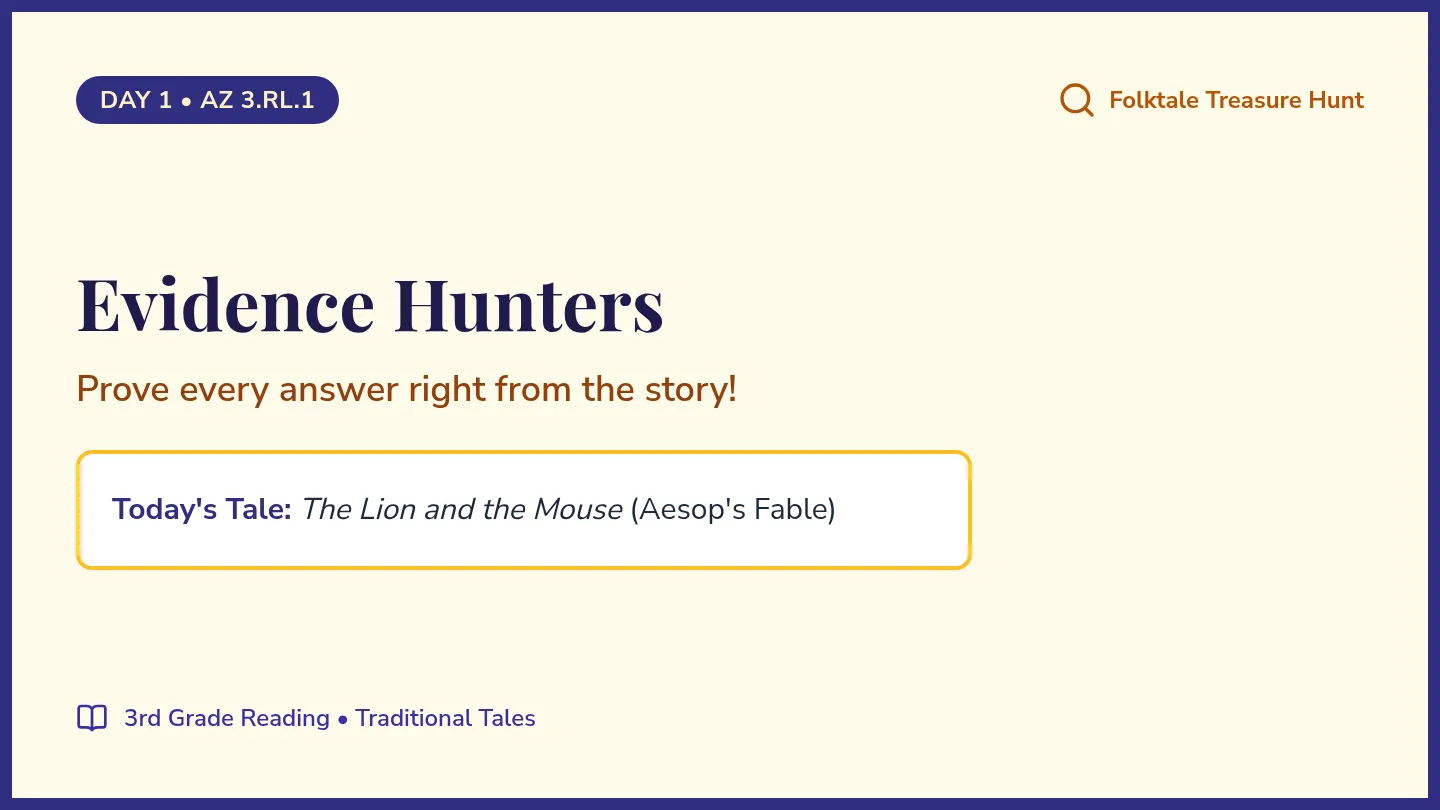
Folktale Treasure Hunt

A 5-day 3rd grade ELA sequence aligned to Arizona standards 3.RL.1, 3.RL.2, 3.RL.4, and 3.RL.5. Students explore traditional folktales and fables from diverse cultures to cite explicit text evidence, recount central messages, distinguish literal from nonliteral language, and analyze how story parts build on one another.

TD

Taylor Doucet

20
Feast of Words Slides

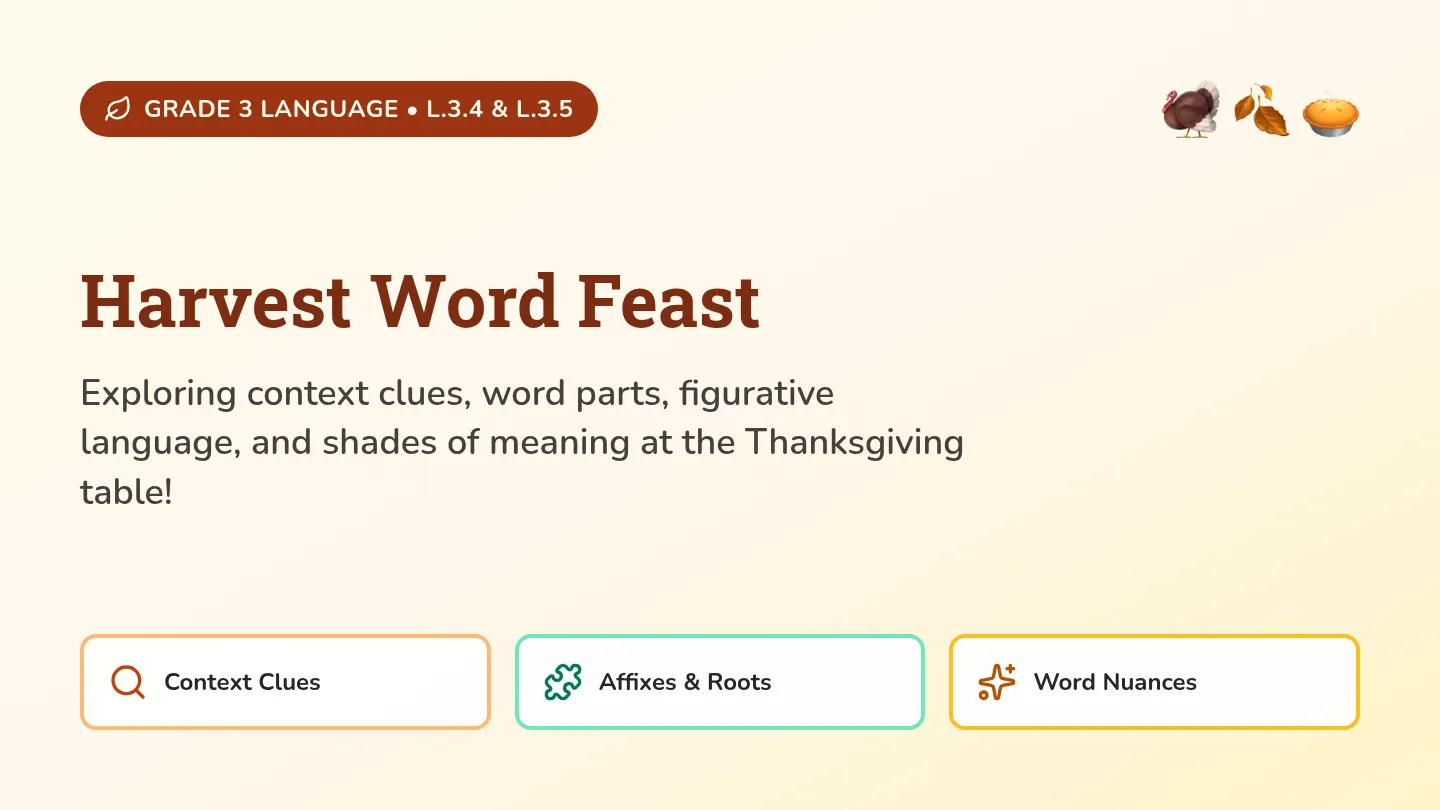
Harvest Word Feast

A festive 3rd-grade vocabulary and figurative language lesson targeting CCSS L.3.4 and L.3.5 through Thanksgiving-themed activities. Students practice context clues, affixes, root words, literal vs. nonliteral meanings, real-life word connections, and shades of meaning across interactive slides, printable worksheets, and a hands-on activity bundle.

TB

Tabitha Brewer

5
Compare Contrast Slides

Compare Contrast Slides

A 6-slide instructional presentation for Day 3 of RI.3.8 focusing on compare-and-contrast connections between sentences and paragraphs, plus a cumulative review of all three Idea Bridges. Includes signal words, a modeled passage on frogs and toads, and partner practice.

TB

Tabitha Brewer