Lenny.com
Explore
Create
ActivitiesNewCurriculumNewMathEnglish Language ArtsScience & EngineeringSocial StudiesGlobal LanguagesHealth & Physical EducationSpecial EducationCounseling & Life SkillsArts & CreativityESL
Lenny.com
Lenny.com
Explore
Create
ActivitiesNewCurriculumNewMathEnglish Language ArtsScience & EngineeringSocial StudiesGlobal LanguagesHealth & Physical EducationSpecial EducationCounseling & Life SkillsArts & CreativityESL
Lenny.com
Lenny.com

Solutions

Lenny for EducatorsLenny for SchoolsLenny for Districts

Product

ExploreSign inCreateSupportAbout

Resources

Getting startedMTSS Acceleration Program

Newsletters

School Funding Newsletter

© 2026 Lenny Learning Inc.

TermsPrivacyAccessibility
LinkedInInstagramX
Lenny
English Language ArtsPhonics & Reading FoundationsLetter IdentificationLearn Letters A-ZLowercase and Uppercase LettersConsonants and VowelsLetter-Sound AssociationsLetter-Sound Associations: LowercaseLetter-Sound Associations: UppercaseBeginning and Ending SoundsRhymingBlending And SegmentingShort VowelsShort Vowel SoundsConsonant BlendsConsonant DigraphsBlends, Digraphs, and TrigraphsDigraphs, Blends, and Silent LettersLong Vowel SoundsLong Vowel PatternsShort and Long VowelsShort and Long Vowel PatternsSilent EVowel SoundsVowel TeamsR-Controlled VowelsDiphthongs: Oi, Oy, Ou, OwVariant VowelsVariant, Diphthong, And R Vowel PatternsSoft G And CSight WordsIrregular WordsWord RecognitionSyllablesSyllable TypesTwo-Syllable WordsMultisyllabic WordsPhoneme ManipulationDecodable TextsVocabularyAction WordsQuestion WordsNouns and AdjectivesClassify WordsCompound WordsSynonyms and AntonymsHomophonesHomophones and HomonymsShades of MeaningContext CluesPrefixes and SuffixesGreek and Latin RootsAnalogiesIdioms and AdagesForeign Words and ExpressionsWord Choice and UsageReference SkillsReading ComprehensionRead-Along Literary TextsRead-Along Informational TextsReality vs. FictionStory ElementsCharacterSequenceMain IdeaCause And EffectCompare And ContrastReading StrategiesText StructureAuthor's PurposeAuthor's Purpose And ToneAuthor's PerspectivePoint Of ViewThemeInference And ThemeInference And AnalysisPoetry ElementsLiterary DevicesAnalyzing LiteratureAnalyzing Informational TextsComparing TextsAudience, Purpose, And ToneBusiness DocumentsNovel StudyNonfiction Book StudyGrammar & MechanicsSentencesNounsVerbsAdjectivesPronounsCapitalizationPunctuationContractionsConjunctionsPrepositionsArticlesAdjectives And AdverbsVerb TypesVerb TensePronouns And AntecedentsPronoun TypesSubject-Verb AgreementDirect And Indirect ObjectsSentences, Fragments, And Run-OnsPhrases And ClausesCommasSemicolons, Colons, And CommasDashes, Hyphens, And EllipsesSpellingAbbreviationsFormattingVerb Tense And MoodMisplaced ModifiersWritingDescriptive DetailsCreative WritingOpinion WritingTopic SentencesOrganizing WritingLinking WordsSentence VarietyIntroductions And ConclusionsPersuasive And Opinion WritingExpository WritingPersuasive StrategiesDeveloping And Supporting ArgumentsTopic Sentences And Thesis StatementsSummarizingResearch SkillsEditing And RevisingActive And Passive Voice=Writing Clearly And ConciselyDebate & Public SpeakingPublic Speaking BasicsPersuasive TechniquesClaims and EvidenceTypes of ArgumentsReasoning TypesLogical FallaciesTopic ResearchOrganizing EvidenceDebate Speech OrganizationAttacking and Defending ArgumentsClash and EngagementImpact CalculusQuestioning and Cross-ExaminationCritical ThinkingInformal LogicFormal LogicInductive Reasoning

Wedding Night Omen Worksheet

A two-page close-reading and literary analysis worksheet for Chapter 22 of Mary Shelley's *Frankenstein*, guiding students through character motivations, dramatic irony, Gothic imagery, and text-based claim construction.

Wedding Night Omen Worksheet

A two-page close-reading and literary analysis worksheet for Chapter 22 of Mary Shelley's *Frankenstein*, guiding students through character motivations, dramatic irony, Gothic imagery, and text-based claim construction.

You might also like

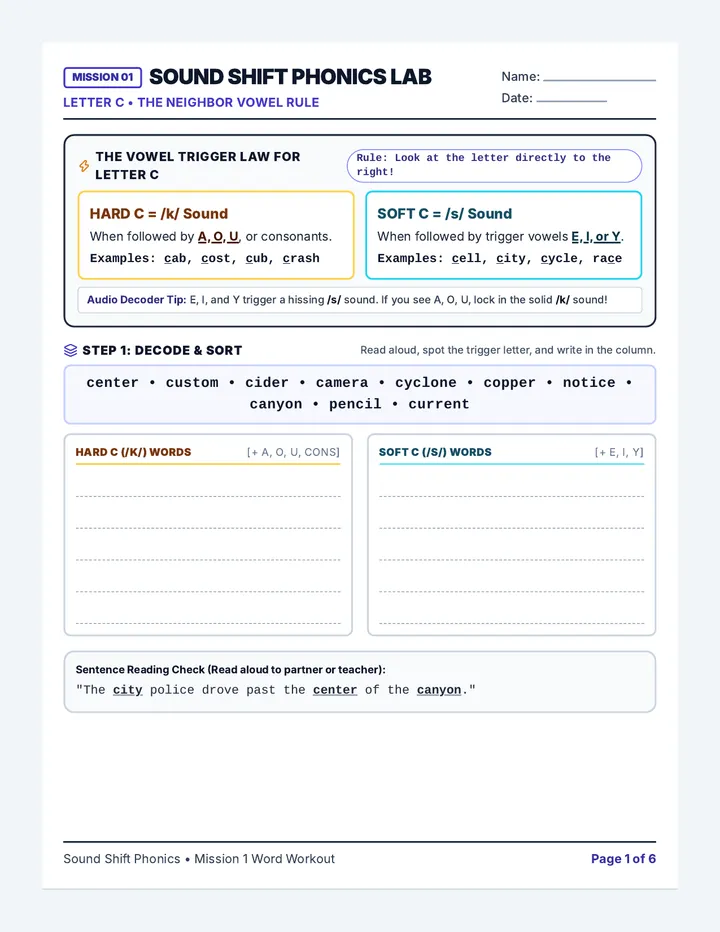
Sound Shift Student Workbook

Phonics Lab Accelerators

A sequential 50-minute phonics and fluency intervention sequence designed for high school students reading at a 3rd to 4th grade level. Each lesson targets high-leverage decoding rules through forensic codebreaking, enlarged print workbooks, and mature, high-interest fluency passages.

D

david.marques

4
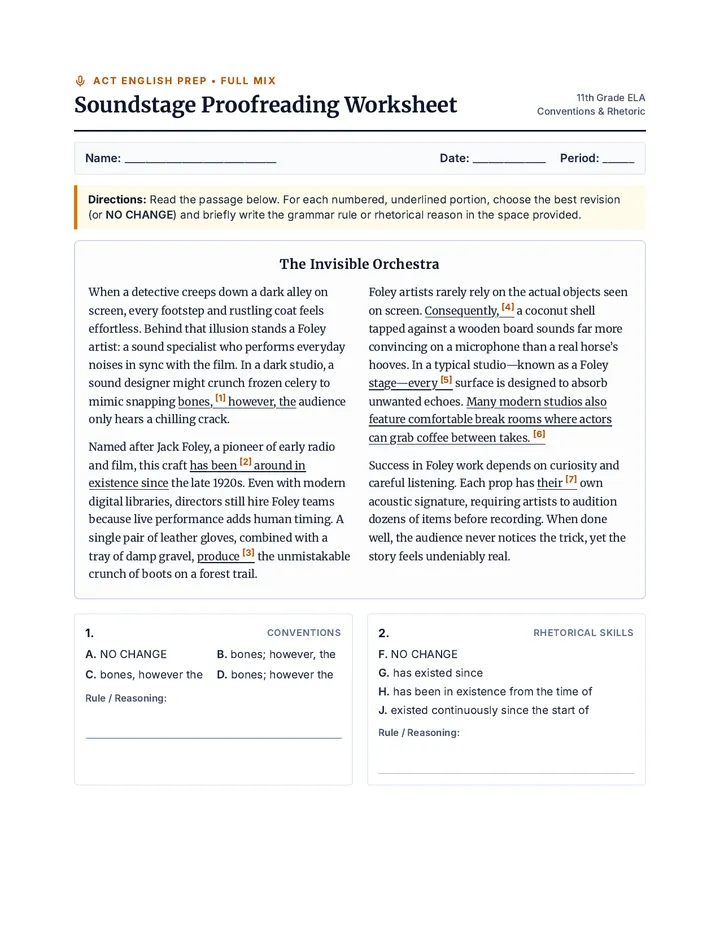
Soundstage Proofreading Worksheet

Soundstage Proofreading Prep

An 11th-grade ACT English prep lesson focused on conventions of standard English, rhetorical skills, and passage-based editing through a Foley sound design passage.

PR

Paula Rein

5
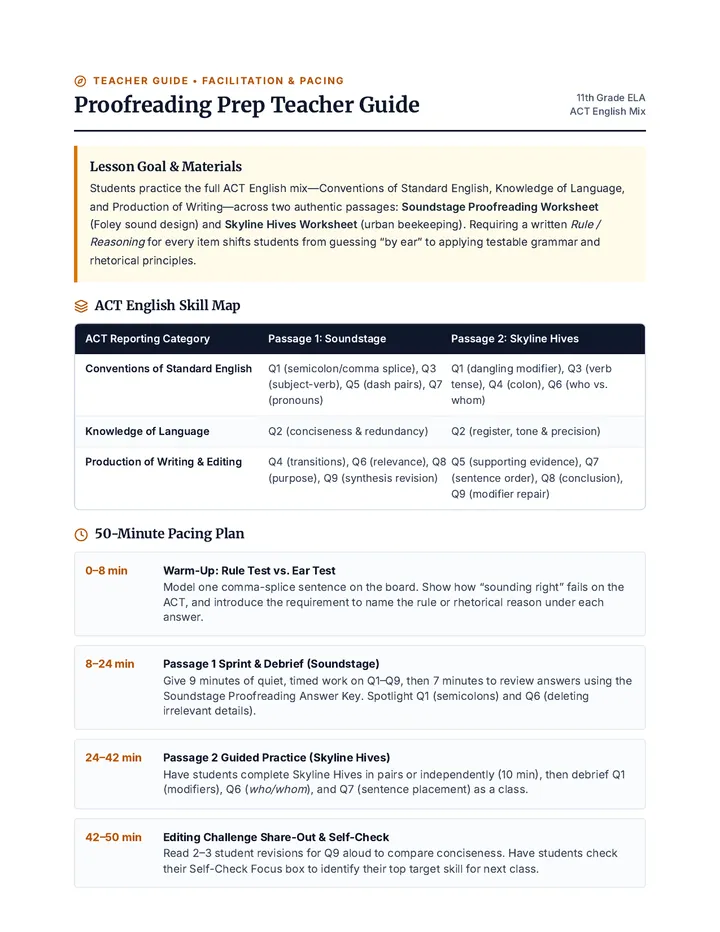
Proofreading Prep Teacher Guide

Proofreading Prep Teacher Guide

A 2-page teacher facilitation guide for the Soundstage Proofreading Prep lesson, featuring an ACT English skill map across both passages, a 50-minute pacing plan, learning objectives and standards alignment, common student misconceptions with quick fixes, and differentiation strategies.

PR

Paula Rein

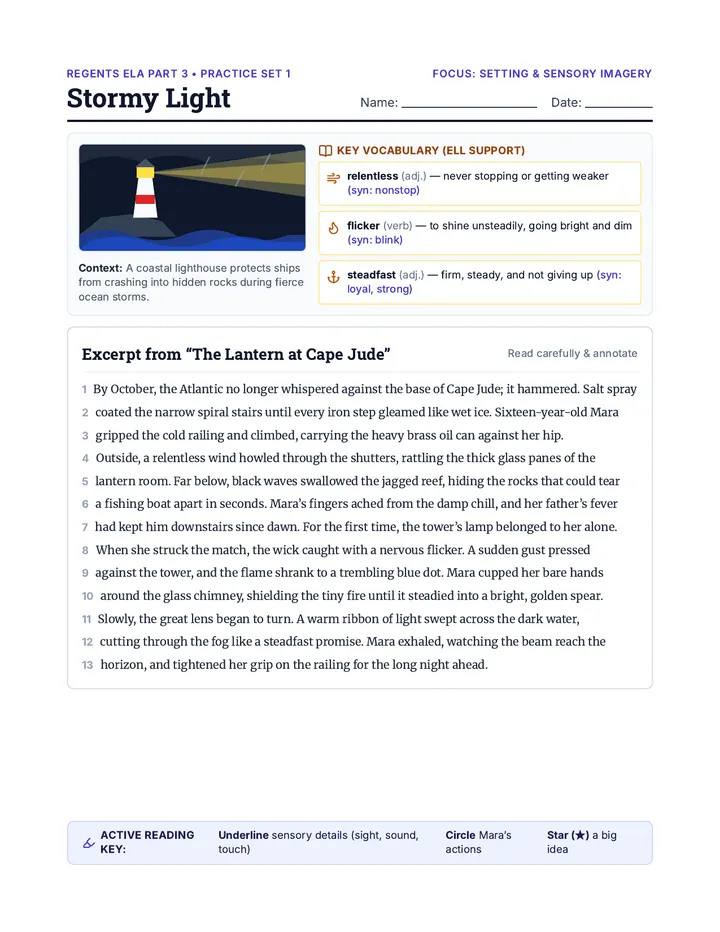
Stormy Light Worksheet

Text Analysis Studio

A three-lesson Regents ELA Part 3 practice sequence focusing on how authors use literary elements to develop central ideas across diverse texts. Includes layered ELL supports (high, moderate, and independent tiers), visual anchors, structured graphic organizers, and print-ready writing spaces.

SO

Siena Oliveri

7
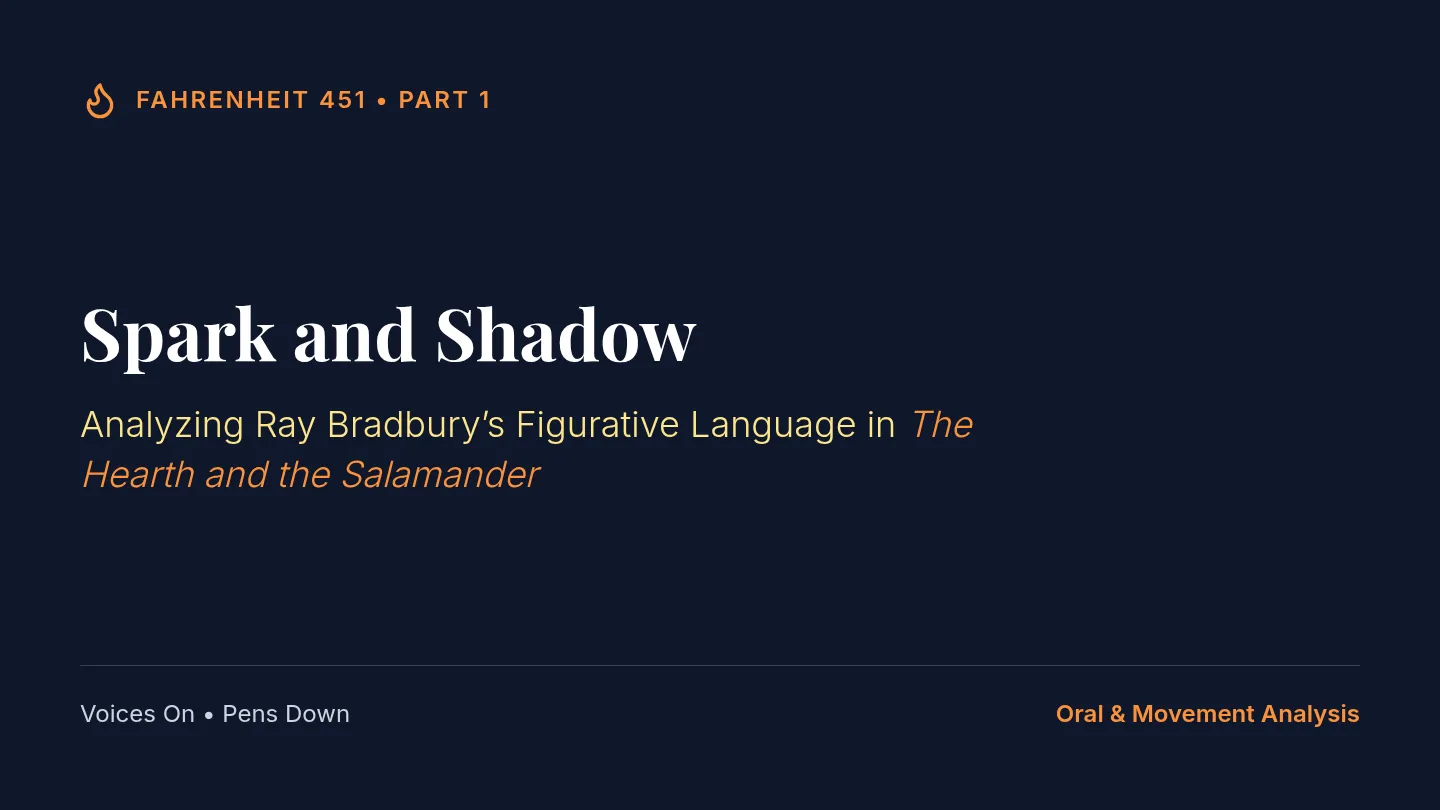
Spark and Shadow Slides

Spark and Shadow

A discussion- and movement-based lesson where students analyze Ray Bradbury's figurative language in Fahrenheit 451, Part 1 ("The Hearth and the Salamander") through oral protocols, tactile sorting, and dramatic interpretation without extended writing.

JR

Jennifer Roth

4
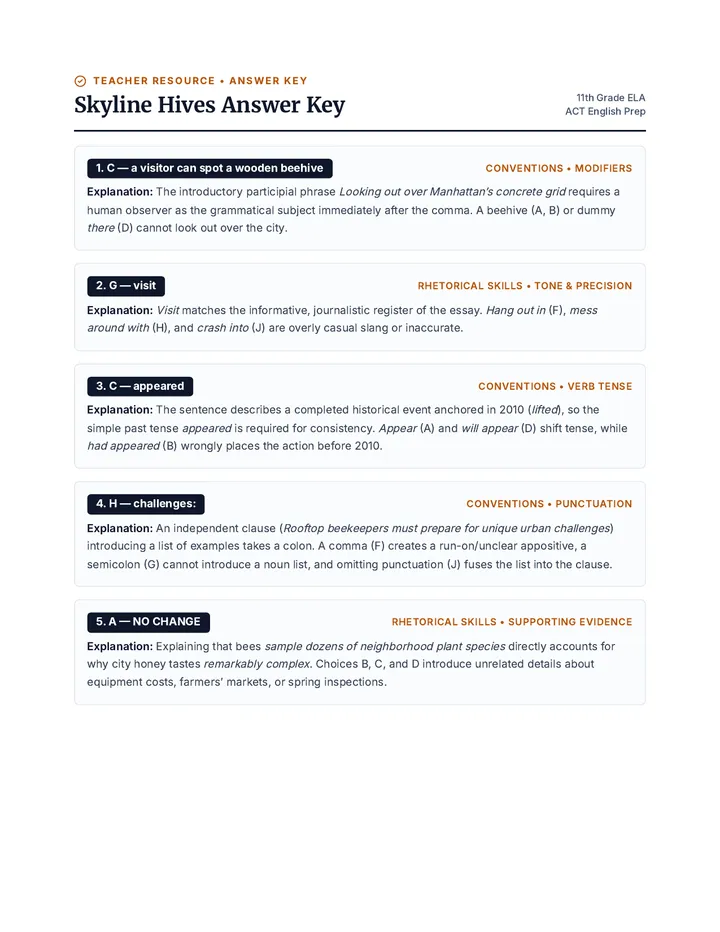
Skyline Hives Answer Key

Skyline Hives Answer Key

A 2-page teacher answer key for the Skyline Hives Worksheet, providing correct answers, skill classifications, concise grammar and rhetorical explanations for Questions 1–8, and sample revisions with scoring criteria for the Question 9 modifier-repair challenge.

PR

Paula Rein

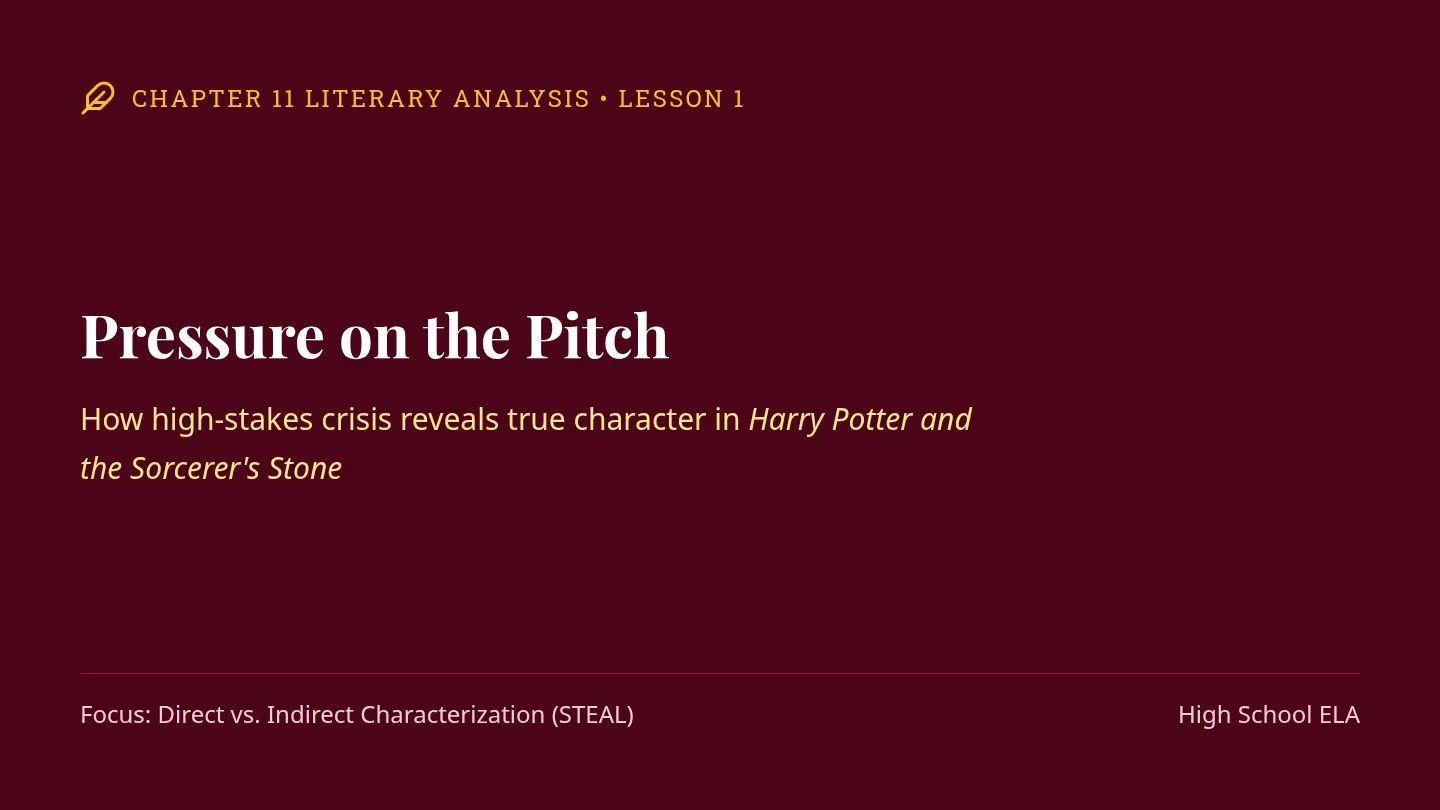
Pressure Pitch Slides

Broomsticks and Allegiances

A three-day high school ELA sequence analyzing character choices, hidden motives, and shifting alliances in Chapter 11 ("Quidditch") of *Harry Potter and the Sorcerer's Stone*. Students progress from tracking indirect characterization under pressure to evaluating confirmation bias and writing a formal character analysis.

ST

Skylar Tackett

11
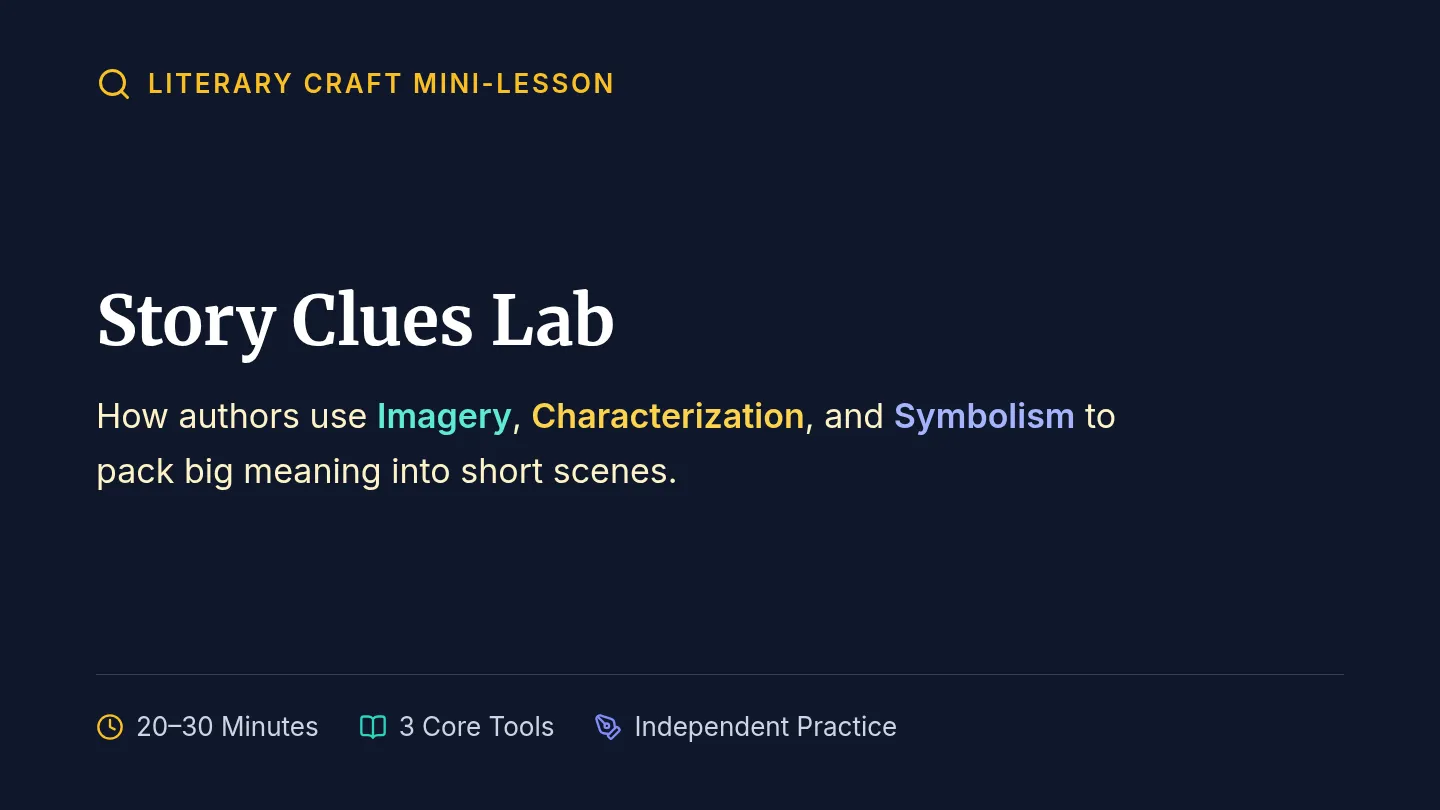
Story Clues Slides

Story Clues Lab

A 20–30 minute independent lesson on imagery, characterization, and symbolism. Students explore concise definitions and mentor examples before practicing identifying and analyzing all three literary devices in short excerpts and a quick-write.

C

christina.grieco

3
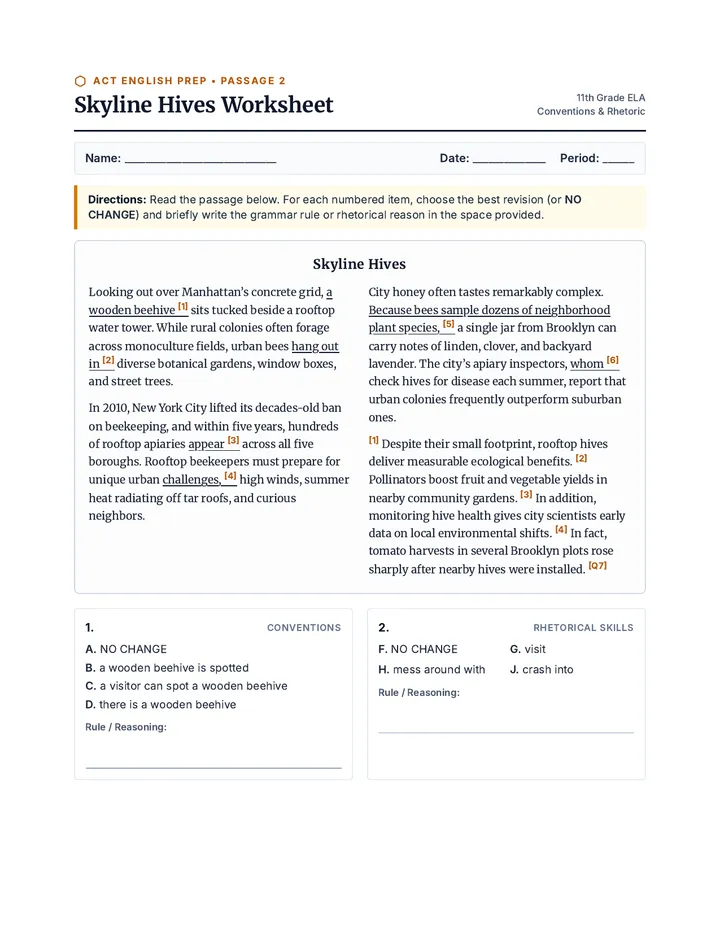
Skyline Hives Worksheet

Skyline Hives Worksheet

A 3-page printable 11th-grade ACT English prep worksheet featuring an original passage on urban rooftop beekeeping with 8 passage-based multiple-choice questions (covering conventions and rhetorical skills), space for student rationales, and a modifier-repair editing challenge.

PR

Paula Rein

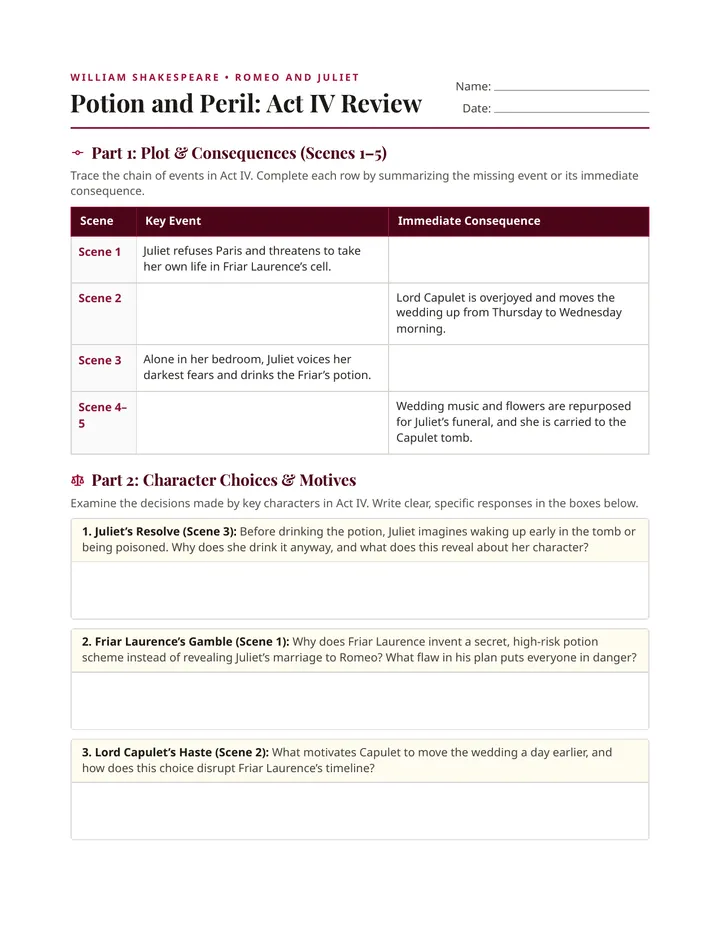
Potion and Peril Worksheet

Act Four Reckoning

A focused review lesson on Act IV of Romeo and Juliet, examining plot consequences, character motives, dramatic irony, and foreshadowing through a student worksheet and teacher answer key.

J

jmitchell

2
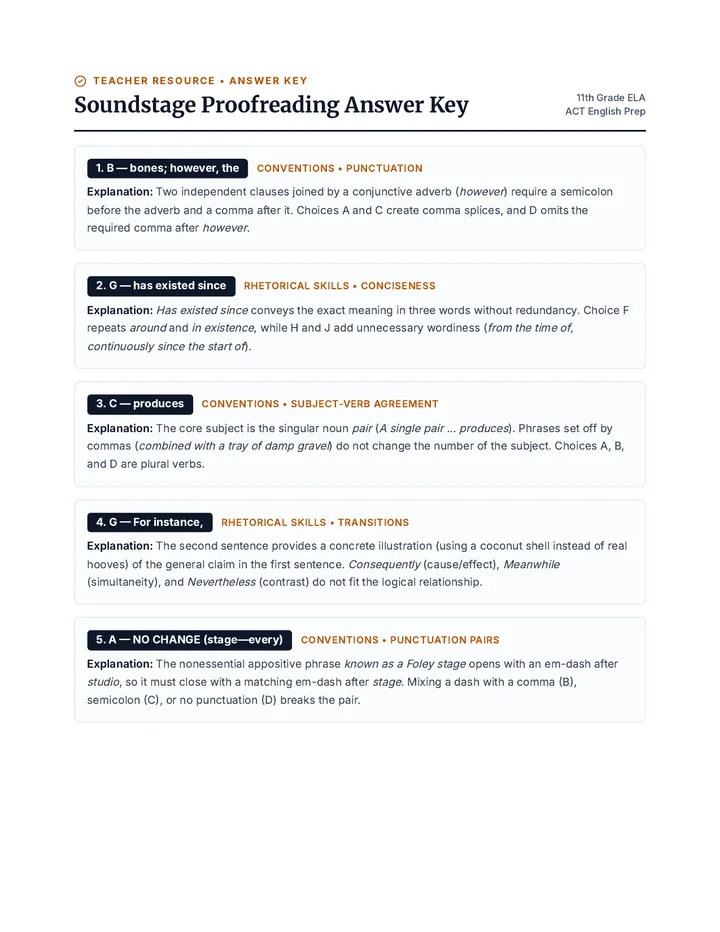
Soundstage Proofreading Answer Key

Soundstage Proofreading Answer Key

A 2-page teacher answer key for the Soundstage Proofreading Worksheet, providing correct answers, skill classifications, concise grammar and rhetorical explanations for Questions 1–8, and sample revisions with scoring criteria for the Question 9 editing challenge.

PR

Paula Rein

Soundstage Proofreading Worksheet

Soundstage Proofreading Worksheet

A 3-page printable 11th-grade ACT English prep worksheet featuring an original passage on Foley sound design with 8 passage-based multiple-choice questions (covering conventions of standard English and rhetorical skills), space for student rationales, and a sentence-revision editing challenge.

PR

Paula Rein