Sentence Structure Japanese Slidesjp en
文の構造
Sentence Structure
文とは何ですか?
文 (Sentence) とは:
主語 (Subject) を理解する
主語:誰が、あるいは何が、動作を行っているか
Who or what is doing the action
-
•
主語とは、その文のテーマとなる名詞または代名詞のことです。
-
•
単一主語 (Simple subject):中心となる名詞や代名詞。
-
•
完全主語 (Complete subject):単一主語に、それを説明する全ての言葉を加えたもの。
例文 (Examples)
Birds sing in the morning.
鳥は朝に歌います。
The studious student aced the test.
勉強家の生徒がテストで満点を取りました。
述語 (Predicate) を理解する
述語:動作や説明
The action or description
-
•
述語は動詞を含み、主語が何をしているか、あるいは主語に何が起きているかを伝えます。
-
•
単一述語 (Simple predicate):中心となる動詞や動詞句。
-
•
完全述語 (Complete predicate):動詞と、その意味を補完する全ての言葉。
例文 (Examples)
Birds sing in the morning.
鳥は朝に歌います。
The studious student aced the test.
勉強家の生徒がテストで満点を取りました。
主語と述語を見つけよう!
Spot the Subject and Predicate!
1
My best friend reads exciting mystery novels.
完全主語 (Complete Subject)
My best friend
単一述語 (Simple Predicate)
reads
2
The tired runner completed the marathon.
完全主語 (Complete Subject)
The tired runner
単一述語 (Simple Predicate)
completed
3
We will watch a movie after school.
完全主語 (Complete Subject)
We
単一述語 (Simple Predicate)
will watch
完全な文
基本の公式
主語 + 述語
= 完全な意味 (Complete Thought)
例:The teacher smiled.
- 主語 (Subject): The teacher
- 述語 (Predicate): smiled
- 意味は通じる?: はい!
文の断片 (Sentence Fragments)
文の断片 (Fragment) とは、主語や述語が欠けていたり、それだけでは意味が不完全なために、完全な文とは言えないもののことです。
| 断片文の例 | 何が欠けているか | 修正後 (完全な文) |
|---|
| Ran to the store quickly. | 主語がない | I ran to the store quickly. |
| The tall, blue building. | 述語がない | The tall, blue building stood proudly. |
| Because the bell rang. | 意味が不完全 | We left because the bell rang. |
独立節 (Independent Clauses)
独立節とは:
- 主語と述語がある
- 完全な意味を表す
- 単独で一つの文として成立する
「全ての完全な文は、独立節です。」
例 (Examples)
• The cat meowed.
• We finished our homework.
• He laughed loudly.
ランオン文 (Run-On Sentences)
問題点
2つ以上の独立節が、適切な句読点なしにつながってしまっている状態を指します。
間違いの例:
"I love to read books I go to the library every weekend to find a new one."
修正方法
1
ピリオドで分ける:
I love to read books. I go to the library...
2
カンマと接続詞を使う:
I love to read books, so I go to the library...
3
セミコロンを使う:
I love to read books**;** I go to the library...
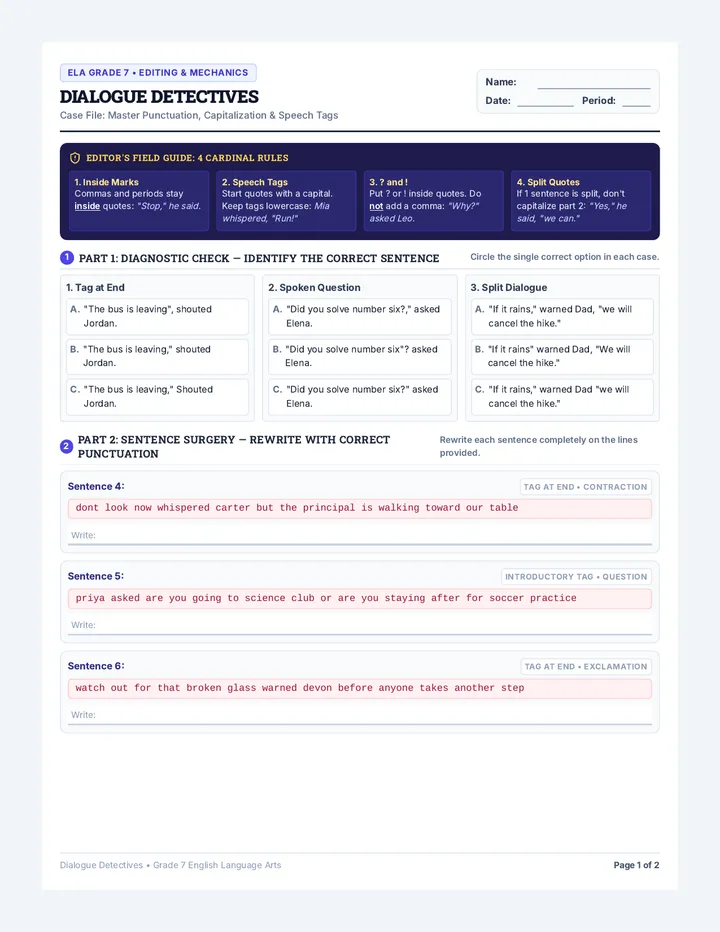
エラーを見つけよう!
CS = 完全な文 F = 断片文 RO = ランオン文
1. Looking forward to the weekend.
F - 主語がない
2. The alarm clock rang loudly, but I still did not wake up right away.
CS
3. My cat loves tuna the dog chases squirrels.
RO - 句読点が必要
4. She learned a new vocabulary word.
CS
5. After the rain stopped.
F - 意味が不完全
書いてみよう!
チャレンジ 1
これを完全な文に直してください:
"Waiting patiently in the long line."
チャレンジ 2
このランオン文を修正してください:
"The concert was sold out we bought tickets anyway."
チャレンジ 3
自分の好きな趣味について完全な文を1つ書いてください。
その後、なぜそれが完全な文だと言えるのか説明してください。
復習しましょう!
-
全ての完全な文には主語と述語が必要です。
-
断片文 (Fragment) は重要な要素が欠けており、完全な意味を成しません。
-
ランオン文 は、2つ以上の完全な文が不適切につながったものです。
-
これらをマスターすることが、明快なコミュニケーションの鍵です!
Exit Ticket
エグジット・チケット(振り返り)
1. 完全な文の2つの必須要素は何ですか?
2. この断片文を完全な文に直してください:Singing a cheerful song.
3. このランオン文を修正してください:I brought my umbrella it is going to rain this afternoon.
Answer Key
エグジット・チケットの答え
1. 解答:
主語と述語 (Subject and Predicate)
2. 解答例:
The bird was singing a cheerful song.
3. 解答例:
I brought my umbrella. It is going to rain this afternoon.