Character Trait Essay Checklist
6th Grade Writing Workshop
Character Trait Essay Checklist
Self-Revising & Editing Guide for a 4-Paragraph Character Analysis
4
Paragraphs
Name:
Date:
Character:
Book / Story:
Trait #1:
Trait #2:
Part 1: Revising Your Ideas & Structure
Read your draft out loud. Check that every paragraph does its job before fixing spelling!
1
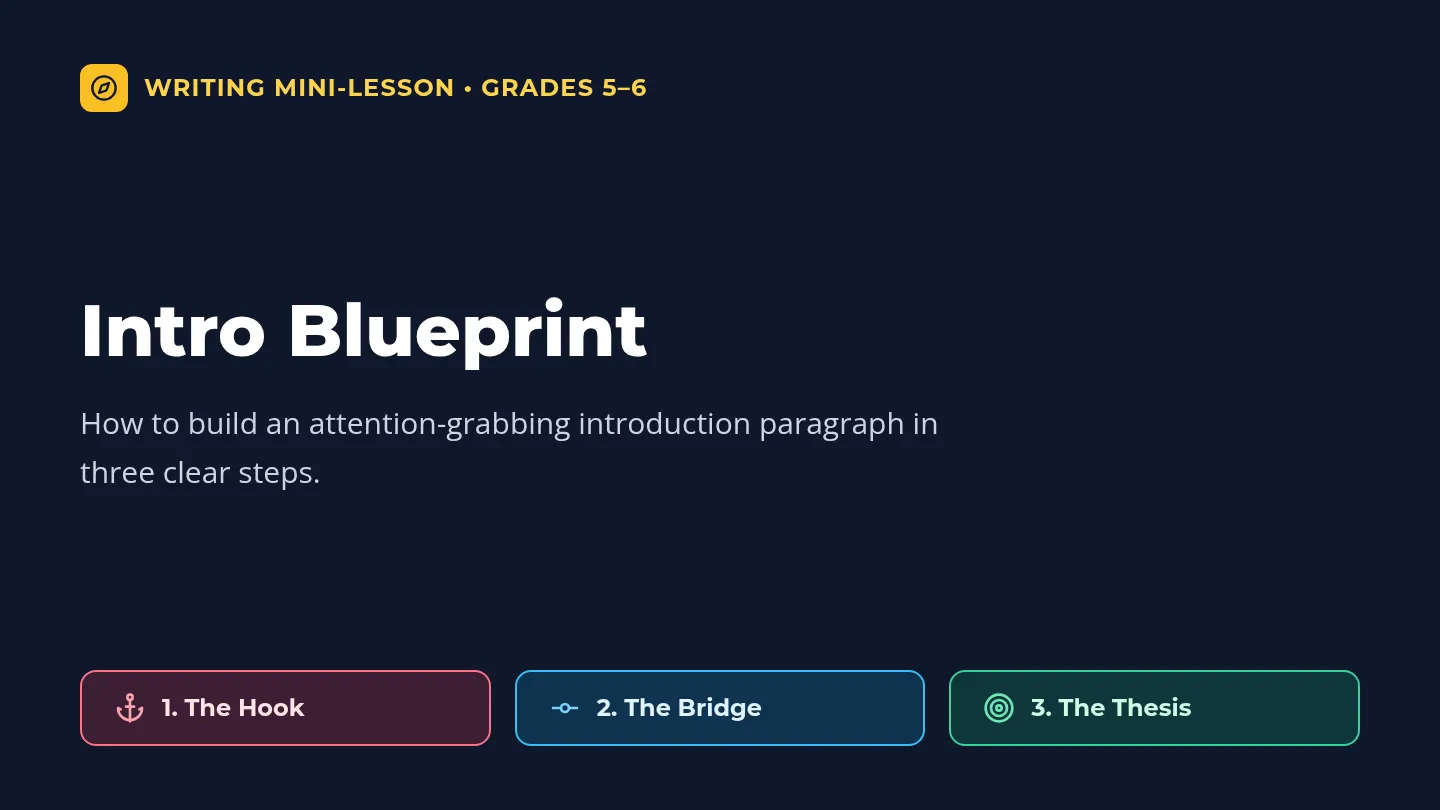
Introduction Paragraph
- I started with an engaging hook that grabs the reader's attention.
- I introduced the title, author, and character with brief background context.
- My thesis statement clearly names the two character traits I will prove.
- I did not include specific quotes or details that belong in my body paragraphs.
2
Body Paragraph 1 (Trait #1)
- My topic sentence clearly introduces Trait #1.
- I included at least one specific text detail or direct quote showing Trait #1.
- I explained in my own words how the evidence proves this trait (not just summary).
- I ended with a closing sentence that wraps up Trait #1.
3
Body Paragraph 2 (Trait #2)
- My topic sentence uses a transition and clearly introduces Trait #2.
- I included at least one specific text detail or direct quote showing Trait #2.
- I explained in my own words how the evidence proves Trait #2.
- My evidence for Trait #2 is different from my evidence for Trait #1.
4
Conclusion Paragraph
- I restated my thesis using fresh words (not copied word-for-word).
- I briefly summarized how both traits shape the character's actions or growth.
- I ended with a final thought or takeaway about why this character matters.
- I did not introduce any brand-new traits or quotes here.
Big-Picture Check: Read your thesis statement and both topic sentences back-to-back. Do your two traits match in the exact same order?
Part 2: Editing & Polishing
Fine-tune your quotes, word choice, grammar, and mechanics before turning in your final draft.
Final Polish
Evidence, Quotes & Literary Style
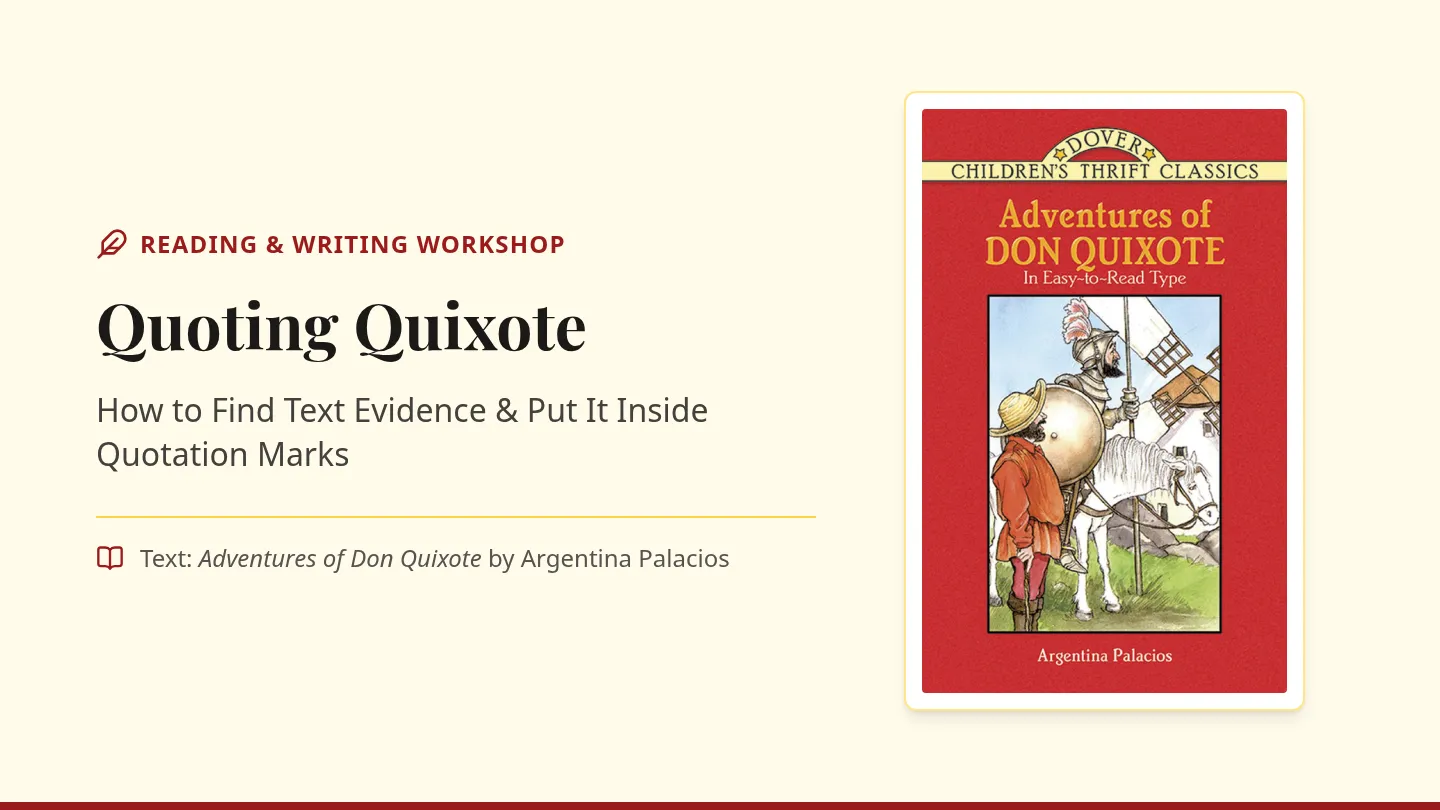
Every direct quote has quotation marks (" ") around the exact words from the text.
I introduced each quote with context (e.g., When Leo stands up, he says, "...").
I wrote in literary present tense (e.g., "Maya shows..." instead of "Maya showed...").
I avoided 1st-person phrases like "I think" or "In this essay I will...".
Word Choice & Sentence Flow
I used transition words to connect ideas (Furthermore, In addition, In contrast, Overall).
I upgraded weak words (good, bad, nice, things) to precise trait vocabulary.
My sentences start in different ways (not every sentence starts with the character's name).
I fixed any run-on sentences or incomplete fragments.
CUPS Mechanics Check
C — Capitalization: Every sentence, character name, author, and book title is capitalized.
U — Usage: Subjects and verbs agree, and pronouns clearly match the character.
P — Punctuation: Every sentence ends with punctuation; commas follow transitions and intro clauses.
S — Spelling: Tricky words and homophones (their/there/they're, its/it's, your/you're) are correct.
Writer's Reflection & Sign-Off
1. One revision I made that made my character analysis stronger:
2. One grammar, quote, or spelling fix I caught while editing:
Writer's Signature:
Ready to Submit!