Lenny.com
Explore
Create
ActivitiesNewMathEnglish Language ArtsScience & EngineeringSocial StudiesGlobal LanguagesHealth & Physical EducationSpecial EducationCounseling & Life SkillsArts & CreativityESL
Lenny.com
Lenny.com
Explore
Create
ActivitiesNewMathEnglish Language ArtsScience & EngineeringSocial StudiesGlobal LanguagesHealth & Physical EducationSpecial EducationCounseling & Life SkillsArts & CreativityESL
Lenny.com
Lenny.com

Solutions

Lenny for EducatorsLenny for SchoolsLenny for Districts

Product

ExploreSign inCreateSupportAbout

Resources

Getting startedMTSS Acceleration Program

Newsletters

School Funding Newsletter

© 2026 Lenny Learning Inc.

TermsPrivacyAccessibility
LinkedInInstagramX
Lenny
English Language ArtsPhonics & Reading FoundationsLetter IdentificationLearn Letters A-ZLowercase and Uppercase LettersConsonants and VowelsLetter-Sound AssociationsLetter-Sound Associations: LowercaseLetter-Sound Associations: UppercaseBeginning and Ending SoundsRhymingBlending And SegmentingShort VowelsShort Vowel SoundsConsonant BlendsConsonant DigraphsBlends, Digraphs, and TrigraphsDigraphs, Blends, and Silent LettersLong Vowel SoundsLong Vowel PatternsShort and Long VowelsShort and Long Vowel PatternsSilent EVowel SoundsVowel TeamsR-Controlled VowelsDiphthongs: Oi, Oy, Ou, OwVariant VowelsVariant, Diphthong, And R Vowel PatternsSoft G And CSight WordsIrregular WordsWord RecognitionSyllablesSyllable TypesTwo-Syllable WordsMultisyllabic WordsPhoneme ManipulationDecodable TextsVocabularyAction WordsQuestion WordsNouns and AdjectivesClassify WordsCompound WordsSynonyms and AntonymsHomophonesHomophones and HomonymsShades of MeaningContext CluesPrefixes and SuffixesGreek and Latin RootsAnalogiesIdioms and AdagesForeign Words and ExpressionsWord Choice and UsageReference SkillsReading ComprehensionRead-Along Literary TextsRead-Along Informational TextsReality vs. FictionStory ElementsCharacterSequenceMain IdeaCause And EffectCompare And ContrastReading StrategiesText StructureAuthor's PurposeAuthor's Purpose And ToneAuthor's PerspectivePoint Of ViewThemeInference And ThemeInference And AnalysisPoetry ElementsLiterary DevicesAnalyzing LiteratureAnalyzing Informational TextsComparing TextsAudience, Purpose, And ToneBusiness DocumentsNovel StudyNonfiction Book StudyGrammar & MechanicsSentencesNounsVerbsAdjectivesPronounsCapitalizationPunctuationContractionsConjunctionsPrepositionsArticlesAdjectives And AdverbsVerb TypesVerb TensePronouns And AntecedentsPronoun TypesSubject-Verb AgreementDirect And Indirect ObjectsSentences, Fragments, And Run-OnsPhrases And ClausesCommasSemicolons, Colons, And CommasDashes, Hyphens, And EllipsesSpellingAbbreviationsFormattingVerb Tense And MoodMisplaced ModifiersWritingDescriptive DetailsCreative WritingOpinion WritingTopic SentencesOrganizing WritingLinking WordsSentence VarietyIntroductions And ConclusionsPersuasive And Opinion WritingExpository WritingPersuasive StrategiesDeveloping And Supporting ArgumentsTopic Sentences And Thesis StatementsSummarizingResearch SkillsEditing And RevisingActive And Passive Voice=Writing Clearly And ConciselyDebate & Public SpeakingPublic Speaking BasicsPersuasive TechniquesClaims and EvidenceTypes of ArgumentsReasoning TypesLogical FallaciesTopic ResearchOrganizing EvidenceDebate Speech OrganizationAttacking and Defending ArgumentsClash and EngagementImpact CalculusQuestioning and Cross-ExaminationCritical ThinkingInformal LogicFormal LogicInductive Reasoning

Castle Word Quest Slides

A 7-slide vocabulary presentation for Chapters 7 and 8 of *The Knight at Dawn*, featuring the words *winding*, *precipice*, *flailed*, and *afloat*. Includes custom storybook-style illustrations on the title and word slides alongside kid-friendly definitions, context sentences, movement or discussion prompts, and a class review.

MHMartha Hanson

You might also like

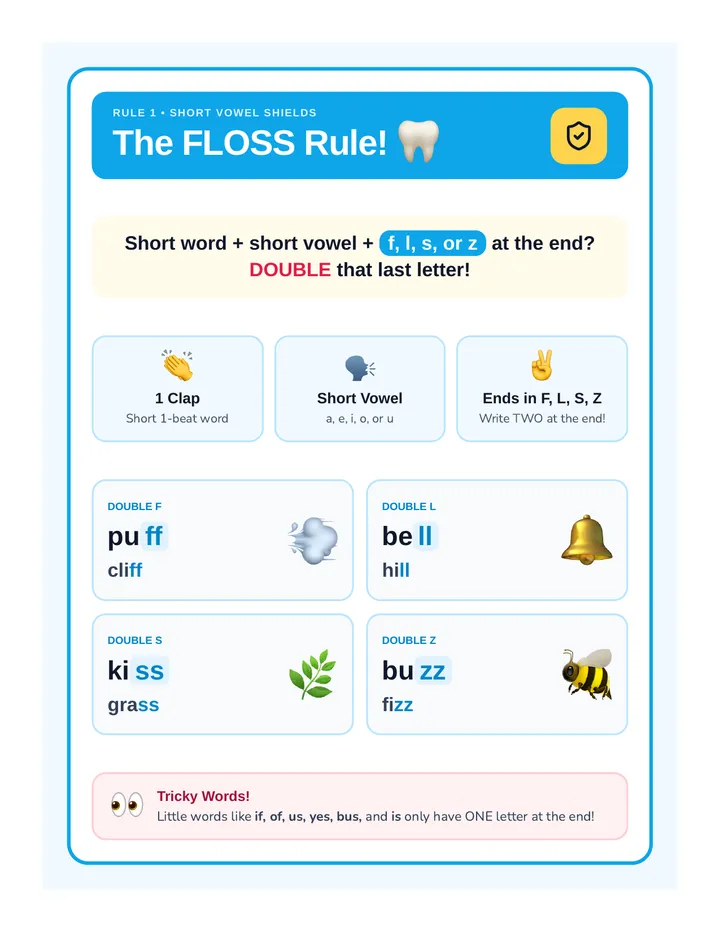
FLOSS Rule Anchor Chart

Spelling Rule Mastery

A developmental collection of 12 single-page spelling rule anchor charts organized from foundational short-vowel patterns to advanced suffix and word-building rules. Each chart provides a kid-friendly mantra, visual steps, color-coded word examples, and a quick memory tip.

PR

Pam Roderick

17
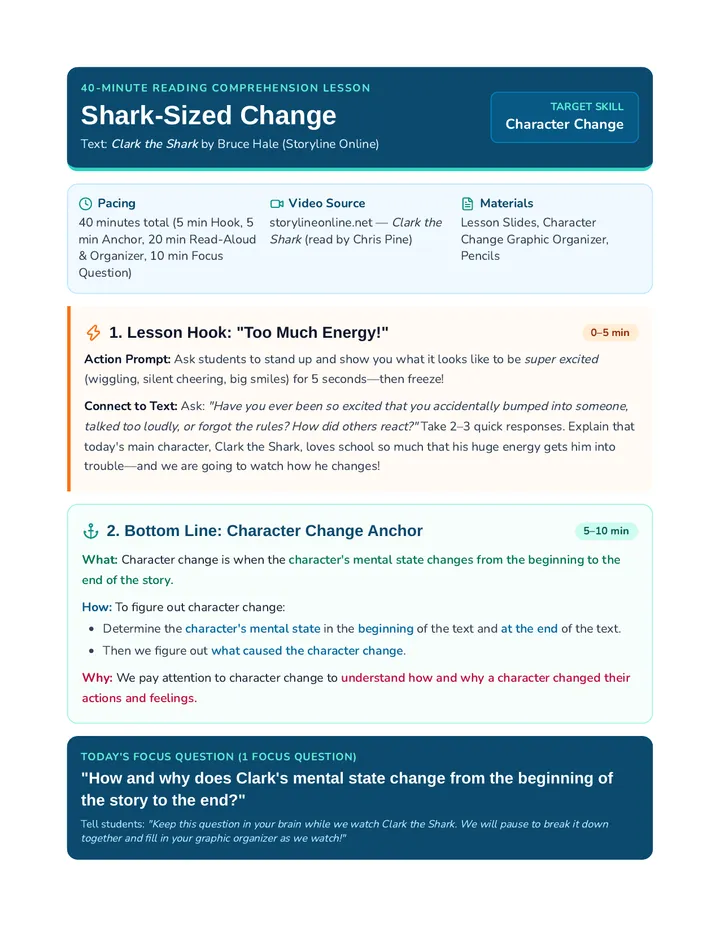
Shark-Sized Change Teacher Guide

Shark-Sized Change

A 40-minute reading comprehension lesson using Clark the Shark by Bruce Hale on Storyline Online to teach character change. Students explore how and why a character's mental state changes from the beginning to the end of a story using a hook, video stopping-point questions, and a character change graphic organizer.

DB

Daimyn Badzic

4
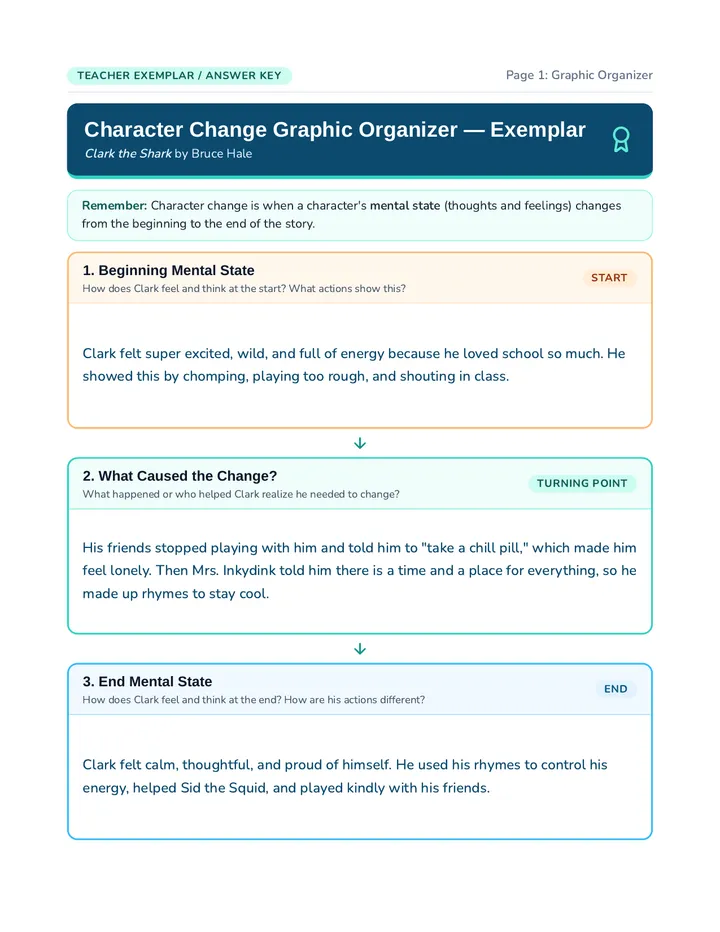
Character Change Exemplar

Character Change Exemplar

A 2-page teacher exemplar and answer key matching the Character Change Graphic Organizer for Clark the Shark. Page 1 models completed responses for Clark's beginning mental state, what caused the change, and his end mental state; Page 2 models a complete written response to the focus question using the student sentence starters.

DB

Daimyn Badzic

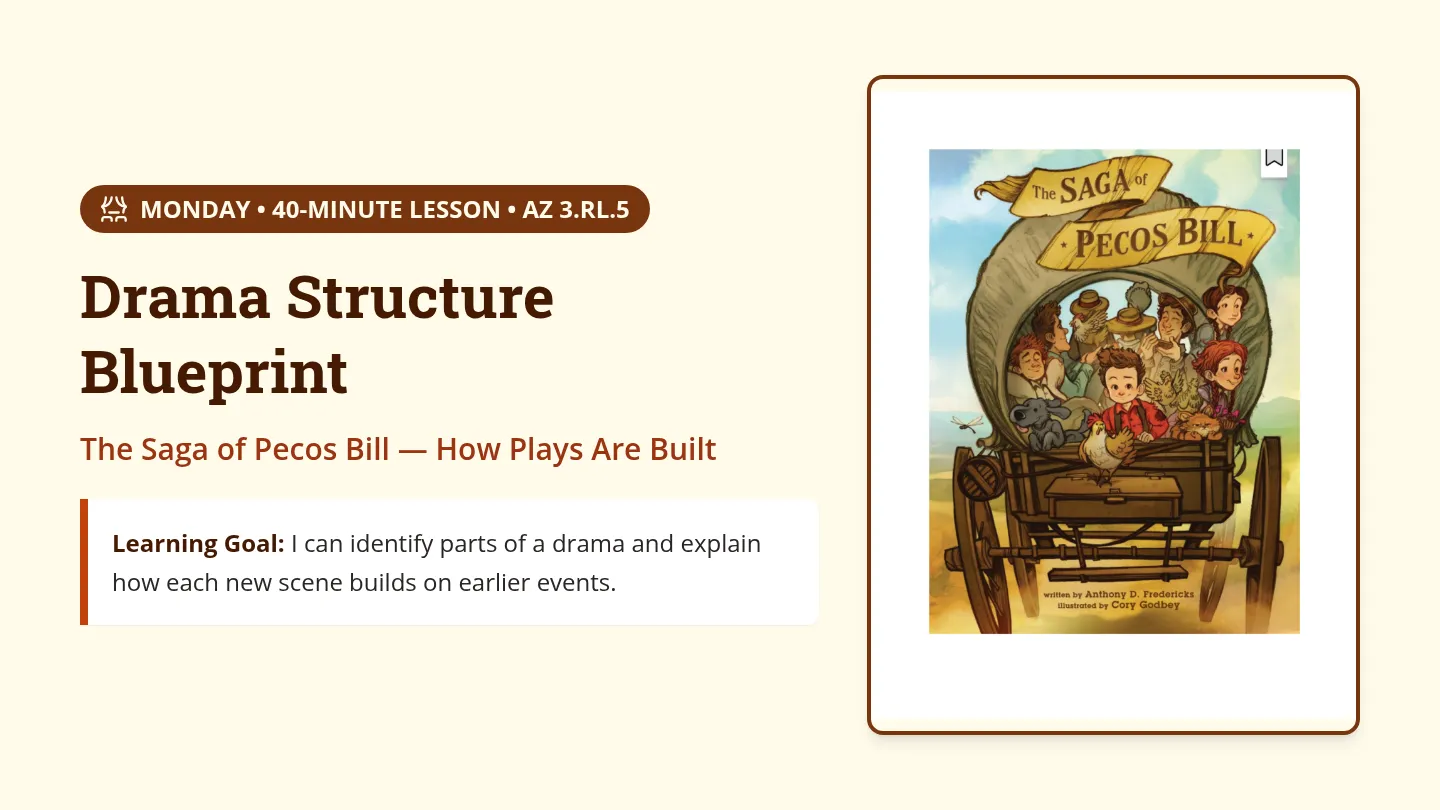
Drama Structure Slides

Wild West Saga

A four-day (Monday–Thursday) 3rd-grade ELA sequence for HMH Into Reading's *The Saga of Pecos Bill*, aligned to Arizona standards 3.RL.2, 3.RL.4, and 3.RL.5. Each 40-minute lesson pairs a teacher-directed slideshow with an I Do, We Do, You Do higher-order thinking worksheet and teacher guide.

SM

Samantha McBath

12
Fable Character Response Worksheet

Lion and Mouse Interactions

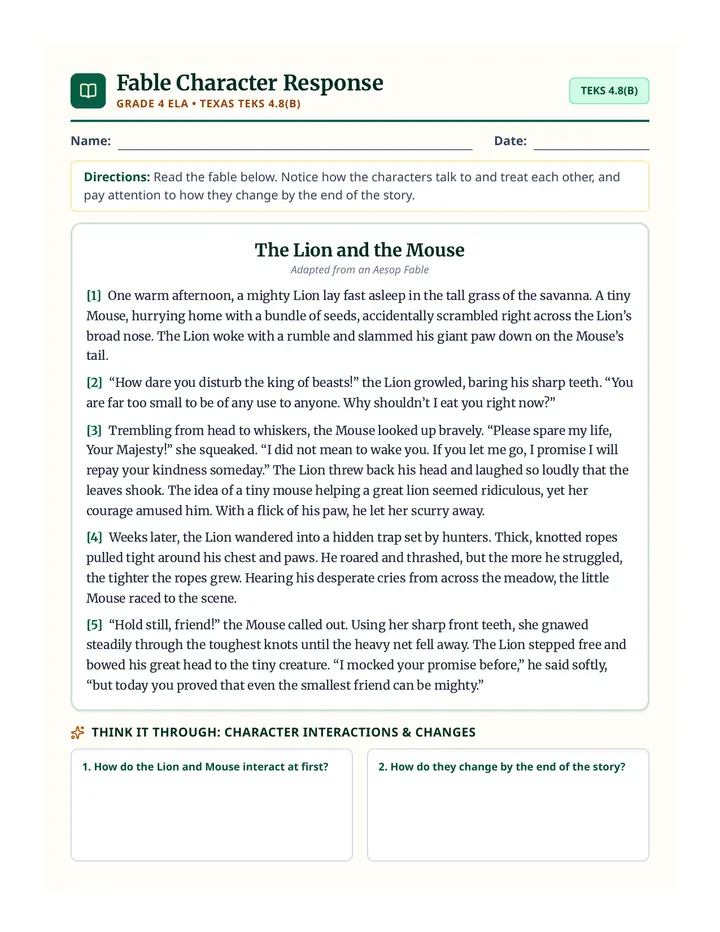
A 4th-grade Texas ELA lesson aligned to TEKS 4.8(B) where students analyze how character interactions in *The Lion and the Mouse* reveal feelings and drive character change through a Short Constructed Response.

G

guerrac

2
Character Change Graphic Organizer

Character Change Graphic Organizer

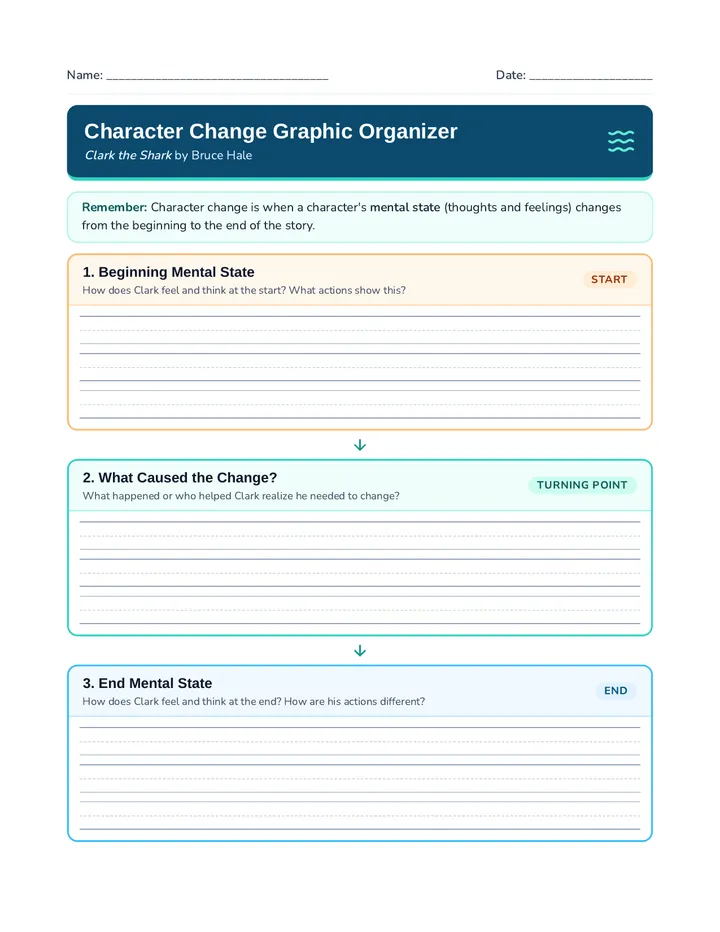
A 2-page print-ready student graphic organizer and focus question response sheet for Clark the Shark. Page 1 guides students to track Clark's beginning mental state, what caused the change, and his end mental state using primary-ruled handwriting lines; Page 2 provides primary-ruled lines (headline, midline, baseline) with sentence starters to answer the focus question and a self-check rubric.

DB

Daimyn Badzic

Day 1 Elephant Dilemma Lesson Plan

Wild Hearts Reading

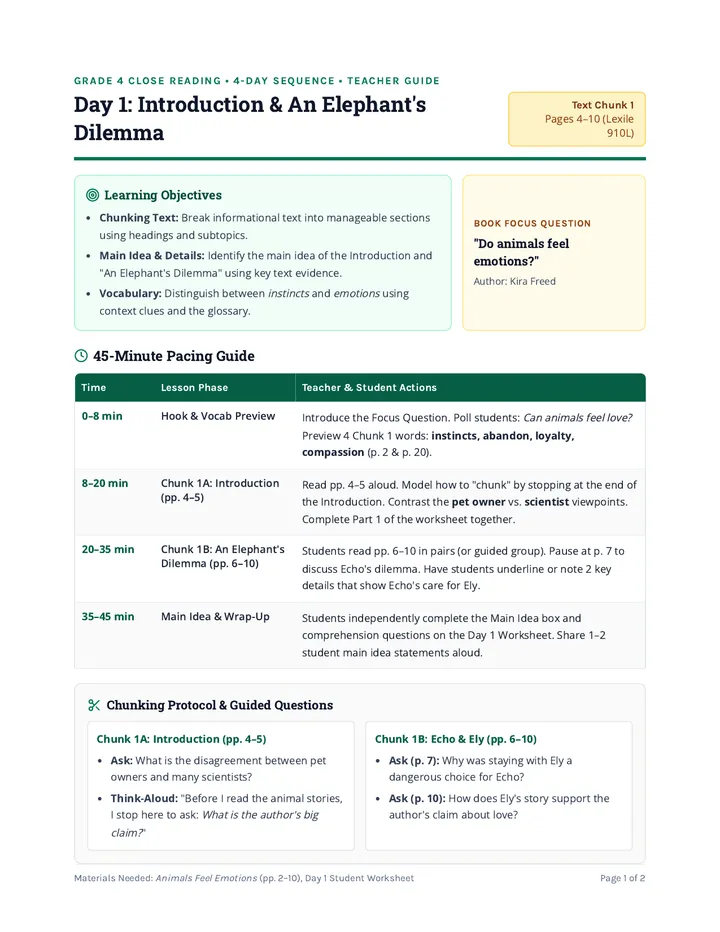
A 4-day Grade 4 close reading sequence built around Kira Freed's nonfiction text *Animals Feel Emotions* (Lexile 910L). Students chunk the text into manageable sections, identify main ideas and supporting evidence, answer text-dependent comprehension questions, and complete a 10-question multiple-choice check for overall understanding.

F

fsaccente

8
Pedestal Persuasion Prompt

Stand For Liberty

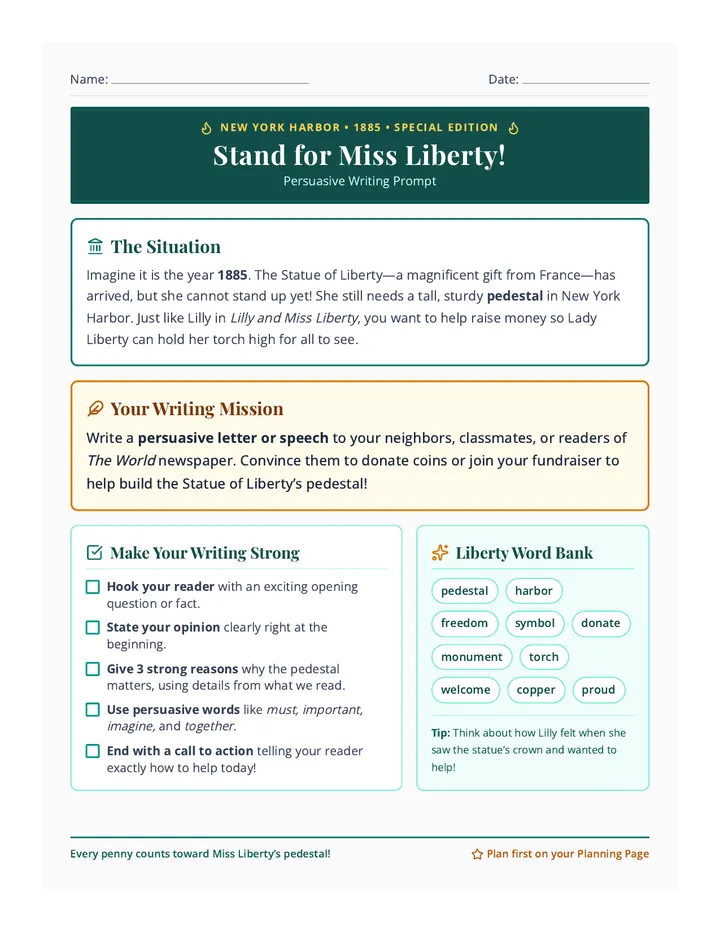
A persuasive writing lesson connected to the Statue of Liberty and *Lilly and Miss Liberty*, guiding students to convince others to support building Miss Liberty's pedestal. Includes a themed writing prompt and a structured planning page.

CJ

Courtney Jewell

2
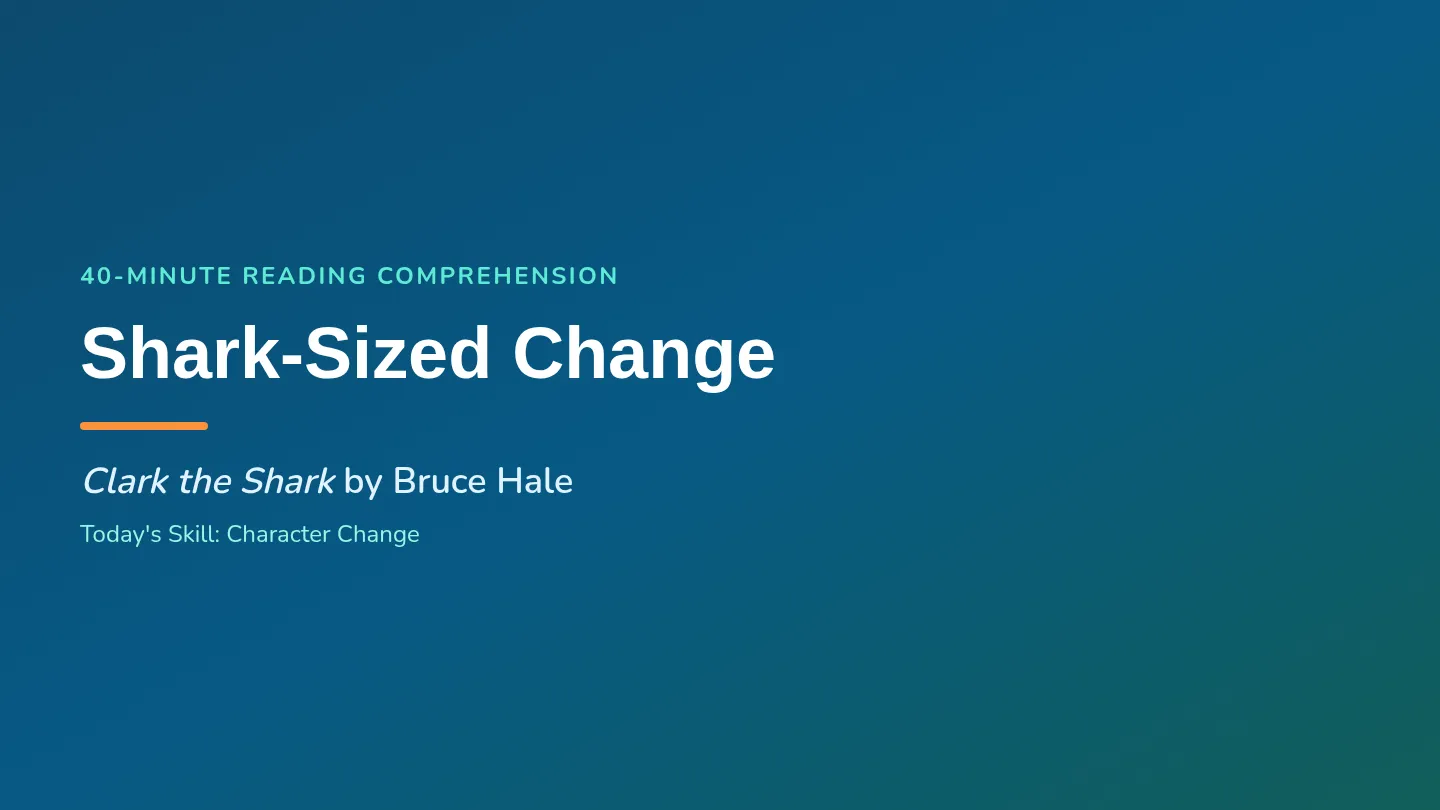
Shark-Sized Change Slides

Shark-Sized Change Slides

A 16:9 classroom slide deck for the 40-minute Clark the Shark reading comprehension lesson. Covers the lesson hook, the What/How/Why character change anchor, the focus question, four video stopping-point break-it-down questions, and graphic organizer directions.

DB

Daimyn Badzic

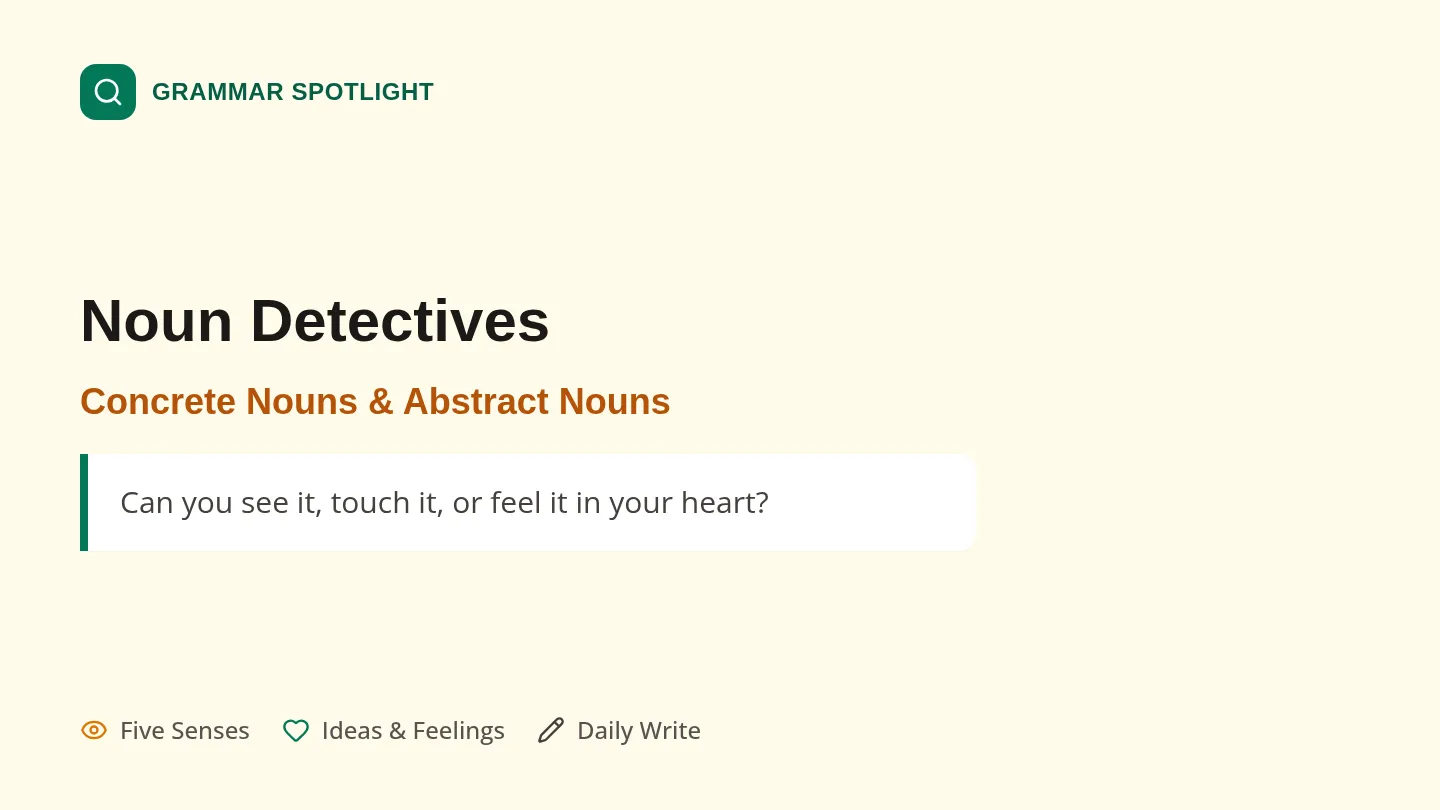
Senses and Feelings Slides

Abstract Noun Adventures

A multi-day ELA grammar sequence helping students distinguish concrete nouns from abstract nouns through the five senses, guided sentence analysis, and daily writing inspired by All the Places to Love.

B

Bhoovaragavaswamym

4
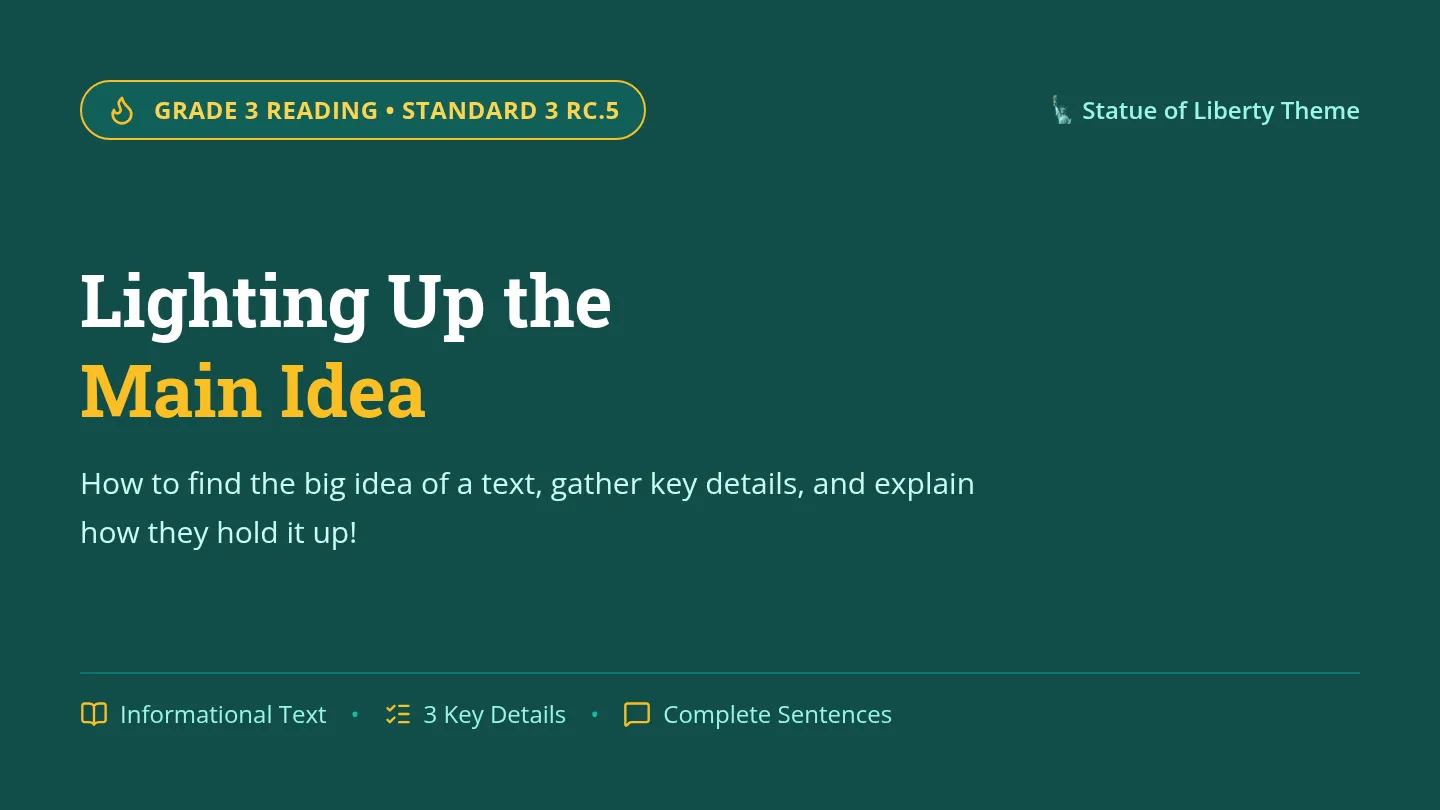
Lady Liberty Slides

Lady Liberty Main Idea

A 3rd-grade reading comprehension lesson (Standard 3 RC.5) using Statue of Liberty informational texts to teach identifying the main idea, listing three supporting key details, and explaining how those details support the main idea in complete sentences.

CJ

Courtney Jewell

4
Shark-Sized Change Teacher Guide

Shark-Sized Change Teacher Guide

A 40-minute teacher guide for teaching character change using Clark the Shark by Bruce Hale on Storyline Online. Includes a lesson hook, the What/How/Why character change anchor, one focus question, and four video stopping-point break-it-down questions with sample responses for completing the graphic organizer during reading.

DB

Daimyn Badzic