Axolotl Slides WILD WONDERS
Decoding Informational Texts
Main Idea Text Features Author's Purpose
Meet the "Smiling Monster"
It lives underwater, it has pink feathery gills, and it can regrow its own limbs.
What is it? 🦎
"Informational texts give us the keys to unlock the mysteries of the real world."
🧬
The Structure of Truth
Main Idea
The "Big Umbrella." It tells us what the whole text is mostly about.
Key Details
The "Legs." They support the main idea with facts, examples, and statistics.
Specific facts
Numbers/Dates
Descriptions
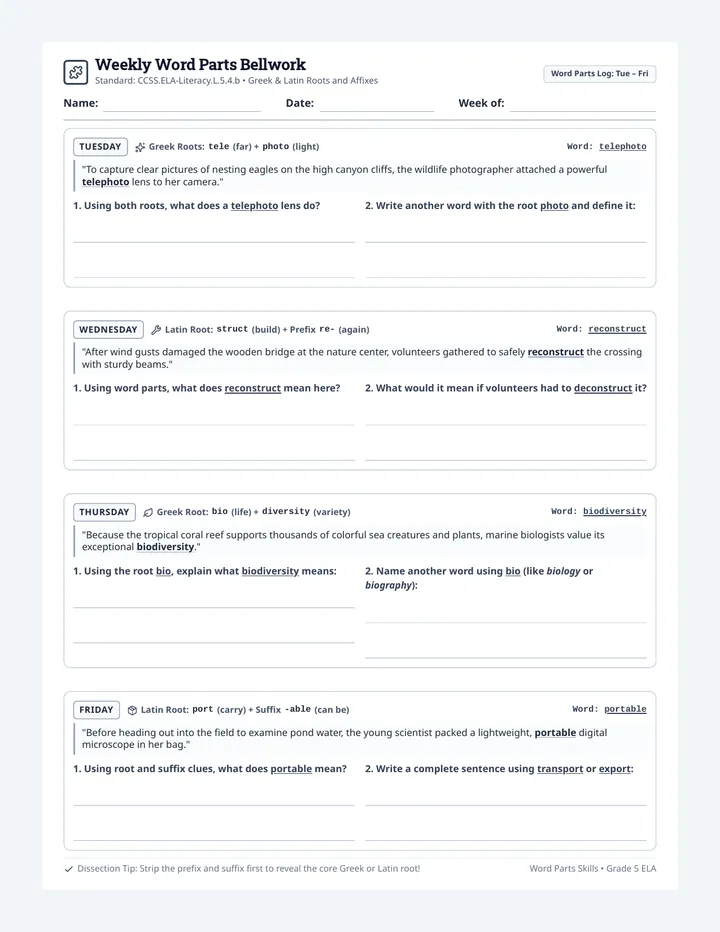
Why did they write it?
P
Persuade
Trying to get you to do something or believe something.
I
Inform
Giving you facts and teaching you about a topic. (Our focus today!)
E
Entertain
Telling a story or providing enjoyment.
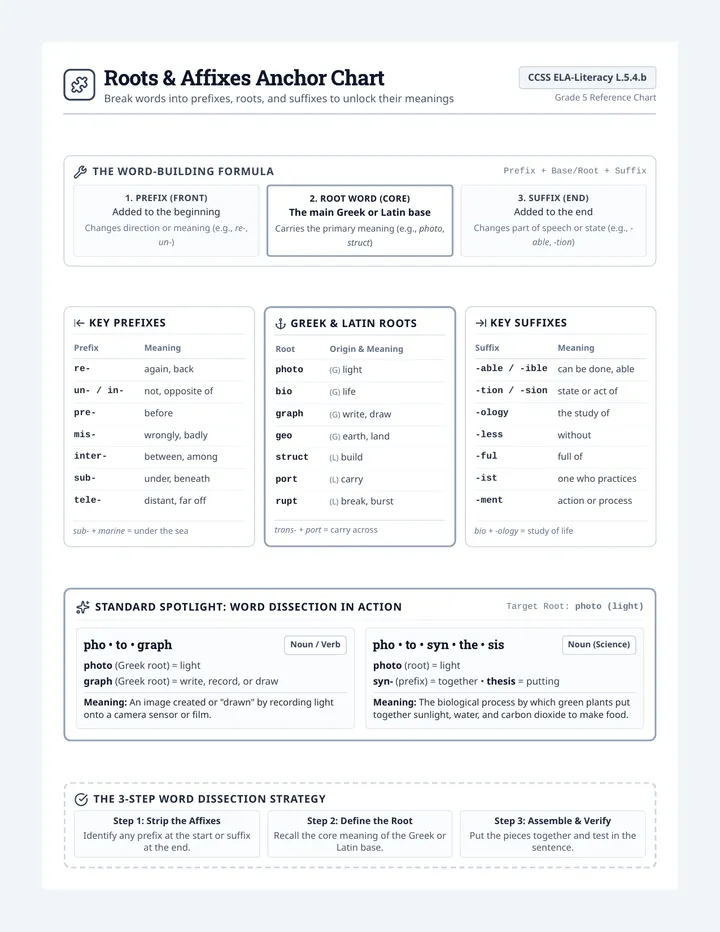
Navigation Tools
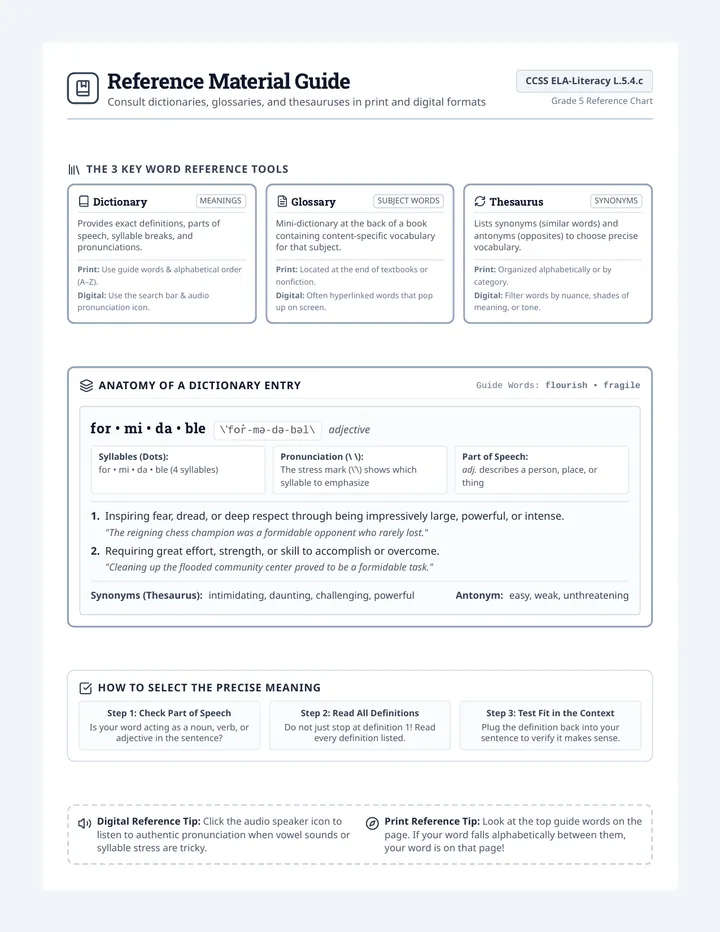
Informational texts use Text Features to help readers find info quickly.
Headings
Preview what the next section is about.
Captions
Explain what is happening in a photo.
Bold Words
Signal important vocabulary terms.
Diagrams
Labeled pictures that show how things work.
Glosssary
Mini-dictionary for the specific text.
Sidebars
Extra fun facts in a separate box.
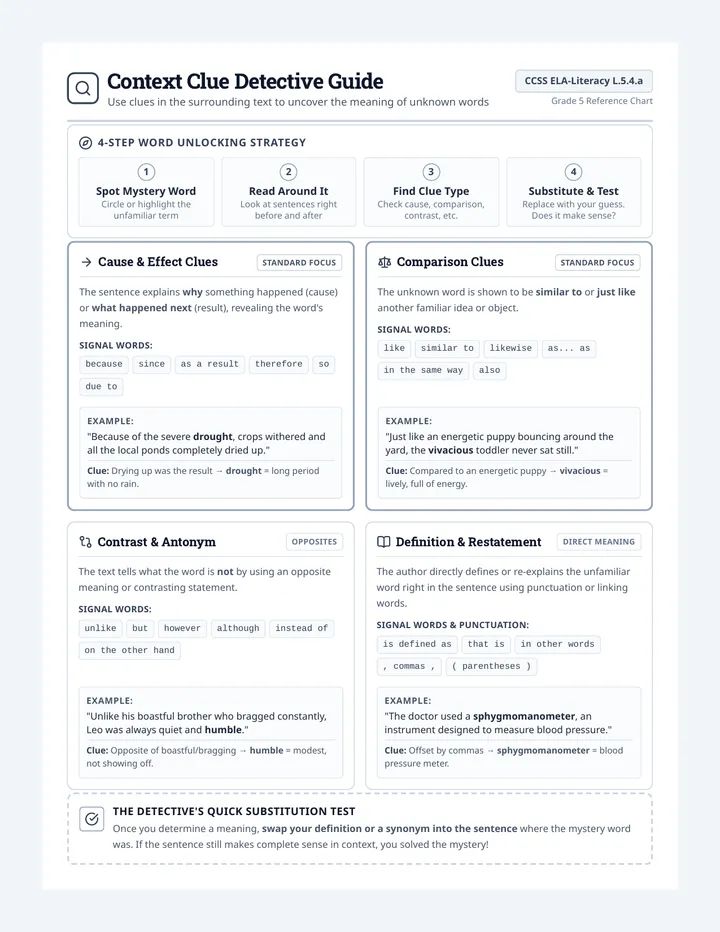
The "Detective" Strategy
1
Preview: Check titles, headings, and images first.
2
Annotate: Underline the "What" and the "So What" in each paragraph.
3
Evidence: For every answer, go back and find the sentence that proves it.
4
Eliminate: Cross out the "Almost" and "Distractor" answers.
Your Turn!
Open your Smiling Monster Worksheet.
Smiling Monster Worksheet Smiling Monster Practice
Wild Wonders Series: Informational Text Review
Name:
Date:
Reading Passage
Label 1 text feature here
Jot Main Idea of P1
Jot Main Idea of P2
Axolotls: The Peter Pan of the Pond
🦎
Figure 1: The axolotl is known for its "smile" and feathery pink external gills that allow it to breathe underwater.
Imagine a creature that looks like a smiling baby dragon with pink, feathery branches coming out of its head. This unusual animal is the axolotl (pronounced ACK-suh-lah-tul). Unlike most salamanders that eventually grow up and move onto land, the axolotl lives its entire life underwater. It is often called a "Mexican Walking Fish," but it is actually an amphibian.
Superpower Survivors
Scientists are fascinated by the axolotl because of its incredible ability to heal. If an axolotl loses a limb, it doesn't just grow a scar. Instead, it can completely regrow its arm, leg, tail, or even parts of its heart and brain! This ability to regenerate makes them some of the most resilient creatures on the planet. Doctors study them to see if they can help humans heal faster.
A Disappearing Home
Today, axolotls are extremely rare in the wild. They are native only to a single lake system near Mexico City. Because of pollution and habitat loss, these "smiling monsters" are now an endangered species. Conservationists are working hard to clean the water and create safe spaces so that axolotls can thrive once again in their natural home.
Practice Questions
1 What is the main idea of the section titled "Superpower Survivors"?
A. Axolotls are amphibians that live in Mexico City.
B. Axolotls have a special ability to regrow parts of their bodies.
C. Doctors are trying to find ways to make people smile like axolotls.
D. The axolotl is more resilient than a common salamander.
2 The author includes the bold words regenerate and endangered most likely to —
A. show that these words are fun to say out loud
B. indicate that these words can be found in a glossary
C. highlight important vocabulary terms for the reader
D. list the different parts of an axolotl's body
3 What is the author’s primary purpose for writing this selection?
A. To persuade people to adopt an axolotl as a pet
B. To share a fictional story about a smiling dragon
C. To teach the reader about the traits and habitat of axolotls
D. To explain why Mexico City is a great place for science
4 Constructed Response: Explain how the text feature "Figure 1" helps the reader understand the passage. Use evidence from the text to support your answer.
Teacher Decoders Guide Wild Wonders
Informational Text Review: Teacher's Decoder
Grades 3-5
45-Minute Lesson
Learning Objectives
Students will identify the main idea and supporting details of a passage.
Students will explain how text features (headings, captions, bold words) assist the reader.
Students will determine the author's primary purpose (PIE).
TEKS Alignment
3.9(D)(i), 4.9(D)(i), 5.9(D)(i)
Recognize characteristics and structures of informational text, including central idea with supporting evidence.
3.10(A), 4.10(A), 5.10(A)
Explain the author's purpose and message within a text.
Pacing Guide
Time Phase Action & Key Questions 5 min Hook / Engage Slides 1-2: Introduce the "Smiling Monster." Ask: Why do you think scientists study unusual animals? 10 min Mini-Lesson Slides 3-6: Review PIE (Persuade, Inform, Entertain), Main Idea Umbrella, and Text Features. Quick check: Give an example of an informational text you've read recently. 15 min Guided Reading Distribute worksheet. Read paragraph 1 together. Guided Annotation: Box "amphibian," circle the title, and label the caption in the margin. 10 min Independent Practice Students complete paragraphs 2-3 and the 4 practice questions independently. Monitor for the "Detective" strategy. 5 min Exit & Review Review question #1 (Main Idea) as a class. Have one student share their SCR for question #4.
Answer Key & Rationales
1. Answer: B
Rationale: Paragraph 2 focuses entirely on "regeneration" (growing back arms, legs, tail). Option A is found in Paragraph 1; C is a distractor; D is a minor detail.
2. Answer: C
Rationale: Bold words in informational text signal domain-specific vocabulary or key concepts for the reader to pay attention to.
3. Answer: C
Rationale: The text's primary goal is to inform (PIE) the reader about axolotls' physical traits, abilities, and status in the wild.
4. SCR Sample Answer
Response: Figure 1 helps the reader visualize what the axolotl looks like. In the text, it says they have "pink, feathery branches" and "smile," and the image and caption confirm this so the reader can understand the description better.