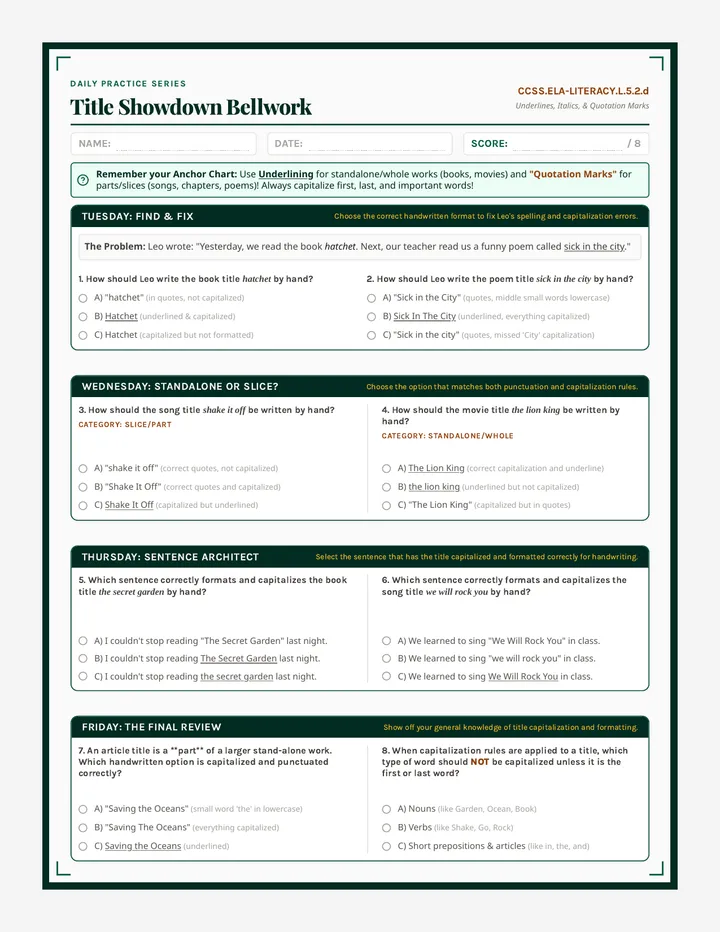
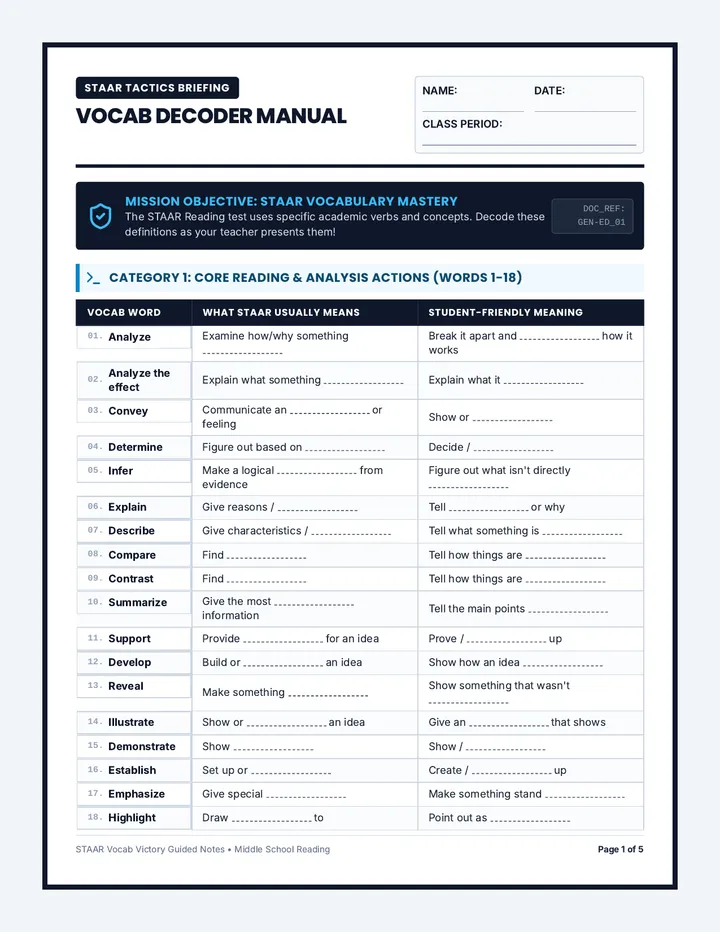
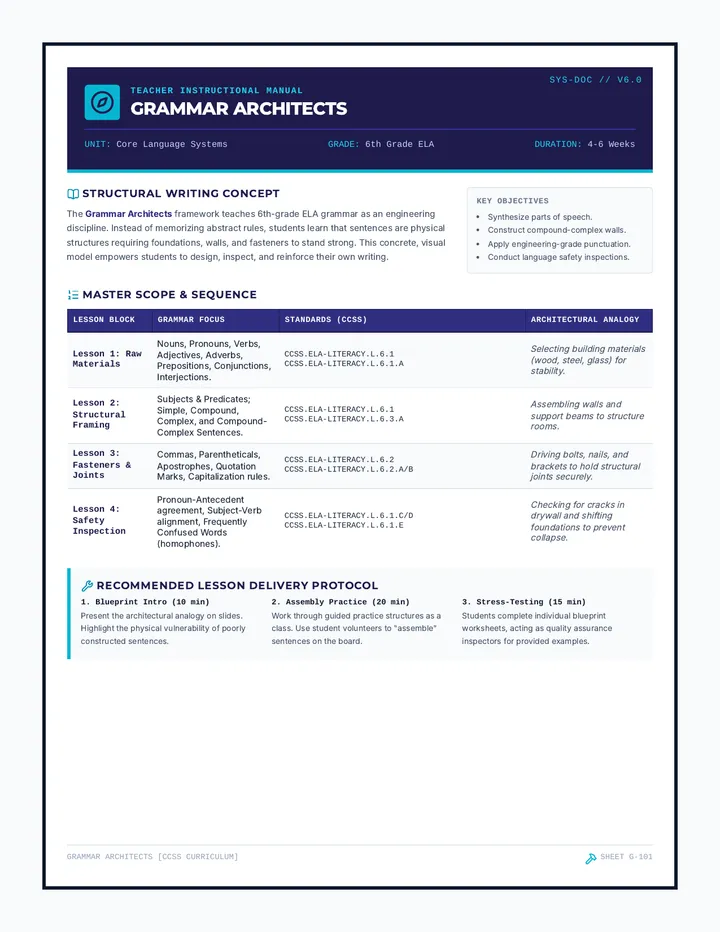
Sentence Surgery Slides Grammar Clinic
Sentence
Surgery
Operating on Run-ons & Comma Splices
Grade 5-6 Syntax Intensive
Warm-up: The Sentence Train
Can you hear the crash?
I woke up late for school then I missed the bus so my mom had to drive me but she forgot her keys so we had to go back inside and then we finally left but there was a traffic jam near the park.
CLAP when the sentence should stop!
Observation Deck
Analyzing the "Runaway Train"
LIVE OPERATION
Embedded media
Source: Khan Academy Grammar
Discussion Questions:
Why does David call a run-on a "runaway train"?
What are the two specific tools used to "stop the train" in the video?
Surgical Definitions
Independent Clause
A group of words that has a subject and a verb and can stand alone as a complete sentence.
Example:
"We bought nails."
Run-on Sentence
Two independent clauses put together without any punctuation or conjunctions.
Example:
"We bought nails we bought a hammer."
What is a Comma Splice?
Splicing means weaving things together. A comma splice is when you try to join two independent clauses with only a comma.
"A comma is like weak glue. It's not strong enough to hold two whole sentences together!"
LIL' TONY APPROVED
"I love Lil' Tony 2 , it is my favorite movie."
Diagnosis: Comma Splice
Sentence Surgery
Procedure Steps for All Grammar Surgeons
1
The Incision
Identify the two independent clauses. Use your scissors to cut exactly where the clauses split.
2
Apply Band-Aid
Choose your tool: A comma + conjunction or a semicolon. Write it on your Band-Aid tape.
3
The Repair
Tape the clauses back together. Ensure the new sentence is structurally sound and flows perfectly!
Post-Op Report
Be ready to share one surgically repaired sentence with the class. Why did you choose that specific "fix"?
Patient Stable
Grammar Improved
Sentence Surgery Worksheet Sentence Surgery Patient File
Grammar Clinic • Intensive Syntax Unit
Department
Punctuation Repairs
Attending Surgeon (Student Name)
Dr. ___________________________
Date of Operation
January 19, 2026
Surgical Facility
Classroom Lab
I. Pre-Op Observations (Video Notes)
1. David compares a run-on sentence to a because it doesn't have enough .
2. Define these critical conditions:
Independent Clause
Comma Splice
II. Surgical Toolkit (The Repairs)
Option A: The Semicolon (;)
Stronger than a comma, weaker than a period. Used when two clauses are closely related.
Option B: Comma + Conjunction (, and)
Use a comma and a FANBOYS word (for, and, nor, but, or, yet, so).
III. Diagnostic Practice
Identify where the split should occur by drawing a vertical line (|). Then, choose a repair tool and rewrite the fixed sentence below.
1. The sun was shining brightly we decided to go for a hike.
Rewrite the repaired sentence here...
2. My favorite food is pizza, it is delicious with pepperoni.
Rewrite the repaired sentence here...
IV. Post-Op Reflection
Why is a comma alone not strong enough to join two independent clauses? (The "Weak Glue" theory)
Patient Recovery Ward
Paste your "Surgically Repaired" sentence strips here after the activity. Ensure your Band-Aids are applied securely!
Operation #1 Result
Operation #2 Result
Operation #3 Result
Sentence Surgery Strips Surgery Material Sheet
Print this page and cut out the sentence strips and Band-Aids below.
Sterile Equipment
Patient Sentences (Run-ons & Splices)
The ocean was calm the seagulls flew over the waves.
Case #101
I practiced my flute for an hour I am ready for the concert.
Case #102
The pizza arrived hot, it smelled like cheesy goodness.
Case #103
My dog loves to play fetch he never gets tired of the ball.
Case #104
Science is my favorite subject, we are learning about space.
Case #105
Medical Supplies (Band-Aids)
; SEMICOLON ;
, and FANBOYS , and
, but FANBOYS , but
; SEMICOLON ;
, so FANBOYS , so
, for FANBOYS , for
, yet FANBOYS , yet
Custom Tool
Tip: Print on colored paper for extra surgical flair!
Sentence Surgery Teacher Guide Chief Surgeon's Guide
Lesson: Sentence Surgery (Run-ons & Splices)
Grade 5-6 • 50 Minutes
Objective
Identify independent clauses and use coordinating conjunctions/semicolons to fix run-ons.
Materials Needed
Slides, Worksheets, Sentence Strips, Scissors, Glue/Tape.
Video Link
Khan Academy: "Run-ons and comma splices"
Surgical Timeline
5 MIN
Warm-up: The Sentence Train
Write a long, breathless run-on sentence on the board (see Slides). Read it aloud without stopping. Have students clap every time they think you should have paused for breath or a period.
10 MIN
Video & Observation
Watch the Khan Academy video. Stop at 0:47 and ask students to propose three ways to fix the first example. Continue to 1:21 to cover run-ons and the train analogy.
Key Quote to Highlight:
"It's sort of like a runaway train... it doesn't have enough stoppage in it."
25 MIN
The Operation (Activity)
Distribute the Surgery Strips . Students must:
Find the "split" between independent clauses.
Physically cut the strip in half.
Tape them back together using a Band-Aid tool.
Paste the finished "patient" onto their worksheet.
5 MIN
Closure: Post-Op Share
Students share one repaired sentence. Ask: "Why did you choose a semicolon instead of a comma + and?" Discuss how it changes the flow.
Diagnostic Answer Key
I. Video Notes
Train Analogy: Runaway Train / Stoppage
Independent Clause: A group of words that can stand alone as a sentence.
Comma Splice: Two independent clauses inappropriately joined by a comma.
III. Diagnostic Practice
Item #1
"The sun was shining brightly | we decided to go for a hike."
Fix: ...brightly; we... OR ...brightly, and we...
Item #2
"My favorite food is pizza | , it is delicious..."
Fix: ...pizza; it... OR ...pizza, and it...
Case #101-105 Solutions
101: ...calm ; the... OR ...calm , and the...
102: ...hour ; I... OR ...hour , so I...
103: ...hot ; it... OR ...hot , and it...