Lenny.com
Explore
Create
ActivitiesNewMathEnglish Language ArtsScience & EngineeringSocial StudiesGlobal LanguagesHealth & Physical EducationSpecial EducationCounseling & Life SkillsArts & CreativityESL
Lenny.com
Lenny.com
Explore
Create
ActivitiesNewMathEnglish Language ArtsScience & EngineeringSocial StudiesGlobal LanguagesHealth & Physical EducationSpecial EducationCounseling & Life SkillsArts & CreativityESL
Lenny.com
Lenny.com

Solutions

Lenny for EducatorsLenny for SchoolsLenny for Districts

Product

ExploreSign inCreateSupportAbout

Resources

Getting startedMTSS Acceleration Program

© 2026 Lenny Learning Inc.

TermsPrivacyAccessibility
LinkedInInstagramX
Lenny
English Language ArtsPhonics & Reading FoundationsLetter IdentificationLearn Letters A-ZLowercase and Uppercase LettersConsonants and VowelsLetter-Sound AssociationsLetter-Sound Associations: LowercaseLetter-Sound Associations: UppercaseBeginning and Ending SoundsRhymingBlending And SegmentingShort VowelsShort Vowel SoundsConsonant BlendsConsonant DigraphsBlends, Digraphs, and TrigraphsDigraphs, Blends, and Silent LettersLong Vowel SoundsLong Vowel PatternsShort and Long VowelsShort and Long Vowel PatternsSilent EVowel SoundsVowel TeamsR-Controlled VowelsDiphthongs: Oi, Oy, Ou, OwVariant VowelsVariant, Diphthong, And R Vowel PatternsSoft G And CSight WordsIrregular WordsWord RecognitionSyllablesSyllable TypesTwo-Syllable WordsMultisyllabic WordsPhoneme ManipulationDecodable TextsVocabularyAction WordsQuestion WordsNouns and AdjectivesClassify WordsCompound WordsSynonyms and AntonymsHomophonesHomophones and HomonymsShades of MeaningContext CluesPrefixes and SuffixesGreek and Latin RootsAnalogiesIdioms and AdagesForeign Words and ExpressionsWord Choice and UsageReference SkillsReading ComprehensionRead-Along Literary TextsRead-Along Informational TextsReality vs. FictionStory ElementsCharacterSequenceMain IdeaCause And EffectCompare And ContrastReading StrategiesText StructureAuthor's PurposeAuthor's Purpose And ToneAuthor's PerspectivePoint Of ViewThemeInference And ThemeInference And AnalysisPoetry ElementsLiterary DevicesAnalyzing LiteratureAnalyzing Informational TextsComparing TextsAudience, Purpose, And ToneBusiness DocumentsNovel StudyNonfiction Book StudyGrammar & MechanicsSentencesNounsVerbsAdjectivesPronounsCapitalizationPunctuationContractionsConjunctionsPrepositionsArticlesAdjectives And AdverbsVerb TypesVerb TensePronouns And AntecedentsPronoun TypesSubject-Verb AgreementDirect And Indirect ObjectsSentences, Fragments, And Run-OnsPhrases And ClausesCommasSemicolons, Colons, And CommasDashes, Hyphens, And EllipsesSpellingAbbreviationsFormattingVerb Tense And MoodMisplaced ModifiersWritingDescriptive DetailsCreative WritingOpinion WritingTopic SentencesOrganizing WritingLinking WordsSentence VarietyIntroductions And ConclusionsPersuasive And Opinion WritingExpository WritingPersuasive StrategiesDeveloping And Supporting ArgumentsTopic Sentences And Thesis StatementsSummarizingResearch SkillsEditing And RevisingActive And Passive Voice=Writing Clearly And ConciselyDebate & Public SpeakingPublic Speaking BasicsPersuasive TechniquesClaims and EvidenceTypes of ArgumentsReasoning TypesLogical FallaciesTopic ResearchOrganizing EvidenceDebate Speech OrganizationAttacking and Defending ArgumentsClash and EngagementImpact CalculusQuestioning and Cross-ExaminationCritical ThinkingInformal LogicFormal LogicInductive Reasoning

Seeds to Stage

Students analyze how Chapter 4 connects to Chapter 3 in Frank Berrios's biography of Lin-Manuel Miranda, exploring how college experiments, key partnerships, and personal perseverance shaped his journey to Broadway.

KWKereen Welch

Seeds to Stage

Students analyze how Chapter 4 connects to Chapter 3 in Frank Berrios's biography of Lin-Manuel Miranda, exploring how college experiments, key partnerships, and personal perseverance shaped his journey to Broadway.

KWKereen Welch

The Story of Lin-Manuel Miranda • Nonfiction Text Connection Activity Page 2 of 2

Teacher Answer Key Part 2 • Synthesis & Rubric

Exemplar Written Response & Scoring Guide

Target Length: 5–7 Sentences

Exemplar Student Response (Score: 4 / 4)

High Proficiency Model

[Ch. 3 Detail] In Chapter 3 of The Story of Lin-Manuel Miranda, Lin began writing an early 80-minute one-act version of In the Heights while a sophomore at Wesleyan University, testing his songs in front of enthusiastic student audiences. [Transition] Building upon this early college draft, [Ch. 4 Detail] Lin partnered with college alum Thomas Kail in Chapter 4 to spend six rigorous years cutting, rewriting, and expanding the musical into a full two-act Broadway show. [Transition] Because of the skills and friendships formed in college, [Connection / Synthesis] Lin possessed both the collaborative team and the cultural determination needed to endure day jobs as an English teacher and party dancer until his show reached Broadway in 2008. [Thematic Conclusion] Ultimately, Chapter 4 demonstrates that Broadway triumphs are not overnight accidents; they sprout directly from the creative seeds, authentic cultural voices, and trusted partnerships planted during college.

3-Point Analytical Rubric

Criteria

Proficient (3)

Approaching (2)

Beginning (1)

Text Evidence

Cites accurate, specific facts from BOTH Ch. 3 & Ch. 4.

Mentions both chapters, but details are vague or general.

Only references one chapter or facts are inaccurate.

Causal Connection

Clearly explains HOW Ch. 3 actions caused Ch. 4 outcomes.

States that events are related without explaining how or why.

Lists events separately with no connective explanation.

Transitions & Style

Uses effective transitional phrases (e.g., "As a result", "Later").

Uses basic chronological words ("Then", "Next").

Lacks transition words; sentences feel disconnected.

Common Student Misconceptions

  • Overnight Stardom: Students often assume In the Heights went straight from college to Broadway. Remind them of the 6–8 years of rewriting in basements.
  • Solo Genius: Students may overlook Tommy Kail and the improv crew. Highlight theater as an inherently collaborative art.

Scaffolding & Differentiation

  • Support: Provide a fill-in-the-blank paragraph template for students who struggle with synthesis flow.
  • Extension: Ask advanced students how Lin's experiences in Ch. 3 & 4 laid the foundation for his later masterpiece, Hamilton.

The Story of Lin-Manuel Miranda • Teacher Answer Key & Rubric Page 2 of 2
You might also like

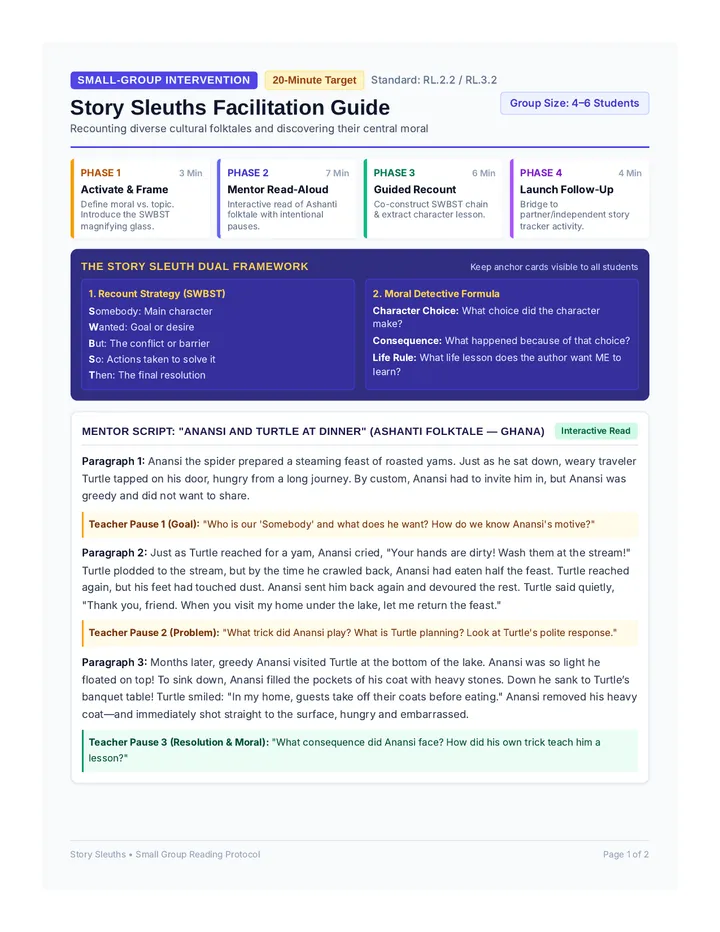
Story Sleuths Facilitation Guide

Story Explorers

An interactive, high-impact reading comprehension unit targeting core foundational literature standards. Students master recounting diverse folktales, extracting central morals, and analyzing how characters respond to major events and challenges.

S

Squiretak

8
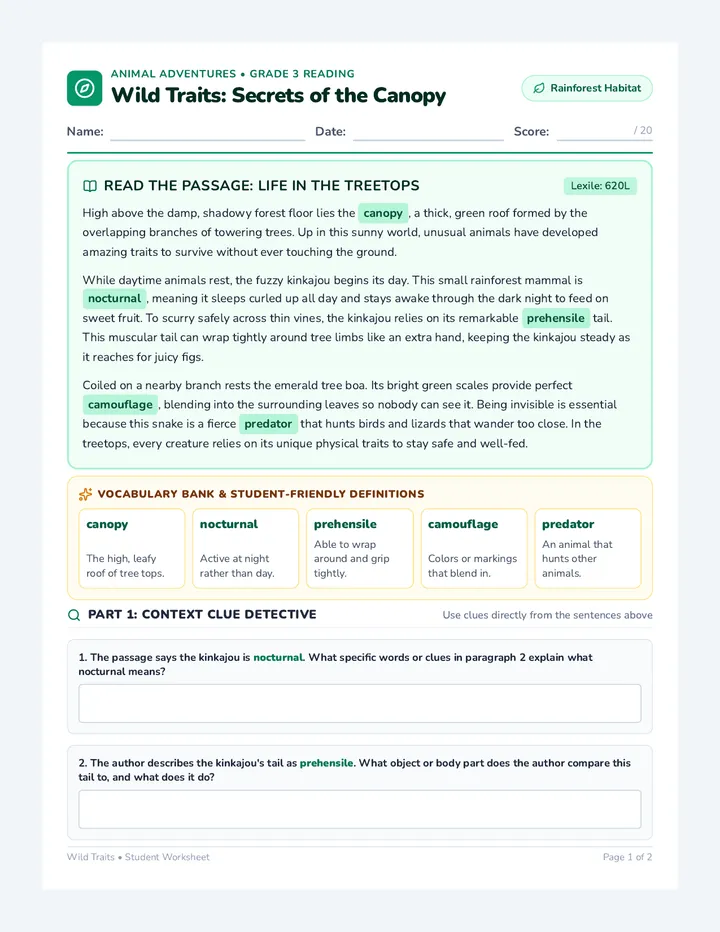
Wild Traits Reading Worksheet

Wild Traits

A 3rd-grade reading and vocabulary lesson exploring how animals survive using specialized traits and adaptations in their rainforest habitats. Students read an informational passage, deduce word meanings using context clues, and answer text-dependent comprehension questions.

C

cottonc

2
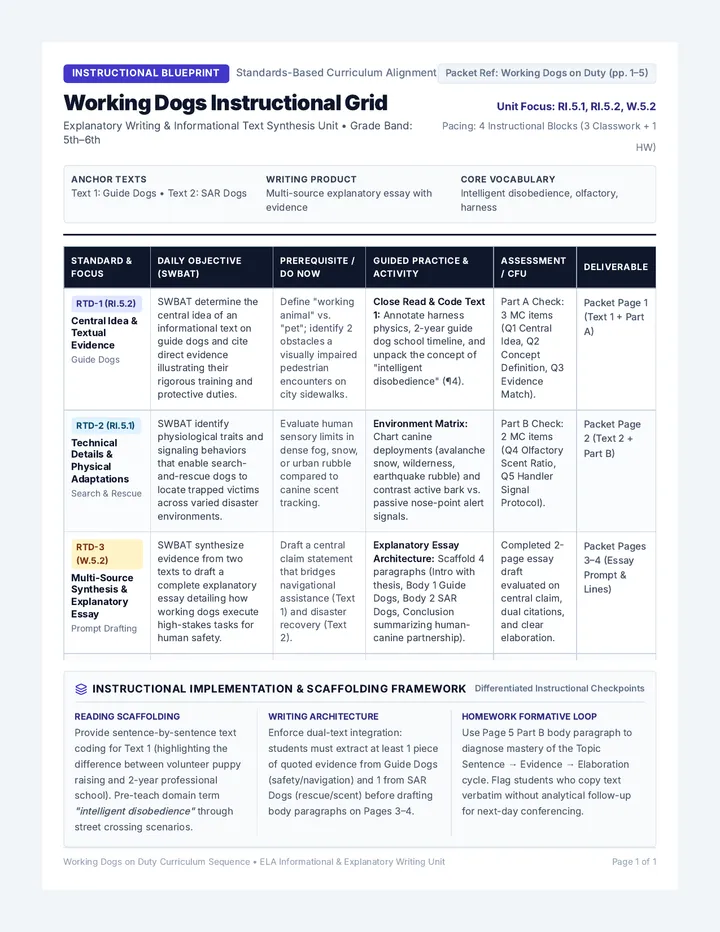
Working Dogs Curriculum Grid

Working Dogs Curriculum Grid

Curriculum planning and alignment grid for the Working Dogs on Duty explanatory writing unit. Maps daily objectives, prerequisites, guided instructional activities, formative assessments, and text-aligned deliverables across the five-page student packet.

C

chyna.jackson

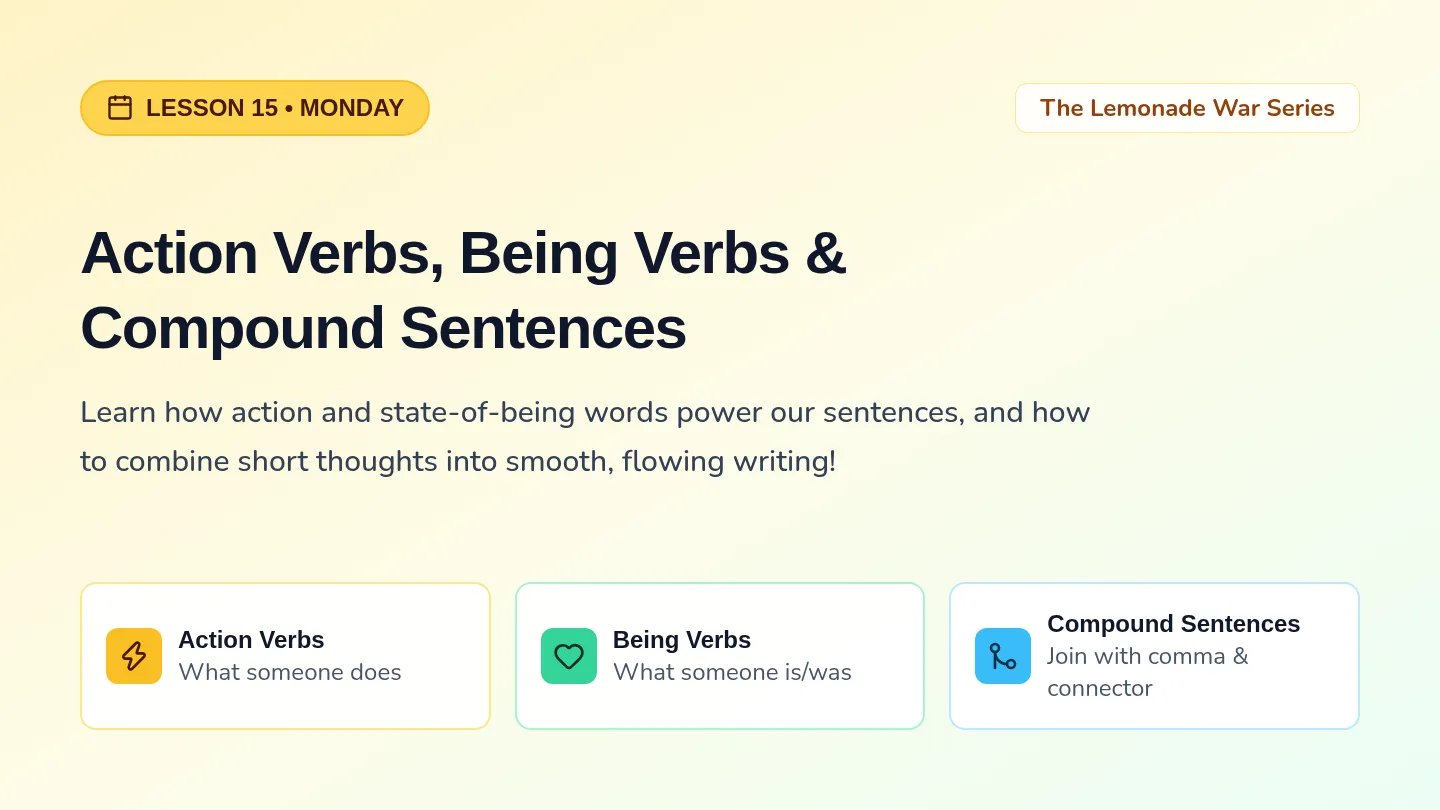
Lemonade Verbs Slides

Reading Writing Workshop

An engaging elementary English Language Arts unit connecting grammar mechanics, mentor texts, vocabulary, and sensory descriptive writing.

B

Bhoovaragavaswamym

8
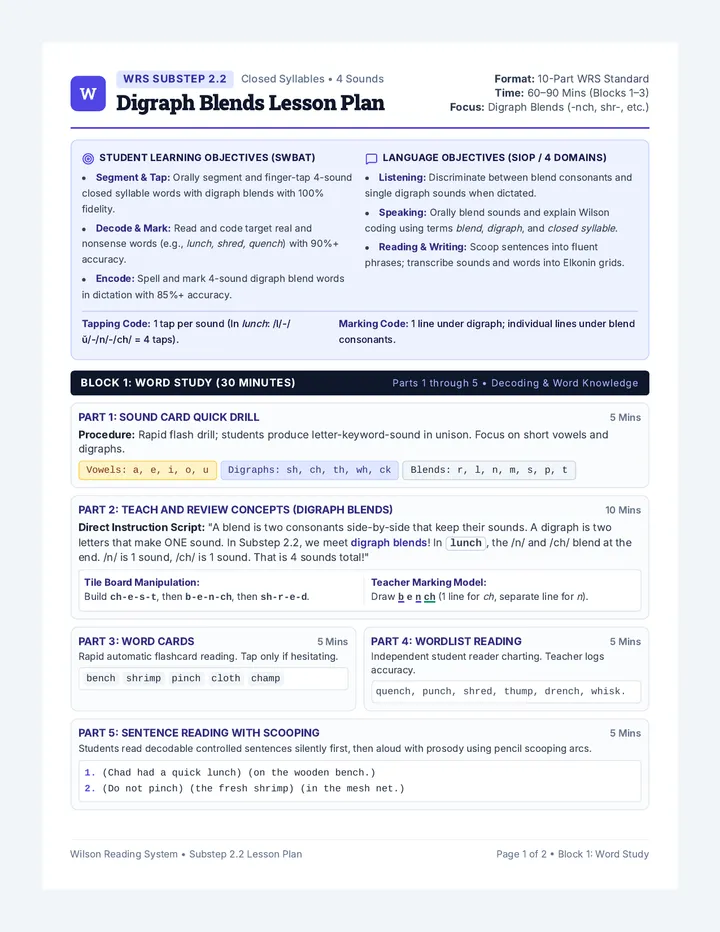
Digraph Blend Quest Lesson Plan

Digraph Blend Quest

Comprehensive Orton-Gillingham Wilson Reading System Substep 2.2 lesson focusing on 4-sound words with digraph blends (including final digraph blends like -nch, initial digraph blends like shr-, and words with blends and digraphs). Covers multisensory finger-tapping, Wilson coding and marking rules, sound drills, decodable sentence scooping, and dictation.

KW

Kellie Walsh

4
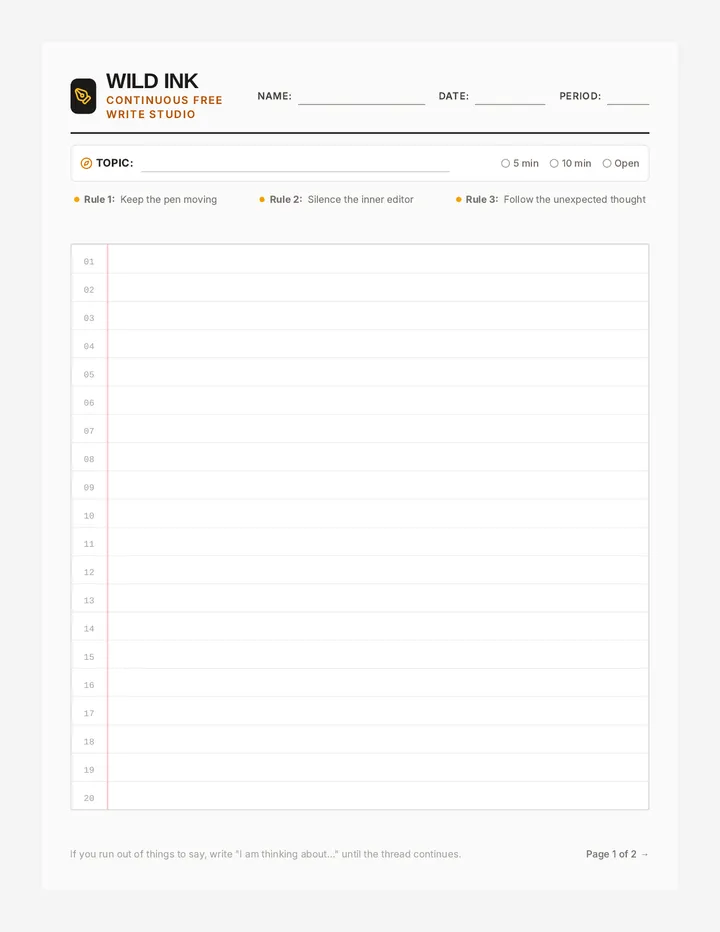
Writing Worksheet

Writing Worksheet

A two-page printable free-writing handout designed for secondary and upper-elementary students. Features an intention-setting banner, authentic numbered notebook lines with generous spacing, and a closing reflection with a Golden Line spotlight.

JA

Jessica Anderson

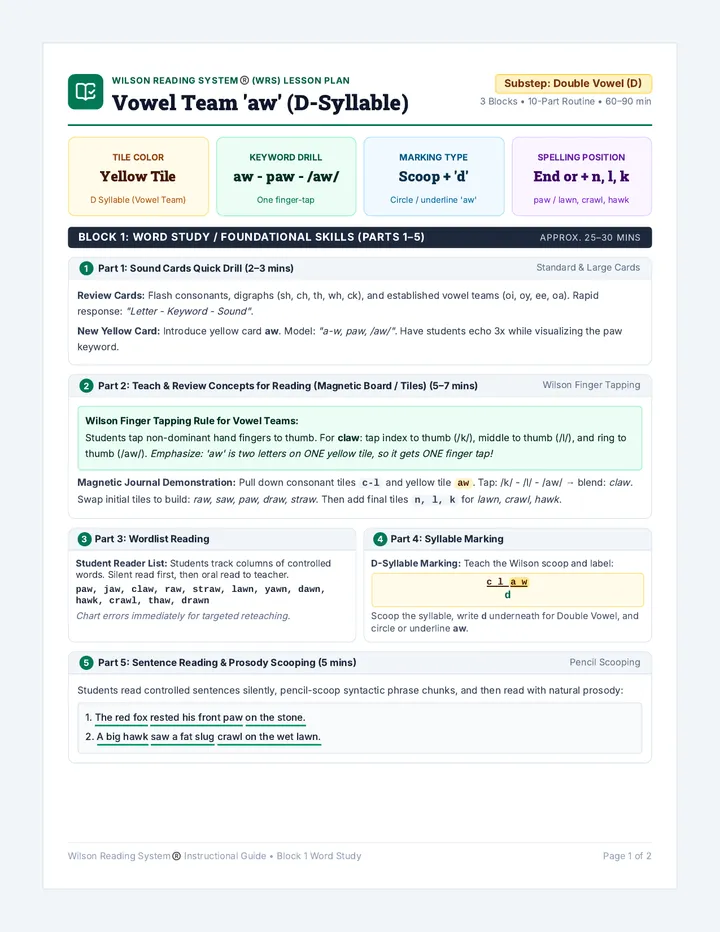
Paw Print Teacher Guide

Vowel Team Aw Pathways

A comprehensive structured literacy sequence targeting the vowel team 'aw', offering dual instructional pathways using both the Classic Orton-Gillingham 7-step routine and the 10-part Wilson Reading System (WRS) framework.

KW

Kellie Walsh

10
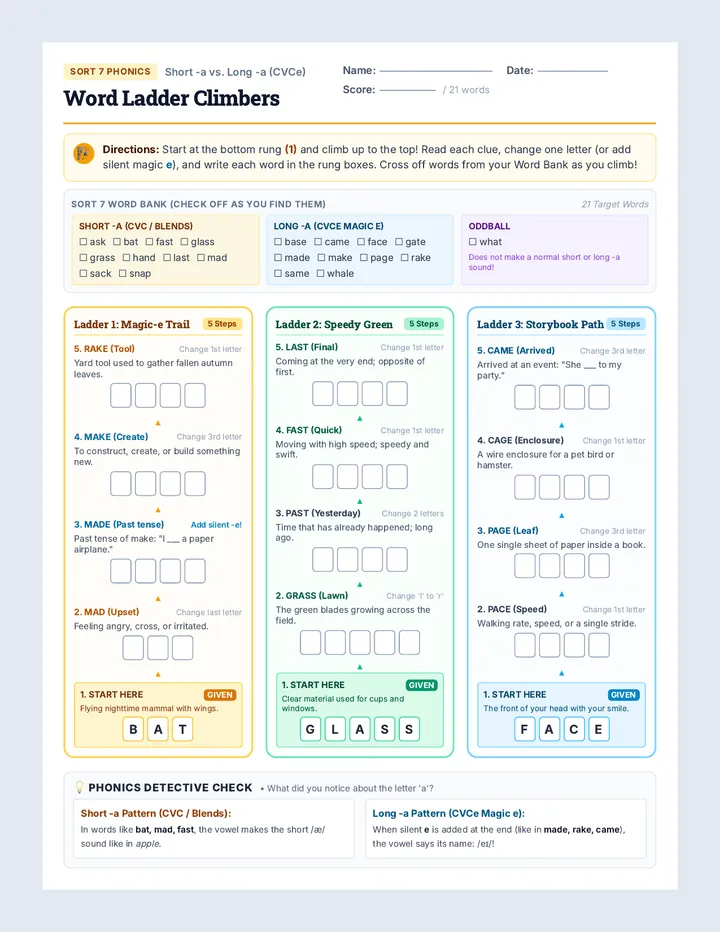
Short and Long a Word Ladder Worksheet

Vowel Ladder Climbers

A collection of phonics word ladder worksheets exploring short vowel versus long vowel CVCe patterns. Students step through letter-change rungs and classify target words in hands-on sound sorting vaults.

N

nmack

2
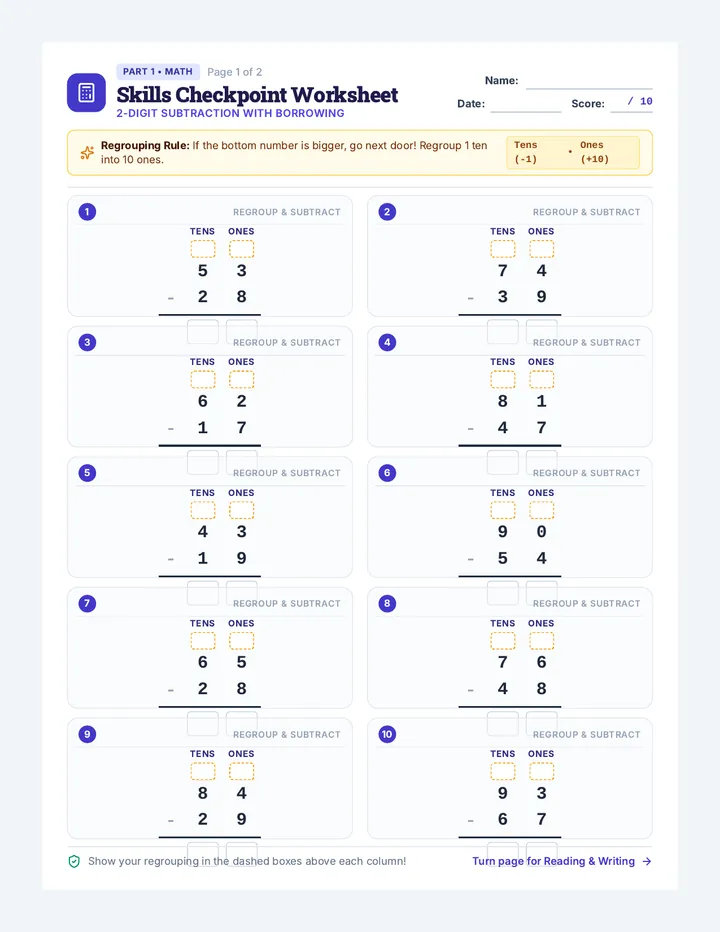
Skills Checkpoint Worksheet

Skills Checkpoint Worksheet

A comprehensive two-page elementary skills worksheet featuring 10 precisely aligned two-digit subtraction problems with borrowing on page one, followed by an oral reading assessment of 20 words (scaffolded with 2-syllable and multi-syllable words) and a two-sentence personal response writing prompt on page two.

AA

alicia accapezzato

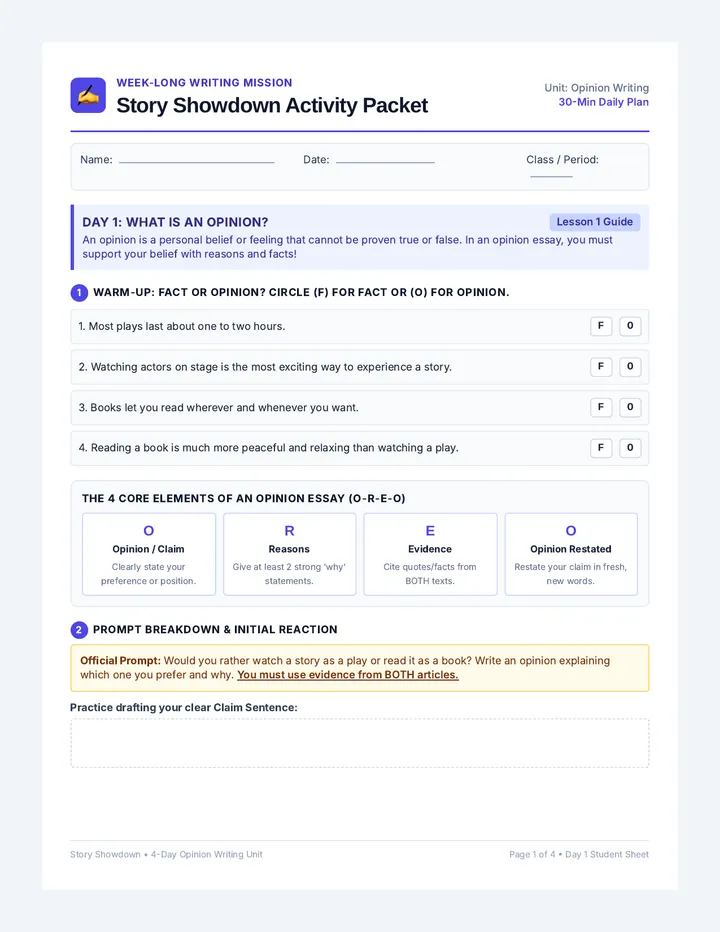
Story Showdown Activity Packet

Story Showdown

A four-day opinion writing unit guiding students through forming claims, analyzing paired texts, and crafting evidence-based essays comparing theatrical plays and books.

SM

Samantha McBath

6
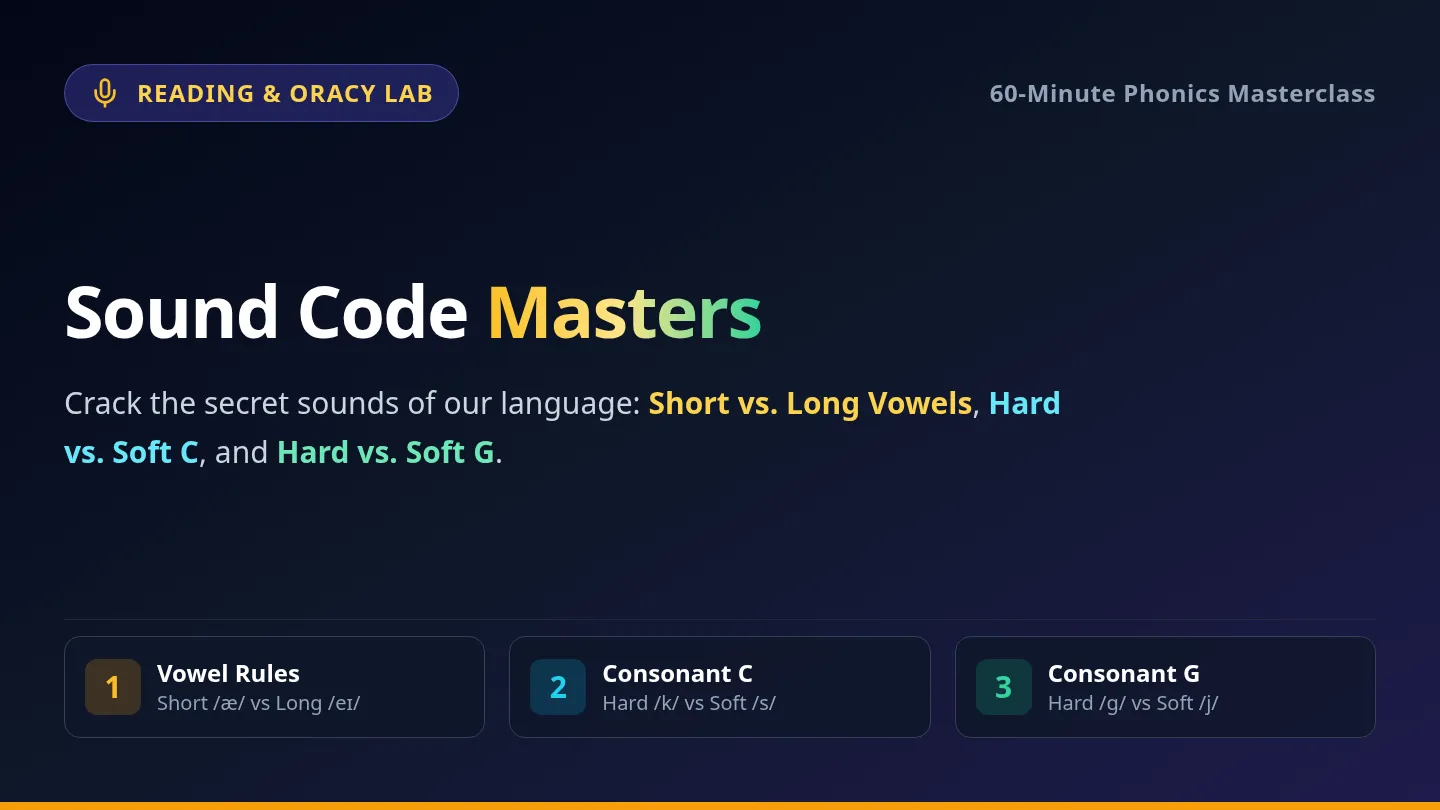
Sound Code Slides

Sound Code Masters

A comprehensive 60-minute foundational reading and oracy lesson reviewing and practicing short vs. long vowels, hard vs. soft c, and hard vs. soft g. Through multisensory articulation modeling, partner whisper-and-echo drills, and oral reading challenges, students master phonics rules and spoken fluency.

LS

Laurel Sviatko

5
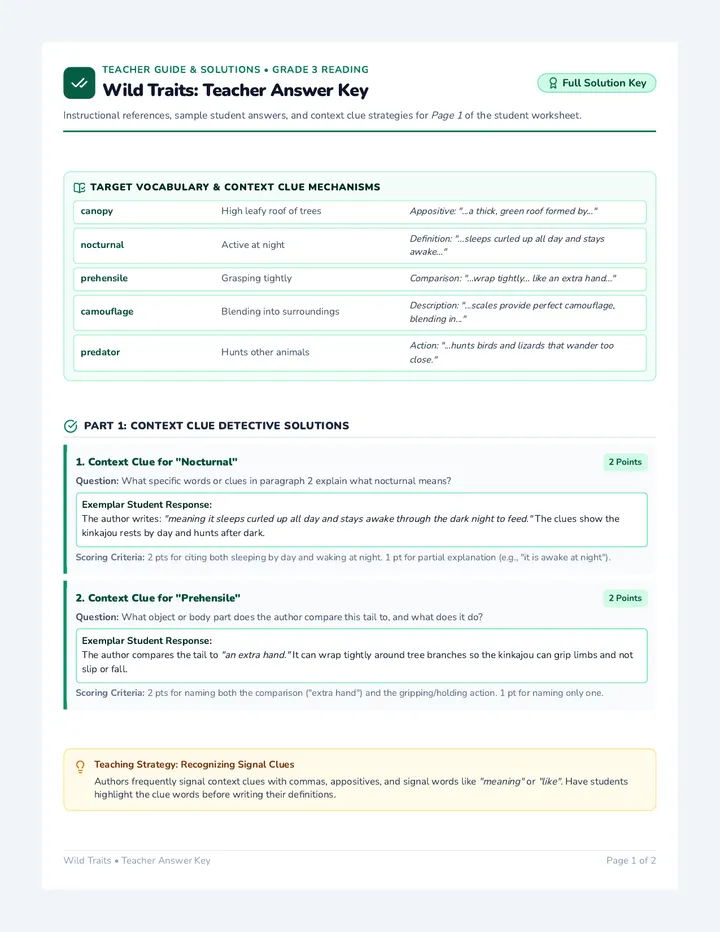
Wild Traits Answer Key

Wild Traits Answer Key

A comprehensive 2-page teacher answer key and instructional guide for the Wild Traits reading worksheet, providing full solution models, context clue rationales, a short-response rubric, and differentiation tips.

C

cottonc