Lenny.com
Explore
Create
ActivitiesNewMathEnglish Language ArtsScience & EngineeringSocial StudiesGlobal LanguagesHealth & Physical EducationSpecial EducationCounseling & Life SkillsArts & CreativityESL
Lenny.com
Lenny.com
Explore
Create
ActivitiesNewMathEnglish Language ArtsScience & EngineeringSocial StudiesGlobal LanguagesHealth & Physical EducationSpecial EducationCounseling & Life SkillsArts & CreativityESL
Lenny.com
Lenny.com

Solutions

Lenny for EducatorsLenny for SchoolsLenny for Districts

Product

ExploreSign inCreateSupportAbout

Resources

Getting startedMTSS Acceleration Program

© 2026 Lenny Learning Inc.

TermsPrivacyAccessibility
LinkedInInstagramX
Lenny
English Language ArtsPhonics & Reading FoundationsLetter IdentificationLearn Letters A-ZLowercase and Uppercase LettersConsonants and VowelsLetter-Sound AssociationsLetter-Sound Associations: LowercaseLetter-Sound Associations: UppercaseBeginning and Ending SoundsRhymingBlending And SegmentingShort VowelsShort Vowel SoundsConsonant BlendsConsonant DigraphsBlends, Digraphs, and TrigraphsDigraphs, Blends, and Silent LettersLong Vowel SoundsLong Vowel PatternsShort and Long VowelsShort and Long Vowel PatternsSilent EVowel SoundsVowel TeamsR-Controlled VowelsDiphthongs: Oi, Oy, Ou, OwVariant VowelsVariant, Diphthong, And R Vowel PatternsSoft G And CSight WordsIrregular WordsWord RecognitionSyllablesSyllable TypesTwo-Syllable WordsMultisyllabic WordsPhoneme ManipulationDecodable TextsVocabularyAction WordsQuestion WordsNouns and AdjectivesClassify WordsCompound WordsSynonyms and AntonymsHomophonesHomophones and HomonymsShades of MeaningContext CluesPrefixes and SuffixesGreek and Latin RootsAnalogiesIdioms and AdagesForeign Words and ExpressionsWord Choice and UsageReference SkillsReading ComprehensionRead-Along Literary TextsRead-Along Informational TextsReality vs. FictionStory ElementsCharacterSequenceMain IdeaCause And EffectCompare And ContrastReading StrategiesText StructureAuthor's PurposeAuthor's Purpose And ToneAuthor's PerspectivePoint Of ViewThemeInference And ThemeInference And AnalysisPoetry ElementsLiterary DevicesAnalyzing LiteratureAnalyzing Informational TextsComparing TextsAudience, Purpose, And ToneBusiness DocumentsNovel StudyNonfiction Book StudyGrammar & MechanicsSentencesNounsVerbsAdjectivesPronounsCapitalizationPunctuationContractionsConjunctionsPrepositionsArticlesAdjectives And AdverbsVerb TypesVerb TensePronouns And AntecedentsPronoun TypesSubject-Verb AgreementDirect And Indirect ObjectsSentences, Fragments, And Run-OnsPhrases And ClausesCommasSemicolons, Colons, And CommasDashes, Hyphens, And EllipsesSpellingAbbreviationsFormattingVerb Tense And MoodMisplaced ModifiersWritingDescriptive DetailsCreative WritingOpinion WritingTopic SentencesOrganizing WritingLinking WordsSentence VarietyIntroductions And ConclusionsPersuasive And Opinion WritingExpository WritingPersuasive StrategiesDeveloping And Supporting ArgumentsTopic Sentences And Thesis StatementsSummarizingResearch SkillsEditing And RevisingActive And Passive Voice=Writing Clearly And ConciselyDebate & Public SpeakingPublic Speaking BasicsPersuasive TechniquesClaims and EvidenceTypes of ArgumentsReasoning TypesLogical FallaciesTopic ResearchOrganizing EvidenceDebate Speech OrganizationAttacking and Defending ArgumentsClash and EngagementImpact CalculusQuestioning and Cross-ExaminationCritical ThinkingInformal LogicFormal LogicInductive Reasoning

Novel Promo Blueprint

A scaffolded unit designed to help 5th-grade developing and emerging students create a mock e-commerce book listing for a novel they have read. This lesson breaks down complex writing tasks like summaries, quotes, and editorial reviews into structured, bite-sized templates with built-in sentence frames.

COCatherine Onessimo

E-commerce pages often highlight real excerpts of dialogue or narration from the book to show off the author's writing style.

Choose quotes that are exciting or meaningful.

Always record the exact Page Number.

Briefly explain what the quote reveals to the reader.

Curation Guide:

Step 1: Write Quote & Page

"The mystery was bigger than any of them had ever dreamed." (Page 42)

Step 2: Explain Its Power

Starter 1: "This reveals that ________."

Starter 2: "This tells the reader ________."

Choose short quotes (1 sentence) rather than full paragraphs, so they stand out elegantly on your listing page!


PART 4: EDITORIAL REVIEW SESSION 1: THE MISSION

Write Your Editorial Review

An editorial review is a professional critic's review of the novel. It states your clear, honest opinion and explains why people should or shouldn't spend their money on this book.

First, Choose Your Rating:

"4 out of 5 Stars!"

Model Writing Frame:

Sentence Starter 1: Critical Opinion

"In my opinion, this novel is outstanding because the author constructs an incredibly detailed fantasy world."

Sentence Starter 2: Strengths or Memorable Moment

"The most memorable part of the story was when the characters finally solved the ancient puzzle because it kept me on the edge of my seat."

Remember, professional critics are always specific! Name setting elements or character traits to support your rating.


PART 5: THE FINAL TOUCH SESSION 1: THE MISSION

Option A

Recommend Other Books

Suggest another book with similar themes, characters, or conflicts to cross-promote with your listing.

💡 "If you loved this novel, you should also read..."

💡 "They are similar because they both..."

Option B

Rank Against Recent Reads

Position this novel alongside 4 other books you've read. Explain where it ranks on a 1-to-5 scale and why.

💡 "This book ranks at number ________ out of 5..."

💡 "...because its fast pacing kept me more engaged than..."

Choose the option you feel most excited to write about! Remember, keep your reasons specific and persuasive.

Pages:

Part 1: The Preview Hook

"Have you ever wondered what would happen if a normal boy was sent to a hot, dry camp in the desert for a crime he didn't commit?"

Part 2: Plot Summary

Somebody: The story is about a friendly but unlucky boy named Stanley Yelnats...

Wanted: who really wanted to survive his unfair sentence at Camp Green Lake...

But: But a major obstacle stood in his way because they had to dig holes in the hot sun...

So: So, to solve this big problem, they decided to escape into the desert with his friend Zero...

Then: In the end, the main conflict is resolved when they find a treasure chest and prove Stanley's innocence!

Part 3: Key Quote

"If you spend your whole life in a hole, the only way you can go is up." (Page 115)

Reveals: This reveals that characters must find hope even when times are extremely tough.

Part 4: Editorial Review

"In my opinion, this novel is outstanding because the author weaves together three different mysteries perfectly. The most memorable part was when Zero and Stanley survived on onions!"

Asset-Based Grading Rubric (Scaffold Focus)

CriteriaExceeding (3 pts)Developing (2 pts)Emerging (1 pt)
Scaffold UseCompletes all sentence starters with highly relevant and detailed ideas.Completes frames properly but keeps answers short or simple.Leaves several frames incomplete or writes unrelated details.
Plot StructureClearly establishes characters, goals, problems, and solutions logically.Organizes plot with minor pacing skips, but logical progression remains.Struggles with logical order; events seem mixed up or disconnected.
Text EvidenceSelects powerful quotes, cites page numbers, and links meaning to plot.Selects quotes but explanation does not link directly to the meaning.No quotes selected or they are disconnected from the book context.
You might also like

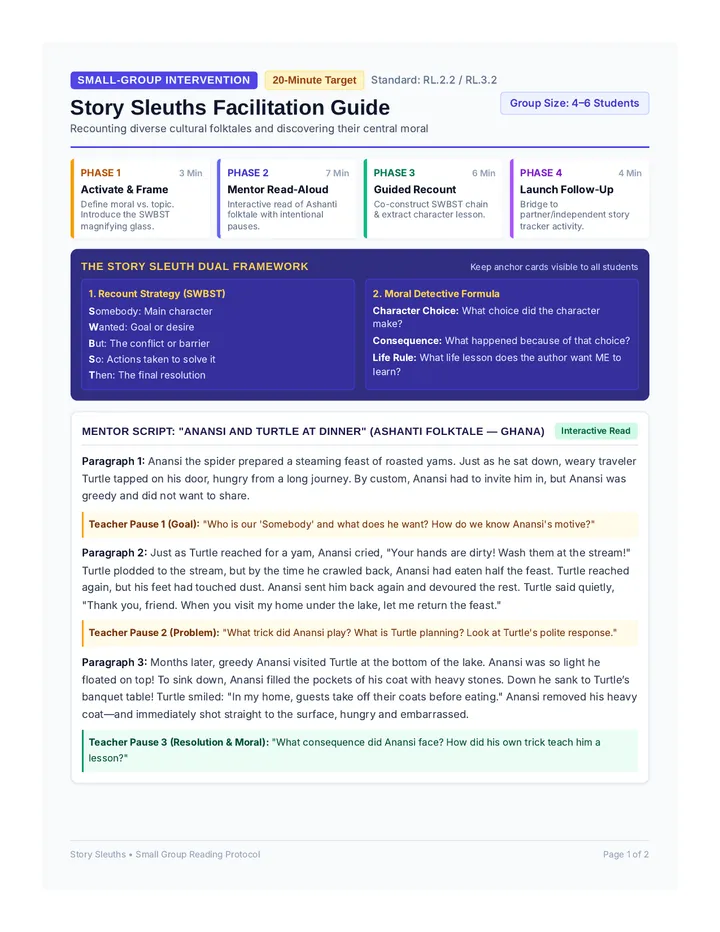
Story Sleuths Facilitation Guide

Story Explorers

An interactive, high-impact reading comprehension unit targeting core foundational literature standards. Students master recounting diverse folktales, extracting central morals, and analyzing how characters respond to major events and challenges.

S

Squiretak

8
Week 3 Monday Sentences Worksheet

Week 3 Monday Launch

Week 3 Monday kickoff introducing 13 target red words through structured heart-mapping, sentence pyramids, the Tessa Barber decodable reader 'Pip and the Map', comprehension exit ticket, and fluency assessment.

S

Sara

4
Week 3 Monday Fluency Sheet

Week 3 Monday Fluency Sheet

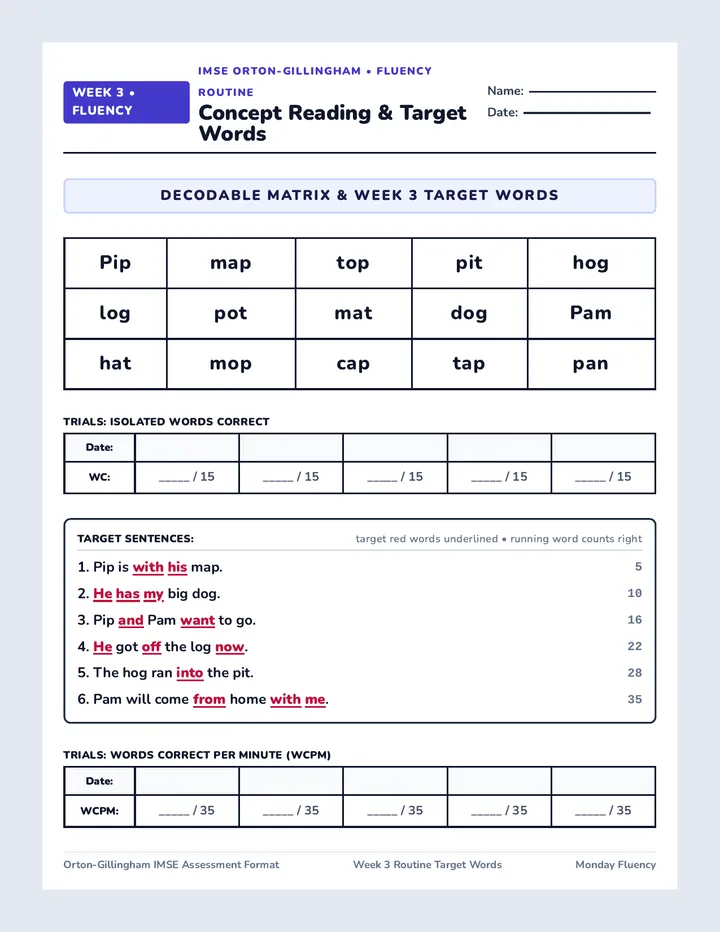
Week 3 Monday Orton-Gillingham fluency assessment sheet featuring a 15-word decodable matrix, 6 decodable sentences with target red words and running word counts, and multi-trial tracking tables.

S

Sara

Lemonade Verbs Slides

Reading Writing Workshop

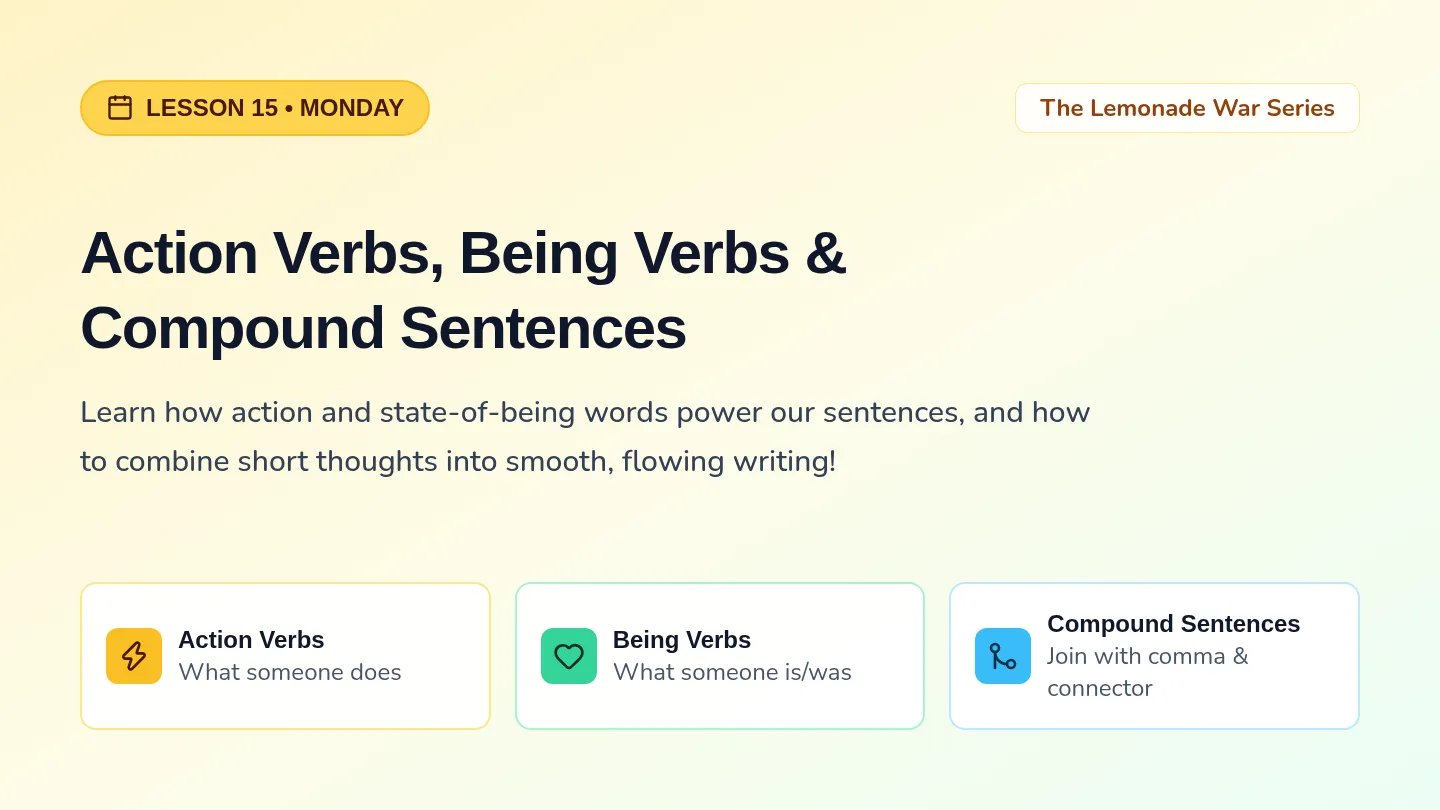
An engaging elementary English Language Arts unit connecting grammar mechanics, mentor texts, vocabulary, and sensory descriptive writing.

B

Bhoovaragavaswamym

8
Digraph Champions Assistant Guide

Phonics Champions

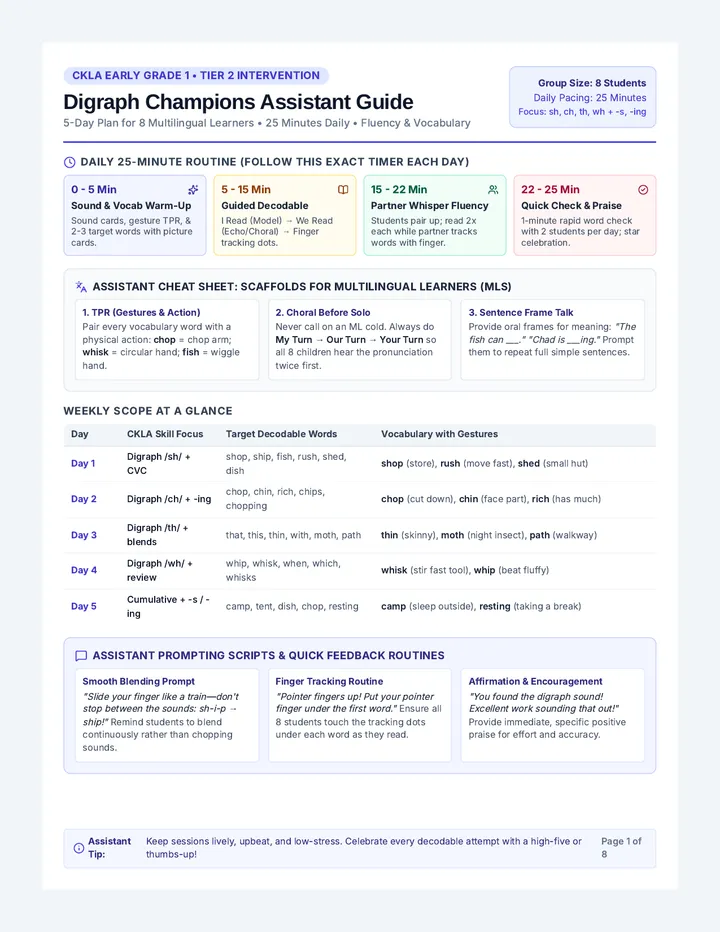
A targeted Tier 2 small-group phonics intervention sequence designed for multilingual first-graders. Each week features structured 25-minute assistant-led daily routines, language scaffolds, decodable texts, and printables.

A

ALYSSA.BEASLEY

2
Week 3 Monday Story Exit Ticket

Week 3 Monday Story Exit Ticket

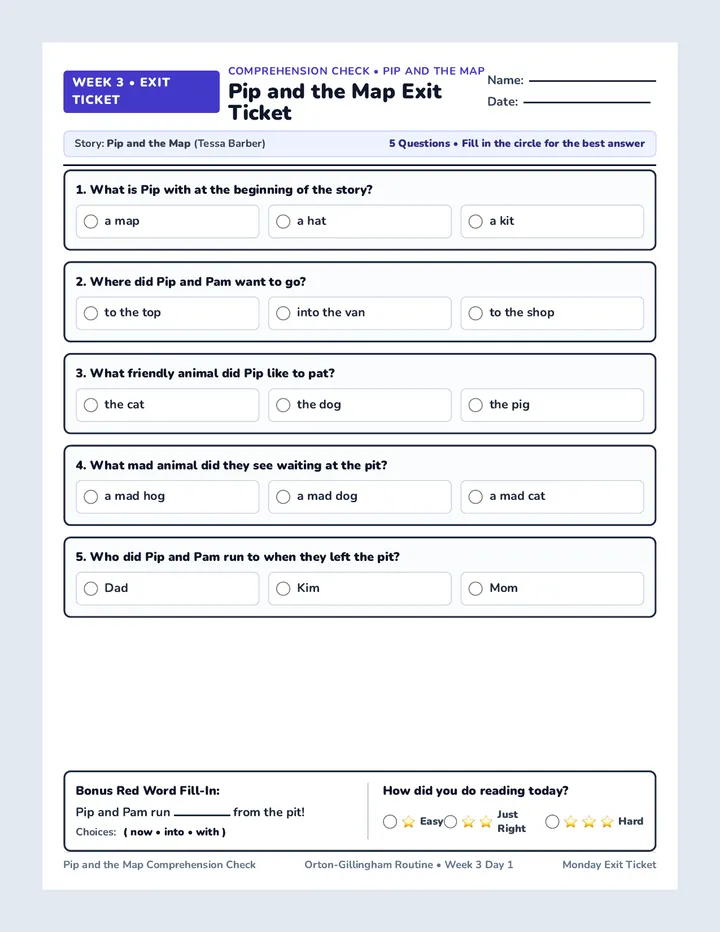
A 1-page Week 3 Monday multiple-choice exit ticket assessing reading comprehension and target red words for the decodable text 'Pip and the Map'.

S

Sara

Paw Print Teacher Guide

Vowel Team Aw Pathways

A comprehensive structured literacy sequence targeting the vowel team 'aw', offering dual instructional pathways using both the Classic Orton-Gillingham 7-step routine and the 10-part Wilson Reading System (WRS) framework.

KW

Kellie Walsh

10
Real Words Flashcards

Sound Blaster Cards

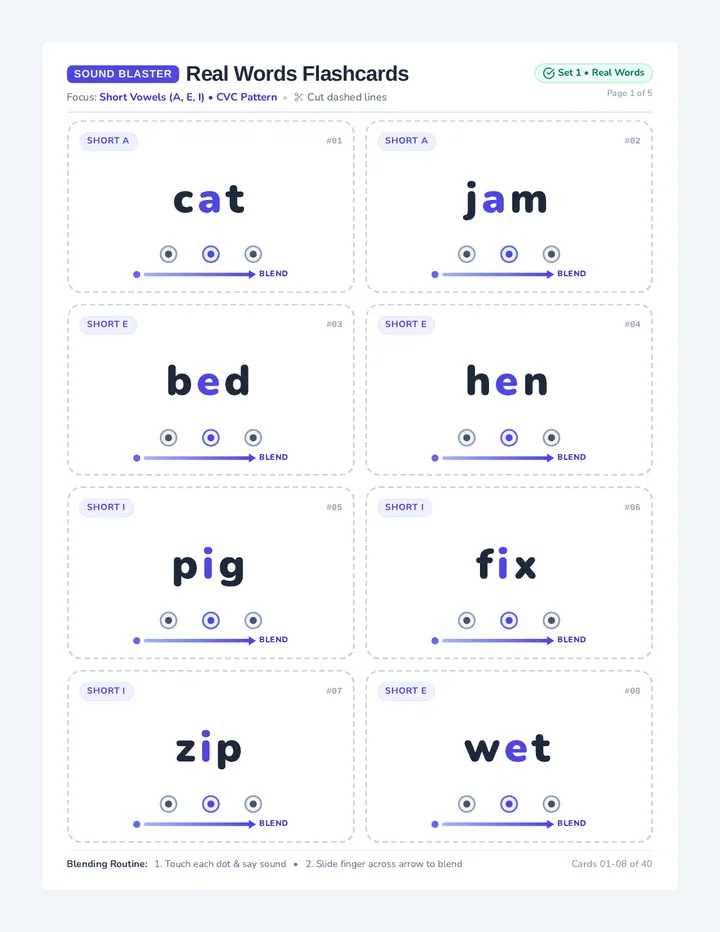
A comprehensive phonics decoding card toolkit covering all 26 letters of the alphabet, all short vowels (a, e, i, o, u), double 'ee' vowel digraphs, and silent e patterns (a_e, i_e, o_e, u_e). Students isolate phonemes with Elkonin sound buttons and build automaticity using continuous blending arrows across real and nonsense word decks.

A

ALYSSA.BEASLEY

2
Week 3 Monday Decodable Reader

Week 3 Monday Decodable Reader

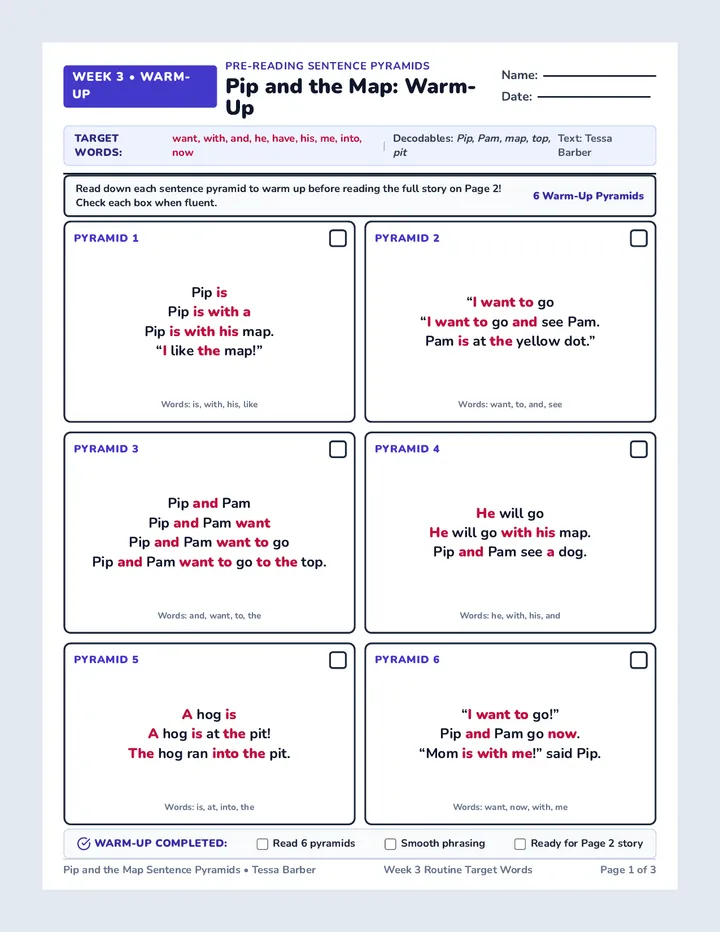
A 3-page Week 3 Monday decodable reader packet for 'Pip and the Map' by Tessa Barber featuring Page 1 pyramid warm-up targeting Week 3 words, Page 2 passage and comprehension story map with primary lines, and Page 3 6 comprehension questions with written response.

S

Sara

Story Showdown Activity Packet

Story Showdown

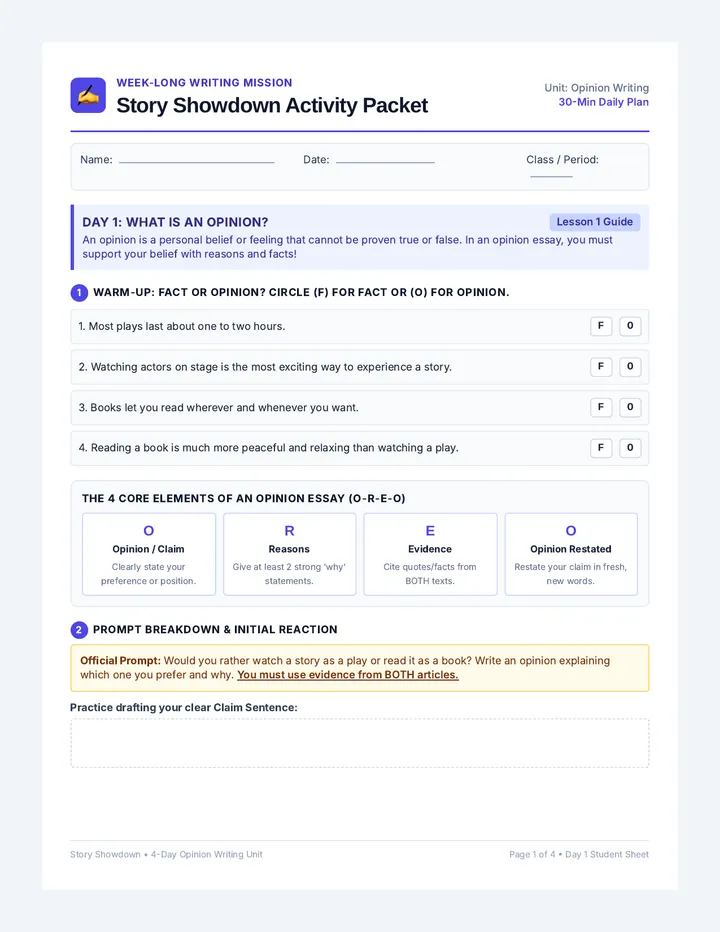
A four-day opinion writing unit guiding students through forming claims, analyzing paired texts, and crafting evidence-based essays comparing theatrical plays and books.

SM

Samantha McBath

6
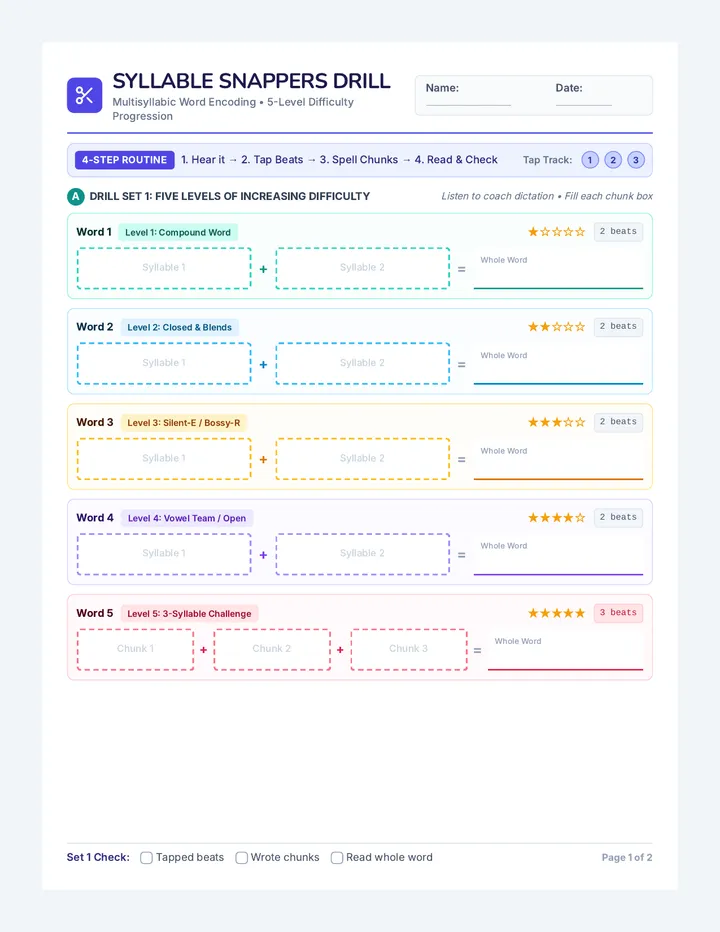
Syllable Snappers Student Drill

Syllable Snappers

A targeted multisyllabic encoding intervention designed for third-grade learners mastering syllable division and phoneme-grapheme mapping. Features a student-facing practice drill and an explicit step-by-step facilitation script for paraprofessionals.

SW

Stephanie Wooten

14
Week 3 Monday Sentences Worksheet

Week 3 Monday Sentences Worksheet

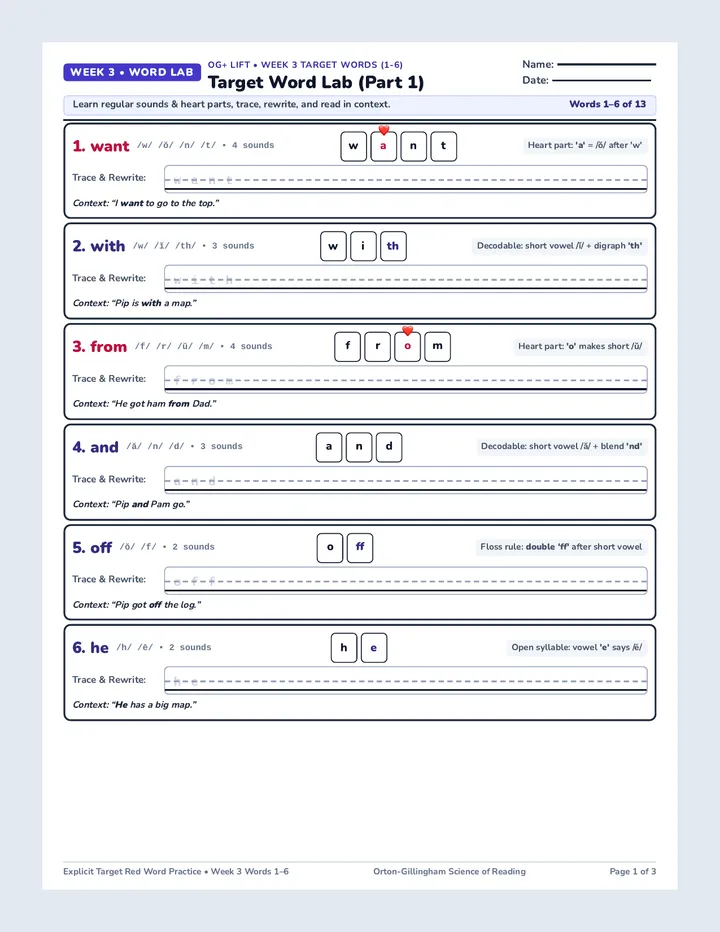
Week 3 Monday sentences worksheet expanded to a 3-page packet: Pages 1 and 2 cover all 13 target red words ('want', 'with', 'from', 'and', 'off', 'he', 'have', 'has', 'me', 'his', 'my', 'into', 'now') with orthographic heart mapping, trace, rewrite, and context sentences; Page 3 provides sentence pyramids, rapid arm-tap, and 52px transcription.

S

Sara