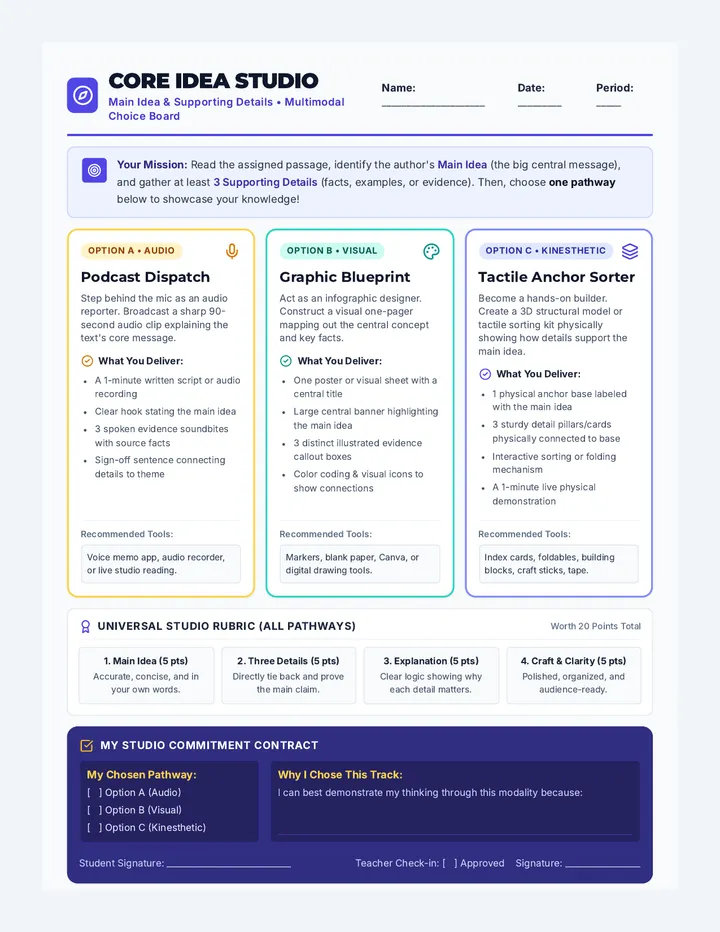
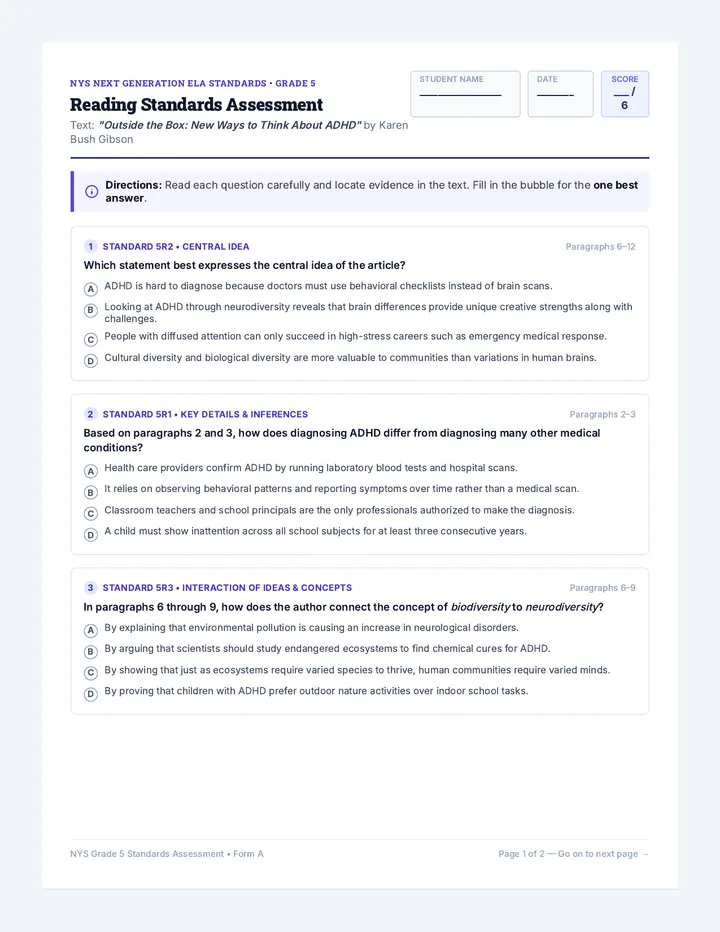
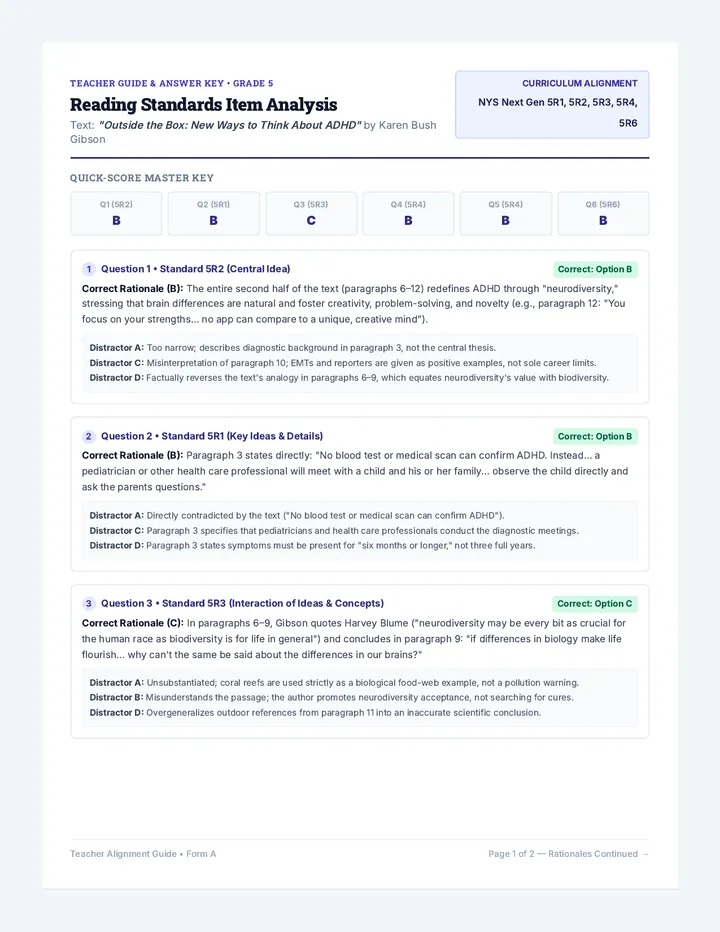
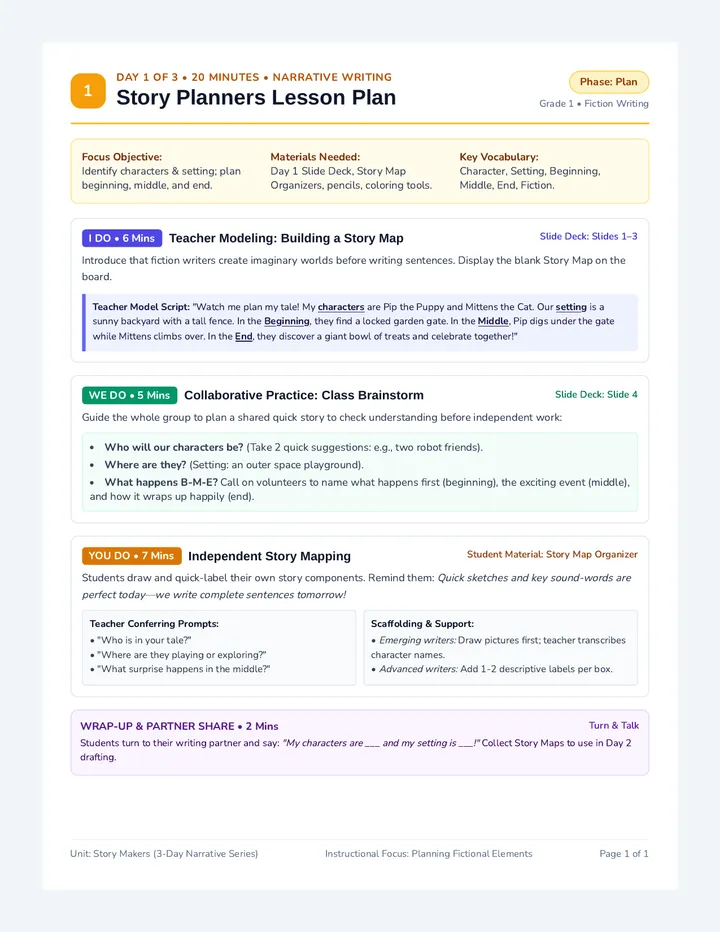
Explain Essay Graphic Organizer Student Name:
Date:
Period:
Explanatory Essay Graphic Organizer
Traditional Outline Format • WIDA Focus: EXPLAIN (Clarify causes, effects, and how phenomena work)
ELD Level IV
1
PARAGRAPH 1: INTRODUCTION
Hook • Context & Phenomenon • Explanatory Thesis
1. Hook (Surprising observation, mystery, or intriguing fact about the phenomenon):
2. Background & Phenomenon (2-3 sentences defining the topic and explaining why it occurs):
3. Explanatory Thesis Statement (State the phenomenon + your 2 main causes, factors, or stages):
2
PARAGRAPH 2: BODY PARAGRAPH 1 (CAUSE / STAGE 1)
Focus Sentence • Factual Evidence • Mechanism Analysis
Topic / Focus Sentence (Identify the first major cause, condition, or initial phase):
Evidence & Technical Detail (Data, observable scientific or historical facts, or expert source):
Explanation of Mechanism (Explain how and why: What steps make this happen? What is the outcome?):
ACADEMIC TRANSITION BANK (USE THESE TO CONNECT YOUR SENTENCES)
Cause & Effect: Consequently, as a result of, due to, for this reason, therefore
Process Steps: Initially, in the next phase, subsequently, simultaneously, over time
Clarifying How/Why: This demonstrates that, specifically, in other words, this triggers
Student:
Explanatory Essay Graphic Organizer • Page 2
Body 2 & Conclusion
3
PARAGRAPH 3: BODY PARAGRAPH 2 (CAUSE / STAGE 2)
Focus Sentence • Factual Evidence • Mechanism Analysis
Topic / Focus Sentence (Identify the second major cause, condition, or subsequent phase):
Evidence & Technical Detail (Specific facts, experimental data, or observations with source):
Explanation of Mechanism (Explain how this builds upon Stage 1 to produce the overall result):
4
PARAGRAPH 4: CONCLUDING PARAGRAPH
Restate Thesis • Synthesize Process • Broader Impact
1. Restate Explanatory Thesis (Rephrase how/why the phenomenon happens in fresh academic terms):
2. Synthesis of Stages / System (Summarize how the causes and stages connect into a unified process):
3. Broader Significance & Impact (Why does understanding this process matter to science, society, or daily life?):
EXPLANATORY WRITING CHECKLIST (REVIEW BEFORE WRITING YOUR ROUGH DRAFT)
Clear thesis identifying phenomenon & 2 causes/stages
Used cause/effect transitions from the bank
Two pieces of factual evidence with clear source citations
Formal, objective tone (no informal slang or "I think")
Detailed mechanism explaining how and why each step happens
Conclusion explains real-world impact and significance
Argue Essay Graphic Organizer Student Name:
Date:
Period:
Argumentative Essay Graphic Organizer (5-Paragraph CER)
CER Outline Format • WIDA Focus: ARGUE (Claim • Evidence • Reasoning)
ELD Level IV
1
PARAGRAPH 1: INTRODUCTION
Hook • Issue Context • Overarching Claim
1. Hook (Compelling statistic, provocative question, or dilemma):
2. Issue Background (2-3 sentences introducing the debate and key stakeholders):
3. Overarching Claim (Thesis) (State your clear stance + your 2-3 main supporting reasons):
2
PARAGRAPH 2: BODY PARAGRAPH 1 (CER #1)
Sub-Claim 1 • Evidence • Reasoning
Claim (Topic Sentence) (First specific reason that directly proves your thesis):
Evidence & Source Attribution (Data, quote, or fact — e.g., "According to..."):
Reasoning (Warrant) (Explain why this evidence proves your claim: Connect proof to thesis):
3
PARAGRAPH 3: BODY PARAGRAPH 2 (CER #2)
Sub-Claim 2 • Evidence • Reasoning
Claim (Topic Sentence) (Second distinct reason that strengthens your stance):
Evidence & Source Attribution (Research finding, expert quote, or documented fact):
Reasoning (Warrant) (Explain the logical rule: How does this evidence validate your sub-claim?):
CER ACADEMIC TRANSITION BANK (CONNECT YOUR CLAIMS, EVIDENCE & REASONING)
Giving Evidence: Research confirms that, according to, data illustrates, for instance
Explaining Reasoning: This proves that, because of this, this demonstrates why, clearly
Counterclaim & Rebuttal: Although critics claim, despite this view, conversely, yet the evidence shows
Student:
Argumentative Essay (5-Paragraph CER) • Page 2
Body 3 & Conclusion
4
PARAGRAPH 4: BODY PARAGRAPH 3 (COUNTERCLAIM & REBUTTAL CER)
Counter-Claim • Evidence • Rebuttal Reasoning
Counter-Claim (Opposing View) (What objection or alternative claim do skeptics assert?):
Opposing Evidence & Rebuttal Evidence (Acknowledge their evidence, then cite stronger data refuting it):
Rebuttal Reasoning (Warrant) (Explain why the counterargument is flawed or why your claim remains valid):
5
PARAGRAPH 5: CONCLUDING PARAGRAPH
Restate Claim • Synthesize CER • Call to Action
1. Restate Overarching Claim (Rephrase your stance with fresh, assertive, elevated vocabulary):
2. Synthesis of CER Points (Summarize how your 3 claims and evidence unite to prove your argument):
3. Call to Action / Lasting Insight (What action should readers take, or what big truth should they remember?):
CER Quick Formula: Claim = What you argue • Evidence = Credible proof/quotes • Reasoning = How/why proof validates your claim.
ARGUMENTATIVE CER WRITING CHECKLIST (REVIEW BEFORE WRITING YOUR ROUGH DRAFT)
Clear overarching claim taking an arguable, defensible stance
Used CER transitions from the bank to connect sentences
All 3 body paragraphs contain specific, cited evidence ("According to...")
Formal, persuasive academic tone (no informal slang or emotional insults)
Clear reasoning (warrant) explaining how each piece of evidence proves claim
Included counter-claim with evidence and a strong rebuttal
Narrate Essay Graphic Organizer Student Name:
Date:
Period:
Narrative Essay Graphic Organizer
Traditional Outline Format • WIDA Focus: NARRATE (Sequence events, depict conflicts, and convey theme)
ELD Level IV
1
PARAGRAPH 1: EXPOSITION & INCITING INCIDENT
Narrative Hook • Setting & Character • Inciting Incident
1. Narrative Hook (Vivid sensory detail, dialogue in media res, or reflective opening statement):
2. Exposition & Setting (Establish protagonist, physical time/place atmosphere, and normal life context):
3. Inciting Incident & Core Conflict (The disruption or dilemma that sets the narrative journey in motion):
2
PARAGRAPH 2: RISING ACTION & DEVELOPING OBSTACLES
Action Step • Sensory Detail & Dialogue • Rising Stakes
Complication / Action Attempt (First major action character takes, and the obstacle or twist encountered):
Sensory Description & Dialogue ("Show, don't tell": concrete sights, sounds, physical actions, or dialogue lines):
Internal Reaction & Heightened Stakes (Protagonist's feelings, thoughts, and why the stakes escalate):
NARRATIVE TRANSITION BANK (USE THESE TO PACING AND CONNECT SCENES)
Time & Sequence: Before long, moments later, as dawn broke, eventually, meanwhile
Sudden Shifts: Out of nowhere, without warning, in an instant, abruptly, unexpectedly
Sensory & Reflection: Senses heightened as, gazing toward, in that moment I realized, aware that
Student:
Narrative Essay Graphic Organizer • Page 2
Climax & Resolution
3
PARAGRAPH 3: CLIMAX & FALLING ACTION
Turning Point • Decisive Action • Immediate Aftermath
Climax / Turning Point (The peak moment of highest tension, confrontation, or critical dilemma):
Decisive Choice / Action (The critical decision or bold move the protagonist executes under pressure):
Falling Action & Aftermath (Immediate emotional or physical outcome as the central crisis begins to settle):
4
PARAGRAPH 4: RESOLUTION & THEMATIC REFLECTION
New Reality • Character Growth • Universal Theme
1. Resolution / New Reality (How the situation or environment has been permanently changed):
2. Character Transformation (What personal realization, new perspective, or emotional shift occurred?):
3. Universal Theme / Final Insight (What enduring life truth or deeper meaning does this story reveal to readers?):
NARRATIVE WRITING CHECKLIST (REVIEW BEFORE WRITING YOUR ROUGH DRAFT)
Engaging exposition establishing setting, character, and core conflict
Used temporal and pacing transitions from the transition bank
Sensory language and dialogue that "shows rather than tells"
Clear chronological flow with purposeful scene and paragraph pacing
Climax featuring a high-stakes turning point and decisive character action
Thoughtful resolution highlighting character growth and universal theme
Compare Contrast Graphic Organizer Student Name:
Date:
Period:
Compare & Contrast Graphic Organizer
Point-by-Point Format • WIDA Focus: INFORM (Analyze similarities, differences, and significance)
ELD Level IV
1
PARAGRAPH 1: INTRODUCTION
Hook • Subject Context • Comparative Thesis
1. Hook (Engaging fact, quote, or question that connects both Subject A and Subject B):
2. Introduce Both Subjects (2-3 sentences providing context on Subject A and Subject B):
3. Comparative Thesis Statement (Name both subjects + your 2 main comparison points + key overall insight):
2
PARAGRAPH 2: BODY PARAGRAPH 1 (CRITERION / POINT 1)
Focus Criterion • Evidence (A vs. B) • Analysis
Topic Sentence (Criterion 1) (Identify the first feature, quality, or category being compared):
Subject A & Subject B Evidence (Cite facts, stats, or quotes illustrating how each subject handles this point):
Comparative Analysis (Explain the similarity or difference: Why is this distinction important to understand?):
COMPARATIVE TRANSITION BANK (USE THESE TO CONNECT YOUR COMPARISONS)
Showing Similarities: Similarly, likewise, in the same manner, just as... so too, both
Showing Differences: In contrast, whereas, on the other hand, conversely, unlike, however
Revealing Significance: This distinction reveals, notably, this highlights that, this underscores
Student:
Compare & Contrast Graphic Organizer • Page 2
Point 2 & Conclusion
3
PARAGRAPH 3: BODY PARAGRAPH 2 (CRITERION / POINT 2)
Focus Criterion • Evidence (A vs. B) • Analysis
Topic Sentence (Criterion 2) (Identify the second feature, quality, or category being compared):
Subject A & Subject B Evidence (Specific facts, textual details, or data showing how each relates to this criterion):
Comparative Analysis (Analyze the connection: What does comparing them on this point uncover?):
4
PARAGRAPH 4: CONCLUDING PARAGRAPH
Restate Thesis • Synthesize Comparison • Final Insight
1. Restate Comparative Thesis (Rephrase the core comparison using fresh, elevated academic words):
2. Synthesis of Key Similarities & Differences (Briefly bring together your main comparison findings):
3. Broader Insight & Significance (Why does comparing Subject A and Subject B matter to the reader or the world?):
COMPARE & CONTRAST WRITING CHECKLIST (REVIEW BEFORE WRITING YOUR ROUGH DRAFT)
Clear thesis identifying Subject A, Subject B, and 2 comparison points
Used comparative transitions (e.g., "In contrast", "Similarly")
Balanced factual evidence provided for both Subject A and Subject B
Formal, objective academic tone without informal slang or bias
Analysis clearly explains the significance of each similarity or difference
Conclusion explains what comparing the two subjects reveals overall