Heart of Service Slides Heart of Service
Analyzing Theme Development Through Parallel Narratives
Journal Warm-Up
"What makes a volunteer experience meaningful?"
5 Minutes to Write
Video Analysis
Determining Central Ideas and Themes
10 MINUTES
Embedded media
Focus: Justin's Story
Focus: Liz's Texts
The Essentials
Central Idea
The main point or primary message of a specific text.
Example
Liz wants to adopt Fluffy.
Theme
The underlying message or 'big lesson' that applies to life.
Example
Volunteering is rewarding.
Detective Mode
1:30 Making Inferences
When Liz mentions "sad eyes," what is she really trying to say?
2:35 Analyzing Strategy
Mom asks about "nice people." Is she curious, or is this a diversion?
Theme Mapping
Activity
The Shared Theme
Volunteering is Rewarding
Story A
Justin
Basketball, bridge, and a thank-you postcard.
Story B
Liz
Shelter help, "sad eyes," and bonding with Fluffy.
"One heart, two different stories."
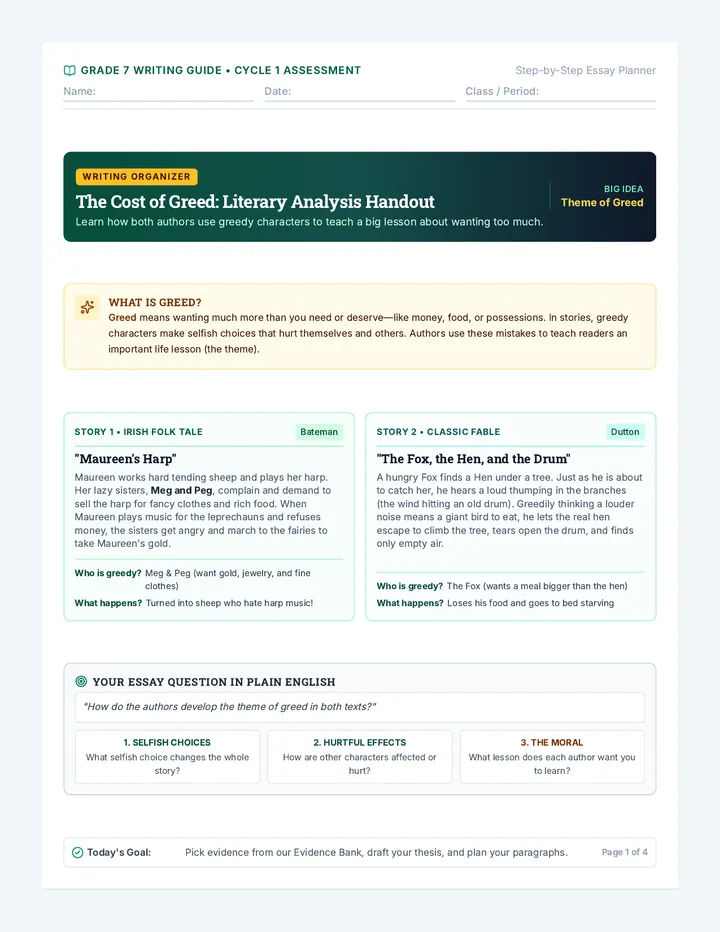
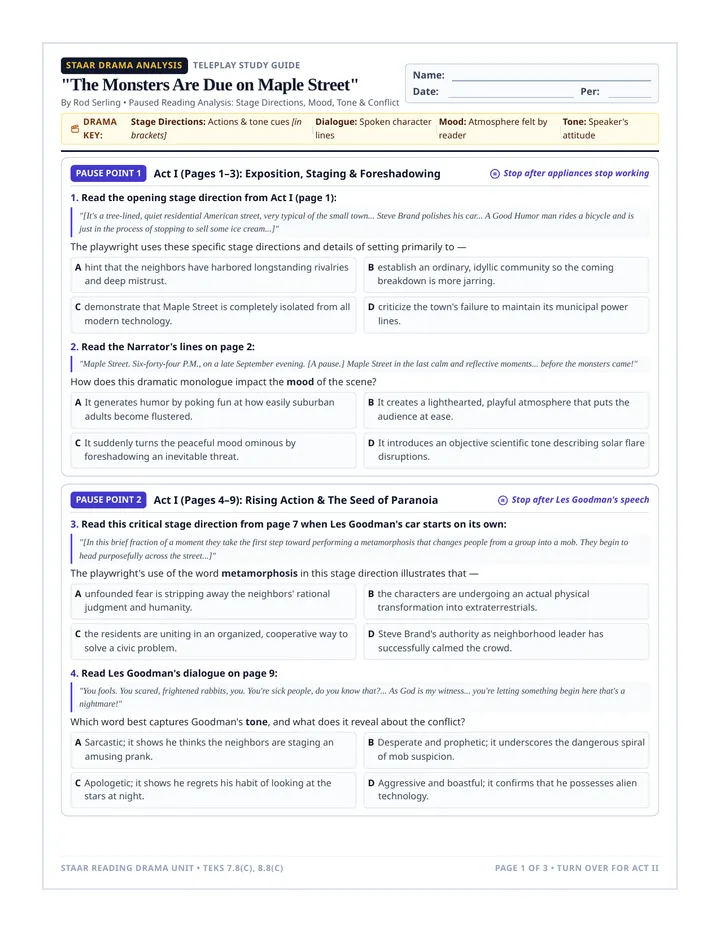
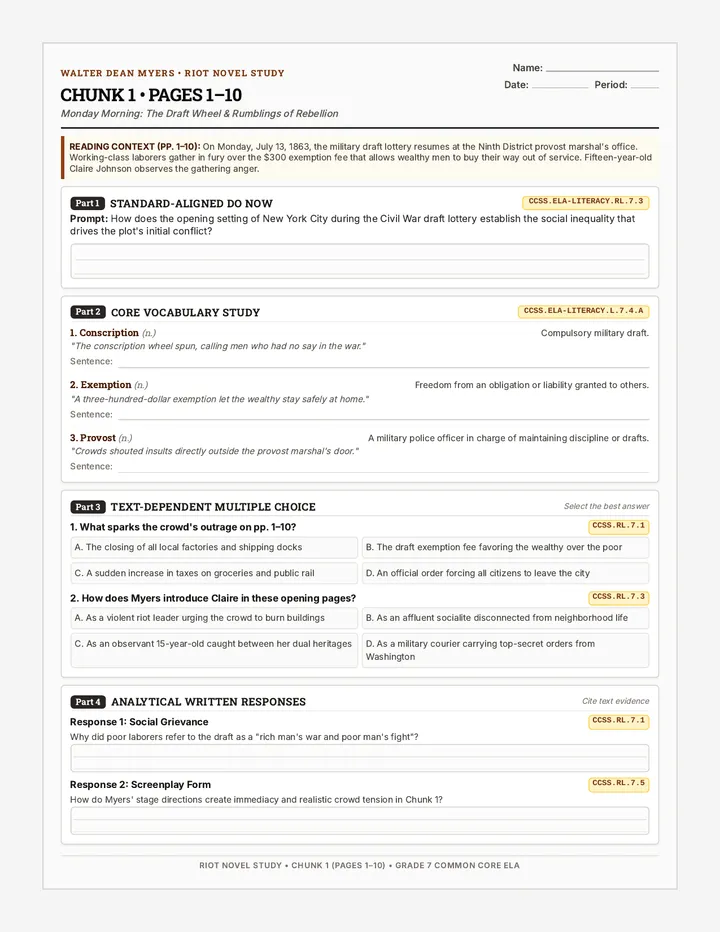
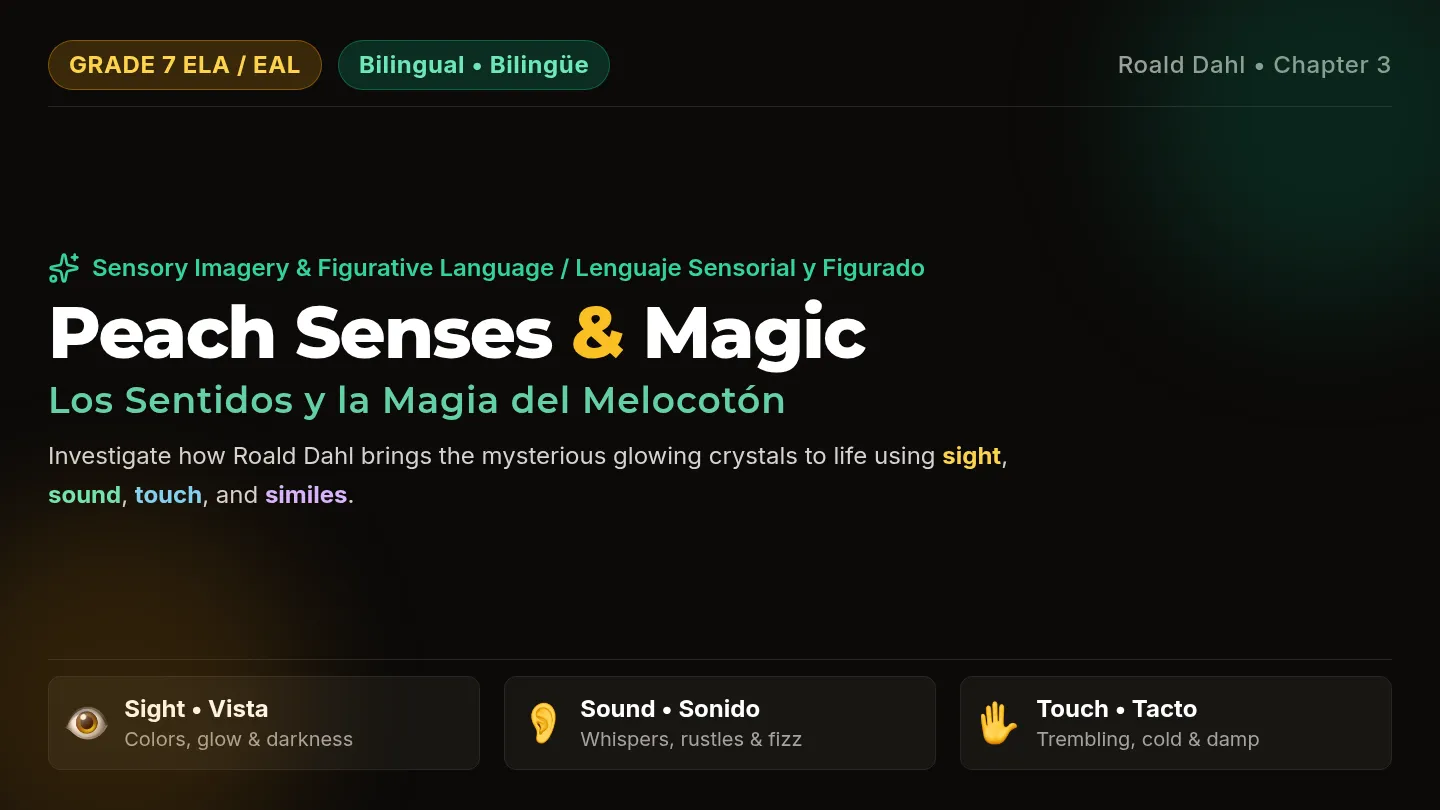
Analysis Writing
Write one paragraph explaining how the creator used parallel narratives to reinforce the theme.
Compare Justin & Liz
Use Specific Details
Define the Shared Lesson
Final Share
"Share one piece of evidence from your map that proves volunteering is rewarding."
1
Speak Up
2
Reference Evidence
3
Listen In
Service Journal Prompts Service Journal
Reflections on Theme & Giving
Name:
Date:
Part 1: The Warm-Up
"What makes a volunteer experience meaningful?"
Part 2: Reflection
After watching the video and seeing Liz and Justin's different experiences, how has your definition of "rewarding" changed? Is the reward always what we expect?
Service Stories Anchor Chart Analyzing Theme
How Stories Connect
Central Idea
The main point of a specific text or conversation.
"Liz wants to adopt Fluffy."
Theme
The universal lesson that applies to everyone's life.
"Volunteering is rewarding."
One Theme, Two Stories
Justin's Story
Volunteering at the gym to fix a bridge and play basketball.
"I had a great time!"
Giving is
Liz's Story
Volunteering at the animal shelter and bonding with Fluffy.
"It was awesome!"
Authors use different paths to reach the same truth.
Parallel narratives show us that themes are universal constants.
Service Tracker Worksheet Theme Tracker
Case Study: Heart of Service
Student:
Date:
Mapping the Heart
Theme
Volunteering is Rewarding
Justin's Story Evidence
Liz's Story Evidence
List specific details (the bridge, Fluffy, etc.) that prove the experience was rewarding for each character.
Writing: Parallel Narratives
Explain how the author used parallel narratives (Justin and Liz's stories side-by-side) to reinforce the theme. How does having two stories make the message stronger?
Justin's Story Included
Liz's Story Included
Shared Theme Defined
Heart of Service Answer Key Answer Key
Theme Tracker & Analysis
Teacher Resource
Part 1: Theme Map Evidence
Justin's Story (Story A)
Emotional Reward: Justin says he had an "awesome experience" and "great time."Physical Impact: The group worked together to fix a wooden bridge.Gratitude: He received a thank-you postcard from the organization.Continuity: He is so excited that he's going back to volunteer again.
Liz's Story (Story B)
Shift in Mindset: Liz admits she "didn't want to volunteer" but "totally changed my mind."Connection: She bonded deeply with Fluffy (the bearded dragon).Commitment: She wants to come "every day" to help and see the animals.Outcome: She finds the experience so rewarding she wants to adopt a pet.
Part 2: Narrative Structure Analysis
Sample Strong Response
"The creator uses parallel narratives by placing Justin's personal story at the beginning and end, while Liz's text conversation happens in the middle. By showing two different people—one at a gym and one at an animal shelter—experiencing the same feelings of joy and accomplishment, the creator proves that the theme 'volunteering is rewarding' is universal. It doesn't matter what kind of work you do; the lesson remains the same. The parallel structure reinforces the theme by providing double the evidence from two completely different perspectives, making the 'big lesson' feel more true to the audience."
Discussion Prompts
Justin's Framing:
Ask: "Why does Justin start with his own story instead of just showing Liz's texts?" (Answer: To establish himself as a credible narrator and set the tone).
The Reveal:
Ask: "How does the humor of Fluffy being a lizard connect to the theme?" (Answer: It shows that rewards can be unexpected and delightful).