Lenny.com
Explore
Create
ActivitiesNewMathEnglish Language ArtsScience & EngineeringSocial StudiesGlobal LanguagesHealth & Physical EducationSpecial EducationCounseling & Life SkillsArts & CreativityESL
Lenny.com
Lenny.com
Explore
Create
ActivitiesNewMathEnglish Language ArtsScience & EngineeringSocial StudiesGlobal LanguagesHealth & Physical EducationSpecial EducationCounseling & Life SkillsArts & CreativityESL
Lenny.com
Lenny.com

Solutions

Lenny for EducatorsLenny for SchoolsLenny for Districts

Product

ExploreSign inCreateSupportAbout

Resources

Getting startedMTSS Acceleration Program

© 2026 Lenny Learning Inc.

TermsPrivacyAccessibility
LinkedInInstagramX
Lenny

Descriptive Details

Sensory language, specific adjectives, and vivid imagery used to create mental pictures. Develops 'show, not tell' techniques to enhance narrative and expository writing.

English Language ArtsPhonics & Reading FoundationsLetter IdentificationLearn Letters A-ZLowercase and Uppercase LettersConsonants and VowelsLetter-Sound AssociationsLetter-Sound Associations: LowercaseLetter-Sound Associations: UppercaseBeginning and Ending SoundsRhymingBlending And SegmentingShort VowelsShort Vowel SoundsConsonant BlendsConsonant DigraphsBlends, Digraphs, and TrigraphsDigraphs, Blends, and Silent LettersLong Vowel SoundsLong Vowel PatternsShort and Long VowelsShort and Long Vowel PatternsSilent EVowel SoundsVowel TeamsR-Controlled VowelsDiphthongs: Oi, Oy, Ou, OwVariant VowelsVariant, Diphthong, And R Vowel PatternsSoft G And CSight WordsIrregular WordsWord RecognitionSyllablesSyllable TypesTwo-Syllable WordsMultisyllabic WordsPhoneme ManipulationDecodable TextsVocabularyAction WordsQuestion WordsNouns and AdjectivesClassify WordsCompound WordsSynonyms and AntonymsHomophonesHomophones and HomonymsShades of MeaningContext CluesPrefixes and SuffixesGreek and Latin RootsAnalogiesIdioms and AdagesForeign Words and ExpressionsWord Choice and UsageReference SkillsReading ComprehensionRead-Along Literary TextsRead-Along Informational TextsReality vs. FictionStory ElementsCharacterSequenceMain IdeaCause And EffectCompare And ContrastReading StrategiesText StructureAuthor's PurposeAuthor's Purpose And ToneAuthor's PerspectivePoint Of ViewThemeInference And ThemeInference And AnalysisPoetry ElementsLiterary DevicesAnalyzing LiteratureAnalyzing Informational TextsComparing TextsAudience, Purpose, And ToneBusiness DocumentsNovel StudyNonfiction Book StudyGrammar & MechanicsSentencesNounsVerbsAdjectivesPronounsCapitalizationPunctuationContractionsConjunctionsPrepositionsArticlesAdjectives And AdverbsVerb TypesVerb TensePronouns And AntecedentsPronoun TypesSubject-Verb AgreementDirect And Indirect ObjectsSentences, Fragments, And Run-OnsPhrases And ClausesCommasSemicolons, Colons, And CommasDashes, Hyphens, And EllipsesSpellingAbbreviationsFormattingVerb Tense And MoodMisplaced ModifiersWritingDescriptive DetailsCreative WritingOpinion WritingTopic SentencesOrganizing WritingLinking WordsSentence VarietyIntroductions And ConclusionsPersuasive And Opinion WritingExpository WritingPersuasive StrategiesDeveloping And Supporting ArgumentsTopic Sentences And Thesis StatementsSummarizingResearch SkillsEditing And RevisingActive And Passive Voice=Writing Clearly And ConciselyDebate & Public SpeakingPublic Speaking BasicsPersuasive TechniquesClaims and EvidenceTypes of ArgumentsReasoning TypesLogical FallaciesTopic ResearchOrganizing EvidenceDebate Speech OrganizationAttacking and Defending ArgumentsClash and EngagementImpact CalculusQuestioning and Cross-ExaminationCritical ThinkingInformal LogicFormal LogicInductive Reasoning

Videos

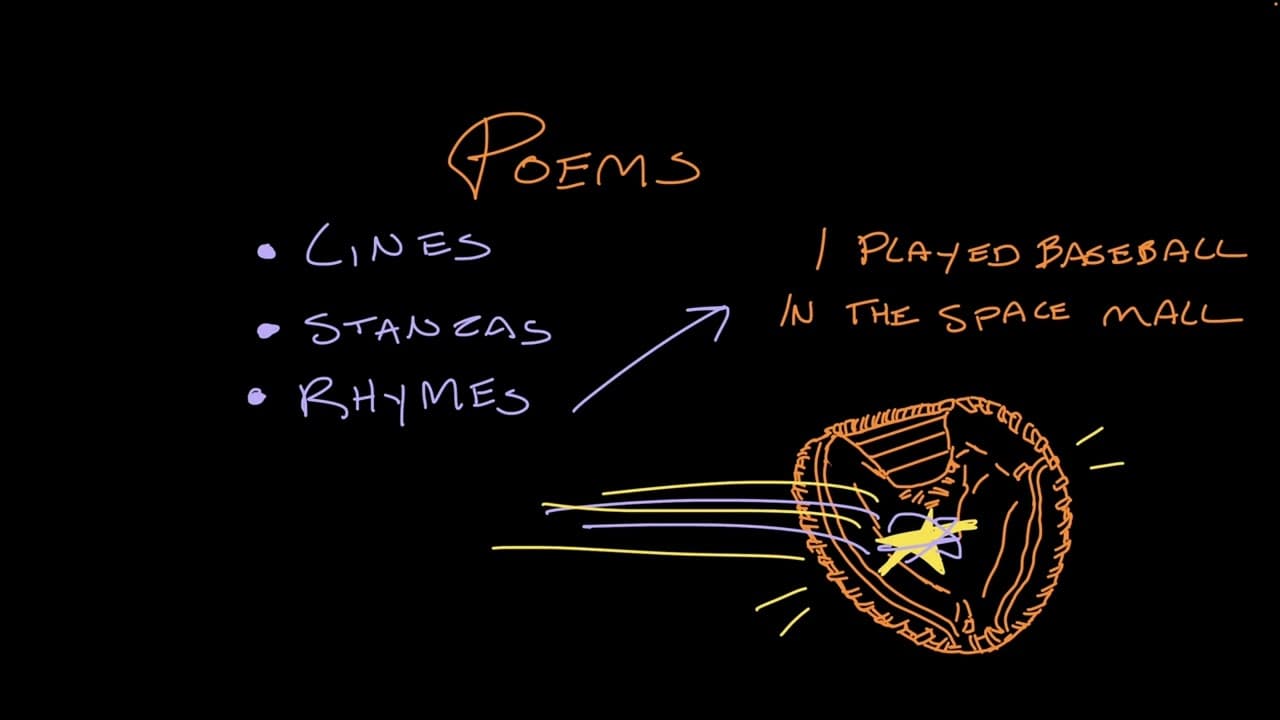
How to Read a Poem: Structure and Meaning

How to Read a Poem: Structure and Meaning

This educational video serves as an engaging introduction to poetry analysis, specifically focusing on how structure contributes to meaning. The narrator, David, welcomes viewers to "The Poem Zone" and breaks down the fundamental building blocks of poetry: lines, line breaks, stanzas, and rhyme. He defines poetry simply as "art made out of words" and explains that while poems play with sound and rhythm, they don't always have to rhyme. The visual style uses a blackboard aesthetic with handwritten text that appears in real-time to illustrate concepts. The core of the video features an original piece titled "Egg Poem," which the narrator reads and then dissects stanza by stanza. Through this close reading, the video demonstrates how a poem's structure can organize ideas and build an emotional arc. The narrator highlights how the poem uses a repeating structure ("Morning is...") to anchor each stanza while progressing from a calm morning to a chaotic one. For educators, this video is a powerful tool for bridging the gap between simply reading poetry and analyzing it. It explicitly teaches students to ask how lines and stanzas build meaning, rather than just identifying them as structural elements. The video introduces the concept of extended metaphor in a highly accessible way by connecting the cooking terms "easy," "medium," and "hard" to both the state of an egg and the speaker's emotional state, providing a clear model for students to use in their own literary analysis.

Khan AcademyKhan Academy

4mins 6s

Using Adjectives to Create Vivid Mental Images

Using Adjectives to Create Vivid Mental Images

This educational video provides a clear and engaging introduction to adjectives and their role in grammar and writing. It defines adjectives as words that "modify" or change nouns, explaining this concept through visual demonstrations of how descriptive language alters mental images. The narrator uses a step-by-step approach, starting with a basic sentence ("The dog ran") and showing how adding different adjectives (e.g., "brown," "sneaky," "thirsty") completely transforms the reader's visualization of the event.

GrammarSongs by MelissaGrammarSongs by Melissa

3mins 42s

How Intensifiers and Adverbs of Degree Work

How Intensifiers and Adverbs of Degree Work

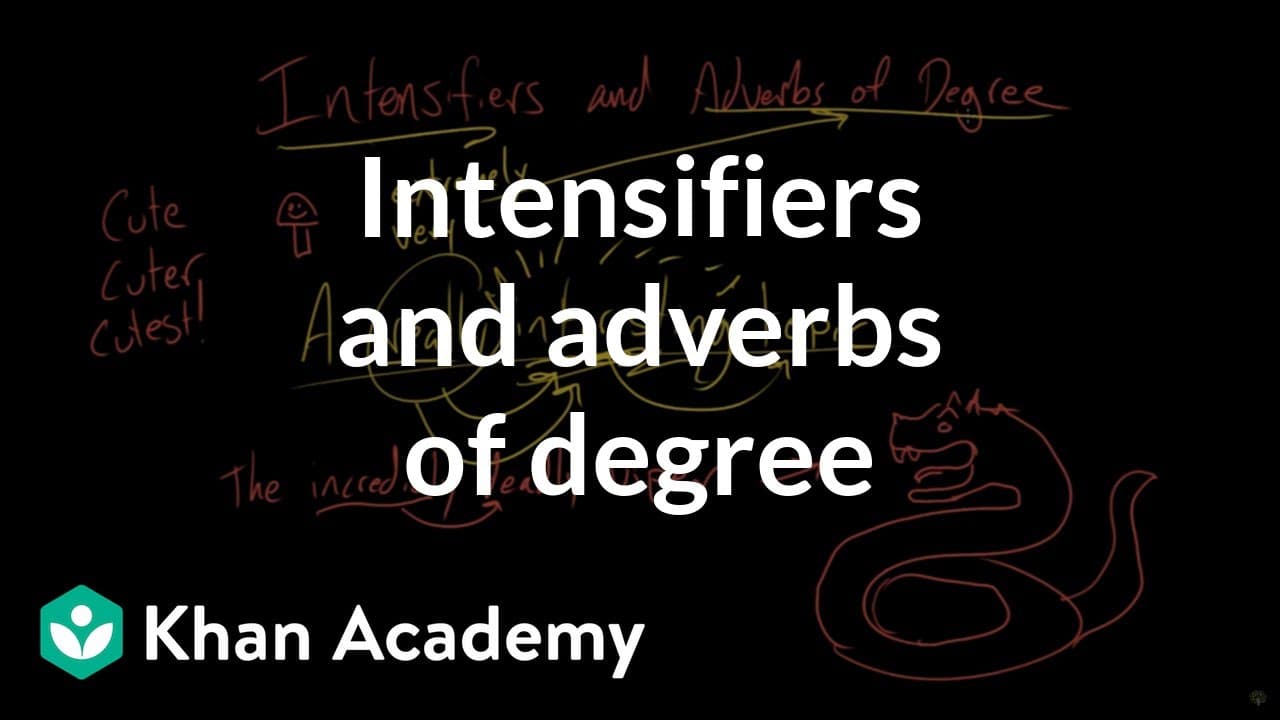
This animated grammar lesson explores the function and usage of intensifiers and adverbs of degree. The narrator explains how these specific types of adverbs modify adjectives to express intensity or extent, distinguishing them from simple comparative modifiers. Using clear handwritten text and simple illustrations, the video demonstrates how adding words like "really," "very," and "extremely" can double down on a description. The video uses engaging and humorous examples, such as the "Incredibly Deadly Viper" from Lemony Snicket's *A Series of Unfortunate Events*, to visualize abstract grammatical concepts. By altering the viper's description to "somewhat deadly" and "barely deadly"—and adjusting the drawing's teeth accordingly—the narrator concretely shows how adverbs of degree shift meaning along a spectrum. Teachers can use this video to help students move beyond basic descriptions in their writing. It provides a accessible framework for understanding how language can be precise regarding "how much" or to what extent something is true, moving from binary descriptions to a nuanced scale of meaning using modifiers.

Khan AcademyKhan Academy

5mins 14s

Writing Literary Journalism: Balancing Creativity and Truth

Writing Literary Journalism: Balancing Creativity and Truth

This engaging video lesson introduces students to the genre of literary journalism, distinguishing it from traditional objective reporting. Through a humorous framing device parodying a reality TV competition called "Write on the Money," the host explores how writers can blend factual reporting with narrative techniques like detailed descriptions, character development, and subjective perspectives to create compelling non-fiction. The content uses Jon Krakauer's "Into the Wild" as a primary text to demonstrate these techniques in action. A significant portion of the video is dedicated to the ethics of journalism, specifically the vital importance of accuracy, fact-checking, and transparency. It presents clear scenarios illustrating the real-world consequences of inaccurate reporting for business owners, the public, and the writer's own credibility. Ideal for English Language Arts and creative writing classrooms, this video provides a roadmap for students to write their own literary journalism. It offers practical strategies for research and interviewing while emphasizing that creativity must never come at the expense of the truth. The lesson concludes with a revised writing example that successfully balances narrative flair with factual integrity.

Miacademy & MiaPrep Learning ChannelMiacademy & MiaPrep Learning Channel

10mins 23s

How to Use Descriptive Language to Bring Stories to Life

How to Use Descriptive Language to Bring Stories to Life

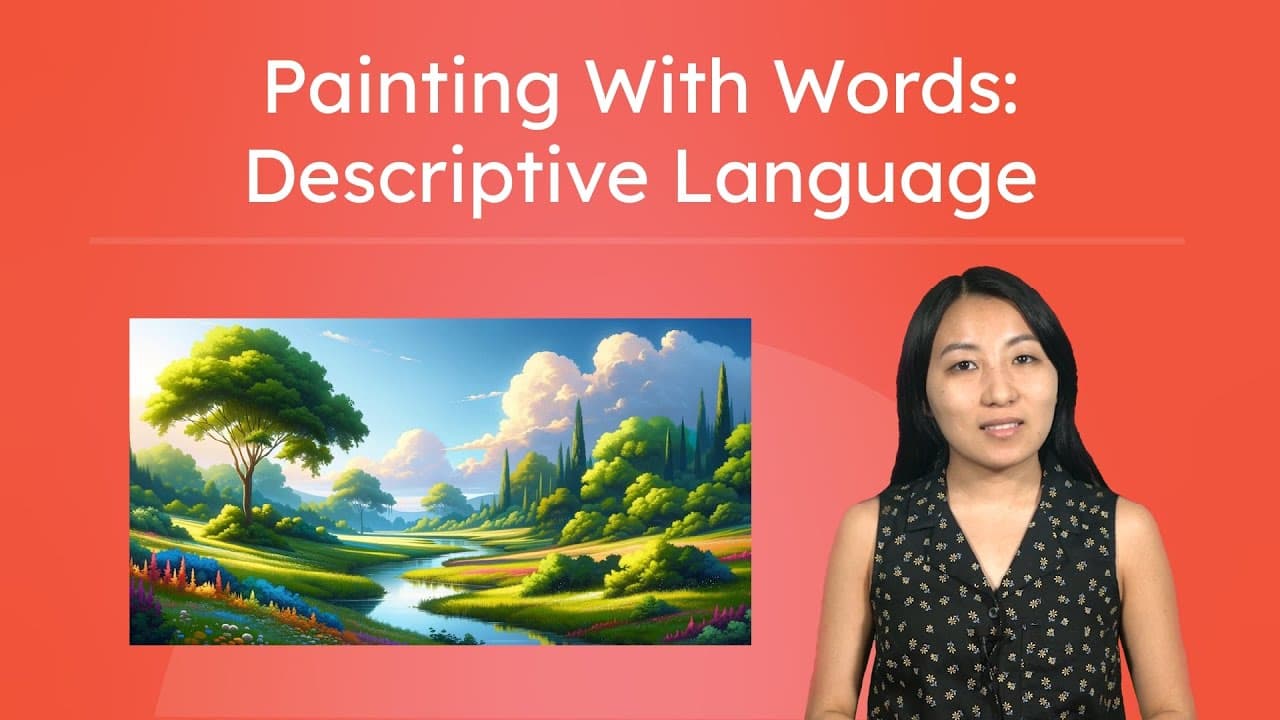
This engaging educational video teaches students how to elevate their writing using descriptive language. Set within a gamified narrative, the host and her robot companion arrive at 'Palette Plains,' a world that has lost its color and turned gray. To restore the vibrancy of the land and earn a 'Crystal Quill fragment,' the viewer must transform a dull, factual paragraph into a vivid, descriptive scene using adjectives, adverbs, and sensory details. The video breaks down the writing process into actionable strategies. It first reviews the roles of adjectives and adverbs before introducing two key techniques: 'Sensory Language' (appealing to the five senses) and 'Emotional Language' (establishing mood and feeling). Through clear examples—such as comparing a boring description of a beach to a vivid one—the narrator demonstrates how specific word choices help readers visualize a setting. The video also models close reading by analyzing a text to find descriptive elements. Ideally suited for upper elementary and middle school English Language Arts classrooms, this resource combines direct instruction with interactive practice. It includes specific pause points where students are prompted to complete tasks in a companion PDF (or on paper), such as matching definitions, analyzing a text, planning sensory details, and rewriting a paragraph. Teachers can use this video to introduce a descriptive writing unit, reinforce the concept of 'showing not telling,' or as a self-paced revision workshop.

Miacademy & MiaPrep Learning ChannelMiacademy & MiaPrep Learning Channel

10mins 4s

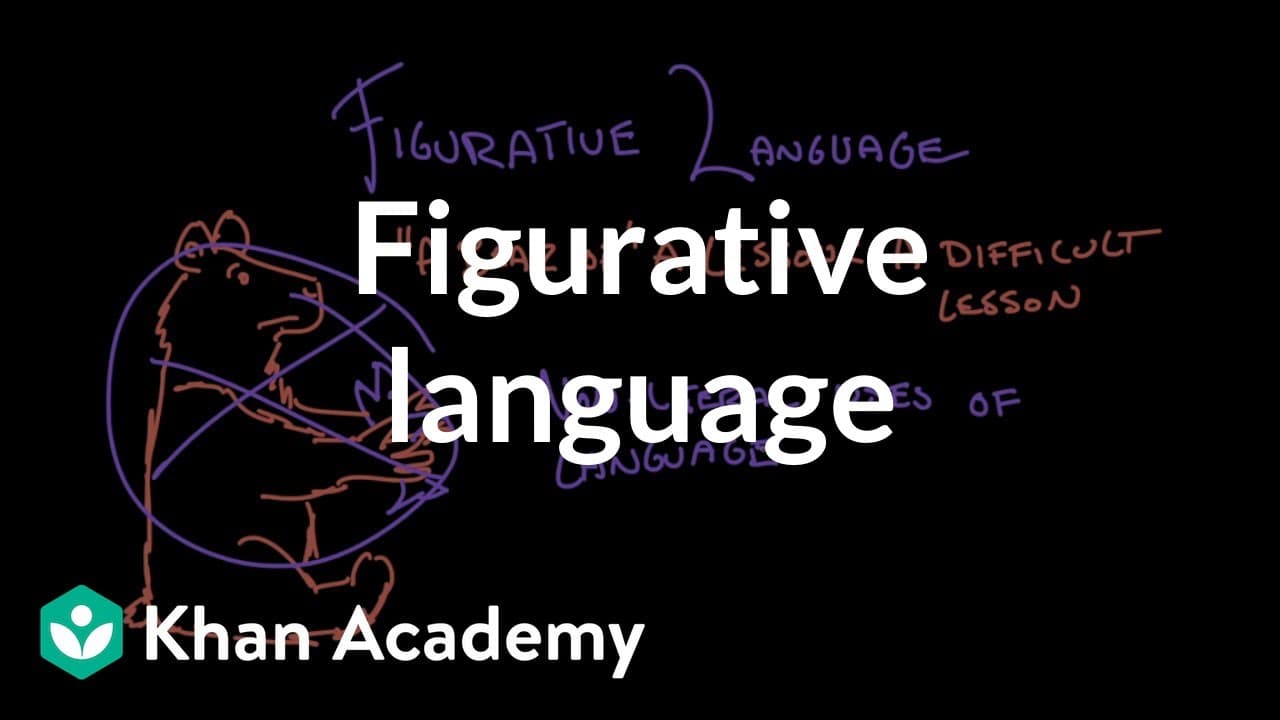
Mastering Figurative Language: Similes, Metaphors, and More

Mastering Figurative Language: Similes, Metaphors, and More

This engaging educational video provides a clear and humorous introduction to figurative language, distinguishing it from literal speech. Through the use of hand-drawn animations and dynamic text, the narrator breaks down five essential figures of speech: simile, metaphor, personification, hyperbole, and allusion. The video explains that figurative language involves saying one thing but meaning another to express truths more vividly, using the example of an "eagle-eyed editor" to demonstrate the concept. The content is structured systematically, dedicating a segment to each literary device. It defines similes as comparisons using "like" or "as" (e.g., "hungry as a wolf"), contrasts them with metaphors which make direct comparisons (e.g., "love is a rose"), and explores how personification attributes human traits to inanimate objects. It also covers hyperbole as purposeful exaggeration for effect and explains allusion as a reference to shared cultural knowledge, citing examples like Superman and Gollum. For educators, this video serves as an excellent primer or review tool for English Language Arts units on literary devices or creative writing. It provides accessible definitions and memorable visual examples that help students grasp abstract linguistic concepts. The humor and pacing make it suitable for upper elementary and middle school students, helping them move beyond literal interpretations to understand nuance, imagery, and emphasis in writing.
Khan AcademyKhan Academy

5mins 58s

Materials

First Day Feelings Reading Worksheet

First Day Feelings Reading Worksheet

An adapted reading passage of Patty Hansen's 'The First Day of Middle School' with enlarged, readable text scaled to fit each page, complete with chunked passage text, comprehension check, and emoji reflection organizer.

PL

Patrick l

Story Architect Guide Worksheet

Story Architect Guide Worksheet

A refined three-page story planning guide for senior English. Features a high-contrast architectural blueprint aesthetic with improved visual hierarchy, expanded student work areas, and technical schematic sections for character psychology, plot structure, and dialogue subtext.

JT

Jason Tetlow

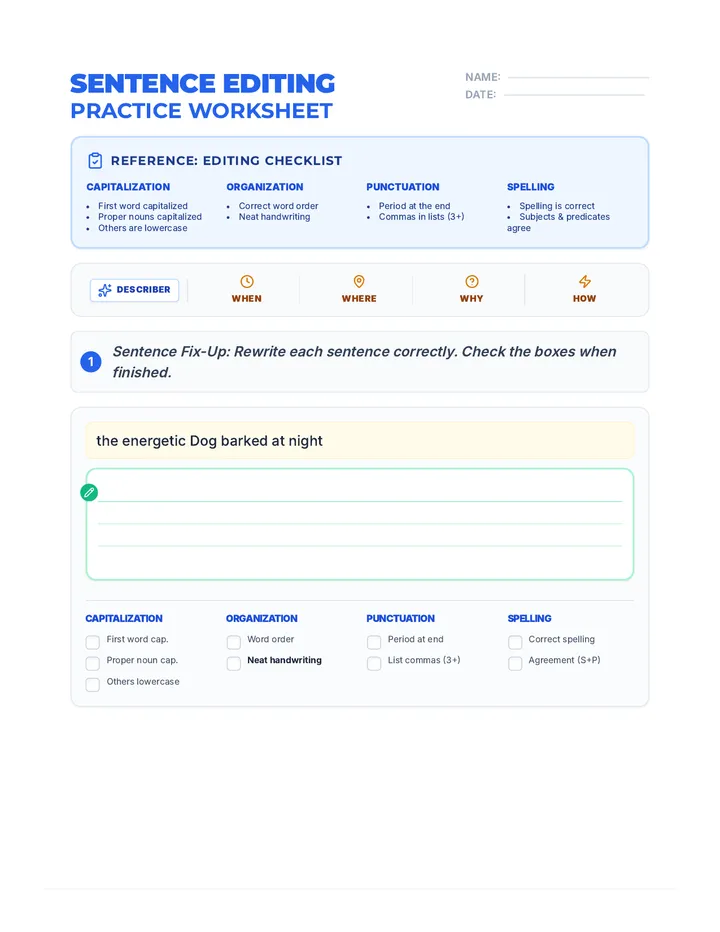
Sentence Editing Practice Worksheet

Sentence Editing Practice Worksheet

An extensive 6-page worksheet for sentence building and correction. Features an editing checklist for review at the top of Page 1, followed by four 'Sentence Fix-Up' items and six complex frames. All tasks include 4 handwriting lines and a standardized checklist with increased font sizes for better legibility. Subtitle removed and font sizes polished for classroom use.

EV

Erin Venuti

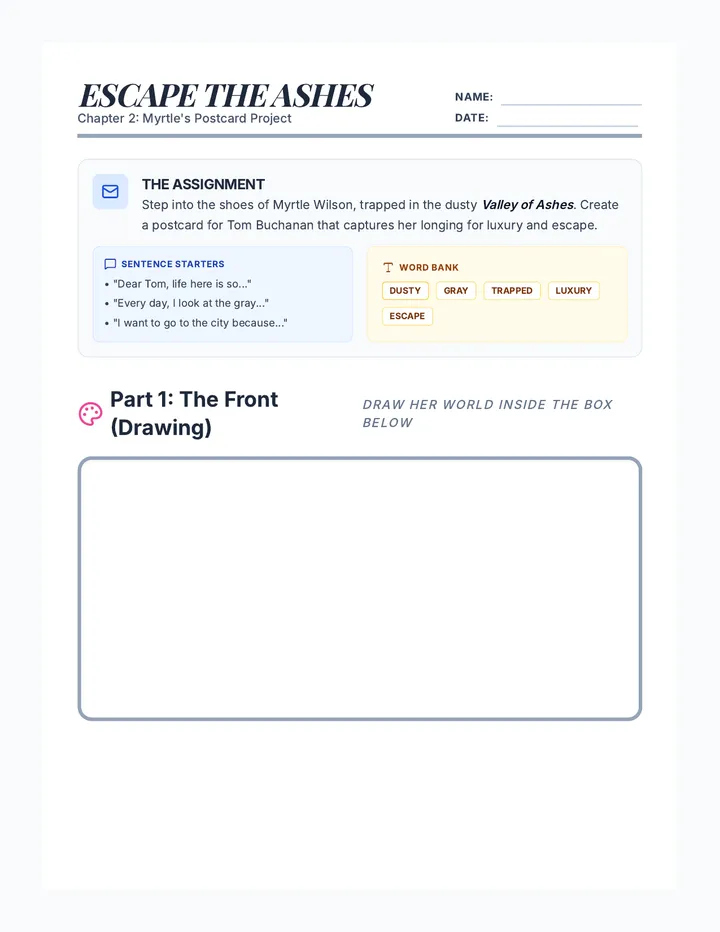
Myrtle Postcard Project Worksheet Expanded Final Balance Plus Plus Plus Plus Plus Plus

Myrtle Postcard Project Worksheet Expanded Final Balance Plus Plus Plus Plus Plus Plus

A print-perfect two-page postcard project. Page 1 contains instructions, compact scaffolding, and a 300px drawing box guaranteed to stay on the first page. Page 2 features the postcard back with 16 writing lines. This version ensures Page 1 content is perfectly contained with a significant bottom margin to prevent accidental page splits during printing.

KR

Kirstin Reed

Sensory Palette Worksheet

Sensory Palette Worksheet

A two-page literary and imagery analysis worksheet featuring structured color-coded annotation guides, two contrasting literary passages, sensory evidence organizers, and analytical response sections to examine mood, tone, and theme.

WM

Will Molinar

Sensory Sentences Worksheet

Sensory Sentences Worksheet

A vibrant, print-ready two-page worksheet designed to help students master sensory and descriptive vocabulary. Features 10 color-coded nouns, action verbs, and vivid adjectives with expanded handwriting lines and a combo challenge.

C

carlsond

Sequences

Lesson Plan 1 Introduction

Literary Device Detectives

A comprehensive multi-unit sequence for 3rd and 4th grade students covering key literary devices: Introduction to Figurative Language, Onomatopoeia, Similes, Metaphors, Personification, and Idioms. Each unit provides 5 lesson plans, interactive notebook resources, and a wide variety of activities and stories designed to improve descriptive writing and reading comprehension.

JS

Janette Sullivan

105
Value Vault Teacher Guide

Metamorphosis Mastery

An 8-week deep dive into Kafka's Metamorphosis for special education students, focusing on abstract thinking, social value, and the human condition through high-engagement activities and visual organizers.

C

Ceeasia.walker

58
Prophecy and Power Slides

Shadows and Crowns

A series of lessons exploring Shakespeare's Macbeth, specifically designed for 10th-grade emergent bilingual students to master complex characterization and thematic elements.

DC

Dylan Clark

30
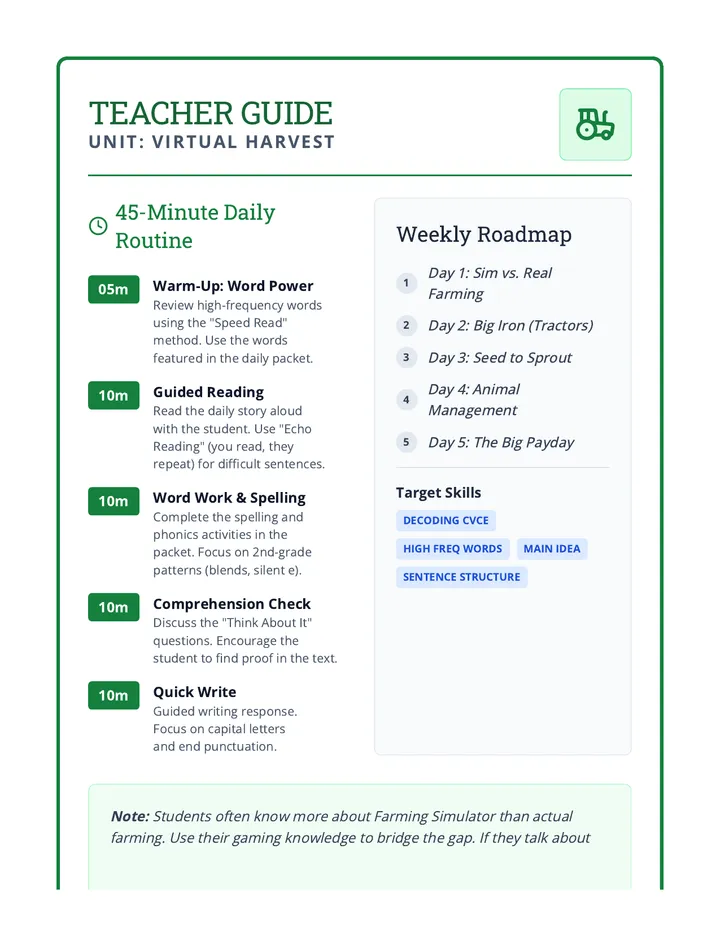
Virtual Harvest Teacher Guide

Digital Dirt

A 5-day reading comprehension and writing unit for struggling readers, blending the world of Farming Simulator with real-world agriculture. Focuses on 2nd-grade level literacy skills within a high-interest 5th-grade context.

CM

carley Martin

30
Question Anatomy Slides

Insight Investigators

A 6-week reading intervention unit for 5th graders focused on making inferences, analyzing questions, and using text evidence. Themes include mysteries, sports (baseball and basketball), and dragons to engage high-interest readers.

MK

Meg Keene

48
Verse and Veracity Teacher Guide

Media Center Year Curriculum

A comprehensive K-5 Media Center curriculum spanning August to May. Each month features a thematic unit integrating library skills (Dewey Decimal System, research, digital citizenship), literacy (poetry, biographies, informational texts), and STEM/Maker Space challenges. Resources are differentiated for K-2 and 3-5.

B

bethany.nied

50