Lenny.com
Explore
Create
ActivitiesNewMathEnglish Language ArtsScience & EngineeringSocial StudiesGlobal LanguagesHealth & Physical EducationSpecial EducationCounseling & Life SkillsArts & CreativityESL
Lenny.com
Lenny.com
Explore
Create
ActivitiesNewMathEnglish Language ArtsScience & EngineeringSocial StudiesGlobal LanguagesHealth & Physical EducationSpecial EducationCounseling & Life SkillsArts & CreativityESL
Lenny.com
Lenny.com

Solutions

Lenny for EducatorsLenny for SchoolsLenny for Districts

Product

ExploreSign inCreateSupportAbout

Resources

Getting startedMTSS Acceleration Program

Newsletters

School Funding Newsletter

© 2026 Lenny Learning Inc.

TermsPrivacyAccessibility
LinkedInInstagramX
Lenny

Word Choice and Usage

Refines communication through precise vocabulary selection and nuanced synonym differentiation. Targets tone and audience appropriateness while addressing common usage errors in academic and creative writing.

English Language ArtsPhonics & Reading FoundationsLetter IdentificationLearn Letters A-ZLowercase and Uppercase LettersConsonants and VowelsLetter-Sound AssociationsLetter-Sound Associations: LowercaseLetter-Sound Associations: UppercaseBeginning and Ending SoundsRhymingBlending And SegmentingShort VowelsShort Vowel SoundsConsonant BlendsConsonant DigraphsBlends, Digraphs, and TrigraphsDigraphs, Blends, and Silent LettersLong Vowel SoundsLong Vowel PatternsShort and Long VowelsShort and Long Vowel PatternsSilent EVowel SoundsVowel TeamsR-Controlled VowelsDiphthongs: Oi, Oy, Ou, OwVariant VowelsVariant, Diphthong, And R Vowel PatternsSoft G And CSight WordsIrregular WordsWord RecognitionSyllablesSyllable TypesTwo-Syllable WordsMultisyllabic WordsPhoneme ManipulationDecodable TextsVocabularyAction WordsQuestion WordsNouns and AdjectivesClassify WordsCompound WordsSynonyms and AntonymsHomophonesHomophones and HomonymsShades of MeaningContext CluesPrefixes and SuffixesGreek and Latin RootsAnalogiesIdioms and AdagesForeign Words and ExpressionsWord Choice and UsageReference SkillsReading ComprehensionRead-Along Literary TextsRead-Along Informational TextsReality vs. FictionStory ElementsCharacterSequenceMain IdeaCause And EffectCompare And ContrastReading StrategiesText StructureAuthor's PurposeAuthor's Purpose And ToneAuthor's PerspectivePoint Of ViewThemeInference And ThemeInference And AnalysisPoetry ElementsLiterary DevicesAnalyzing LiteratureAnalyzing Informational TextsComparing TextsAudience, Purpose, And ToneBusiness DocumentsNovel StudyNonfiction Book StudyGrammar & MechanicsSentencesNounsVerbsAdjectivesPronounsCapitalizationPunctuationContractionsConjunctionsPrepositionsArticlesAdjectives And AdverbsVerb TypesVerb TensePronouns And AntecedentsPronoun TypesSubject-Verb AgreementDirect And Indirect ObjectsSentences, Fragments, And Run-OnsPhrases And ClausesCommasSemicolons, Colons, And CommasDashes, Hyphens, And EllipsesSpellingAbbreviationsFormattingVerb Tense And MoodMisplaced ModifiersWritingDescriptive DetailsCreative WritingOpinion WritingTopic SentencesOrganizing WritingLinking WordsSentence VarietyIntroductions And ConclusionsPersuasive And Opinion WritingExpository WritingPersuasive StrategiesDeveloping And Supporting ArgumentsTopic Sentences And Thesis StatementsSummarizingResearch SkillsEditing And RevisingActive And Passive Voice=Writing Clearly And ConciselyDebate & Public SpeakingPublic Speaking BasicsPersuasive TechniquesClaims and EvidenceTypes of ArgumentsReasoning TypesLogical FallaciesTopic ResearchOrganizing EvidenceDebate Speech OrganizationAttacking and Defending ArgumentsClash and EngagementImpact CalculusQuestioning and Cross-ExaminationCritical ThinkingInformal LogicFormal LogicInductive Reasoning

Videos

Creating and Curating a Poetry Portfolio

Creating and Curating a Poetry Portfolio

In this engaging creative writing lesson, the host Justin introduces students to the concept of becoming a "Penfluencer" by curating a professional poetry portfolio. The video breaks down the complex process of assembling a literary collection into three manageable steps: selection, revision, and reflection. Students learn that a portfolio is not just a random pile of work, but a thoughtful collection that demonstrates both their personal style and their range of skills as poets. The content dives deep into specific strategies for selecting poems, distinguishing between a "diverse" portfolio (variety of styles/topics) and a "coherent" one (unified by theme or mood). It then guides students through the revision process, moving beyond simple proofreading to deep stylistic changes involving connotation and sound devices like alliteration and meter. Finally, the video introduces the concept of an "Author's Statement," teaching students how to articulate their artistic choices and inspiration. This video is an excellent resource for middle and high school English Language Arts classrooms focusing on the writing process. It moves students beyond merely generating content to the higher-order thinking skills of curation and critique. By framing the task within a modern "app" context, it makes the potentially dry topics of revision and metacognitive reflection relevant and accessible. Teachers can use this video to structure a multi-day final project for a poetry unit.

Miacademy & MiaPrep Learning ChannelMiacademy & MiaPrep Learning Channel

8mins 36s

Mastering Confusing Words: Complement vs. Compliment and Desert vs. Dessert

Mastering Confusing Words: Complement vs. Compliment and Desert vs. Dessert

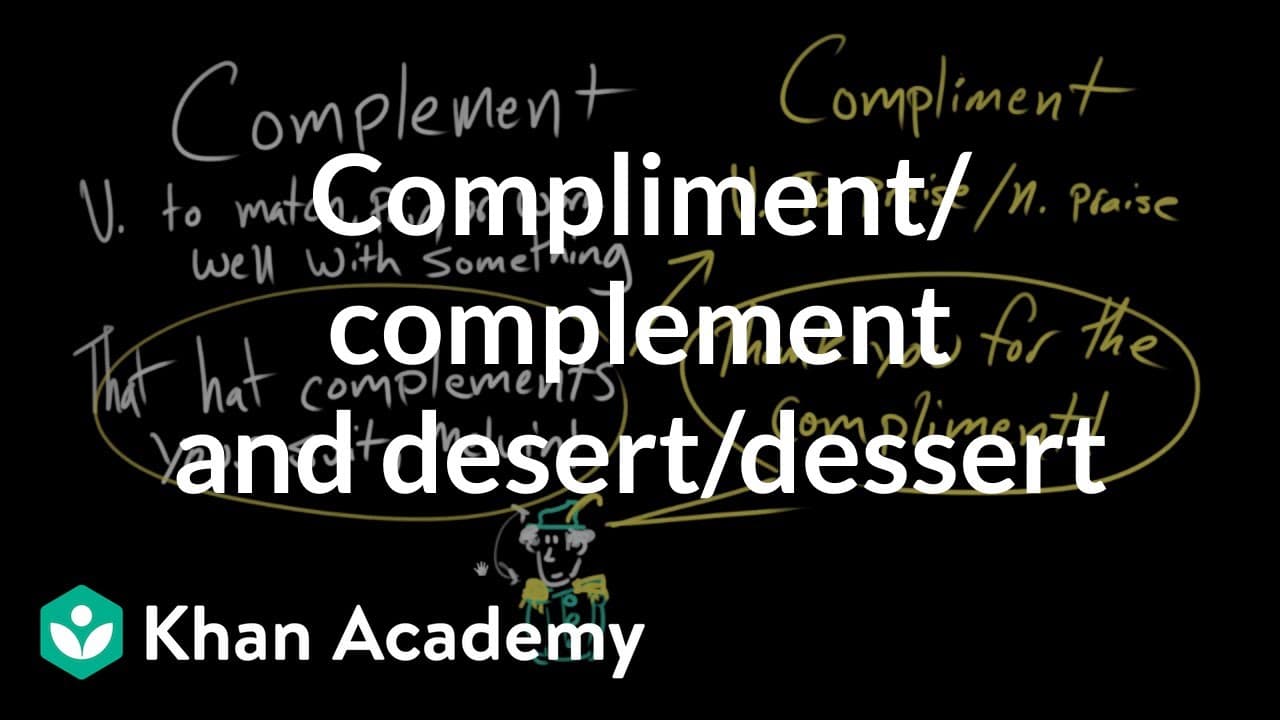
This engaging grammar tutorial clarifies the confusion between two pairs of commonly misused words: "complement" vs. "compliment" and "desert" vs. "dessert." Through whimsical illustrations and clear definitions, the narrator breaks down the spelling, meaning, and pronunciation differences for each pair. The video uses memorable mnemonics—like associating the single 's' in desert with "less water" and the double 's' in dessert with "strawberry and sweet"—to help viewers retain the correct usage. The content focuses on key language arts concepts including homophones, near-homophones, and spelling rules. It explores how a word's spelling often links directly to its meaning and origin. The video specifically highlights how "complement" relates to completing or matching something (like an outfit), while "compliment" relates to praise. Similarly, it distinguishes the dry landscape of a "desert" from the sweet treat of "dessert" through visual associations. For educators, this video serves as an excellent hook or review tool for English Language Arts lessons on vocabulary and mechanics. It provides concrete, visual strategies that students can use to self-correct their writing. The lighthearted tone and simple animations make abstract spelling rules concrete, helping students move past rote memorization to understanding the logic—or at least the memory tricks—behind these tricky words.

Khan AcademyKhan Academy

4mins 15s

Exploring the Vocabulary Words Recently and Voyage

Exploring the Vocabulary Words Recently and Voyage

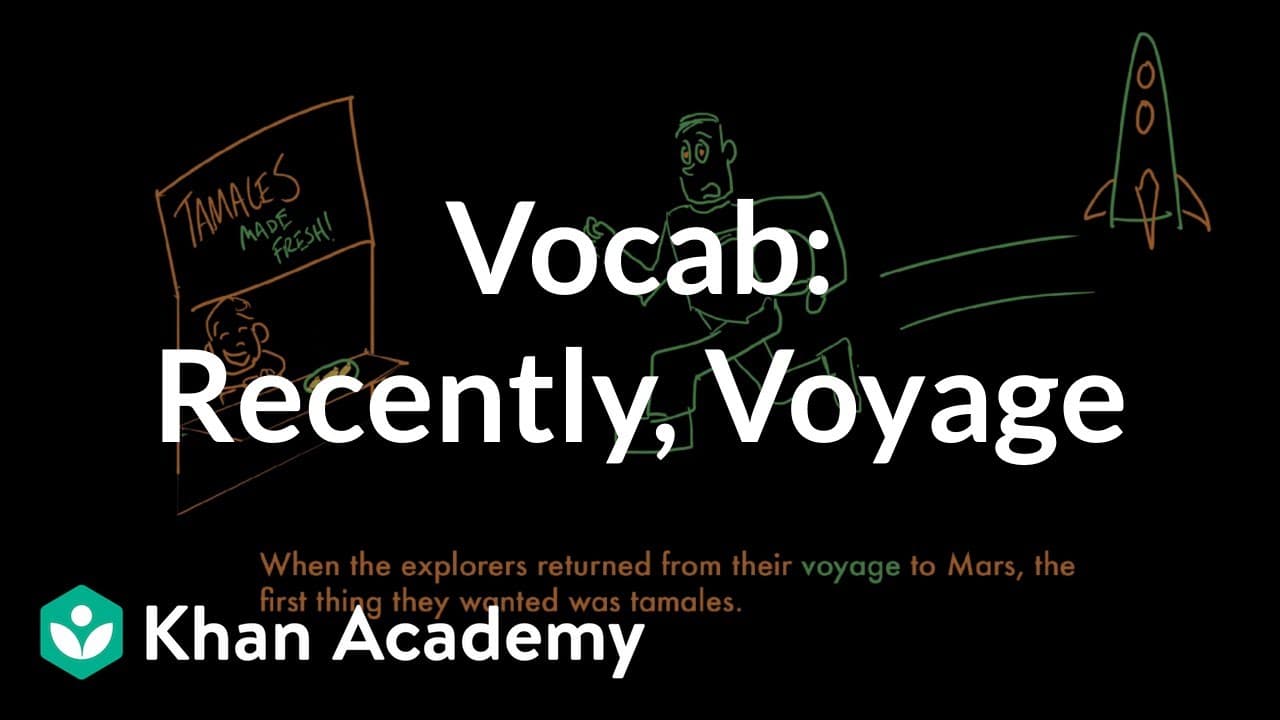
In this engaging vocabulary lesson, the narrator introduces students to two specific words: "recently" and "voyage." Through a blend of humor, storytelling, and simple illustrations, the video breaks down the definitions, parts of speech, and grammatical rules associated with each word. Specifically, it explains how the suffix "-ly" transforms adjectives into adverbs and how a single word like "voyage" can function as both a noun and a verb. The video explores key grammatical concepts in an accessible way. It defines "recently" as an adverb meaning "happening a short time ago" and demonstrates how adjectives like "happy" and "quick" become adverbs with the addition of "-ly." It then defines "voyage" as a long journey, providing examples of its use as a noun (taking a trip) and a verb (the act of traveling). The narrator uses humorous example sentences involving astronomers and astronauts craving tamales to solidify understanding. For educators, this video is a valuable tool for reinforcing parts of speech and expanding vocabulary. It can be used to introduce the concept of suffixes, specifically how word endings change grammatical function. The clear definitions and contextual examples make it an excellent resource for ELA lessons focused on grammar, reading comprehension, and creative writing, encouraging students to use new vocabulary in their own sentences.

Khan AcademyKhan Academy

2mins 29s

Defining Experiment, Invention, and Discovery

Defining Experiment, Invention, and Discovery

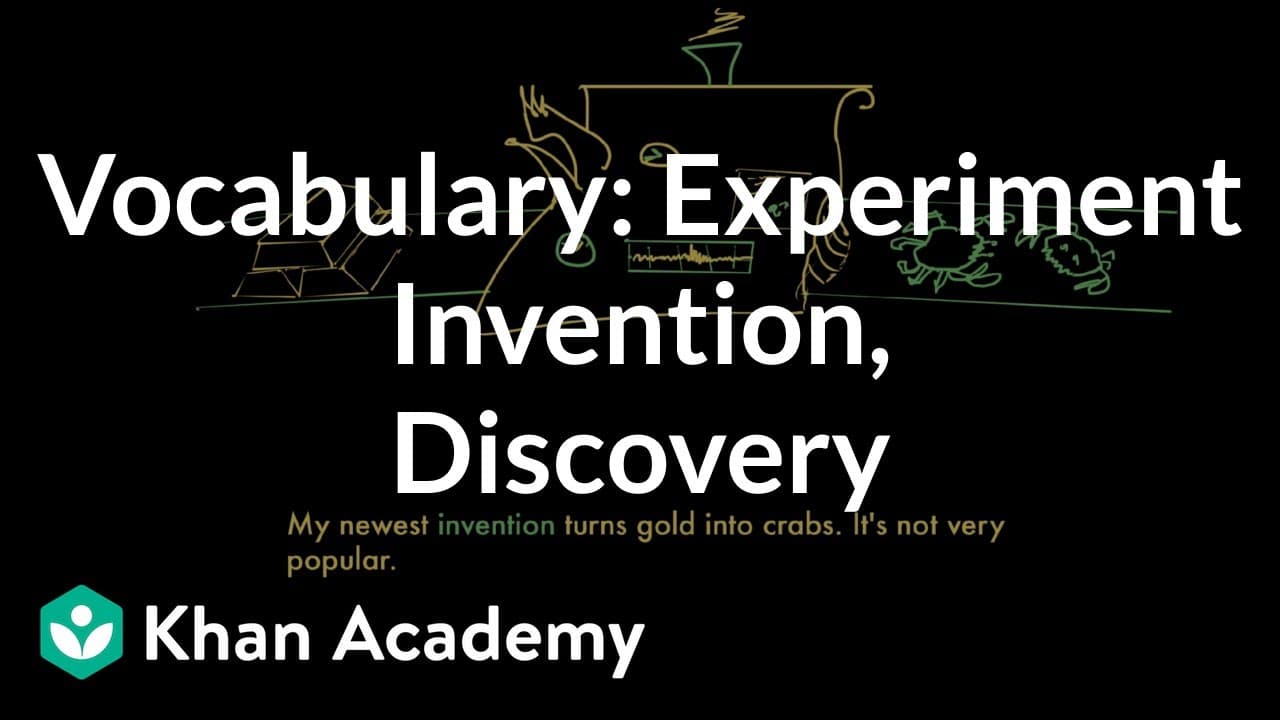
This engaging vocabulary lesson from Khan Academy invites students into the "Vocabulab" to explore three interconnected words: experiment, invention, and discovery. Narrated with humor and energy, the video defines each term as a noun and verb, providing clear distinctions between creating something new (invention), testing an idea (experiment), and finding something that already exists (discovery). The narrator uses whimsical hand-drawn animations to illustrate these concepts, making abstract definitions concrete and memorable for young learners. The video delves deeper than simple definitions by exploring word origins, specifically the prefix "dis-." It breaks down "discovery" into "dis-" (not/opposite) and "cover," explaining that discovering is literally the act of uncovering something hidden. This etymological sidebar helps students understand how prefixes function to change the meaning of base words, reinforcing language mechanics alongside vocabulary acquisition. The narrator provides additional examples like "dislike" and "disapprove" to cement this concept. Educationally, this resource is excellent for both English Language Arts and Science curriculums. It clarifies terms often used interchangeably in scientific contexts, helping students speak more precisely about the scientific method. The inclusion of a "useless invention" (a machine that turns gold into crabs) adds a layer of fun that keeps students engaged, while the narrator's persistence with his failed experiments subtly models a growth mindset. Teachers can use this to introduce scientific units, teach prefixes, or inspire creative writing about imaginary inventions.
Khan AcademyKhan Academy

3mins 28s

Mastering Language Register: Formal vs. Informal Writing

Mastering Language Register: Formal vs. Informal Writing

This engaging video lesson introduces students to the concept of "register" in language arts—the level of formality used in speaking and writing. Through a narrative involving a "Deportment Store" in Media Metropolis, the narrator explains the difference between formal and informal communication using relatable analogies like choosing the right outfit for an occasion. The video defines key terms like deportment and register, helping students understand that language choices depend heavily on the audience and context.

Miacademy & MiaPrep Learning ChannelMiacademy & MiaPrep Learning Channel

10mins 5s

Identifying Cause and Effect in Texts

Identifying Cause and Effect in Texts

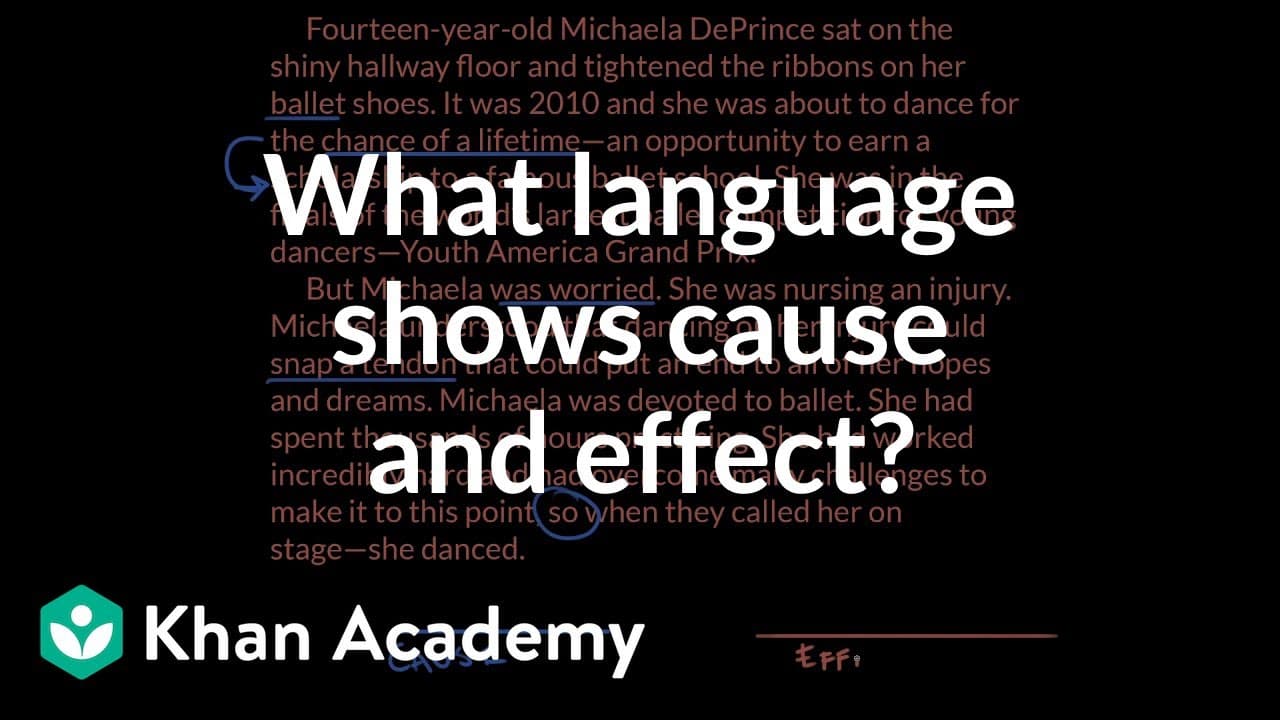
This educational video uses the whimsical machinery of Rube Goldberg to introduce and explain the concept of cause and effect in reading comprehension. The narrator begins by analyzing a complex cartoon machine where one action triggers a chain reaction, providing a concrete visual metaphor for how events are connected. This visual introduction seamlessly transitions into a lesson on identifying these relationships within written text, distinguishing between the 'cause' (why something happens) and the 'effect' (the result). The video covers key themes including logical sequencing, identifying signal words, and critical reading strategies. It explicitly lists common transition words that signal causes (e.g., because, since) and effects (e.g., therefore, consequently). The narrator also addresses the common misconception that cause and effect must follow the order of the sentence, demonstrating how sentence structure can be inverted without changing the logical relationship. For the classroom, this video is an excellent tool for scaffolding reading comprehension skills. It moves from a fun, low-stakes visual example to a rigorous close reading of a nonfiction passage about ballerina Michaela DePrince. By modeling how to annotate a text and ask 'why' questions to uncover hidden motivations and results, the video demonstrates practical strategies students can apply to any complex text to better understand narrative structure and character motivation.

Khan AcademyKhan Academy

7mins 30s

Materials

Text Decoders Reference Poster

Text Decoders Reference Poster

A high-impact, single-page ELA CCSS standards reference poster for 8th-grade Reading. Redesigned with the modern Poppins font for titles and labels, paired with a highly readable body text font. Features color-coded columns for Reading Literature (RL) and Reading Informational Text (RI) with concise, student-focused definitions and clear visual icon associations.

SP

Sheridan Pickett

Myrtle Postcard Project Worksheet Expanded Final Balance Plus Plus Plus Plus Plus Plus

Myrtle Postcard Project Worksheet Expanded Final Balance Plus Plus Plus Plus Plus Plus

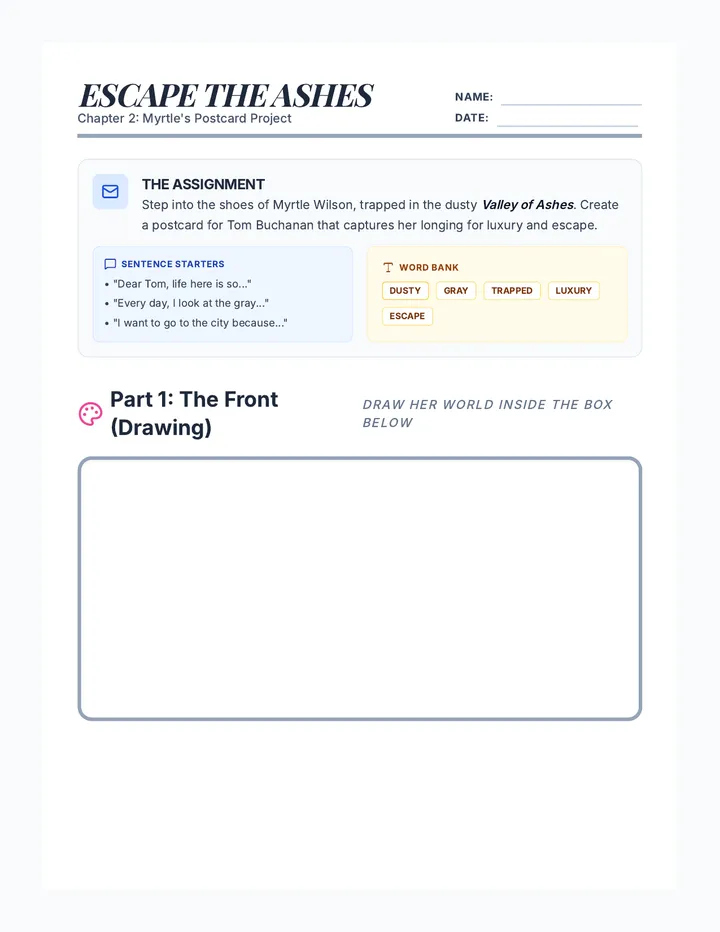
A print-perfect two-page postcard project. Page 1 contains instructions, compact scaffolding, and a 300px drawing box guaranteed to stay on the first page. Page 2 features the postcard back with 16 writing lines. This version ensures Page 1 content is perfectly contained with a significant bottom margin to prevent accidental page splits during printing.

KR

Kirstin Reed

Neverland Legend Poster Bubbles Updated

Neverland Legend Poster Bubbles Updated

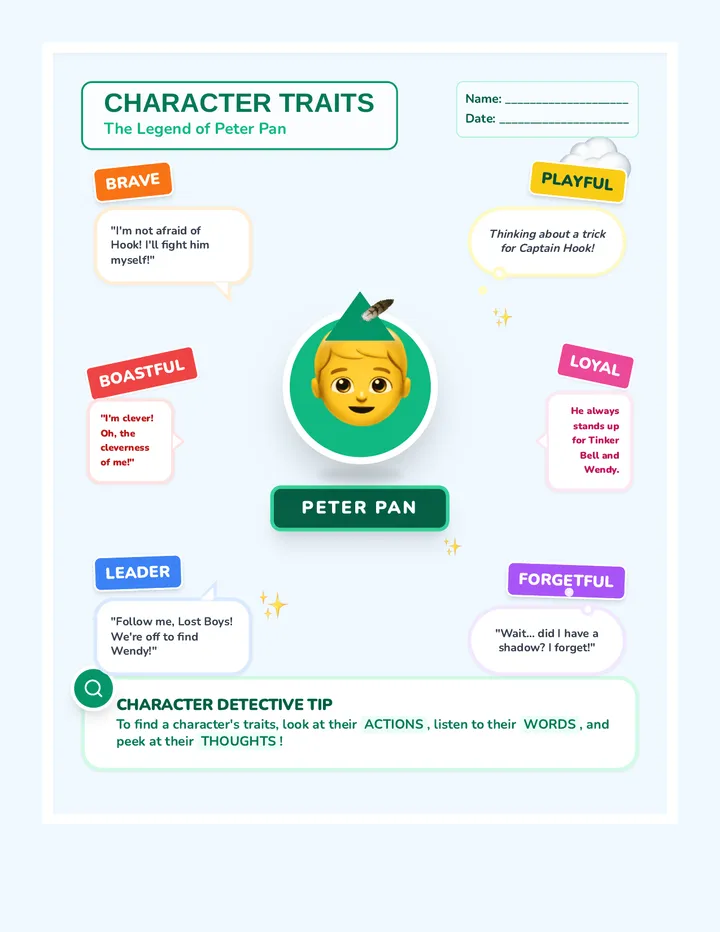
An updated visual character traits poster for Peter Pan featuring iconic speech bubbles with tails and cloud-like thought bubbles with trailing circles. The layout is optimized to fit on a single page while maintaining high-impact visuals and clear instructional tips for Grade 3.

A

amagalhaes

Vocab Showdown Slides

Vocab Showdown Slides

An interactive 10-slide whole-class vocabulary deck covering the 10 Grade 5 Unit Launch words through choral reading, turn-and-talk challenges, 4-corner voting prompts, and a changemaker application challenge.

JJ

Julie Johns

Sensory Sentences Worksheet

Sensory Sentences Worksheet

A vibrant, print-ready two-page worksheet designed to help students master sensory and descriptive vocabulary. Features 10 color-coded nouns, action verbs, and vivid adjectives with expanded handwriting lines and a combo challenge.

C

carlsond

Figurative Language Anchor Charts

Figurative Language Anchor Charts

A 4-page print-optimized, ink-friendly 8th-grade ELA figurative language anchor chart set aligned to NYS Next Gen Standard 8R4, designed with crisp high-contrast typography, color-coded device families, mentor text breakdowns, and evidence-based analytical sentence stems.

MV

Maryanne Von Bevern

Sequences

Prefix Power Sort 1 Worksheet

Word Wizard Packet

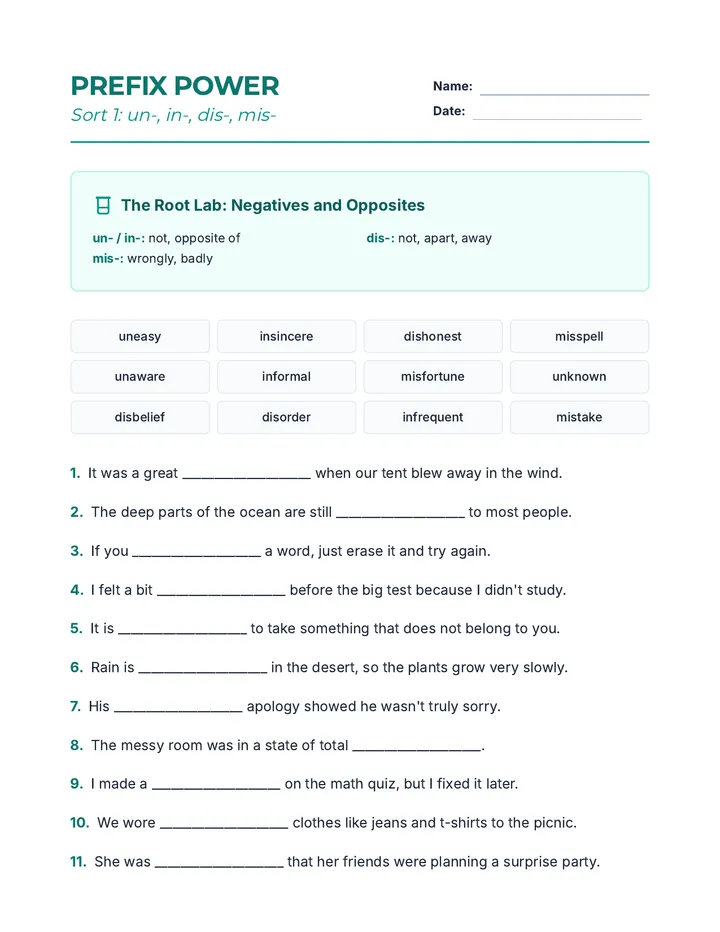
A comprehensive vocabulary and morphology curriculum covering prefixes, suffixes, Latin roots, and Greek roots through fill-in-the-blank exercises and engaging word puzzles.

N

nmack

137
Invention Quest Slides

Frindle Frenzy Novel Study

A 9-day novel study for 'Frindle' by Andrew Clements, aligned to 3rd Grade ELAR TEKS, focusing on character development, vocabulary, and plot analysis.

LH

Lucy Hellerman

56
Lesson Plan 1 Introduction

Literary Device Detectives

A comprehensive multi-unit sequence for 3rd and 4th grade students covering key literary devices: Introduction to Figurative Language, Onomatopoeia, Similes, Metaphors, Personification, and Idioms. Each unit provides 5 lesson plans, interactive notebook resources, and a wide variety of activities and stories designed to improve descriptive writing and reading comprehension.

JS

Janette Sullivan

105
Prophecy and Power Slides

Shadows and Crowns

A series of lessons exploring Shakespeare's Macbeth, specifically designed for 10th-grade emergent bilingual students to master complex characterization and thematic elements.

DC

Dylan Clark

30
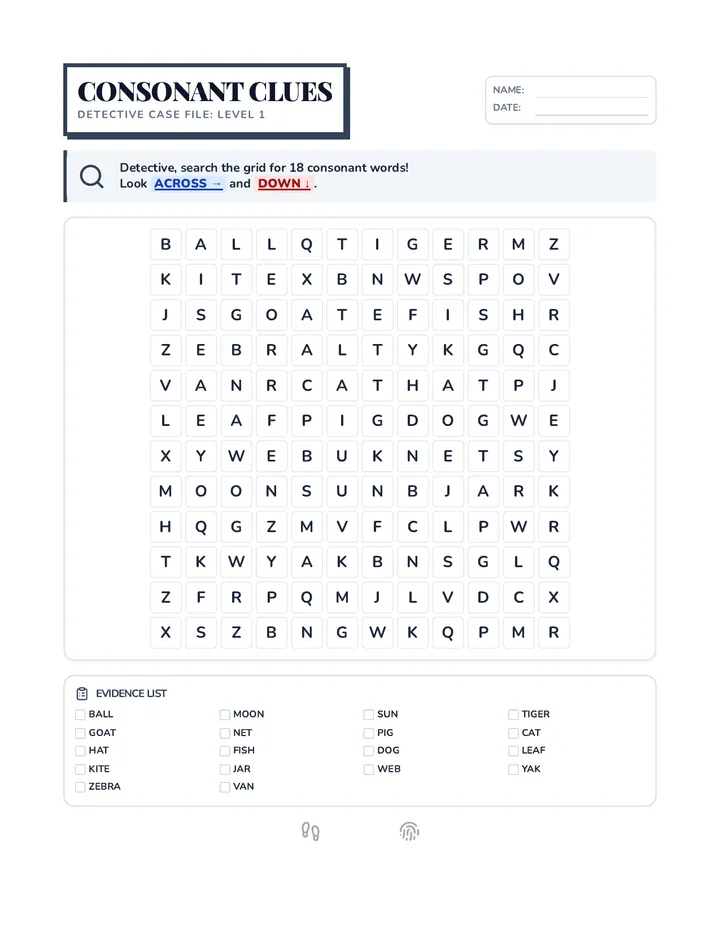
Consonant Clues Word Search

Sound Detective Workbook

A complete phonics journey covering letter-name alphabetic spelling stages, featuring randomized word sort practice through interactive sentence completion.

N

nmack

57
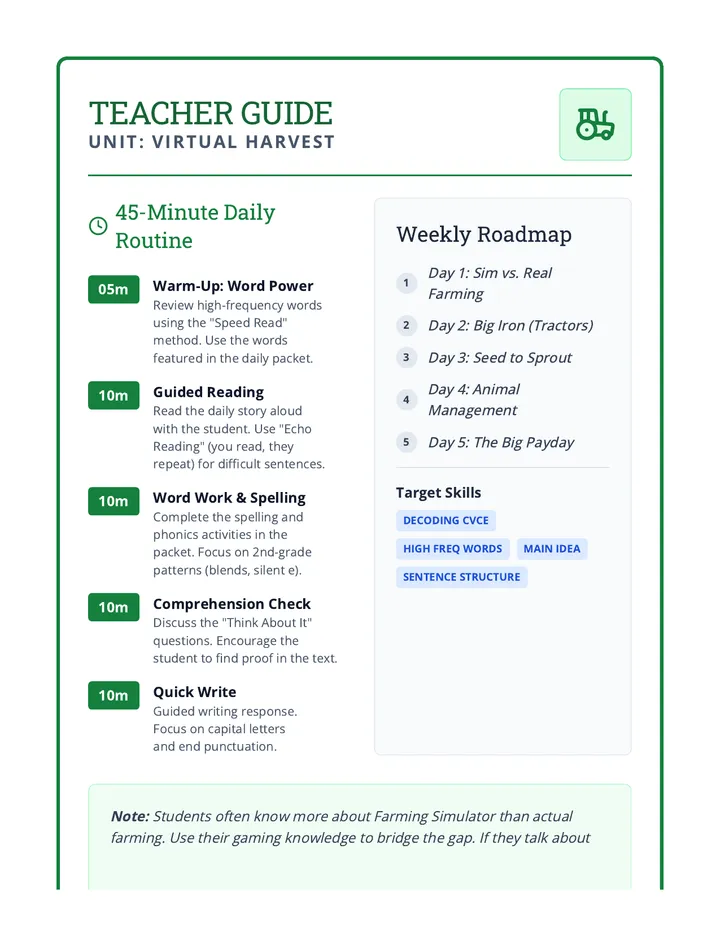
Virtual Harvest Teacher Guide

Digital Dirt

A 5-day reading comprehension and writing unit for struggling readers, blending the world of Farming Simulator with real-world agriculture. Focuses on 2nd-grade level literacy skills within a high-interest 5th-grade context.

CM

carley Martin

30