Lenny.com
Explore
Create
ActivitiesNewMathEnglish Language ArtsScience & EngineeringSocial StudiesGlobal LanguagesHealth & Physical EducationSpecial EducationCounseling & Life SkillsArts & CreativityESL
Lenny.com
Lenny.com
Explore
Create
ActivitiesNewMathEnglish Language ArtsScience & EngineeringSocial StudiesGlobal LanguagesHealth & Physical EducationSpecial EducationCounseling & Life SkillsArts & CreativityESL
Lenny.com
English Language ArtsPhonics & Reading FoundationsLetter IdentificationLearn Letters A-ZLowercase and Uppercase LettersConsonants and VowelsLetter-Sound AssociationsLetter-Sound Associations: LowercaseLetter-Sound Associations: UppercaseBeginning and Ending SoundsRhymingBlending And SegmentingShort VowelsShort Vowel SoundsConsonant BlendsConsonant DigraphsBlends, Digraphs, and TrigraphsDigraphs, Blends, and Silent LettersLong Vowel SoundsLong Vowel PatternsShort and Long VowelsShort and Long Vowel PatternsSilent EVowel SoundsVowel TeamsR-Controlled VowelsDiphthongs: Oi, Oy, Ou, OwVariant VowelsVariant, Diphthong, And R Vowel PatternsSoft G And CSight WordsIrregular WordsWord RecognitionSyllablesSyllable TypesTwo-Syllable WordsMultisyllabic WordsPhoneme ManipulationDecodable TextsVocabularyAction WordsQuestion WordsNouns and AdjectivesClassify WordsCompound WordsSynonyms and AntonymsHomophonesHomophones and HomonymsShades of MeaningContext CluesPrefixes and SuffixesGreek and Latin RootsAnalogiesIdioms and AdagesForeign Words and ExpressionsWord Choice and UsageReference SkillsReading ComprehensionRead-Along Literary TextsRead-Along Informational TextsReality vs. FictionStory ElementsCharacterSequenceMain IdeaCause And EffectCompare And ContrastReading StrategiesText StructureAuthor's PurposeAuthor's Purpose And ToneAuthor's PerspectivePoint Of ViewThemeInference And ThemeInference And AnalysisPoetry ElementsLiterary DevicesAnalyzing LiteratureAnalyzing Informational TextsComparing TextsAudience, Purpose, And ToneBusiness DocumentsNovel StudyNonfiction Book StudyGrammar & MechanicsSentencesNounsVerbsAdjectivesPronounsCapitalizationPunctuationContractionsConjunctionsPrepositionsArticlesAdjectives And AdverbsVerb TypesVerb TensePronouns And AntecedentsPronoun TypesSubject-Verb AgreementDirect And Indirect ObjectsSentences, Fragments, And Run-OnsPhrases And ClausesCommasSemicolons, Colons, And CommasDashes, Hyphens, And EllipsesSpellingAbbreviationsFormattingVerb Tense And MoodMisplaced ModifiersWritingDescriptive DetailsCreative WritingOpinion WritingTopic SentencesOrganizing WritingLinking WordsSentence VarietyIntroductions And ConclusionsPersuasive And Opinion WritingExpository WritingPersuasive StrategiesDeveloping And Supporting ArgumentsTopic Sentences And Thesis StatementsSummarizingResearch SkillsEditing And RevisingActive And Passive Voice=Writing Clearly And ConciselyDebate & Public SpeakingPublic Speaking BasicsPersuasive TechniquesClaims and EvidenceTypes of ArgumentsReasoning TypesLogical FallaciesTopic ResearchOrganizing EvidenceDebate Speech OrganizationAttacking and Defending ArgumentsClash and EngagementImpact CalculusQuestioning and Cross-ExaminationCritical ThinkingInformal LogicFormal LogicInductive Reasoning

Synonyms and Antonyms

Word relationships through similar and opposite meanings to expand vocabulary and precision in writing. Strengthens reading comprehension by identifying nuances between related terms.

Lenny.com

Solutions

Lenny for EducatorsLenny for SchoolsLenny for Districts

Product

ExploreSign inCreateSupportAbout

Resources

Getting startedMTSS Acceleration Program

© 2026 Lenny Learning Inc.

TermsPrivacyAccessibility
LinkedInInstagramX
Lenny

Videos

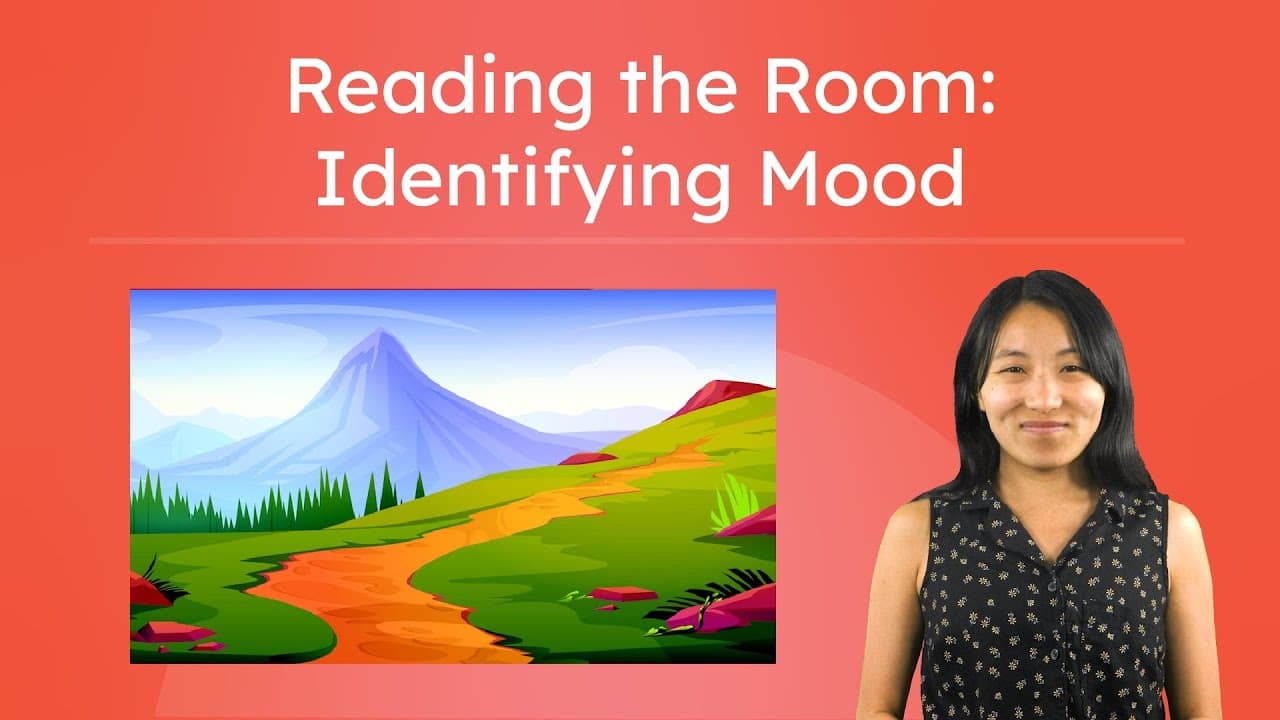
Reading the Room: How to Identify Mood in Stories

Reading the Room: How to Identify Mood in Stories

In this engaging Language Arts adventure, viewers join a narrator and her robot companion, Mia, on a quest through the "Valley of Vibes." To succeed, they must face the "Vibe Master" and pass a series of "vibe checks" by correctly identifying the mood of various narrative passages. The video combines a fantasy storyline with direct instruction to teach students how to analyze literature, moving beyond simple emotional descriptors to more precise literary vocabulary. The video focuses on the concept of "mood" in narrative writing, defining it as the emotional atmosphere an author creates for the reader. It systematically breaks down how writers construct mood using specific tools: characterization, setting, conflict, and word choice. The lesson guides students through three distinct examples, transitioning from guided analysis to independent practice, and introduces sophisticated vocabulary words such as "melancholy," "exuberant," "triumphant," and "foreboding" to replace simpler terms like "sad," "happy," or "scary." This resource is highly valuable for upper elementary and middle school classrooms as it models the thought process behind literary analysis. By explicitly highlighting text evidence—such as "plodded" versus "strode" or "gloomy" versus "emerald grass"—it shows students exactly how to locate and interpret clues within a text. The video includes built-in pause points for student reflection and participation, making it an excellent tool for interactive whole-class instruction or self-paced learning stations focused on reading comprehension and author's craft.
Miacademy & MiaPrep Learning ChannelMiacademy & MiaPrep Learning Channel

10mins 49s

Mastering Intentional Word Choice in Creative Writing

Mastering Intentional Word Choice in Creative Writing

This engaging video lesson explores the power of intentional word choice in creative writing, demonstrating how specific vocabulary transforms flat descriptions into vivid, immersive experiences for readers. Through a "writer's escape room" narrative, the host guides students through the concepts of denotation and connotation, illustrating how words with similar definitions can evoke vastly different emotional responses. The lesson uses practical examples, including excerpts from Kenneth Grahame's *The Wind in the Willows*, to show how authors use language to establish mood, setting, and character traits. The video breaks down three specific strategies for selecting the perfect words: visualizing the scene to brainstorm descriptors, choosing words that emphasize key character or setting traits, and considering the intensity of synonyms to match the intended atmosphere. It provides concrete examples for each strategy, such as shifting from "old" to "dilapidated" to "derelict" to increase intensity, or distinguishing between "childlike" and "childish" to understand positive versus negative connotations. Ideal for English Language Arts classrooms, this resource helps move students beyond basic vocabulary toward more sophisticated writing techniques. It encourages learners to treat writing as an art form where every word matters, providing them with actionable tools to revise their own drafts. The video concludes with a modeling exercise where the narrator applies these strategies to write a scene, allowing students to see the immediate impact of intentional word choice on narrative quality.

Miacademy & MiaPrep Learning ChannelMiacademy & MiaPrep Learning Channel

10mins 32s

Cracking the Case: Using Context Clues to Solve Mysteries

Cracking the Case: Using Context Clues to Solve Mysteries

This engaging educational video transforms a standard language arts lesson on context clues into a thrilling mystery case file. Viewers join the host and her robot assistant, Mia, at "The Context" resort to solve the theft of a valuable "Ormolu Horologe." Through an interactive narrative, students learn to define challenging, unfamiliar vocabulary words by analyzing the surrounding text for hints, synonyms, antonyms, examples, and inferences. The video explicitly breaks down four primary strategies for using context clues: looking for definitions or examples, identifying synonyms and antonyms, making inferences based on the situation, and using logic to deduce meaning. By embedding these lessons within a detective story, the video demonstrates how these skills apply not just to reading comprehension, but to critical thinking and problem-solving in real-world scenarios. Teachers can use this video as a comprehensive standalone lesson or a hook for a unit on vocabulary acquisition strategies. The "pause-and-solve" format encourages active participation, allowing students to practice the skills immediately. It is particularly valuable for demonstrating how to tackle high-level vocabulary without a dictionary, building student confidence in reading complex texts.

Miacademy & MiaPrep Learning ChannelMiacademy & MiaPrep Learning Channel

10mins 9s

How Word Choice Changes Meaning: Connotation Explained

How Word Choice Changes Meaning: Connotation Explained

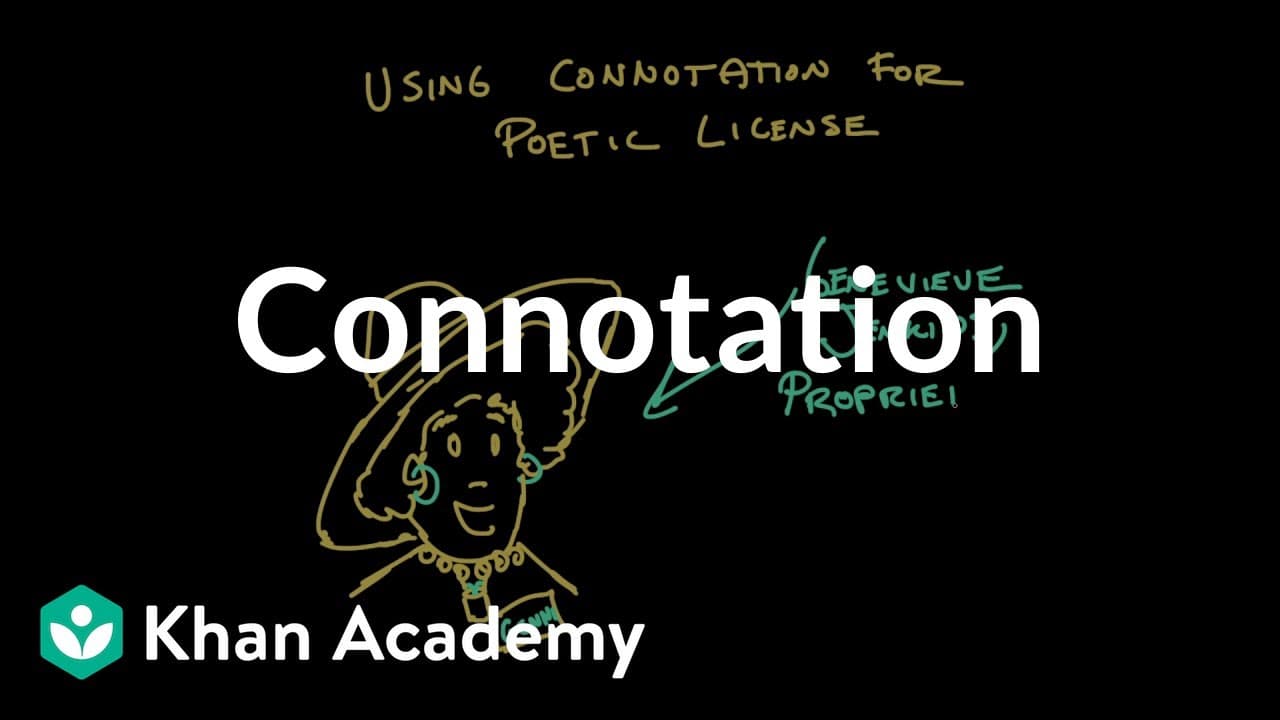
This engaging instructional video explores the concept of connotation—the emotional and cultural associations words carry beyond their literal dictionary definitions (denotation). Through clear analogies, such as water flowing around a rock, and relatable examples like "companion" versus "buddy," the narrator illustrates how synonyms can mean the same thing factually while conveying entirely different feelings or levels of formality. The video delves into key literary concepts including tone, author's intent, and the spectrum of positive, negative, and neutral connotations. It uses a detailed example of a fictional character, Genevieve Jenkins, to demonstrate how specific word choices (like "flourished" and "roots") can build a thematic motif. The narrator also distinguishes between cultural connotations shared by many and personal connotations derived from individual experiences, using a humorous personal anecdote about basketball. For educators, this resource is an excellent tool for teaching vocabulary nuances, literary analysis, and creative writing. It helps students move beyond basic comprehension to understanding *why* authors choose specific words. The content directly supports standards related to analyzing the impact of specific word choices on meaning and tone, making it highly applicable for English Language Arts classrooms from upper elementary through high school.

Khan AcademyKhan Academy

5mins 22s

How to Figure Out New Words Using Context Clues

How to Figure Out New Words Using Context Clues

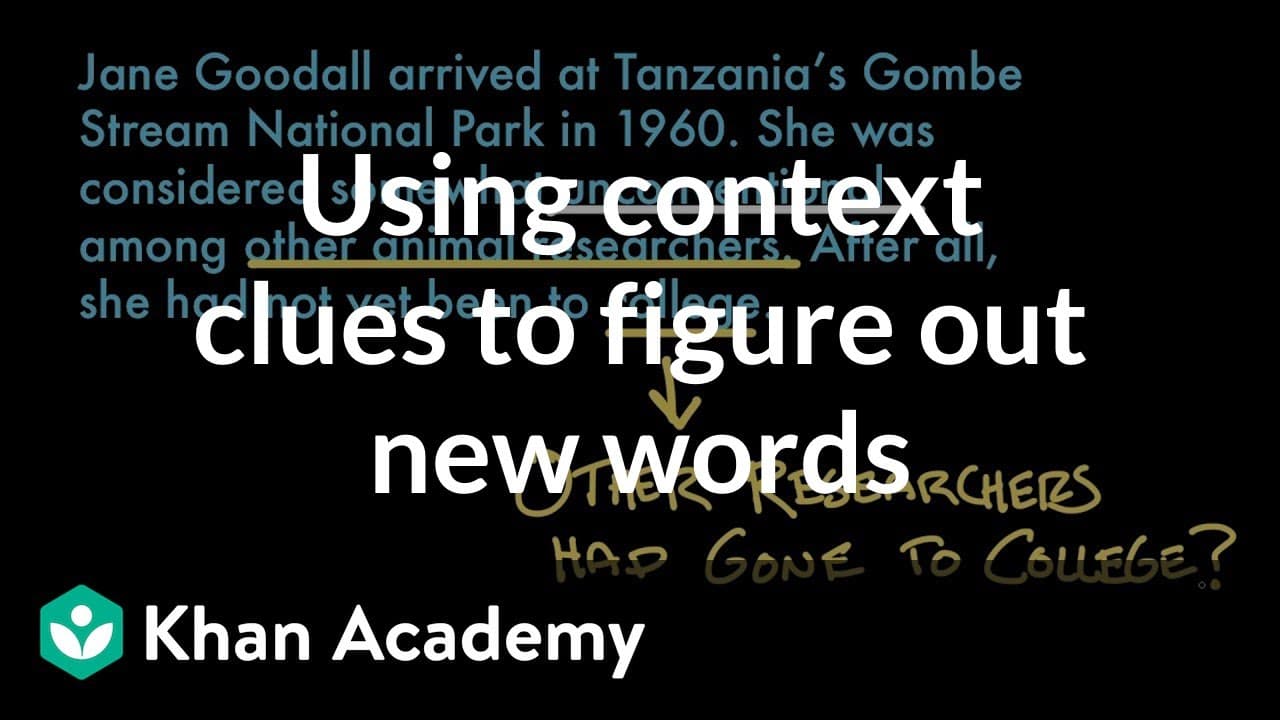
This educational video introduces students to specific strategies for determining the meaning of unfamiliar words while reading. Narrated by David, the video acknowledges that even adults encounter unknown words and presents "context"—the language surrounding a word—as the primary tool for deciphering meaning without immediately reaching for a dictionary. The core of the video is built around the mnemonic acronym "IDEAS," which stands for Inference, Definition, Example, Antonym, and Synonym. Using a passage about primatologist Jane Goodall and the word "unconventional," the narrator demonstrates how each of these five distinct types of context clues functions. The video modifies the original text to illustrate how authors might provide definitions, examples, opposites, or synonyms directly within the narrative flow. For educators, this resource provides a clear, memorable framework for teaching vocabulary acquisition skills. It encourages students to be active readers who use detective work to solve linguistic puzzles. The video is particularly useful for English Language Arts lessons focusing on reading comprehension, vocabulary development, and independent reading strategies for upper elementary and middle school students.

Khan AcademyKhan Academy

4mins 47s

How Similar Words Are Different: Shades of Meaning

How Similar Words Are Different: Shades of Meaning

This engaging animated video introduces students to the concept of 'shades of meaning'—the subtle differences between similar words (synonyms). Hosted by a friendly animated teacher character, the video explains that while two words might refer to the same general idea, they often have different intensities or specificities. Through clear visual comparisons and humorous examples, students learn that choosing the precise word is important for clear communication. The video explores several key word pairs to demonstrate this concept, including 'boat vs. ship,' 'look vs. stare,' and 'cold vs. frozen.' It uses a mix of animation, stock footage, and funny skits—such as a man staring intensely at himself in a mirror—to make the definitions stick. Following the instructional segment, the video transitions into an interactive game show format where viewers are challenged to identify the correct word based on questions about intensity (e.g., 'Which is quieter?' or 'Which is faster?'). For educators, this resource serves as an excellent introduction to vocabulary nuance, addressing Common Core standards related to distinguishing shades of meaning among verbs and adjectives. It is perfect for visual learners and provides immediate formative assessment through the built-in quiz section. Teachers can use this video to launch lessons on synonym gradients, creative writing, or word choice, helping students move beyond basic vocabulary to more descriptive language.

Homeschool PopHomeschool Pop

7mins 3s

Materials

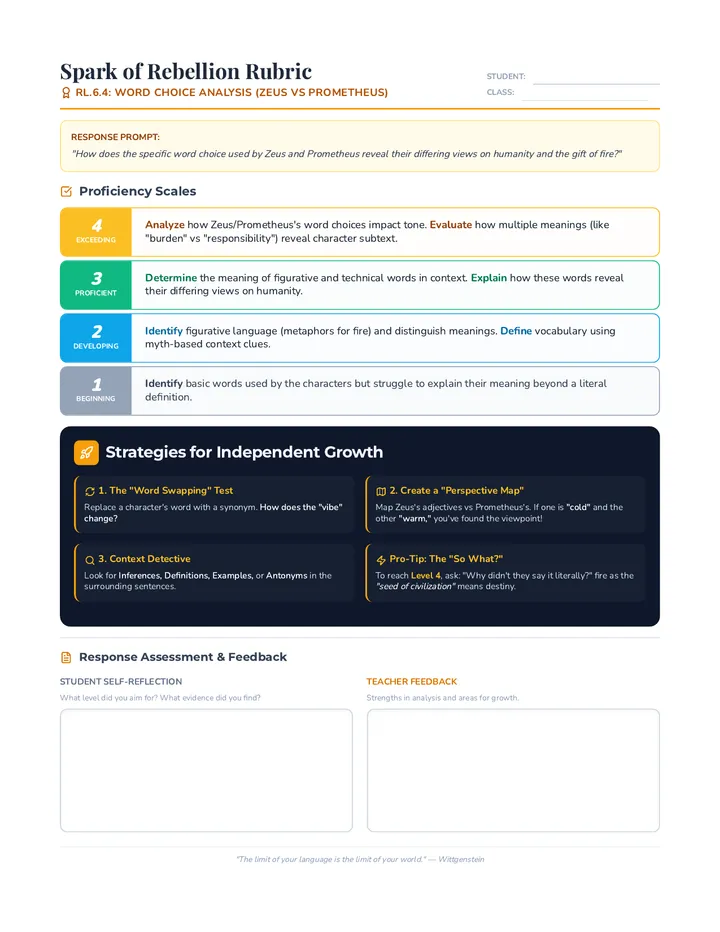
Spark of Rebellion Rubric

Spark of Rebellion Rubric

A tailored mastery rubric for the 'Spark of Rebellion' assignment, specifically assessing RL.6.4 by analyzing the word choices of Zeus and Prometheus. Includes a 4-level proficiency scale, targeted growth strategies, and reflection areas for assessment.

CG

Candace Ghelfi

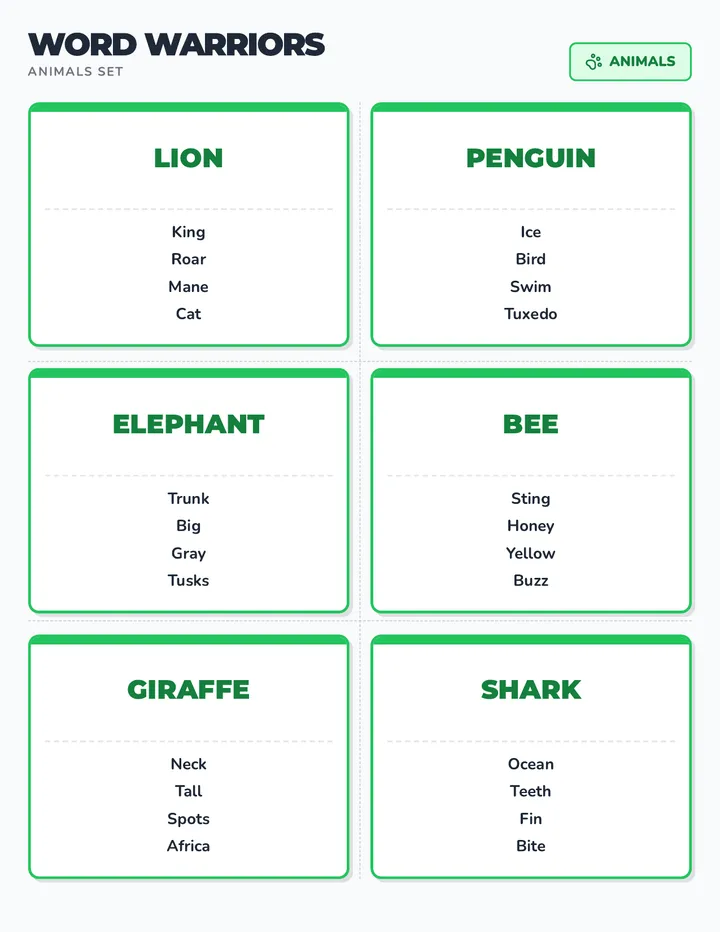
Word Warriors Taboo 100 Pack

Word Warriors Taboo 100 Pack

The complete 100-card "Word Warriors" Taboo pack for 4th graders. Includes 10 categories (Animals, Objects, Sports, Food, Places, Jobs, Nature, Clothing, Tech, Hobbies) with 10 cards each. Features dashed cut guides for easy printing and clear rule summary.

RS

Rebecca Scalise

Blue Tier Daily Routine Guide

Blue Tier Daily Routine Guide

A comprehensive 4-page instructional routine blueprint, decoding matrix, T-chart evidence organizer, and full gamified toolkit featuring Trashketball, Capture the Flag, Syllable Slam, and IREAD-3 test strategies.

M

Melinda.Rader

Word Detective Missions Worksheet

Word Detective Missions Worksheet

A 5-assignment fiction reading and decoding worksheet packet focusing on context clues, sentence clues, phonics chunking, and reading fluency across mystery, school, and adventure themes.

B

bgolladay

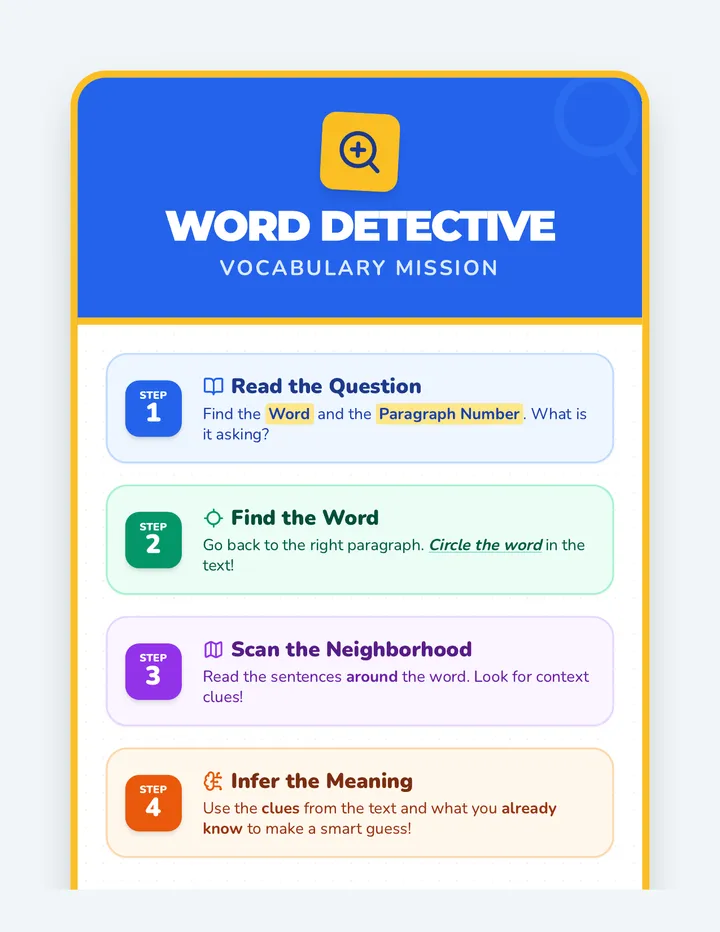
Word Detective Poster

Word Detective Poster

A revised 'Word Detective' poster for 3rd graders. Step 4 has been updated to focus on the skill of 'Inferring the Meaning,' encouraging students to use both text clues and their background knowledge to make smart guesses about vocabulary.

EB

Emily Brown

Kerfuffle Vocabulary Flashcard

Kerfuffle Vocabulary Flashcard

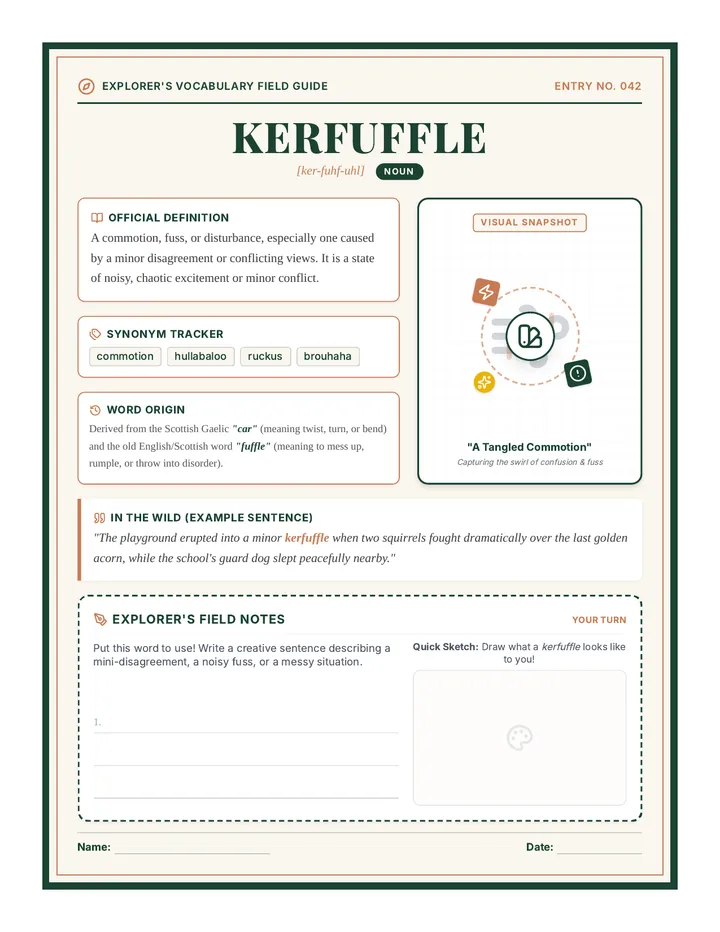
A single-page printable vocabulary flashcard for the word 'kerfuffle'. It features definition, pronunciation, word origin, synonym tracker, a stylized field-guide illustration of commotion, and a hands-on 'Field Notes' student workspace for custom sentence writing and drawing.

Sequences

Invention Quest Slides

Frindle Frenzy Novel Study

A 9-day novel study for 'Frindle' by Andrew Clements, aligned to 3rd Grade ELAR TEKS, focusing on character development, vocabulary, and plot analysis.

LH

Lucy Hellerman

56
Lesson Plan 1 Introduction

Literary Device Detectives

A comprehensive multi-unit sequence for 3rd and 4th grade students covering key literary devices: Introduction to Figurative Language, Onomatopoeia, Similes, Metaphors, Personification, and Idioms. Each unit provides 5 lesson plans, interactive notebook resources, and a wide variety of activities and stories designed to improve descriptive writing and reading comprehension.

JS

Janette Sullivan

105
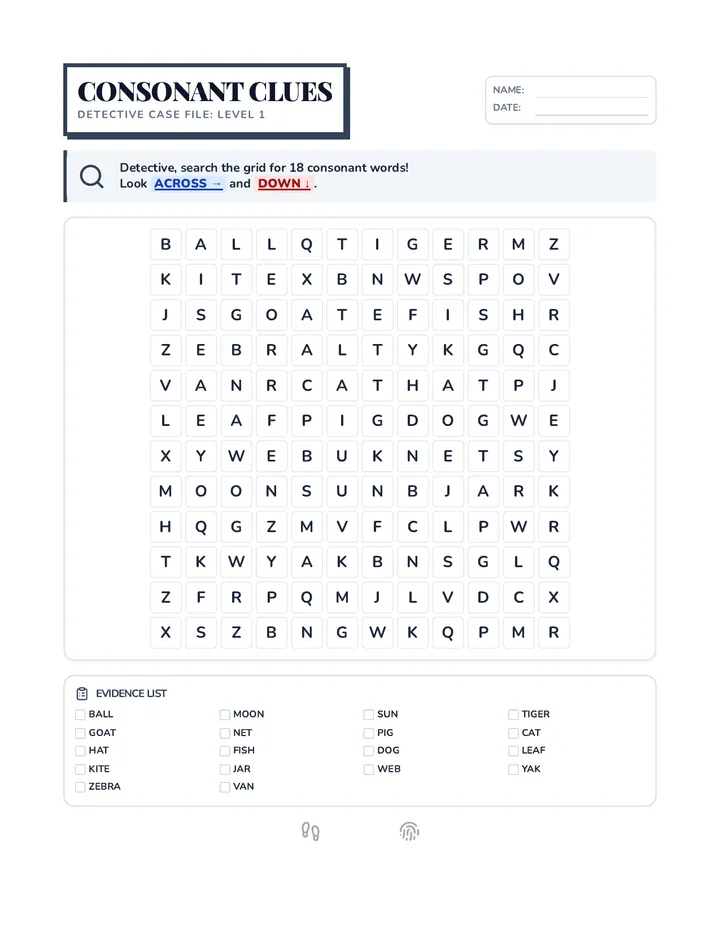
Consonant Clues Word Search

Sound Detective Workbook

A complete phonics journey covering letter-name alphabetic spelling stages, featuring randomized word sort practice through interactive sentence completion.

N

nmack

57
Copenhagen Clues Slides

Resistance Chronicles

A 9-day novel study for Number the Stars centered on 5th Grade ELAR TEKS, focusing on character development, plot analysis, and historical context through the lens of a Resistance Secret File.

LH

Lucy Hellerman

79
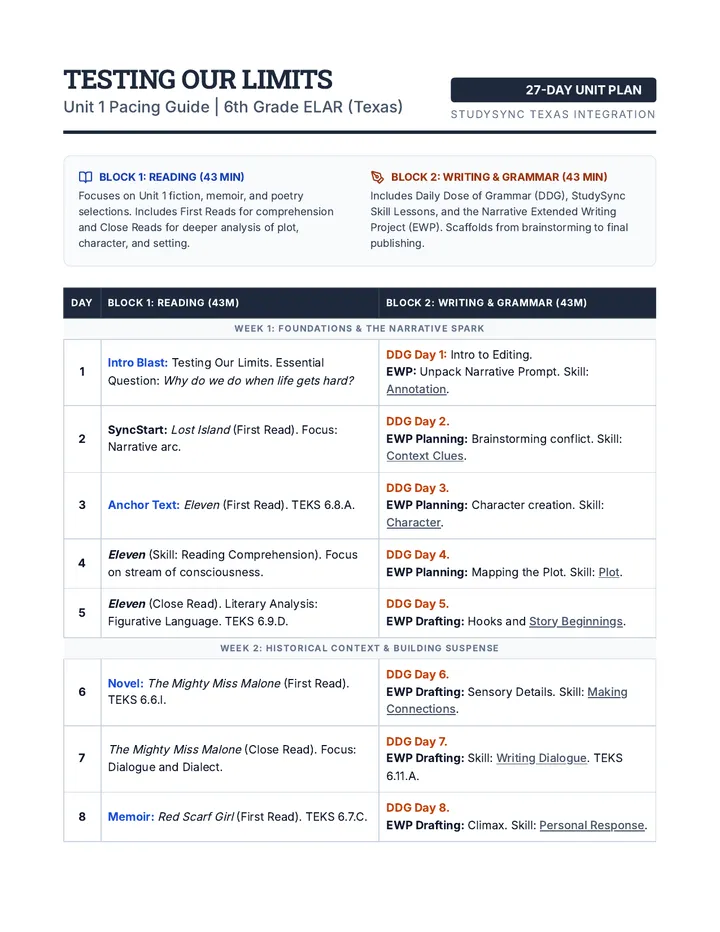
Unit 1 Pacing Guide Document

Testing Our Limits Unit Sequence

A 27-day instructional sequence for 6th Grade ELAR Unit 1: Testing Our Limits, featuring dual blocks for Reading and Writing with daily grammar and skill scaffolding.

DM

Dawn Mustian

81
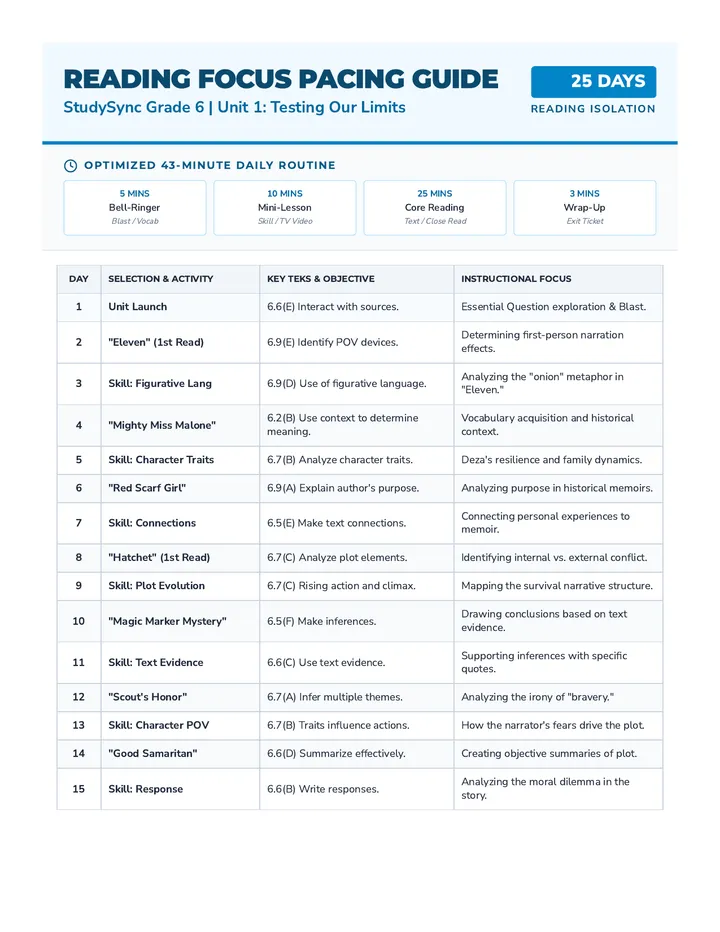
Reading Focus Pacing Guide

Testing Our Limits Unit

A 25-day comprehensive unit for StudySync Grade 6 that explores the theme of courage and resilience through isolated reading and writing tracks, aligned to ELA TEKS.

DM

Dawn Mustian

79

Lessons

Awakening Words Bell Ringer

Stolen Seconds

A comprehensive lesson exploring Tanith Lee's 'Awake,' a subversion of Sleeping Beauty, focusing on structural choices and source material transformation (RL.5 and RL.9). Students will analyze character conflict and the concept of 'the gift of time.'

V

vivianbelarmino

25
Narrative Navigator Slides

Journal Journey Cultural Bridge

An advanced 8th-grade ELA lesson exploring the intersection of Filipino and American identities through personal narrative. Students analyze the immigrant experience, master advanced vocabulary via a 'Quiz Bee,' and draft narratives that bridge their cultural heritage with their current journey.

V

vivianbelarmino

13
Progression Annuelle Grammaire Guide Pedagogique

Portrait de Monstre

Une leçon complète pour étudier la structure du portrait d'un personnage imaginaire (l'ogre) à travers l'analyse d'un texte littéraire et documentaire. Elle comprend des fiches de lecture, d'analyse de structure et de vocabulaire pour guider les élèves vers la rédaction autonome de leur propre créature légendaire.

LP

LAURENT PERCHE

24
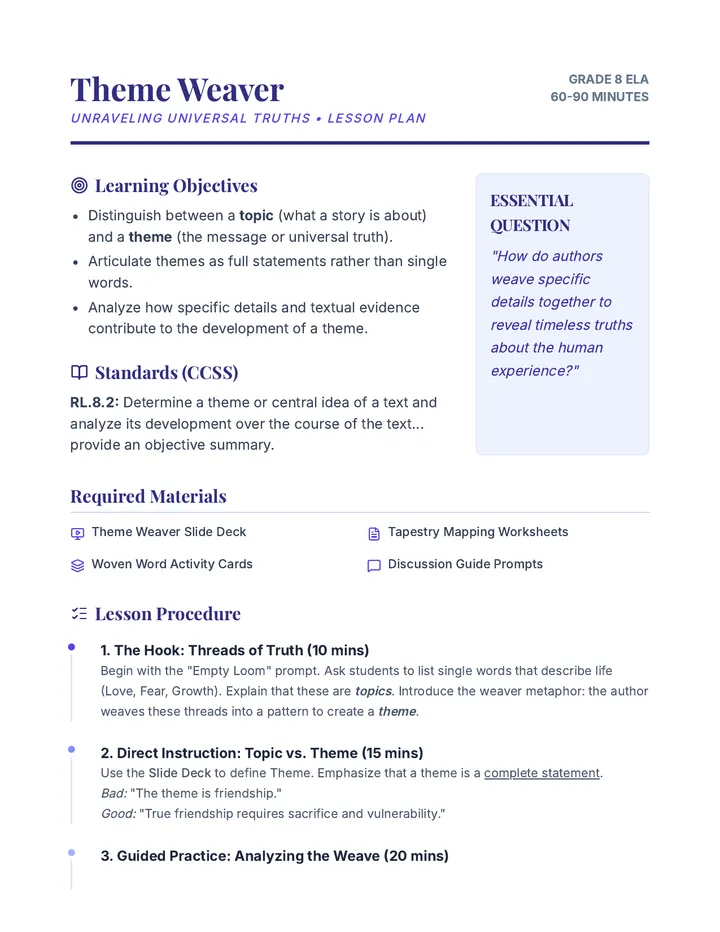
Theme Weaver Teacher Guide

Theme Weaver

An 8th-grade ELA lesson where students become 'theme weavers' to uncover universal truths in literature. They will learn to distinguish between topic and theme, identify thematic statements, and support their findings with textual evidence.

V

vivianbelarmino

24
Precision Prose Teacher Guide

Precision Prose

A 60-minute ELA lesson focused on analyzing author's diction and drawing logical inferences using excerpts from the Grade 7 Interim Assessment. Students will explore how specific word choices shape meaning and tone through guided and independent practice.

RC

Rachel Cohen

9
Rivers and Roads Answer Key

Rivers and Roads

A comprehensive ELA lesson for 8th grade exploring themes of displacement, identity, and resilience through the analysis of Andrew Jackson's Indian Removal Speech, a Trail of Tears diary entry, and the poems 'Maps' and 'The Negro Speaks of Rivers'. Students engage with Tier 2 and advanced vocabulary, comparative analysis, and a creative choice board.

V

vivianbelarmino

10