Lenny.com
Explore
Create
ActivitiesNewMathEnglish Language ArtsScience & EngineeringSocial StudiesGlobal LanguagesHealth & Physical EducationSpecial EducationCounseling & Life SkillsArts & CreativityESL
Lenny.com
Lenny.com
Explore
Create
ActivitiesNewMathEnglish Language ArtsScience & EngineeringSocial StudiesGlobal LanguagesHealth & Physical EducationSpecial EducationCounseling & Life SkillsArts & CreativityESL
Lenny.com
Lenny.com

Solutions

Lenny for EducatorsLenny for SchoolsLenny for Districts

Product

ExploreSign inCreateSupportAbout

Resources

Getting startedMTSS Acceleration Program

© 2026 Lenny Learning Inc.

TermsPrivacyAccessibility
LinkedInInstagramX
Lenny

Context Clues

Strategies for decoding unfamiliar words using surrounding text hints such as synonyms, antonyms, and examples. Strengthens reading comprehension by teaching students to infer meaning through linguistic patterns.

English Language ArtsPhonics & Reading FoundationsLetter IdentificationLearn Letters A-ZLowercase and Uppercase LettersConsonants and VowelsLetter-Sound AssociationsLetter-Sound Associations: LowercaseLetter-Sound Associations: UppercaseBeginning and Ending SoundsRhymingBlending And SegmentingShort VowelsShort Vowel SoundsConsonant BlendsConsonant DigraphsBlends, Digraphs, and TrigraphsDigraphs, Blends, and Silent LettersLong Vowel SoundsLong Vowel PatternsShort and Long VowelsShort and Long Vowel PatternsSilent EVowel SoundsVowel TeamsR-Controlled VowelsDiphthongs: Oi, Oy, Ou, OwVariant VowelsVariant, Diphthong, And R Vowel PatternsSoft G And CSight WordsIrregular WordsWord RecognitionSyllablesSyllable TypesTwo-Syllable WordsMultisyllabic WordsPhoneme ManipulationDecodable TextsVocabularyAction WordsQuestion WordsNouns and AdjectivesClassify WordsCompound WordsSynonyms and AntonymsHomophonesHomophones and HomonymsShades of MeaningContext CluesPrefixes and SuffixesGreek and Latin RootsAnalogiesIdioms and AdagesForeign Words and ExpressionsWord Choice and UsageReference SkillsReading ComprehensionRead-Along Literary TextsRead-Along Informational TextsReality vs. FictionStory ElementsCharacterSequenceMain IdeaCause And EffectCompare And ContrastReading StrategiesText StructureAuthor's PurposeAuthor's Purpose And ToneAuthor's PerspectivePoint Of ViewThemeInference And ThemeInference And AnalysisPoetry ElementsLiterary DevicesAnalyzing LiteratureAnalyzing Informational TextsComparing TextsAudience, Purpose, And ToneBusiness DocumentsNovel StudyNonfiction Book StudyGrammar & MechanicsSentencesNounsVerbsAdjectivesPronounsCapitalizationPunctuationContractionsConjunctionsPrepositionsArticlesAdjectives And AdverbsVerb TypesVerb TensePronouns And AntecedentsPronoun TypesSubject-Verb AgreementDirect And Indirect ObjectsSentences, Fragments, And Run-OnsPhrases And ClausesCommasSemicolons, Colons, And CommasDashes, Hyphens, And EllipsesSpellingAbbreviationsFormattingVerb Tense And MoodMisplaced ModifiersWritingDescriptive DetailsCreative WritingOpinion WritingTopic SentencesOrganizing WritingLinking WordsSentence VarietyIntroductions And ConclusionsPersuasive And Opinion WritingExpository WritingPersuasive StrategiesDeveloping And Supporting ArgumentsTopic Sentences And Thesis StatementsSummarizingResearch SkillsEditing And RevisingActive And Passive Voice=Writing Clearly And ConciselyDebate & Public SpeakingPublic Speaking BasicsPersuasive TechniquesClaims and EvidenceTypes of ArgumentsReasoning TypesLogical FallaciesTopic ResearchOrganizing EvidenceDebate Speech OrganizationAttacking and Defending ArgumentsClash and EngagementImpact CalculusQuestioning and Cross-ExaminationCritical ThinkingInformal LogicFormal LogicInductive Reasoning

Videos

Learning to Spell and Use the Sight Word 'Buy'

Learning to Spell and Use the Sight Word 'Buy'

This high-energy music video is designed to teach early learners the sight word "buy." Through a catchy, repetitive song, students are guided to recognize the word by sight, spell it aloud letter-by-letter, and understand its meaning through context sentences. The video utilizes simple, high-contrast visuals with white text against a purple background to focus student attention specifically on the target vocabulary. The content covers three main literacy skills: word recognition, spelling (B-U-Y), and usage in sentences. The song introduces the conditional phrase structure "If I had some money, I would buy..." followed by rhyming or humorous animal examples like a puppy, pony, monkey, and donkey. This helps students associate the word "buy" with the concept of purchasing items using money. For educators, this video serves as an engaging hook or review tool for literacy lessons. It transforms rote memorization into a kinetic and auditory experience, making it particularly effective for auditory learners and students who benefit from musical mnemonics. The predictable pattern of the song allows for immediate student participation, while the sentence frames provide excellent models for writing activities.

Have Fun TeachingHave Fun Teaching

2mins 17s

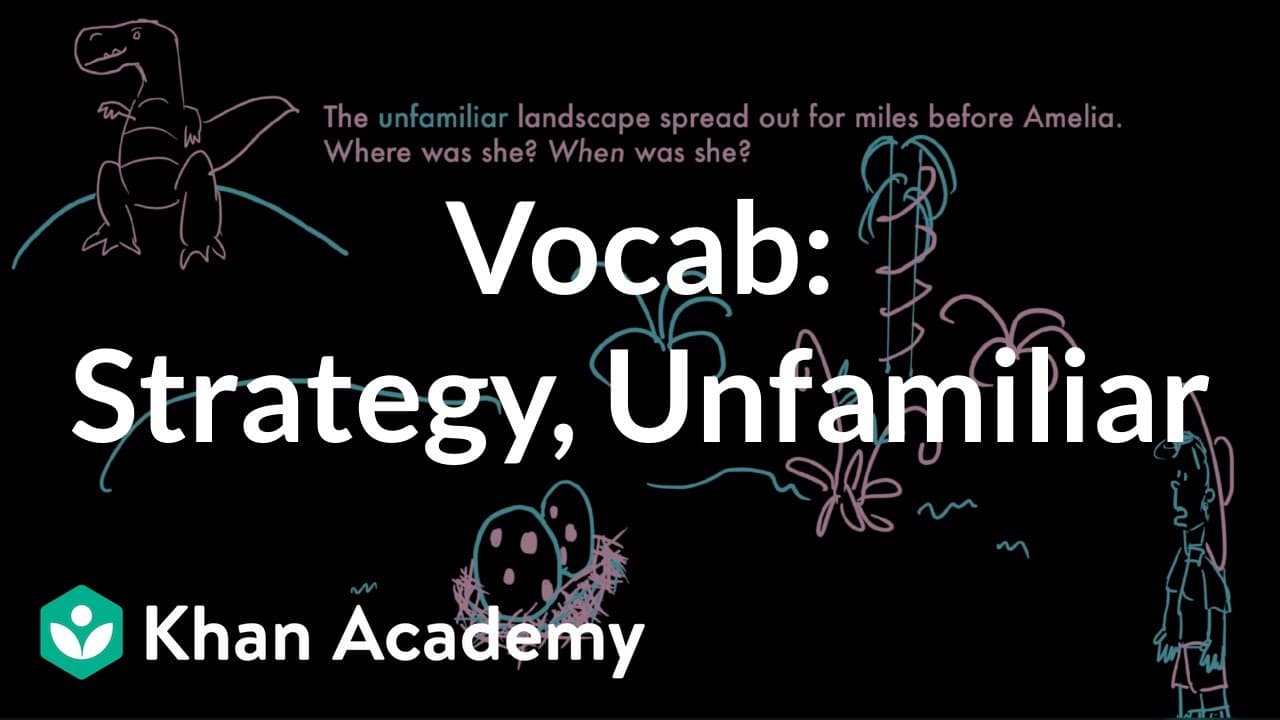
Learning Unfamiliar and Strategy Through Storytelling

Learning Unfamiliar and Strategy Through Storytelling

This engaging vocabulary lesson introduces two high-utility words, "unfamiliar" and "strategy," framed around a humorous personal narrative where the narrator has locked himself out of his house. Through digital whiteboard-style illustrations and text, the video breaks down the definitions, morphology, and usage of each word while weaving in a storyline about retrieving keys through a window. The narrator explains the prefix "un-" to decode meaning and distinguishes between the noun "strategy" and verb "strategize." Key themes include vocabulary acquisition, word morphology (prefixes and roots), and context clues. The video explores how breaking words into parts (like identifying "family" within "familiar") helps understanding, and it provides memorable, slightly absurd example sentences involving dinosaurs and fishing for tuna in a grocery store to reinforce the concepts in a fun way. For educators, this video serves as an excellent hook for literacy blocks focusing on Tier 2 vocabulary or morphology. It connects abstract definitions to concrete, humorous scenarios that aid retention. Teachers can use the "locked out" scenario to prompt students to brainstorm their own strategies, or use the "un-" segment to launch a lesson on how prefixes change word meanings.

Khan AcademyKhan Academy

2mins 45s

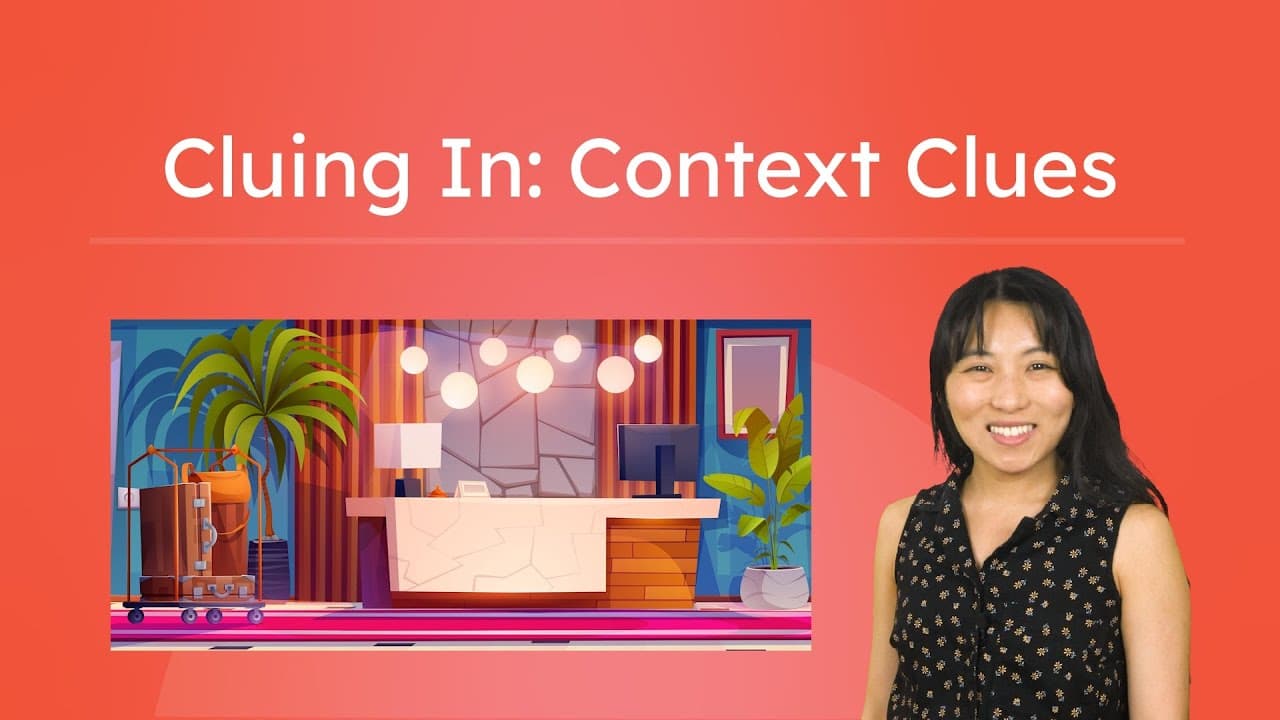
Cracking the Case: Using Context Clues to Solve Mysteries

Cracking the Case: Using Context Clues to Solve Mysteries

This engaging educational video transforms a standard language arts lesson on context clues into a thrilling mystery case file. Viewers join the host and her robot assistant, Mia, at "The Context" resort to solve the theft of a valuable "Ormolu Horologe." Through an interactive narrative, students learn to define challenging, unfamiliar vocabulary words by analyzing the surrounding text for hints, synonyms, antonyms, examples, and inferences. The video explicitly breaks down four primary strategies for using context clues: looking for definitions or examples, identifying synonyms and antonyms, making inferences based on the situation, and using logic to deduce meaning. By embedding these lessons within a detective story, the video demonstrates how these skills apply not just to reading comprehension, but to critical thinking and problem-solving in real-world scenarios. Teachers can use this video as a comprehensive standalone lesson or a hook for a unit on vocabulary acquisition strategies. The "pause-and-solve" format encourages active participation, allowing students to practice the skills immediately. It is particularly valuable for demonstrating how to tackle high-level vocabulary without a dictionary, building student confidence in reading complex texts.

Miacademy & MiaPrep Learning ChannelMiacademy & MiaPrep Learning Channel

10mins 9s

Rhythmic Reading: High-Frequency Sight Words in Context

Rhythmic Reading: High-Frequency Sight Words in Context

This educational music video features a high-energy, rhythmic song designed to teach early readers common sight words (high-frequency words) that often cannot be sounded out phonetically. Through a structured call-and-response format, the video introduces words individually, pronouncing them clearly, and then immediately places them into a simple, relatable sentence to demonstrate proper usage and context. The content covers a vast array of essential sight words found in early literacy curriculums (like Dolch and Fry lists), grouped into color-coded sections (Blue, Pink, Green, and Orange backgrounds) to help with visual categorization. Key themes include reading fluency, vocabulary acquisition, sentence structure, and word recognition. The repetition and catchy beat utilize the 'earworm' effect to aid memorization. For educators, this video serves as a versatile classroom tool. It can be used as a daily warm-up to build reading confidence, a transition activity to settle students, or a direct instructional tool for introducing new vocabulary. The consistent visual pattern—word, then sentence—makes it accessible for non-readers to follow along, bridging the gap between isolated word recognition and fluent reading comprehension.

Have Fun TeachingHave Fun Teaching

18mins 12s

Decoding Confusing Texts Using Context Clues

Decoding Confusing Texts Using Context Clues

This engaging educational video explores the critical role of context in communication, using relatable text message scenarios to demonstrate how easily misunderstandings can occur. The presenter, Justin, walks viewers through two distinct examples of confusion caused by ambiguous language: a conversation about "followers" that conflates track teammates with social media audiences, and a discussion about a "forecast" that could refer to either vacation weather or business sales projections. By breaking down these interactions, the video illustrates how looking at surrounding sentences helps decode intended meaning. Key themes include reading comprehension, context clues, multiple-meaning words (polysemy), and digital literacy. The video highlights how the same word can mean completely different things depending on the situation and how our own mental frameworks influence our interpretation of messages. It emphasizes the importance of analyzing the "whole picture" rather than isolated phrases to achieve clarity. This resource is highly valuable for English Language Arts classrooms as a hook for lessons on context clues, inference, and vocabulary. The modern, digital-native format of analyzing text bubbles makes the abstract concept of "context" concrete and relevant for students. Teachers can use this video to spark discussions about clear communication, have students analyze their own ambiguous messages, or introduce the concept of homonyms and polysemous words in a fun, low-stakes environment.

Miacademy & MiaPrep Learning ChannelMiacademy & MiaPrep Learning Channel

5mins 12s

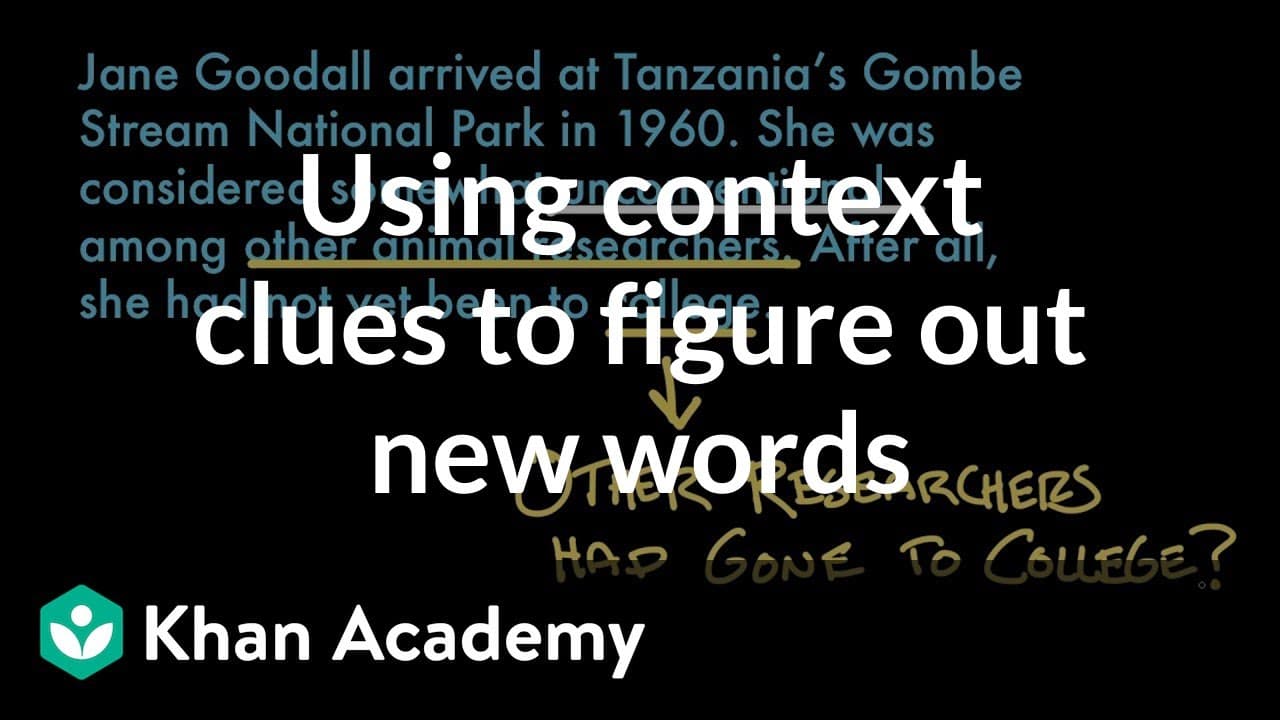
How to Figure Out New Words Using Context Clues

How to Figure Out New Words Using Context Clues

This educational video introduces students to specific strategies for determining the meaning of unfamiliar words while reading. Narrated by David, the video acknowledges that even adults encounter unknown words and presents "context"—the language surrounding a word—as the primary tool for deciphering meaning without immediately reaching for a dictionary. The core of the video is built around the mnemonic acronym "IDEAS," which stands for Inference, Definition, Example, Antonym, and Synonym. Using a passage about primatologist Jane Goodall and the word "unconventional," the narrator demonstrates how each of these five distinct types of context clues functions. The video modifies the original text to illustrate how authors might provide definitions, examples, opposites, or synonyms directly within the narrative flow. For educators, this resource provides a clear, memorable framework for teaching vocabulary acquisition skills. It encourages students to be active readers who use detective work to solve linguistic puzzles. The video is particularly useful for English Language Arts lessons focusing on reading comprehension, vocabulary development, and independent reading strategies for upper elementary and middle school students.

Khan AcademyKhan Academy

4mins 47s

Materials

Map Explorers Worksheet

Map Explorers Worksheet

A rigorous 2-page 5th-grade reading comprehension worksheet adapted from 'Reading Maps and Globes' for Spanish ESL learners. Features rich academic vocabulary with Latinate cognates, numbered text sections, academic summary sentence frames, and rigorous text-evidence multiple-choice questions with POE strategy.

MG

Max Garner

ILEARN Checkpoint Master Guide

ILEARN Checkpoint Master Guide

Comprehensive Grade 3 ELA ILEARN Checkpoint 1 Master Pacing Guide and Extended Assessment Bank aligned to Indiana Academic Standards. Features a 9-week pacing calendar, standard unwrapping matrix, and a 4-page comprehensive item bank including EBSR Part A/B stems, informational text passages, multi-select items, technology-enhanced table grids, and short constructed response rubrics.

L

LINDSEY.ELLIOTT

Fort Friends Vocabulary Supplement

Fort Friends Vocabulary Supplement

A single-page Grade 3 supplemental assessment sheet with three context clue questions aligned to standard 3.RL.4 based on the reading passage 'Fort Friends'.

TD

Taylor Doucet

ELA Baseline Screener

ELA Baseline Screener

An expanded 5-page 6th-grade Resource Room diagnostic ELA screener featuring an in-depth phonics and multisyllable decoding inventory, Greek and Latin roots, academic vocabulary, context clues tasks (with affixes removed), four progressive reading passages with all grade-level markers removed for students, and sentence editing with a structured diagnostic paragraph prompt.

L

laura.clar

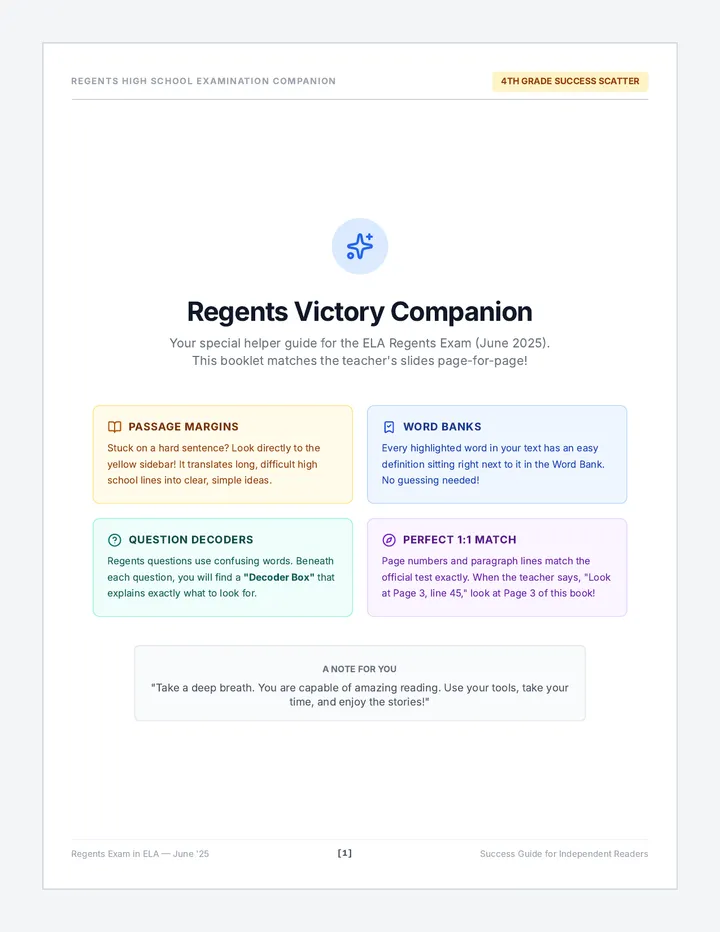
Regents Victory Companion Worksheet

Regents Victory Companion Worksheet

An ELA Regents scaffold guide designed for a 4th-grade independent reader, replicating the layout of ELA Regents June 2025 pages 2-11. Includes exact passages, line numbers, and questions, combined with an active side vocabulary bank and simplified 'Decoder' margin summaries to ensure classroom success.

AP

Alexis Paolini

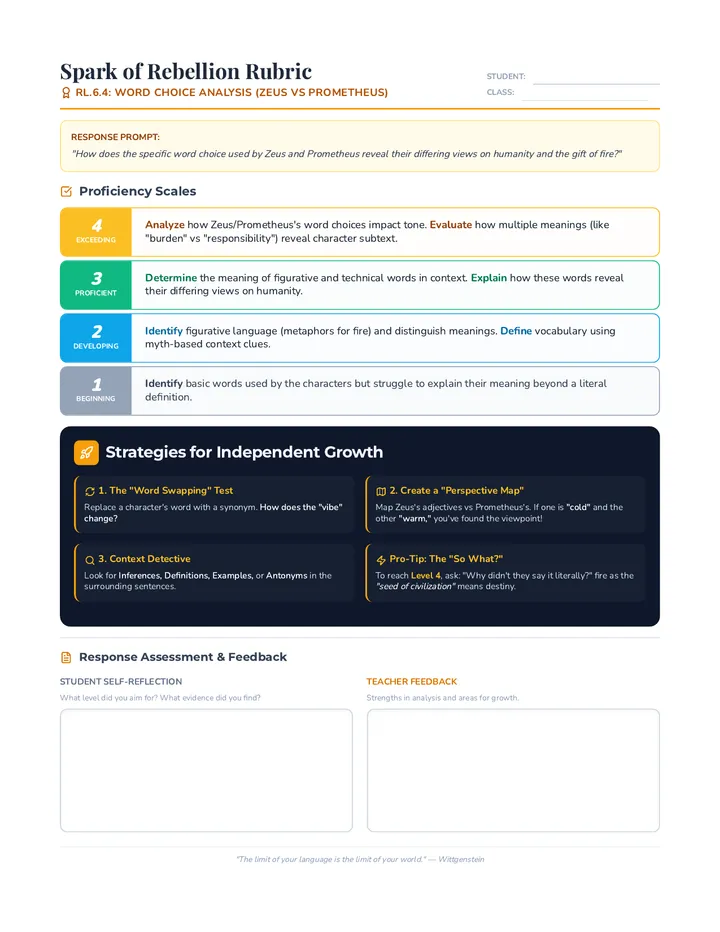
Spark of Rebellion Rubric

Spark of Rebellion Rubric

A tailored mastery rubric for the 'Spark of Rebellion' assignment, specifically assessing RL.6.4 by analyzing the word choices of Zeus and Prometheus. Includes a 4-level proficiency scale, targeted growth strategies, and reflection areas for assessment.

CG

Candace Ghelfi

Sequences

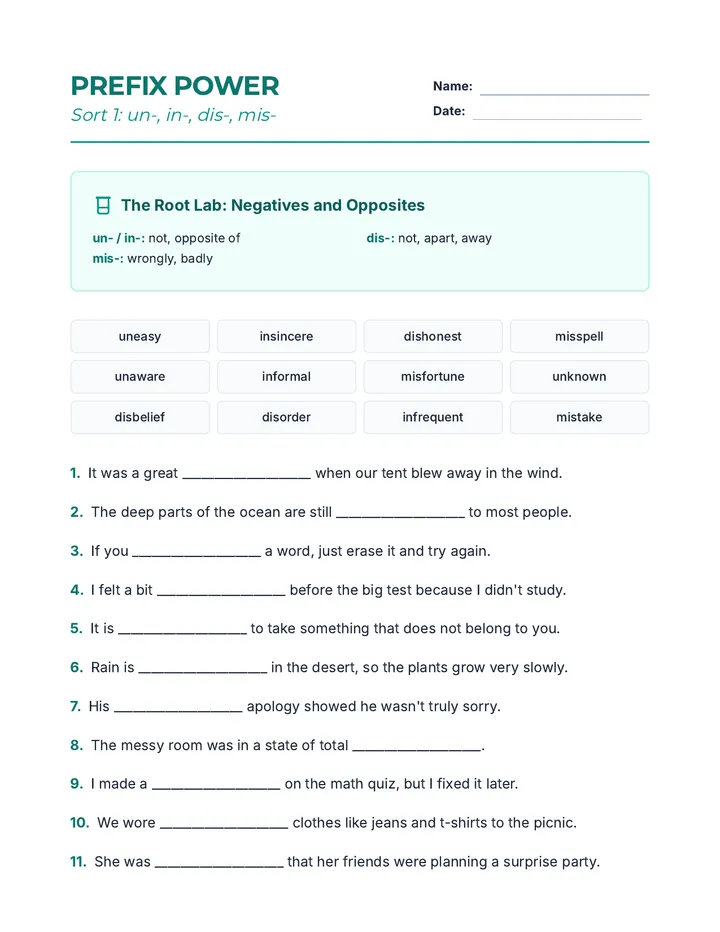
Prefix Power Sort 1 Worksheet

Word Wizard Packet

A comprehensive vocabulary and morphology curriculum covering prefixes, suffixes, Latin roots, and Greek roots through fill-in-the-blank exercises and engaging word puzzles.

N

nmack

137
Invention Quest Slides

Frindle Frenzy Novel Study

A 9-day novel study for 'Frindle' by Andrew Clements, aligned to 3rd Grade ELAR TEKS, focusing on character development, vocabulary, and plot analysis.

LH

Lucy Hellerman

56
Lesson Plan 1 Introduction

Literary Device Detectives

A comprehensive multi-unit sequence for 3rd and 4th grade students covering key literary devices: Introduction to Figurative Language, Onomatopoeia, Similes, Metaphors, Personification, and Idioms. Each unit provides 5 lesson plans, interactive notebook resources, and a wide variety of activities and stories designed to improve descriptive writing and reading comprehension.
JS

Janette Sullivan

105
Prophecy and Power Slides

Shadows and Crowns

A series of lessons exploring Shakespeare's Macbeth, specifically designed for 10th-grade emergent bilingual students to master complex characterization and thematic elements.

DC

Dylan Clark

30
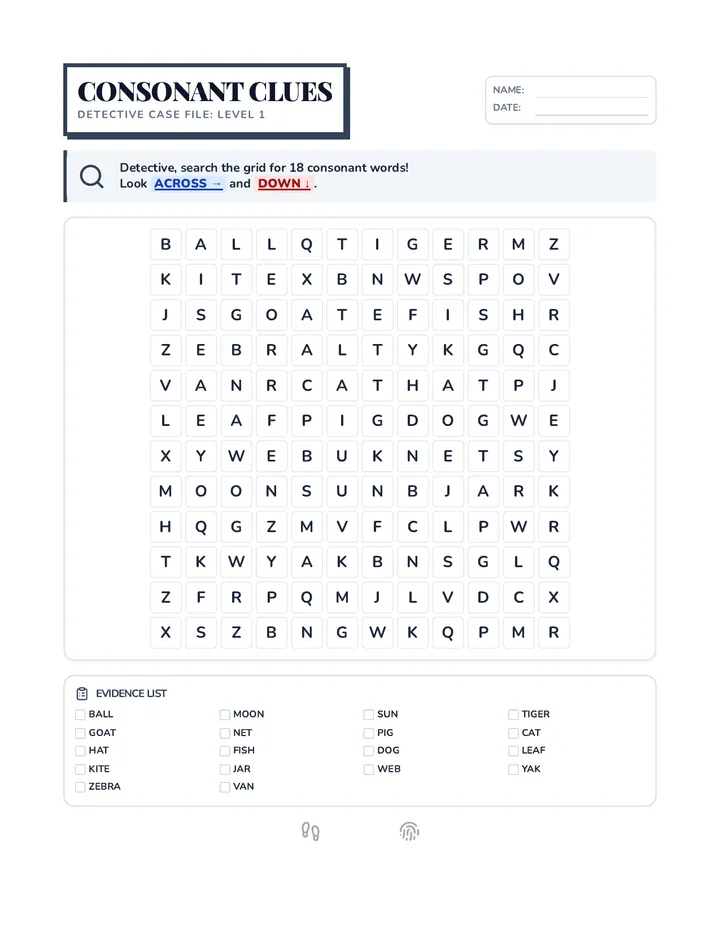
Consonant Clues Word Search

Sound Detective Workbook

A complete phonics journey covering letter-name alphabetic spelling stages, featuring randomized word sort practice through interactive sentence completion.

N

nmack

57
Copenhagen Clues Slides

Resistance Chronicles

A 9-day novel study for Number the Stars centered on 5th Grade ELAR TEKS, focusing on character development, plot analysis, and historical context through the lens of a Resistance Secret File.

LH

Lucy Hellerman

79