Lenny.com
Explore
Create
ActivitiesNewMathEnglish Language ArtsScience & EngineeringSocial StudiesGlobal LanguagesHealth & Physical EducationSpecial EducationCounseling & Life SkillsArts & CreativityESL
Lenny.com
Lenny.com
Explore
Create
ActivitiesNewMathEnglish Language ArtsScience & EngineeringSocial StudiesGlobal LanguagesHealth & Physical EducationSpecial EducationCounseling & Life SkillsArts & CreativityESL
Lenny.com
Lenny.com

Solutions

Lenny for EducatorsLenny for SchoolsLenny for Districts

Product

ExploreSign inCreateSupportAbout

Resources

Getting startedMTSS Acceleration Program

Newsletters

School Funding Newsletter

© 2026 Lenny Learning Inc.

TermsPrivacyAccessibility
LinkedInInstagramX
Lenny

Sequence

Arithmetic and geometric progressions defined by constant differences or ratios. Identifies patterns within ordered lists and calculates nth terms or limits.

English Language ArtsPhonics & Reading FoundationsLetter IdentificationLearn Letters A-ZLowercase and Uppercase LettersConsonants and VowelsLetter-Sound AssociationsLetter-Sound Associations: LowercaseLetter-Sound Associations: UppercaseBeginning and Ending SoundsRhymingBlending And SegmentingShort VowelsShort Vowel SoundsConsonant BlendsConsonant DigraphsBlends, Digraphs, and TrigraphsDigraphs, Blends, and Silent LettersLong Vowel SoundsLong Vowel PatternsShort and Long VowelsShort and Long Vowel PatternsSilent EVowel SoundsVowel TeamsR-Controlled VowelsDiphthongs: Oi, Oy, Ou, OwVariant VowelsVariant, Diphthong, And R Vowel PatternsSoft G And CSight WordsIrregular WordsWord RecognitionSyllablesSyllable TypesTwo-Syllable WordsMultisyllabic WordsPhoneme ManipulationDecodable TextsVocabularyAction WordsQuestion WordsNouns and AdjectivesClassify WordsCompound WordsSynonyms and AntonymsHomophonesHomophones and HomonymsShades of MeaningContext CluesPrefixes and SuffixesGreek and Latin RootsAnalogiesIdioms and AdagesForeign Words and ExpressionsWord Choice and UsageReference SkillsReading ComprehensionRead-Along Literary TextsRead-Along Informational TextsReality vs. FictionStory ElementsCharacterSequenceMain IdeaCause And EffectCompare And ContrastReading StrategiesText StructureAuthor's PurposeAuthor's Purpose And ToneAuthor's PerspectivePoint Of ViewThemeInference And ThemeInference And AnalysisPoetry ElementsLiterary DevicesAnalyzing LiteratureAnalyzing Informational TextsComparing TextsAudience, Purpose, And ToneBusiness DocumentsNovel StudyNonfiction Book StudyGrammar & MechanicsSentencesNounsVerbsAdjectivesPronounsCapitalizationPunctuationContractionsConjunctionsPrepositionsArticlesAdjectives And AdverbsVerb TypesVerb TensePronouns And AntecedentsPronoun TypesSubject-Verb AgreementDirect And Indirect ObjectsSentences, Fragments, And Run-OnsPhrases And ClausesCommasSemicolons, Colons, And CommasDashes, Hyphens, And EllipsesSpellingAbbreviationsFormattingVerb Tense And MoodMisplaced ModifiersWritingDescriptive DetailsCreative WritingOpinion WritingTopic SentencesOrganizing WritingLinking WordsSentence VarietyIntroductions And ConclusionsPersuasive And Opinion WritingExpository WritingPersuasive StrategiesDeveloping And Supporting ArgumentsTopic Sentences And Thesis StatementsSummarizingResearch SkillsEditing And RevisingActive And Passive Voice=Writing Clearly And ConciselyDebate & Public SpeakingPublic Speaking BasicsPersuasive TechniquesClaims and EvidenceTypes of ArgumentsReasoning TypesLogical FallaciesTopic ResearchOrganizing EvidenceDebate Speech OrganizationAttacking and Defending ArgumentsClash and EngagementImpact CalculusQuestioning and Cross-ExaminationCritical ThinkingInformal LogicFormal LogicInductive Reasoning

Videos

How to Summarize a Story

How to Summarize a Story

This engaging video lesson breaks down the skill of summarizing stories using a clever mix of humor, clear definitions, and a familiar example. The narrator defines a summary as a shorter version of a passage that retells only the main ideas, adopting a "reporter" persona to emphasize efficiency: "Get in, get the facts, get out." The video playfully starts by summarizing itself in ten seconds before diving deeper into the nuances of the skill. Using the fairy tale "The Three Little Pigs," the video demonstrates three types of summaries: the "Just Right" version that captures the characters, decisions, and outcomes; the "Too Little" version that misses the resolution; and the "Too Much" version that gets bogged down in irrelevant details like the pigs' middle school friendships and investment strategies. This "Goldilocks" approach helps clarify exactly what information belongs in a summary and what should be cut. This resource is an excellent tool for upper elementary classrooms working on reading comprehension and narrative writing. It specifically targets the common struggle students have with distinguishing between a summary and a retelling. By providing concrete non-examples (too short vs. too detailed), it gives teachers a shared language to use when guiding student writing. The clear checklist at the end—events in order, characters, and problems—provides a ready-made anchor chart for the classroom.

Khan AcademyKhan Academy

2mins 38s

How to Plan a Short Story by Focusing on One Element

How to Plan a Short Story by Focusing on One Element

In this creative writing lesson, Justin guides students through the pre-writing phase of crafting a short story, introducing the concept of a "narrative focus" to overcome the intimidation of a blank page. The video emphasizes that because short stories are brief (typically 1,000 to 8,000 words), they require a unified approach where one element drives the others. Justin demonstrates how to choose one primary narrative element—character, setting, conflict, or plot—to serve as the foundation for the entire story plan.

Miacademy & MiaPrep Learning ChannelMiacademy & MiaPrep Learning Channel

8mins 42s

Mapping the Mountain: How Stories Are Structured

Mapping the Mountain: How Stories Are Structured

This engaging video introduces students to the core structural elements of narrative fiction using the classic "Story Mountain" diagram. The narrator breaks down the standard plot arc into six key components: Exposition, Conflict, Rising Action, Climax, Falling Action, and Resolution. By visualizing a story as a mountain journey, students can easily grasp how tension builds and releases throughout a narrative. To solidify these abstract concepts, the video applies them to a creative, humorous example: a sci-fi reboot of "The Three Little Pigs" titled "TLP: Starbound." This retelling transforms the classic fairy tale into a space opera, demonstrating exactly how each plot point functions within a familiar yet fresh context. From straw spaceships to a cyborg wolf pirate, the example makes literary analysis memorable and fun. This resource is highly valuable for English Language Arts classrooms, specifically for reading comprehension and creative writing units. It provides a shared vocabulary for discussing literature and offers a clear template that students can use to analyze books they read or structure stories they write. The video effectively bridges the gap between simple storytelling and formal literary analysis.

Khan AcademyKhan Academy

5mins 14s

How Good Readers Connect Ideas in a Text

How Good Readers Connect Ideas in a Text

This video introduces the critical reading comprehension strategy of making connections between ideas within a text. Using an accessible analogy of a social network where friends are connected in different ways, the narrator explains how sentences and concepts in a passage relate to one another to build a larger meaning. The video transitions from this analogy to a concrete demonstration using a nonfiction passage about the history of shipbuilding. The content focuses on three specific types of text connections: Comparison (identifying similarities and differences), Cause and Effect (understanding how one event leads to another), and Sequence (tracking the order of events). Through a step-by-step close reading of a paragraph about iron versus brass nails in ships, the narrator explicitly models how to identify these structures using textual evidence. For educators, this resource provides a clear, visual model for teaching text structure and close reading. It moves beyond the common "text-to-self" connection strategy to the more rigorous "text-to-text" internal analysis required for higher-level comprehension. It is an excellent tool for introducing informational text structures or for supporting students who struggle to see the "big picture" when reading complex nonfiction.

Khan AcademyKhan Academy

3mins 3s

How to Structure and Outline a Novel's Plot

How to Structure and Outline a Novel's Plot

This video serves as a comprehensive guide for student writers on how to transform a general story idea into a structured plot outline. Hosted by Justin, it introduces "Challenge Six" in a creative writing series, focusing on "Plotting the Campaign." The lesson distinguishes between a simple plot summary and a detailed plot outline, emphasizing the importance of intentional design in storytelling to manage the reader's experience. The content explores the traditional narrative arc, breaking it down into five stages: exposition, rising action, climax, falling action, and resolution. A key feature of the video is the concept of "transition points"—specific moments that shift the story from one stage to the next, visualized as gears driving the plot forward. The host guides viewers through a three-step outlining process: identifying these transition points, planning the scenes that bridge them, and revising for flow. Ideally suited for English Language Arts classrooms, this video provides actionable strategies for creative writing units. It encourages students to shift their perspective from writer (omniscient) to reader (linear experience), asking critical questions about what the audience should know and feel at each stage. The video includes modeling with a sample story about a detective named Julius, making abstract structural concepts concrete and easy to apply for novice writers.
Miacademy & MiaPrep Learning ChannelMiacademy & MiaPrep Learning Channel

9mins 42s

Ordering Ideas: Why Structure Matters in Writing

Ordering Ideas: Why Structure Matters in Writing

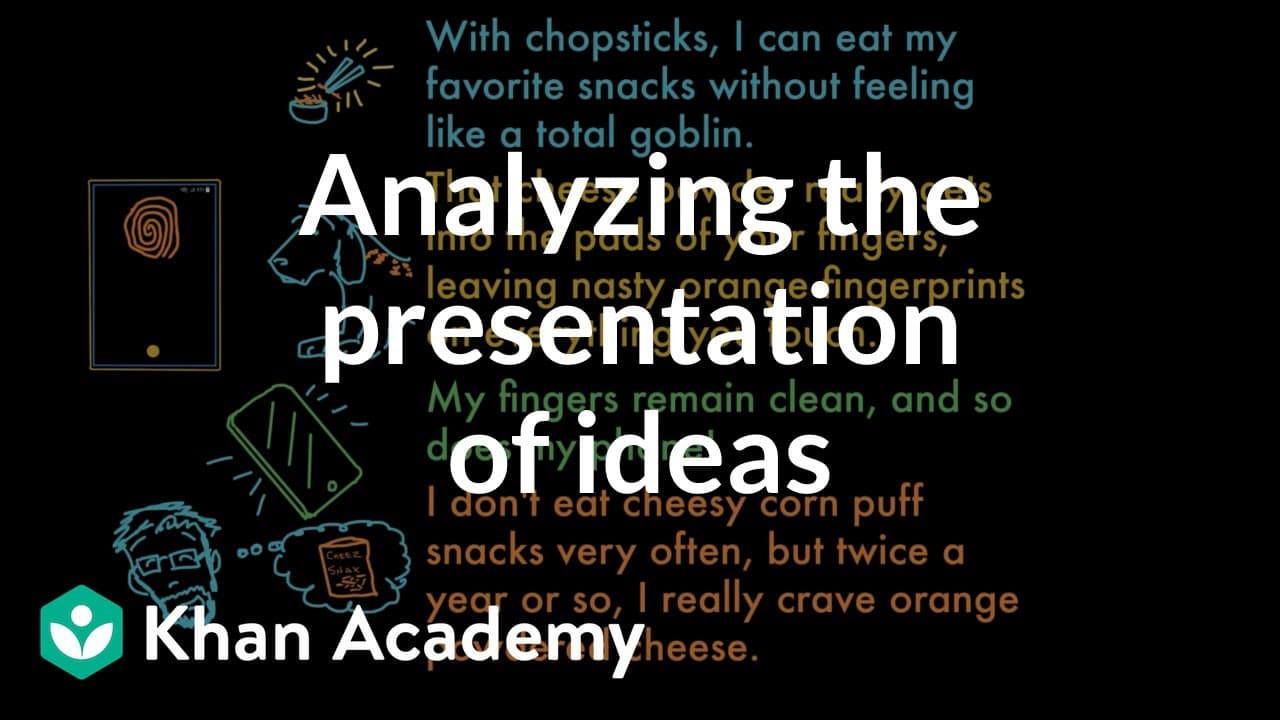
This video uses a humorous and relatable example—eating messy snacks with chopsticks—to demonstrate the importance of logically ordering ideas in writing. The narrator presents a jumbled paragraph that makes little sense, challenges the viewer to unscramble it, and then reveals the correct sequence to show how structure creates clarity and persuasion. The video explores key themes of writing structure, specifically the logical flow from context to problem to solution to evidence. It draws a parallel between reading and writing, explaining that understanding structure helps students become 'stronger readers' who can evaluate authors' choices and 'stronger writers' who can craft clear arguments. For educators, this video serves as an excellent hook for lessons on paragraph structure, editing, or persuasive writing. Its interactive nature (asking viewers to pause and reorder the text) makes it an active learning tool rather than passive consumption. It concretizes the abstract concept of 'flow' using a low-stakes, funny example that is accessible to upper elementary and middle school students.

Khan AcademyKhan Academy

3mins 28s

Materials

Lost Son Story Slides

Lost Son Story Slides

A 10-slide visual teaching deck adapted for deaf kindergarten listeners, enhanced with Google Slides 16:9 widescreen print and export compatibility CSS for seamless PDF import into Google Slides.

SC

Shelley Carman

Pencil Story Worksheet

Pencil Story Worksheet

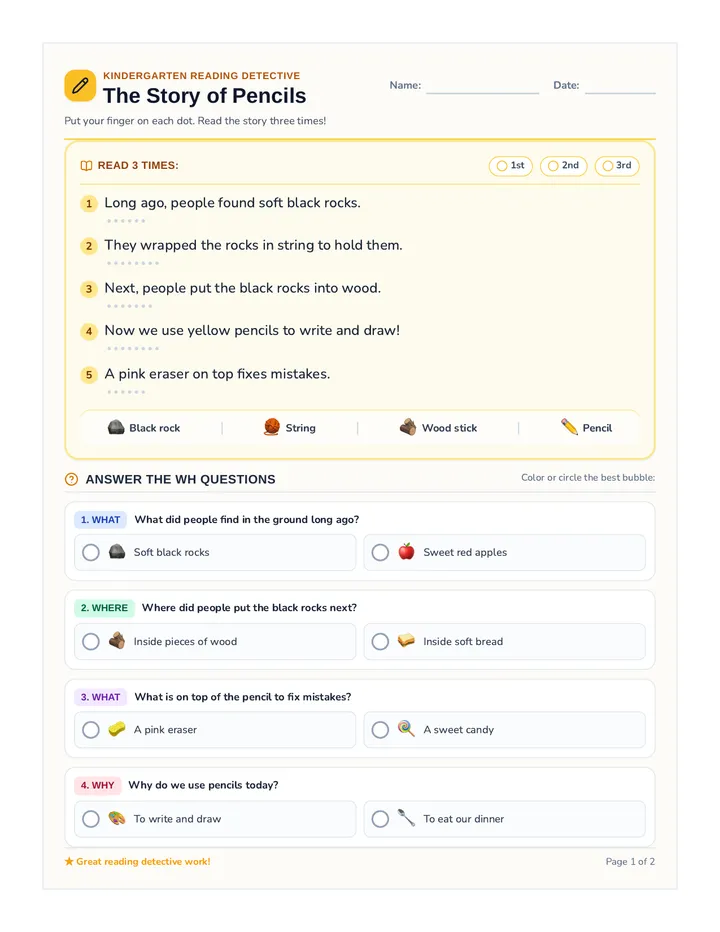
A kindergarten-level reading passage and comprehension resource exploring the history of pencils with extra-large, jumbo typography (22px text, large tracking dots, 15px+ questions). Includes decodable text, illustrated WH comprehension questions, ordering activity, drawing space, and teacher guide.

RP

Riley Pate

ILEARN Caminos Blueprint Guide

ILEARN Caminos Blueprint Guide

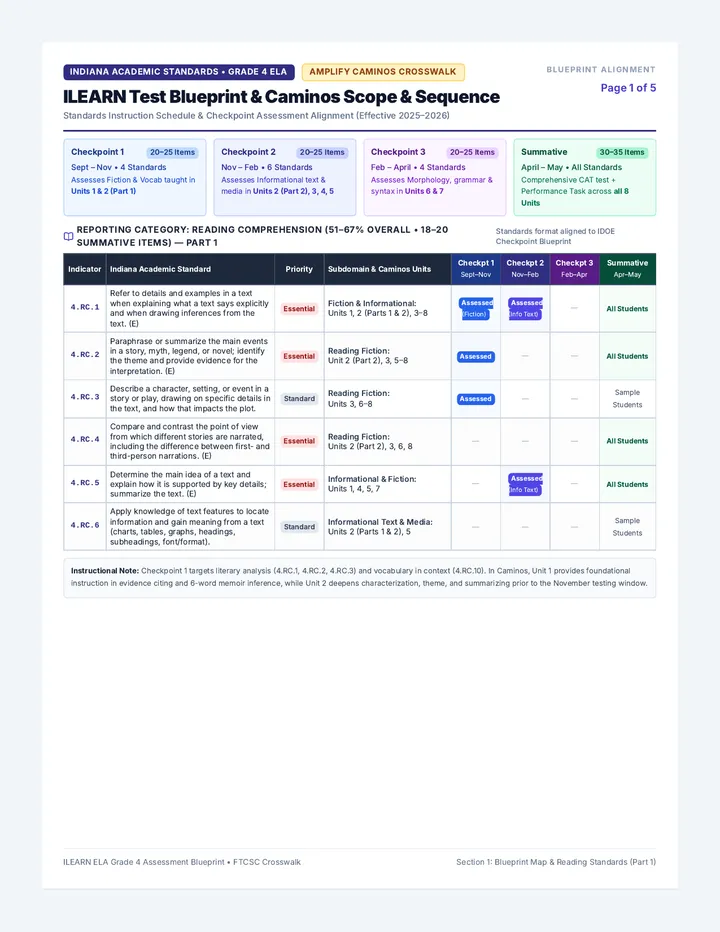
Comprehensive Grade 4 ILEARN Test Blueprint and Amplify Caminos Scope & Sequence crosswalk. Formatted to match the state ILEARN checkpoint blueprint, showing exactly when Indiana Academic Standards (Reading, Vocabulary, Writing, Grammar, and Communication) are taught across Units 1–8 and assessed in Checkpoints 1, 2, 3, and the Summative Assessment.

A

Amy.Hacker

Story Steps Placemat

Story Steps Placemat

A wide landscape sequencing visual featuring maximized columns labeled First, Next, and Last with extra-large blank workspace boxes and enlarged open transition circles.

EB

Emily Brown

Swallowed Fly Story Cards

Swallowed Fly Story Cards

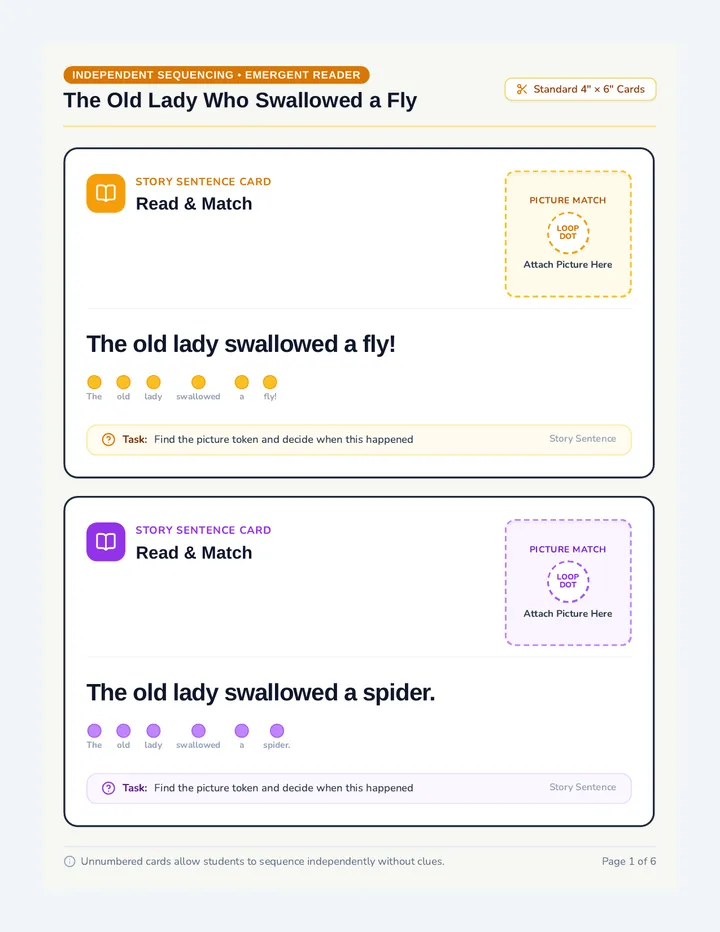
Standard 4x6 inch unnumbered story cards and matching picture tokens for 'There Was an Old Lady Who Swallowed a Fly' with goat removed. The fly card explicitly reads 'The old lady swallowed a fly!', with touch reading dots, corner Velcro target boxes, and an independent 7-step sequencing board.

JR

JUDI-ANN REID

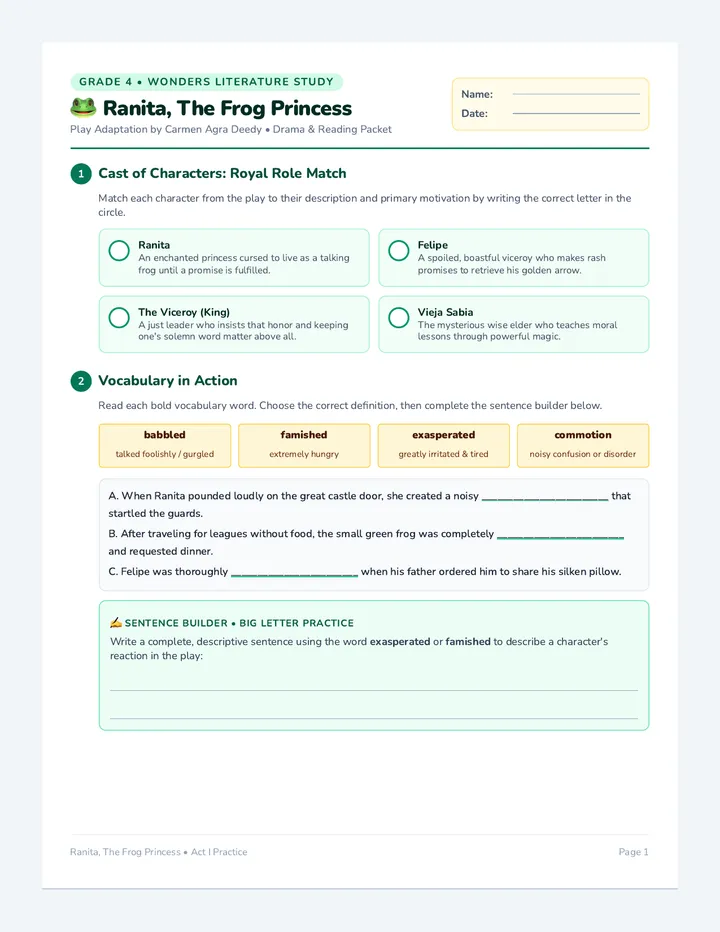
Frog Princess Classwork Packet

Frog Princess Classwork Packet

A 4-page student classwork packet for *Ranita, The Frog Princess* featuring large, clear typography, character analysis, drama mechanics, vocabulary in context, text-dependent comprehension questions, and scaffolded written response sentence frames.

RM

Rosalyn Mcrae

Sequences

Invention Quest Slides

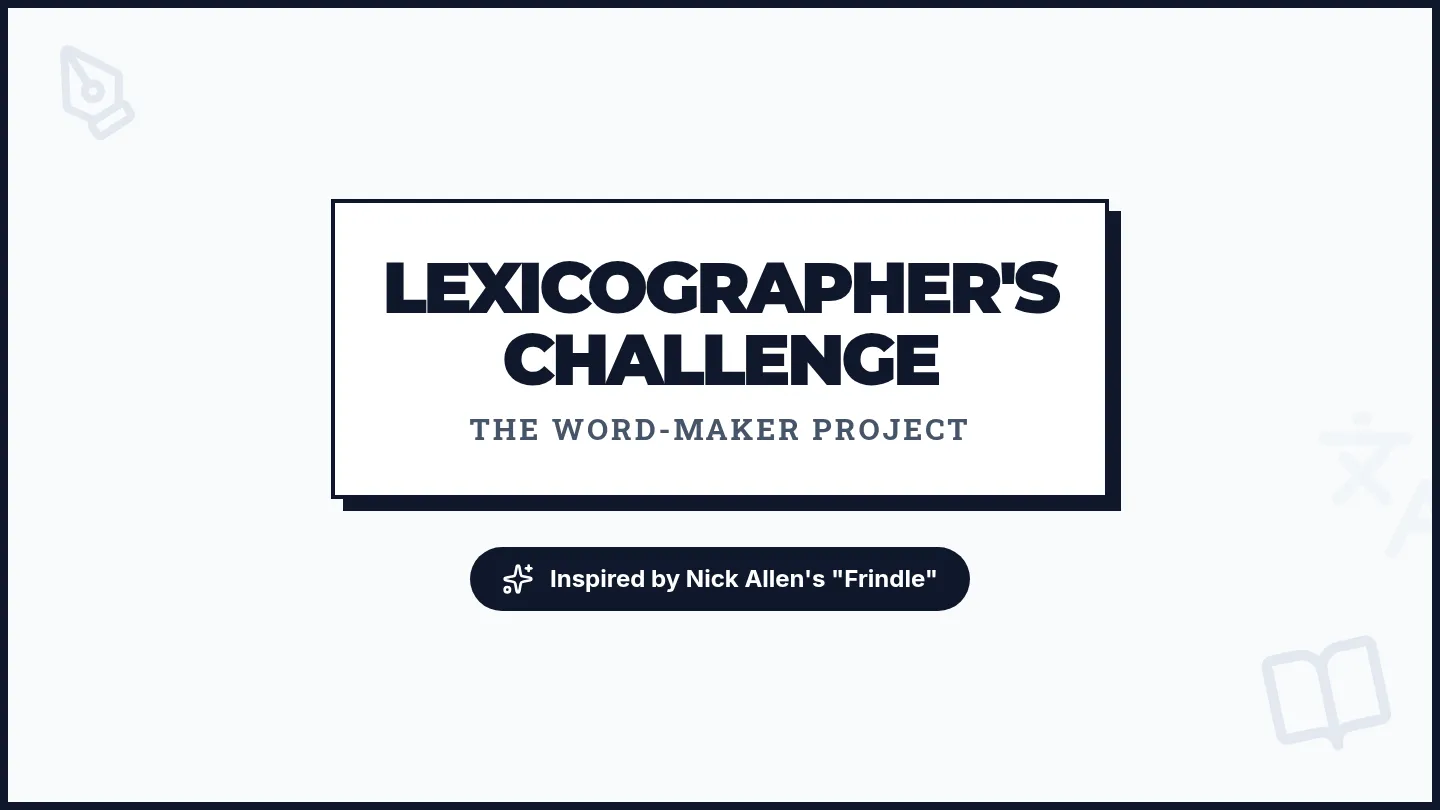
Frindle Frenzy Novel Study

A 9-day novel study for 'Frindle' by Andrew Clements, aligned to 3rd Grade ELAR TEKS, focusing on character development, vocabulary, and plot analysis.

LH

Lucy Hellerman

56
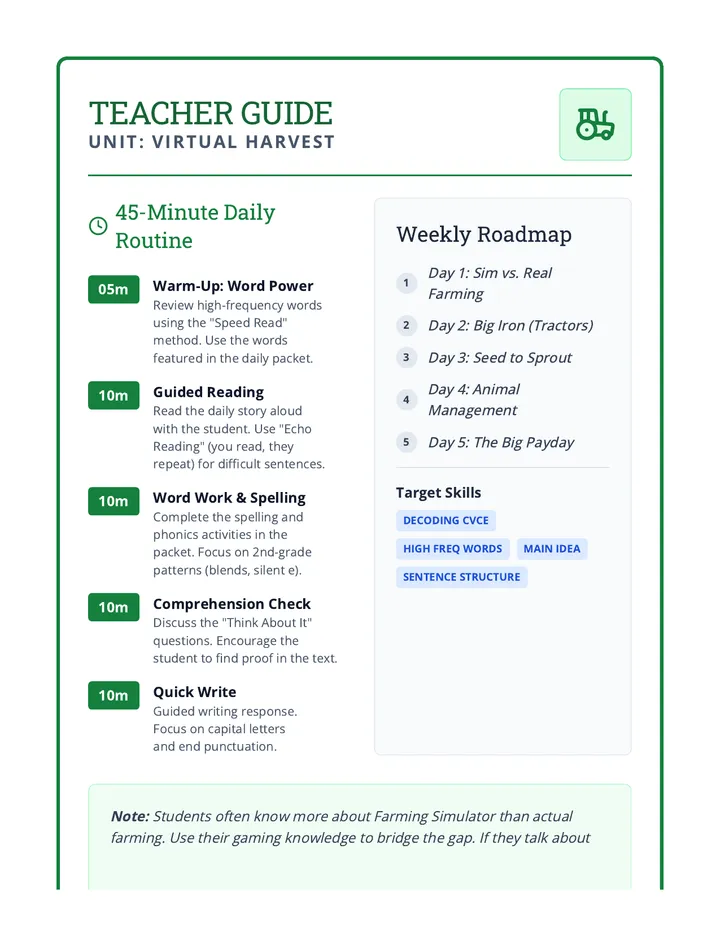
Virtual Harvest Teacher Guide

Digital Dirt

A 5-day reading comprehension and writing unit for struggling readers, blending the world of Farming Simulator with real-world agriculture. Focuses on 2nd-grade level literacy skills within a high-interest 5th-grade context.

CM

carley Martin

30
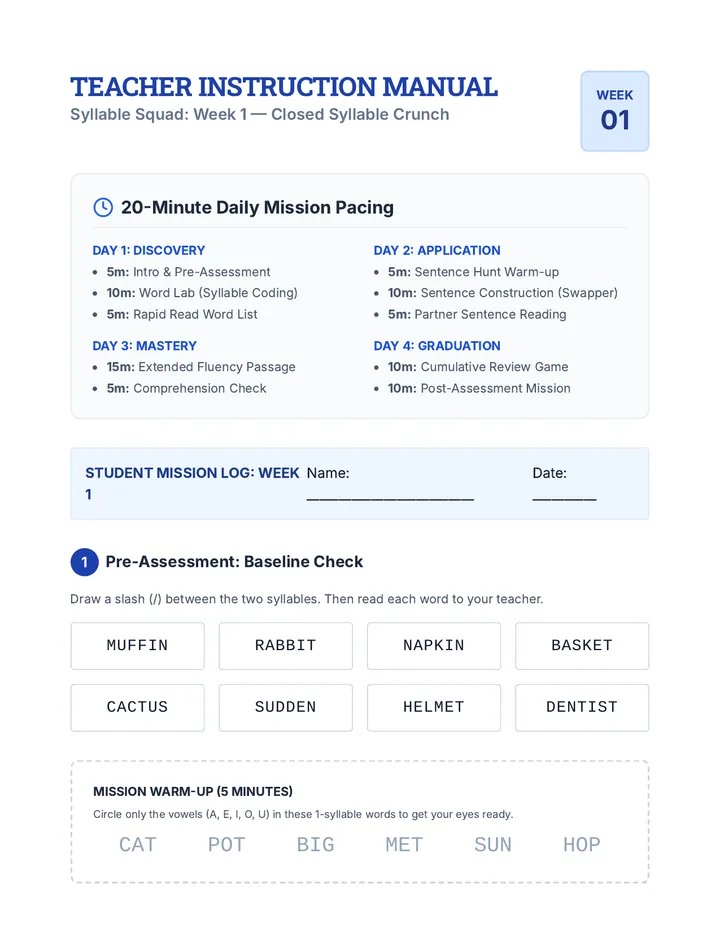
Week 1 Closed Syllable Manual

Syllable Squad Decoding Mission

A comprehensive 5-week phonics intervention focused on decoding two-syllable words across five major syllable types. Each week includes a pre-assessment, daily lessons with specific targets, student practice sheets, and a post-assessment.

KJ

Kelsey Jacobs

29
Copenhagen Clues Slides

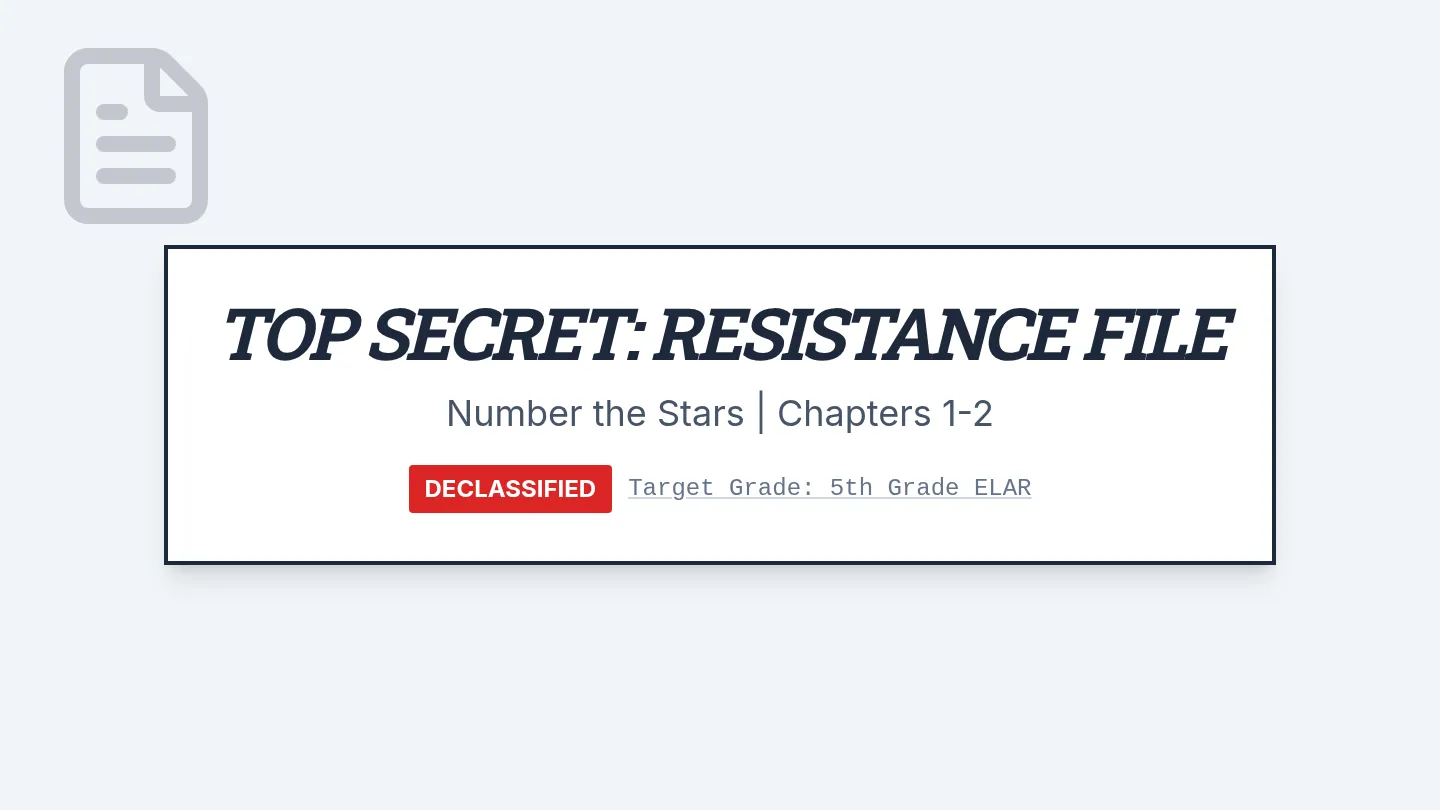
Resistance Chronicles

A 9-day novel study for Number the Stars centered on 5th Grade ELAR TEKS, focusing on character development, plot analysis, and historical context through the lens of a Resistance Secret File.

LH

Lucy Hellerman

79
Unit 1 Pacing Guide Document

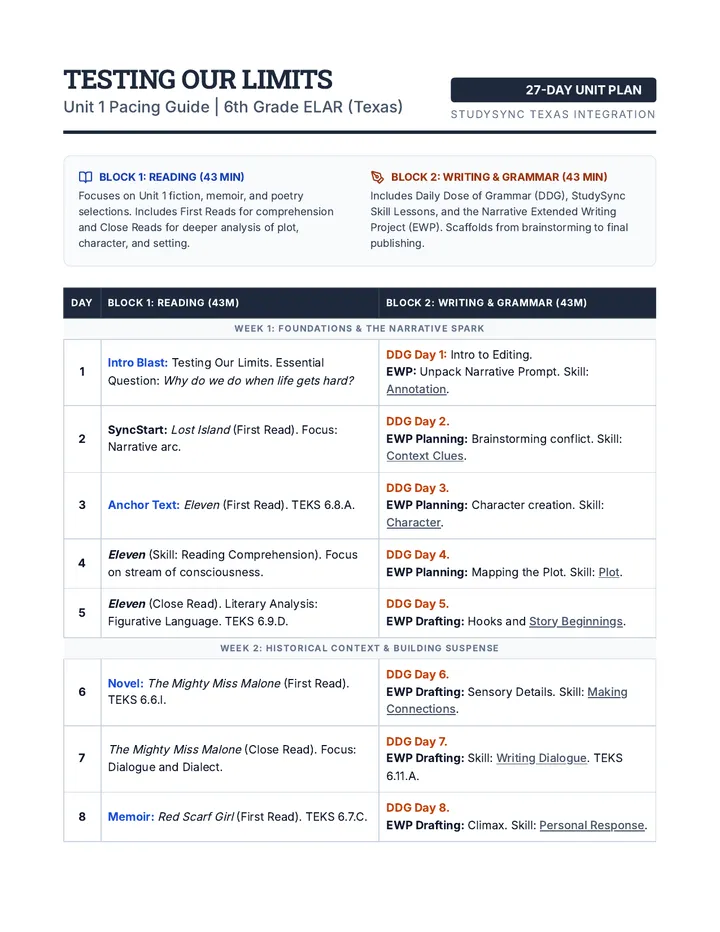
Testing Our Limits Unit Sequence

A 27-day instructional sequence for 6th Grade ELAR Unit 1: Testing Our Limits, featuring dual blocks for Reading and Writing with daily grammar and skill scaffolding.

DM

Dawn Mustian

81
Reading Focus Pacing Guide

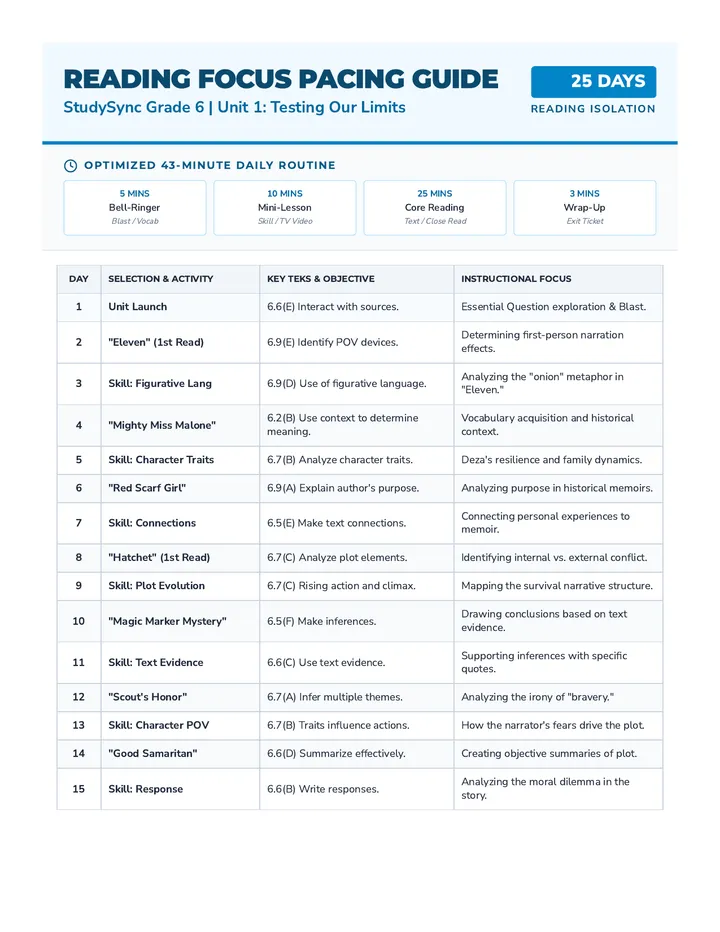
Testing Our Limits Unit

A 25-day comprehensive unit for StudySync Grade 6 that explores the theme of courage and resilience through isolated reading and writing tracks, aligned to ELA TEKS.

DM

Dawn Mustian

79