Lenny.com
Explore
Create
ActivitiesNewMathEnglish Language ArtsScience & EngineeringSocial StudiesGlobal LanguagesHealth & Physical EducationSpecial EducationCounseling & Life SkillsArts & CreativityESL
Lenny.com
Lenny.com
Explore
Create
ActivitiesNewMathEnglish Language ArtsScience & EngineeringSocial StudiesGlobal LanguagesHealth & Physical EducationSpecial EducationCounseling & Life SkillsArts & CreativityESL
Lenny.com
Lenny.com

Solutions

Lenny for EducatorsLenny for SchoolsLenny for Districts

Product

ExploreSign inCreateSupportAbout

Resources

Getting startedMTSS Acceleration Program

Newsletters

School Funding Newsletter

© 2026 Lenny Learning Inc.

TermsPrivacyAccessibility
LinkedInInstagramX
Lenny

Sentences, Fragments, And Run-Ons

Identification of subjects and predicates to differentiate complete sentences from fragments and run-ons. Focuses on correction techniques using punctuation and coordinating conjunctions.

English Language ArtsPhonics & Reading FoundationsLetter IdentificationLearn Letters A-ZLowercase and Uppercase LettersConsonants and VowelsLetter-Sound AssociationsLetter-Sound Associations: LowercaseLetter-Sound Associations: UppercaseBeginning and Ending SoundsRhymingBlending And SegmentingShort VowelsShort Vowel SoundsConsonant BlendsConsonant DigraphsBlends, Digraphs, and TrigraphsDigraphs, Blends, and Silent LettersLong Vowel SoundsLong Vowel PatternsShort and Long VowelsShort and Long Vowel PatternsSilent EVowel SoundsVowel TeamsR-Controlled VowelsDiphthongs: Oi, Oy, Ou, OwVariant VowelsVariant, Diphthong, And R Vowel PatternsSoft G And CSight WordsIrregular WordsWord RecognitionSyllablesSyllable TypesTwo-Syllable WordsMultisyllabic WordsPhoneme ManipulationDecodable TextsVocabularyAction WordsQuestion WordsNouns and AdjectivesClassify WordsCompound WordsSynonyms and AntonymsHomophonesHomophones and HomonymsShades of MeaningContext CluesPrefixes and SuffixesGreek and Latin RootsAnalogiesIdioms and AdagesForeign Words and ExpressionsWord Choice and UsageReference SkillsReading ComprehensionRead-Along Literary TextsRead-Along Informational TextsReality vs. FictionStory ElementsCharacterSequenceMain IdeaCause And EffectCompare And ContrastReading StrategiesText StructureAuthor's PurposeAuthor's Purpose And ToneAuthor's PerspectivePoint Of ViewThemeInference And ThemeInference And AnalysisPoetry ElementsLiterary DevicesAnalyzing LiteratureAnalyzing Informational TextsComparing TextsAudience, Purpose, And ToneBusiness DocumentsNovel StudyNonfiction Book StudyGrammar & MechanicsSentencesNounsVerbsAdjectivesPronounsCapitalizationPunctuationContractionsConjunctionsPrepositionsArticlesAdjectives And AdverbsVerb TypesVerb TensePronouns And AntecedentsPronoun TypesSubject-Verb AgreementDirect And Indirect ObjectsSentences, Fragments, And Run-OnsPhrases And ClausesCommasSemicolons, Colons, And CommasDashes, Hyphens, And EllipsesSpellingAbbreviationsFormattingVerb Tense And MoodMisplaced ModifiersWritingDescriptive DetailsCreative WritingOpinion WritingTopic SentencesOrganizing WritingLinking WordsSentence VarietyIntroductions And ConclusionsPersuasive And Opinion WritingExpository WritingPersuasive StrategiesDeveloping And Supporting ArgumentsTopic Sentences And Thesis StatementsSummarizingResearch SkillsEditing And RevisingActive And Passive Voice=Writing Clearly And ConciselyDebate & Public SpeakingPublic Speaking BasicsPersuasive TechniquesClaims and EvidenceTypes of ArgumentsReasoning TypesLogical FallaciesTopic ResearchOrganizing EvidenceDebate Speech OrganizationAttacking and Defending ArgumentsClash and EngagementImpact CalculusQuestioning and Cross-ExaminationCritical ThinkingInformal LogicFormal LogicInductive Reasoning

Videos

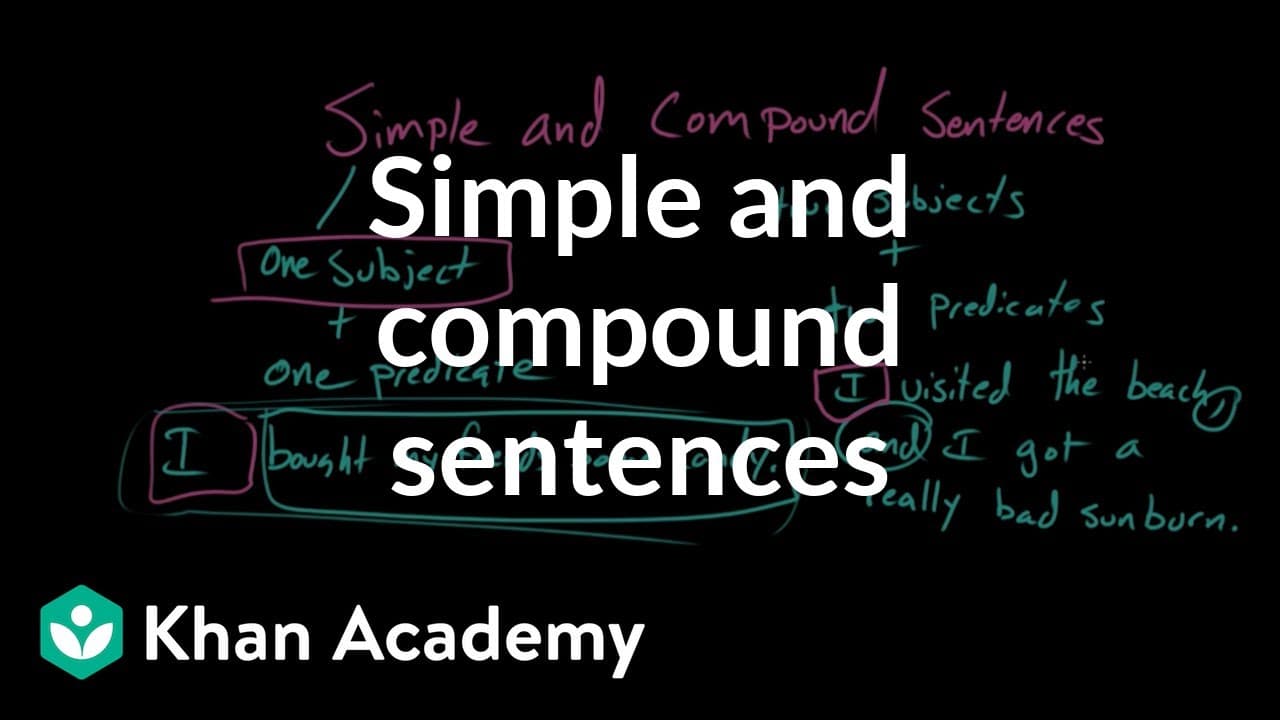
Understanding Simple and Compound Sentences

Understanding Simple and Compound Sentences

In this engaging grammar tutorial, David and Paige explain the structural differences between simple and compound sentences. Using a digital whiteboard, they break down the core components of sentence construction, defining a simple sentence as consisting of a single subject and predicate, while a compound sentence combines two or more independent clauses joined by a conjunction. The video dives into technical grammar terminology in an accessible way, introducing concepts like "independent clauses" and "predicates." A significant portion of the video is dedicated to a common point of confusion: the difference between a compound sentence (two complete thoughts joined together) and a simple sentence with a compound predicate (one subject doing two things). Through specific examples about buying candy and getting sunburned, the narrators visually diagram these differences. For educators, this resource serves as an excellent tool for improving student writing fluency. It moves beyond basic definitions to help students understand sentence variety and the mechanics of combining ideas. The visual diagramming of subjects and predicates provides a clear model for students to analyze their own writing, making it particularly useful for lessons on syntax, editing, and avoiding run-on sentences.

Khan AcademyKhan Academy

4mins 29s

Understanding Independent and Dependent Clauses

Understanding Independent and Dependent Clauses

This video provides a comprehensive grammar lesson on the fundamental differences between independent and dependent clauses. Through clear examples and real-time handwriting on a blackboard, the narrators explain that while both clause types contain a subject and a verb, only independent clauses can stand alone as complete sentences. The lesson breaks down the structure of a clause and demonstrates how adding elements like subordinating conjunctions transforms a complete sentence into a dependent fragment. The content explores specific grammatical markers that create dependency, such as the words "because," "although," "while," and "unless." It addresses the nuance between spoken English, where fragments are common and understood, and formal written English, which requires complete sentences. The video uses side-by-side comparisons to show how dependent clauses often act as background information or descriptors that must "lean" on an independent clause to make sense. For educators, this resource is excellent for tackling the common student problem of sentence fragments in writing. By explaining the "why" behind the rules—specifically looking at how subordinating conjunctions function—it moves beyond rote memorization to conceptual understanding. It is particularly useful for writing workshops, grammar instruction, and editing sessions to help students construct more complex, varied sentences with "vim and vigor."
Khan AcademyKhan Academy

7mins 4s

The Core Components of a Sentence: Subject and Predicate

The Core Components of a Sentence: Subject and Predicate

This video provides a fundamental overview of sentence structure, defining a sentence as a "grammatically complete idea" composed of specific functional parts. Narrators David and Paige introduce the concept of syntax—the ordering of language—and break down the two essential components found in every sentence: the subject (the noun or pronoun part) and the predicate (the verb part). Using clear handwritten examples on a digital blackboard, the lesson explores various types of sentences to illustrate these concepts in action. The video analyzes a standard descriptive sentence ("The great big dog licked my face"), a minimal two-word sentence ("I am"), and an imperative command ("Pick up that muffin!") to demonstrate how subjects can sometimes be implied rather than explicitly stated. This resource is highly valuable for English Language Arts classrooms as it demystifies core grammatical terminology. By visually separating subjects and predicates and addressing tricky cases like commands, it helps students understand not just what a sentence looks like, but how it functions. This foundational knowledge supports better writing skills, reading comprehension, and the ability to distinguish complete sentences from fragments.

Khan AcademyKhan Academy

4mins 34s

How to Identify and Fix Run-On Sentences

How to Identify and Fix Run-On Sentences

This engaging animated video introduces elementary students to the concept of run-on sentences using a humorous and clear approach. Narrated by an enthusiastic cartoon character, the video begins by defining what a proper sentence is—a group of words with a subject, a verb, and a complete thought. Through simple examples like "The dog plays catch," it establishes the baseline for correct sentence structure before introducing the "villain" of the lesson: the sneaky run-on sentence. The video characterizes run-on sentences as "greedy" and "sneaky" because they try to cram two complete thoughts into a single sentence without permission. Using visual metaphors like a character sneaking through a jungle and leaking pipes, the narrator explains that run-ons contain two sentences inside one. The video then transitions into a practical workshop mode, guiding viewers through three specific examples of run-on sentences. For each example, the narrator asks the viewer to identify the break point, pauses to allow for thinking time, and then demonstrates exactly how to split the run-on into two correct sentences using a period and a capital letter. Ideally suited for 2nd through 4th grade language arts classrooms, this resource is excellent for introducing editing skills and sentence structure. It simplifies the often-confusing concept of run-ons by limiting the solution to one method: splitting the sentence with a period. This makes it a perfect foundational lesson for young writers who are just beginning to write longer paragraphs and need to learn where one thought ends and the next begins.

Homeschool PopHomeschool Pop

7mins 35s

How Subordinating Conjunctions Connect Independent and Dependent Clauses

How Subordinating Conjunctions Connect Independent and Dependent Clauses

This educational video provides a clear and comprehensive introduction to subordinating conjunctions and their role in sentence structure. The narrator breaks down the fundamental difference between independent and dependent clauses, explaining that while all sentences are clauses, not all clauses are sentences. Using the helpful analogy of a tree (independent clause) and a ladder (dependent clause), the video demonstrates how subordinating conjunctions function to connect these two types of clauses to add context and detail to writing. The content covers key grammatical concepts including the definition of a clause (subject plus verb), the identifying features of sentence fragments, and the distinction between coordinating conjunctions (FANBOYS) and subordinating conjunctions. Through humorous example sentences involving characters like Herbert and Sir Reginald, viewers learn practical tests—such as the "Yeah? So what?" test—to identify dependent clauses and determine if a sentence is grammatically complete. For educators, this video is an excellent resource for teaching complex sentence structure and helping students avoid sentence fragments. It simplifies abstract grammatical terms into tangible concepts using visual aids and memorable analogies. The video concludes with a comprehensive list of common subordinating conjunctions, making it a useful reference tool for students looking to add variety and sophistication to their writing.

Khan AcademyKhan Academy

5mins 27s

How to Identify and Fix Sentence Fragments

How to Identify and Fix Sentence Fragments

In this engaging grammar lesson, David and his teacher-cousin Beth break down the concept of sentence fragments using a simple, collaborative blackboard style. The video explains that a sentence fragment is an incomplete thought that mimics a sentence by ending with a period but fails to tell the "whole story." Through clear visual examples, the hosts demonstrate the two main causes of fragments: missing a subject (the "who") or missing a predicate (the "what happened"). The video explores three distinct types of fragments: those missing a predicate, those missing a subject, and phrases that lack both (like prepositional phrases standing alone). Using relatable examples like "The pancakes" and "Because of the snowstorm," David and Beth show exactly how to turn these fragments into complete sentences by combining subjects and predicates. The visual use of green and white handwriting on a black background helps distinguish between the naming part (subject) and the telling part (predicate). This resource is highly valuable for upper elementary and middle school language arts classrooms. It provides a non-intimidating entry point into sentence structure, helping students move beyond intuition to understanding the grammatical mechanics of why a sentence is complete. Teachers can use this video to introduce editing skills, support struggling writers who frequently use fragments, or reinforce the fundamental concepts of subject and predicate.

Khan AcademyKhan Academy

3mins 48s

Materials

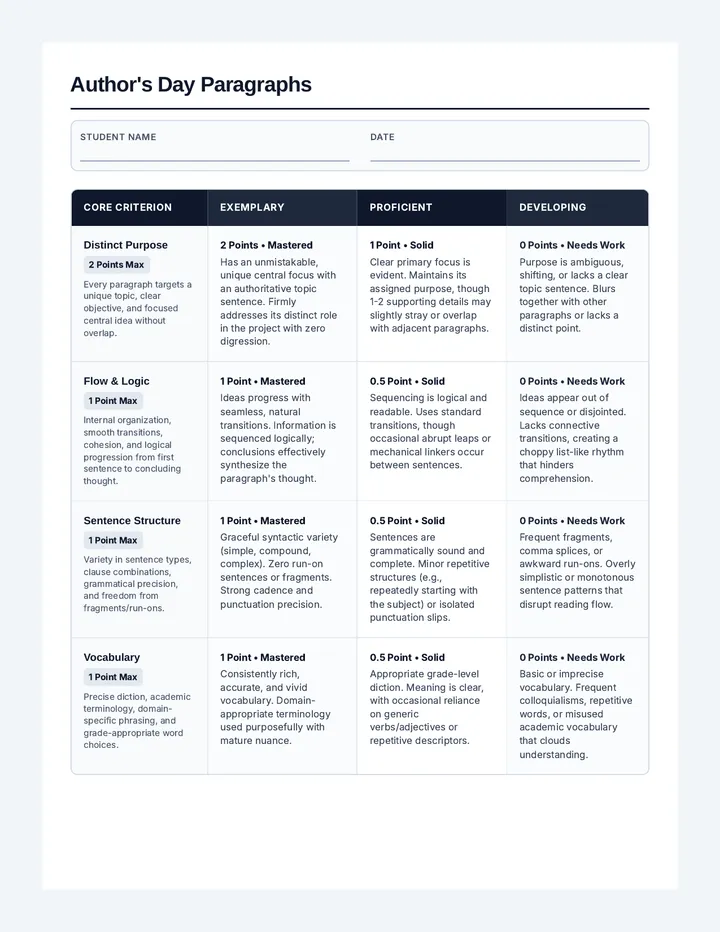
Author's Day Paragraphs Rubric

Author's Day Paragraphs Rubric

A black-and-white 5-point analytic rubric and full-page 12-paragraph evaluation ledger for the Author's Day Paragraphs project, featuring maximized row height with multiple writing lines per paragraph.

KD

kathy dale

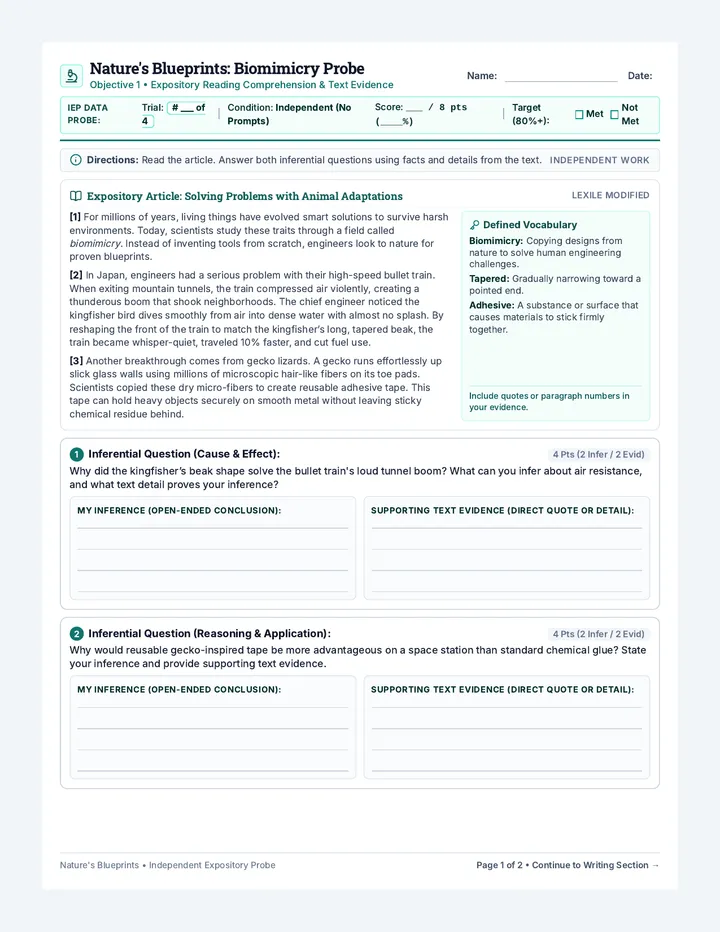
Biomimicry Probe Worksheet

Biomimicry Probe Worksheet

A two-page independent progress monitoring worksheet assessing expository reading inference with supportive text evidence, elaborative paragraph writing with two or more supporting details, and single-skill editing mechanics, featuring expanded student writing space and streamlined header data tracking.

A

amanda_raboin

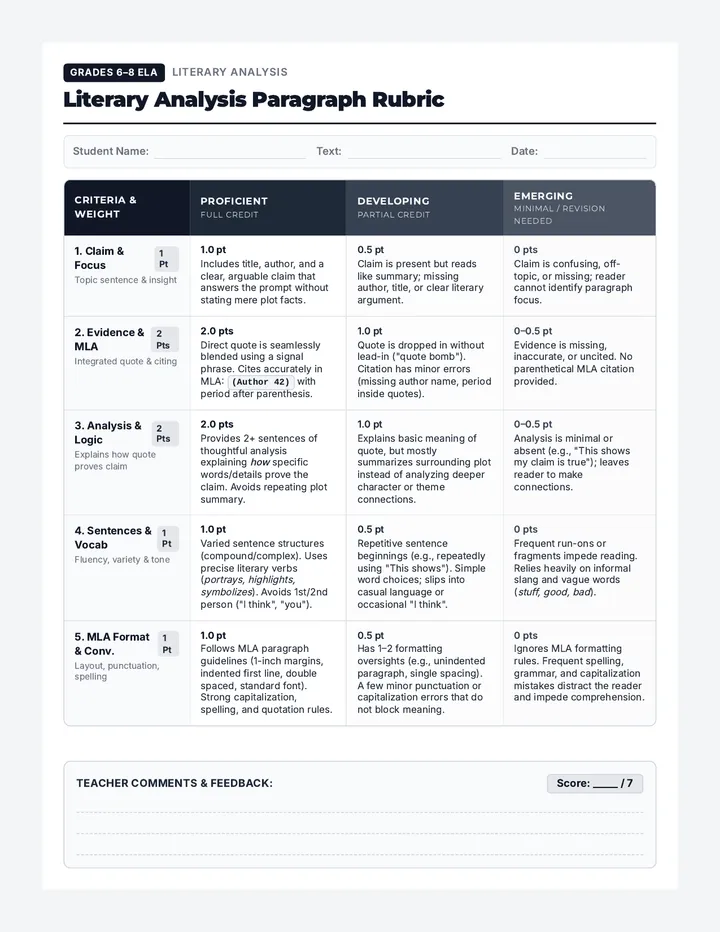
Analysis Architect Rubric

Analysis Architect Rubric

A grayscale 7-point middle school literary analysis paragraph rubric evaluating claim strength, MLA citation, evidence integration, analytical depth, and sentence craft.

KD

kathy dale

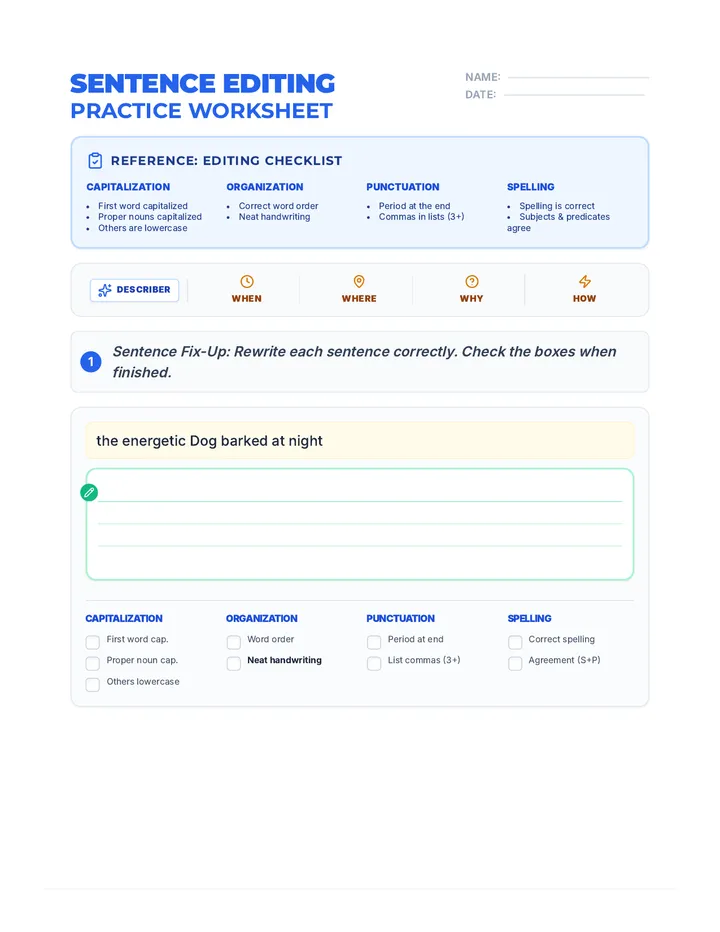
Sentence Editing Practice Worksheet

Sentence Editing Practice Worksheet

An extensive 6-page worksheet for sentence building and correction. Features an editing checklist for review at the top of Page 1, followed by four 'Sentence Fix-Up' items and six complex frames. All tasks include 4 handwriting lines and a standardized checklist with increased font sizes for better legibility. Subtitle removed and font sizes polished for classroom use.

EV

Erin Venuti

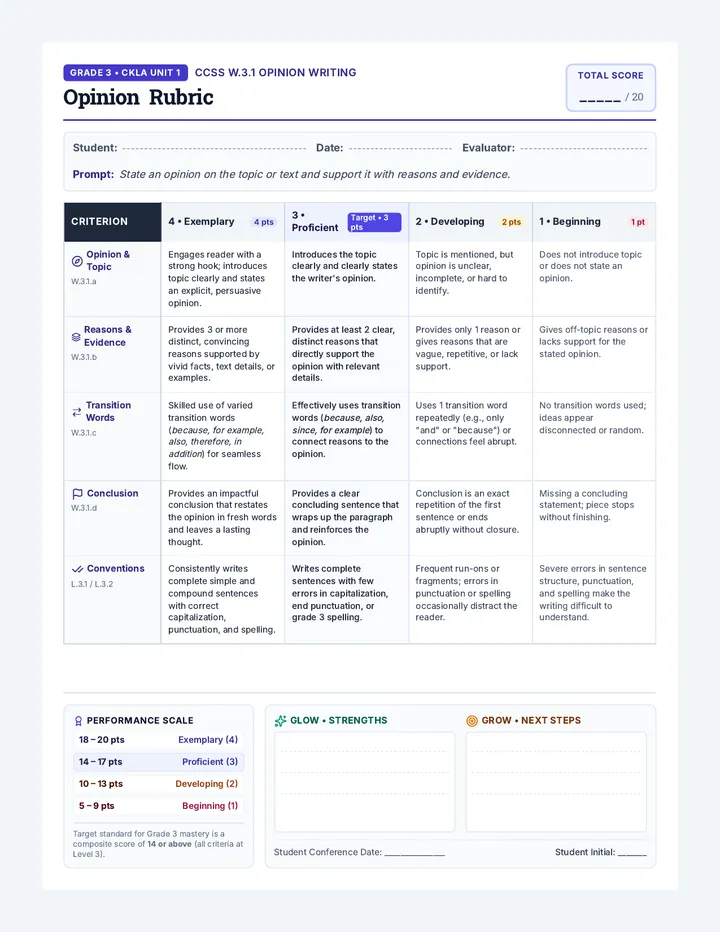
Opinion Verdict Rubric

Opinion Verdict Rubric

A comprehensive Grade 3 CKLA Unit 1 opinion writing rubric aligned with CCSS W.3.1, featuring a 4-point developmental scale focusing on transition words, scoring conversion bands, and a teacher feedback section.

B

bymccarthy

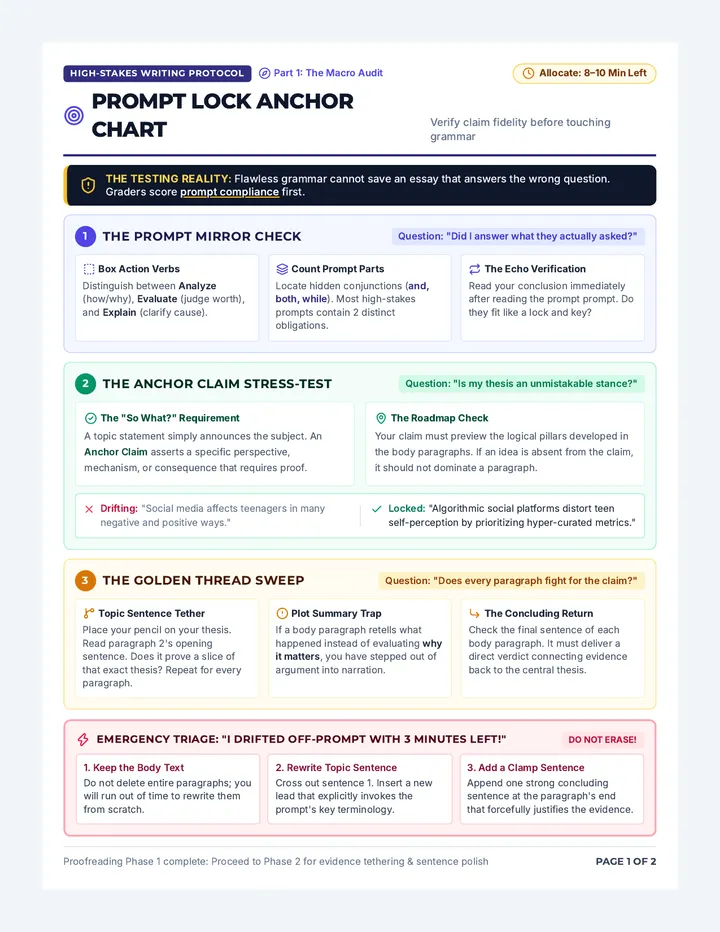
Prompt Lock Anchor Chart

Prompt Lock Anchor Chart

A high-impact two-page anchor chart and test-day reference guide designed to help students systematically proofread writing under timed testing conditions. It provides visual cues and multi-pass protocols focused primarily on verifying prompt alignment, defending central claims, tethering evidence, and executing rapid last-minute triage.

RB

Rachel Barnes

Sequences

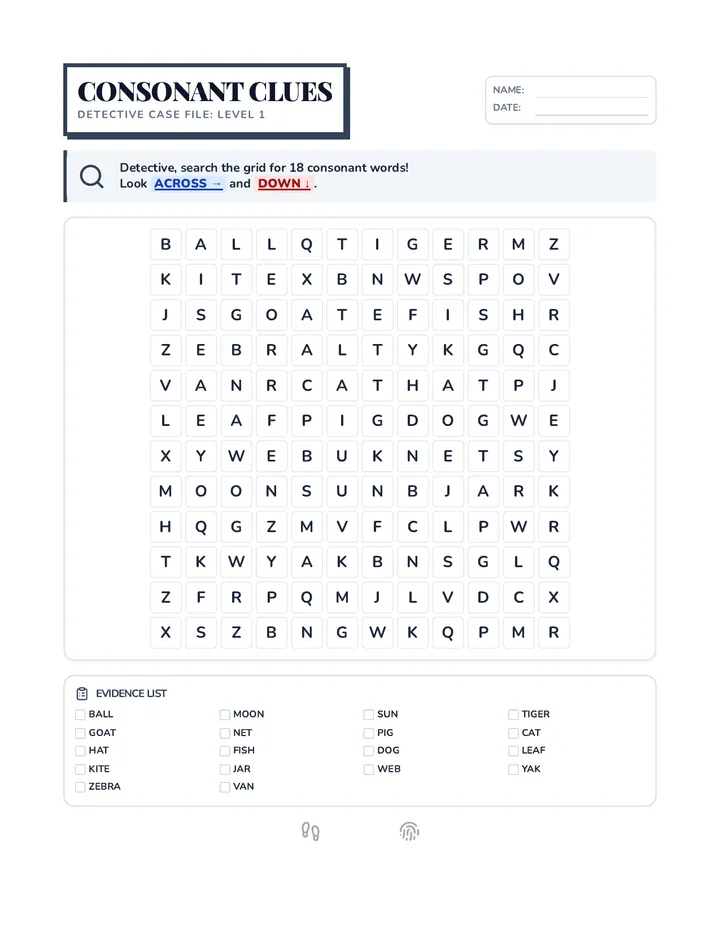
Consonant Clues Word Search

Sound Detective Workbook

A complete phonics journey covering letter-name alphabetic spelling stages, featuring randomized word sort practice through interactive sentence completion.

N

nmack

57
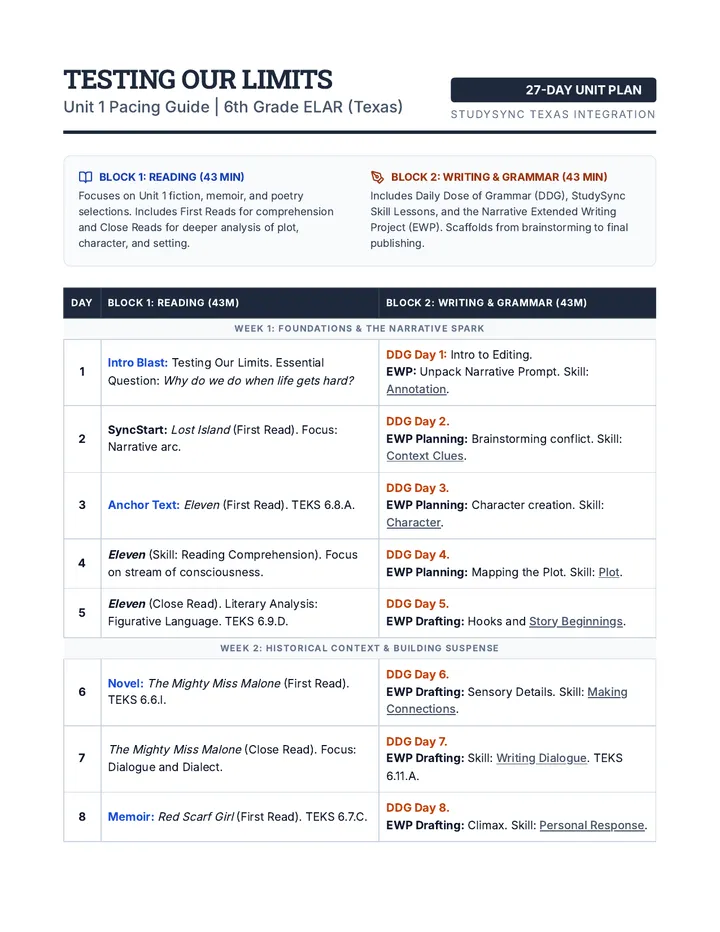
Unit 1 Pacing Guide Document

Testing Our Limits Unit Sequence

A 27-day instructional sequence for 6th Grade ELAR Unit 1: Testing Our Limits, featuring dual blocks for Reading and Writing with daily grammar and skill scaffolding.

DM

Dawn Mustian

81
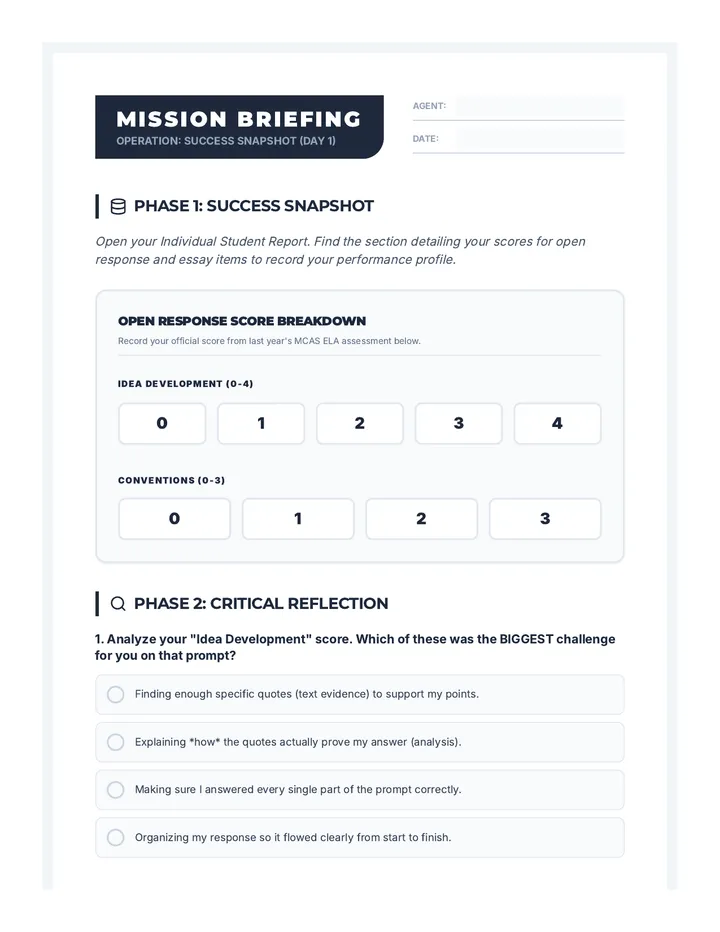
Mission Briefing Worksheet

Mastery Mission

A project-based learning unit designed to help middle school students analyze their past MCAS ELA performance, deconstruct scoring rubrics, and create a personalized strategy playbook for upcoming assessments. Students move from 'investigating' their scores to 'rebooting' their responses and 'finalizing' their test-taking toolkit.

M

mhbutterworth

18
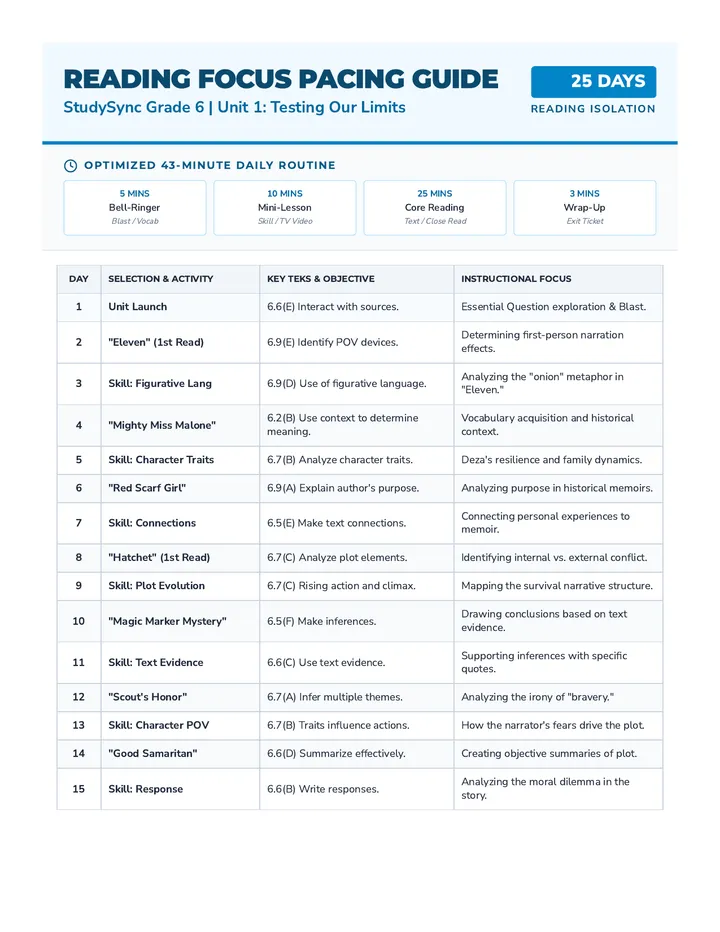
Reading Focus Pacing Guide

Testing Our Limits Unit

A 25-day comprehensive unit for StudySync Grade 6 that explores the theme of courage and resilience through isolated reading and writing tracks, aligned to ELA TEKS.

DM

Dawn Mustian

79
Burger Builder Slides

Paragraph Foundations

A foundational paragraph writing unit designed for early writers and SpEd students to master core paragraph structures through narrative, opinion, and informational writing with heavy visual scaffolding.

E

ecreamer

23
Story Crafters Overview Teacher Guide

Story Crafters Workshop

A 10-day immersion into narrative writing for upper elementary students, focusing on craft, structure, and grammar conventions.

SS

Summer Say

20

Lessons

Second Proof Assessment Plus Added Question

The Editors Desk

A comprehensive lesson on advanced revising and editing for 10th grade, focusing on organizational structure, parallel construction, sentence effectiveness, and grammatical precision. Students will learn to transform drafts into polished, professional pieces of writing.

SM

Samantha Moore

6
Progression Annuelle Grammaire Guide Pedagogique

Portrait de Monstre

Une leçon complète pour étudier la structure du portrait d'un personnage imaginaire (l'ogre) à travers l'analyse d'un texte littéraire et documentaire. Elle comprend des fiches de lecture, d'analyse de structure et de vocabulaire pour guider les élèves vers la rédaction autonome de leur propre créature légendaire.

LP

LAURENT PERCHE

24
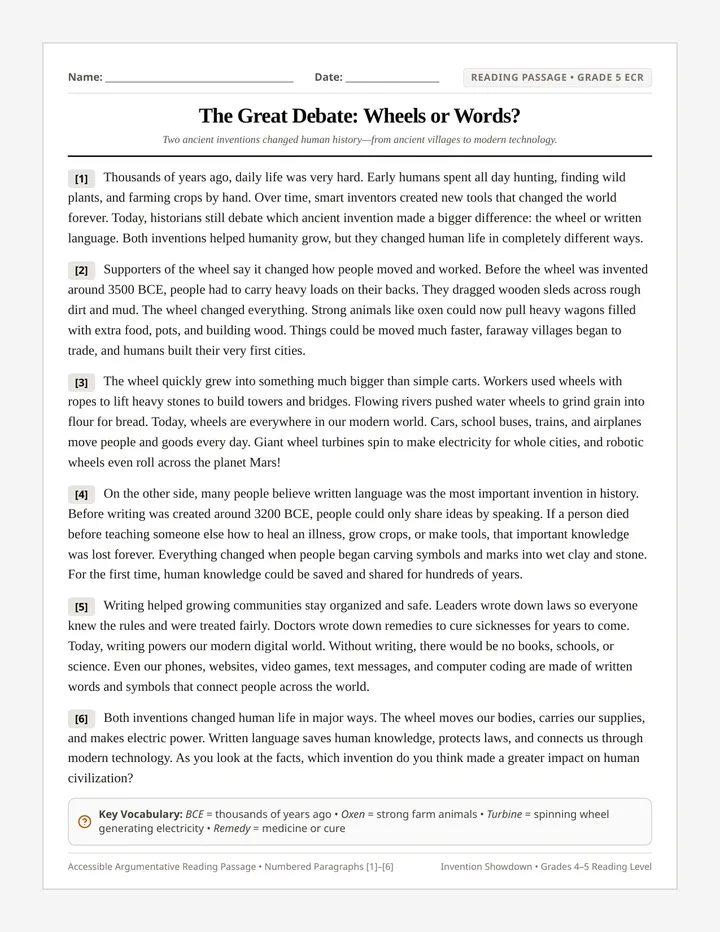
Invention Showdown Passage

Invention Showdown

An informational reading and argumentative writing study exploring whether the wheel or written language had a greater impact on human civilization. Students analyze evidence to prepare for a STAAR extended constructed response.

ED

Emily Denson

8
Paragraph Mastery Slides

Paragraph Architecture

A senior secondary literacy lesson focused on advanced paragraph construction techniques including Kernel Sentences, the Seldon Method, and sentence upgrading for high-level analysis.

E

elizabeth.metzke

20
Scoring Scout Training Slides

Mammal Extremes Comparison

This lesson focuses on comparing the world's largest mammal, the blue whale, with some of the world's smallest mammals. Students will use the provided informational text and conduct their own research to create a comparative report.

E

ecreamer

9
Repair Shop Slides

Sentence Repair Shop

A comprehensive lesson focused on identifying and correcting sentence fragments using the 'Three Question Test' and subordinating conjunctions. Students act as 'Sentence Mechanics' to repair incomplete thoughts.

PM

Pam Muise

9