Lenny.com
Explore
Create
ActivitiesNewMathEnglish Language ArtsScience & EngineeringSocial StudiesGlobal LanguagesHealth & Physical EducationSpecial EducationCounseling & Life SkillsArts & CreativityESL
Lenny.com
Lenny.com
Explore
Create
ActivitiesNewMathEnglish Language ArtsScience & EngineeringSocial StudiesGlobal LanguagesHealth & Physical EducationSpecial EducationCounseling & Life SkillsArts & CreativityESL
Lenny.com
English Language ArtsPhonics & Reading FoundationsLetter IdentificationLearn Letters A-ZLowercase and Uppercase LettersConsonants and VowelsLetter-Sound AssociationsLetter-Sound Associations: LowercaseLetter-Sound Associations: UppercaseBeginning and Ending SoundsRhymingBlending And SegmentingShort VowelsShort Vowel SoundsConsonant BlendsConsonant DigraphsBlends, Digraphs, and TrigraphsDigraphs, Blends, and Silent LettersLong Vowel SoundsLong Vowel PatternsShort and Long VowelsShort and Long Vowel PatternsSilent EVowel SoundsVowel TeamsR-Controlled VowelsDiphthongs: Oi, Oy, Ou, OwVariant VowelsVariant, Diphthong, And R Vowel PatternsSoft G And CSight WordsIrregular WordsWord RecognitionSyllablesSyllable TypesTwo-Syllable WordsMultisyllabic WordsPhoneme ManipulationDecodable TextsVocabularyAction WordsQuestion WordsNouns and AdjectivesClassify WordsCompound WordsSynonyms and AntonymsHomophonesHomophones and HomonymsShades of MeaningContext CluesPrefixes and SuffixesGreek and Latin RootsAnalogiesIdioms and AdagesForeign Words and ExpressionsWord Choice and UsageReference SkillsReading ComprehensionRead-Along Literary TextsRead-Along Informational TextsReality vs. FictionStory ElementsCharacterSequenceMain IdeaCause And EffectCompare And ContrastReading StrategiesText StructureAuthor's PurposeAuthor's Purpose And ToneAuthor's PerspectivePoint Of ViewThemeInference And ThemeInference And AnalysisPoetry ElementsLiterary DevicesAnalyzing LiteratureAnalyzing Informational TextsComparing TextsAudience, Purpose, And ToneBusiness DocumentsNovel StudyNonfiction Book StudyGrammar & MechanicsSentencesNounsVerbsAdjectivesPronounsCapitalizationPunctuationContractionsConjunctionsPrepositionsArticlesAdjectives And AdverbsVerb TypesVerb TensePronouns And AntecedentsPronoun TypesSubject-Verb AgreementDirect And Indirect ObjectsSentences, Fragments, And Run-OnsPhrases And ClausesCommasSemicolons, Colons, And CommasDashes, Hyphens, And EllipsesSpellingAbbreviationsFormattingVerb Tense And MoodMisplaced ModifiersWritingDescriptive DetailsCreative WritingOpinion WritingTopic SentencesOrganizing WritingLinking WordsSentence VarietyIntroductions And ConclusionsPersuasive And Opinion WritingExpository WritingPersuasive StrategiesDeveloping And Supporting ArgumentsTopic Sentences And Thesis StatementsSummarizingResearch SkillsEditing And RevisingActive And Passive Voice=Writing Clearly And ConciselyDebate & Public SpeakingPublic Speaking BasicsPersuasive TechniquesClaims and EvidenceTypes of ArgumentsReasoning TypesLogical FallaciesTopic ResearchOrganizing EvidenceDebate Speech OrganizationAttacking and Defending ArgumentsClash and EngagementImpact CalculusQuestioning and Cross-ExaminationCritical ThinkingInformal LogicFormal LogicInductive Reasoning

Pronoun Types

Identification and usage of personal, possessive, relative, and indefinite pronouns. Strengthens pronoun-antecedent agreement and clarity in complex sentence structures.

Lenny.com

Solutions

Lenny for EducatorsLenny for SchoolsLenny for Districts

Product

ExploreSign inCreateSupportAbout

Resources

Getting startedMTSS Acceleration Program

© 2026 Lenny Learning Inc.

TermsPrivacyAccessibility
LinkedInInstagramX
Lenny

Videos

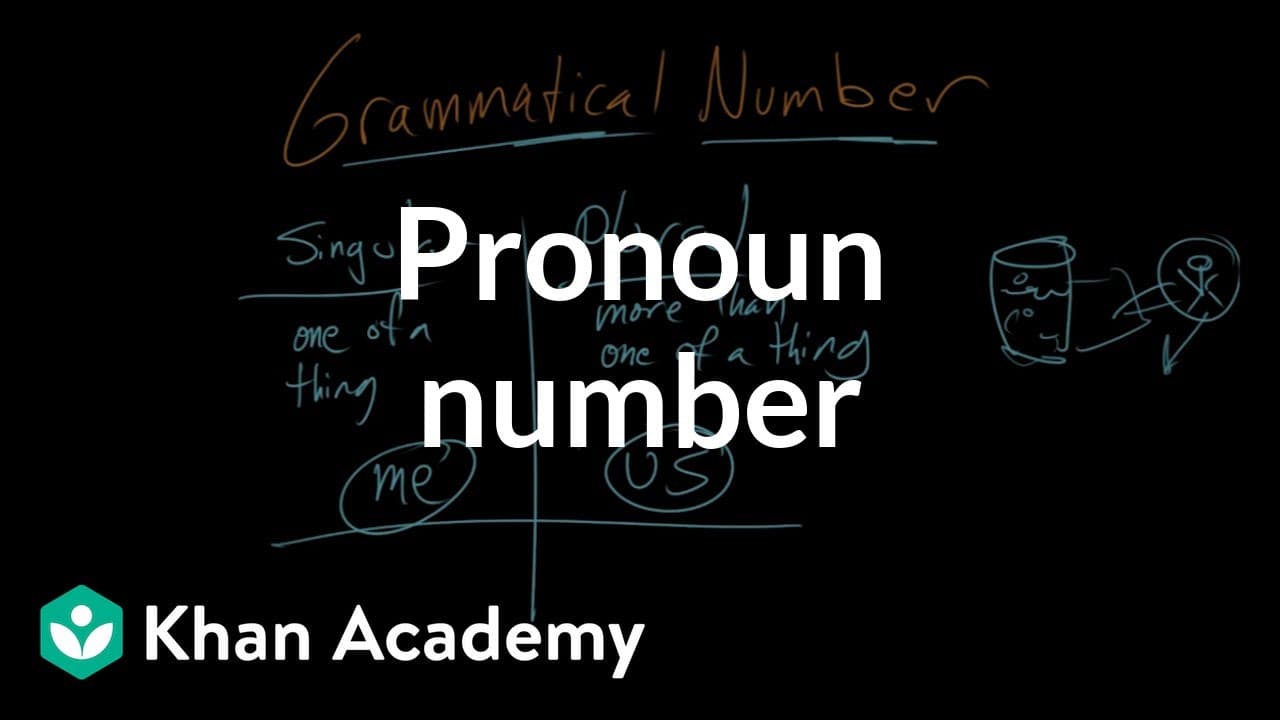
Understanding Grammatical Number and Pronoun Agreement

Understanding Grammatical Number and Pronoun Agreement

This video provides a clear and engaging introduction to the concept of grammatical number in English, specifically focusing on the distinction between singular (one) and plural (more than one). The narrator uses handwritten text and simple drawings to visualize how nouns and pronouns must agree in number, explaining that "singular" refers to one thing while "plural" refers to multiple things. The video highlights how this concept is encoded into the language, particularly within pronouns like "me" versus "us." Key themes include pronoun-antecedent agreement, the importance of consistency in writing to avoid confusion, and specific exceptions to standard rules. The narrator uses humorous and memorable examples—such as a sci-fi cloning machine to explain the shift from "me" to "us," and a confusing scenario about sharing a single watch to illustrate agreement errors. The video also briefly touches upon "you" and "they" as flexible pronouns that can function as both singular and plural. For educators, this resource is excellent for introducing or reviewing the mechanics of pronoun usage and sentence structure. It moves beyond rote memorization by providing context for *why* grammar rules exist: to prevent ambiguity. Teachers can use the video's specific examples, like the "cantaloupe" test at the end, to help students identify antecedents and ensure their own writing maintains logical consistency between subjects and pronouns.

Khan AcademyKhan Academy

5mins 18s

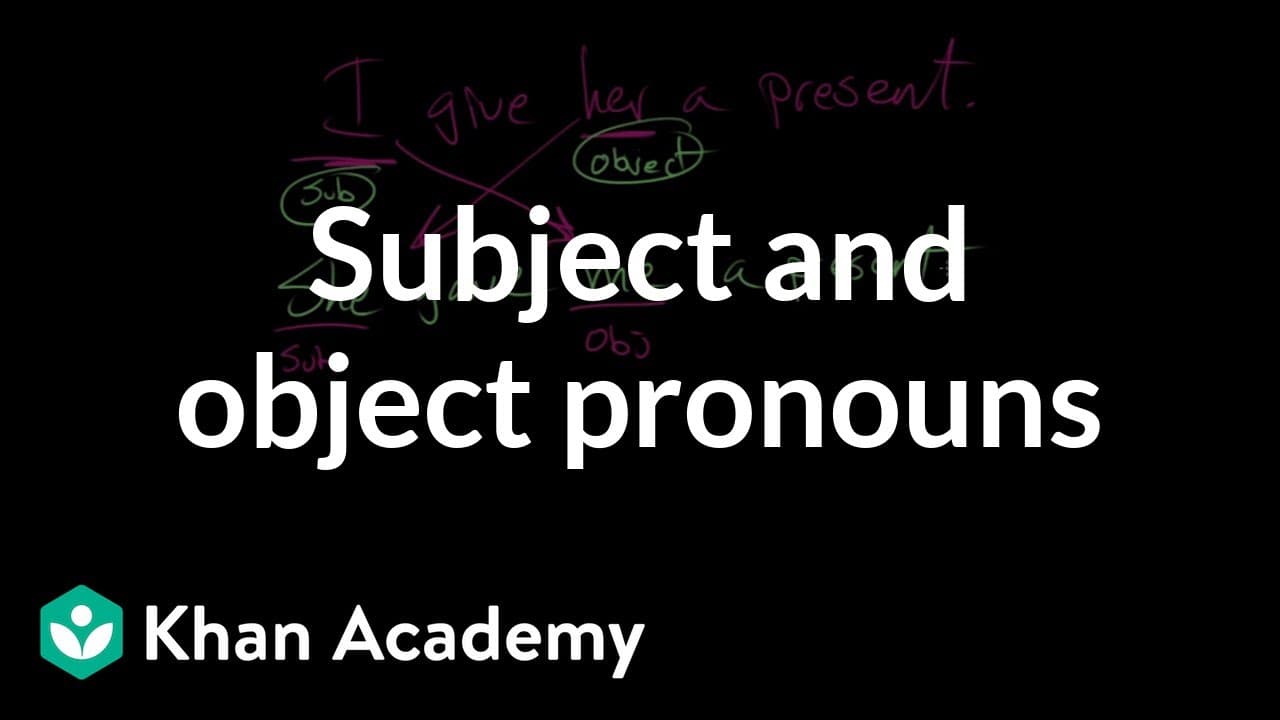
Mastering Subject and Object Pronouns

Mastering Subject and Object Pronouns

This educational video provides a clear and accessible introduction to the grammatical concepts of subject and object pronouns. The narrator, David, uses a digital blackboard style to visually map out sentence structures, explaining that subjects are the "doers" of actions while objects are the things "acted upon." Through a series of concrete examples, the video demonstrates how nouns can be replaced by specific pronouns depending on their role in the sentence. The content focuses on the mechanics of swapping pronouns like "I/me," "she/her," "he/him," and "they/them." It visually illustrates the "switcheroo" technique—flipping the subject and object of a sentence to show how the pronouns must morph to fit their new grammatical function. The lesson also highlights the exceptions of "you" and "it," which remain constant regardless of their placement. For educators, this video serves as an excellent foundational tool for teaching sentence structure and proper pronoun usage. It simplifies abstract grammatical rules into a visual logic puzzle, making it easier for students to grasp why we say "She gave it to me" rather than "Her gave it to I." It is particularly useful for upper elementary students learning parts of speech or for English Language Learners grappling with case distinctions.

Khan AcademyKhan Academy

5mins 34s

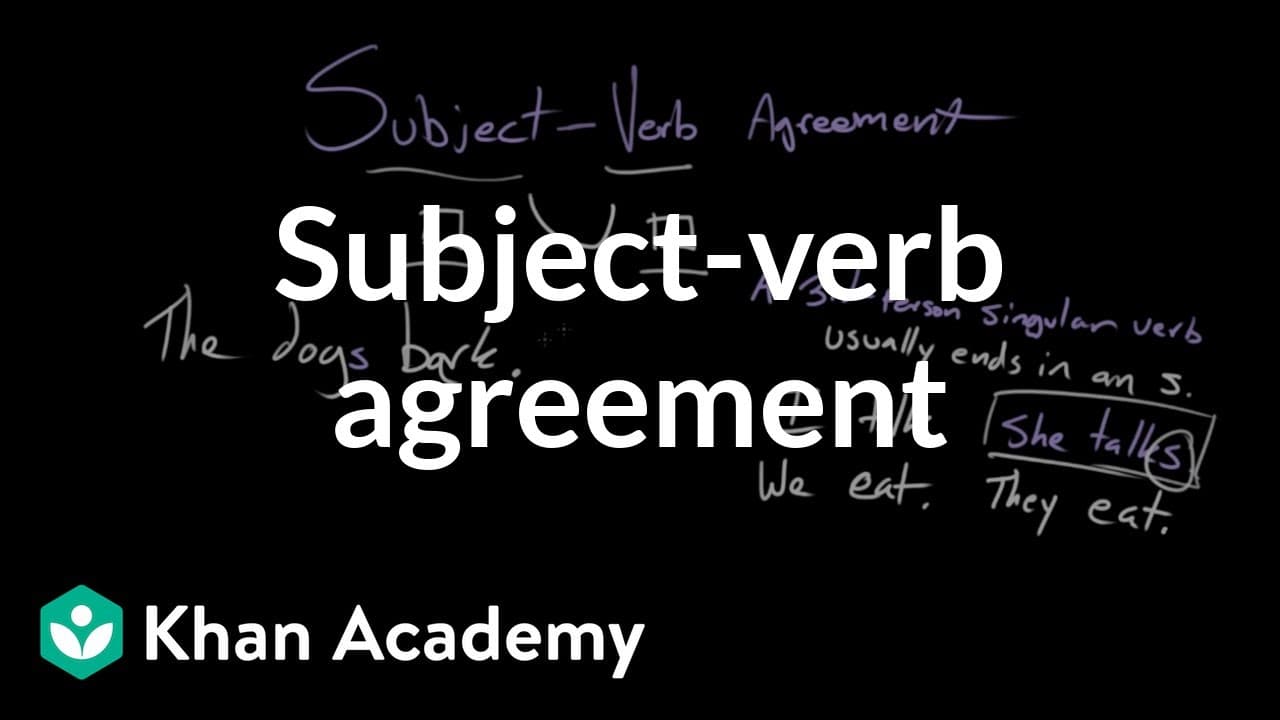
Matching Subjects and Verbs Correctly

Matching Subjects and Verbs Correctly

This educational video provides a clear and accessible explanation of subject-verb agreement, a fundamental concept in English grammar. The narrator uses the analogy of a "square peg in a square hole" to illustrate the necessity of matching sentence parts correctly. The video breaks down the differences between singular and plural subjects and how they dictate the form of the verb, specifically highlighting the counter-intuitive rule that while plural nouns often end in "s," third-person singular verbs also end in "s." The video explores key grammatical themes including conjugation, singular versus plural forms, and the specific rules governing third-person singular verbs. It directly addresses the common confusion students face regarding why an "s" is added to verbs for singular subjects (e.g., "The dog barks") but removed for plural subjects (e.g., "The dogs bark"). Additionally, the video touches upon indefinite pronouns like "anyone," explaining why they are treated as singular subjects despite implying a group context. For educators, this video serves as an excellent tool for introducing or reinforcing grammar rules in upper elementary and middle school classrooms. The step-by-step strategy provided—finding the subject, determining if it is singular or plural, and checking for the "s"—gives students a practical method for self-editing. The visual use of a blackboard with clear color-coded text helps visual learners grasp the patterns of agreement, making it a valuable resource for writing workshops and grammar mini-lessons.

Khan AcademyKhan Academy

4mins 53s

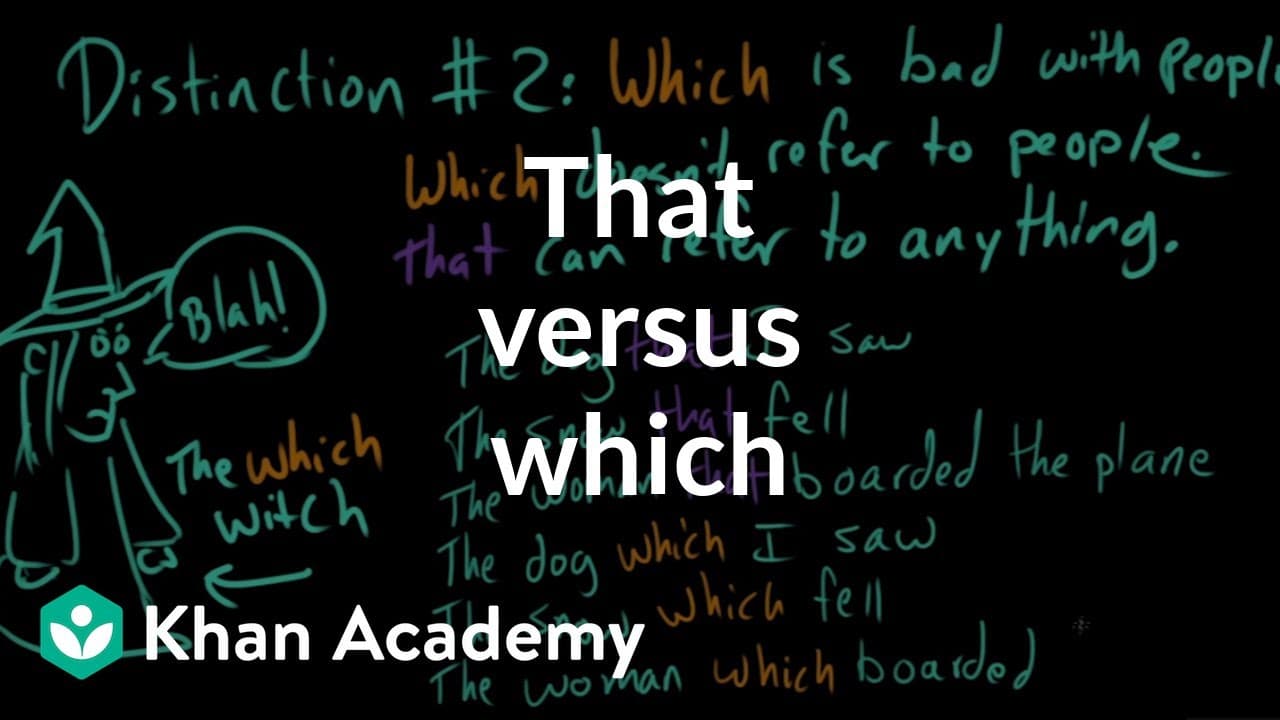
How to Use That vs. Which Correctly

How to Use That vs. Which Correctly

This educational video clarifies the often-confusing grammatical distinction between the relative pronouns "that" and "which." It begins by framing the discussion within the broader linguistic debate between prescriptivists, who value strict adherence to rules, and descriptivists, who observe how language is actually used. The narrator positions himself in the middle, offering a practical synthesis to help writers make the right choice. The video explores two primary distinctions to guide usage. First, it demonstrates how "that" functions with restrictive clauses and explains why it should generally not be used with commas (non-restrictive clauses), using clear sentence examples about a carrot. Second, it uses a memorable mnemonic involving a cranky "witch" to explain why "which" should not be used when referring to people. The content covers restrictive vs. non-restrictive clauses, comma usage, and pronoun-antecedent agreement. For educators, this video provides an accessible tool for teaching complex grammar mechanics without getting bogged down in overly technical jargon. It is excellent for middle and high school English classes, particularly during writing workshops or editing phases. The visual examples and humorous mnemonics make abstract grammatical rules concrete and easier for students to retain and apply in their own writing.

Khan AcademyKhan Academy

5mins 41s

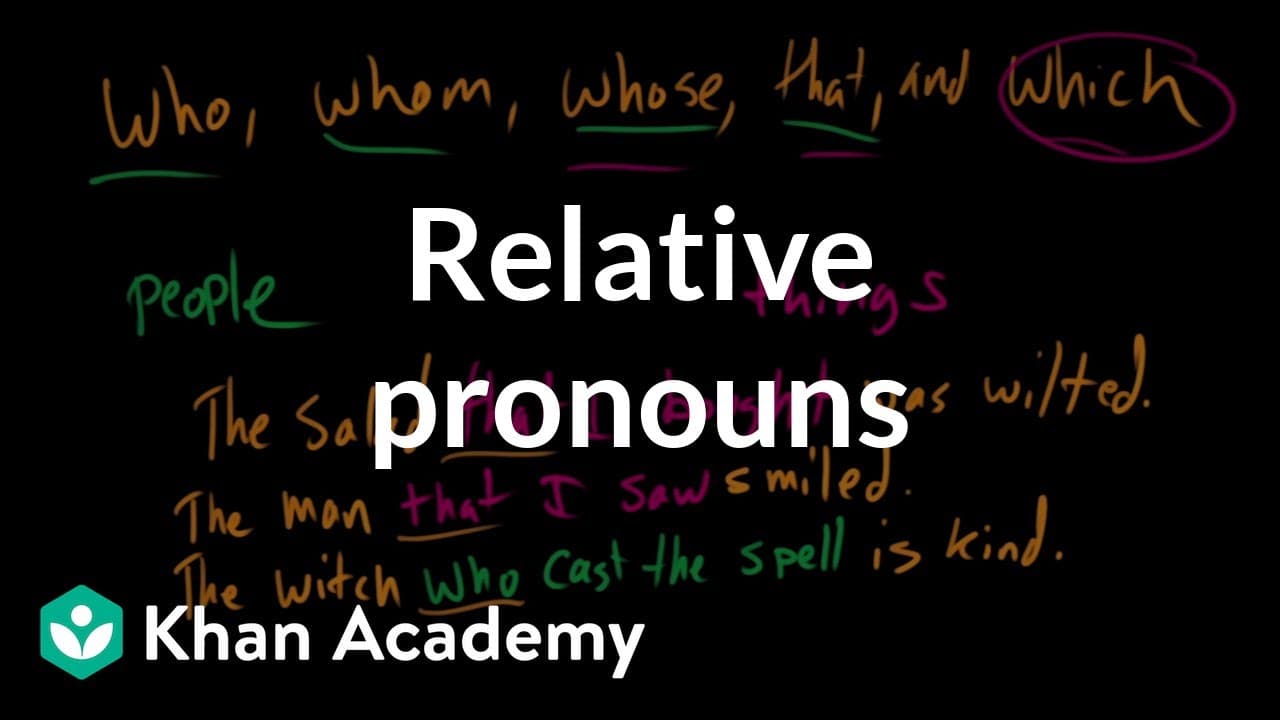
Linking Ideas with Relative Pronouns

Linking Ideas with Relative Pronouns

In this concise grammar tutorial, the narrator introduces relative pronouns—who, whom, whose, that, and which—and explains their primary function: linking independent and dependent clauses. The video breaks down the specific usage rules for each pronoun, distinguishing between those used for people (who, whom, whose, that) and those used for inanimate objects or concepts (whose, that, which). Key grammatical rules are demonstrated through clear, handwritten examples on a blackboard style background. The video specifically highlights the flexibility of the word "that" (usable for both people and things) while cautioning against the common error of using "which" to refer to people. Through examples like "The man who sold the world" and "The salad that I bought," viewers see practical applications of these rules in sentence construction. This resource is highly valuable for English Language Arts classrooms as it addresses a specific, common pain point in student writing: sentence variety and correct pronoun usage. It provides a foundational understanding that helps students combine simple sentences into complex ones, improving the flow and sophistication of their writing while clarifying the often-confused distinction between "who," "that," and "which."
Khan AcademyKhan Academy

1min 56s

Using Emphatic Pronouns to Intensify Your Writing

Using Emphatic Pronouns to Intensify Your Writing

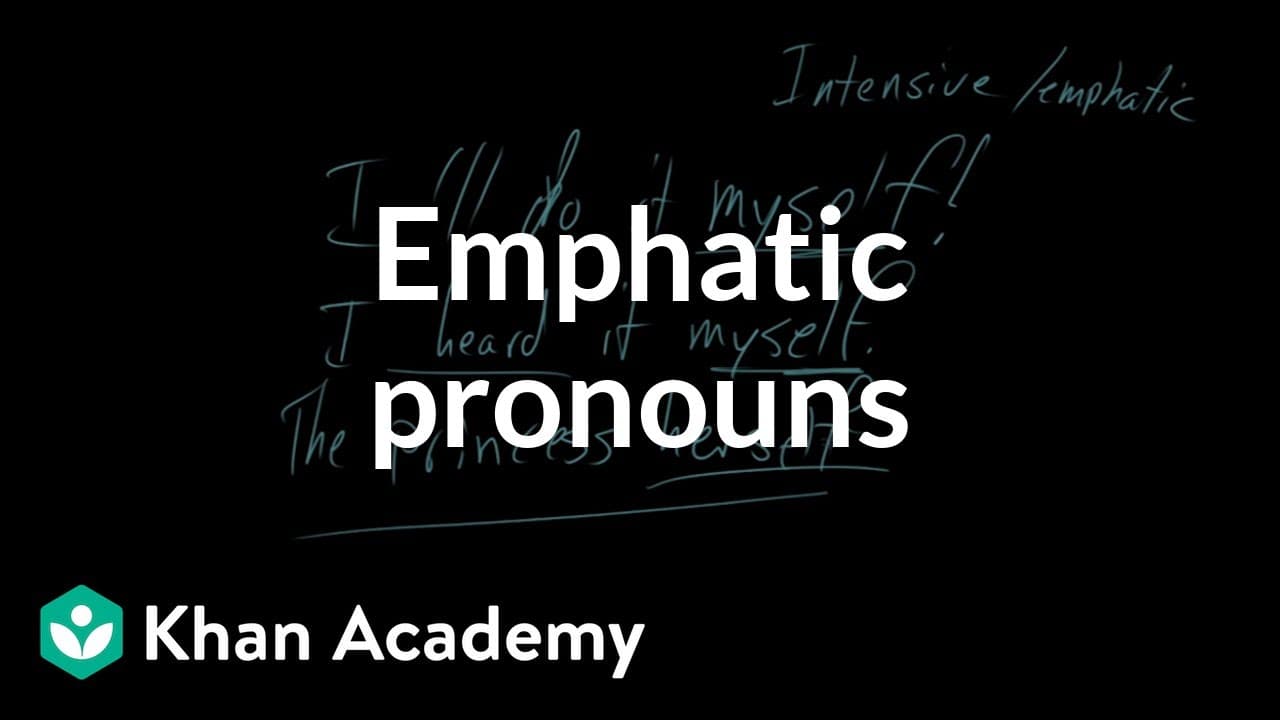
This educational video provides a clear and concise explanation of emphatic pronouns, also known as intensive pronouns. The narrator begins by reviewing reflexive pronouns to establish a baseline, explaining how they are used when a subject performs an action on themselves. He then pivots to the main topic, demonstrating how the same words (myself, himself, herself) function differently when used for emphasis rather than as essential grammatical objects.

Khan AcademyKhan Academy

2mins 55s

Materials

Book Jacket Studio Worksheet

Book Jacket Studio Worksheet

A comprehensive 2-page book jacket and front-matter design worksheet where students craft their own book cover illustration, back cover blurb, endorsements, dedication, table of contents, chapter names, preface, and interior illustration.

MG

MICHELLE GRIMALDI

Syntax Mechanics Worksheet

Syntax Mechanics Worksheet

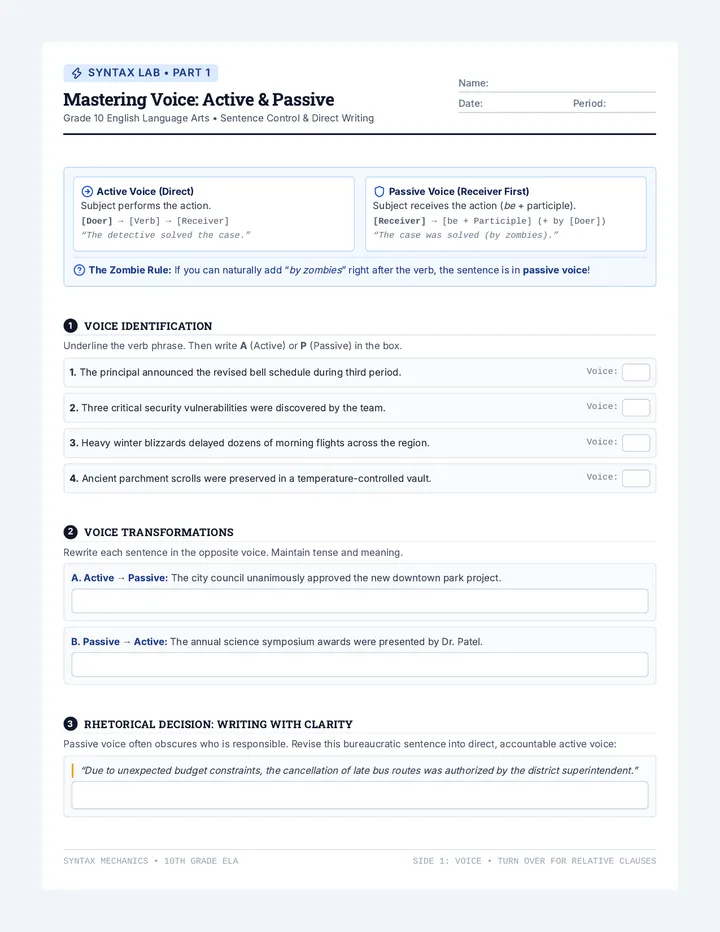
A two-sided, 10th-grade accessible syntax worksheet featuring active versus passive voice on side one and relative clauses with punctuation on side two.

KS

Kerry Shaver

Parts of Speech Flashcards

Parts of Speech Flashcards

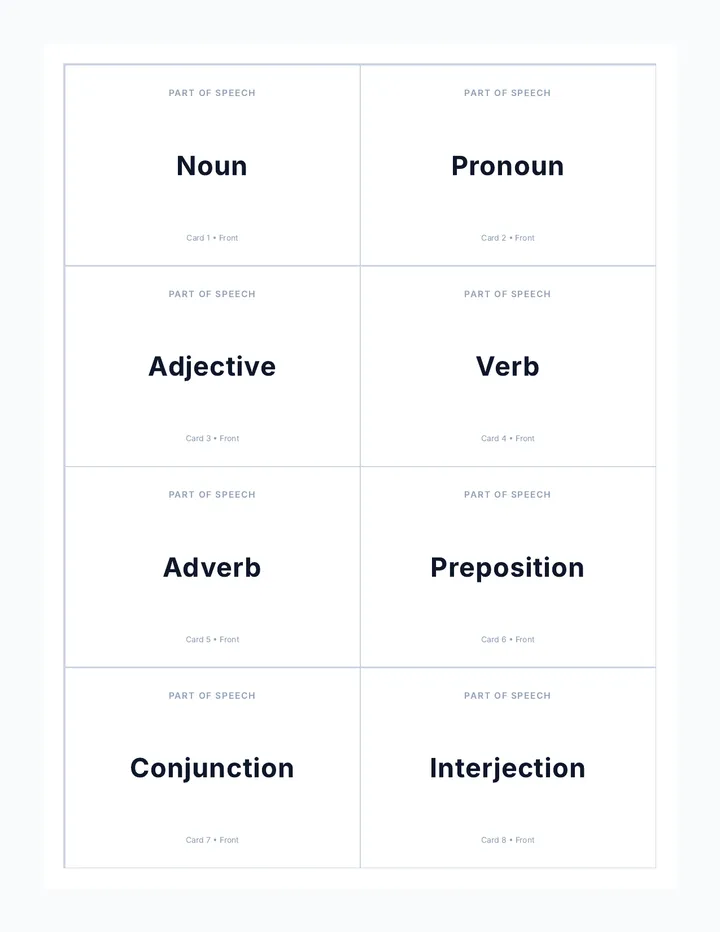
A clean, minimalist double-sided printable flashcard set covering the eight parts of speech. Features simple bold terms on the front and exact definitions on the reverse, precisely aligned for duplex printing and cutting.

AJ

Amber Jones

Question Words Poster

Question Words Poster

A vibrant and comprehensive classroom anchor chart poster introducing fundamental question words (who, what, when, where, why, how) alongside expanded inquiry terms (which, whose, whom) and common how-combinations with definitions, visual cues, and example questions.

AC

Aimee Crosby

Grammar Lab Anchor Chart

Grammar Lab Anchor Chart

A comprehensive, two-page composition notebook anchor chart reference spread covering all 8 parts of speech with 7th-grade appropriate examples, advanced subtypes (reflexive pronouns, linking verbs, subordinating conjunctions, conjunctive adverbs), and a dedicated focus on how sentence function dictates word classification.

AS

Adrienne Synatschk

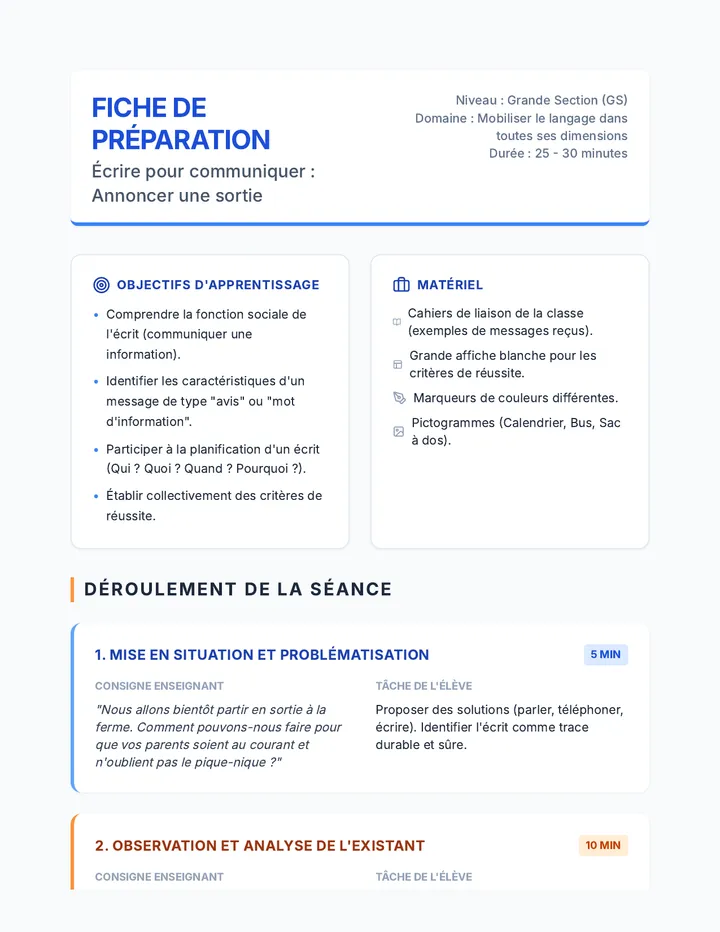
Grammaire Double Niveau Progression Guide

Grammaire Double Niveau Progression Guide

Progression annuelle complète de grammaire pour cours double CM1-CM2 conforme au Bulletin Officiel n° 16 d'avril 2025. Structurée sur 36 semaines (5 périodes scolaires à raison d'une heure hebdomadaire), elle détaille les objectifs notionnels, les manipulations syntaxiques et la différenciation spécifique CM1/CM2.

LP

LAURENT PERCHE

Sequences

Unit 1 Pacing Guide Document

Testing Our Limits Unit Sequence

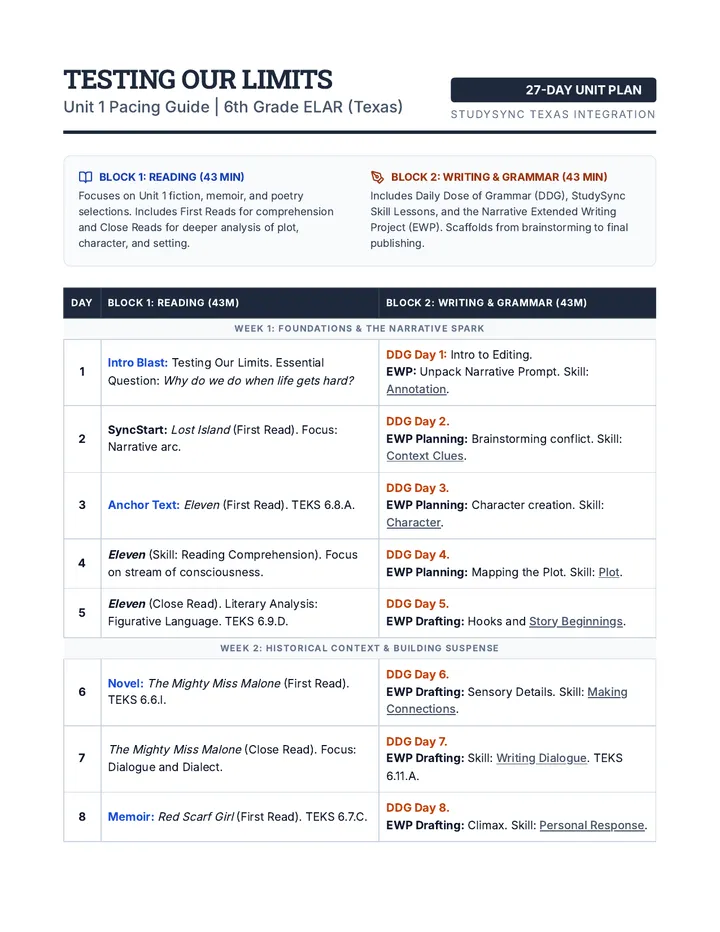
A 27-day instructional sequence for 6th Grade ELAR Unit 1: Testing Our Limits, featuring dual blocks for Reading and Writing with daily grammar and skill scaffolding.

DM

Dawn Mustian

81
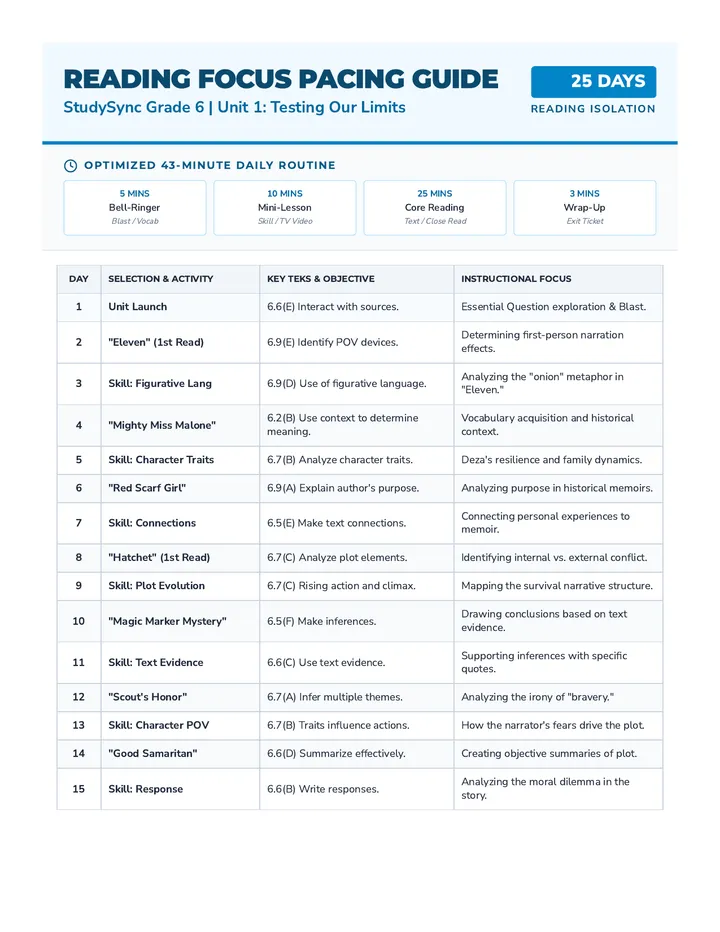
Reading Focus Pacing Guide

Testing Our Limits Unit

A 25-day comprehensive unit for StudySync Grade 6 that explores the theme of courage and resilience through isolated reading and writing tracks, aligned to ELA TEKS.

DM

Dawn Mustian

79
Literary Dossier Packet

The STAAR Files Web Quest Extended Mission

A comprehensive 380-minute digital web quest for STAAR English 2 preparation, divided into 9 high-intensity missions of 45 minutes or less, covering the top five most tested TEKS.

LF

Lindsey Foulks

13
Life Legacy Organizer

Curators Quest

A collection of 5th-grade ELA and Grammar resources focusing on biographical research, summary writing, and language mastery.

CO

Catherine Onessimo

30
Mission Message Guide Enseignant

Expertise Formation Premier Degré

Une série de modules de formation destinés aux conseillers pédagogiques pour renforcer leur expertise en ingénierie de formation continue, spécifiquement appliquée à l'enseignement du français à l'école primaire.

VD

Val Désirée

27
EOC Blueprint Tracker Worksheet

EOC Mastery Review

A 10-day intensive review sequence designed to prepare students for the revising and editing portions of the Texas English 2 EOC exam. Each day features targeted practice questions mirroring the actual test format.

PR

Penne Reed

4