Lenny.com
Explore
Create
ActivitiesNewMathEnglish Language ArtsScience & EngineeringSocial StudiesGlobal LanguagesHealth & Physical EducationSpecial EducationCounseling & Life SkillsArts & CreativityESL
Lenny.com
Lenny.com
Explore
Create
ActivitiesNewMathEnglish Language ArtsScience & EngineeringSocial StudiesGlobal LanguagesHealth & Physical EducationSpecial EducationCounseling & Life SkillsArts & CreativityESL
Lenny.com
Lenny.com

Solutions

Lenny for EducatorsLenny for SchoolsLenny for Districts

Product

ExploreSign inCreateSupportAbout

Resources

Getting startedMTSS Acceleration Program

© 2026 Lenny Learning Inc.

TermsPrivacyAccessibility
LinkedInInstagramX
Lenny

Formatting

Standardized conventions for capitalization, punctuation marks, and visual document layout. Addresses indentation, list structures, and typographical emphasis to enhance professional clarity.

English Language ArtsPhonics & Reading FoundationsLetter IdentificationLearn Letters A-ZLowercase and Uppercase LettersConsonants and VowelsLetter-Sound AssociationsLetter-Sound Associations: LowercaseLetter-Sound Associations: UppercaseBeginning and Ending SoundsRhymingBlending And SegmentingShort VowelsShort Vowel SoundsConsonant BlendsConsonant DigraphsBlends, Digraphs, and TrigraphsDigraphs, Blends, and Silent LettersLong Vowel SoundsLong Vowel PatternsShort and Long VowelsShort and Long Vowel PatternsSilent EVowel SoundsVowel TeamsR-Controlled VowelsDiphthongs: Oi, Oy, Ou, OwVariant VowelsVariant, Diphthong, And R Vowel PatternsSoft G And CSight WordsIrregular WordsWord RecognitionSyllablesSyllable TypesTwo-Syllable WordsMultisyllabic WordsPhoneme ManipulationDecodable TextsVocabularyAction WordsQuestion WordsNouns and AdjectivesClassify WordsCompound WordsSynonyms and AntonymsHomophonesHomophones and HomonymsShades of MeaningContext CluesPrefixes and SuffixesGreek and Latin RootsAnalogiesIdioms and AdagesForeign Words and ExpressionsWord Choice and UsageReference SkillsReading ComprehensionRead-Along Literary TextsRead-Along Informational TextsReality vs. FictionStory ElementsCharacterSequenceMain IdeaCause And EffectCompare And ContrastReading StrategiesText StructureAuthor's PurposeAuthor's Purpose And ToneAuthor's PerspectivePoint Of ViewThemeInference And ThemeInference And AnalysisPoetry ElementsLiterary DevicesAnalyzing LiteratureAnalyzing Informational TextsComparing TextsAudience, Purpose, And ToneBusiness DocumentsNovel StudyNonfiction Book StudyGrammar & MechanicsSentencesNounsVerbsAdjectivesPronounsCapitalizationPunctuationContractionsConjunctionsPrepositionsArticlesAdjectives And AdverbsVerb TypesVerb TensePronouns And AntecedentsPronoun TypesSubject-Verb AgreementDirect And Indirect ObjectsSentences, Fragments, And Run-OnsPhrases And ClausesCommasSemicolons, Colons, And CommasDashes, Hyphens, And EllipsesSpellingAbbreviationsFormattingVerb Tense And MoodMisplaced ModifiersWritingDescriptive DetailsCreative WritingOpinion WritingTopic SentencesOrganizing WritingLinking WordsSentence VarietyIntroductions And ConclusionsPersuasive And Opinion WritingExpository WritingPersuasive StrategiesDeveloping And Supporting ArgumentsTopic Sentences And Thesis StatementsSummarizingResearch SkillsEditing And RevisingActive And Passive Voice=Writing Clearly And ConciselyDebate & Public SpeakingPublic Speaking BasicsPersuasive TechniquesClaims and EvidenceTypes of ArgumentsReasoning TypesLogical FallaciesTopic ResearchOrganizing EvidenceDebate Speech OrganizationAttacking and Defending ArgumentsClash and EngagementImpact CalculusQuestioning and Cross-ExaminationCritical ThinkingInformal LogicFormal LogicInductive Reasoning

Videos

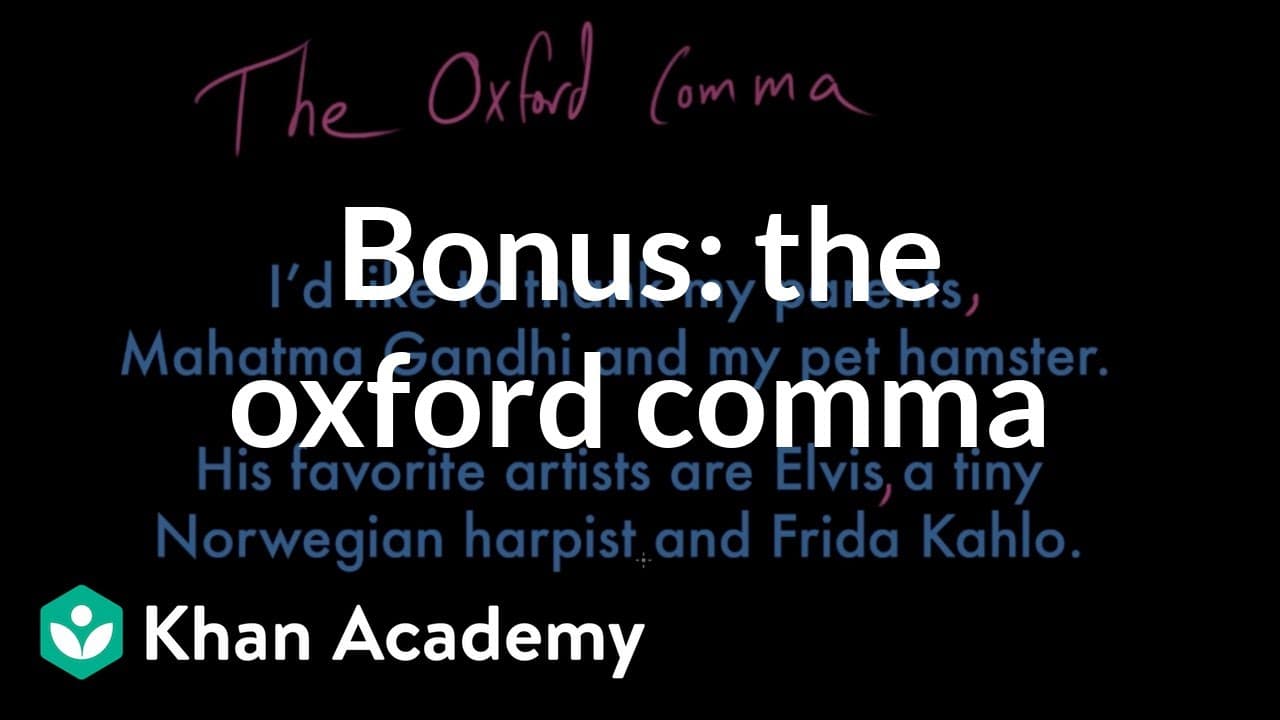
How the Oxford Comma Prevents Confusion

How the Oxford Comma Prevents Confusion

This engaging video explores the function and importance of the Oxford comma (also known as the serial comma) through humorous and memorable examples. Narrators David and Paige explain that while the comma placed before the conjunction in a list is optional in some style guides, its omission can lead to hilarious and confusing misunderstandings. They illustrate this with sentences implying one's parents are Mahatma Gandhi and a hamster, or that Elvis is a tiny Norwegian harpist. The video delves into the nuances of grammatical clarity versus stylistic choice, referencing major style guides like AP (which typically omits it) and Chicago (which includes it). It introduces the grammatical concept of "apposition" to explain why these specific misunderstandings occur. The narrators also offer a sophisticated counter-argument: that rewriting a sentence to change the word order is often a better solution for ambiguity than relying solely on punctuation. For educators, this video serves as an excellent hook for grammar lessons, demonstrating that punctuation is not just about following arbitrary rules but about ensuring clear communication. It provides a non-threatening entry point into complex topics like appositives, ambiguity, and style guides. The humorous examples stick in students' minds, making the concept of the serial comma easier to recall and apply in their own writing.

Khan AcademyKhan Academy

3mins 43s

How to Make Words Ending in S Possessive

How to Make Words Ending in S Possessive

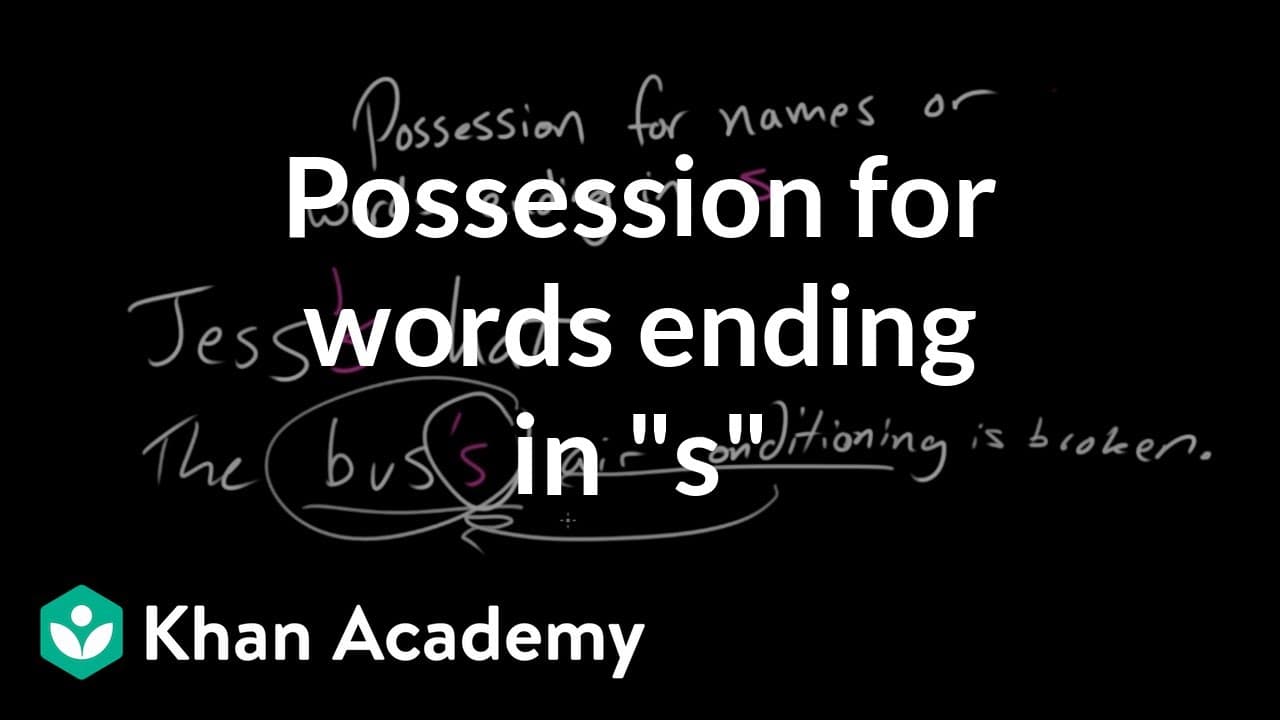
This concise grammar tutorial addresses a common point of confusion in English writing: how to form the possessive of singular nouns and names that already end in the letter 's'. The video features two narrators, David and Paige, who use handwritten examples on a blackboard to demonstrate that the standard rule—adding an apostrophe followed by an 's'—still applies to these words, just as it does for any other singular noun. The video explores key examples including proper names like "Jess" and "Texas," as well as common nouns like "bus." It visually breaks down the transformation from a phrase like "the air conditioning on this bus" to the possessive form "the bus's air conditioning." The narrators acknowledge that while the resulting words may look crowded with 's's, the additional letter is crucial for accurately representing how these possessives are pronounced in spoken English. For educators, this video serves as an excellent tool for clarifying a specific punctuation rule that students frequently misapply. It helps dismantle the misconception that an existing 's' at the end of a word precludes adding another one for possession. The clear, step-by-step visual examples make it easy to introduce or review this concept in upper elementary and middle school English Language Arts classrooms, supporting better mechanics in student writing.

Khan AcademyKhan Academy

1min 51s

Mastering Language Register: Formal vs. Informal Writing

Mastering Language Register: Formal vs. Informal Writing

This engaging video lesson introduces students to the concept of "register" in language arts—the level of formality used in speaking and writing. Through a narrative involving a "Deportment Store" in Media Metropolis, the narrator explains the difference between formal and informal communication using relatable analogies like choosing the right outfit for an occasion. The video defines key terms like deportment and register, helping students understand that language choices depend heavily on the audience and context.

Miacademy & MiaPrep Learning ChannelMiacademy & MiaPrep Learning Channel

10mins 5s

Mastering Parallel Structure in Writing

Mastering Parallel Structure in Writing

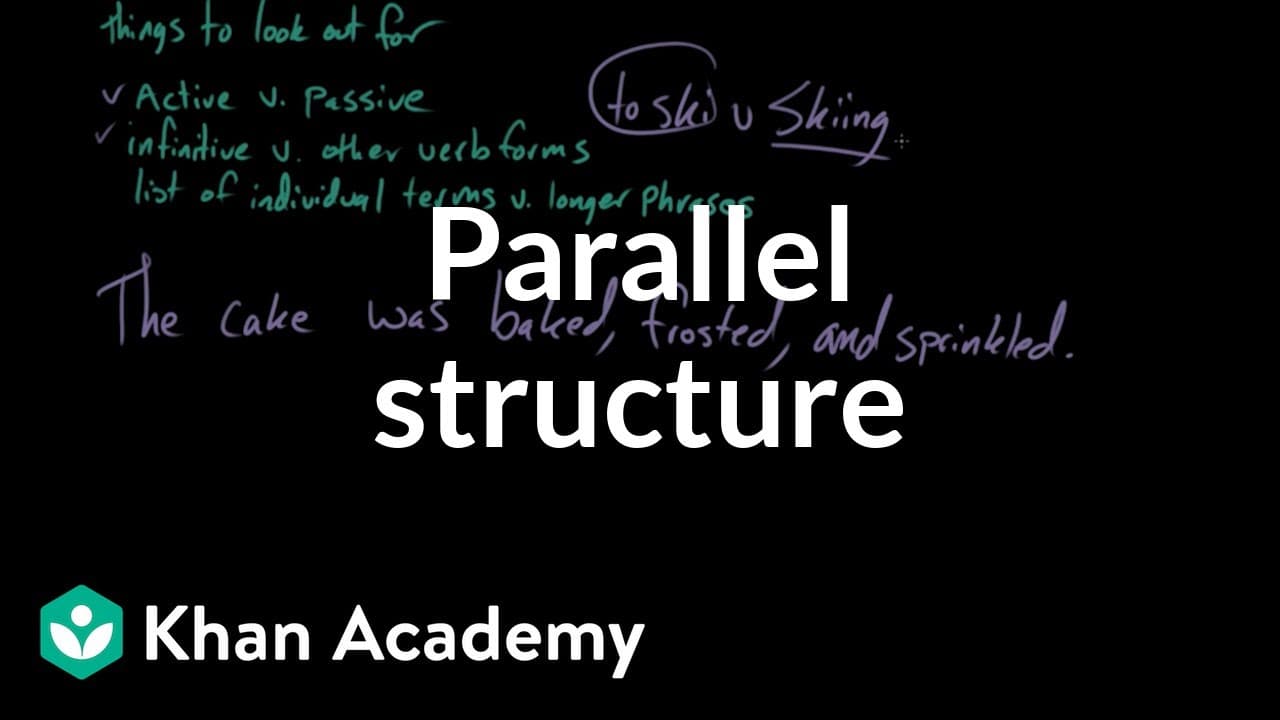
This educational video provides a clear and engaging guide to understanding parallel structure in writing. Hosted by David, Rosie, and Paige, the lesson distinguishes parallel structure as a stylistic choice rather than a strict grammatical rule, emphasizing how it creates harmony and flow in sentences. Through handwritten visual examples on a blackboard, the instructors demonstrate how to align items in a list—whether they are nouns, verbs, or phrases—to ensure they match in form.

Khan AcademyKhan Academy

5mins 5s

How and When to Use Parentheses

How and When to Use Parentheses

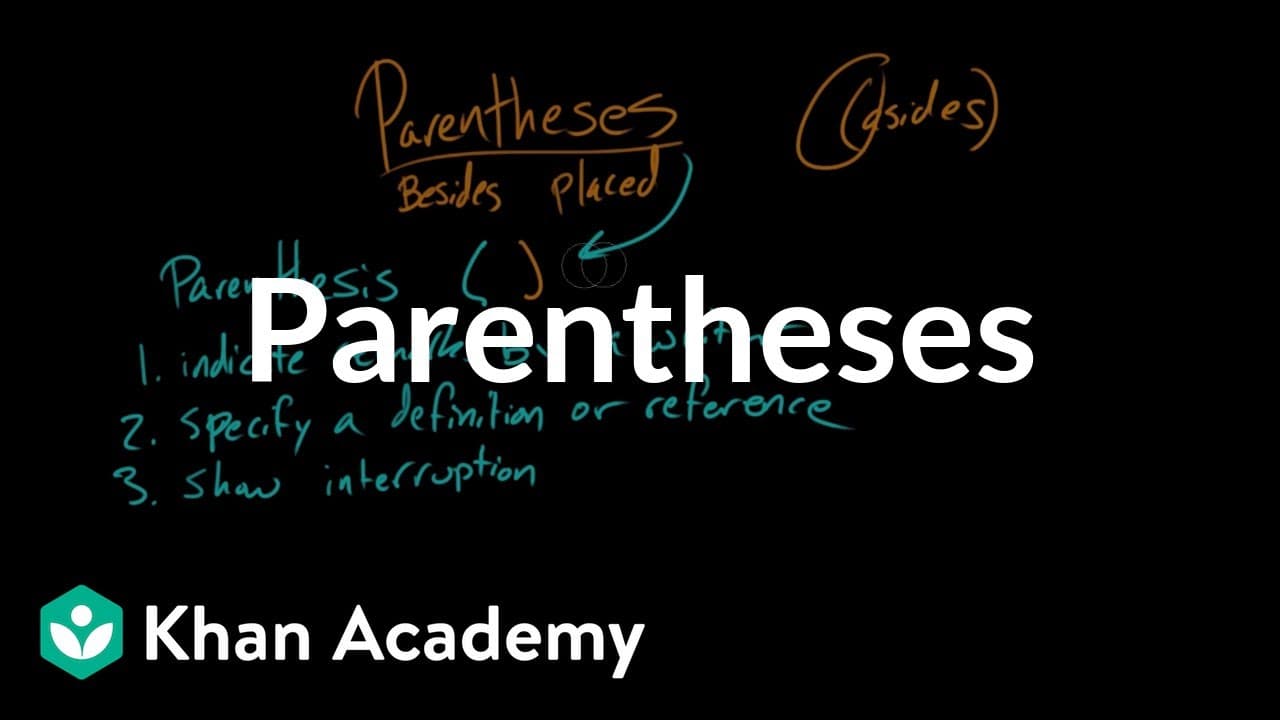
In this engaging grammar tutorial, David and Paige break down the proper usage of parentheses, starting with the word's Greek origins meaning "placed beside." The video utilizes a clear, handwritten visual style to demonstrate the difference between the singular "parenthesis" and the plural "parentheses." The instructors define the primary function of this punctuation mark: to separate technically unnecessary information, or "asides," from the rest of a sentence without destroying the sentence's grammatical integrity. The lesson categorizes the utility of parentheses into three distinct functions: indicating additional remarks by a writer, specifying a definition or reference (citation), and showing interruptions in transcribed speech. Through specific examples—such as adding details about a warm cookie, citing a page number from a fictional autobiography, and noting a cough during a speech—the video illustrates how parentheses hold information that can be removed without altering the core meaning of the text. For educators, this resource is an excellent tool for teaching sentence structure and editing skills. It helps students distinguish between essential and non-essential clauses, a critical skill for developing sentence fluency. The video also introduces the concept of citations and transcription conventions in a low-stakes, humorous way, making it valuable for middle school English Language Arts units on mechanics, research writing, and narrative voice.
Khan AcademyKhan Academy

4mins 9s

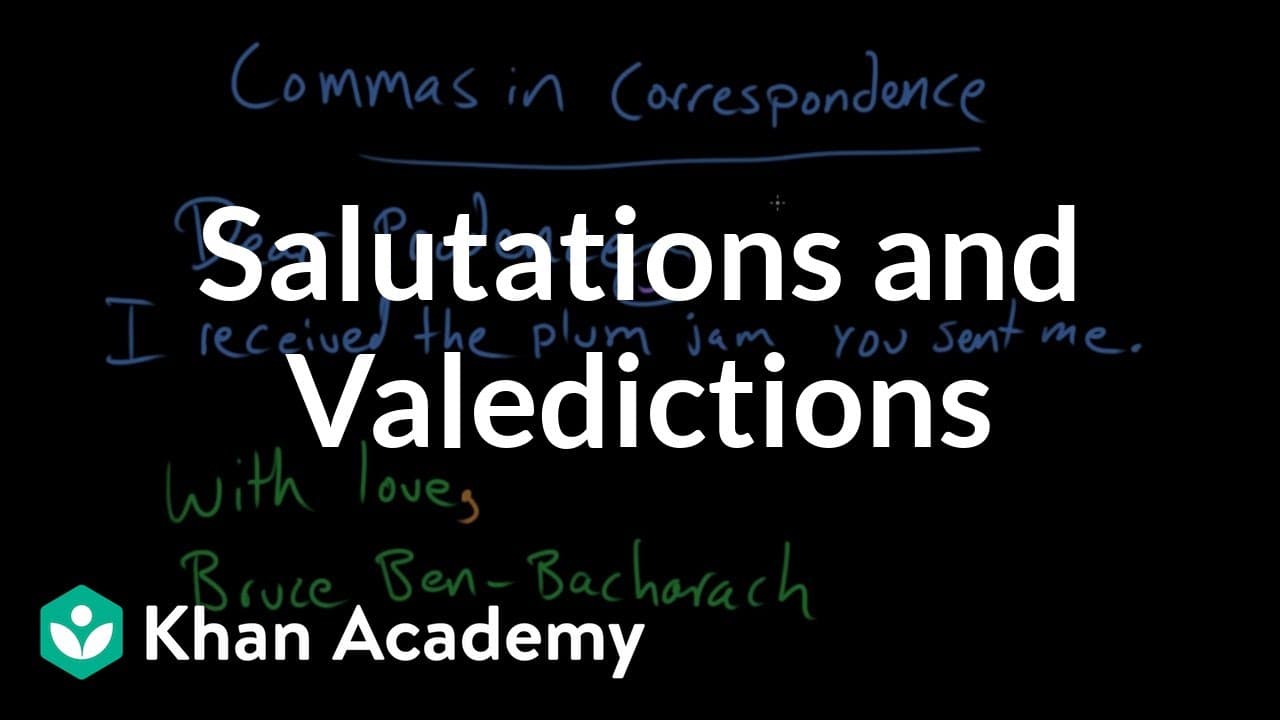
Using Commas in Letters and Emails

Using Commas in Letters and Emails

This video provides a clear and concise grammar lesson on how to correctly use commas in correspondence, specifically within letters and emails. The narrators, David and Paige, demonstrate the proper placement of commas in two key areas: the greeting (salutation) and the closing (valediction). Using handwritten examples on a digital whiteboard, they visually break down the structure of a standard letter to show exactly where punctuation belongs. The lesson explores the mechanics of separating introductory phrases from the body of a message and closing phrases from a signature. Beyond just the punctuation rules, the video introduces specific terminology—"salutation" and "valediction"—and briefly touches on their etymological roots, connecting them to concepts of saying "hello" and "goodbye." For educators, this resource serves as an excellent primer or review for units on letter writing or functional writing skills. It is particularly useful for teaching students the structural conventions of formal and informal communication, ensuring they can compose professional and grammatically correct emails and letters. The visual annotations make the abstract rules concrete and easy to follow for learners.

Khan AcademyKhan Academy

2mins 18s

Materials

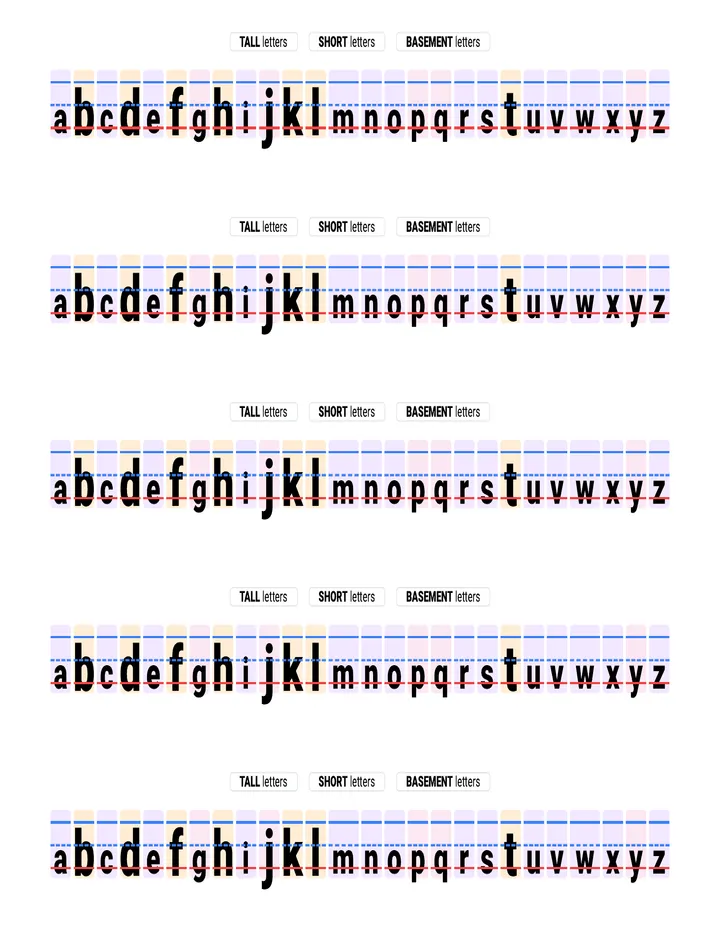
Alphabet Block Strips Final Document

Alphabet Block Strips Final Document

A collection of five alphabet practice strips in landscape layout using Roboto font. Features precisely calibrated primary handwriting line markings (solid blue topline, dashed blue midline, solid red baseline) correctly aligned to letter anatomy. Letters are black, and extra space is provided below the red line for basement letter visibility. Includes a color-coded key and 0.8 inch gaps between strips. Basement letters correctly descend below the red baseline while staying vertically aligned with other letters. High-contrast line colors ensure visibility.

R

RENEE.ALGER

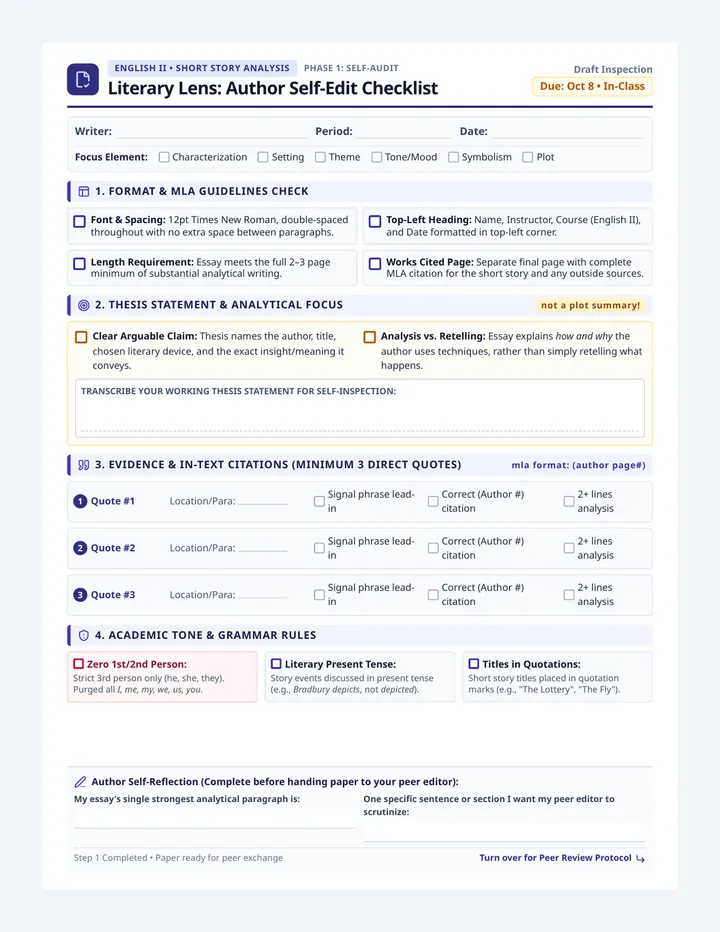
Literary Lens Editing Checklist

Literary Lens Editing Checklist

A comprehensive two-stage self-edit and peer-edit checklist designed for English II students assessing their short story literary analysis essays against assignment requirements, MLA guidelines, and analytical depth.

J

jmitchell

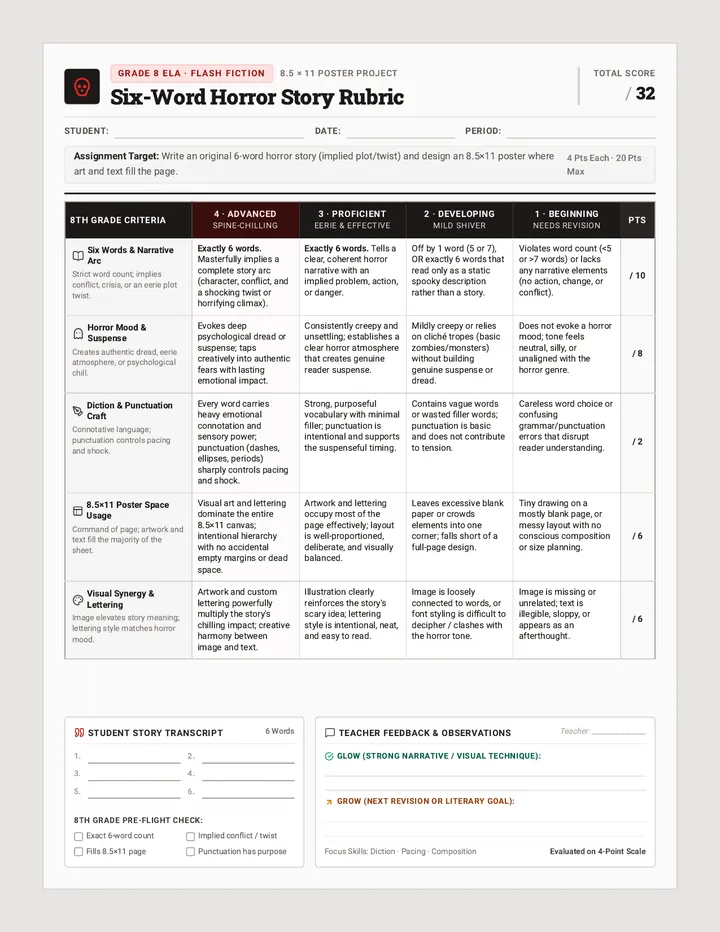
Micro Fright Scoring Rubric

Micro Fright Scoring Rubric

An 8th grade ELA scoring rubric for 8.5x11 six-word horror story posters. Aligned to middle school narrative and language standards, assessing narrative arc, suspenseful mood, connotative diction and punctuation, full-page layout, and graphic synergy.

SR

Savanna Robertson-Boerner

Argument Pro Rubric

Argument Pro Rubric

A comprehensive 100-point rubric for 10th-grade argumentative essays, featuring detailed criteria for claims, evidence, analysis, and counter-claims. Designed with a clean, professional aesthetic for easy grading and clear student feedback.

D

dmclaurin

Analysis Architect Rubric

Analysis Architect Rubric

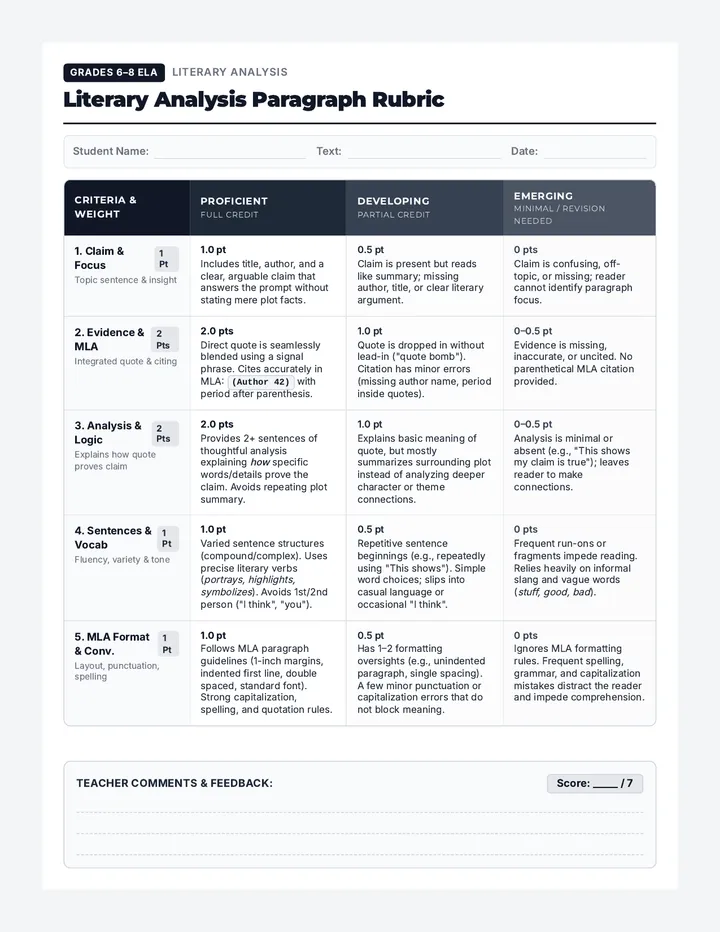
A grayscale 7-point middle school literary analysis paragraph rubric evaluating claim strength, MLA citation, evidence integration, analytical depth, and sentence craft.

KD

kathy dale

Mythology Masterpiece Rubric

Mythology Masterpiece Rubric

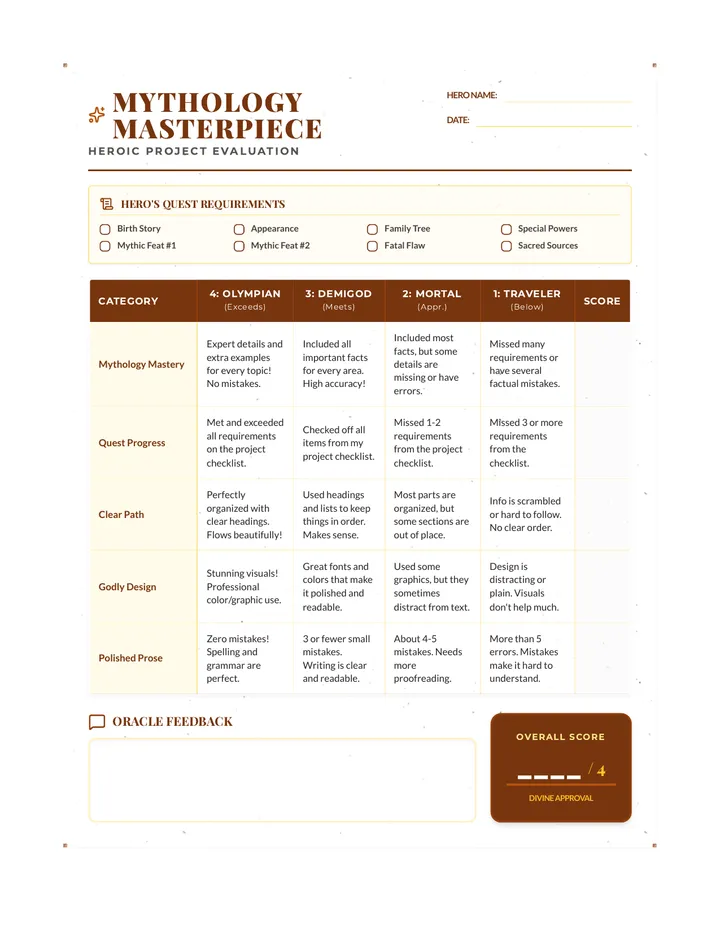
A single-page rubric for the Greek Mythology project, redesigned for space efficiency and readability. It features a horizontal checklist and consolidated footer to ensure the Oracle Feedback and Overall Score sections fit perfectly on one page without sacrificing text size. The final score is now explicitly labeled 'overall score _/4'.

SD

Stephany Durtsche

Sequences

Invention Quest Slides

Frindle Frenzy Novel Study

A 9-day novel study for 'Frindle' by Andrew Clements, aligned to 3rd Grade ELAR TEKS, focusing on character development, vocabulary, and plot analysis.

LH

Lucy Hellerman

56
Unit 1 Pacing Guide Document

Testing Our Limits Unit Sequence

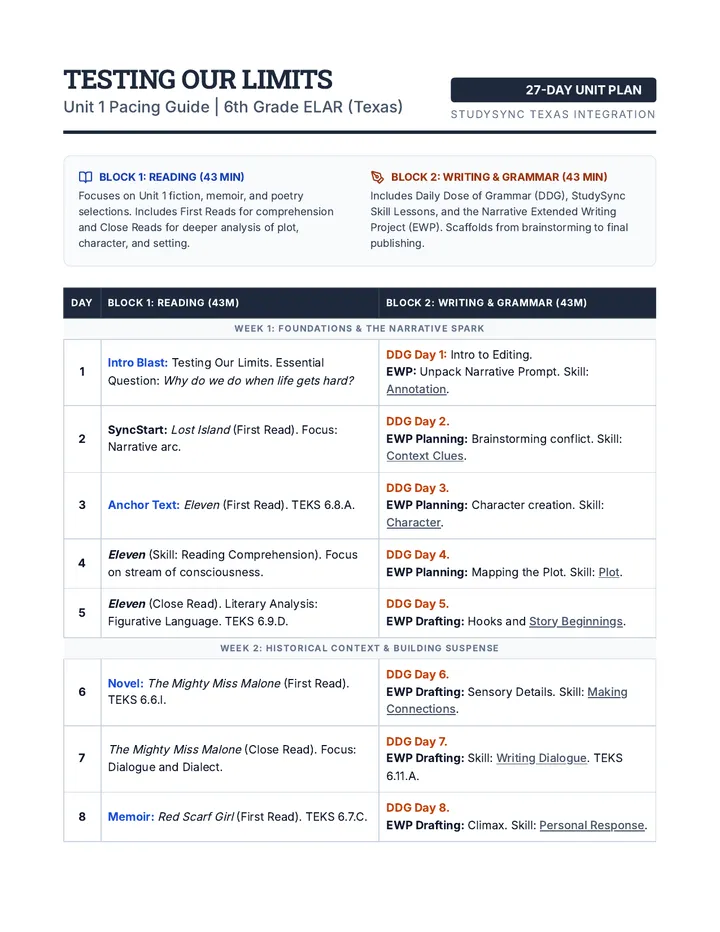
A 27-day instructional sequence for 6th Grade ELAR Unit 1: Testing Our Limits, featuring dual blocks for Reading and Writing with daily grammar and skill scaffolding.

DM

Dawn Mustian

81
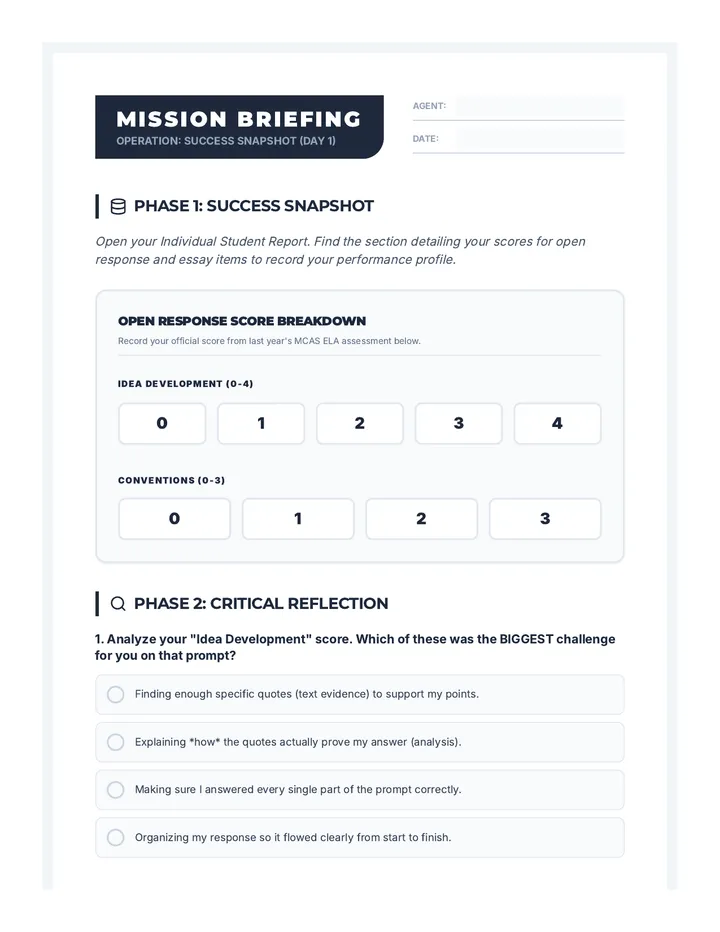
Mission Briefing Worksheet

Mastery Mission

A project-based learning unit designed to help middle school students analyze their past MCAS ELA performance, deconstruct scoring rubrics, and create a personalized strategy playbook for upcoming assessments. Students move from 'investigating' their scores to 'rebooting' their responses and 'finalizing' their test-taking toolkit.

M

mhbutterworth

18
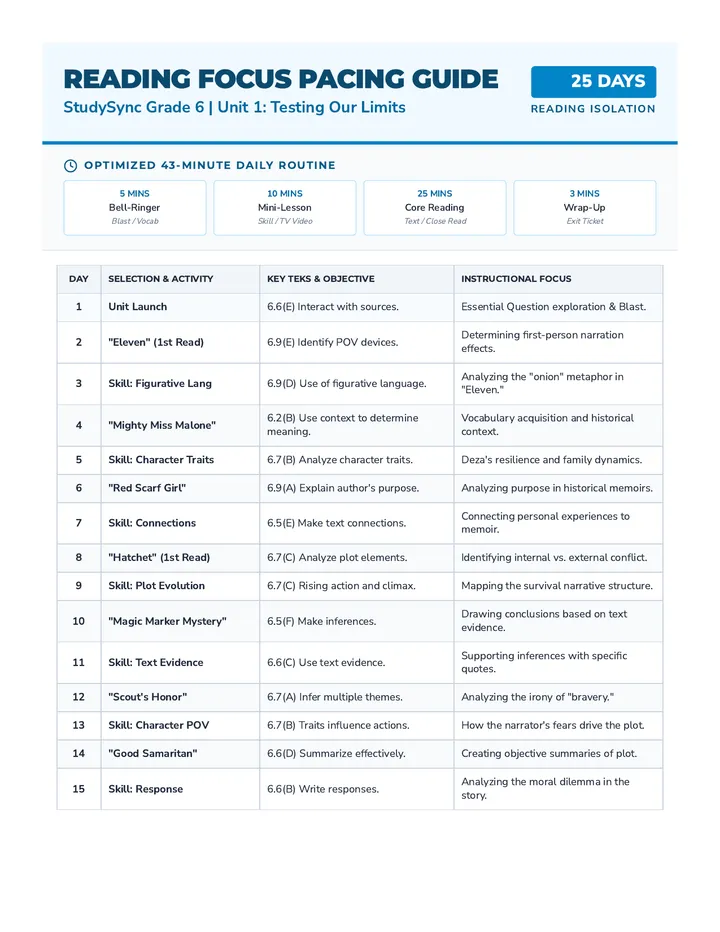
Reading Focus Pacing Guide

Testing Our Limits Unit

A 25-day comprehensive unit for StudySync Grade 6 that explores the theme of courage and resilience through isolated reading and writing tracks, aligned to ELA TEKS.

DM

Dawn Mustian

79
Burger Builder Slides

Paragraph Foundations

A foundational paragraph writing unit designed for early writers and SpEd students to master core paragraph structures through narrative, opinion, and informational writing with heavy visual scaffolding.

E

ecreamer

23
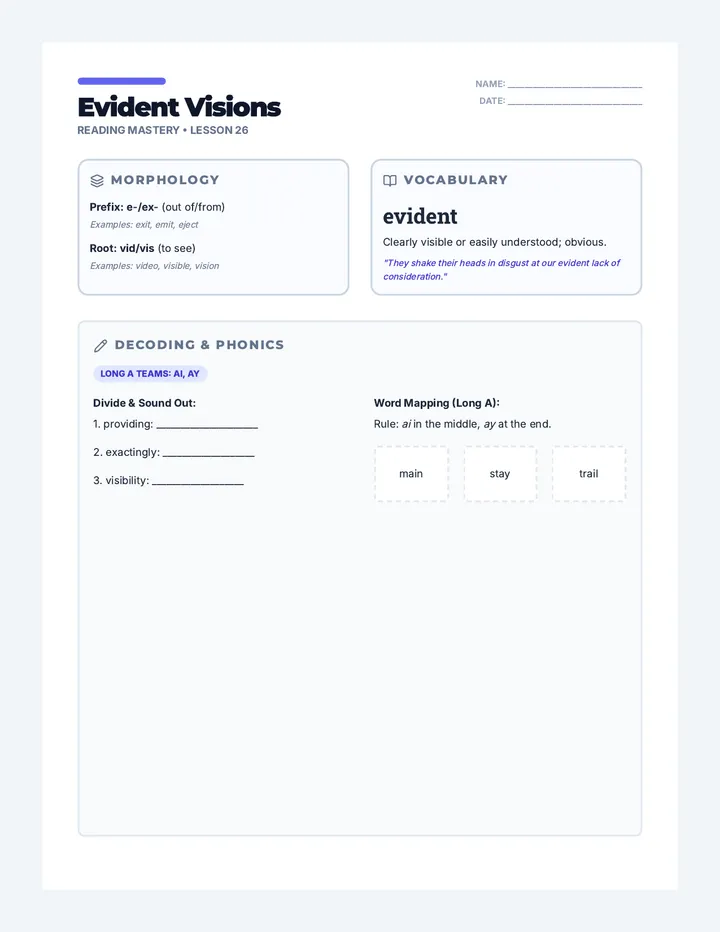
Integrated Mastery Handouts 26-40

Reading Power Pack

A comprehensive literacy intervention sequence for high school TESOL students (Lessons 16-25) focused on morphology, academic vocabulary, systematic decoding, and vowel mastery.

AP

Alexis Paolini

30