Lenny.com
Explore
Create
ActivitiesNewMathEnglish Language ArtsScience & EngineeringSocial StudiesGlobal LanguagesHealth & Physical EducationSpecial EducationCounseling & Life SkillsArts & CreativityESL
Lenny.com
Lenny.com
Explore
Create
ActivitiesNewMathEnglish Language ArtsScience & EngineeringSocial StudiesGlobal LanguagesHealth & Physical EducationSpecial EducationCounseling & Life SkillsArts & CreativityESL
Lenny.com

Conjunctions

Coordinating, subordinating, and correlative conjunctions used to link words, phrases, and clauses. Strengthens sentence structure and clarifies logical relationships between ideas.

Lenny.com

Solutions

Lenny for EducatorsLenny for SchoolsLenny for Districts

Product

ExploreSign inCreateSupportAbout

Resources

Getting startedMTSS Acceleration Program

© 2026 Lenny Learning Inc.

TermsPrivacyAccessibility
LinkedInInstagramX
Lenny

Videos

Understanding Simple and Compound Sentences

Understanding Simple and Compound Sentences

In this engaging grammar tutorial, David and Paige explain the structural differences between simple and compound sentences. Using a digital whiteboard, they break down the core components of sentence construction, defining a simple sentence as consisting of a single subject and predicate, while a compound sentence combines two or more independent clauses joined by a conjunction. The video dives into technical grammar terminology in an accessible way, introducing concepts like "independent clauses" and "predicates." A significant portion of the video is dedicated to a common point of confusion: the difference between a compound sentence (two complete thoughts joined together) and a simple sentence with a compound predicate (one subject doing two things). Through specific examples about buying candy and getting sunburned, the narrators visually diagram these differences. For educators, this resource serves as an excellent tool for improving student writing fluency. It moves beyond basic definitions to help students understand sentence variety and the mechanics of combining ideas. The visual diagramming of subjects and predicates provides a clear model for students to analyze their own writing, making it particularly useful for lessons on syntax, editing, and avoiding run-on sentences.

Khan AcademyKhan Academy

4mins 29s

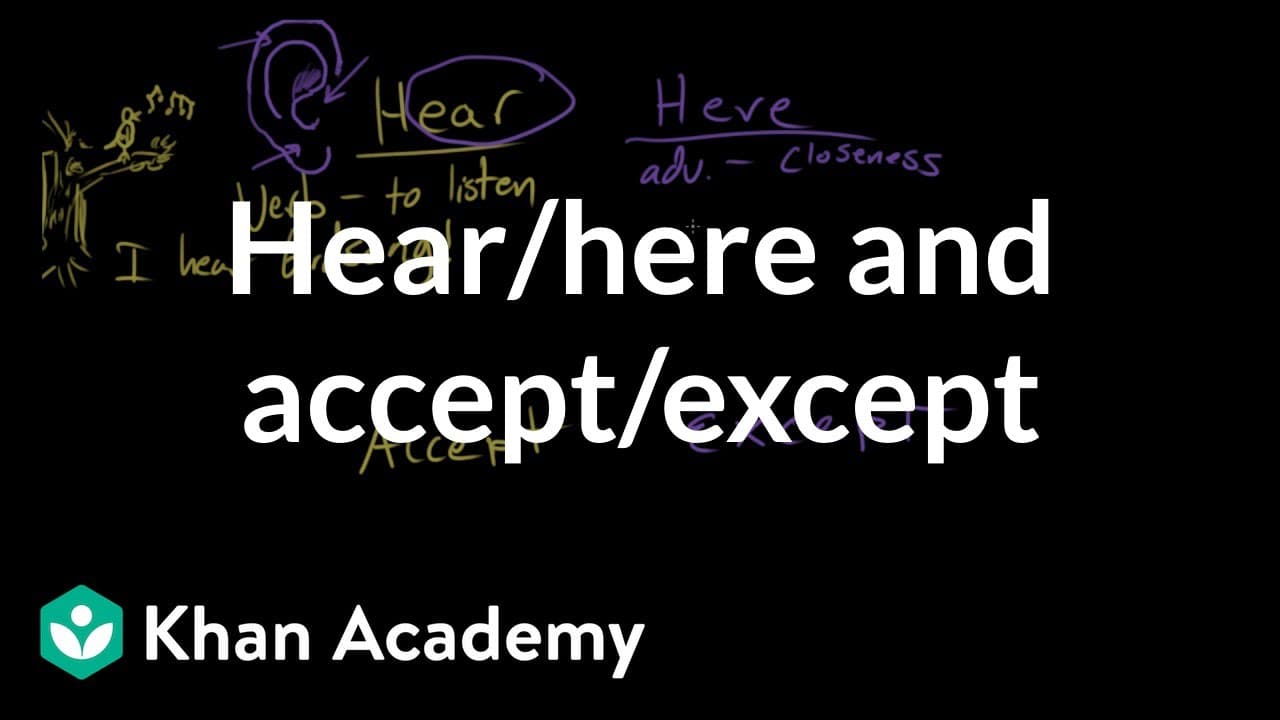
Mastering Confusing Words: Hear vs. Here and Accept vs. Except

Mastering Confusing Words: Hear vs. Here and Accept vs. Except

This educational video provides a clear and engaging guide to mastering two sets of frequently confused words: "hear" vs. "here" and "accept" vs. "except." The narrator, David, breaks down these homophones (or near-homophones) by defining their parts of speech and meanings, ensuring students understand not just how to spell them, but how they function grammatically within a sentence. The video explores key themes of spelling, grammar, and mnemonic strategies. For each word pair, the narrator provides specific memory aids: finding the word "ear" inside "hear," rhyming "here" with "near," linking the "ex" in "except" to "exclude," and connecting the "ac" in "accept" to "access." These cognitive hooks are designed to help learners permanently distinguish between the spellings. For educators, this video is an excellent resource for strengthening vocabulary and writing skills. It directly addresses common pitfalls in student writing and offers practical, visual tools for self-correction. The content is versatile enough to be used as a flipped classroom assignment, a review before a spelling test, or a reference tool for editing workshops, empowering students to proofread their work with greater confidence.

Khan AcademyKhan Academy

3mins 14s

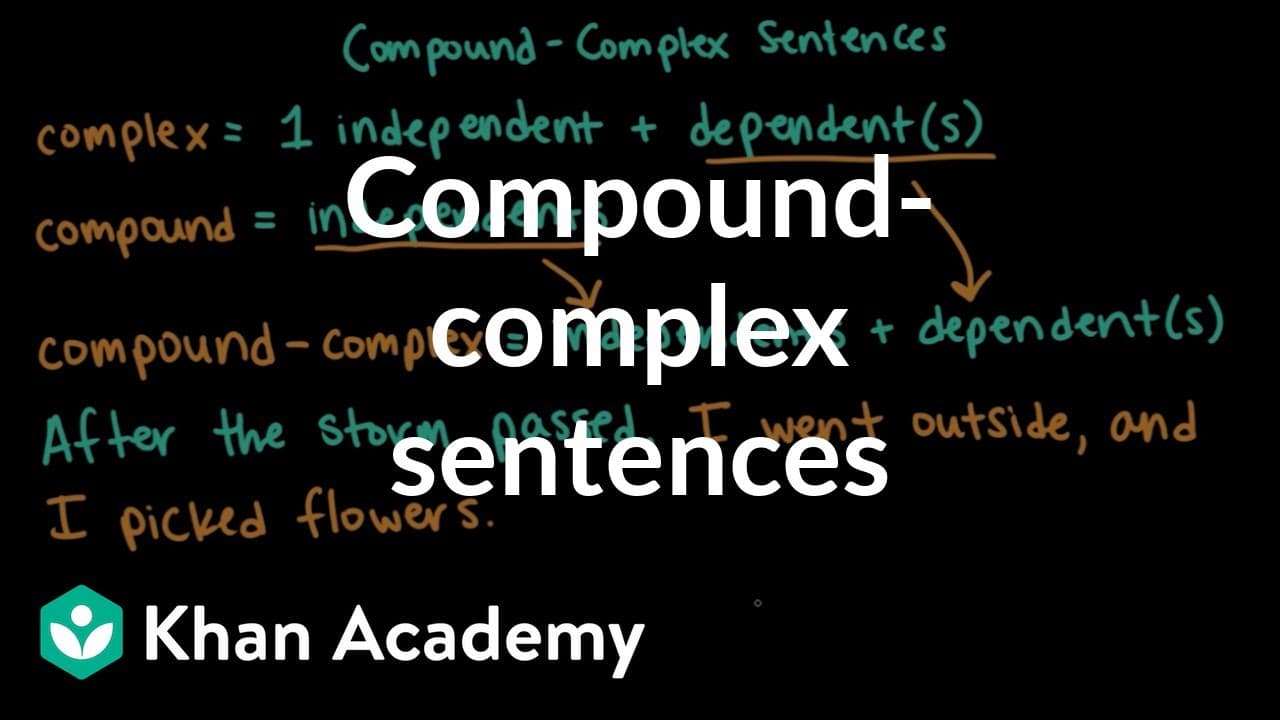
How to Build Compound-Complex Sentences

How to Build Compound-Complex Sentences

This educational video provides a clear and structured explanation of compound-complex sentences, one of the most sophisticated sentence structures in English grammar. The instructors, Paige and Rosie, break down the definition by reviewing the components of simple, compound, and complex sentences before demonstrating how these elements combine. They use a digital whiteboard to visually map out the requirements: at least two independent clauses and at least one dependent clause. The video explores key grammatical themes including clause identification (independent vs. dependent), the use of coordinating conjunctions, and sentence variety. Through two distinct examples—one about picking flowers after a storm and a humorous narrative about a character named Alberto with a walnut allergy—the instructors demonstrate how to identify and construct these sentences. They also show how sentences can be expanded with additional clauses while maintaining their classification. For educators, this resource is an excellent tool for middle school English Language Arts classrooms. It demystifies a concept that often confuses students by visually isolating the parts of speech. Teachers can use this video to transition students from writing simple sentences to more nuanced, rhythmic prose. It serves as a perfect introduction to a lesson on sentence variety or as a remediation tool for students struggling with run-on sentences or fragments.

Khan AcademyKhan Academy

4mins 14s

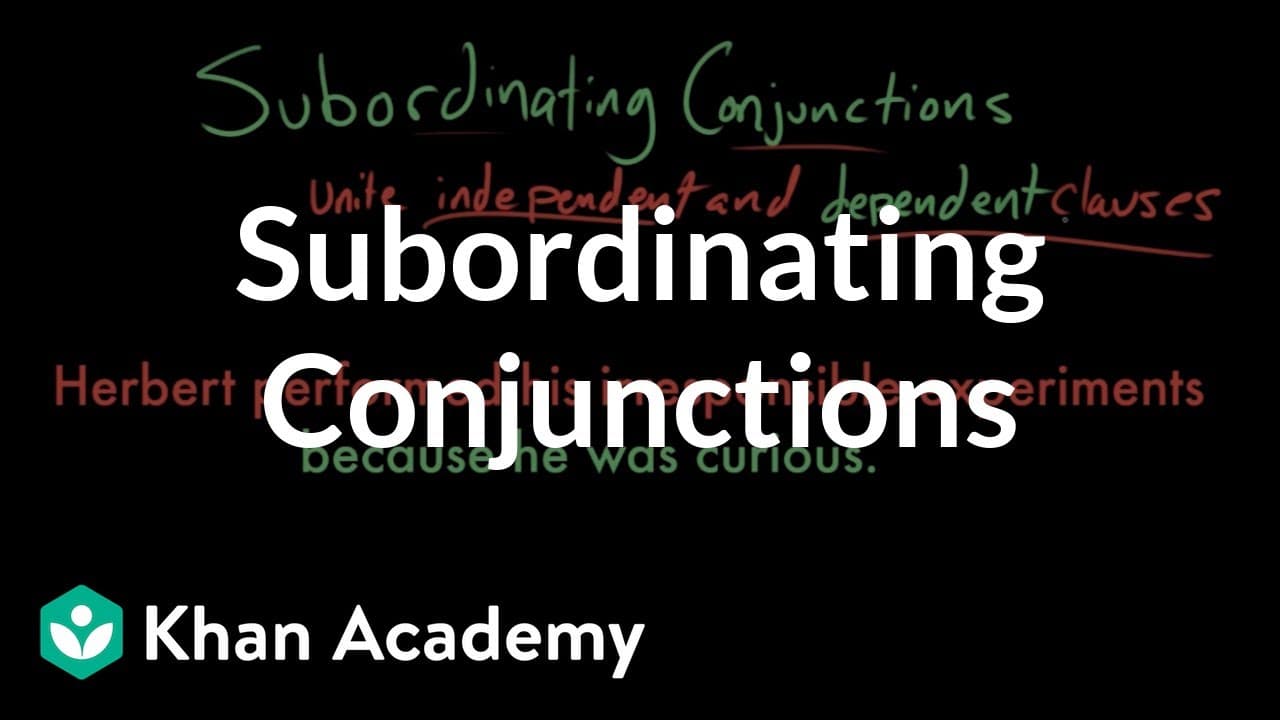
How Subordinating Conjunctions Connect Independent and Dependent Clauses

How Subordinating Conjunctions Connect Independent and Dependent Clauses

This educational video provides a clear and comprehensive introduction to subordinating conjunctions and their role in sentence structure. The narrator breaks down the fundamental difference between independent and dependent clauses, explaining that while all sentences are clauses, not all clauses are sentences. Using the helpful analogy of a tree (independent clause) and a ladder (dependent clause), the video demonstrates how subordinating conjunctions function to connect these two types of clauses to add context and detail to writing. The content covers key grammatical concepts including the definition of a clause (subject plus verb), the identifying features of sentence fragments, and the distinction between coordinating conjunctions (FANBOYS) and subordinating conjunctions. Through humorous example sentences involving characters like Herbert and Sir Reginald, viewers learn practical tests—such as the "Yeah? So what?" test—to identify dependent clauses and determine if a sentence is grammatically complete. For educators, this video is an excellent resource for teaching complex sentence structure and helping students avoid sentence fragments. It simplifies abstract grammatical terms into tangible concepts using visual aids and memorable analogies. The video concludes with a comprehensive list of common subordinating conjunctions, making it a useful reference tool for students looking to add variety and sophistication to their writing.

Khan AcademyKhan Academy

5mins 27s

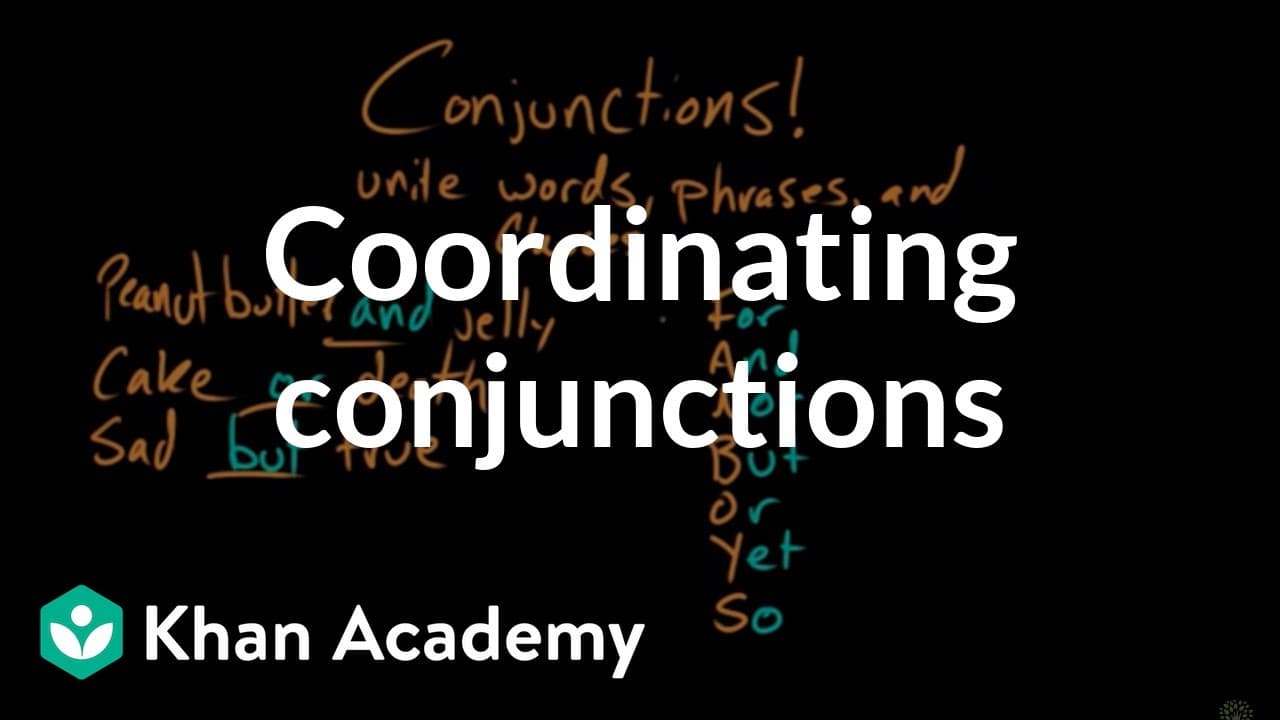
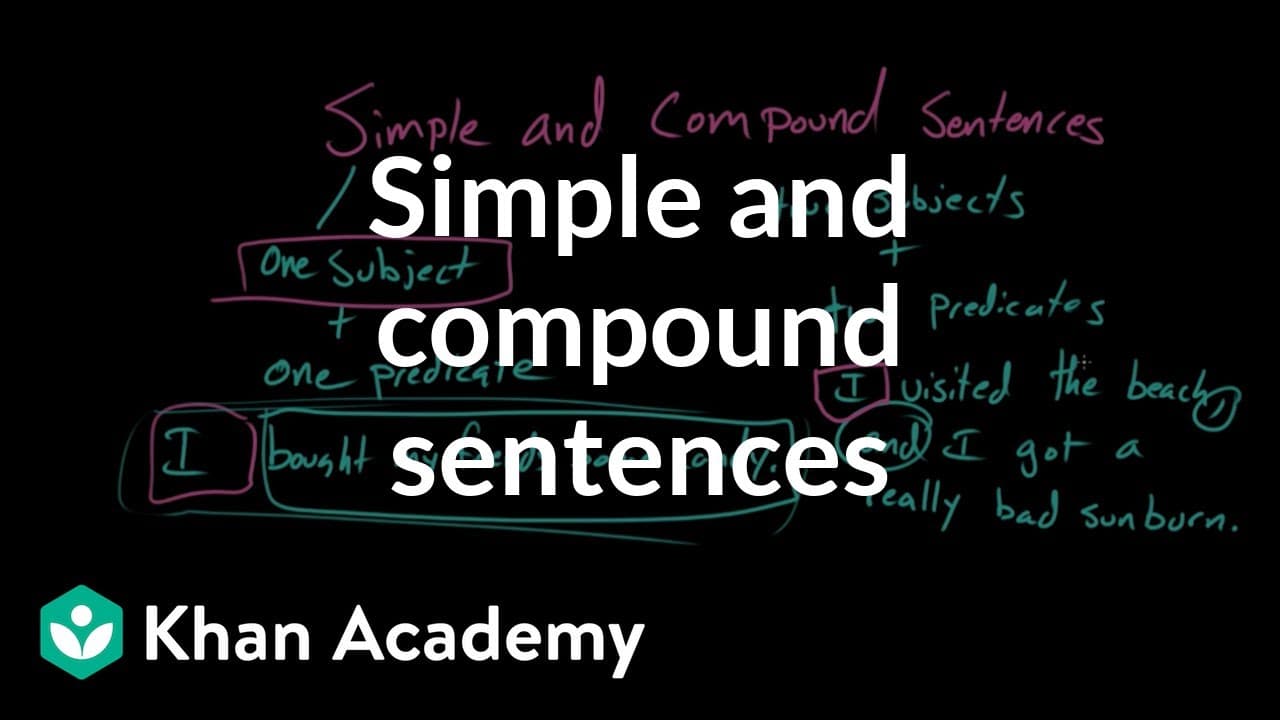
Mastering Coordinating Conjunctions with FANBOYS

Mastering Coordinating Conjunctions with FANBOYS

This engaging grammar lesson introduces students to coordinating conjunctions, the words that glue sentences together. The narrator, David from Khan Academy, defines conjunctions as parts of speech that unite words, phrases, and clauses, providing simple initial examples like "peanut butter and jelly" and "sad but true." The core of the video is the introduction of the mnemonic device "FANBOYS," which helps students remember the seven coordinating conjunctions: For, And, Nor, But, Or, Yet, and So. The video systematically breaks down each of the seven conjunctions, explaining their specific functions and providing humorous, memorable example sentences. From a kangaroo robbing a bank to an angry tree spirit refusing to speak to humans, the quirky examples help illustrate how each conjunction creates different relationships between ideas, such as causality, addition, choice, contrast, or consequence. This resource is highly valuable for ELA classrooms as it transforms a dry grammar topic into an accessible concept through humor and clear visual aids. It is particularly useful for teaching sentence variety, correcting run-on sentences, and helping students understand the logical relationships between clauses. The "FANBOYS" acronym provides a lasting mental hook that students can rely on for years to come.
Khan AcademyKhan Academy

4mins 33s

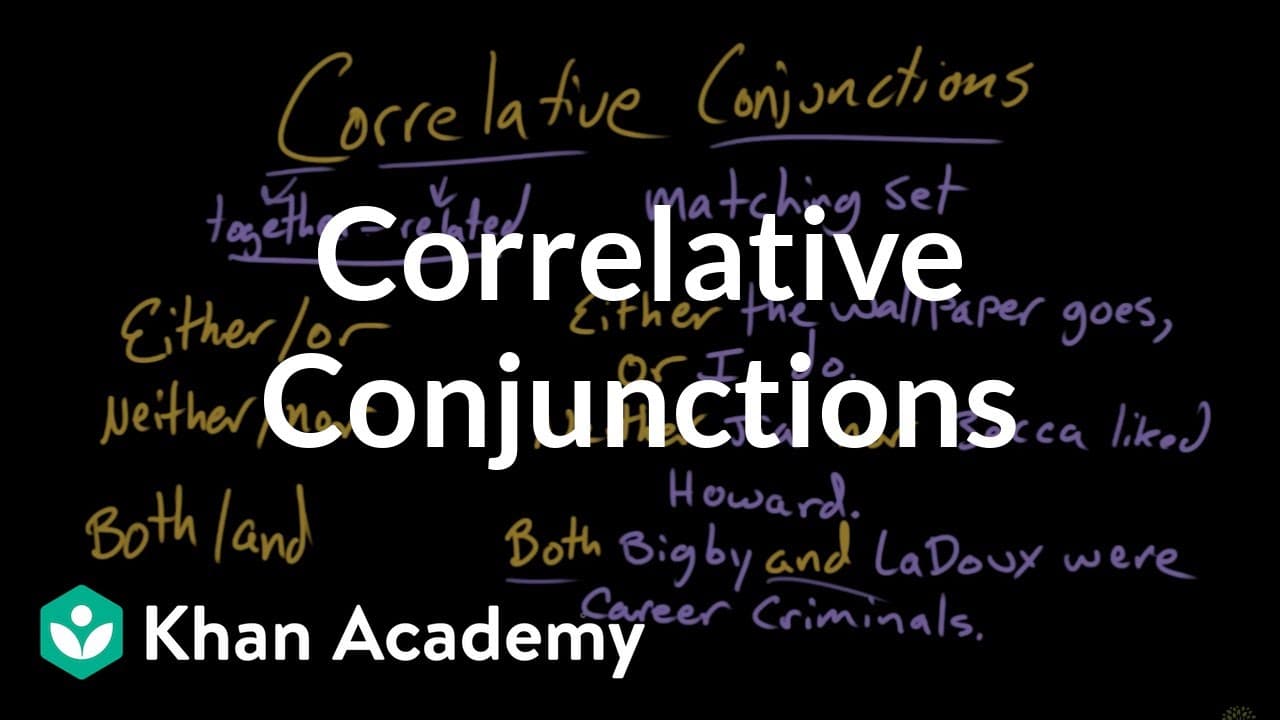
Mastering Correlative Conjunctions and Matched Word Pairs

Mastering Correlative Conjunctions and Matched Word Pairs

This educational video provides a clear and engaging introduction to correlative conjunctions, breaking down the intimidating terminology into simple, manageable concepts. The narrator, David, uses etymology to explain that "correlative" simply means "related together," defining these conjunctions as matching sets used to connect sentence parts. Through five distinct examples—either/or, neither/nor, both/and, as/so, and whether/or—the video demonstrates how these pairs function within sentences to create balance and establish relationships between ideas. The video explores key grammatical themes such as sentence structure, parallel construction, and the specific nuances of different conjunction pairs. It covers the difference between positive choices (either/or), negative rejection (neither/nor), inclusion (both/and), formal consequence (as/so), and possibilities (whether/or). The lesson also briefly touches upon pronunciation variations (e.g., ee-ther vs. eye-ther) and uses memorable, sometimes humorous examples involving famous quotes and fictional characters to illustrate usage. For educators, this video serves as an excellent tool for teaching intermediate grammar and writing skills. It transforms abstract grammatical rules into concrete patterns that students can recognize and apply. The breakdown of etymology promotes critical thinking about vocabulary, while the distinct examples provide a template for students to model their own writing. It is particularly useful for lessons on sentence variety, improving writing flow, and understanding the logic behind connecting clauses.

Khan AcademyKhan Academy

3mins 12s

Materials

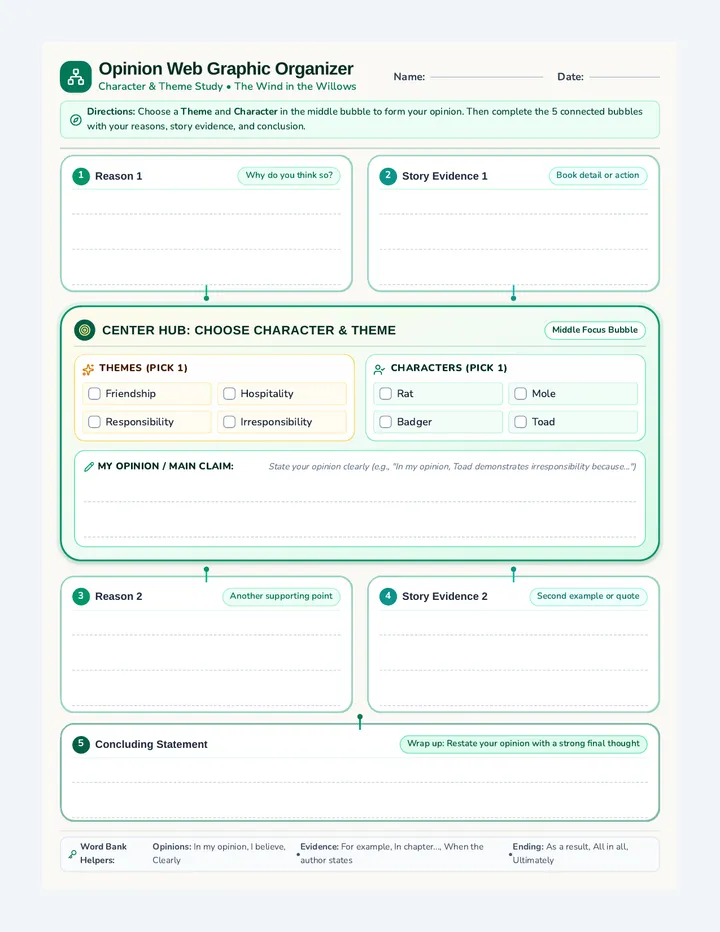
Opinion Web Graphic Organizer

Opinion Web Graphic Organizer

A simplified opinion writing web graphic organizer adapted for ESL and SPED learners. Features a central character and theme web hub directly attached via directional web arrows to four blank writing bubbles, supported by an expanded vocabulary and sentence starter word bank.

M

mkrapazzo

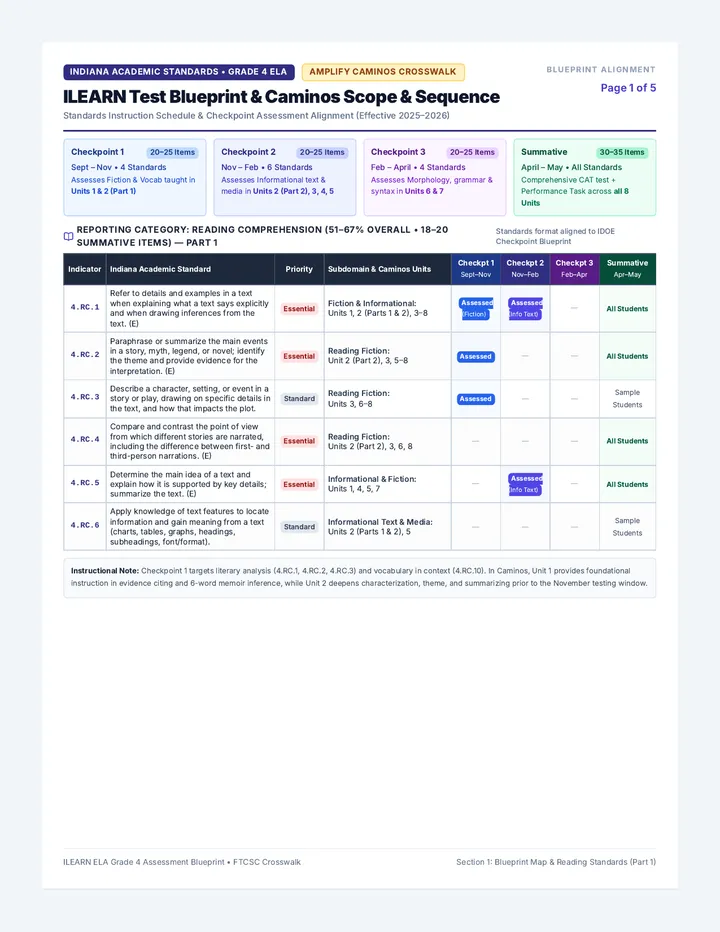
ILEARN Caminos Blueprint Guide

ILEARN Caminos Blueprint Guide

Comprehensive Grade 4 ILEARN Test Blueprint and Amplify Caminos Scope & Sequence crosswalk. Formatted to match the state ILEARN checkpoint blueprint, showing exactly when Indiana Academic Standards (Reading, Vocabulary, Writing, Grammar, and Communication) are taught across Units 1–8 and assessed in Checkpoints 1, 2, 3, and the Summative Assessment.

A

Amy.Hacker

Book Jacket Studio Worksheet

Book Jacket Studio Worksheet

A comprehensive 2-page book jacket and front-matter design worksheet where students craft their own book cover illustration, back cover blurb, endorsements, dedication, table of contents, chapter names, preface, and interior illustration.

MG

MICHELLE GRIMALDI

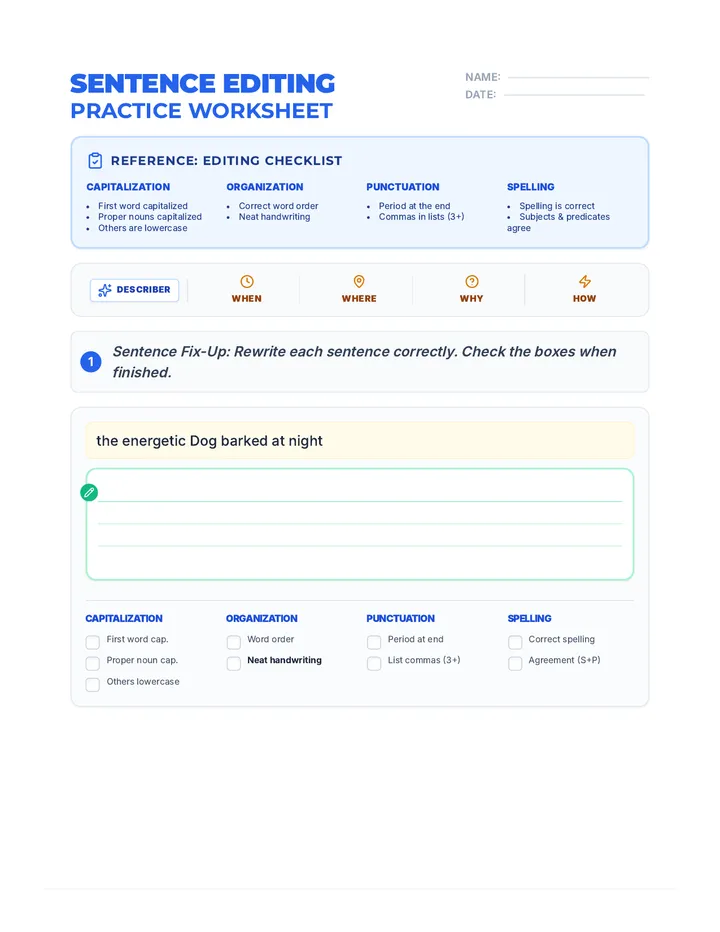
Sentence Editing Practice Worksheet

Sentence Editing Practice Worksheet

An extensive 6-page worksheet for sentence building and correction. Features an editing checklist for review at the top of Page 1, followed by four 'Sentence Fix-Up' items and six complex frames. All tasks include 4 handwriting lines and a standardized checklist with increased font sizes for better legibility. Subtitle removed and font sizes polished for classroom use.

EV

Erin Venuti

Literacy Loop Newsletter

Literacy Loop Newsletter

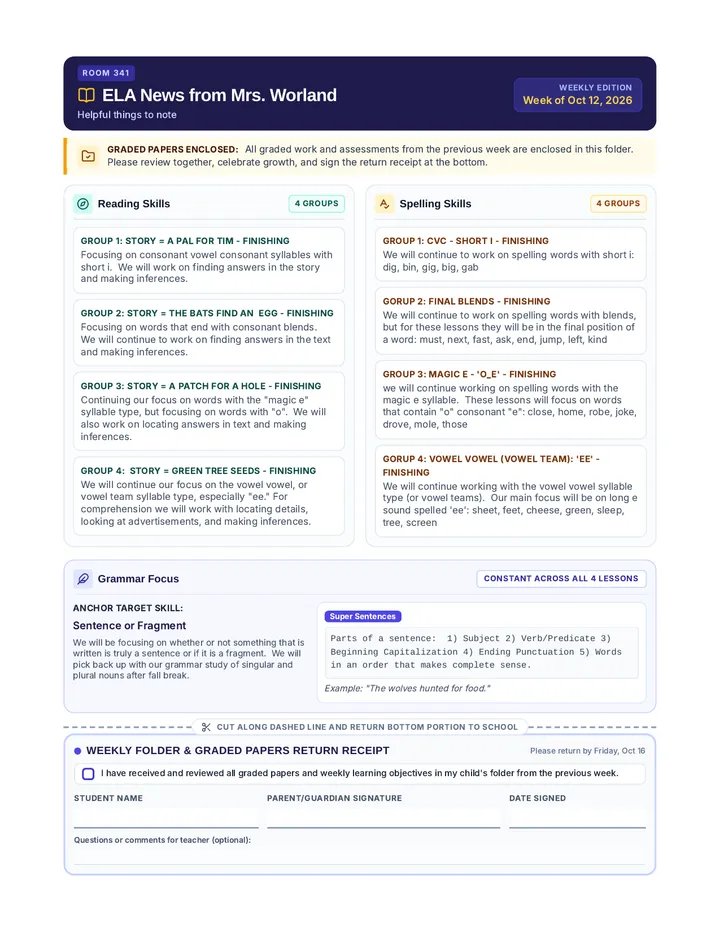
A printable weekly Language Arts newsletter featuring four-lesson skill overviews for reading and spelling, a unified weekly grammar anchor skill, an enclosed graded papers notice, and a tear-off return receipt slip.

CW

Carrie Worland

Bridge Builders List Final Compact

Bridge Builders List Final Compact

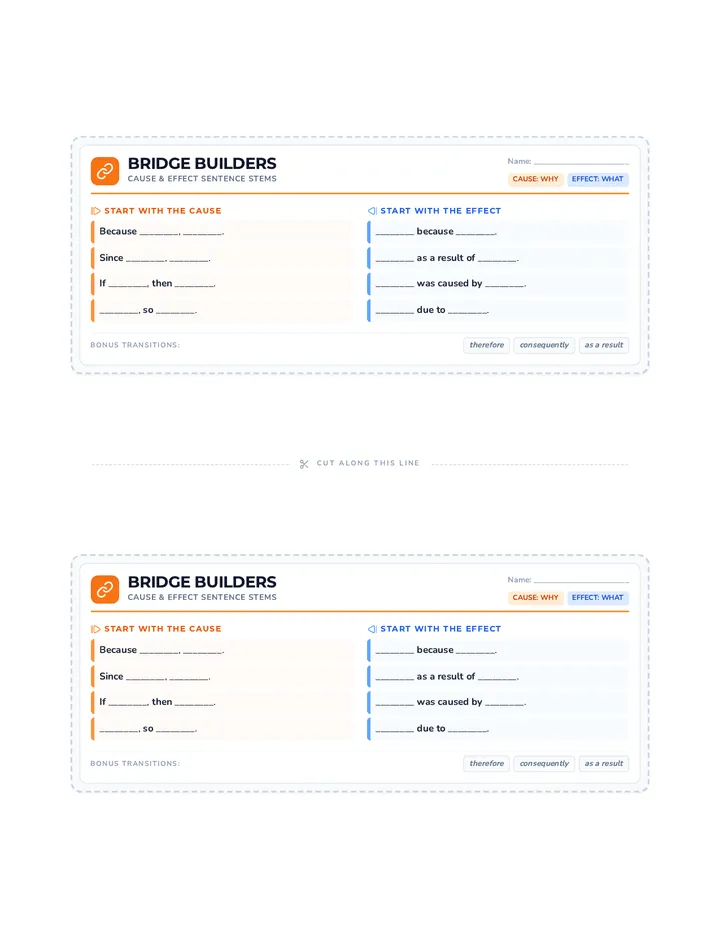
A condensed, printable half-page reference list containing common cause and effect sentence stems for 3rd grade students, strictly constrained to a single page with a center cutting guide.

SP

Sarah Purgason

Sequences

Unit 1 Pacing Guide Document

Testing Our Limits Unit Sequence

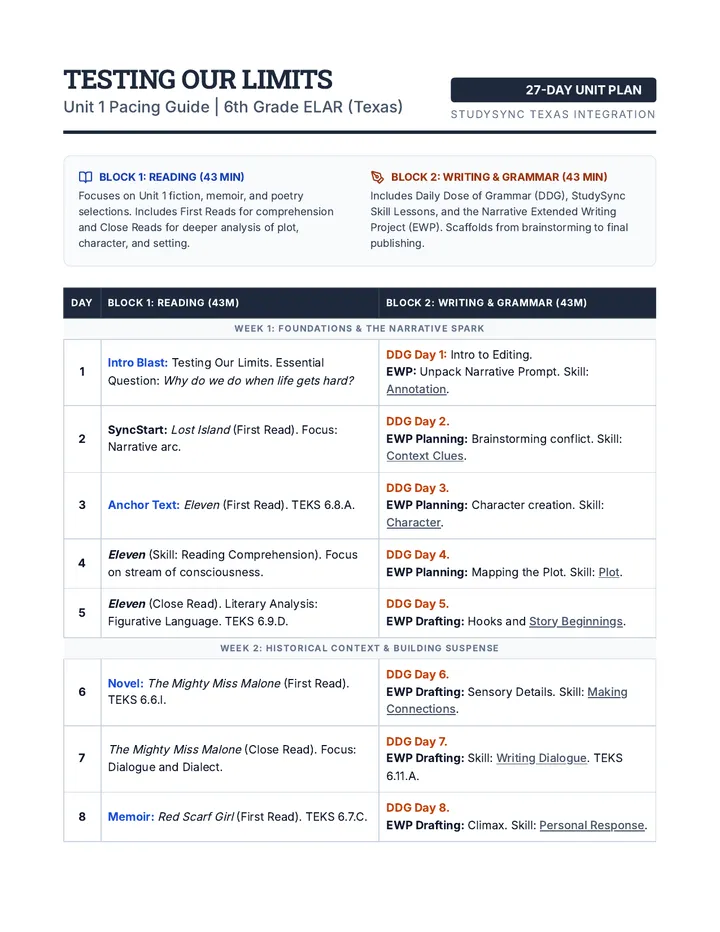
A 27-day instructional sequence for 6th Grade ELAR Unit 1: Testing Our Limits, featuring dual blocks for Reading and Writing with daily grammar and skill scaffolding.

DM

Dawn Mustian

81
Mission Briefing Worksheet

Mastery Mission

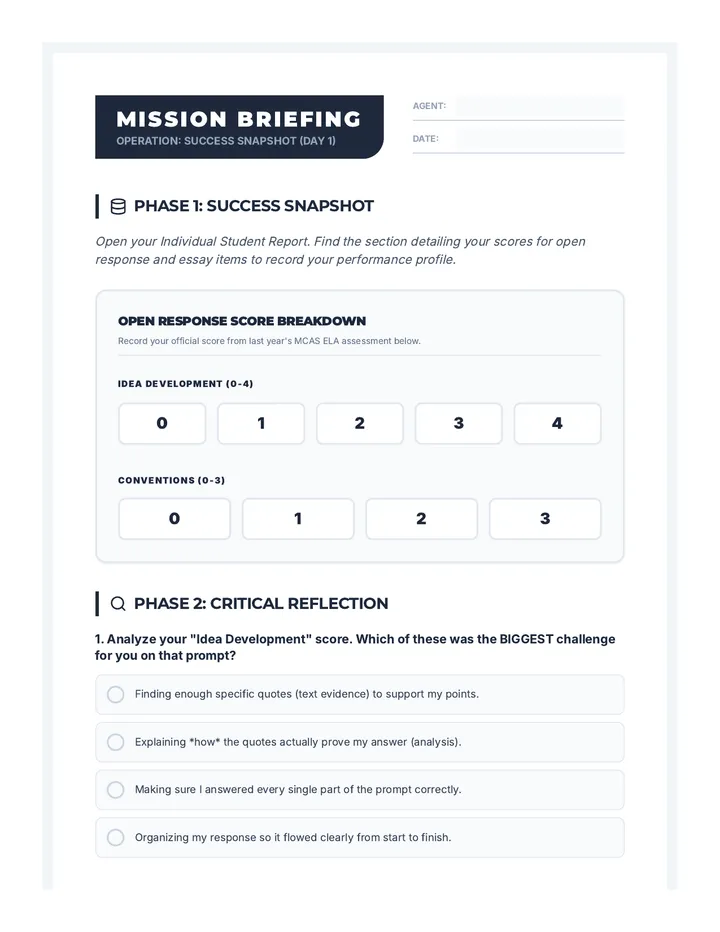
A project-based learning unit designed to help middle school students analyze their past MCAS ELA performance, deconstruct scoring rubrics, and create a personalized strategy playbook for upcoming assessments. Students move from 'investigating' their scores to 'rebooting' their responses and 'finalizing' their test-taking toolkit.

M

mhbutterworth

18
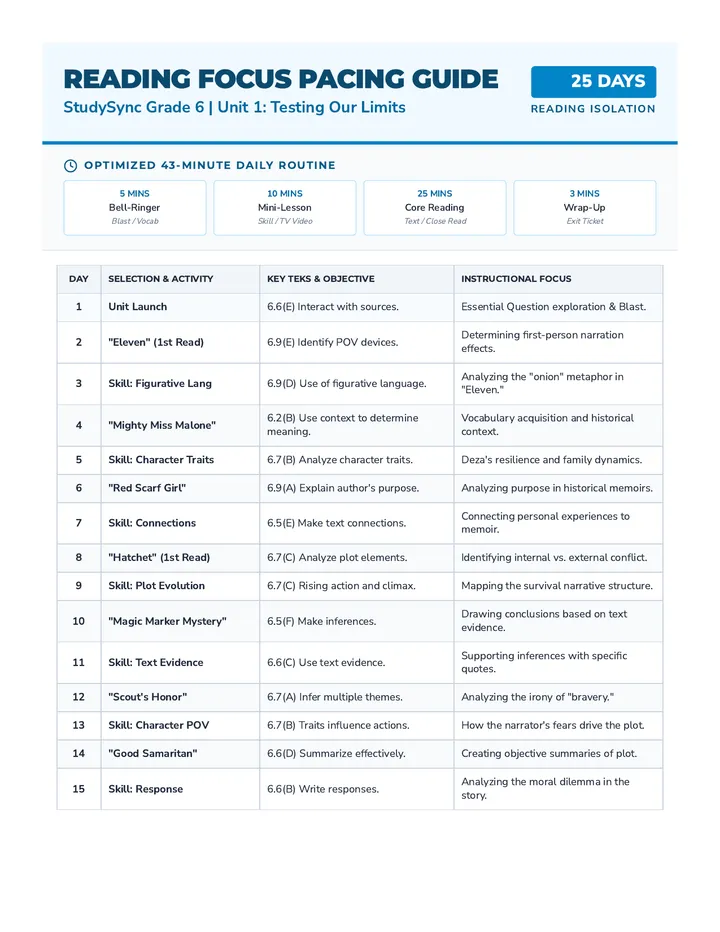
Reading Focus Pacing Guide

Testing Our Limits Unit

A 25-day comprehensive unit for StudySync Grade 6 that explores the theme of courage and resilience through isolated reading and writing tracks, aligned to ELA TEKS.

DM

Dawn Mustian

79
Burger Builder Slides

Paragraph Foundations

A foundational paragraph writing unit designed for early writers and SpEd students to master core paragraph structures through narrative, opinion, and informational writing with heavy visual scaffolding.

E

ecreamer

23
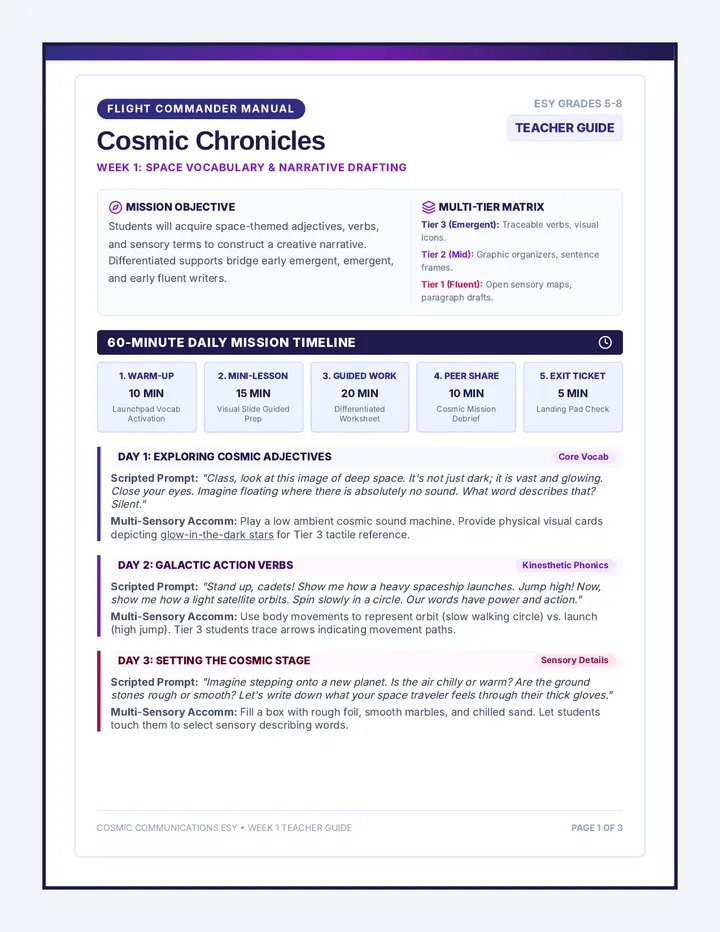
Cosmic Chronicles Teacher Guide

Cosmic Communications ESY

A comprehensive, space-themed 4-week Extended School Year (ESY) ELA curriculum designed for middle school students with disabilities (grades 5-8). It features daily scaffolded learning structures, differentiated materials spanning early emergent to early fluent readers, and visual sensory supports that make ELA skill acquisition accessible, engaging, and structured.

S

samantha.davis

16
Argument Ace Slides

Argument Ace

A comprehensive 3-lesson unit designed to prepare HSED/GED students for the RLA Extended Response by teaching them how to analyze opposing arguments, evaluate evidence, and craft a high-scoring argumentative essay.

VL

V Lundgren

14
English Language ArtsPhonics & Reading FoundationsLetter IdentificationLearn Letters A-ZLowercase and Uppercase LettersConsonants and VowelsLetter-Sound AssociationsLetter-Sound Associations: LowercaseLetter-Sound Associations: UppercaseBeginning and Ending SoundsRhymingBlending And SegmentingShort VowelsShort Vowel SoundsConsonant BlendsConsonant DigraphsBlends, Digraphs, and TrigraphsDigraphs, Blends, and Silent LettersLong Vowel SoundsLong Vowel PatternsShort and Long VowelsShort and Long Vowel PatternsSilent EVowel SoundsVowel TeamsR-Controlled VowelsDiphthongs: Oi, Oy, Ou, OwVariant VowelsVariant, Diphthong, And R Vowel PatternsSoft G And CSight WordsIrregular WordsWord RecognitionSyllablesSyllable TypesTwo-Syllable WordsMultisyllabic WordsPhoneme ManipulationDecodable TextsVocabularyAction WordsQuestion WordsNouns and AdjectivesClassify WordsCompound WordsSynonyms and AntonymsHomophonesHomophones and HomonymsShades of MeaningContext CluesPrefixes and SuffixesGreek and Latin RootsAnalogiesIdioms and AdagesForeign Words and ExpressionsWord Choice and UsageReference SkillsReading ComprehensionRead-Along Literary TextsRead-Along Informational TextsReality vs. FictionStory ElementsCharacterSequenceMain IdeaCause And EffectCompare And ContrastReading StrategiesText StructureAuthor's PurposeAuthor's Purpose And ToneAuthor's PerspectivePoint Of ViewThemeInference And ThemeInference And AnalysisPoetry ElementsLiterary DevicesAnalyzing LiteratureAnalyzing Informational TextsComparing TextsAudience, Purpose, And ToneBusiness DocumentsNovel StudyNonfiction Book StudyGrammar & MechanicsSentencesNounsVerbsAdjectivesPronounsCapitalizationPunctuationContractionsConjunctionsPrepositionsArticlesAdjectives And AdverbsVerb TypesVerb TensePronouns And AntecedentsPronoun TypesSubject-Verb AgreementDirect And Indirect ObjectsSentences, Fragments, And Run-OnsPhrases And ClausesCommasSemicolons, Colons, And CommasDashes, Hyphens, And EllipsesSpellingAbbreviationsFormattingVerb Tense And MoodMisplaced ModifiersWritingDescriptive DetailsCreative WritingOpinion WritingTopic SentencesOrganizing WritingLinking WordsSentence VarietyIntroductions And ConclusionsPersuasive And Opinion WritingExpository WritingPersuasive StrategiesDeveloping And Supporting ArgumentsTopic Sentences And Thesis StatementsSummarizingResearch SkillsEditing And RevisingActive And Passive Voice=Writing Clearly And ConciselyDebate & Public SpeakingPublic Speaking BasicsPersuasive TechniquesClaims and EvidenceTypes of ArgumentsReasoning TypesLogical FallaciesTopic ResearchOrganizing EvidenceDebate Speech OrganizationAttacking and Defending ArgumentsClash and EngagementImpact CalculusQuestioning and Cross-ExaminationCritical ThinkingInformal LogicFormal LogicInductive Reasoning