A 1st Grade ELA sequence focusing on read-along informational texts about weather to teach cause-and-effect, sequencing, and practical application of reading.
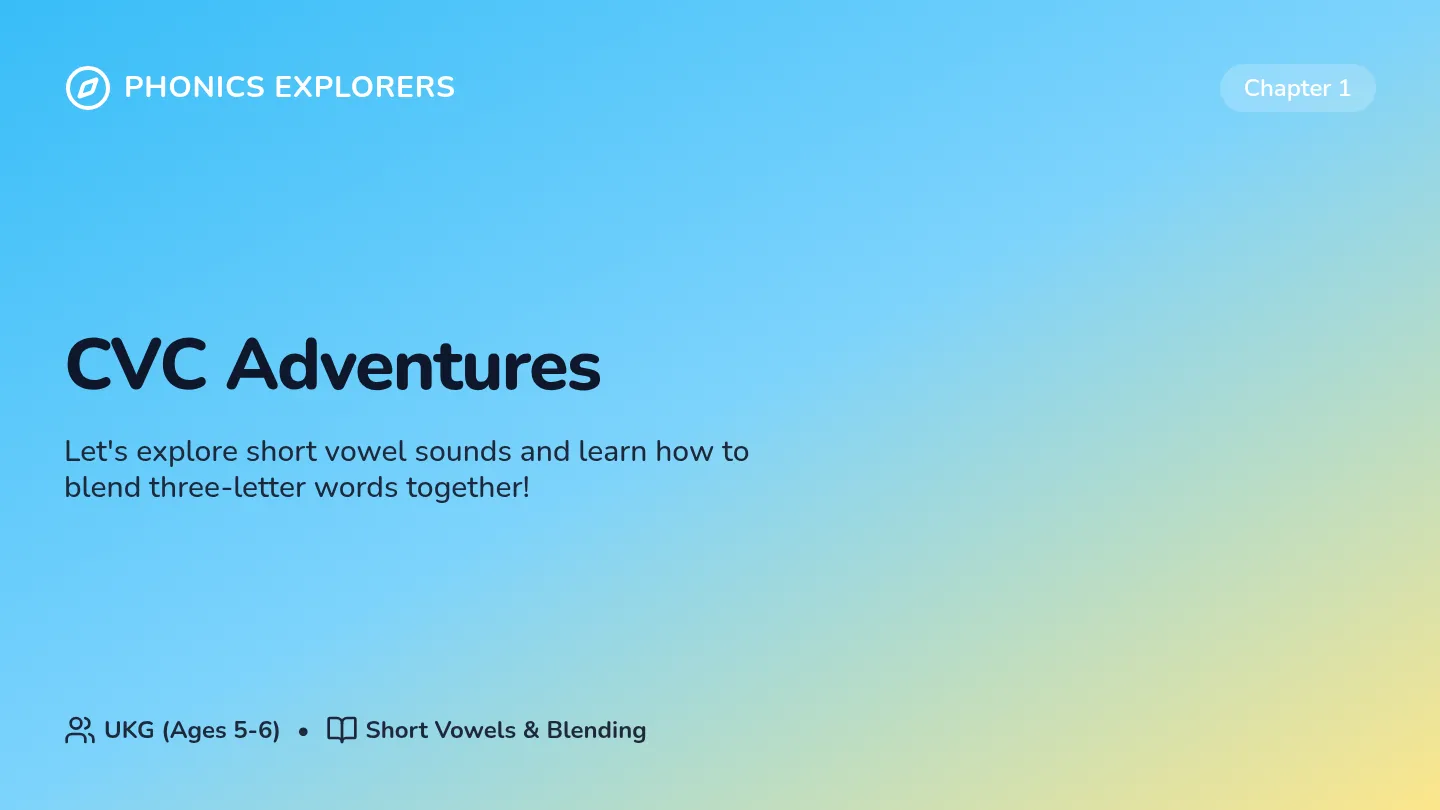
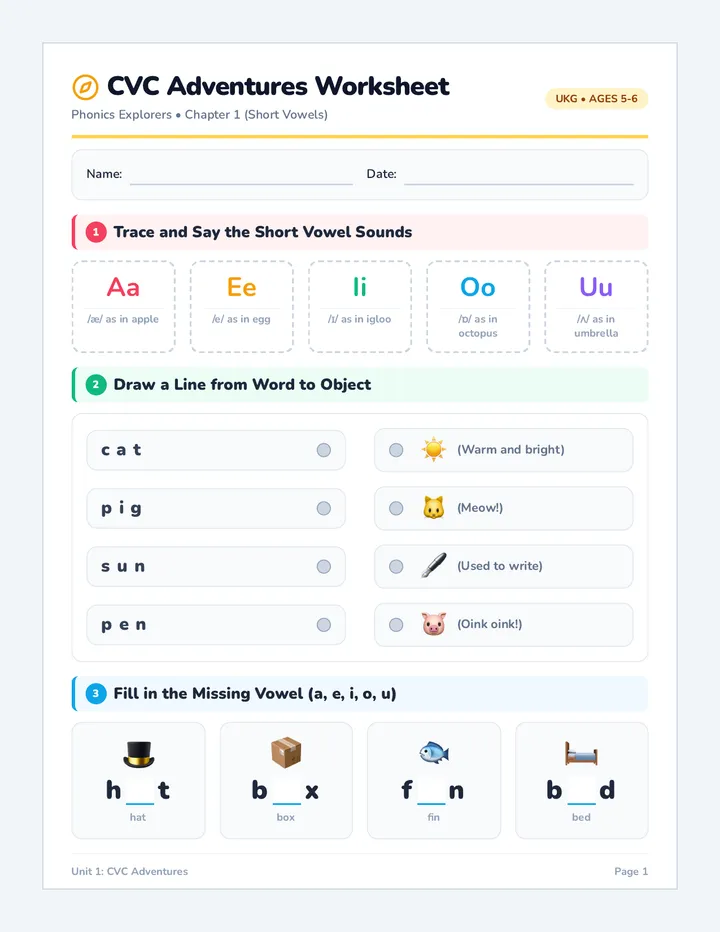
A comprehensive UKG phonics sequence for 5-6 year olds, guiding them from basic CVC blending to consonant blends, digraphs, and simple sentence reading.
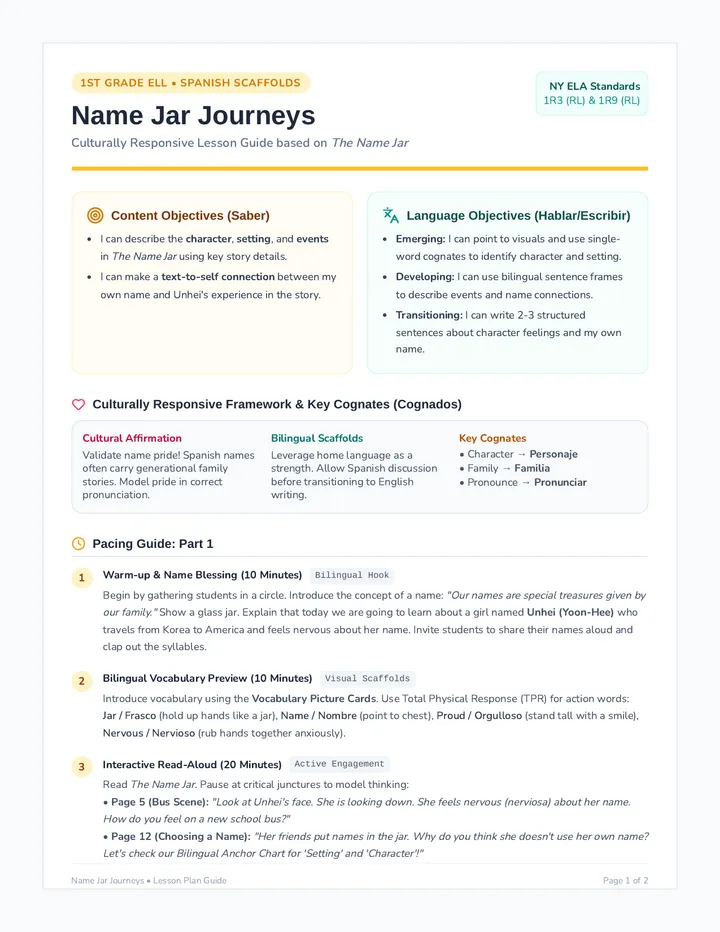
A culturally responsive English Language Arts lesson for first-grade Spanish-speaking ELL students based on 'The Name Jar' by Yangsook Choi. Students explore character, setting, and events, and make meaningful text-to-self connections through bilingual scaffolds, visual supports, and graduated response booklets.
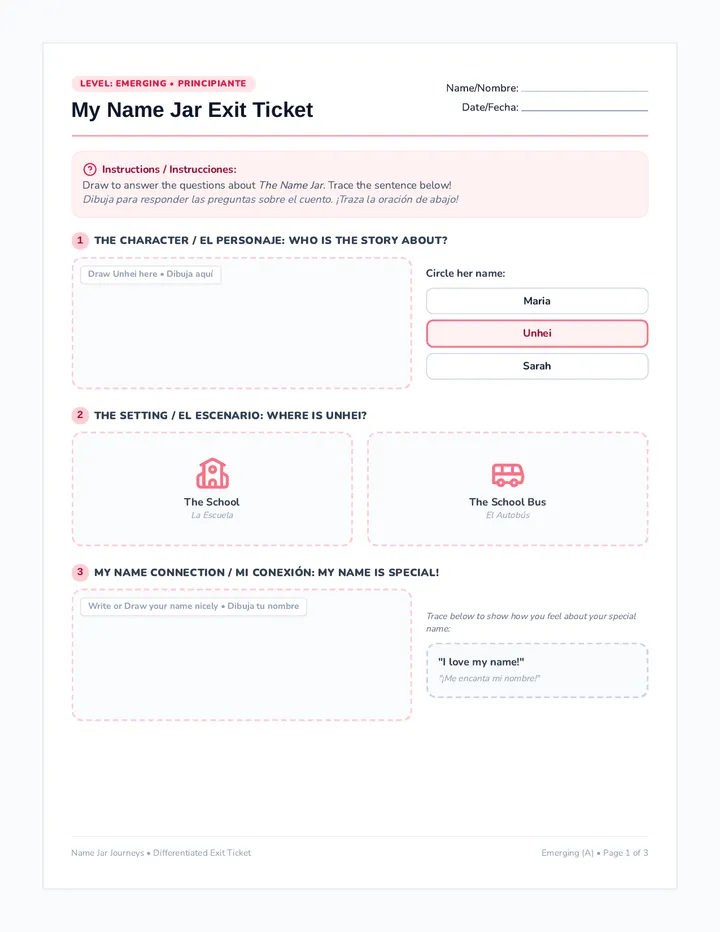
A 3-page printable student exit ticket document structured as guided response booklets, with page 1 for Emerging, page 2 for Developing, and page 3 for Transitioning Spanish-speaking ELL students.
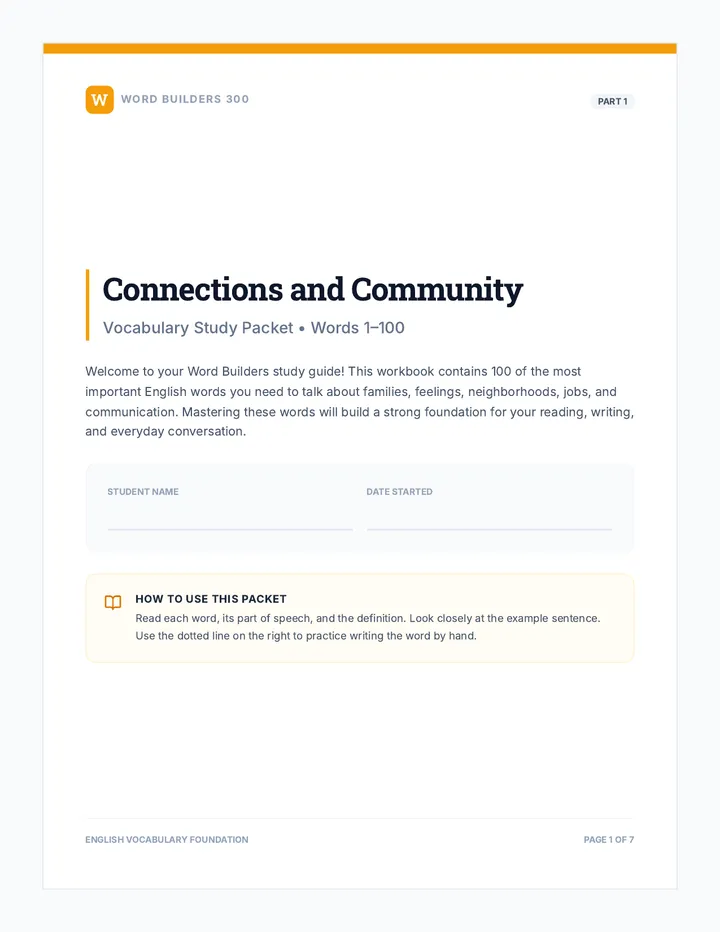
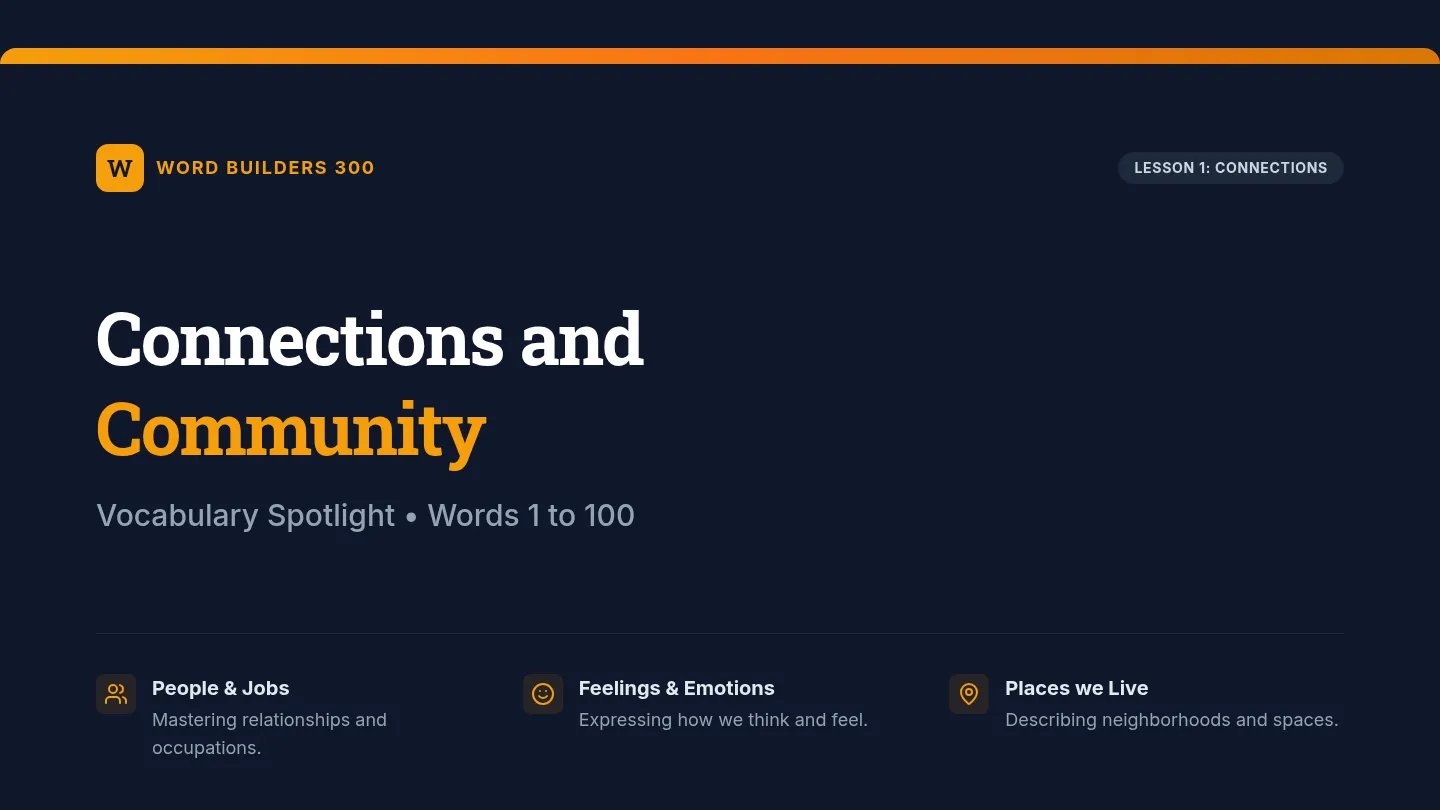
A comprehensive vocabulary mastery sequence designed to help English learners and early readers build a core foundation of 300 high-frequency words. Organized across three themed modules, each featuring a complete 100-word student study packet with definitions, contextual examples, and handwriting lines, paired with high-impact instructional presentation slides.
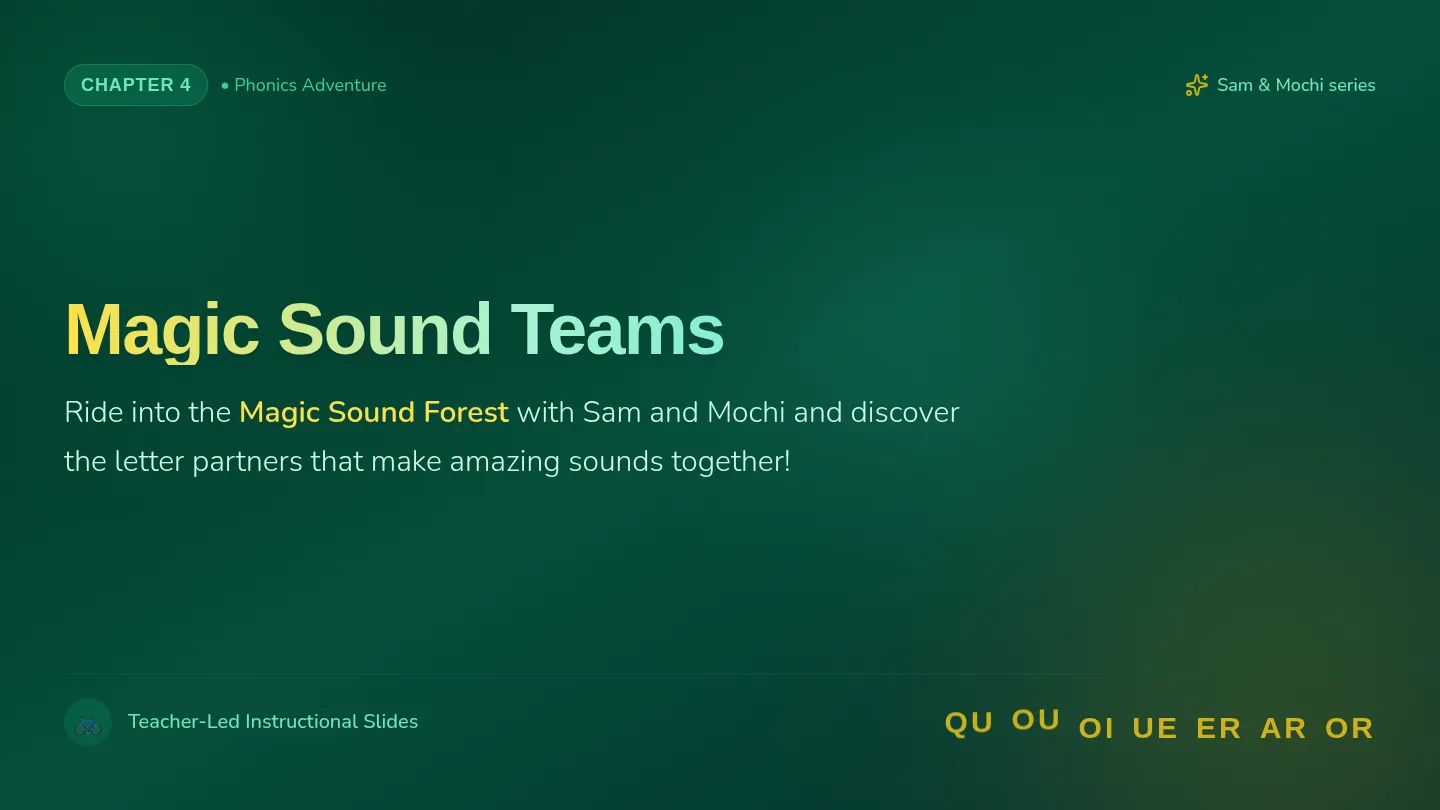
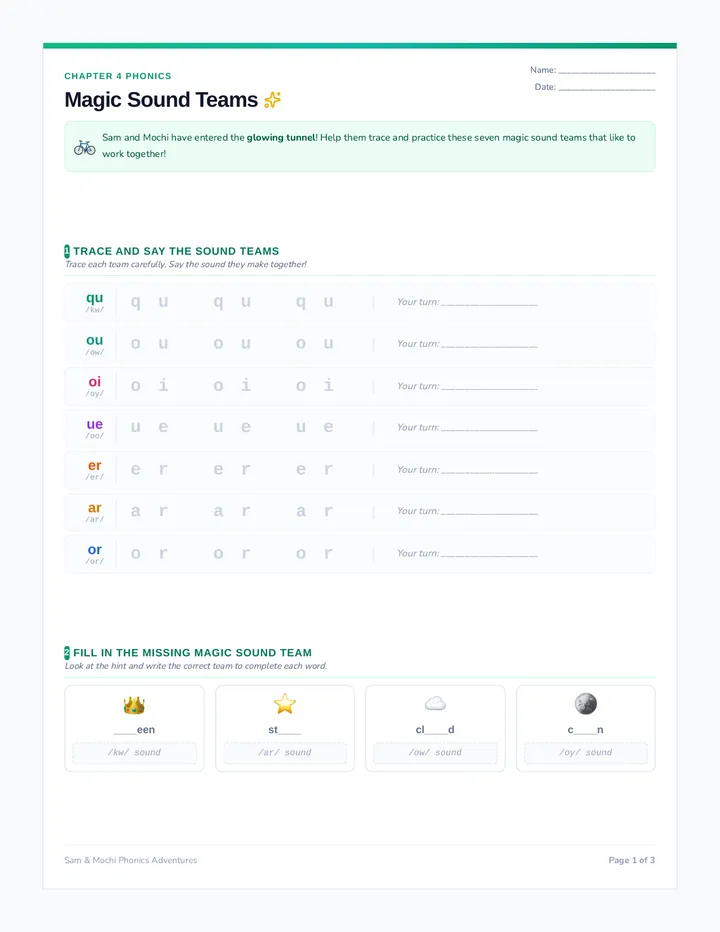
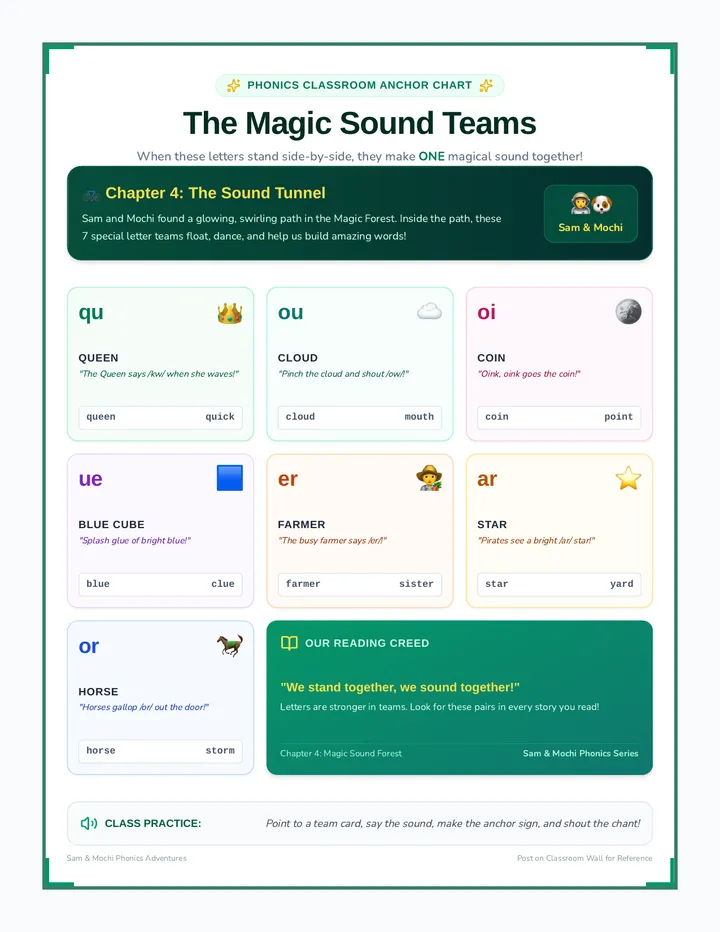
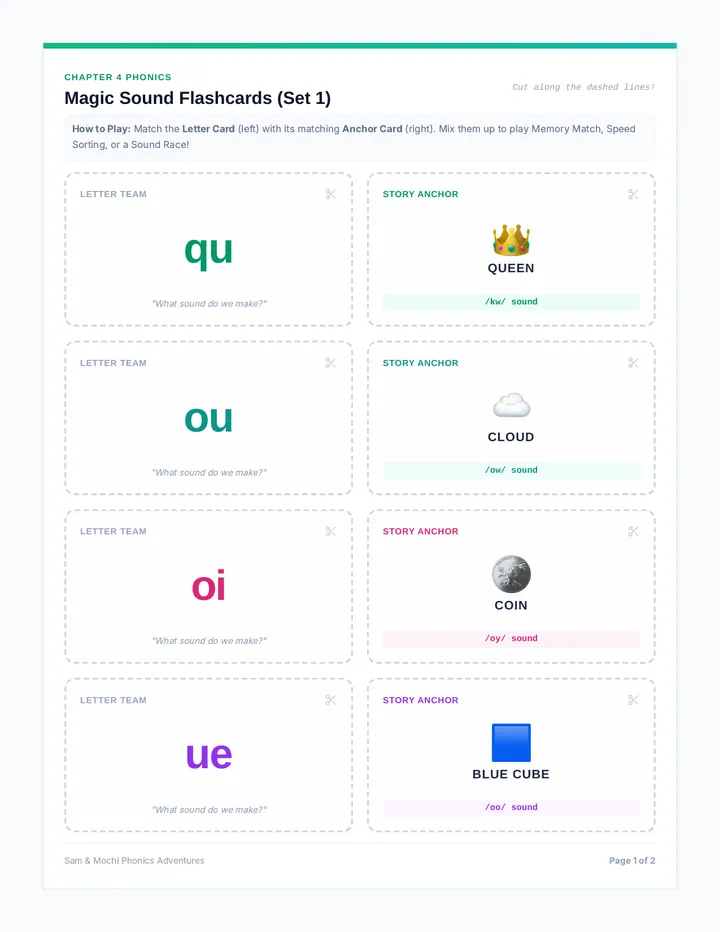
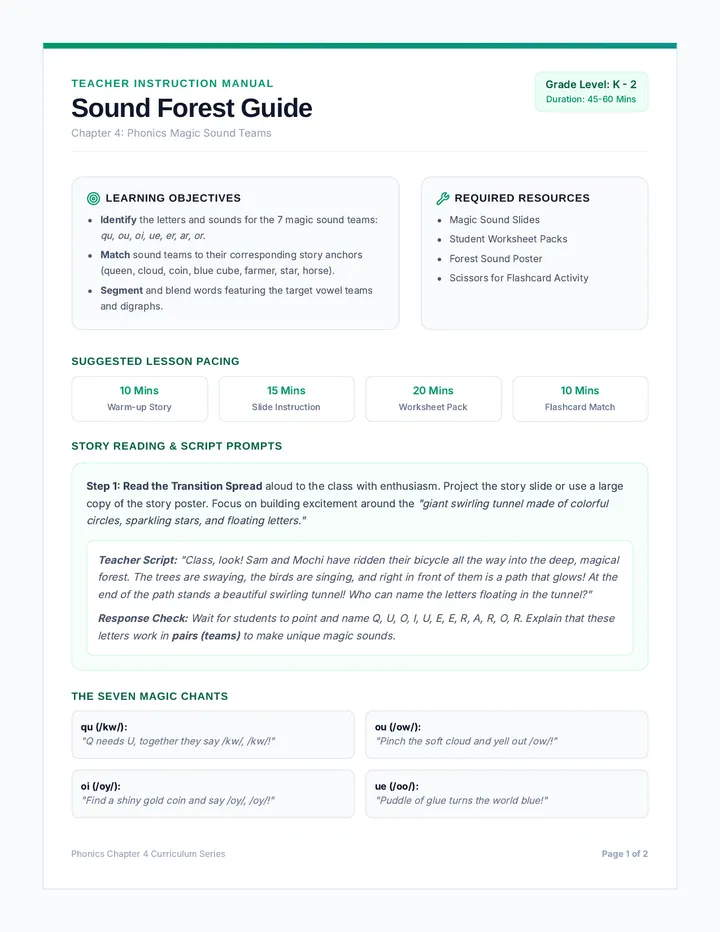
A comprehensive phonics lesson introducing seven magic sound teams (QU, OU, OI, UE, ER, AR, OR) through an engaging narrative with Sam and Mochi. Includes interactive teacher-led slides, a multi-page student activity worksheet, a printable story-based anchor chart, and phonics matching flashcards.
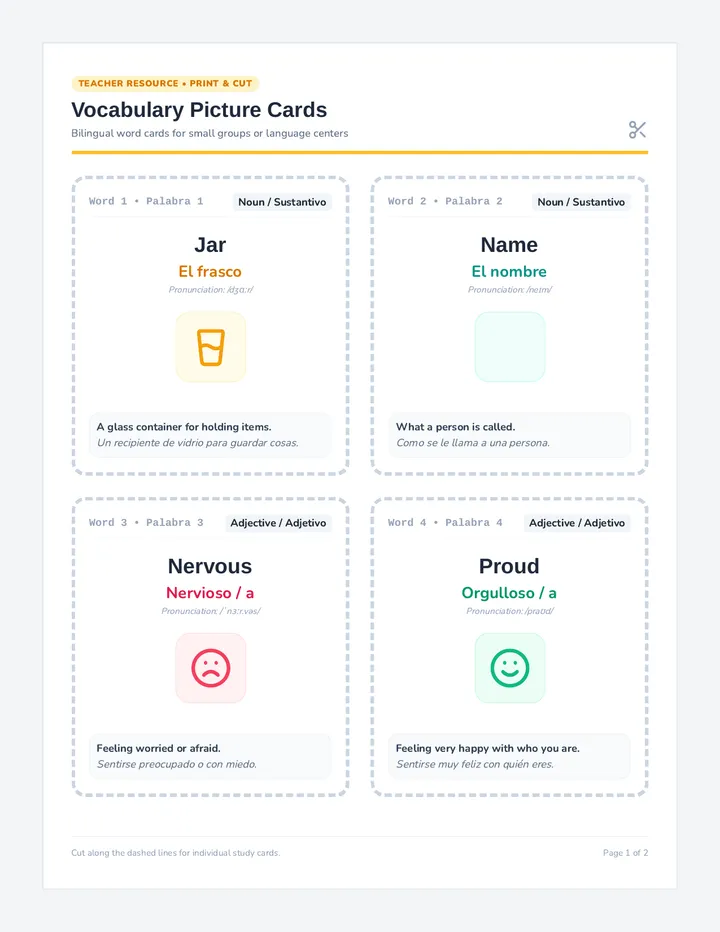
A printable set of 4 vocabulary cards with bilingual terms, illustrations, and pronunciation, plus 4 speaking/writing sentence frame cards differentiated for each ELL proficiency level.
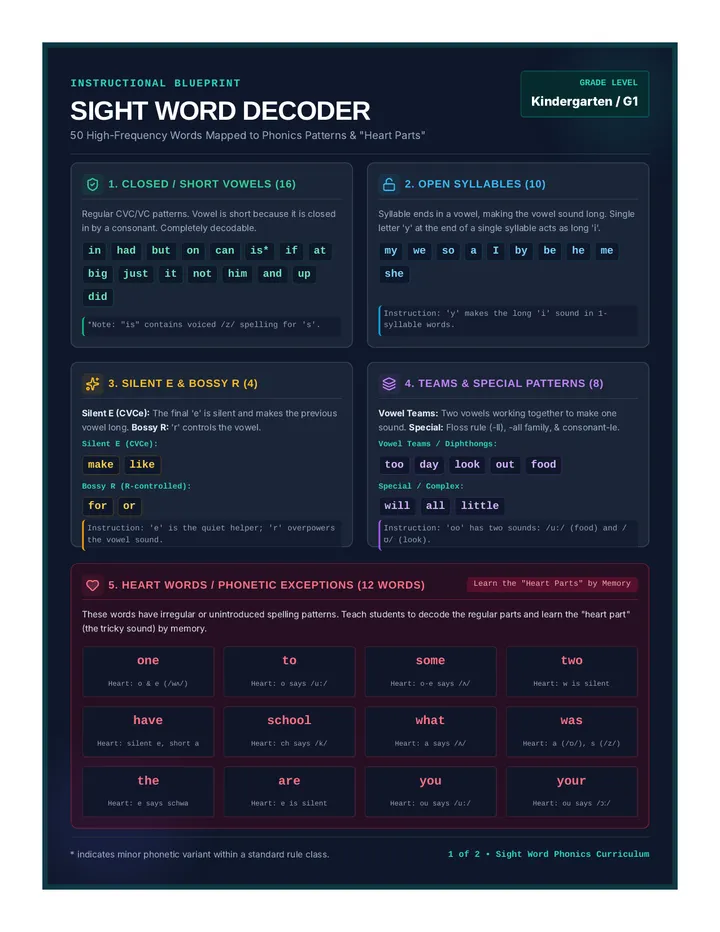
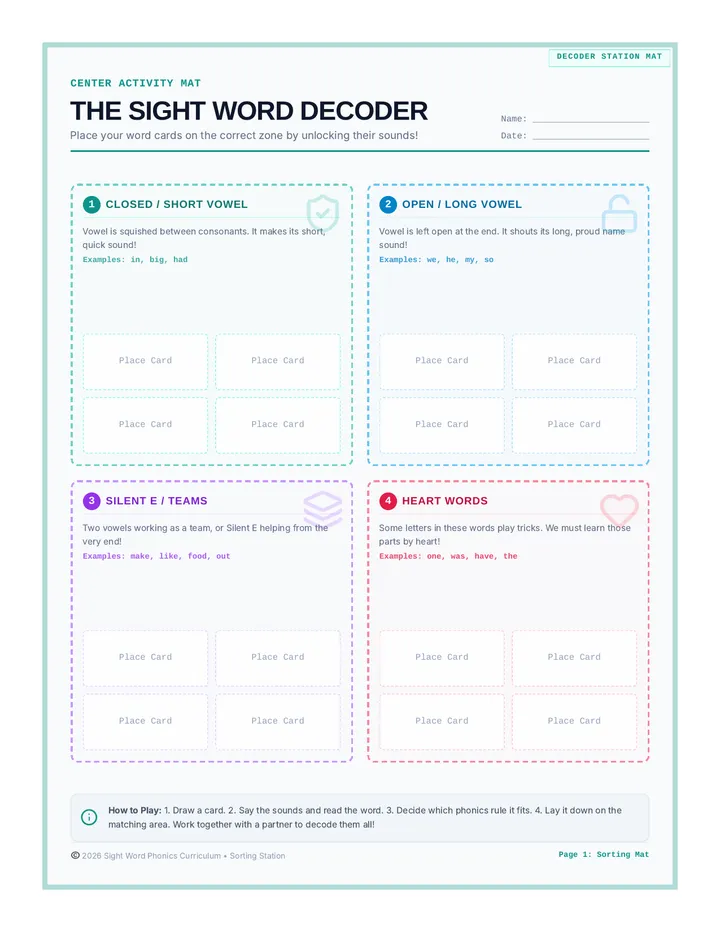
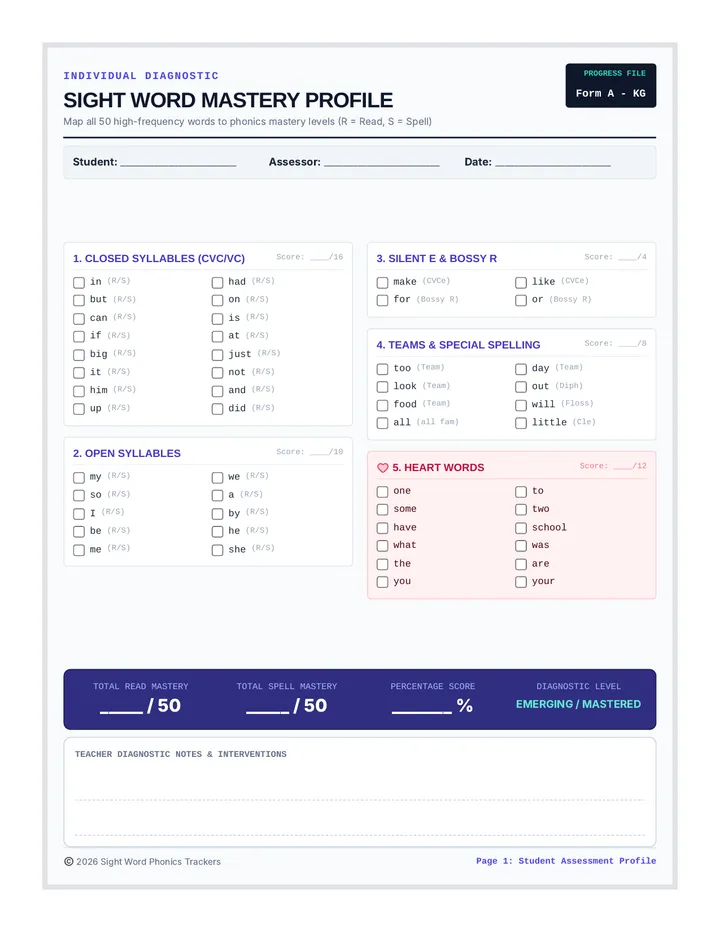
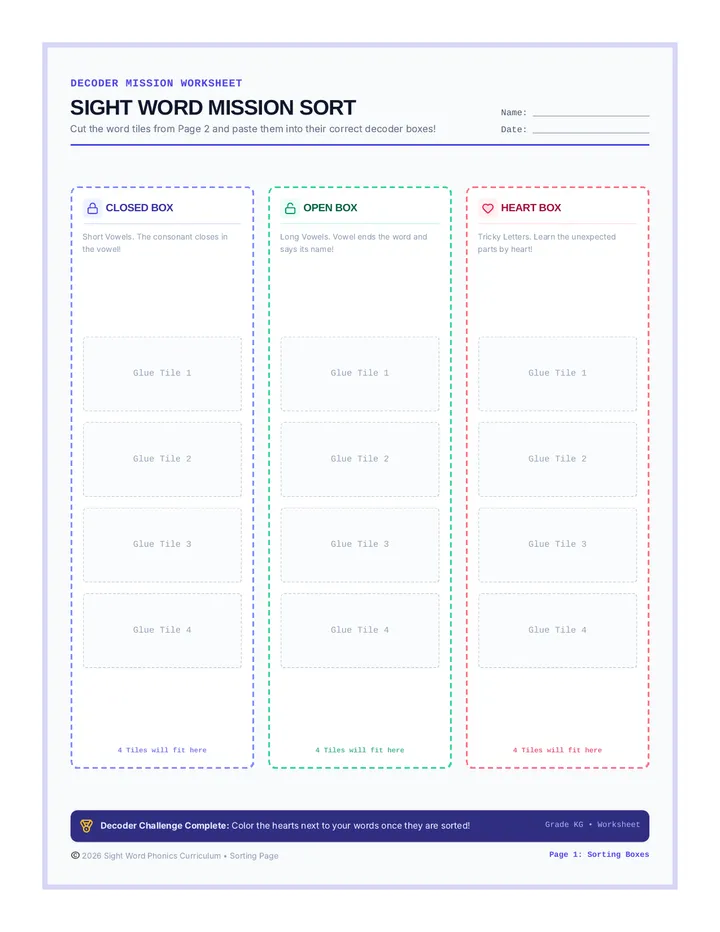
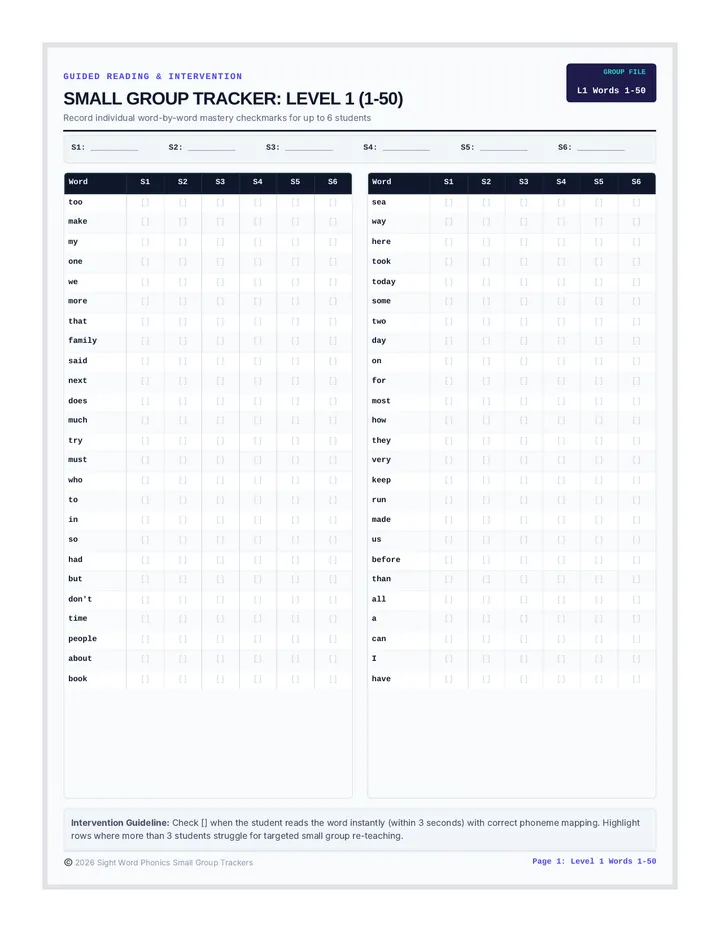
A 3-part comprehensive curriculum sequence mapping and teaching 150 high-frequency sight words phonetically. Includes three progressive mastery levels covering closed syllables, open syllables, silent E, vowel teams, r-controlled, and heart word decoding.
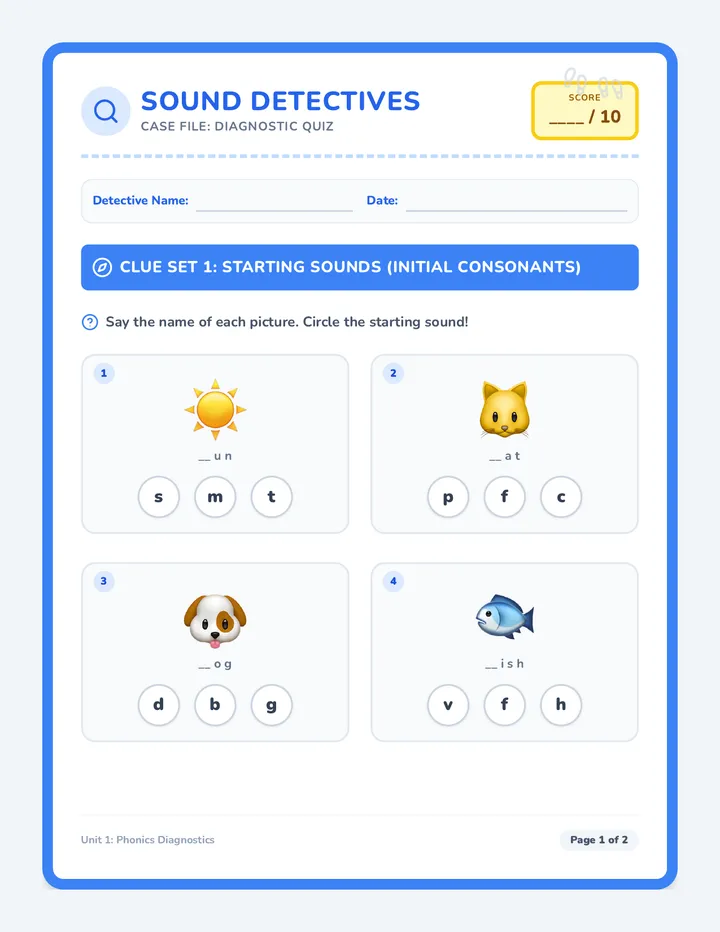
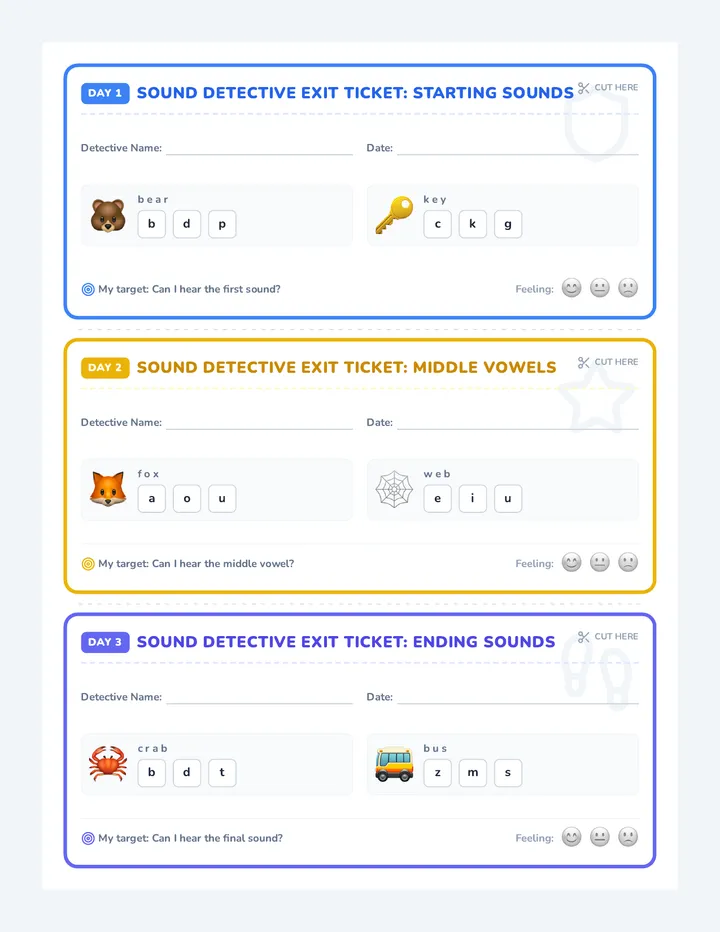
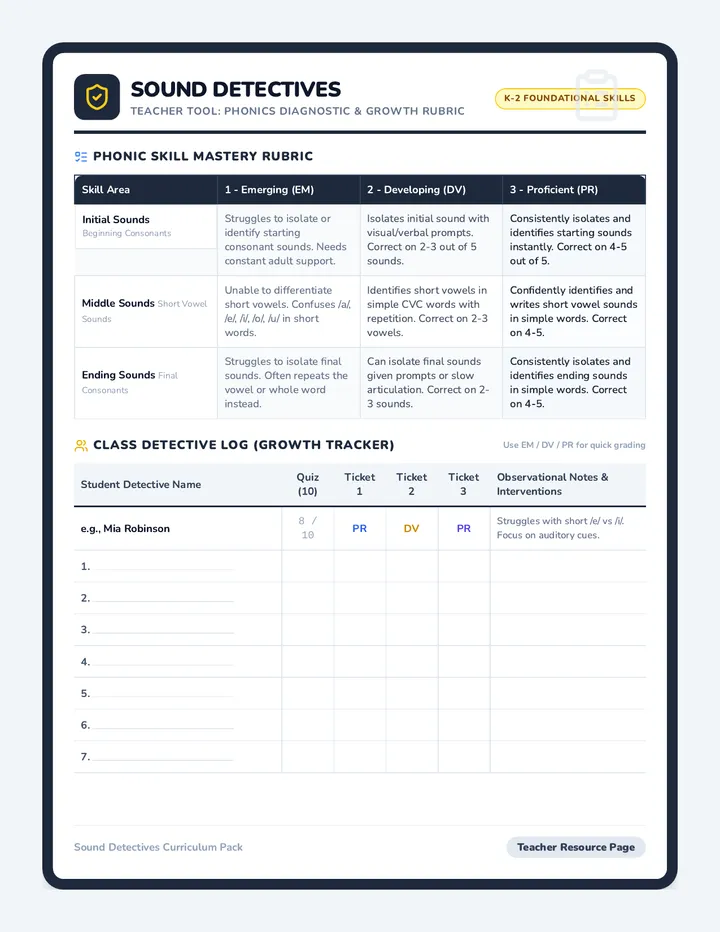
A phonics and phonemic awareness lesson focusing on identifying initial and final consonant sounds and short vowels. Designed for Early Elementary (K-2) with highly visual, engaging detective-themed assessment tools.
Projectable 5-slide presentation using rich picture prompts, visual story maps, and bilingual sentence stems to model character, setting, events, and text-to-self connections.
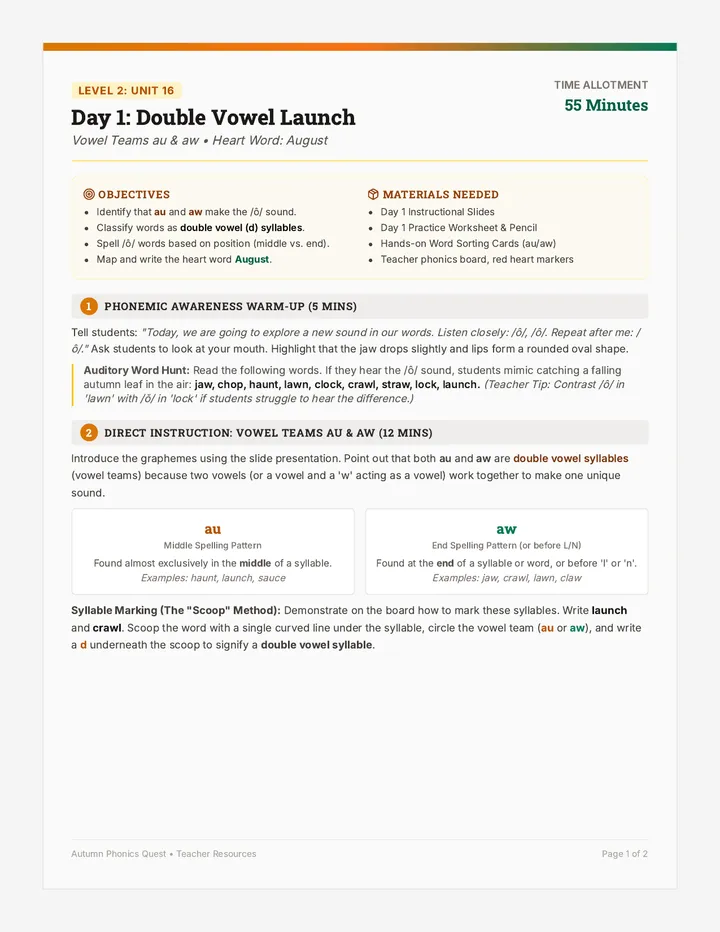
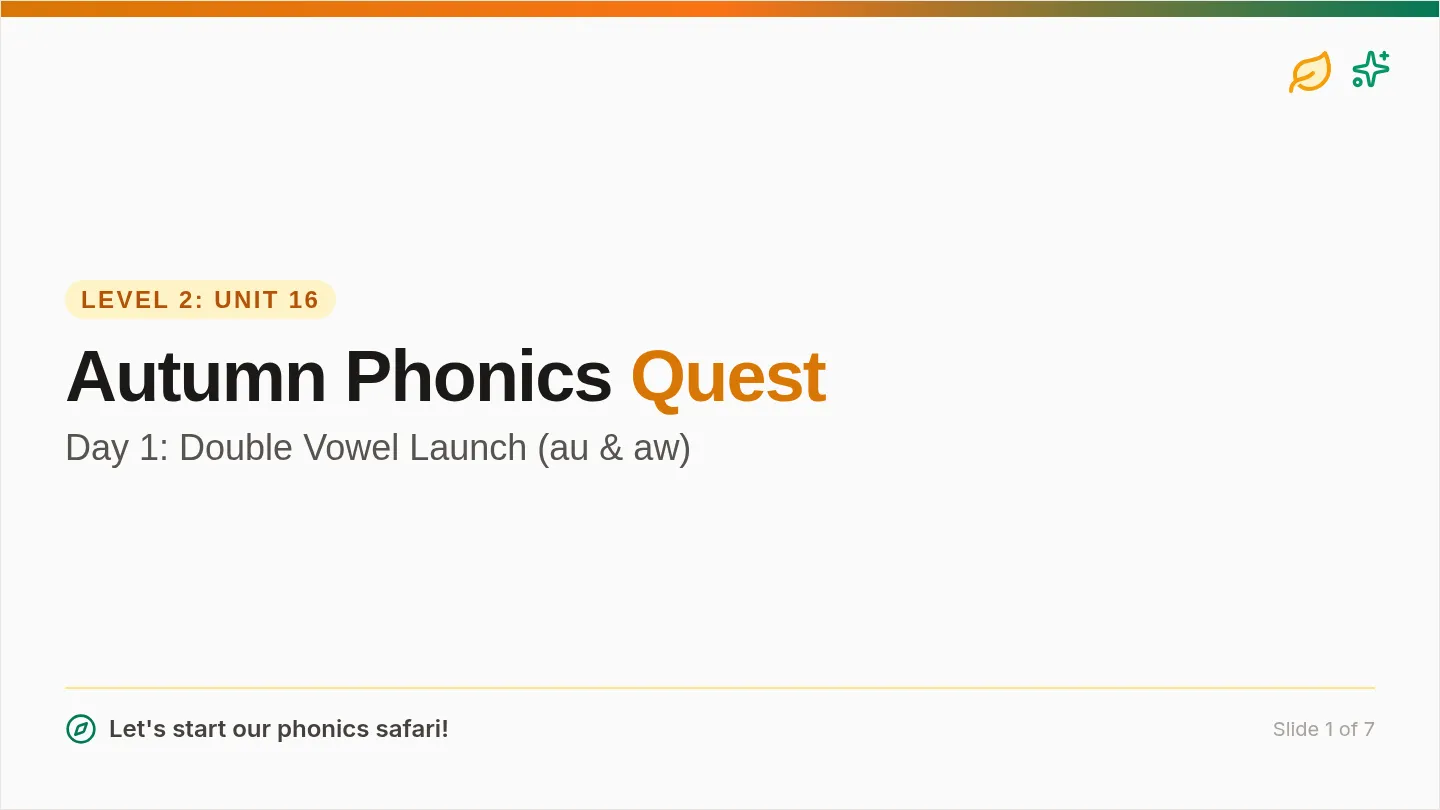
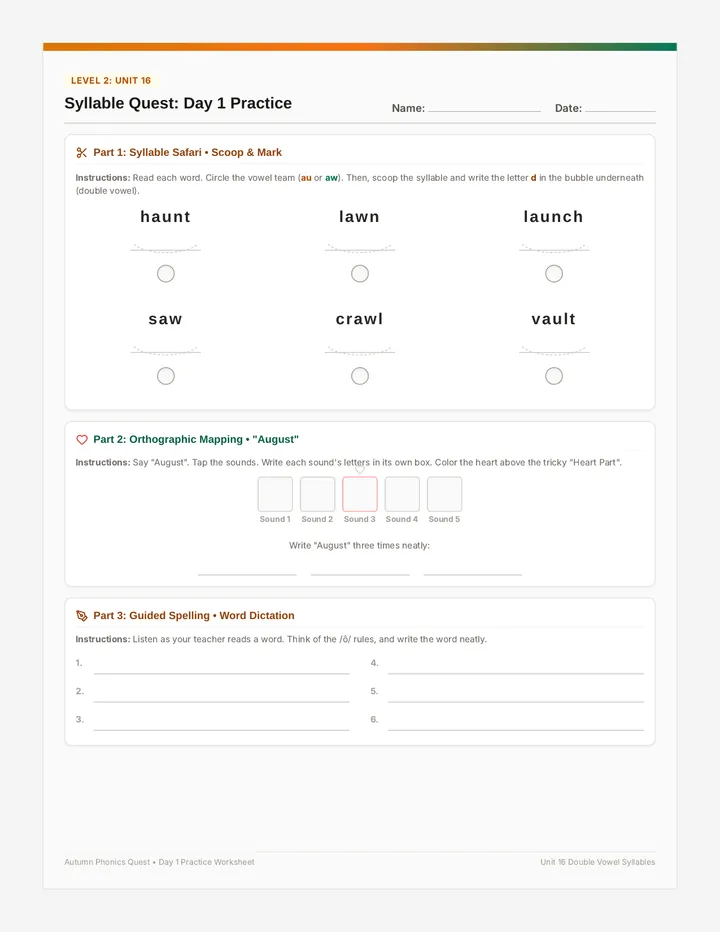
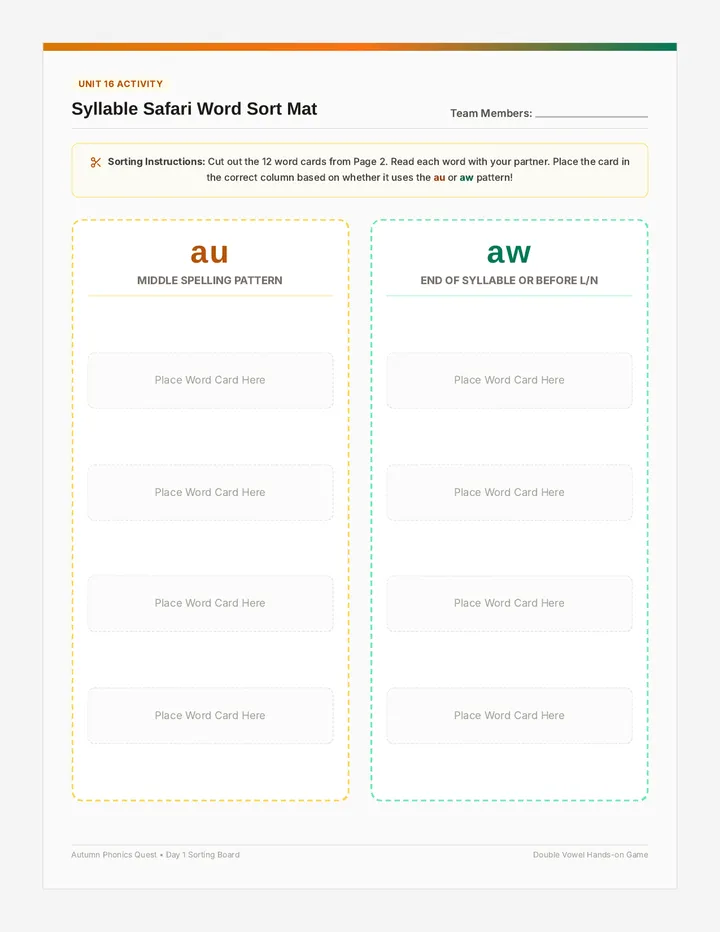
A comprehensive, two-day phonics sequence focusing on the double vowel syllable patterns au and aw, alongside orthographic mapping for the heart words August, laugh, and daughter.
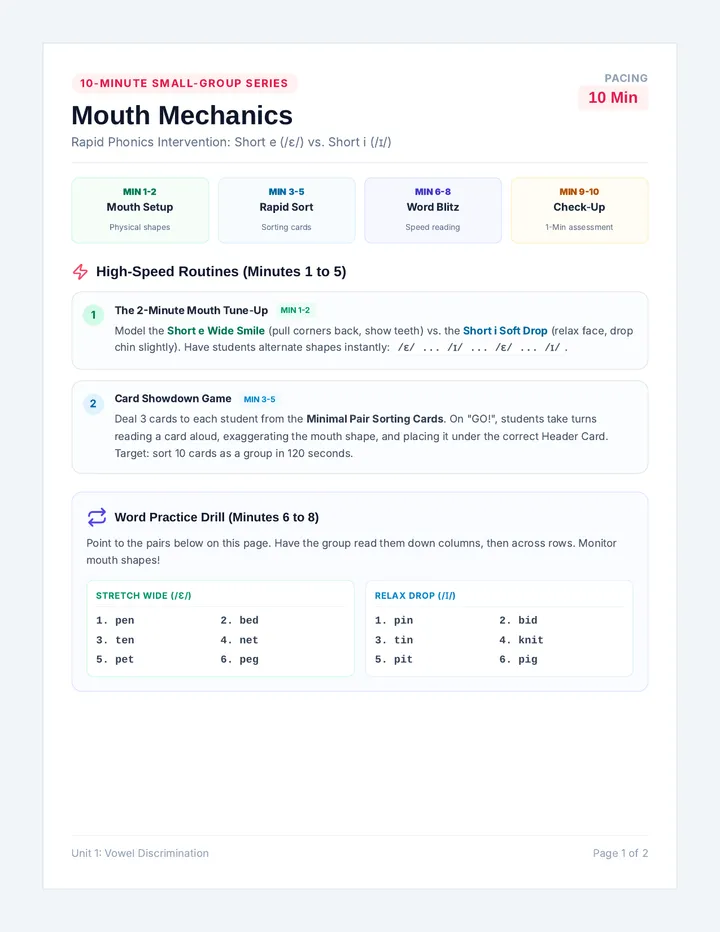
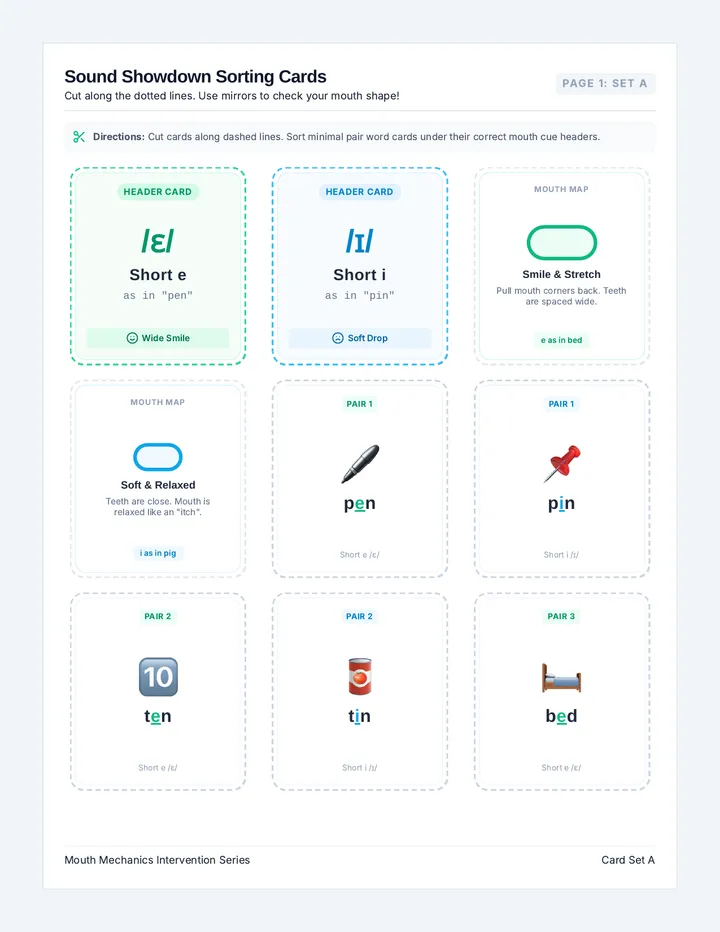
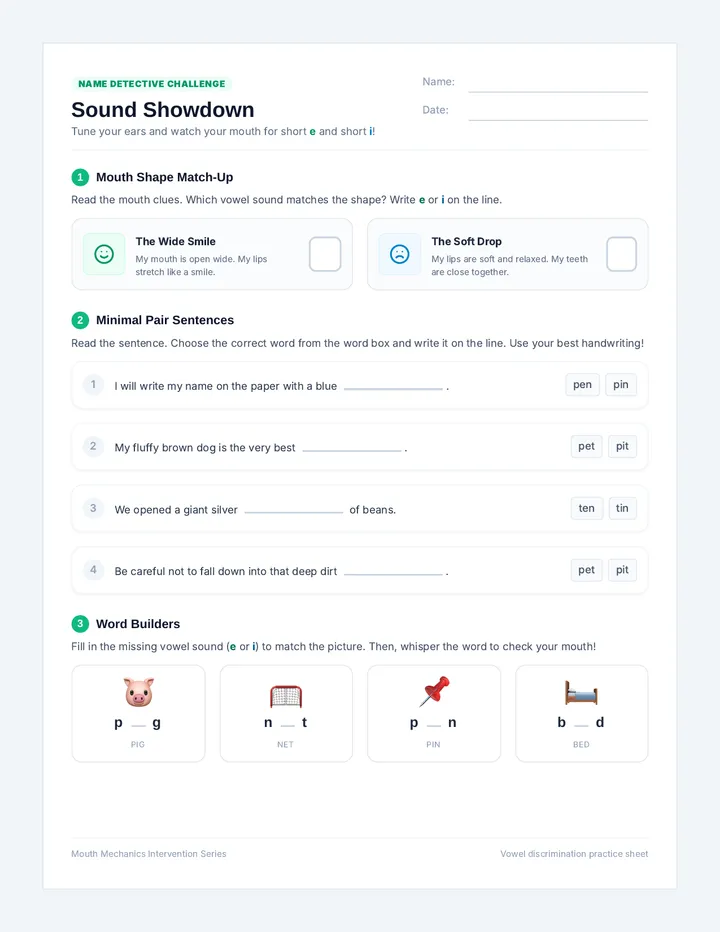
A high-impact small-group reading intervention targeting the common confusion between short e and short i. This lesson includes mouth-formation cues, interactive minimal pair sorting cards, and a targeted student practice sheet.
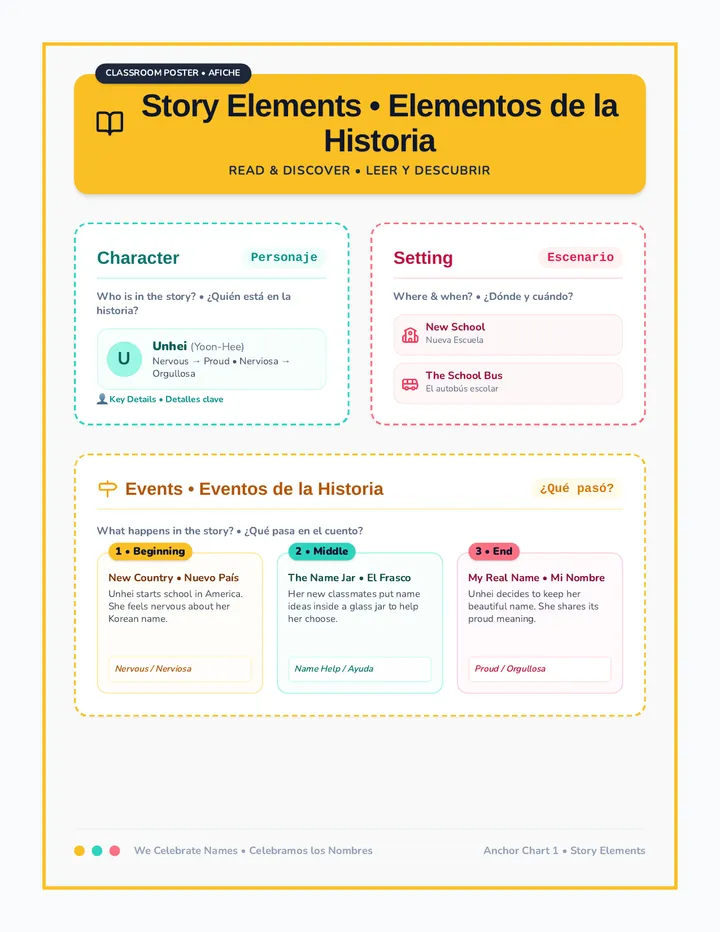
A set of 2 printable bilingual anchor charts (Story Elements & Text-to-Self Connections) designed as colorful, high-visual posters with English/Spanish labels and icons.