A five-day narrative writing sequence where students step into the role of Story Architects, using scaffolded blueprint planners to construct vivid characters, sensory settings, and balanced problem-solution plots.
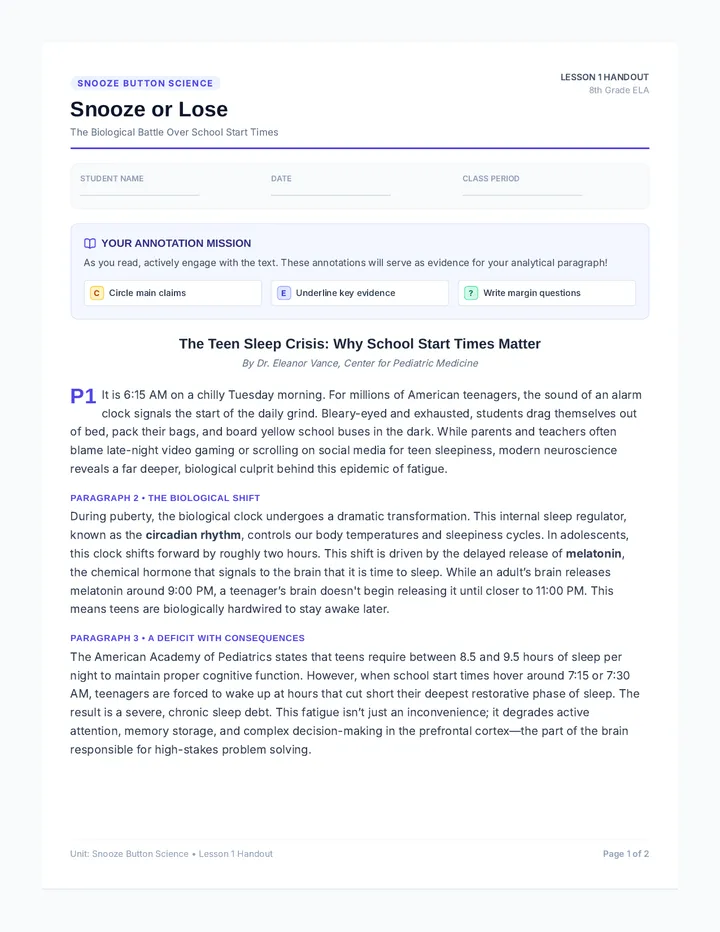
A two-lesson sequence for 8th-grade writing focusing on the science of teenage sleep patterns and school start times. Students read and annotate an evidence-rich article, learn the T.E.X.T. paragraph framework, and write an evidence-based response using structured rubric criteria and exemplars.
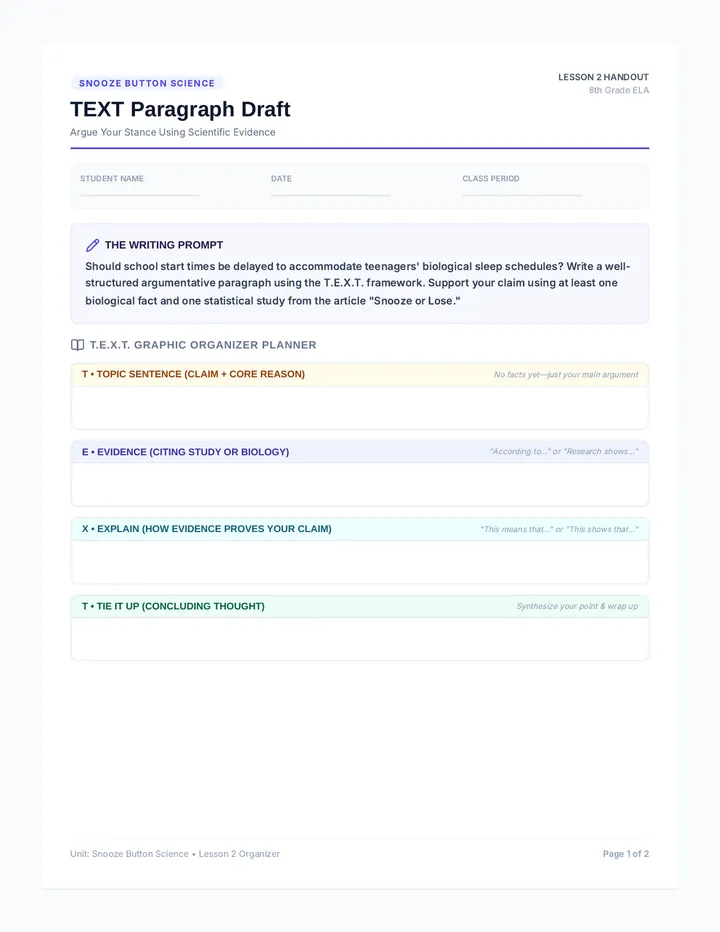
Students learn the T.E.X.T. analytical writing structure, analyze high-quality student exemplars, and draft an evidence-based paragraph response arguing whether school start times should be delayed.
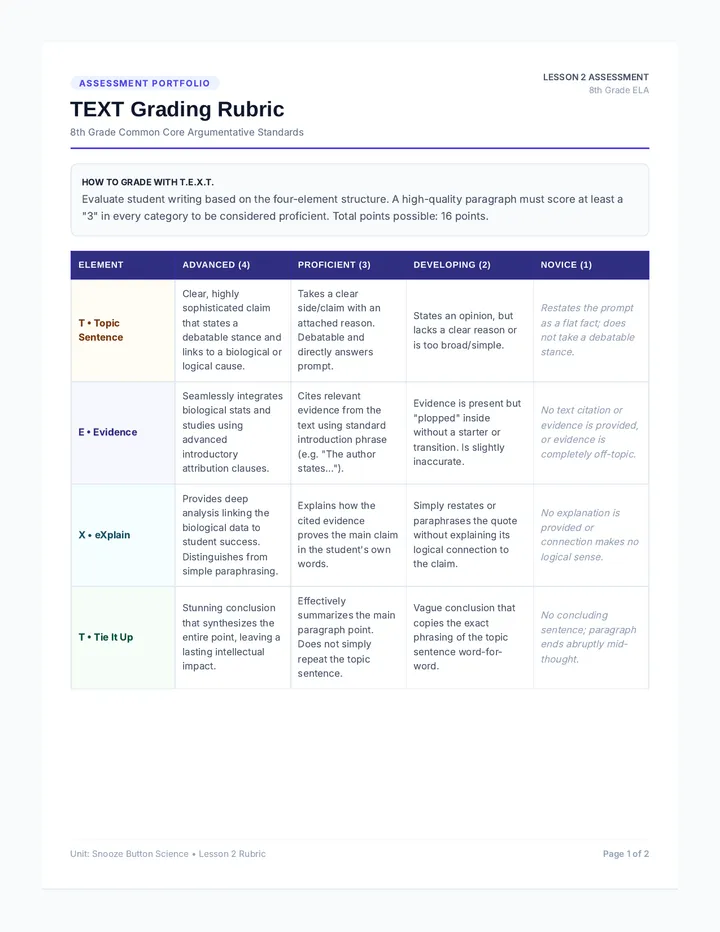
A grading rubric and student exemplar guide showcasing a detailed T.E.X.T. scoring matrix alongside annotated high-quality and weak student response models.
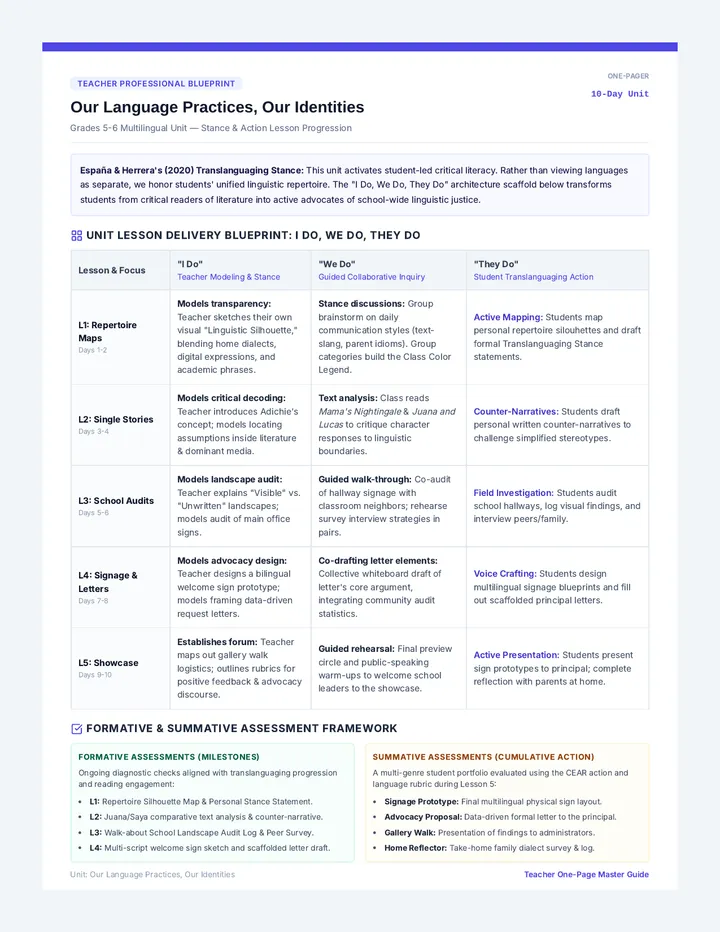
This 2-week unit for middle school (grades 5-6) multilingual learners explores linguistic identity, critiques single stories through diverse literature, audits school linguistic landscapes, and culminates in a student-led advocacy letter and multilingual signage campaign.
Students explore the biological reasons behind teenage sleep patterns, read an informational article, and practice active annotation strategies to extract high-quality evidence.
An 8th-grade student-facing paragraph writing worksheet containing the primary argumentative prompt, a T.E.X.T. graphic organizer planner, and a lined drafting area with self-checklist.
A three-day project sequence where students learn core plot elements through reading comprehension and apply their knowledge by designing, planning, and illustrating their own 3-panel comic strip.
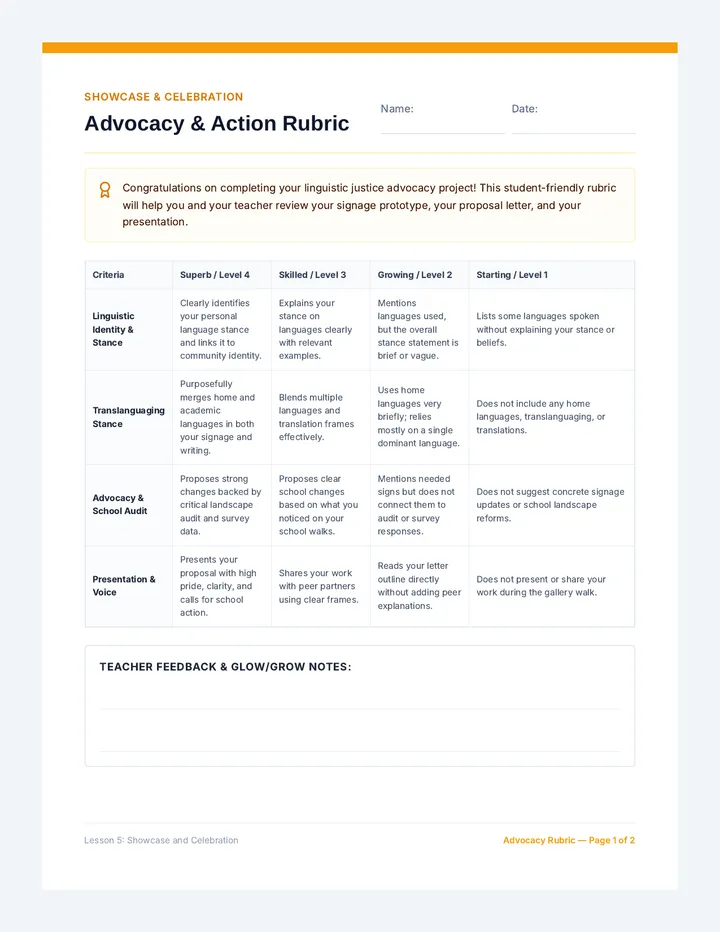
Students finalize their school advocacy letters and multilingual signs, presenting them to the principal or school board in a gallery walk, and reflect on their linguistic journeys with their families.
A high-impact slide presentation introducing 8th graders to teenage sleep biology, active annotation strategies, and the T.E.X.T. analytical writing paragraph framework.
An immersive personal narrative writing unit that empowers students to capture small moments from their lives and craft them into compelling stories. This unit focuses on drafting catchy hooks, utilizing rich sensory details, and revising through collaborative editing stations.
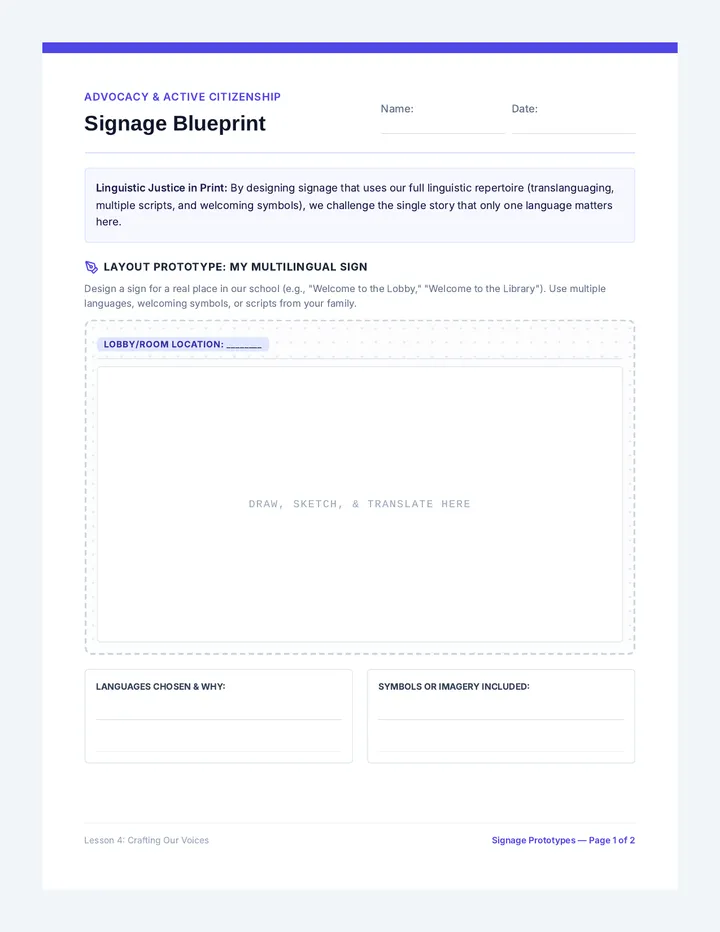
Students design multilingual signage prototypes and outline an advocacy proposal letter to the school principal, leveraging translanguaging and community survey findings to demand greater linguistic inclusion.
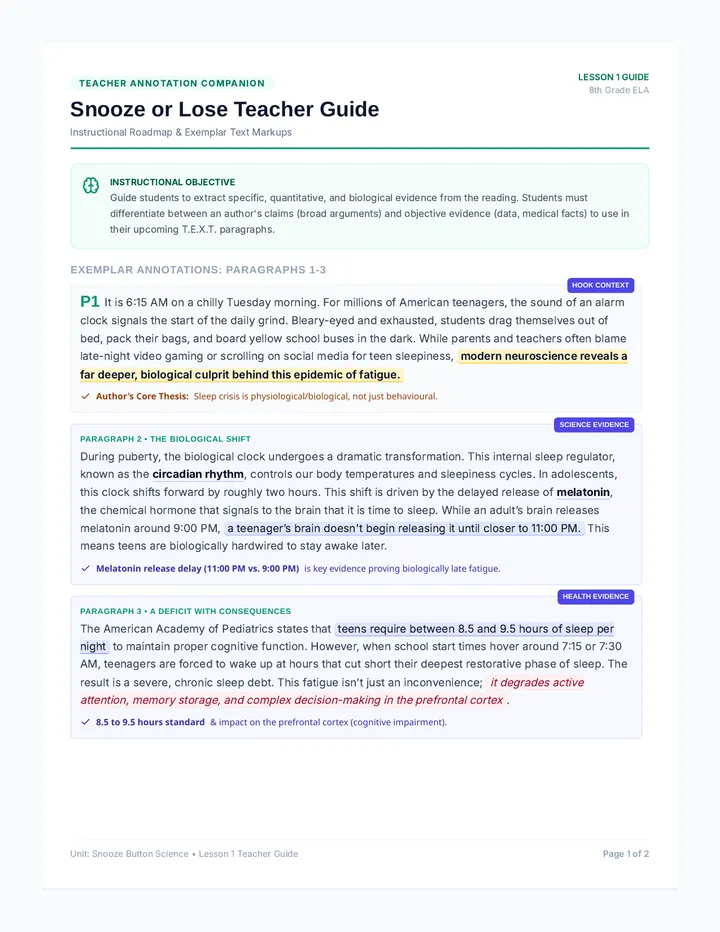
A teacher's reference guide showing expected text annotations, highlightable evidence points, key definitions, and active teaching notes to lead the Lesson 1 close reading.