A 5th-grade grammar unit focusing on the critical distinction between plurals, possessives, and contractions. Students transition from 'Word Surgeons' to 'Apostrophe Auditors' as they master the mechanics of punctuation in real-world contexts.
A deep dive into the elements of folklore for gifted 5th-grade students, focusing on complex character analysis, figurative language, and creative world-building. Students analyze original folktales and apply literary standards to uncover deep thematic meanings.
A mastery-based sequence designed to turn students into dictionary experts. Covering navigation basics, guide word logic, and the nuances of multiple definitions.
A 4-day small group intervention focused on using context clues (definition, example, synonym, and antonym) supported by visual illustrations to determine the meaning of unknown words. Students act as 'Word Detectives' to solve vocabulary mysteries.
A 9-day novel study for Number the Stars centered on 5th Grade ELAR TEKS, focusing on character development, plot analysis, and historical context through the lens of a Resistance Secret File.
A 3rd-grade vocabulary sequence focused on helping multilingual learners distinguish between synonyms, antonyms, and related-but-not-similar words (thematic associations).
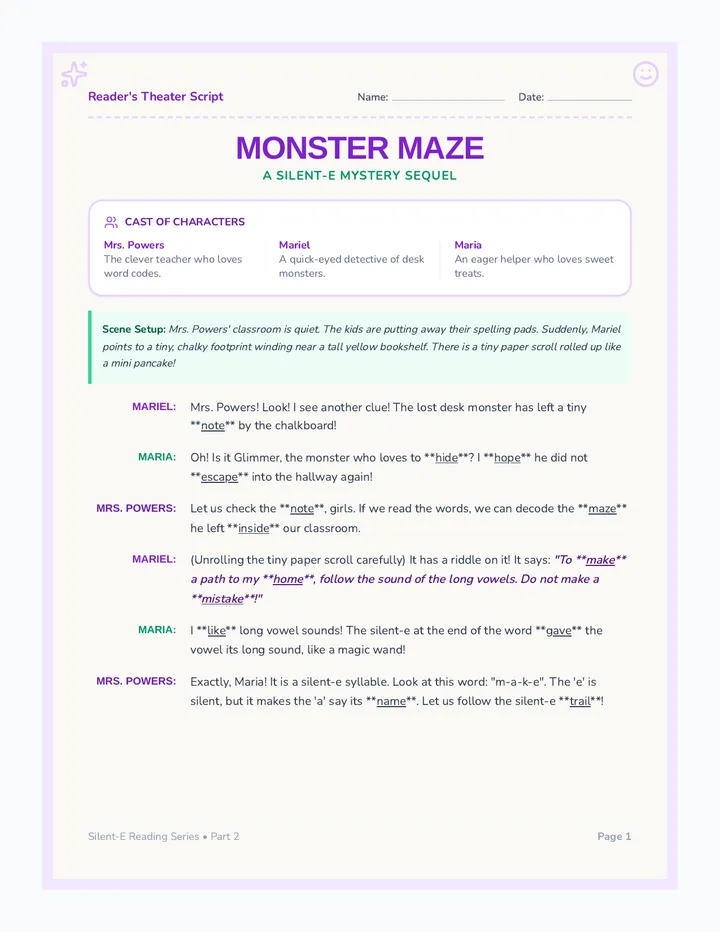
A unit focused on play structure, fluency, and social-emotional problem solving through mystery-themed scripts. Students analyze plot elements while practicing performance skills.
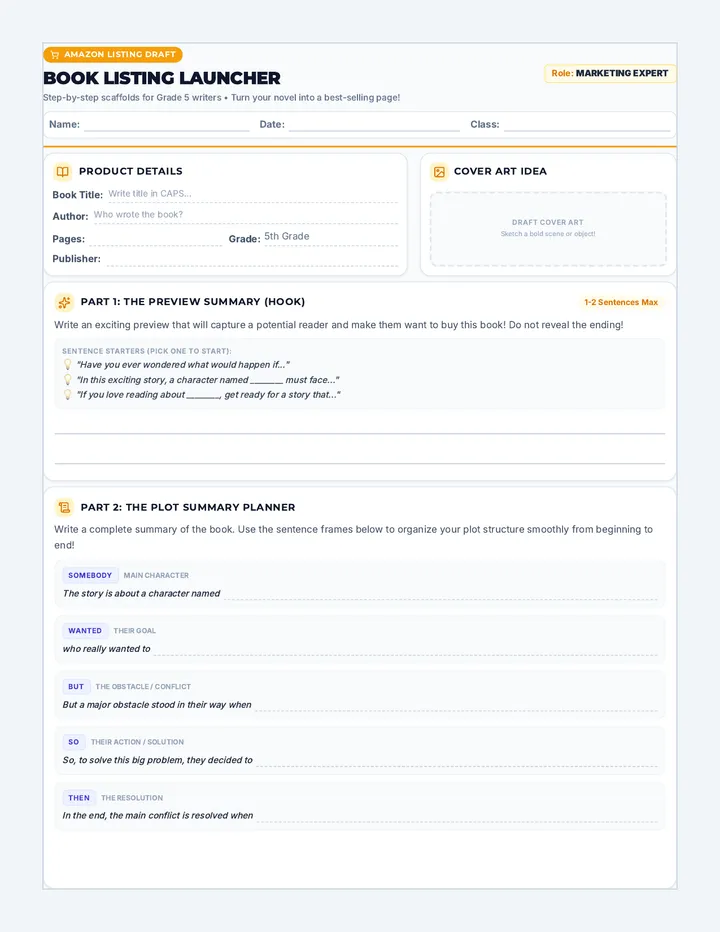
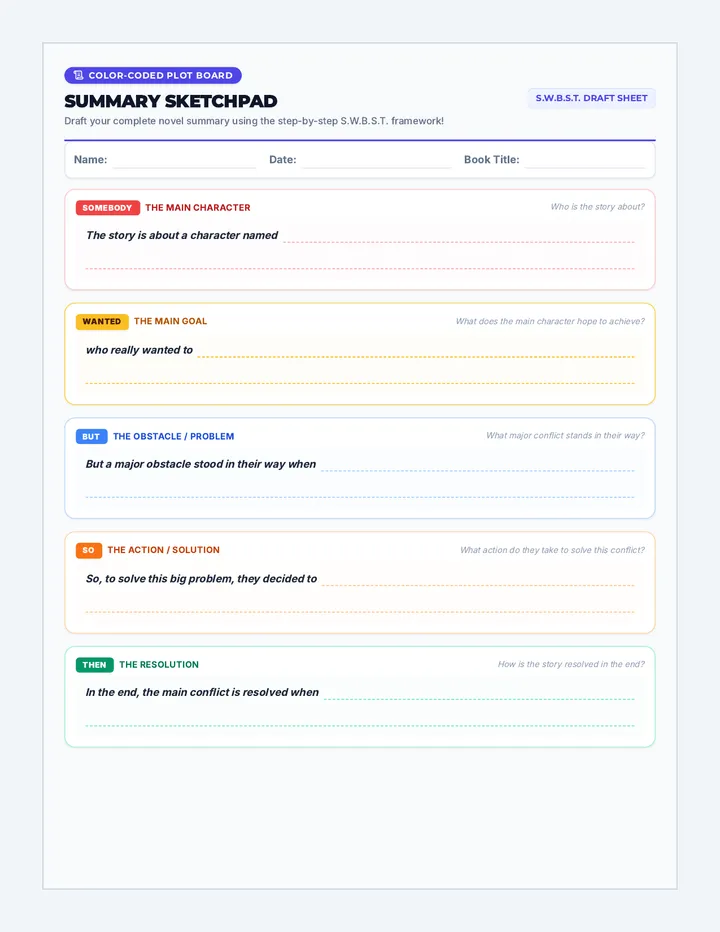
A unit on essential writing and grammar skills, focusing on sentence structure and cohesion through verbs and transition words.
A 9-day novel study for Number the Stars centered on 5th Grade ELAR TEKS, focusing on character relationships, plot analysis, and historical context with a heavy emphasis on making complex inferences through the lens of a Resistance Secret File.
A comprehensive 10-day unit for Pam Muñoz Ryan's 'Esperanza Rising', focusing on historical context, character growth, and bilingual vocabulary development for 5th grade students.
A unit focused on mastering pointer words (demonstratives) to help students describe location and quantity with precision in their writing and speech.
An intensive investigative unit on Franz Kafka's *The Metamorphosis* following the North Star/Uncommon Schools instructional model. The unit focuses on the thematic intersection of labor, identity, and dehumanization. Students analyze Gregor's alienation from his family and society through a structured rigorous framework including vocabulary acquisition, character identification, and thematic synthesis.
A series of integrated ELA lessons that use science and social studies content to build deep reading comprehension and thematic analysis skills in preparation for state testing.
A 5-day mastery unit for RI.8.2 using a Content Creator Studio theme. Students learn to determine central ideas, analyze their development, and write objective summaries through the lens of digital media production.
A collection of simple, low-prep partner games designed for 2nd-grade students to reinforce Indiana reading standards in sight words, main idea, and vocabulary. These games are tailored for use by instructional assistants during extension or small group time.
A two-part series for 5th graders focused on mastering idioms, synonyms, and context clues through a detective-themed lens, aligning with MAP strands and TEKS 5.3B.
A two-part series for 3rd graders focused on mastering the 'Multiple Genres' strand. Students learn to distinguish between literary and informational texts while applying core comprehension skills through paired passages.
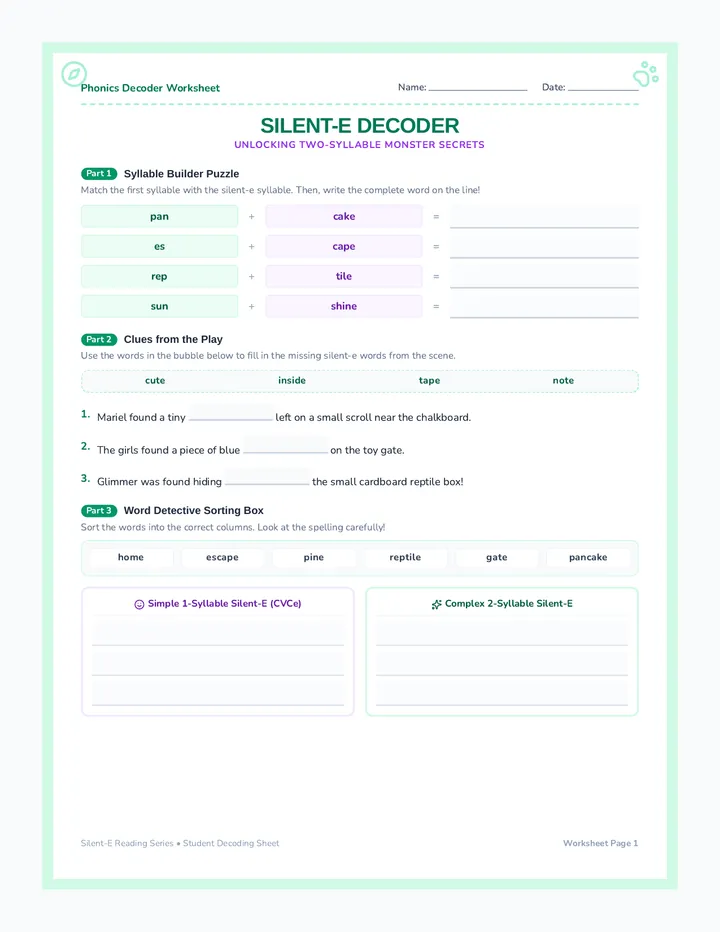
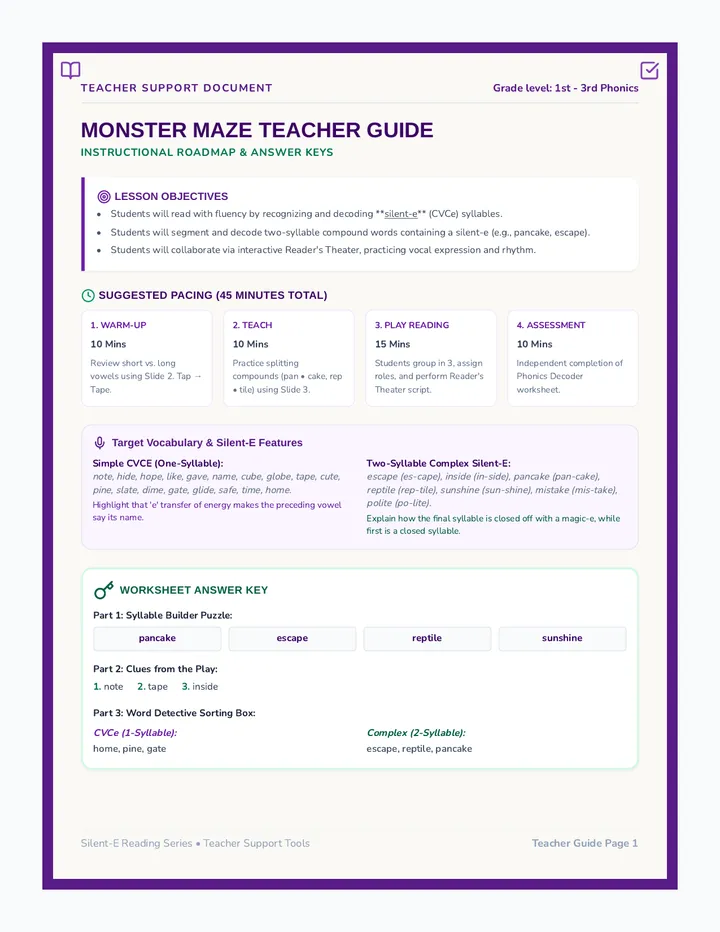
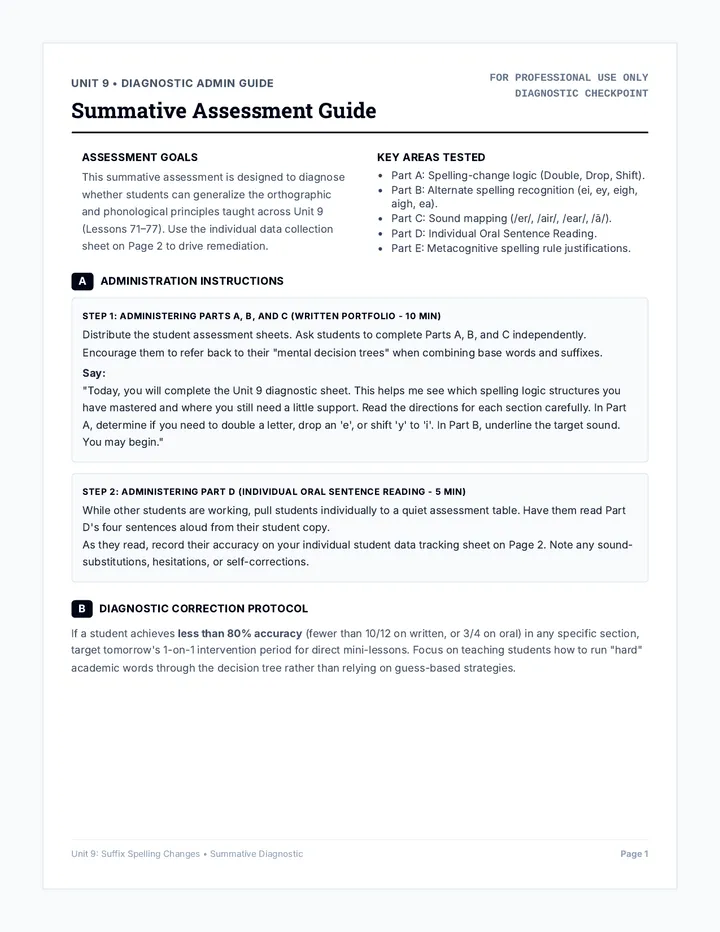
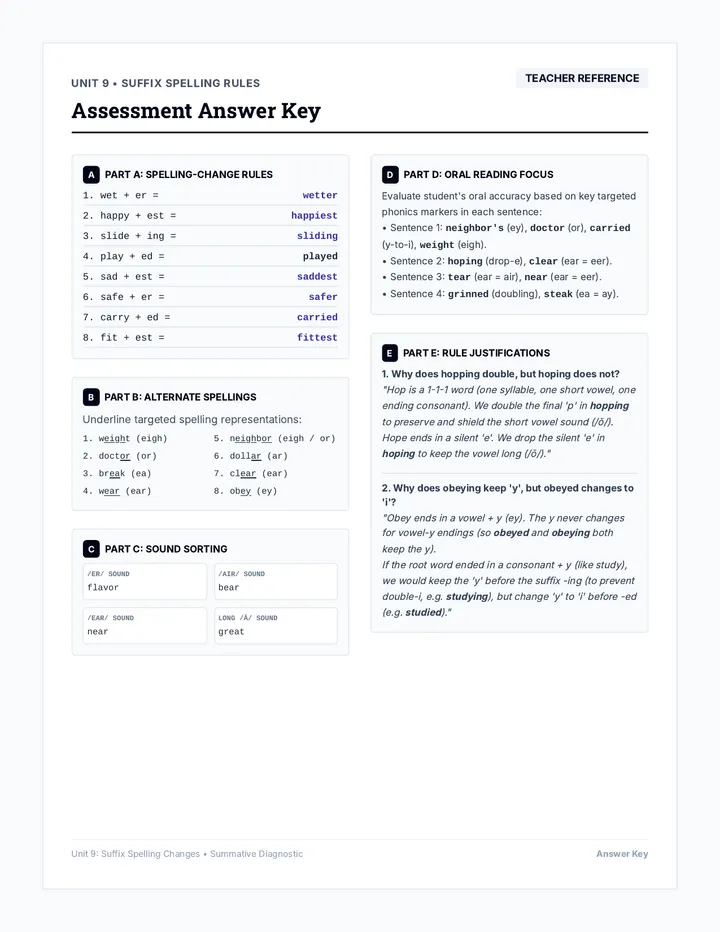
A foundational phonics unit designed for early readers to master consonant-vowel-consonant patterns. The unit incorporates bilingual support to bridge English literacy with Spanish language foundations.
A comprehensive multi-grade level toolkit for reading intervention teachers to track and monitor student reading fluency benchmarks throughout the school year.
A comprehensive writing program for grades 3-12 focused on sentence and paragraph composition across six different genres, culminating in exam preparation and final assessments. The curriculum balances grammar foundations with creative and formal writing structures.
A collection of thematic reading fluency worksheets designed to improve student reading speed, accuracy, and comprehension through repeated readings and partner retelling.
A collection of five fractured fairy tale reader's theater scripts designed for groups of five students, focusing on fluency, expression, and creative retelling.
A two-part exploration of Chapters 19 and 20 of 'Because of Winn-Dixie', focusing on the emotional depth of Littmus Lozenges through sequencing and sensory analysis.
A two-day extension unit for 5th grade students focused on mastering the characteristics of literary fiction and informational non-fiction, aligned to MAP RIT 211-220 and TEKS. Students analyze story elements in fiction and text structures/features in non-fiction, with a heavy emphasis on citing text evidence to support inferences.
A two-day extension sequence for 5th grade students focused on advanced reading analysis skills, including author's perspective, rhetorical word choice, and the impact of text and graphic features. Aligning with MAP and TEKS standards, students use detective-themed tools to investigate narrative, persuasive, and informational texts.
A unit exploring environmental responsibility and school-based sustainability efforts through reading, sequencing, and critical thinking.
A comprehensive unit focusing on essential literature skills: character analysis, making inferences with text evidence, and identifying themes and summaries. Students act as literary detectives to uncover deeper meanings in texts.
A 3-day intensive reteach sequence for 5th grade students focused on Author's Craft, Point of View, and Text Structure, aligned to RIT 191-200 and TEKS standards. Students act as 'Craft Detectives' to investigate how authors use language and structure to convey meaning.
A series of targeted small-group lessons focused on identifying author's purpose using STAAR-style questions for 3rd-grade students. Includes materials for three approaching-level groups and one higher-level group across fiction, non-fiction, and persuasive texts.
A multi-level series of homework packets centered on space exploration, adapted for Kindergarten, 2nd Grade, and 4th Grade students. Each packet includes a grade-appropriate reading passage and three nightly assignments focusing on comprehension, vocabulary, and structural analysis.
A comprehensive unit focusing on vocabulary acquisition and word relationships (L.4 and L.5). Students act as 'Lexicon Engineers' to decode meanings, analyze affixes, and master figurative language through a high-tech laboratory lens.
A week-long exploration of literary elements using fables, myths, and realistic fiction. Students act as 'Story Architects' to deconstruct plot, character, theme, and setting.
A sequence designed for WIDA Levels 1-2 (Entering/Emerging) focused on the Language of Language Arts. Students learn to identify and describe characters, settings, and story sequences using high-visual support and scaffolded sentence frames.
A 4-week writing unit where students create their own 'Wimpy Kid' style diary, exploring narrative, expository, argumentative, and persuasive writing alongside specific figurative language techniques.
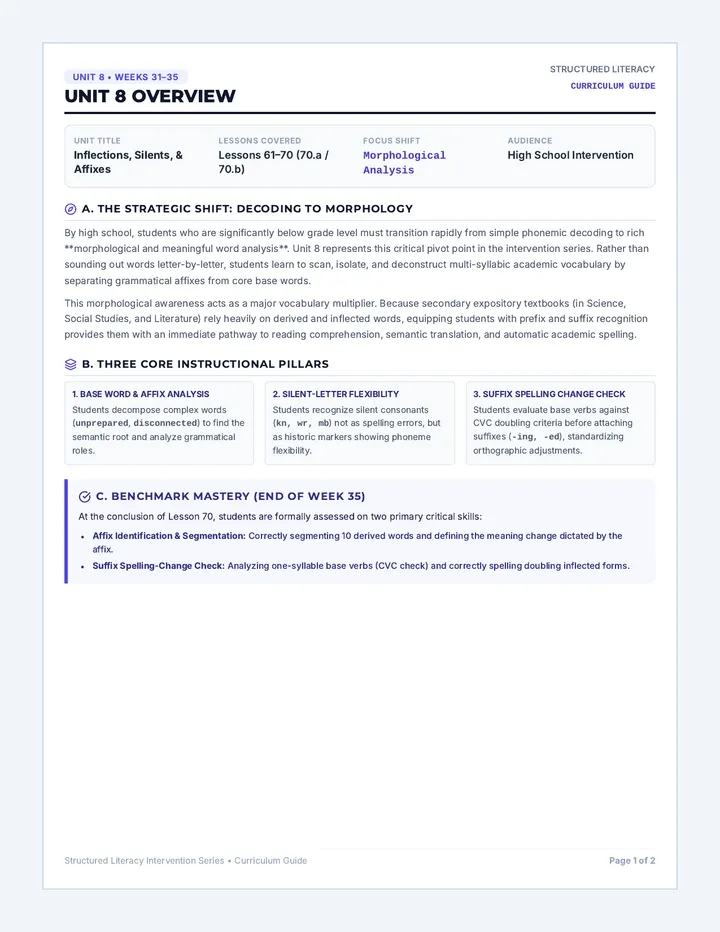
A unit focused on word mechanics, morphology, and meaning-making strategies through a cohesive laboratory and data-analysis theme.
A narrative writing sequence for 5th grade that integrates Earth Science concepts like tectonic plates and mountain formation into literary informational writing. Students learn to blend factual science with compelling storytelling through character and setting development.
A comprehensive lesson sequence exploring the ethical and legal implications of social media screening in the hiring process, based on real-world perspectives.
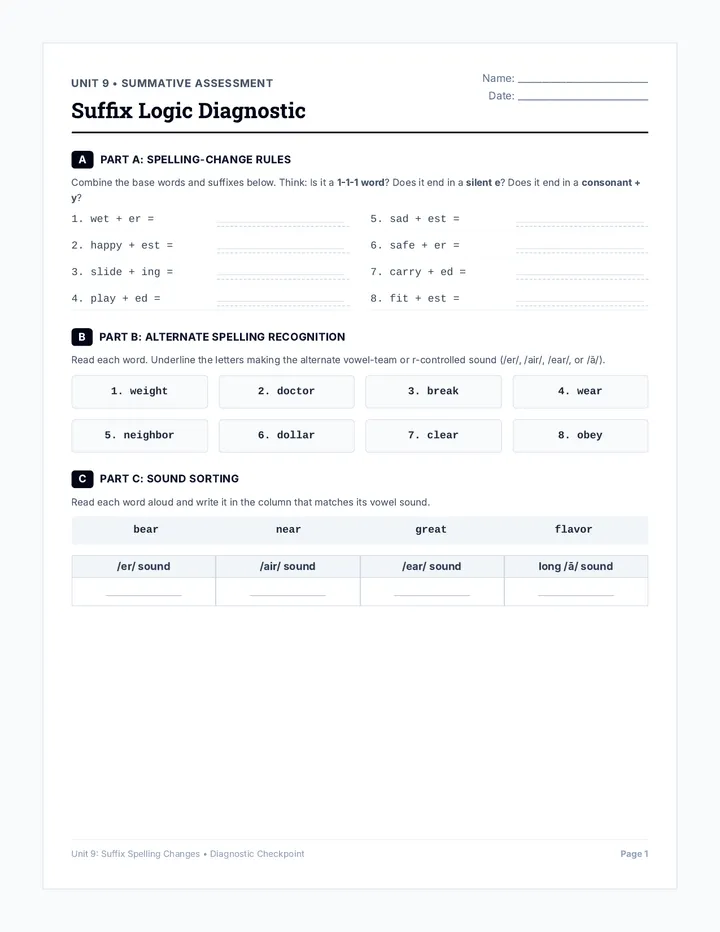
A series of prefix-focused labs designed to help students master common prefixes and suffixes through contextual application and logic puzzles.