Star Secrets Reading Worksheet Star Secrets
Mission: Reading Context Clues
Detective:
Date:
Explorers! Use your context clue skills to decipher vocabulary. Look for definitions, synonyms, and examples!
Transmission #1
"The Sun is immense . It is so huge that over one million Earths could fit inside of it!"
1. Select Meaning:
Hot and fiery
Extremely large
Round like a ball
2. Clue Discovery:
Write the specific clue from the sentence:
Transmission #2
"Energy from the Sun sustains life on Earth. Without its warmth, plants could not grow."
3. Select Meaning:
Supports or keeps alive
Destroys quickly
Makes very bright
4. Clue Discovery:
Write the specific clue from the sentence:
Transmission #3
"Earth orbits the Sun in a predictable way. We can count on it to follow the same path."
5. Select Meaning:
Very fast
Hard to see
Able to be expected
6. Clue Discovery:
Write the specific clue from the sentence:
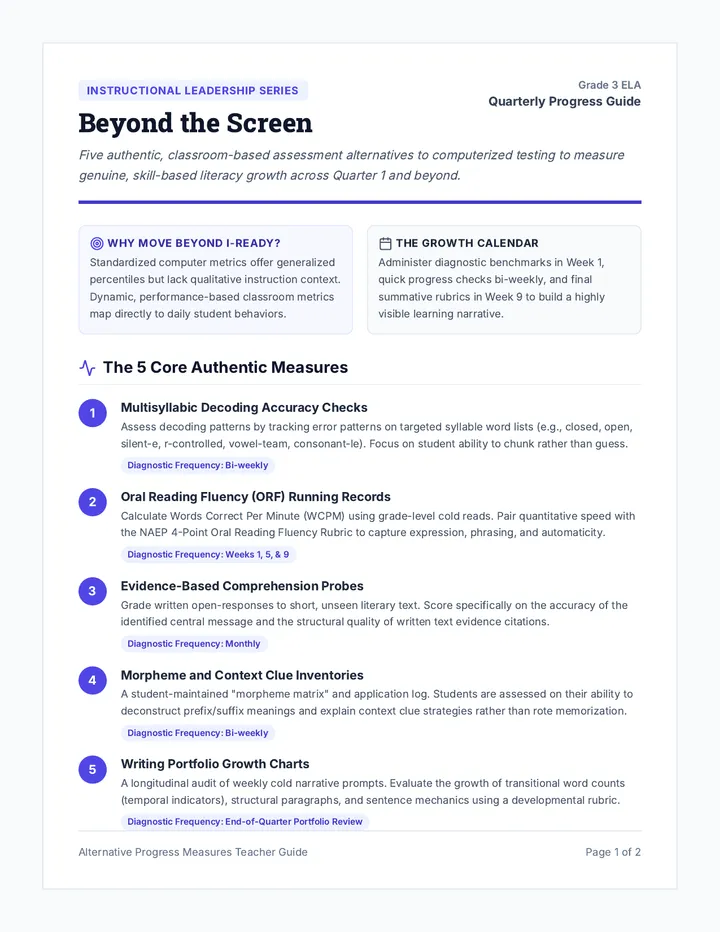
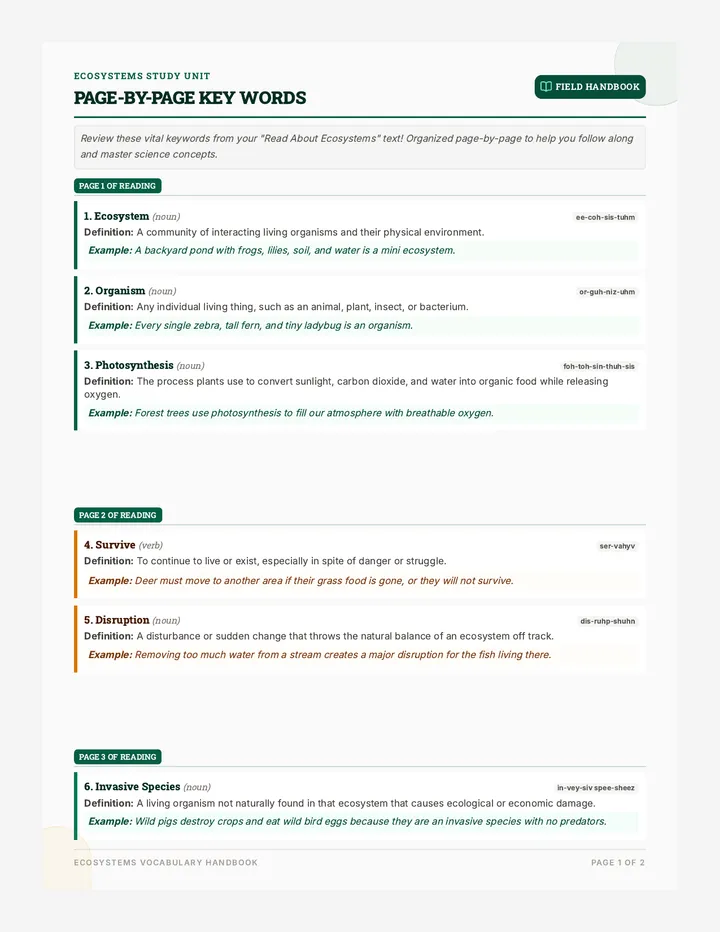
Solar Energy Slides Day 1: Star Power
Solar Power
Mastering Regrouping and Unlocking Secret Meanings.
Math Mission
Regrouping ± 1000
Reading Mission
Context Clues
Our Main Sequence Star
The Sun is a massive ball of hydrogen and helium. It contains 99.8% of all the mass in our entire solar system!
Warning: Extreme Heat
Without the Sun's gravity and energy, our planets would fly off into deep space.
Solar Math: Regrouping
Addition Rules
If a column totals 10 or more, carry the ten to the next place value!
Subtraction Rules
If the top number is smaller, go next door and borrow ten more!
1 1
4 5 8
7 2 3
Context Clue Detectives
"The Sun is a luminous object. Its intense light can be seen from billions of miles away."
Clue 1
"Intense light"
Clue 2
"Helping us see"
Meaning
Bright
Solar Math Lab Worksheet Solar Math Lab
Mission: Energy Calculation & Regrouping
Scientist:
Date:
Explorers! Use addition and subtraction to track solar energy bursts. Be sure to regroup when necessary!
Burst A: Addition
3
4
7
2
8
5
Burst B: Subtraction
8
2
4
-
3
5
9
Satellite Data Multi-Step Mission
Satellite A recorded 450 units. Satellite B recorded 125 more units than A. How many total units were recorded in all?
Step 1: Calculate Satellite B
Step 2: Total Sum (A + B)
Mission Total Units:
The Great Sunspot Challenge
Spot Alpha has 912 particles. Spot Beta has 388 particles. What is the difference between them?
Laboratory Workspace:
Final Difference:
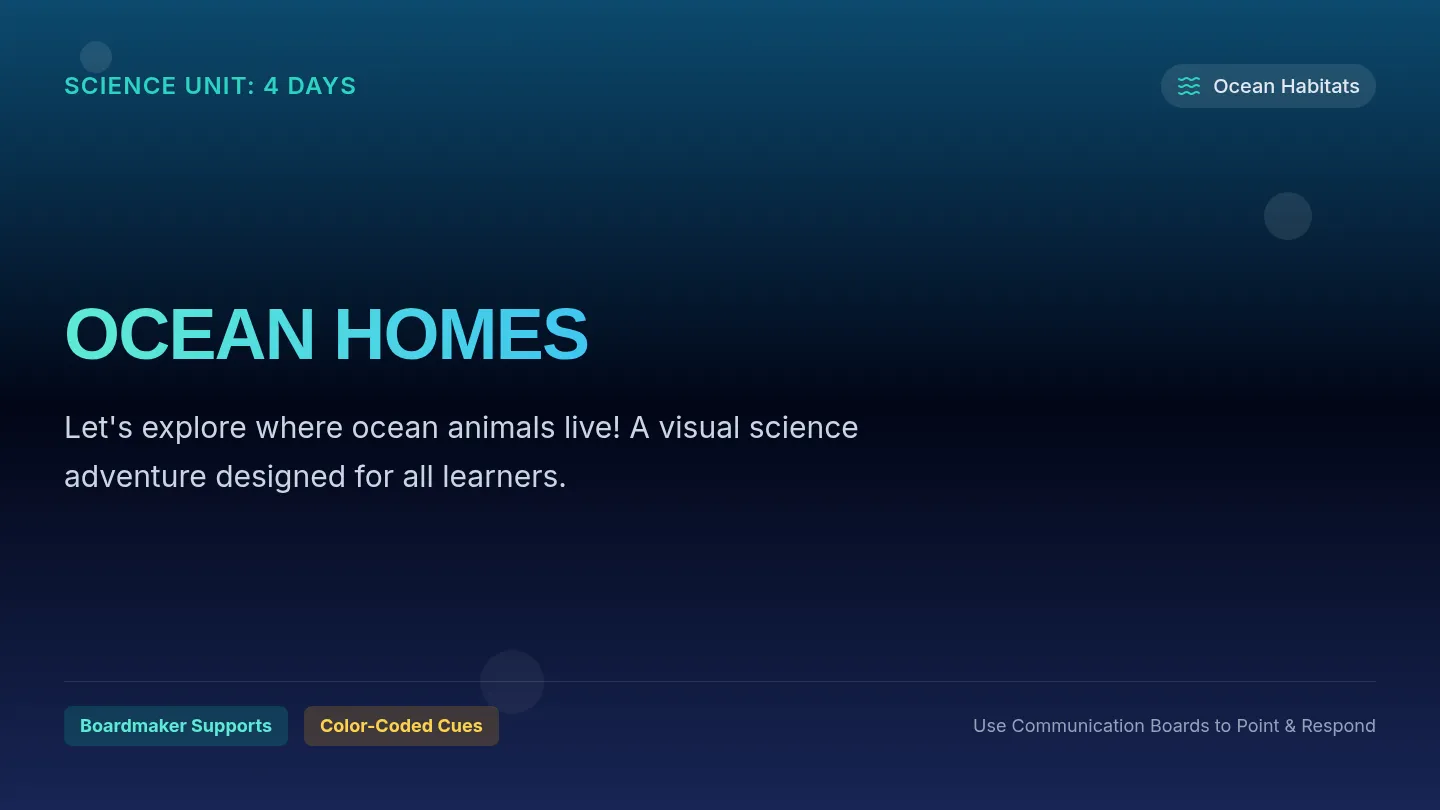
Moon Mission Slides Day 2: Lunar Landing
Moon Mission
Fractional Wonders and Changing Phases.
Math Mission
Fractions (2, 3, 4, 6, 8)
Writing Mission
Informational: Moon Phases
Our Celestial Neighbor
The Moon is about 1/4 the size of Earth. It is our only natural satellite!
Locked in Orbit
It takes the Moon about 27 days to orbit the Earth. We always see the same side of the Moon!
Moon Math: Fractions
1/2
One out of two equal parts. (Halves)
1/4
One out of four equal parts. (Quarters)
3/4
Three out of four equal parts. (Quarters)
Visualizing Parts
1/2
3/4
"The denominator tells how many total parts!"
Mission Report: Moon Phases
Informational Focus
Explain how and why the moon seems to change shape.
Must-Have Words
New Moon Crescent Gibbous Full Moon
Report Outline
1. Introduction
2. Reflection of Light
3. The 8 Major Phases
4. Conclusion
Lunar Fractions Worksheet Lunar Fractions
Mission: Visualizing Parts of a Whole
Navigator:
Date:
Navigator! The Moon's appearance changes in fractional parts. Shade each model to match the fraction given.
1/2
3/4
2/3
5/6
Galaxy Challenge: More Than One Whole
9/8
Shade the full whole plus extra!
Moon Phases Writing Worksheet Lunar Report
Mission: Informational Writing
Observer:
Date:
The Changing Face of the Moon
Why does the Moon appear to change shape? Explain the science of Moon Phases using facts and clear steps!
Drafting Space
Intro
8 Phases
Diagram
Tip: Remember that the Moon doesn't actually change shape; only the part we see reflecting the Sun's light changes!
Earth's Layers Reading Worksheet Earth's Layers
Mission: Reading Analysis & Main Idea
Explorer:
Date:
Flight Manual
A Journey to the Core
Even though we live on the surface of Earth, our planet has many secret layers hidden beneath our feet. Think of Earth like a giant onion with different parts inside. The very first layer is called the crust . This is the thin, rocky layer that we walk on every day. It is like the skin of an apple.
Deep below the crust is the mantle . This is the thickest layer of the Earth. It is made of hot, solid rock that can move very slowly, almost like thick honey. This movement is what causes earthquakes and moves the giant plates on Earth's surface.
Finally, at the very center of our planet is the core . The core is split into two parts. The outer core is made of liquid iron and nickel, while the inner core is a solid ball of metal. It is extremely hot in the core—almost as hot as the surface of the sun!
Mission 1: Main Idea Target
What is the central idea of the passage above?
Earth is the only planet with water.
The center of the Earth is very hot.
Earth is made of several different layers.
Earthquakes move giant plates.
Mission 2: Evidence Retrieval
Support Detail #1:
Support Detail #2:
Mission 3: Deep Core Analysis
What specifically makes up the Earth's core based on the text?
Mission Log Recording Sheet Mission Log
Weekly Review: Cosmic Quest
Explorer:
Squad:
Monday: Sun & Stars
Daily Findings:
Tuesday: Moon Phases
Daily Findings:
Wednesday: Earth Mission
Daily Findings:
Thursday: Planet Patrol
Daily Findings:
Friday: Galactic Finale
Final Mission Discoveries:
Favorite Topic of the Week
The #1 Fact I'll Remember
Mission Accomplished!
KEEP THIS LOG AS PROOF OF YOUR CELESTIAL TRAINING.
Backyard Blueprints Worksheet Backyard Blueprints
Mission: Area of Composite Figures
Architect:
Date:
Architects! Earth bases need careful planning. Calculate the area of each section. Remember: Area = Length × Width .
Unit 1: Supply Depot
8 ft 12 ft
Calculation Space:
Area: ____________ sq. ft
Unit 2: Command Center
6 m 5 m
6 m 10 m
12 m
Calculation Space:
Step 1: Split the shape.
Step 2: Add the areas.
Area: ____________ sq. m
Deep Earth Challenge
Draw a shape with an area of exactly 24 square units in the grid below!
Cosmic Quest Teacher Guide Mission Briefing
Operation: Space Review
Teacher Guide
A 5-day voyage across the cosmos, reviewing 3rd-grade math and ELA standards.
MON
Sun
TUE
Moon
WED
Earth
THU
Planets
FRI
Pluto
Monday: Solar Power
Math: Addition/subtraction within 1000 with regrouping. Practice the "Carry" and "Borrow" techniques.
Reading: Use context clues (definitions/examples) to solve unknown vocabulary.
Tuesday: Moon Landing
Math: Identify/shade fractions (denominators 2, 3, 4, 6, 8). Introduce fractions > 1 whole.
Writing: Informational report on Moon phases. Focus on reflected light and orbit cycles.
Wednesday: Earth Mission
Math: Area of rectangles (L x W) and composite L-shapes. Count square units before formula use.
Reading: Identify main idea (The Umbrella) and supporting details in "A Journey to the Core."
Thursday: Planet Patrol
Math: Multi-step word problems (4 operations). Plan solving steps before computing.
Writing: Planet Profile Research. Use facts to describe a chosen inner or outer planet.
Friday: Galactic Finale
Reading: Figurative language (similes/metaphors) and Theme (the heart of the story).
Writing: "Is Pluto a Planet?" Opinion essay. Make a claim and support with 2 scientific reasons.
Success Criteria
Correct area calculation in sq units.
Accurate 3-digit regrouping.
Identification of fractions of circles.
Opinion writing with claim + 2 reasons.
Standards Mastery Path
MATHEMATICS
3.MD.C.7 (Area), 3.NBT.A.2 (+/-), 3.NF.A.1 (Fractions)
READING
RI.3.1 (Evidence), RI.3.2 (Main Idea), RI.3.4 (Context Clues)
WRITING
W.3.1 (Opinion), W.3.2 (Informational)
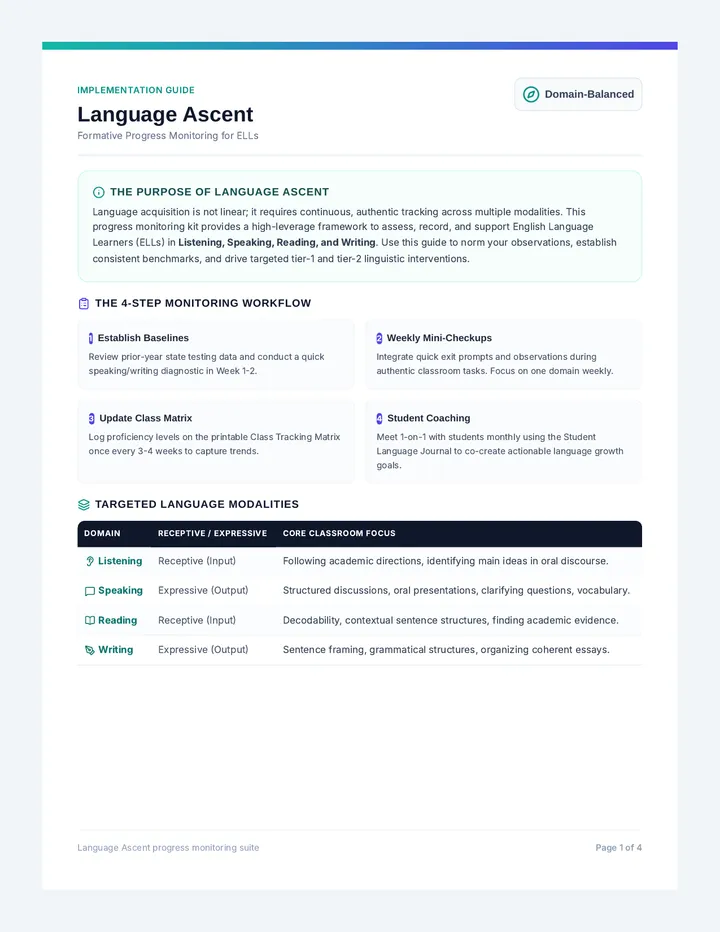
Earth Mission Slides Day 3: Mission Earth
Earth Mission
Exploring our home base through Area and Main Ideas.
Math Mission
Area of Shapes
Reading Mission
Main Idea & Details
The Blue Marble
Did you know?
Earth is the only planet in our solar system known to have liquid water on its surface and support life!
Reading Strategy
Think of the Main Idea as the "big umbrella" that covers all the small facts (details).
Mission Prep: Calculating Area
To build a base on Earth, we need to know how much floor space we have!
1
Area = Length × Width
2
For Composite Figures , split the shape into rectangles!
Check your units
Always answer in square units (like sq. ft or sq. cm)!
Flight Training: Main Idea
"Earth has four distinct layers. The crust is the thin outer layer we walk on. Below that is the thick mantle made of hot rock. In the center is the core."
Main Idea
Earth is made of four different layers.
Key Detail
The crust is the thin outer layer.
Planet Patrol Slides Day 4: Deep Space Patrol
Planet Patrol
Multi-step Mysteries and Planetary Profiles.
Math Mission
Multi-step Problems
Writing Mission
Informational: Planet Report
Planetary Divisions
Terrestrial (Inner)
Mercury, Venus, Earth, Mars
Made of rock and metal
Solid surfaces
Gas Giants (Outer)
Jupiter, Saturn, Uranus, Neptune
Made of gases and ice
No solid ground
Mission Strategy: Two-Step Problems
Space missions are complex! Sometimes we need more than one operation to find the answer.
The Saturn Scramble
"A spaceship has 4 boxes of oxygen tanks. Each box has 8 tanks . If the crew uses 10 tanks , how many are left?"
Step 1: Multiplication
4 × 8 = 32 tanks
Step 2: Subtraction
32 - 10 = 22 tanks left
Planetary Profile: Informational Writing
Introduction
Hook the reader and state your planet's name and type.
Facts & Features
Describe size, distance from sun, and weather!
Conclusion
Summarize why this planet is unique or interesting.
"Informational writing uses facts , not just feelings!"
Planetary Products Worksheet Planetary Products
Mission: Multi-Step Word Problems
Patrol Officer:
Sector:
Officer! Solve each multi-step problem carefully. Plan: Solve Step 1, then use that answer for Step 2!
Mission: Mars Cargo
The supply ship has 6 crates. Each holds 5 pizzas. If the crew eats 12 pizzas, how many are left?
Step 1: Total Pizzas
Step 2: Remaining
Final Count: _________________ pizzas
Mission: Jupiter Moons
An astronomer saw 3 groups of moons. Each group had 9 moons. Later, she found 4 more. Total in all?
Step 1: Groups Total
Step 2: Grand Total
Final Count: _________________ moons
Mission: Saturn Rings
The patrol has 40 fuel canisters shared between 5 ships. If one ship had 3 already, how many now?
Step 1: Sharing
Step 2: Total Sum
Final Count: _________________ canisters
Planet Report Worksheet Planet Report
Mission: Informational Research Profile
Officer:
Sector:
Subject Planet
Essential Data
Planet Type:
Dist. from Sun:
Moon Count:
Visual Map Sketch
Draw planetary features here...
Unique Feature Spotlight
Identify one unique feature (rings, storm, temperature) and explain it:
Mission Report
Write an informational paragraph describing your planet using your data. Explain why it is unique!
Galactic Finale Slides Day 5: Mission Debrief
Galactic Finale
Reviewing Themes, Figures, and the Great Pluto Debate.
Reading Mission
Figurative Language & Theme
Opinion Mission
The Pluto Debate
Galactic Language
Simile
"The Sun is like a giant golden furnace in the sky."
Metaphor
"The stars are tiny diamonds scattered on black velvet."
Why use it?
"Authors use figurative language to paint a picture in the reader's mind. It makes science feel like a story!"
The Great Debate: Is Pluto a Planet?
Yes! (Opinion)
It orbits the Sun just like others.
It has its own moons (like Charon).
It's been a planet for nearly 100 years!
No! (Facts/Opinion)
It hasn't cleared its orbit of debris.
It's tiny (smaller than our Moon!).
It belongs to the Kuiper Belt group.
"In an opinion piece, you must provide reasons for your thinking!"
Mission Accomplished
Congratulations, Space Explorers! You have successfully reviewed the solar system, mastered 3rd-grade math, and sharpened your writing skills. Mission Control is proud!
Earth Mission: Complete
Solar Mission: Complete
Moon Mission: Complete
Pluto Debate Worksheet The Pluto Debate
Mission: Reading & Opinion Writing
Explorer:
Date:
Reading Retrieval
The Lonely Wanderer
Pluto is like a tiny snowflake floating in the vast, dark ocean of space. For many years, it was celebrated as the ninth planet. However, in 2006, scientists decided it was too small to stay in the club. Now, it is called a "dwarf planet." Many people still feel sad for Pluto, believing that size shouldn't matter in the great theater of the stars.
Language Analysis
Find a simile from the text:
Find a metaphor from the text:
Theme Detector
What is the author saying about Pluto's value?
Mission Debate: Pluto's Status
Should Pluto be a planet again? State your claim and give two clear reasons!
My Opinion Statement (Claim):
I believe that...
Reason #1:
Reason #2:
Final Scientific Conclusion:
Space Tourist Opinion Worksheet Space Tourist
Mission: Opinion Writing Finale
Traveler:
Date:
The Ultimate Galactic Voyage
If you could visit any place in our solar system, where would you go? Persuade a friend to join your mission!
Travel Planning Lab
Target Destination:
Boarding Pass View
Sketch your view from space...
Persuasive Logic
Reason #1: Best Feature
Reason #2: Activity
Final Pitch Hook:
"Join me because..."
Persuasive Travel Pitch
Final Draft Transmission
Mission Control Review
Exchange reports with a partner to check for clarity!
Clear Claim
2+ Facts
Closing