A series of lessons focused on mastering the art of persuasion and argumentative writing, from building claims to defending them against opposition.
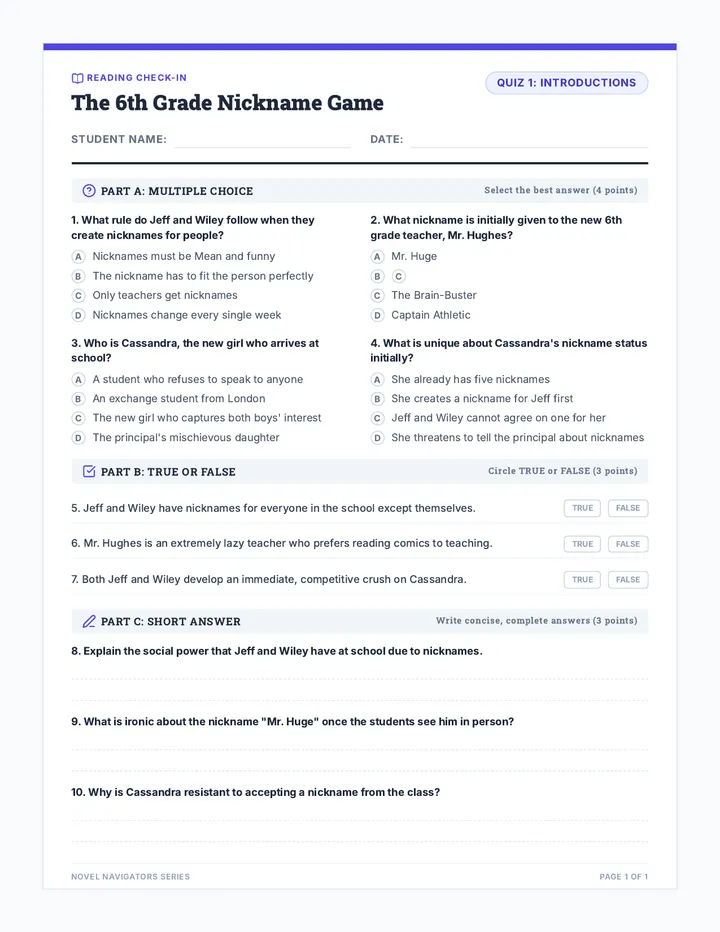
A comprehensive set of reading comprehension check-in quizzes for five popular middle-grade novels. Each novel features two specialized quizzes—one focusing on initial character introductions and the other on major plot resolutions.
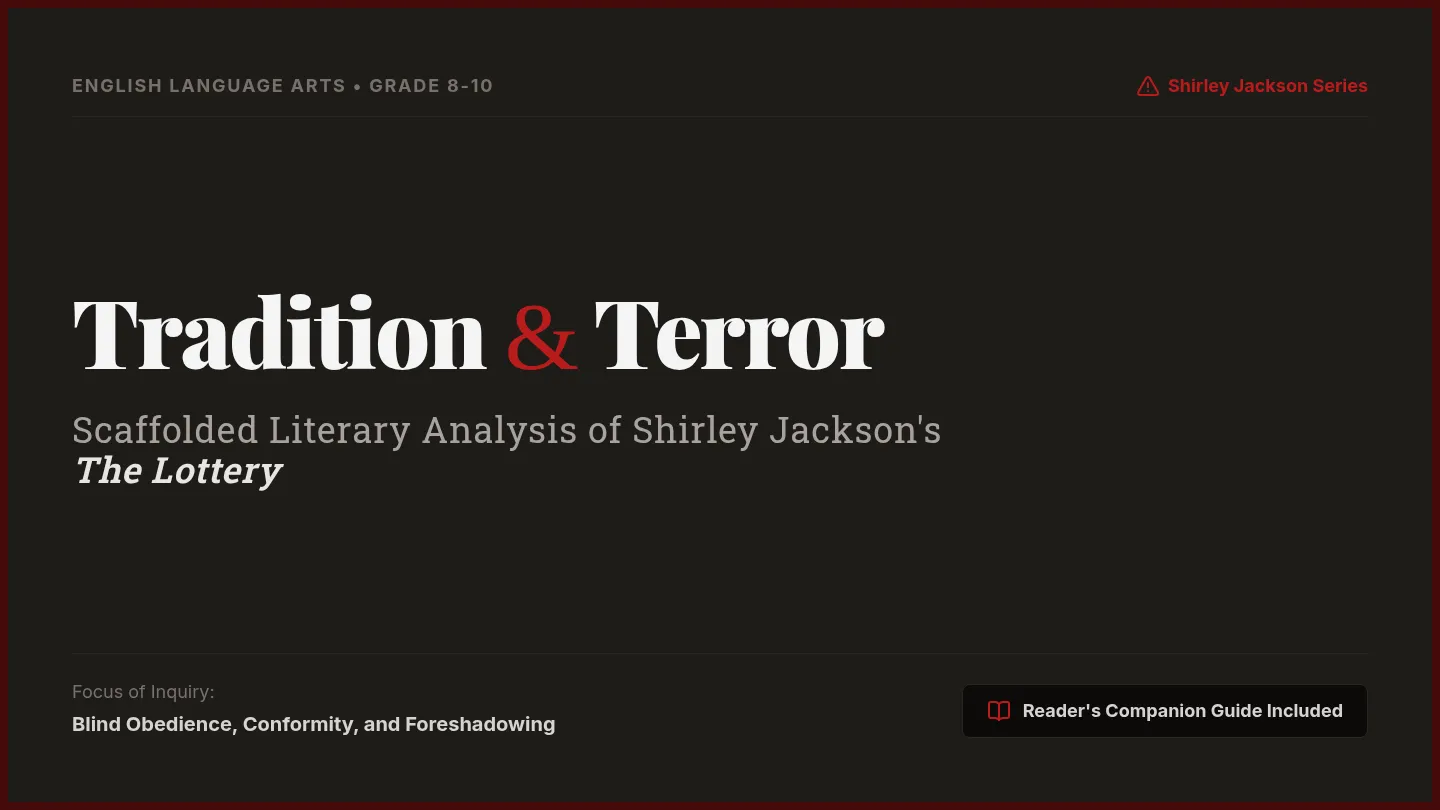
A scaffolded literary analysis of Shirley Jackson's classic short story 'The Lottery', exploring the themes of blind tradition and social conformity. This lesson bundle features interactive presentation slides, scaffolded worksheets with direct text chunks and sentence starter support, a targeted exit ticket, and a teacher's facilitation guide.
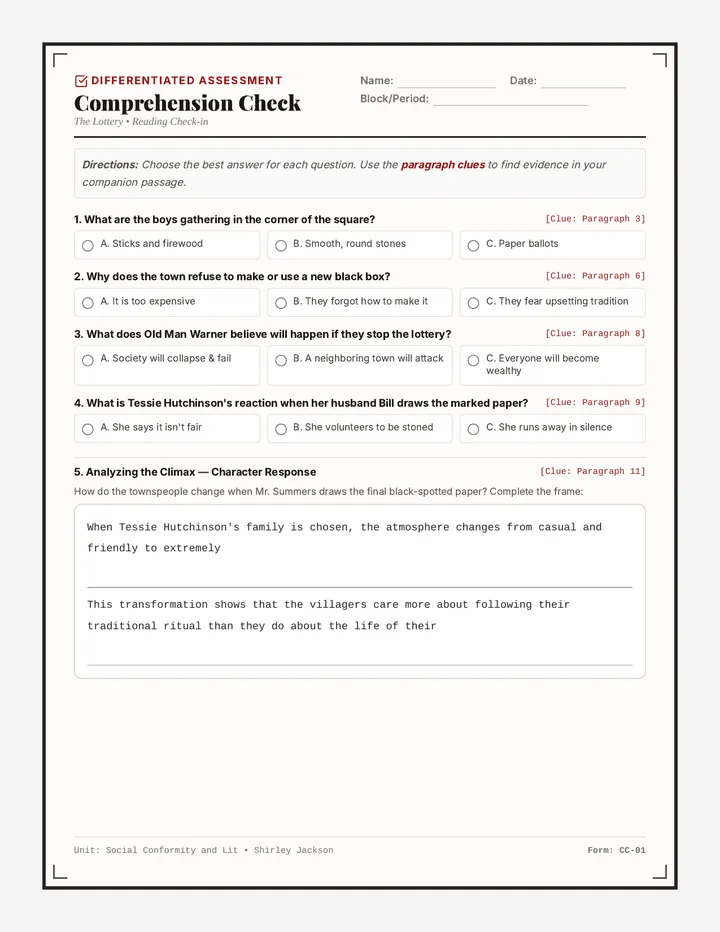
A differentiated 1-page comprehension check for 'The Lottery'. Features multiple-choice questions with reduced answer choices (3 options instead of 4), direct paragraph and line number clues, and a scaffolded short response prompt with writing lines.
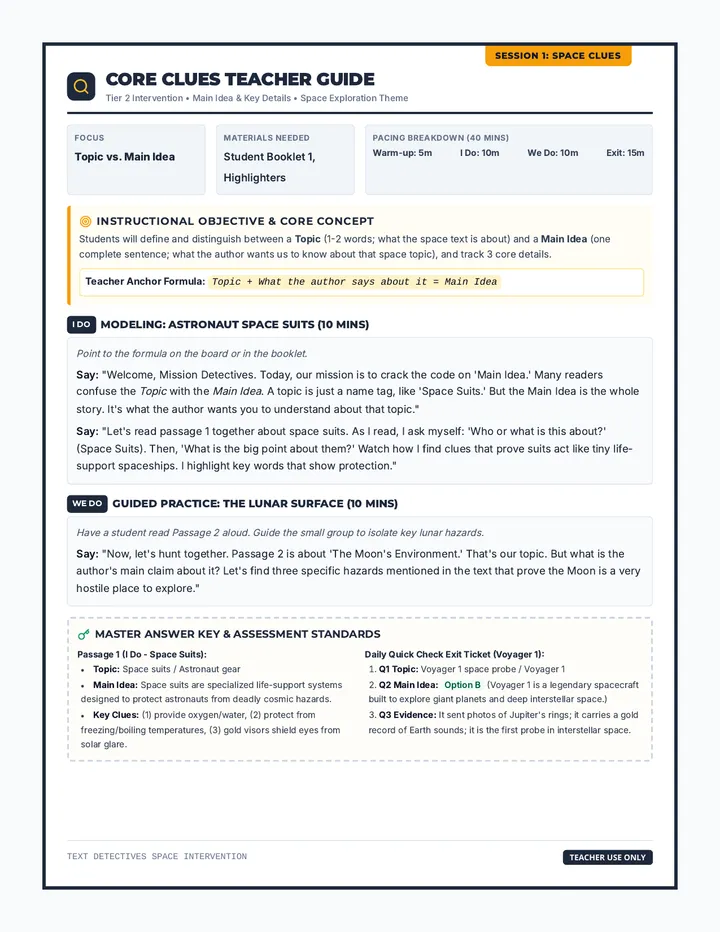
A Tier 2 reading comprehension intervention sequence designed for sixth-grade students. This three-session program utilizes a structured, scaffolded approach to help students identify key details, filter out distracting information, and craft precise main idea summaries.
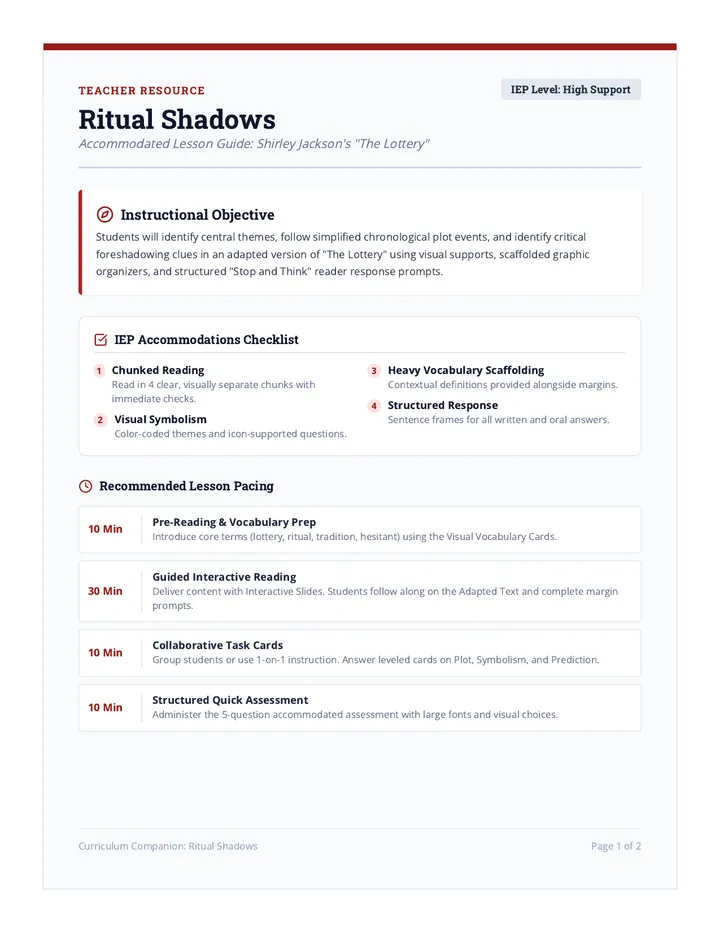
A highly supportive, adapted literature study of Shirley Jackson's 'The Lottery.' This lesson contains a simplified, guided text with margin prompts, interactive slide deck, heavy vocabulary scaffolding cards, leveled task cards, a structured assessment, and a comprehensive teacher guide.
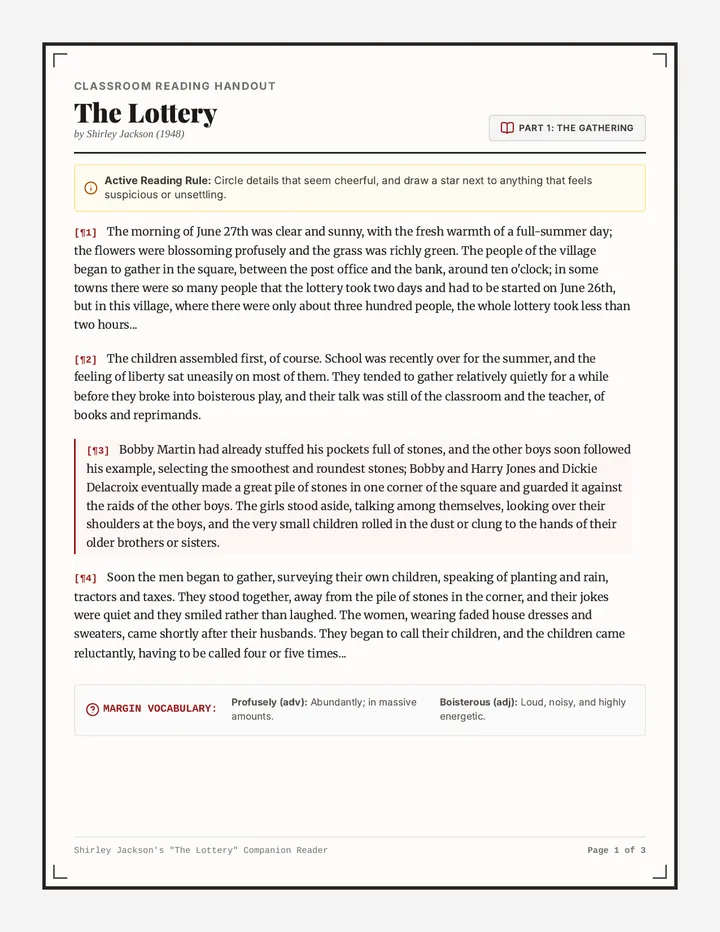
A 3-page printable Student Reading Handout containing key chronological passages from Shirley Jackson's 'The Lottery'. Features clear typography, paragraph numbers for easy reference, line-by-line annotations space, and vocabulary callouts for struggling readers.
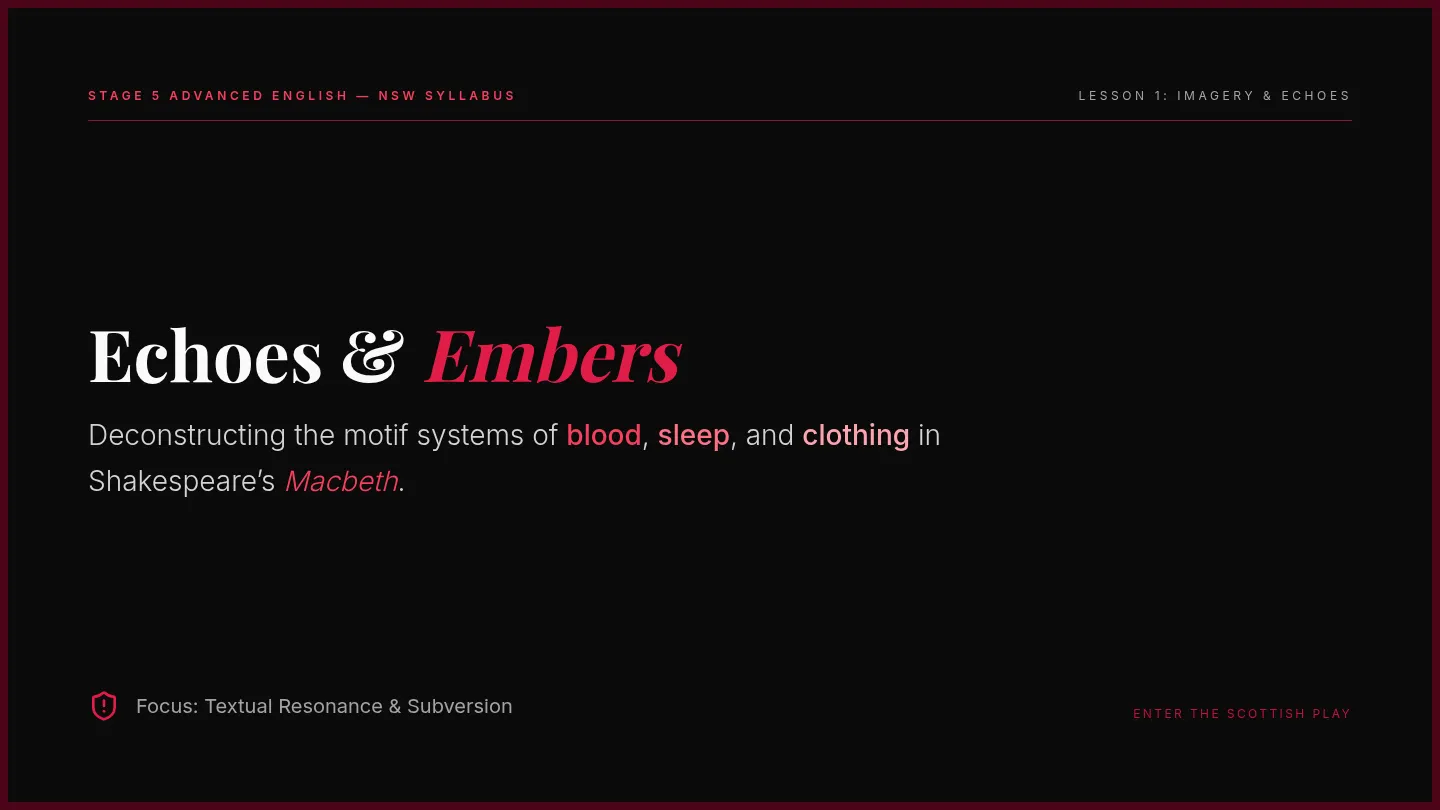
A high-rigour Stage 5 English unit for advanced Year 9 students in NSW. It explores Shakespeare's Macbeth through complex motif systems, psychological disintegration, and tragic subversion, culminating in creative writing and a formal Socratic seminar.
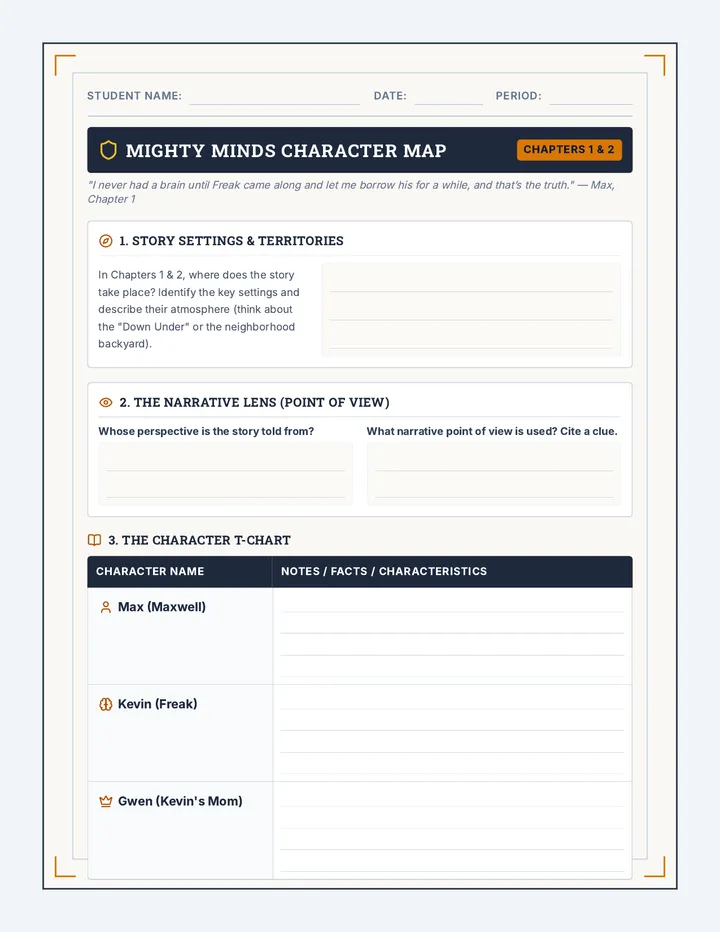
A reading and analysis lesson for the first two chapters of 'Freak the Mighty' by Rodman Philbrick. Students explore character traits, narrative point of view, physical settings, and make initial plot predictions.
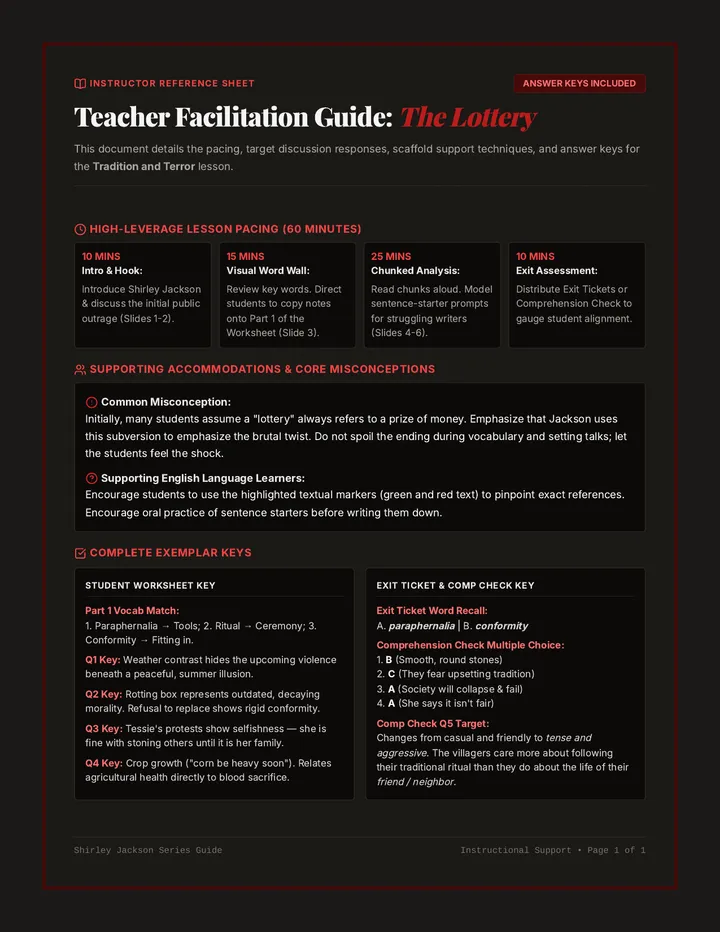
A comprehensive 1-page Teacher Facilitation Guide and Lesson Plan for teaching Shirley Jackson's 'The Lottery'. Features a clear 60-minute pacing guide, active teaching prompts, discussion scaffolding strategies, and a complete answer key for the student worksheets and exit ticket.
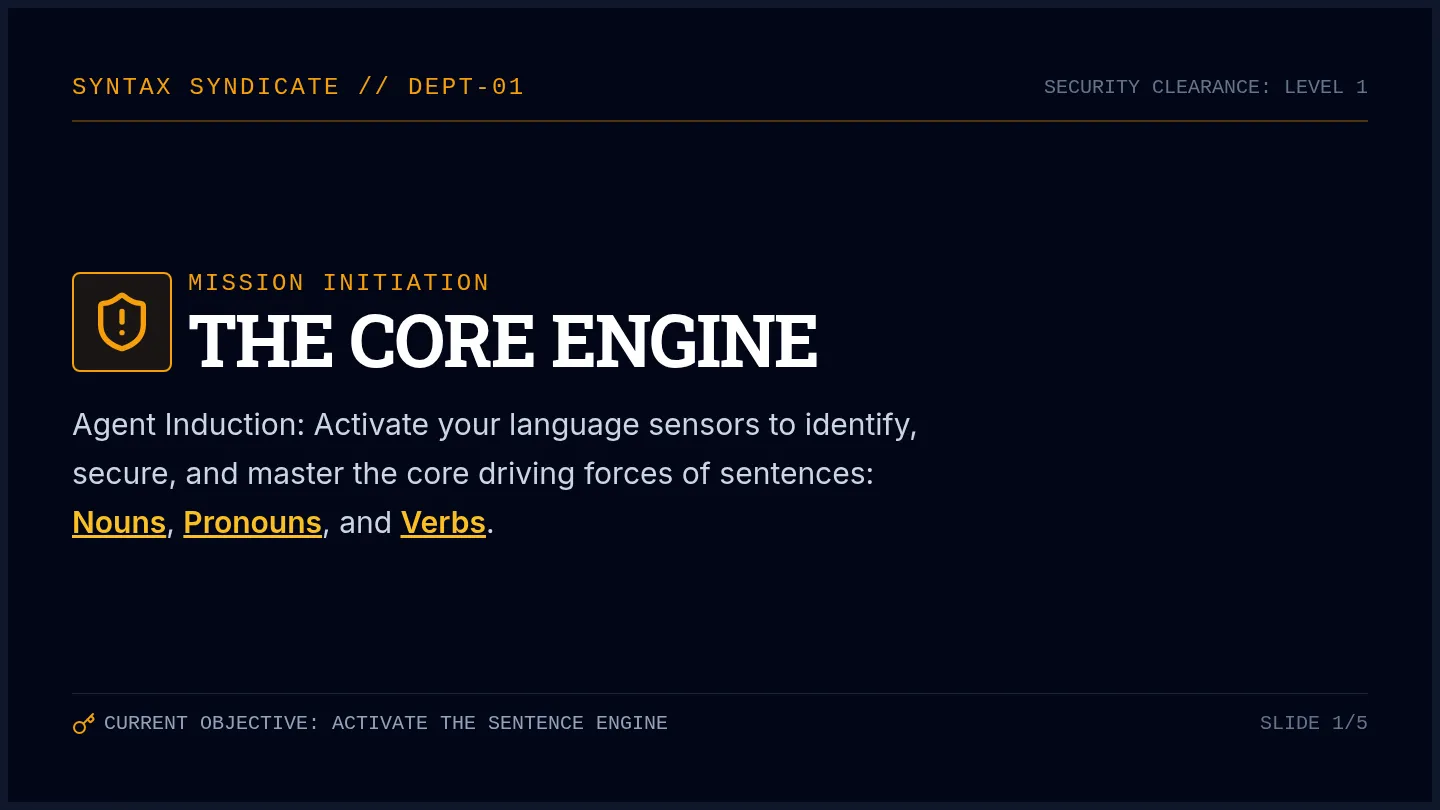
A spy-themed 4-day parts of speech review sequence for 6th and 7th graders. Students become secret agents in the 'Syntax Syndicate', cracking codes and completing missions to master nouns, pronouns, verbs, adjectives, adverbs, prepositions, conjunctions, and interjections, culminating in a collaborative classroom escape room.
A welcoming, high-energy introductory lesson for English Term 2. Students reflect on their holiday experiences, practice active listening and speaking in a collaborative environment, and set personalized, actionable SMART goals for the new term.
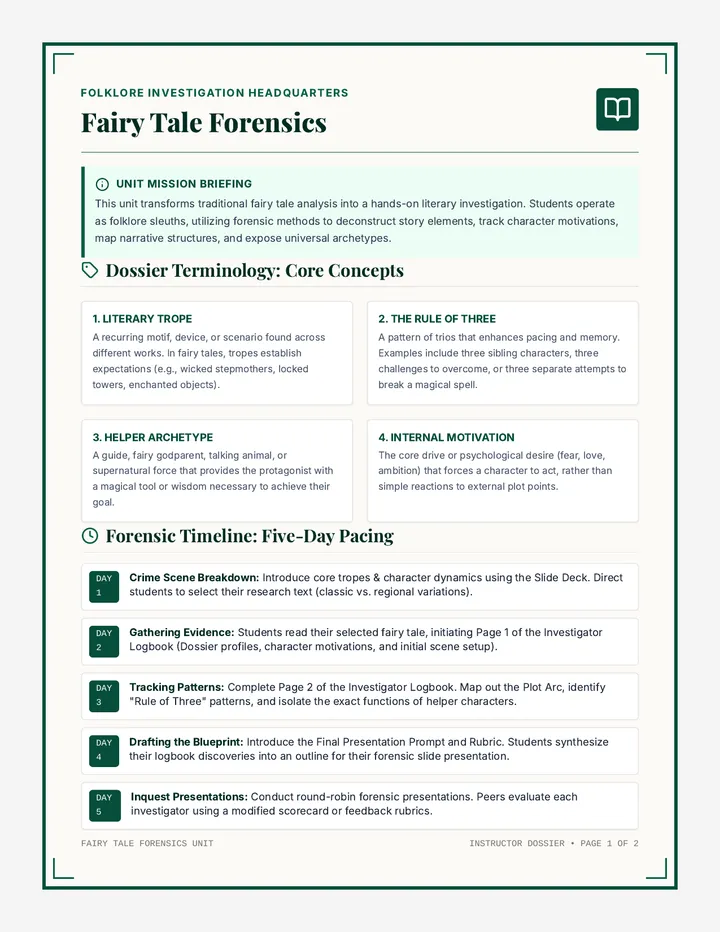
A comprehensive literary research unit designed to guide students through a structural and character analysis of classic and regional fairy tales. Students assume the role of folklore investigators, tracking standard tropes, character motivations, helper archetypes, and plot designs, culminating in an analytical presentation.