A comprehensive printable student reference anchor chart for identifying themes versus topics, featuring grade-banded examples for grades 4-8 and specific tips for avoiding common standardized testing traps.
A retrieval practice sequence for the Roald Dahl narrative unit in Amplify ELA Grade 6, focusing on 'Boy: Tales of Childhood'. It features lesson-by-lesson quick check exit tickets and corresponding teacher guides with answer keys to reinforce reading comprehension, vocabulary, and narrative craft.
Covers retrieval and vocabulary for the intense chapters about early twentieth-century medical procedures, specifically 'The Adenoids' and the terrifying lack of anesthesia.
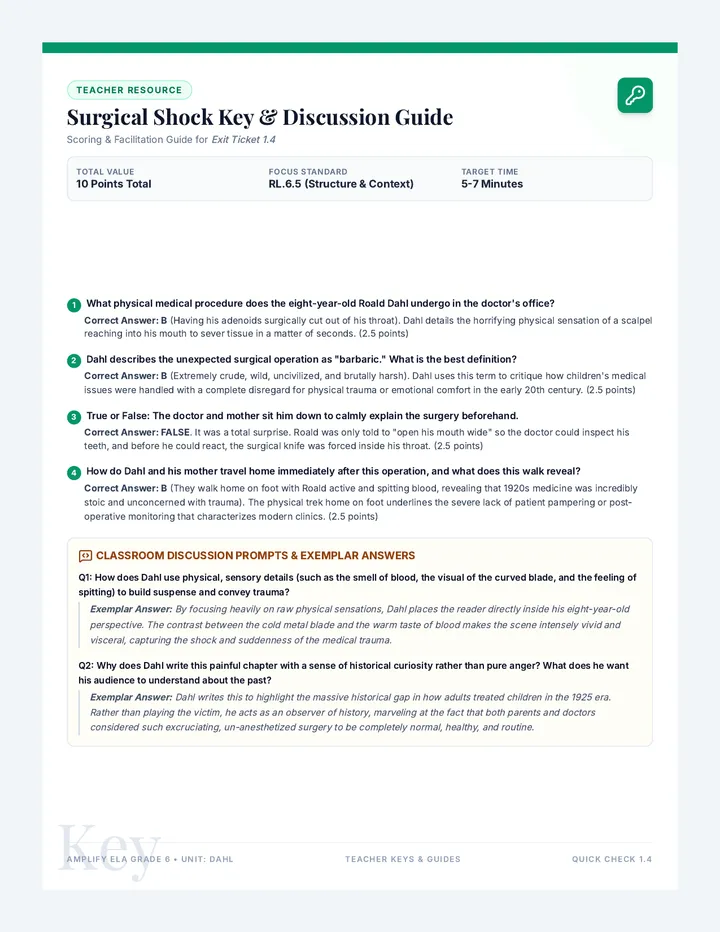
A detailed teacher guide and answer key for the Surgical Shock Exit Ticket, including scoring guidelines, context summaries, and historical background on 1920s pediatric medicine, plus discussion questions with answers.
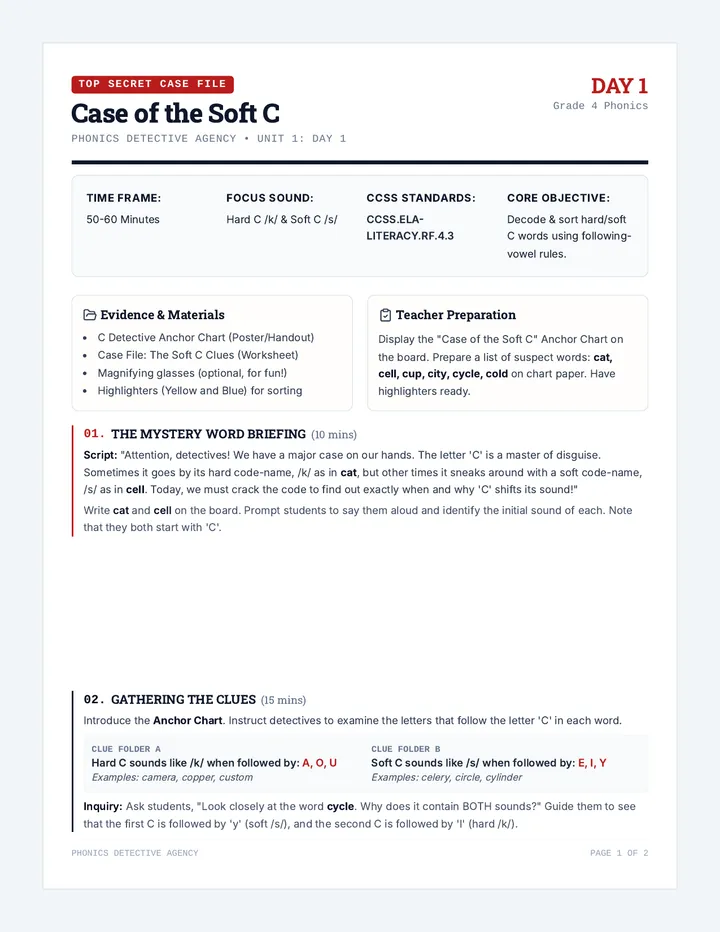
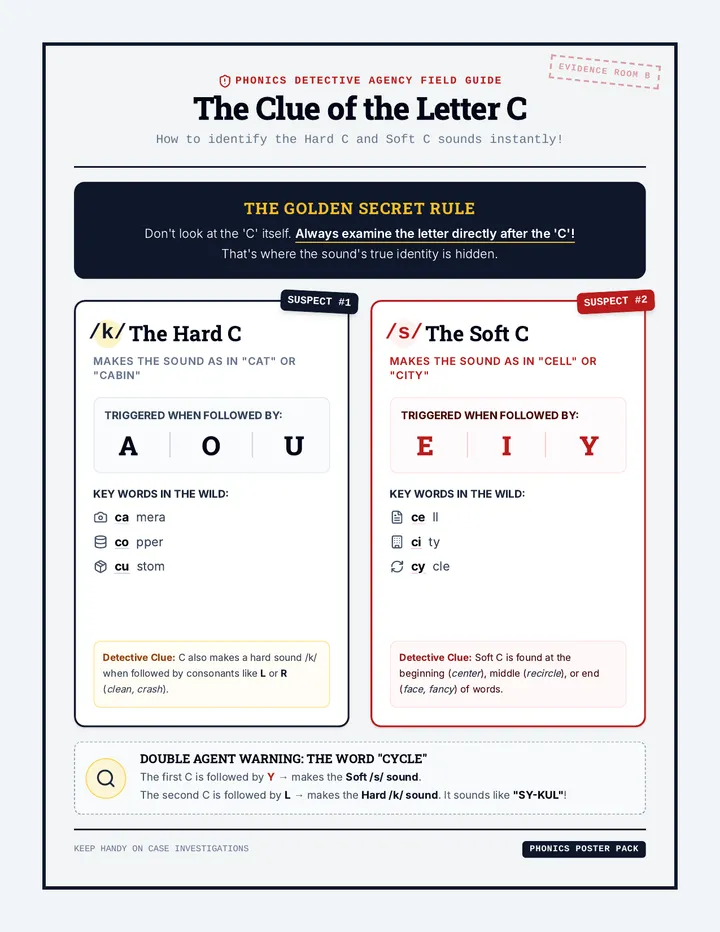
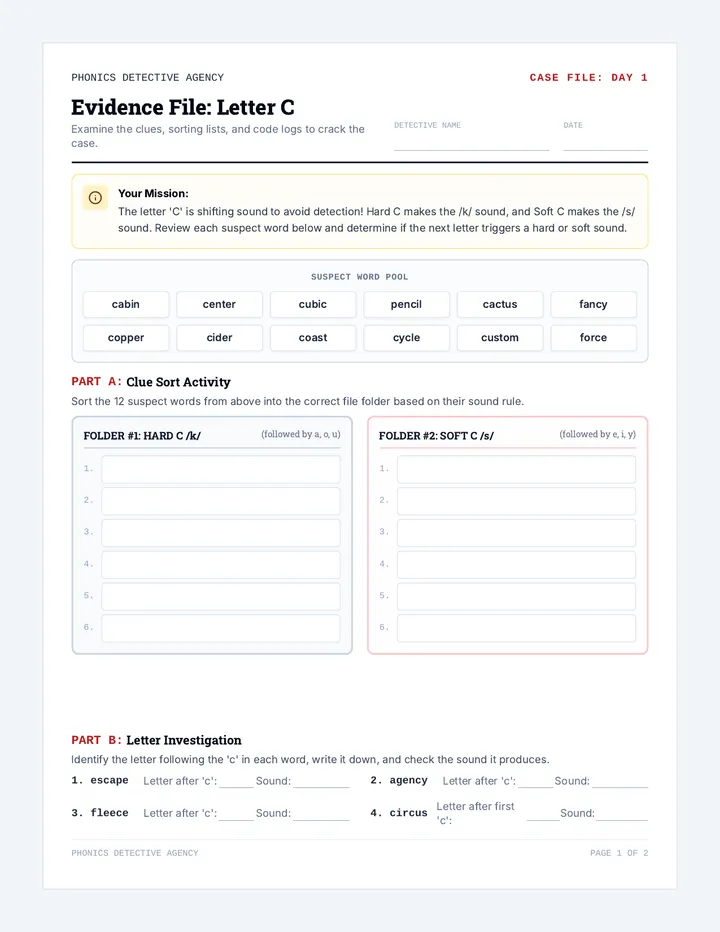
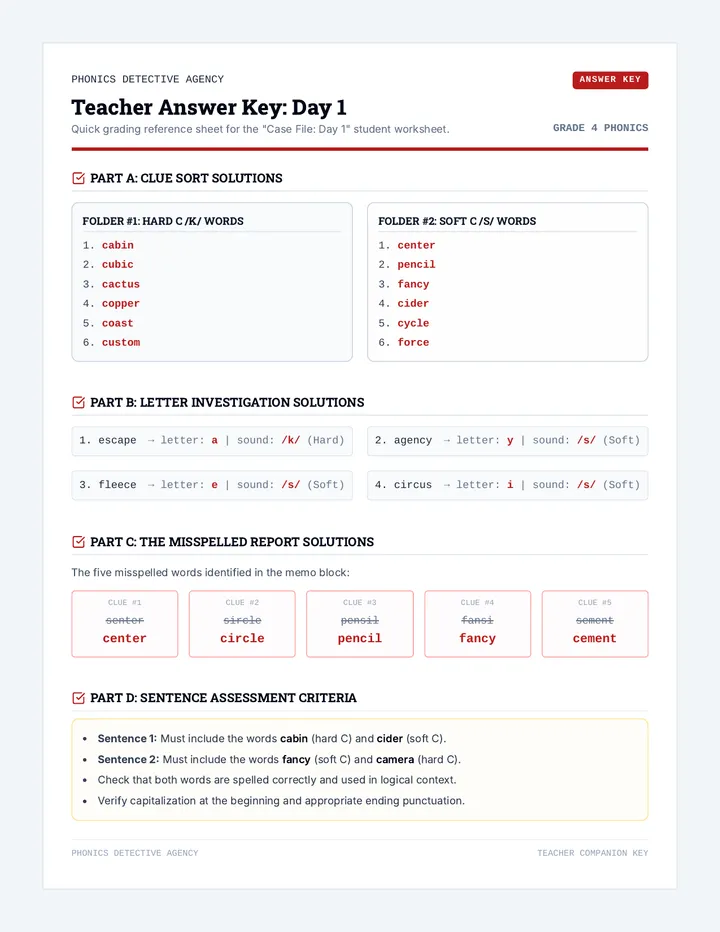
A comprehensive, detective-themed 2-day phonics unit for 4th graders to master the hard and soft sounds of 'c' and 'g' using structured inquiry, visual anchor charts, and scaffolded practice worksheets.
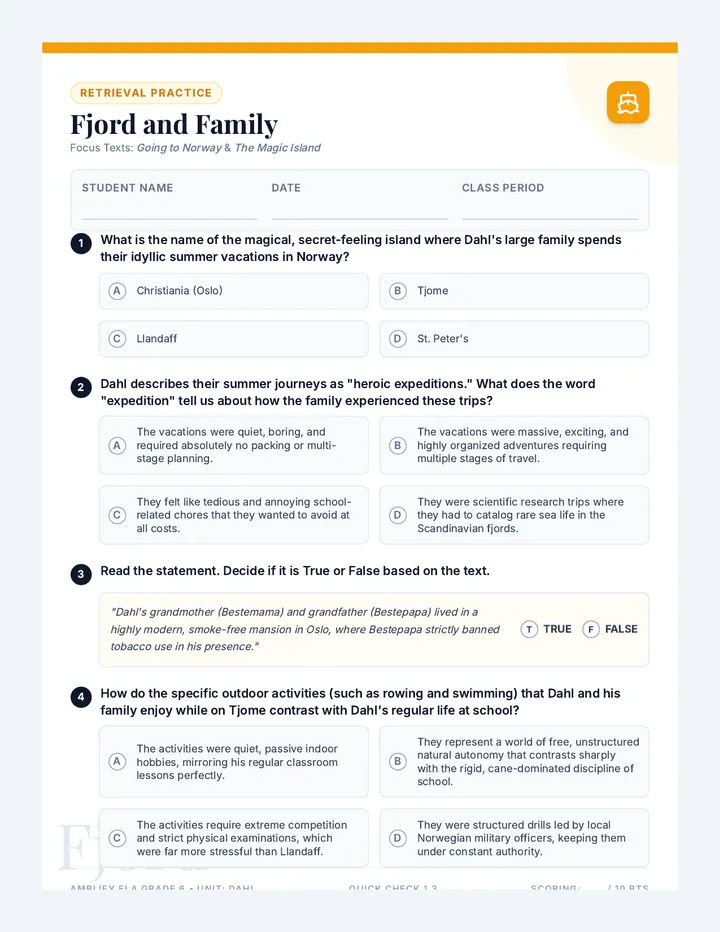
Focuses on the chapters 'Going to Norway' and family summer vacation customs, retrieving key details about Dahl's ancestral home, travel logs, and family members.
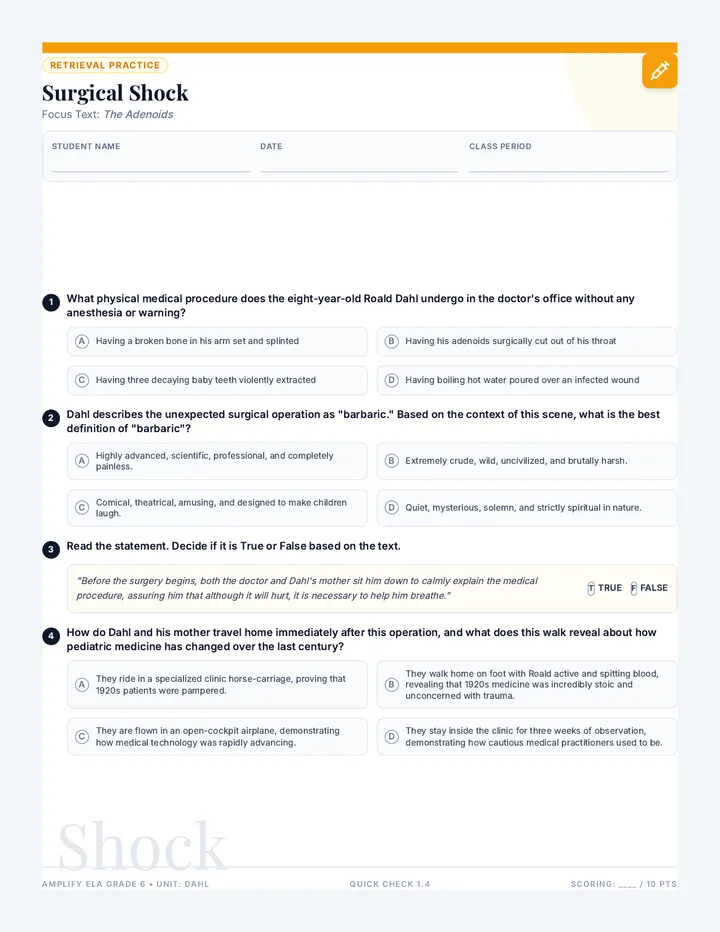
A printable 1-page student exit ticket focusing on the key details, shocking sensory descriptions, and historical context of the surgical procedure in 'The Adenoids' chapter. All questions are converted to multiple-choice and true/false.
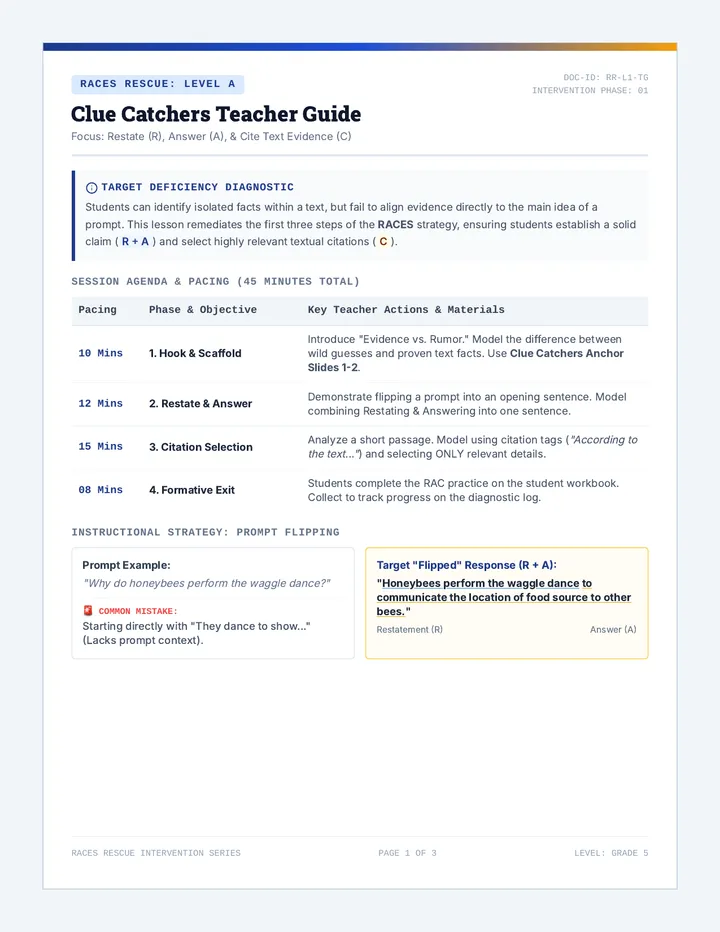
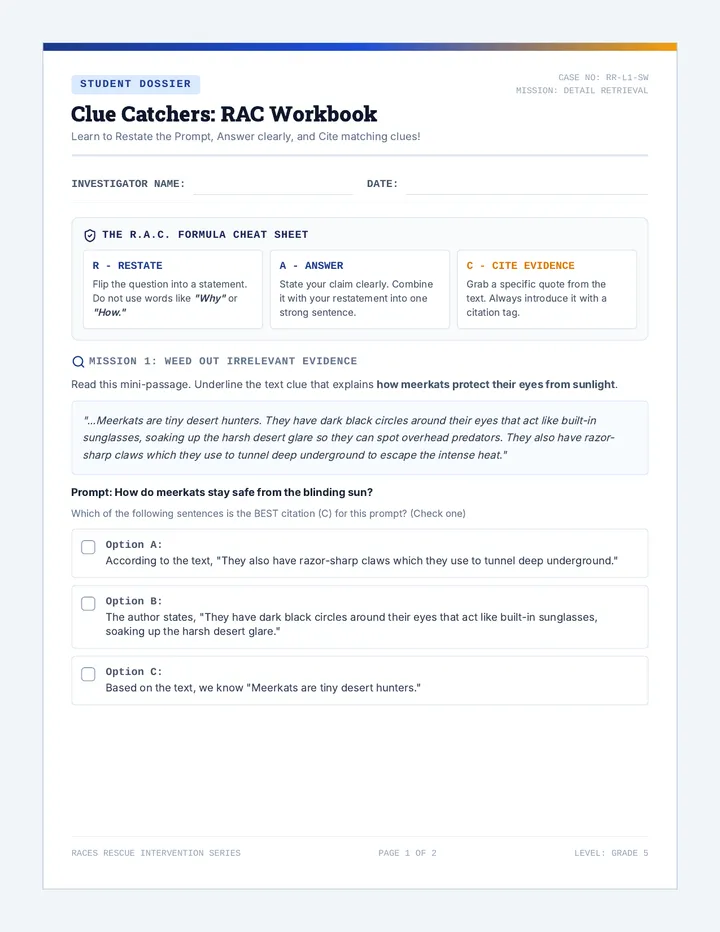
A targeted multi-day academic intervention sequence for fifth-grade readers struggling to synthesize main ideas and explain text evidence. Using the structured RACES writing framework, students transition from copying raw details to providing robust, analytical explanations of how their cited evidence proves their claims.
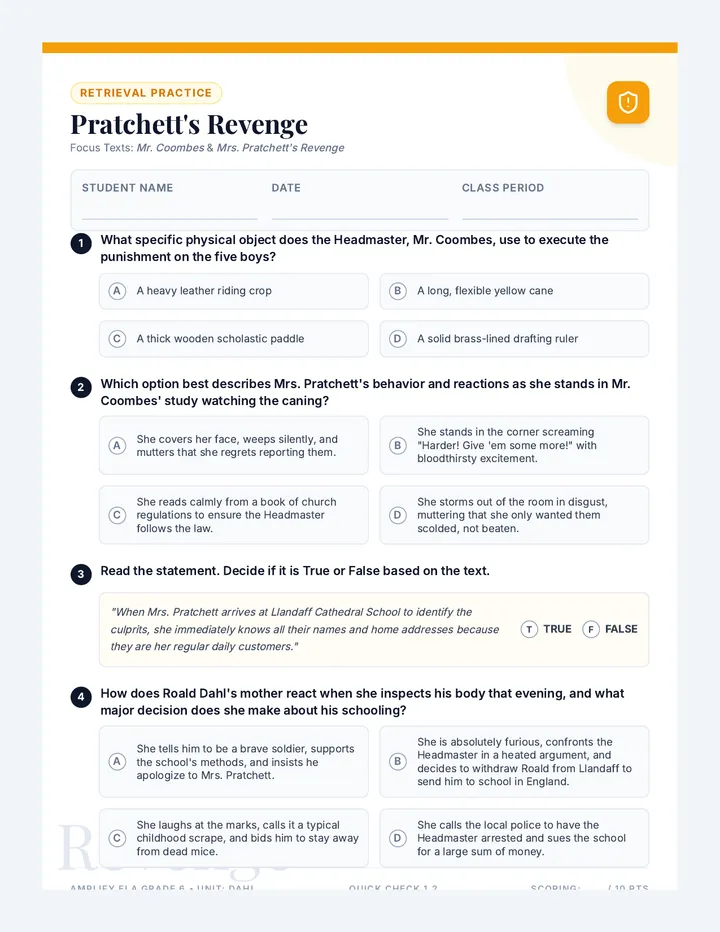
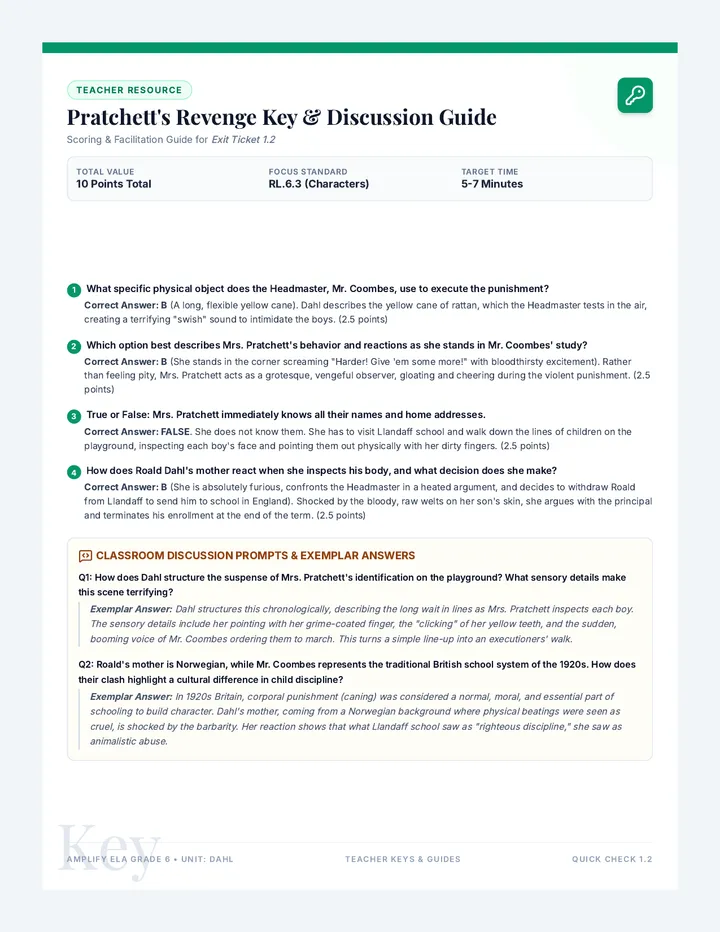
Covers retrieval and vocabulary for the suspenseful climax and immediate aftermath of the mouse plot, focusing on the confrontation with Mrs. Pratchett and Mr. Coombes.
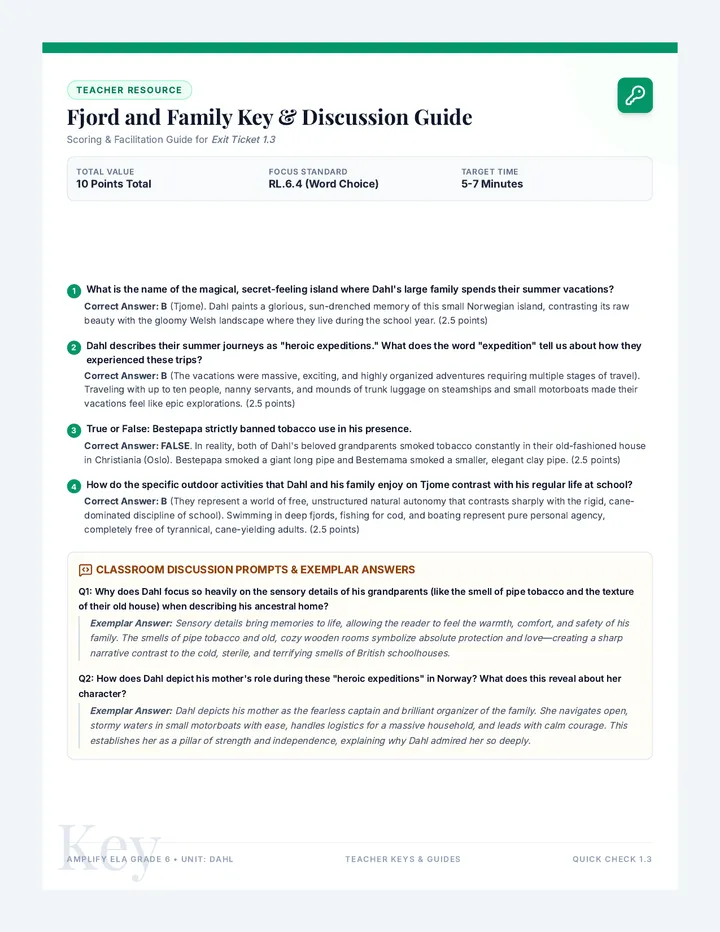
A comprehensive teacher guide and answer key for the Fjord and Family Exit Ticket, including student common misconceptions, detailed grading rubrics, and discussion starters.
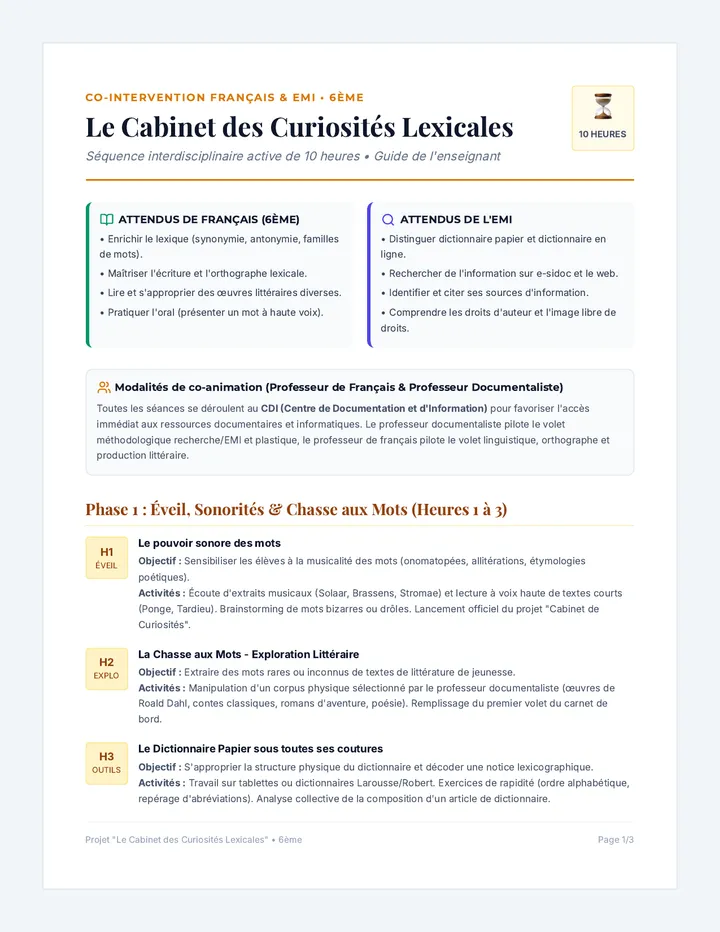
Séquence interdisciplinaire (Français et Éducation aux Médias et à l'Information) de 10 heures pour des élèves de 6ème. Les élèves explorent des mots rares et mélodieux à travers une approche mixte (papier, numérique, littéraire et musicale), rédigent des articles lexicographiques et créent des affiches de cabinet de curiosités lexicales pour le collège.
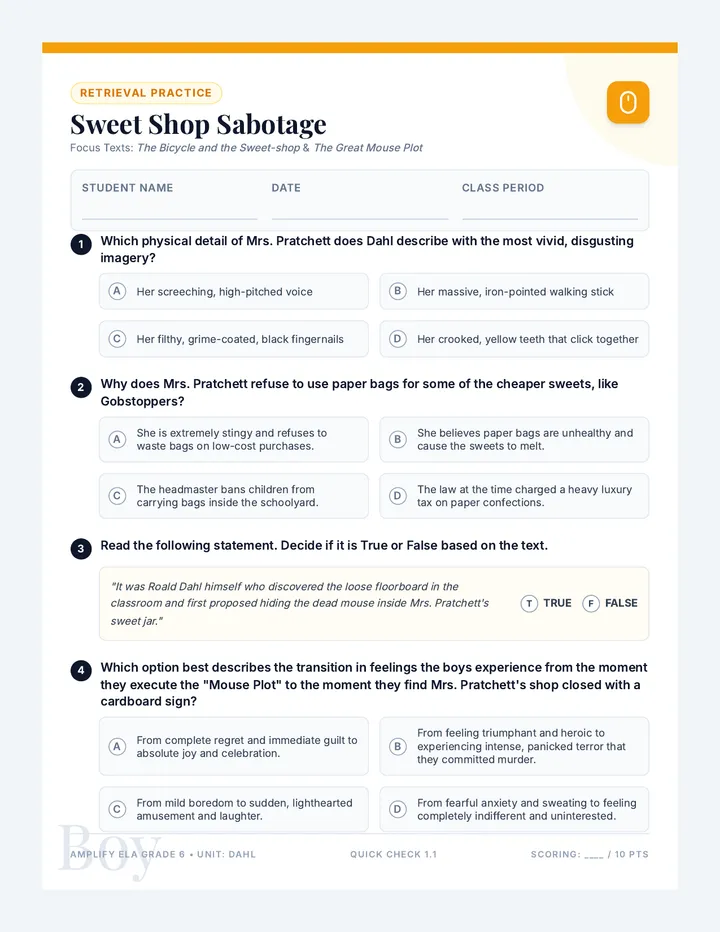
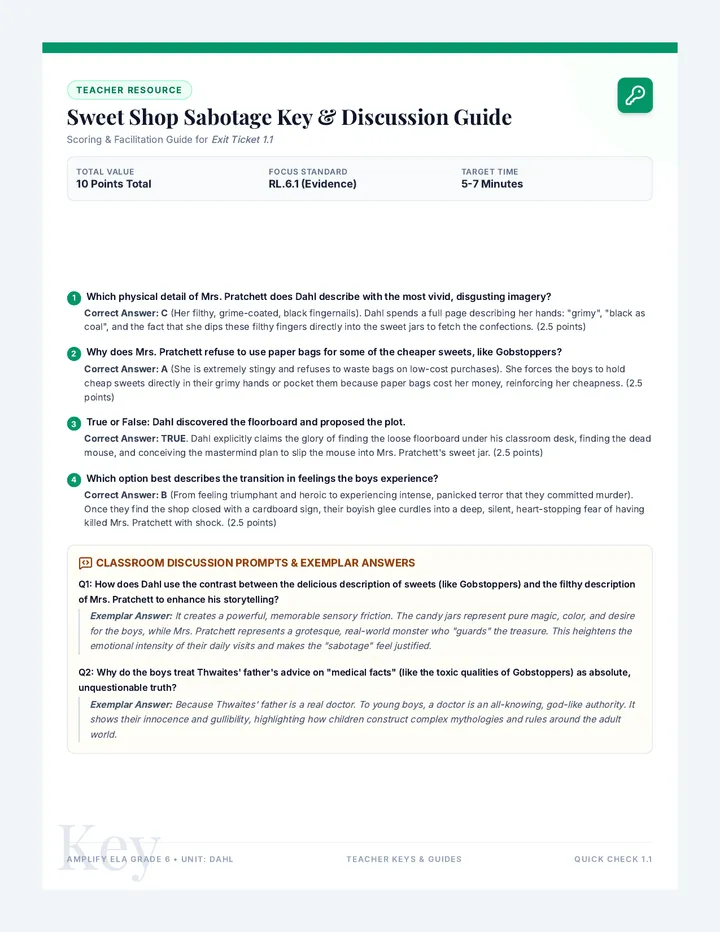
Focuses on retrieval questions for 'The Bicycle and the Sweet-shop' and 'The Great Mouse Plot' chapters of Dahl's memoir, reinforcing comprehension, vocabulary, and early narrative exposition.
A printable 1-page student exit ticket focusing on the chapters 'Going to Norway' and family summer vacation customs, retrieving key details about Dahl's ancestral home, travel logs, and family members. All questions are converted to multiple-choice and true/false.