Student worksheet for Lesson 2 where Kindergarteners sort temperature adjectives (freezing, chilly, warm, boiling) onto a visual scale from coldest to hottest. Includes a quick check section with image prompts.
Student workbook page for Lesson 6 (The Synthesizing Secret). Features a "Thinking Evolution Log" to track changes in understanding at 0%, 50%, and 100% of the text. Includes a synthesis challenge. Revised for contrast, larger text, and single-page fit.
Slides for Lesson 6 (The Synthesizing Secret). Explains synthesis through baking and puzzle metaphors. Revised for contrast and visibility. Added high-contrast labels and improved math symbols.
Teacher guide for Lesson 6 (The Synthesizing Secret). Teaches students how to track thinking changes and synthesize new information as they read. Includes metaphors like puzzles and nesting dolls.
Student workbook page for Lesson 5 (The Questioning Quest). Features a "Quest Map" for tracking questions before and during reading, categorization of Thick vs. Thin, and a reasoning challenge. Revised for alignment, readability, and fit on one page.
Slides for Lesson 5 (The Questioning Quest). Introduces Thick and Thin questions through the metaphor of a search quest and a map. Includes practice examples.
Teacher guide for Lesson 5 (The Questioning Quest). Introduces the concept of Thick vs. Thin questions and teaches students how to actively engage with text through self-generated inquiry.
Student workbook page for Lesson 4 (Mental Movie Marathon). Includes a storyboard drawing area, sensory checklists, and a deductive reasoning challenge based on sensory text clues. Revised for answer choice uniformity, larger writing areas, and readability.
Slides for Lesson 4 (Mental Movie Marathon). Uses movie production metaphors (Mind Camera, lenses, blockbusters) to explain visualization and sensory details.
Teacher guide for Lesson 4 (Mental Movie Marathon). Focuses on teaching visualization through a sensory lens, using storyboards and movie metaphors to ground abstract comprehension.
Student workbook page for Lesson 3 (Inference Investigation). Features the E+S=I equation, practice cases with specific text evidence, and a reasoning check to distinguish between inferences and wild guesses. Includes strategy clues.
Teacher guide for Lesson 3 focusing on Inferences. Introduces the formula 'Evidence + Schema = Inference' and uses Reading Detective techniques to teach students how to read between the lines.
A student workbook page for Lesson 2 (Schema Suitcase). Features a 'Packing List' for activating prior knowledge before reading and space for adding new information. Includes strategy clues and pattern recognition prompts.
A teacher guide for Lesson 2 focusing on Schema. Uses the 'Schema Suitcase' concrete metaphor from Comprehension Connections to help students activate prior knowledge before reading.
A student activity journal page for Lesson 1. Includes a 'Thinking Voice Log', a 'Catch a Thought' visual section, and a deductive reasoning puzzle. Features strategy clues to support learners.
A visually engaging slide deck introducing metacognition ('Brain Power') to students. Uses the metaphor of a 'Thinking Voice' vs. a 'Reading Robot' to make abstract thinking concepts concrete.
A teacher guide for the first lesson in the Mind Detective series, focusing on introducing metacognition and the 'thinking voice' to elementary students. Includes differentiation for K-6.
A final revised teacher answer key with improved contrast for labels, fixed arrow rendering, and corrected layout to prevent section splitting.
A revised slide deck for phonics instruction including 5 specific practice slides with decodable sentences, fixed arrow rendering, and increased text contrast for classroom visibility.
A final revised Lesson 5 phonics worksheet with wider writing areas in the word builder section and darkened lines for better print visibility.
A revised Lesson 4 phonics worksheet that fits on a single page, removes target word highlighting to ensure students perform the identification task, and increases writing space visibility.
A final revised Lesson 3 phonics worksheet that fits on a single page, removes pre-highlighted target words, and uses solid white writing areas for high contrast.
A final revised Lesson 2 phonics worksheet with improved instructions, expanded writing space with mid-line support, and a strict 1-page layout.
A final revised phonics worksheet for Lesson 1 (Short Vowels) with a guaranteed 1-page layout, expanded word variety, and solid white student work areas for better legibility.
A phonics worksheet where students fill in the missing short vowel for CVC words and practice writing a sentence with sight words.
A phonemic awareness worksheet where students sort pictures into columns based on their middle short vowel sound.
A printable board game for practicing high-frequency sight words (the, is, in, on) in an adventure-themed "Safari" layout.
A visually engaging slide deck introducing the five short vowel sounds using the "Vowel Valley" mouth-shape concept, including example words and high-frequency sight words.
A comprehensive facilitation guide for the Vowel Valley lesson, including instructional steps, discussion prompts, activity overviews, and answer keys.
A teacher guide for the Vowel Valley lesson, providing pacing, objectives, and instructional tips for the phonics and sight word activities.
A set of 4 unique bingo cards and a call list for practicing short vowel CVC words in a fun, group setting.
A sight word practice worksheet with tracing, finding, and identifying common high-frequency words in a 'Sight Word Safari' theme.
A phonics-based worksheet where students identify short vowel sounds in pictures and complete CVC words using a 'Vowel Hunter' nature theme.
A high-energy presentation using a 'Vowel Valley Expedition' theme to introduce short vowel sounds and foundational sight words with clear visuals and phonetic cues.
A comprehensive guide for teachers including the correct narrative sequence, learning objectives, and discussion prompts to deepen student understanding.
A worksheet for students to transcribe their ordered sentences into a cohesive narrative. Includes a reflection question to identify the moral of the story.
A printable set of sentence strips from the story for students to cut out and manually arrange. Encourages tactile engagement and logical sequencing of the narrative events.
A vibrant slide deck to introduce the story of 'The Shepherd Boy' and guide students through the sequencing activity. Features clear, large text and visual cues to support narrative comprehension.
A set of creative coloring pages featuring large bubble letters and objects that start with the /v/ sound, such as a volcano, van, and violin.
A detailed answer key for the Letter V worksheets, providing visual solutions for the search grid and maze path activities.
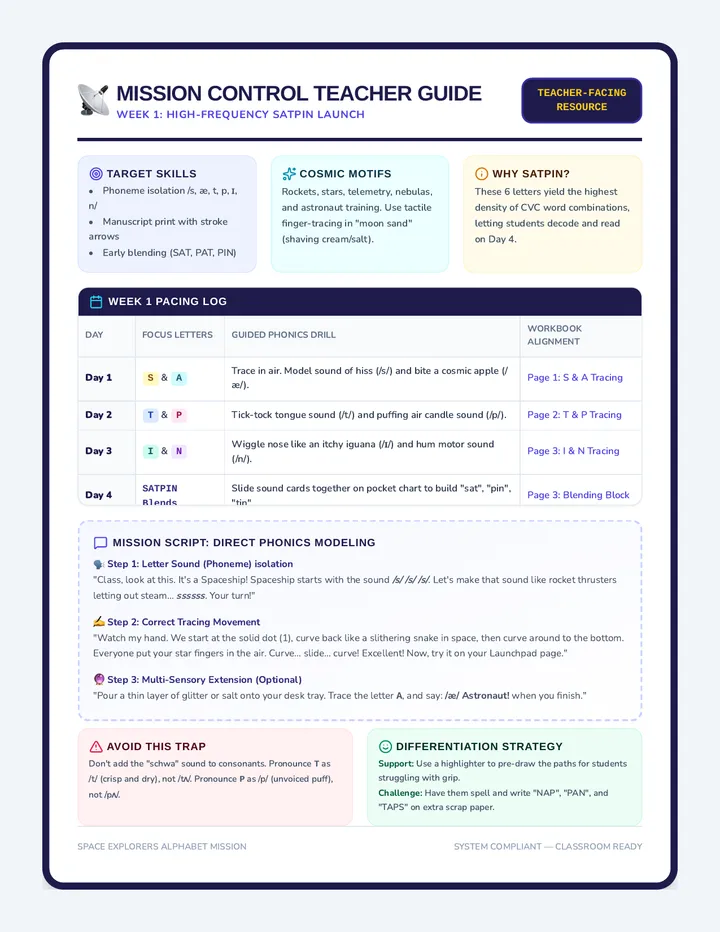
A teacher guide providing instructional scripts, lesson pacing, phonics tips, and differentiation strategies for teaching letter V identification.
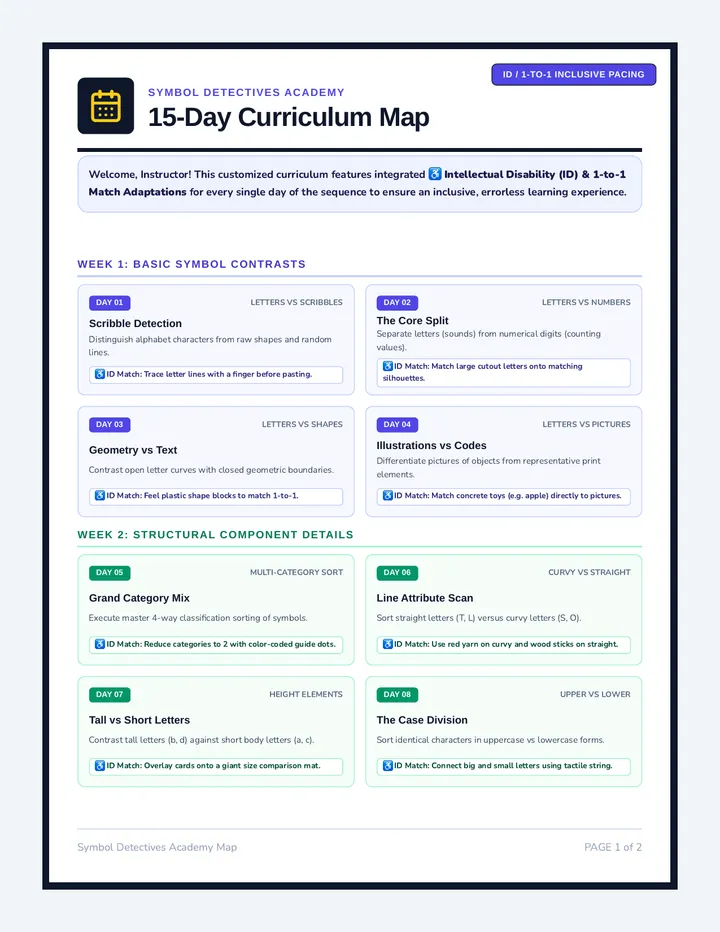
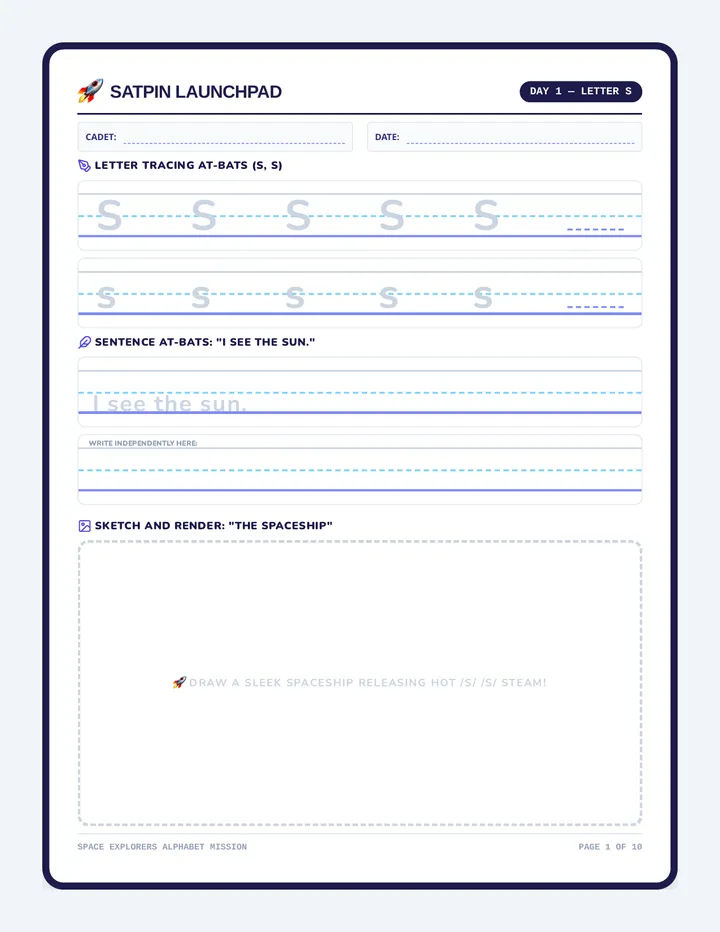
A handwriting and identification worksheet featuring large tracing guides, writing lines, and a "path maze" where students identify V to reach a goal.