Lenny.com
Explore
Create
ActivitiesNewMathEnglish Language ArtsScience & EngineeringSocial StudiesGlobal LanguagesHealth & Physical EducationSpecial EducationCounseling & Life SkillsArts & CreativityESL
Lenny.com
Lenny.com
Explore
Create
ActivitiesNewMathEnglish Language ArtsScience & EngineeringSocial StudiesGlobal LanguagesHealth & Physical EducationSpecial EducationCounseling & Life SkillsArts & CreativityESL
Lenny.com
Lenny.com

Solutions

Lenny for EducatorsLenny for SchoolsLenny for Districts

Product

ExploreSign inCreateSupportAbout

Resources

Getting startedMTSS Acceleration Program

© 2026 Lenny Learning Inc.

TermsPrivacyAccessibility
LinkedInInstagramX
Lenny
English Language ArtsPhonics & Reading FoundationsLetter IdentificationLearn Letters A-ZLowercase and Uppercase LettersConsonants and VowelsLetter-Sound AssociationsLetter-Sound Associations: LowercaseLetter-Sound Associations: UppercaseBeginning and Ending SoundsRhymingBlending And SegmentingShort VowelsShort Vowel SoundsConsonant BlendsConsonant DigraphsBlends, Digraphs, and TrigraphsDigraphs, Blends, and Silent LettersLong Vowel SoundsLong Vowel PatternsShort and Long VowelsShort and Long Vowel PatternsSilent EVowel SoundsVowel TeamsR-Controlled VowelsDiphthongs: Oi, Oy, Ou, OwVariant VowelsVariant, Diphthong, And R Vowel PatternsSoft G And CSight WordsIrregular WordsWord RecognitionSyllablesSyllable TypesTwo-Syllable WordsMultisyllabic WordsPhoneme ManipulationDecodable TextsVocabularyAction WordsQuestion WordsNouns and AdjectivesClassify WordsCompound WordsSynonyms and AntonymsHomophonesHomophones and HomonymsShades of MeaningContext CluesPrefixes and SuffixesGreek and Latin RootsAnalogiesIdioms and AdagesForeign Words and ExpressionsWord Choice and UsageReference SkillsReading ComprehensionRead-Along Literary TextsRead-Along Informational TextsReality vs. FictionStory ElementsCharacterSequenceMain IdeaCause And EffectCompare And ContrastReading StrategiesText StructureAuthor's PurposeAuthor's Purpose And ToneAuthor's PerspectivePoint Of ViewThemeInference And ThemeInference And AnalysisPoetry ElementsLiterary DevicesAnalyzing LiteratureAnalyzing Informational TextsComparing TextsAudience, Purpose, And ToneBusiness DocumentsNovel StudyNonfiction Book StudyGrammar & MechanicsSentencesNounsVerbsAdjectivesPronounsCapitalizationPunctuationContractionsConjunctionsPrepositionsArticlesAdjectives And AdverbsVerb TypesVerb TensePronouns And AntecedentsPronoun TypesSubject-Verb AgreementDirect And Indirect ObjectsSentences, Fragments, And Run-OnsPhrases And ClausesCommasSemicolons, Colons, And CommasDashes, Hyphens, And EllipsesSpellingAbbreviationsFormattingVerb Tense And MoodMisplaced ModifiersWritingDescriptive DetailsCreative WritingOpinion WritingTopic SentencesOrganizing WritingLinking WordsSentence VarietyIntroductions And ConclusionsPersuasive And Opinion WritingExpository WritingPersuasive StrategiesDeveloping And Supporting ArgumentsTopic Sentences And Thesis StatementsSummarizingResearch SkillsEditing And RevisingActive And Passive Voice=Writing Clearly And ConciselyDebate & Public SpeakingPublic Speaking BasicsPersuasive TechniquesClaims and EvidenceTypes of ArgumentsReasoning TypesLogical FallaciesTopic ResearchOrganizing EvidenceDebate Speech OrganizationAttacking and Defending ArgumentsClash and EngagementImpact CalculusQuestioning and Cross-ExaminationCritical ThinkingInformal LogicFormal LogicInductive Reasoning

Noun Navigator Worksheet

A two-sided comprehensive noun sorting worksheet. Side 1 challenges students to distinguish concrete from abstract nouns with an anchor reference, word bank, sorting columns, and a sentence challenge. Side 2 features a 5-way classification into person, place, thing, idea, and animal categories, with common and proper nouns, capitalization guidance, realm-swap challenges, and creative sentence construction.

CQColleen Quinn

You might also like

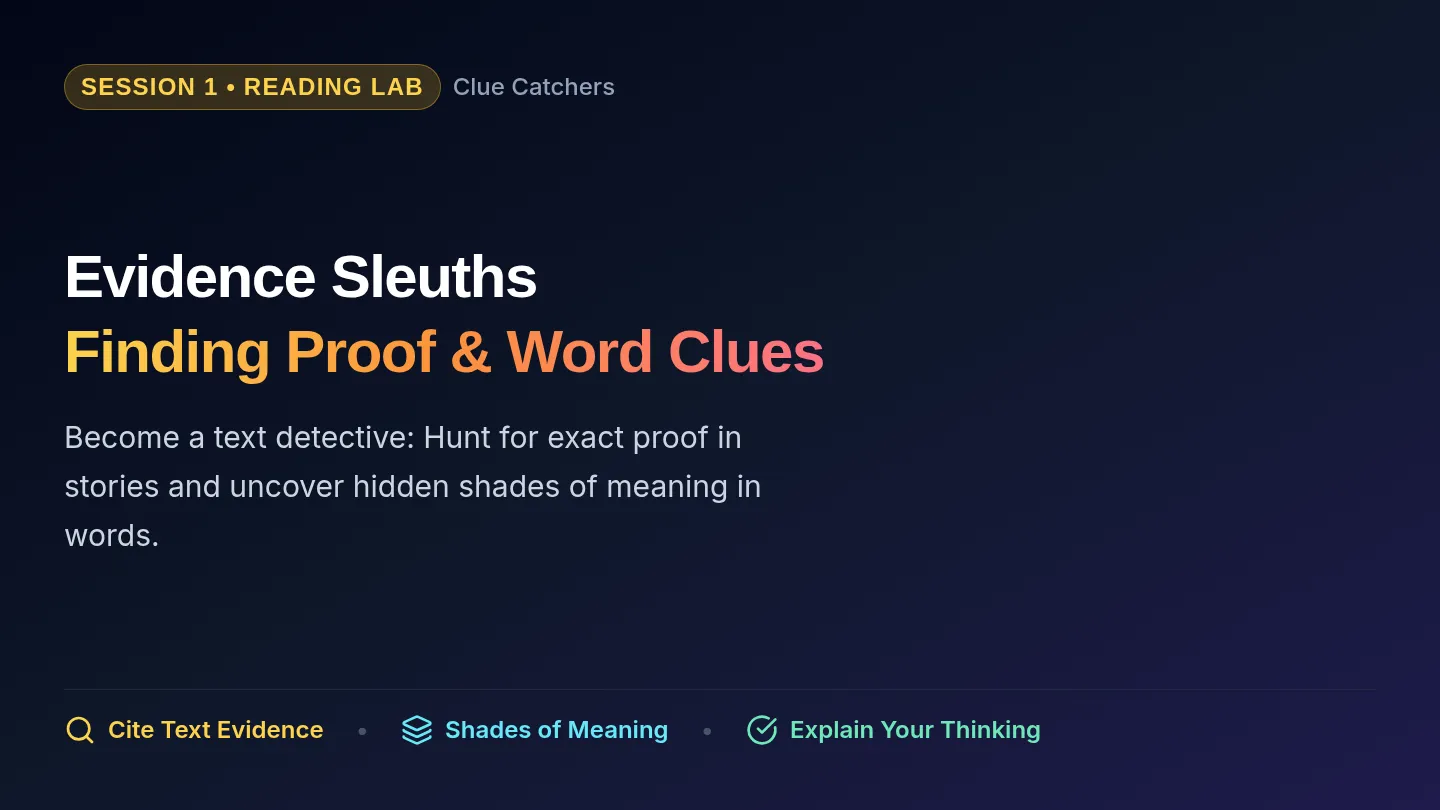
Evidence Sleuths Slides

Clue Catchers

A two-part literacy sequence designed for 6th grade striving readers to master text evidence, word shades of meaning, and concise objective summarizing. Students build investigative reading habits through scaffolded frameworks, high-interest texts, and structured vocabulary exploration.

AD

amee dougherty

9
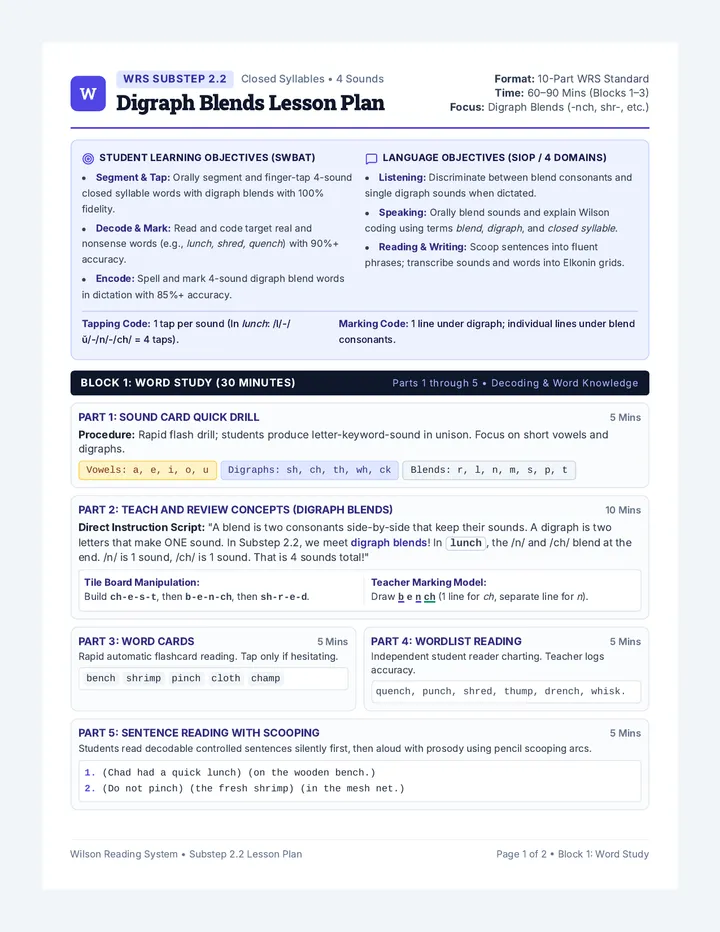
Digraph Blend Quest Lesson Plan

Digraph Blend Quest

Comprehensive Orton-Gillingham Wilson Reading System Substep 2.2 lesson focusing on 4-sound words with digraph blends (including final digraph blends like -nch, initial digraph blends like shr-, and words with blends and digraphs). Covers multisensory finger-tapping, Wilson coding and marking rules, sound drills, decodable sentence scooping, and dictation.

KW

Kellie Walsh

4
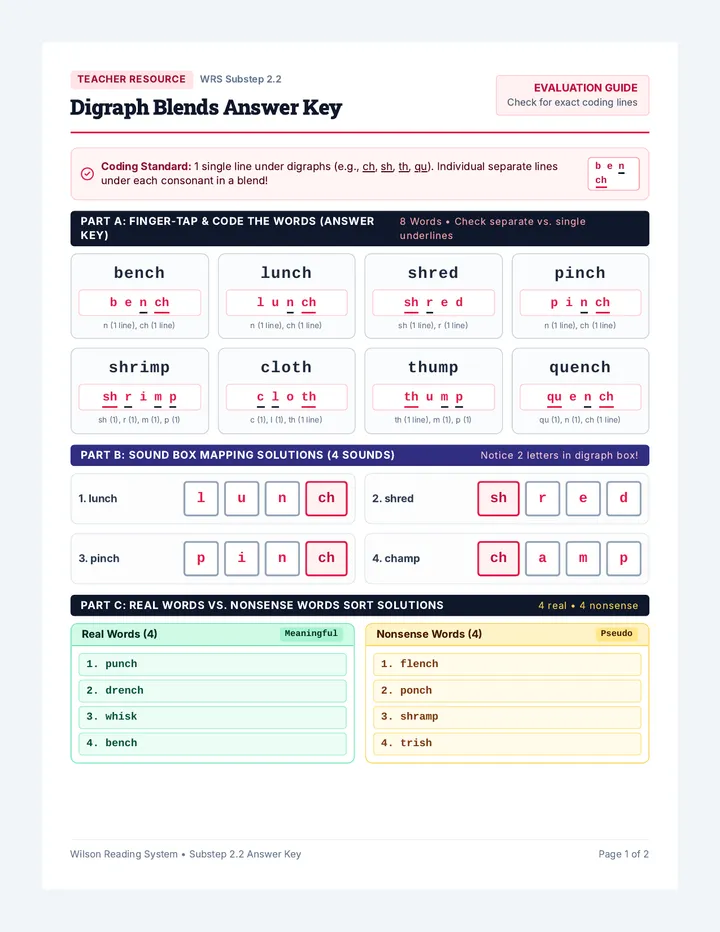
Digraph Blend Quest Answer Key

Digraph Blend Quest Answer Key

Complete 2-page teacher answer key for the Wilson Substep 2.2 Digraph Blends Independent Practice Worksheet. Features precise coding overlays, Elkonin box letter allocations, real vs. nonsense sort answers, sentence cloze solutions, scooping phrase keys, and dictation scoring criteria.

KW

Kellie Walsh

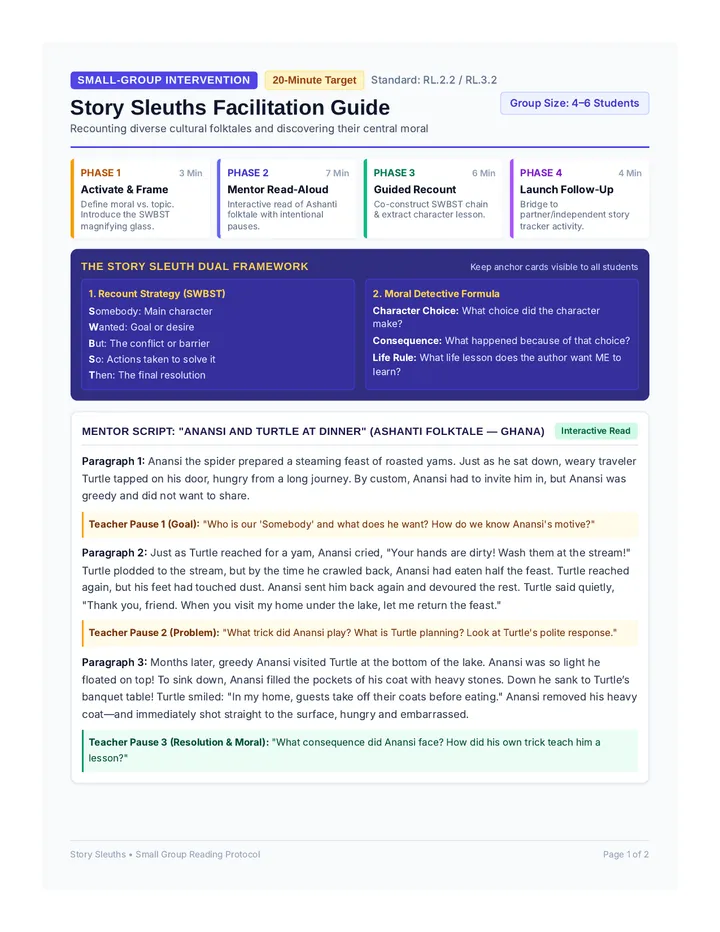
Story Sleuths Facilitation Guide

Story Explorers

An interactive, high-impact reading comprehension unit targeting core foundational literature standards. Students master recounting diverse folktales, extracting central morals, and analyzing how characters respond to major events and challenges.

S

Squiretak

8
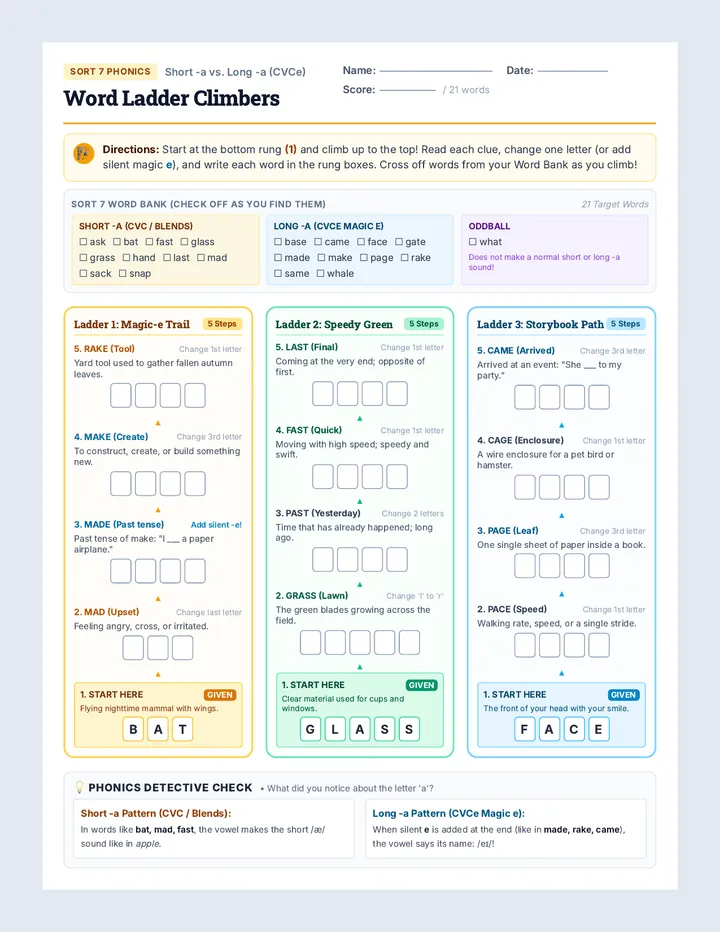
Short and Long a Word Ladder Worksheet

Vowel Ladder Climbers

A collection of phonics word ladder worksheets exploring short vowel versus long vowel CVCe patterns. Students step through letter-change rungs and classify target words in hands-on sound sorting vaults.

N

nmack

2
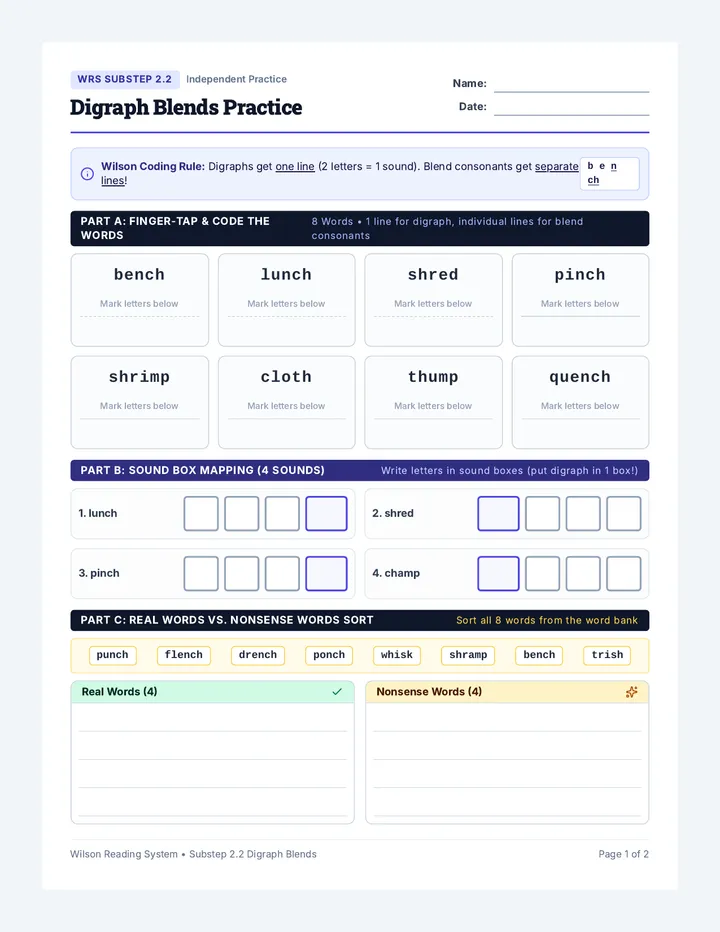
Digraph Blend Quest Practice Worksheet

Digraph Blend Quest Practice Worksheet

A 2-page Orton-Gillingham independent practice worksheet for Wilson Substep 2.2 Digraph Blends. Includes word coding, Elkonin sound box mapping, real vs. nonsense sorting, controlled sentence completion, fluency scooping, and authentic dictation response grids.

KW

Kellie Walsh

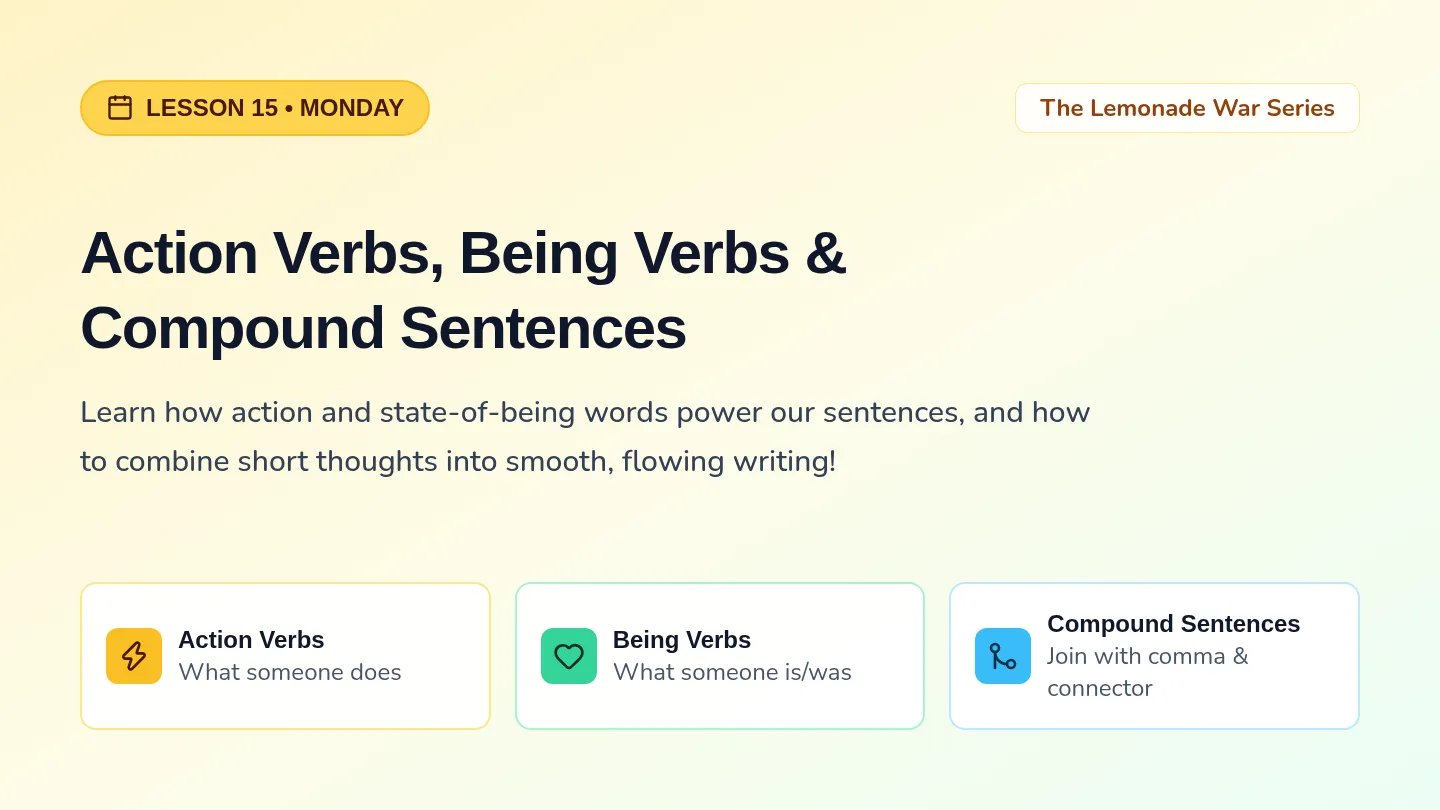
Lemonade Verbs Slides

Reading Writing Workshop

An engaging elementary English Language Arts unit connecting grammar mechanics, mentor texts, vocabulary, and sensory descriptive writing.

B

Bhoovaragavaswamym

8
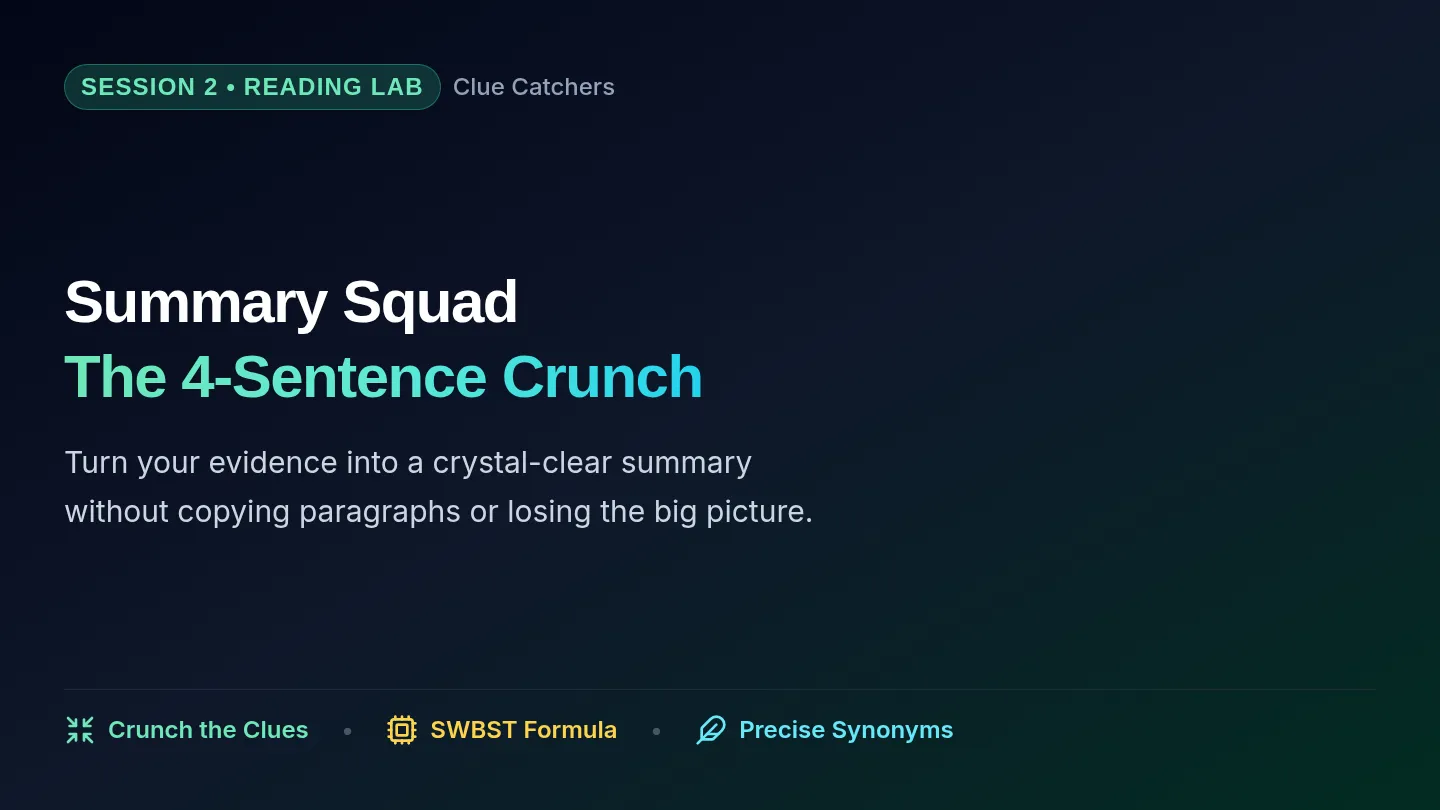
Summary Squad Slides

Summary Crunch

Session 2 builds upon evidence gathering to construct tight, objective summaries using the SWBST framework and precise word choices. Students distinguish between similar words to capture author meaning without copying excess text.

AD

amee dougherty

4
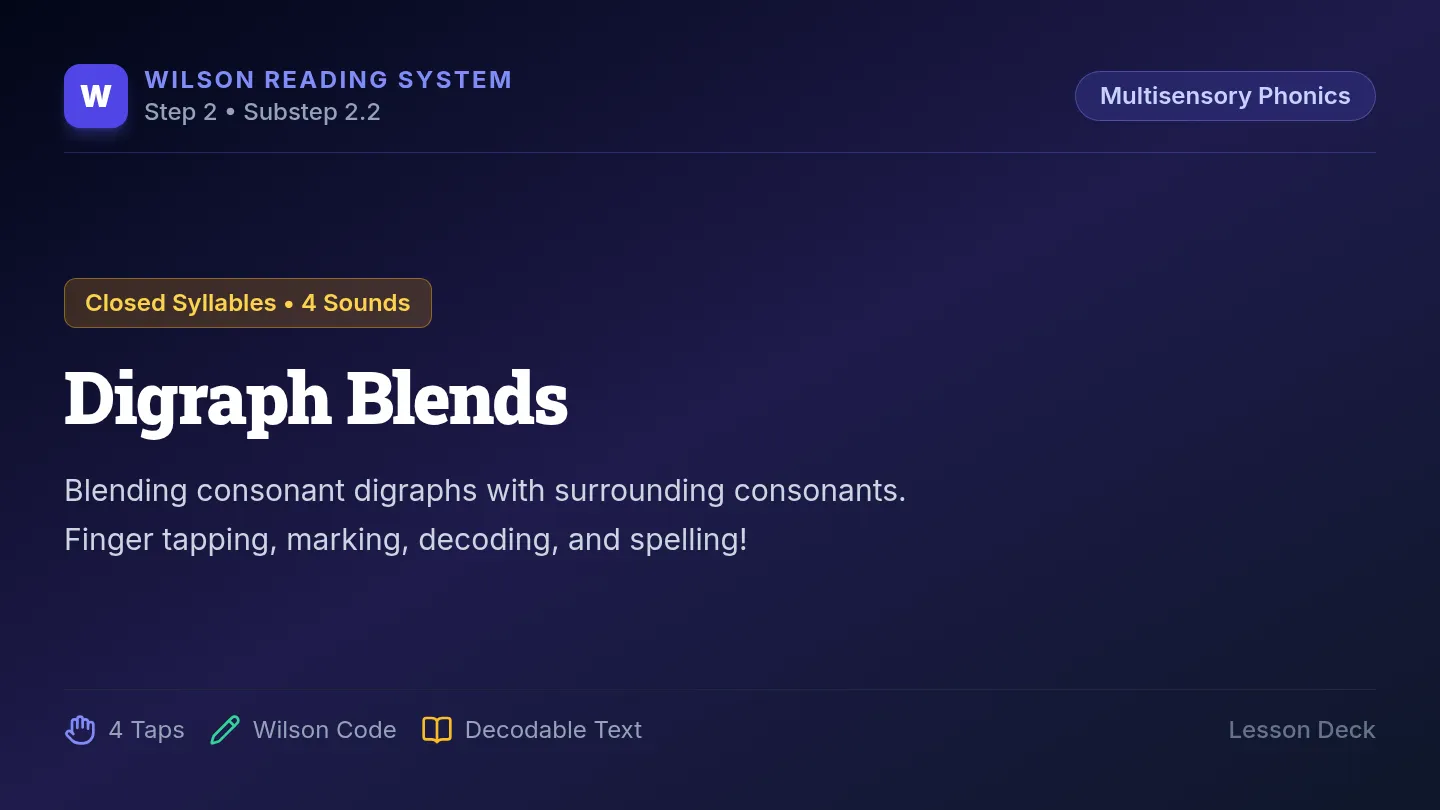
Digraph Blend Quest Slides

Digraph Blend Quest Slides

Interactive 10-slide Orton-Gillingham instructional slide deck for Wilson Substep 2.2 Digraph Blends. Features explicit student learning objectives and 4-domain language objectives, sound drills, finger-tapping demonstrations, coding rules, word blending cards, nonsense word challenges, and sentence scooping.

KW

Kellie Walsh

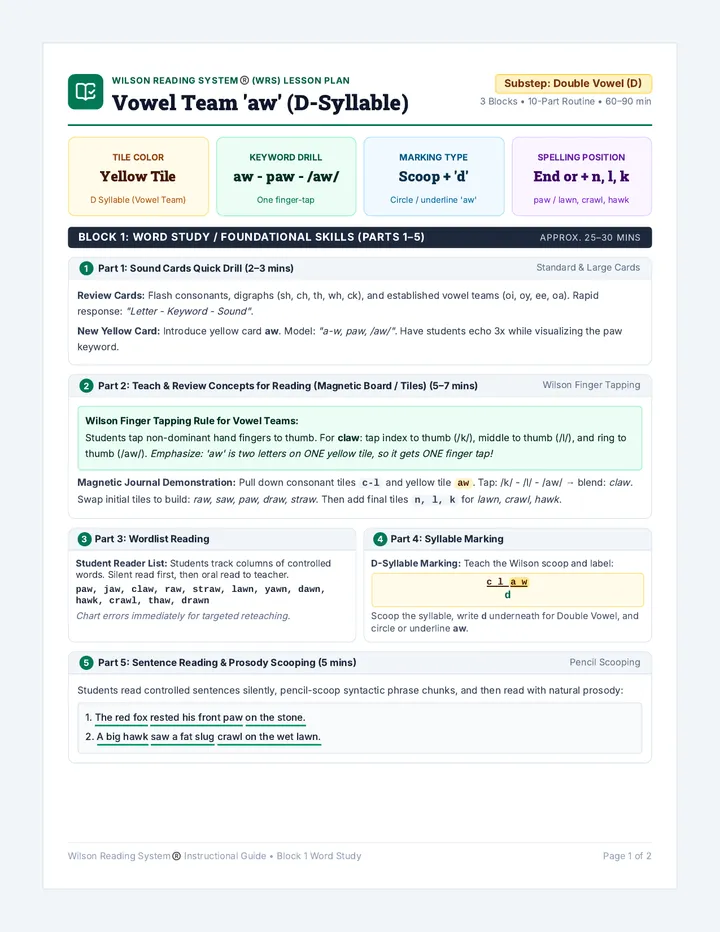
Paw Print Teacher Guide

Vowel Team Aw Pathways

A comprehensive structured literacy sequence targeting the vowel team 'aw', offering dual instructional pathways using both the Classic Orton-Gillingham 7-step routine and the 10-part Wilson Reading System (WRS) framework.

KW

Kellie Walsh

10
Evidence Sleuths Slides

Word Clues

Session 1 guides striving readers to hunt for direct textual evidence using clear sentence frames while analyzing subtle shades of meaning among synonyms. Students read a high-interest mystery passage and practice distinguishing word intensity and emotional tone.

AD

amee dougherty

5
Digraph Blend Quest Lesson Plan

Digraph Blend Quest Lesson Plan

A comprehensive 2-page Orton-Gillingham Wilson Reading System Substep 2.2 lesson plan covering all 10 lesson parts. Features explicit student learning objectives (SWBAT) and 4-domain language objectives (listening, speaking, reading, writing), along with finger-tapping protocols, marking rules, controlled word lists, and dictation items.

KW

Kellie Walsh