A comprehensive teacher guide for a 4th-grade ELA lesson on character analysis. It includes a detailed lesson plan with timing, instructional strategies, differentiation tips, and an answer key, all presented in a 'Detective Case File' theme.
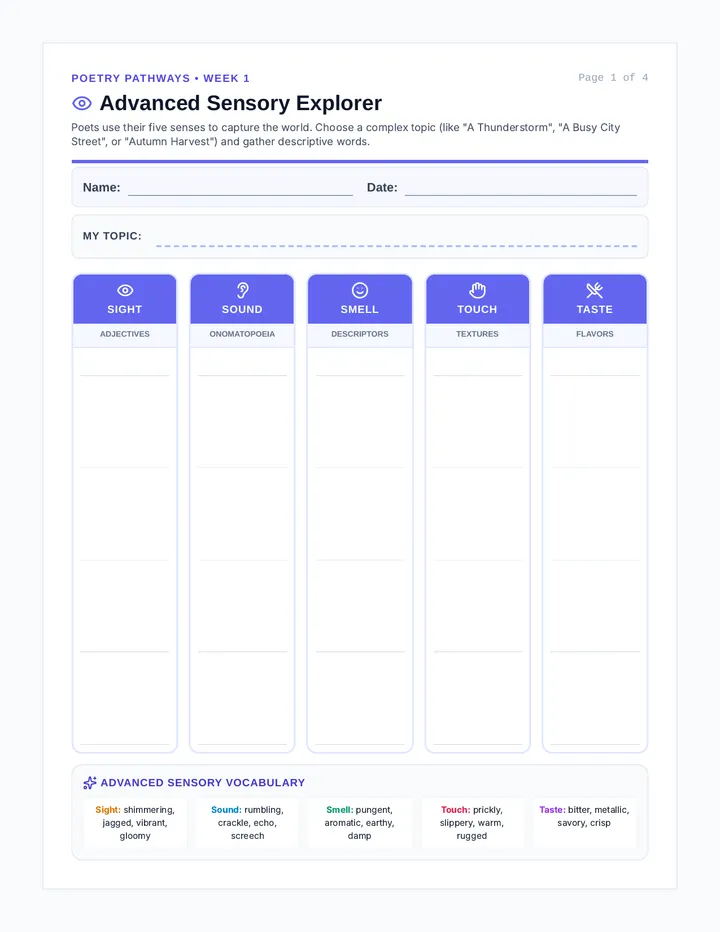
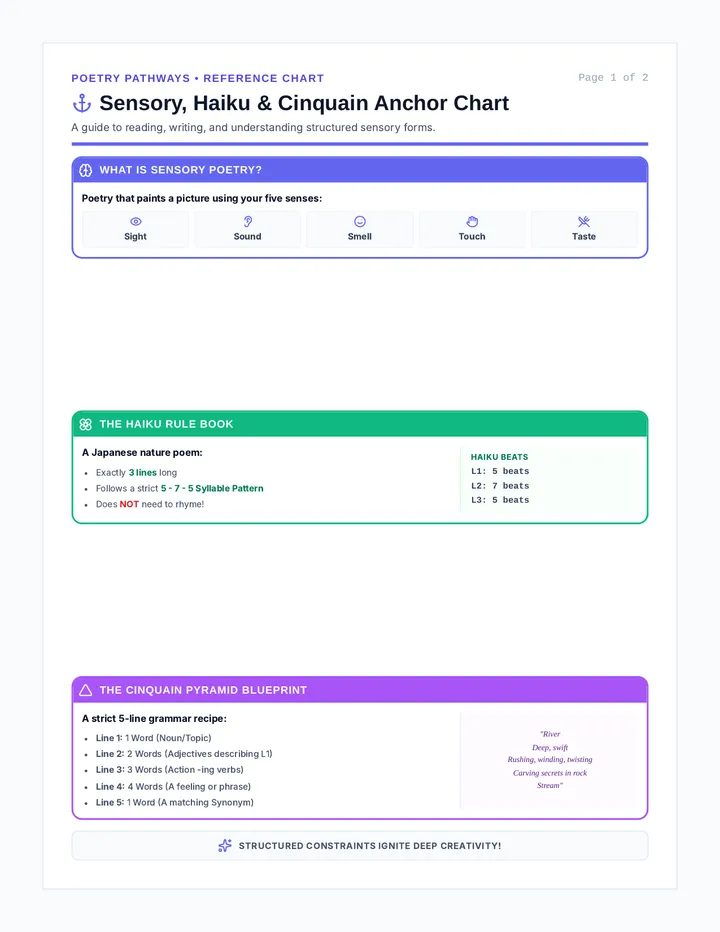
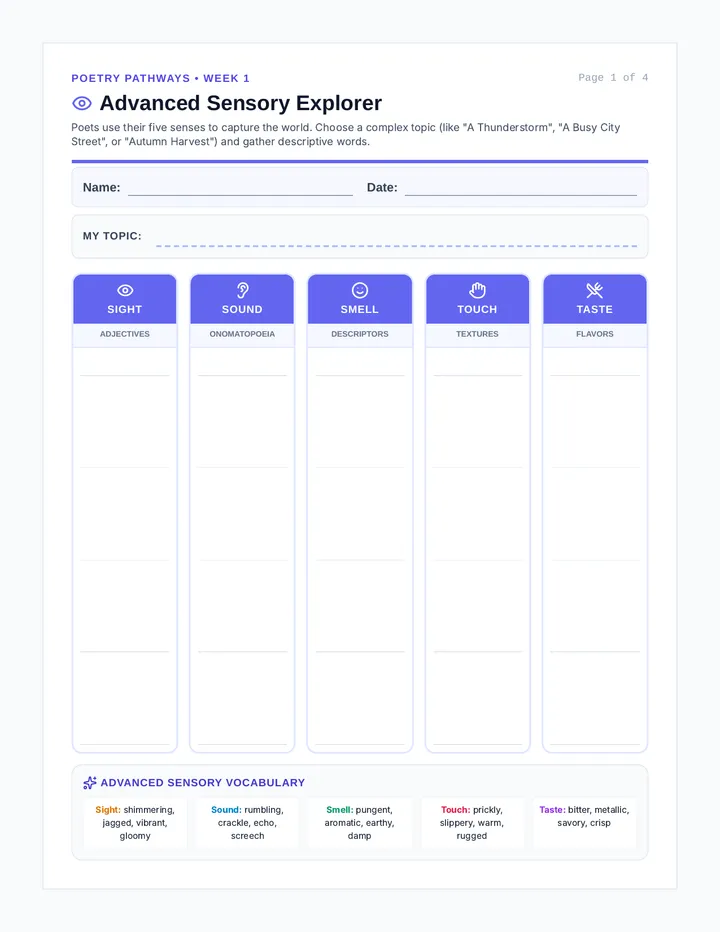
A two-page guided worksheet for students to brainstorm spring-themed grammar and figurative language, then craft a structured poem.
Facilitator script for Lesson 6 of the Thinking Readers Program. Aligned with Bloom's Taxonomy (Remember, Analyze, Evaluate, Create). Focuses on Synthesis (Thinking Evolution). Includes character shift modeling and explicit Bloom's checks. Revised for branding and layout.
Facilitator script for Lesson 5 of the Thinking Readers Program. Aligned with Bloom's Taxonomy (Understand, Analyze, Evaluate). Teaches the Curiosity Compass strategy for generated questioning. Revised for branding and layout.
Facilitator script for Lesson 4 of the Thinking Readers Program. Aligned with Bloom's Taxonomy (Remember, Apply, Create). Focuses on Visualization (The Sensory Cinema). Includes explicit strategy modeling for 4D sensory reading.
Facilitator script for Lesson 3 of the Thinking Readers Program. Aligned with Bloom's Taxonomy (Understand, Apply, Analyze, Evaluate). Teaches the 'Clue Equation' strategy for inferencing. Includes explicit Bloom's check for evaluation.
Facilitator script for Lesson 2 of the Thinking Readers Program. Aligned with Bloom's Taxonomy (Remember, Understand, Analyze, Create). Focuses on activating background knowledge (The Knowledge Vault). Revised for branding and taxonomy labels.
Facilitator script for Lesson 1 of the Thinking Readers Program. Explicitly aligned with Bloom's Taxonomy (Remember, Apply, Analyze, Evaluate). Includes the specific 'Brain Choice' prompt and modeling for metacognition.