A 4th-grade ELA lesson focused on analyzing character actions and supporting claims with text-based evidence and details. Students act as 'Character Detectives' to uncover what actions reveal about a character's personality.
A lesson on the past progressive tense (was/were + verb-ing) focused on describing ongoing and interrupted actions in the past through a detective mystery theme.
A scaffolded introductory lesson on using common prefixes (un-, re-, dis-, mis-) to decode word meanings, featuring hands-on sorting activities and visual organizers.
A comprehensive 30-45 minute lesson on the past perfect tense, featuring explicit instructions, a time-travel themed worksheet, and a detailed teacher guide. This lesson helps students understand how to sequence two past events using the 'past before the past' structure.
A 30-45 minute lesson focused on decoding multisyllabic words using morphology (prefixes, suffixes, and root words). Students will learn to 'mine' for meaning by breaking words into their component parts.
A lesson focused on introducing topics clearly and grouping related cause-and-effect information into cohesive paragraphs. Students will learn to use topic sentences to set the stage for detailed explanations of why things happen.
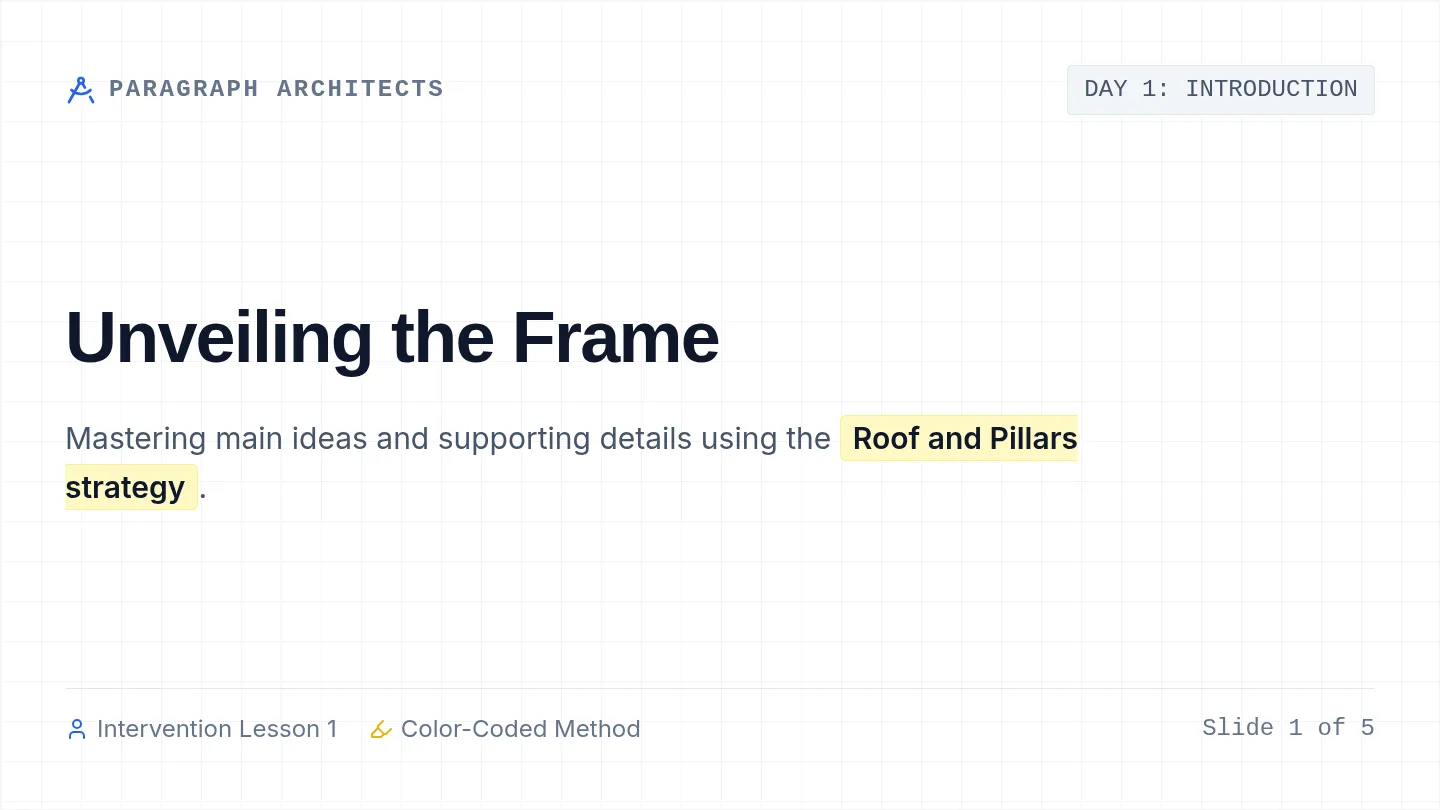
A lesson focused on determining the main idea and identifying supporting key details using a science passage about animal architects. Students will learn to distinguish between the big picture and the specific facts that support it.
A lesson focused on identifying the reasons and evidence provided by a speaker in an educational video about the importance of bees. Students take on the role of 'Evidence Detectives' to map out the speaker's arguments.
A comprehensive 30-45 minute lesson on the present progressive tense, focusing on forming 'am/is/are + verb-ing' to describe actions happening in the immediate moment.
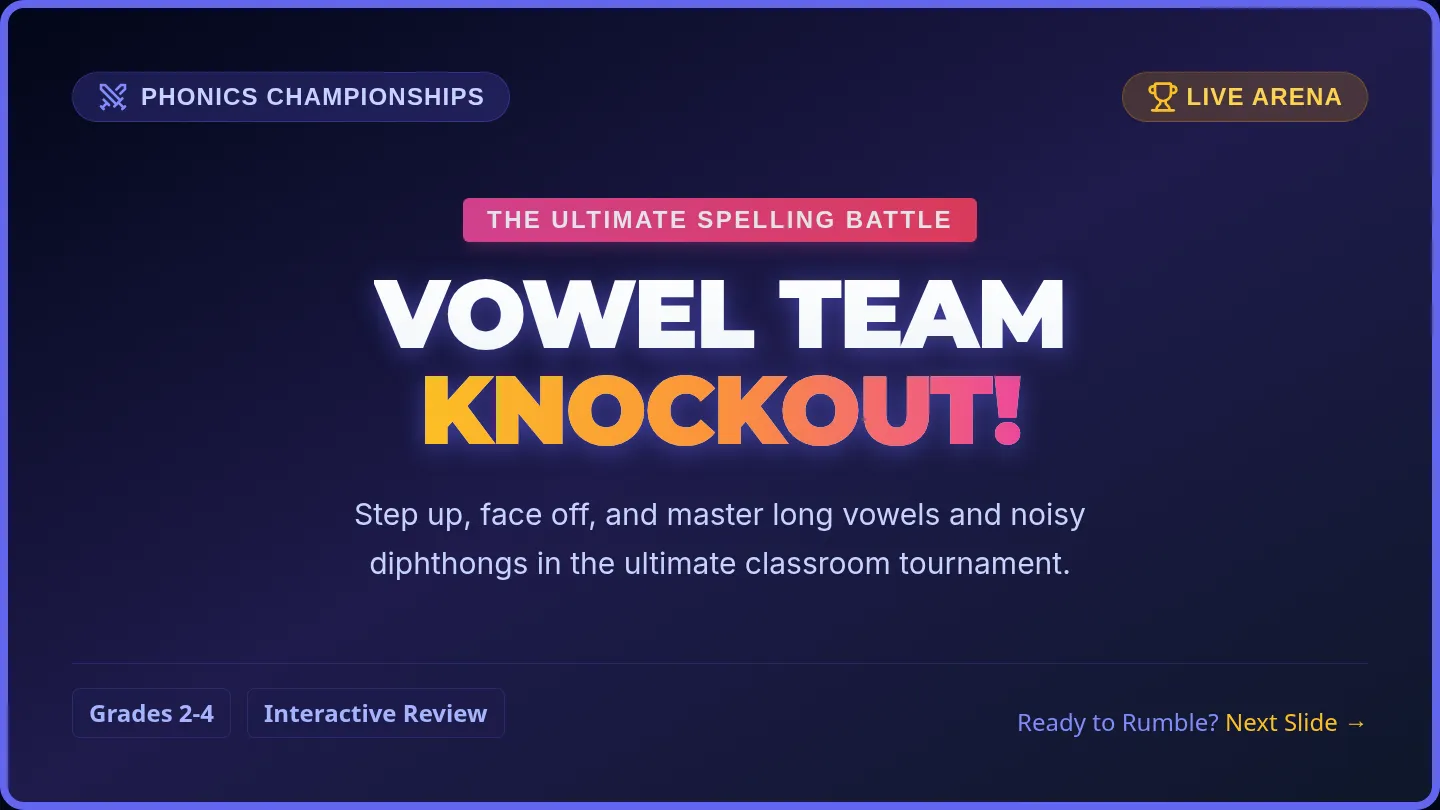
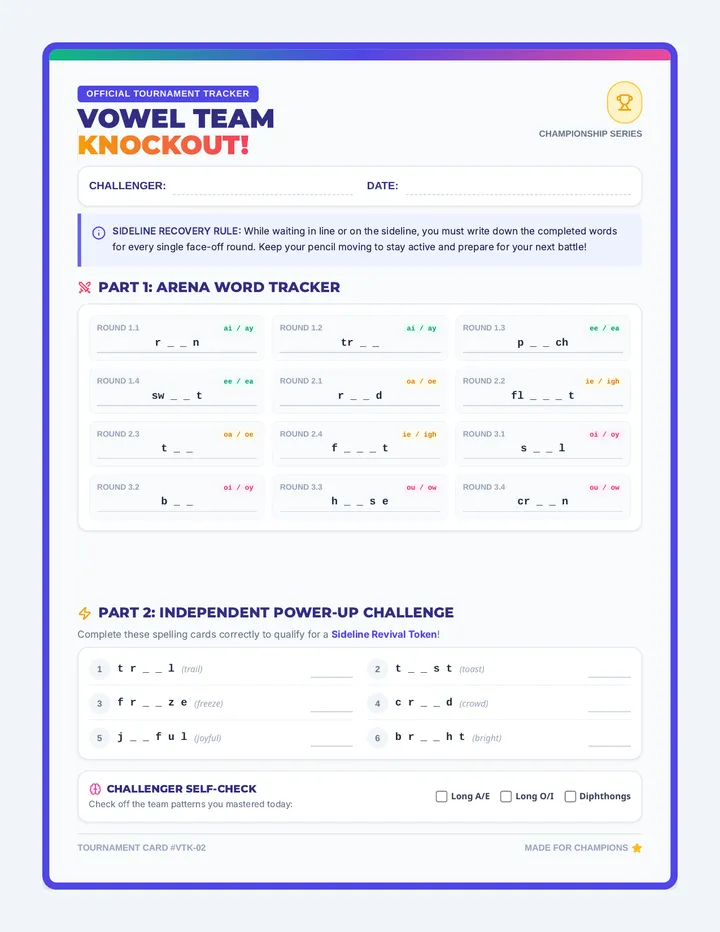
A phonics-focused lesson designed to help students decode multisyllabic words containing complex vowel teams such as ai, ee, oa, and ea through a step-by-step decoding strategy.
A beginner-friendly lesson on using the present perfect tense to talk about past experiences without a specific time. Includes direct instruction on the has/have + past participle formula and interactive matching activities.
A lesson focused on writing objective summaries of non-fiction texts by distinguishing between facts and personal opinions using an animal-themed article.
A lesson focused on making complex inferences supported by multiple pieces of textual evidence. Students act as 'Inference Investigators' to decode short fictional passages and build strong, evidence-backed conclusions.
A lesson introducing interjections as expressive 'bursts' of emotion that stand alone from the rest of the sentence. Students will learn to identify common interjections and use them correctly with appropriate punctuation in a comic-book-inspired format.
A lesson focused on teaching students how to infer character traits and feelings from short fictional scenarios. Includes a themed detective worksheet and an answer key.
A science-focused lesson where students learn to paraphrase information using short passages about diverse animal habitats. Students will practice identifying key details and restating them in their own words without changing the original meaning.
A detective-themed grammar lesson focused on correctly using relative pronouns 'who', 'which', and 'that'. Students will identify the correct pronouns for people versus objects through interactive instruction and a practice mission.
A lesson focused on constructing complex sentences using subordinating conjunctions, featuring architectural-themed scaffolds and sentence frames for Special Education support.
A 30-minute introductory lesson on identifying and pronouncing the schwa sound in 2-3 syllable words, focusing on its 'lazy' nature in unstressed syllables.
A detective-themed lesson teaching 3rd-5th grade students how to use reading comprehension strategies like predicting, questioning, summarizing, and citing evidence to 'crack the case' of any text.
A foundational lesson on identifying and using similes, metaphors, and personification to enhance writing and descriptive language.
An introductory lesson on identifying Author's Purpose (Persuade, Inform, Entertain) and uncovering the deeper Author's Message through short text analysis.
A lesson focused on common word usage errors, homophones, and frequently confused words for 4th-grade writers. Students practice identifying and using the correct words in context through detective-themed scenarios.
A comprehension lesson focused on identifying character emotions and their causes through the story of Luis at summer camp. Students analyze how sharing personal culture can bridge the gap between home and new environments.