Lenny.com
Explore
Create
ActivitiesNewMathEnglish Language ArtsScience & EngineeringSocial StudiesGlobal LanguagesHealth & Physical EducationSpecial EducationCounseling & Life SkillsArts & CreativityESL
Lenny.com
Lenny.com
Explore
Create
ActivitiesNewMathEnglish Language ArtsScience & EngineeringSocial StudiesGlobal LanguagesHealth & Physical EducationSpecial EducationCounseling & Life SkillsArts & CreativityESL
Lenny.com
Lenny.com

Solutions

Lenny for EducatorsLenny for SchoolsLenny for Districts

Product

ExploreSign inCreateSupportAbout

Resources

Getting startedMTSS Acceleration Program

© 2026 Lenny Learning Inc.

TermsPrivacyAccessibility
LinkedInInstagramX
Lenny
English Language ArtsPhonics & Reading FoundationsLetter IdentificationLearn Letters A-ZLowercase and Uppercase LettersConsonants and VowelsLetter-Sound AssociationsLetter-Sound Associations: LowercaseLetter-Sound Associations: UppercaseBeginning and Ending SoundsRhymingBlending And SegmentingShort VowelsShort Vowel SoundsConsonant BlendsConsonant DigraphsBlends, Digraphs, and TrigraphsDigraphs, Blends, and Silent LettersLong Vowel SoundsLong Vowel PatternsShort and Long VowelsShort and Long Vowel PatternsSilent EVowel SoundsVowel TeamsR-Controlled VowelsDiphthongs: Oi, Oy, Ou, OwVariant VowelsVariant, Diphthong, And R Vowel PatternsSoft G And CSight WordsIrregular WordsWord RecognitionSyllablesSyllable TypesTwo-Syllable WordsMultisyllabic WordsPhoneme ManipulationDecodable TextsVocabularyAction WordsQuestion WordsNouns and AdjectivesClassify WordsCompound WordsSynonyms and AntonymsHomophonesHomophones and HomonymsShades of MeaningContext CluesPrefixes and SuffixesGreek and Latin RootsAnalogiesIdioms and AdagesForeign Words and ExpressionsWord Choice and UsageReference SkillsReading ComprehensionRead-Along Literary TextsRead-Along Informational TextsReality vs. FictionStory ElementsCharacterSequenceMain IdeaCause And EffectCompare And ContrastReading StrategiesText StructureAuthor's PurposeAuthor's Purpose And ToneAuthor's PerspectivePoint Of ViewThemeInference And ThemeInference And AnalysisPoetry ElementsLiterary DevicesAnalyzing LiteratureAnalyzing Informational TextsComparing TextsAudience, Purpose, And ToneBusiness DocumentsNovel StudyNonfiction Book StudyGrammar & MechanicsSentencesNounsVerbsAdjectivesPronounsCapitalizationPunctuationContractionsConjunctionsPrepositionsArticlesAdjectives And AdverbsVerb TypesVerb TensePronouns And AntecedentsPronoun TypesSubject-Verb AgreementDirect And Indirect ObjectsSentences, Fragments, And Run-OnsPhrases And ClausesCommasSemicolons, Colons, And CommasDashes, Hyphens, And EllipsesSpellingAbbreviationsFormattingVerb Tense And MoodMisplaced ModifiersWritingDescriptive DetailsCreative WritingOpinion WritingTopic SentencesOrganizing WritingLinking WordsSentence VarietyIntroductions And ConclusionsPersuasive And Opinion WritingExpository WritingPersuasive StrategiesDeveloping And Supporting ArgumentsTopic Sentences And Thesis StatementsSummarizingResearch SkillsEditing And RevisingActive And Passive Voice=Writing Clearly And ConciselyDebate & Public SpeakingPublic Speaking BasicsPersuasive TechniquesClaims and EvidenceTypes of ArgumentsReasoning TypesLogical FallaciesTopic ResearchOrganizing EvidenceDebate Speech OrganizationAttacking and Defending ArgumentsClash and EngagementImpact CalculusQuestioning and Cross-ExaminationCritical ThinkingInformal LogicFormal LogicInductive Reasoning

Young Lin Miranda

A second-grade reading comprehension lesson exploring the childhood of composer Lin-Manuel Miranda based on pages 1–13 of Frank Berrios's biography. Students practice identifying the main idea and answering inferential questions using text clues about his family, music, and imagination.

Aawarner1

Rhythm A steady, repeating beat in music or speech.

Musical A stage play where songs help tell the story.

Young Lin Miranda • Adapted Biography pp. 1–13 Turn to Page 2 for Part 1: Main Idea → Page 1 of 3

Part 1

The Big Umbrella: Main Idea Studio

Name:

☂

The Umbrella Rule: The main idea is what the whole text is mostly about. Small supporting details fit safely underneath the umbrella!

1

What is the main idea of the entire story about young Lin-Manuel Miranda?

A Lin's parents moved from Puerto Rico to New York City before he was born. B Growing up surrounded by music, family, and stories inspired young Lin to create his own songs and musicals. C Playing eighty-eight piano keys is very tiring for a six-year-old boy. D Broadway theaters in New York City have giant red curtains and bright spotlights.

2

Write the main idea in your own words. Complete the sentence starter below:

This story is mostly about how young Lin...

3

Supporting Detail Check: Write two facts from the text that prove Lin loved making stories and music as a kid.

Supporting Detail A (from Paragraph 2 or 3):

Supporting Detail B (from Paragraph 4 or 5):

Young Lin Miranda • Main Idea Studio Turn to Page 3 for Part 2: Inferential Questions → Page 2 of 3

Part 2

Inferential Detective Lab

Name:

The Detective Formula: [Text Clue from Passage] + [What I Know in My Brain] = Smart Inference!

Look for Clues

1

The author does not say "Lin's family made him love rhythm." What clues in Paragraph 1 and 2 show that his family helped shape his love for music?

Clue from the text:

This shows his family helped him because:

2

In Paragraph 3, piano practice made Lin's hands tired and the songs sounded clumsy, but he never quit. What can you infer about what kind of person Lin was?

Sentence Starter: I can infer that young Lin was...

I think this because:

3

In Paragraph 4, Lin created adventures for action figures and wrote skits with his friends. How did playing pretend as a child prepare him to write big musicals later?

I infer that playing pretend helped Lin because:

4

In Paragraph 5, seeing Les Misérables gave Lin goosebumps and made him make a silent promise. What did Lin infer about the power of music and words that night?

Lin realized that music and words could:

Detective Checklist: Used text clues Capital letters & periods Answered in full sentences

Young Lin Miranda • Inferential Detective Lab Page 3 of 3

Rationale: Option B synthesizes all 5 paragraphs. Options A, C, and D are isolated details from single paragraphs.

Question 2 (Own Words Exemplar):

"This story is mostly about how young Lin loved music and stories in his home and worked hard to make up his own songs and plays."

Question 3 (Supporting Details Exemplars):

Detail A (¶2/3): Lin danced to spinning vinyl records / practiced piano keys day after day until sounds smoothed out.
Detail B (¶4/5): Lin wrote funny skits for his class / was amazed by actors singing in Les Misérables.

2 Part 2: Inferential Detective Lab Key (Page 3)

Question 1 (Family & Music Clues - ¶1–2):

Text Clue: Stacks of vinyl records played salsa and Broadway songs; music filled the living room.
Inference: Growing up with music in every room made rhythm feel natural, joyful, and exciting to Lin.

Question 2 (Persistence & Piano - ¶3):

Exemplar: "I can infer that young Lin was patient, hardworking, and determined, because even when his fingers were tired and the notes sounded clumsy, he kept practicing day after day."

Question 3 (Imagination & Pretend Play - ¶4):

Exemplar: Playing pretend with action figures and writing skits taught Lin how to build characters, invent exciting plots, and put words to rhythms before doing it on real stages.

Question 4 (Broadway Spark & Dreams - ¶5):

Exemplar: Lin realized that words, rhythms, and songs could give people goosebumps and make them care deeply about characters, which inspired him to become a musical theater writer.

Striving Readers

Partner read paragraphs 1–5 with a highlighter. Circle the exact text clues before filling in sentence starters on Page 3.

Multilingual / EL

Highlight Spanish and English words in Paragraph 1. Discuss cultural heritage and provide audio / rhythm modeling.

Advanced Extension

Challenge students to write a 4-line rhyming rap describing a time they practiced a difficult skill without giving up.

Lin-Manuel Miranda Lesson Guide • Answer Key & Rubric Page 2 of 2
You might also like

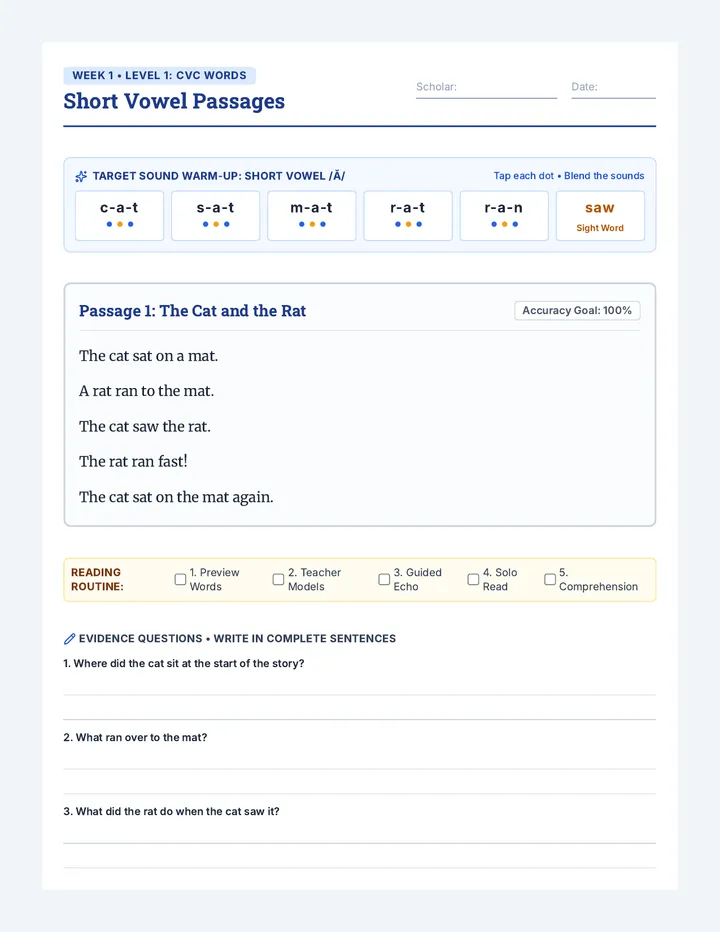
Short Vowel Passages Worksheet

Phonics Scholar Pathway

An eight-week tier-two reading intervention sequence guiding elementary scholars from decodable CVC short vowels through complex multisyllabic words and fluent comprehension. Each week provides structured decodable passages, targeted word banks, text-dependent comprehension questions, and systematic fluency tracking.

B

Bhoovaragavaswamym

8
Suffix Sounds Teacher Guide

Past Tense Power

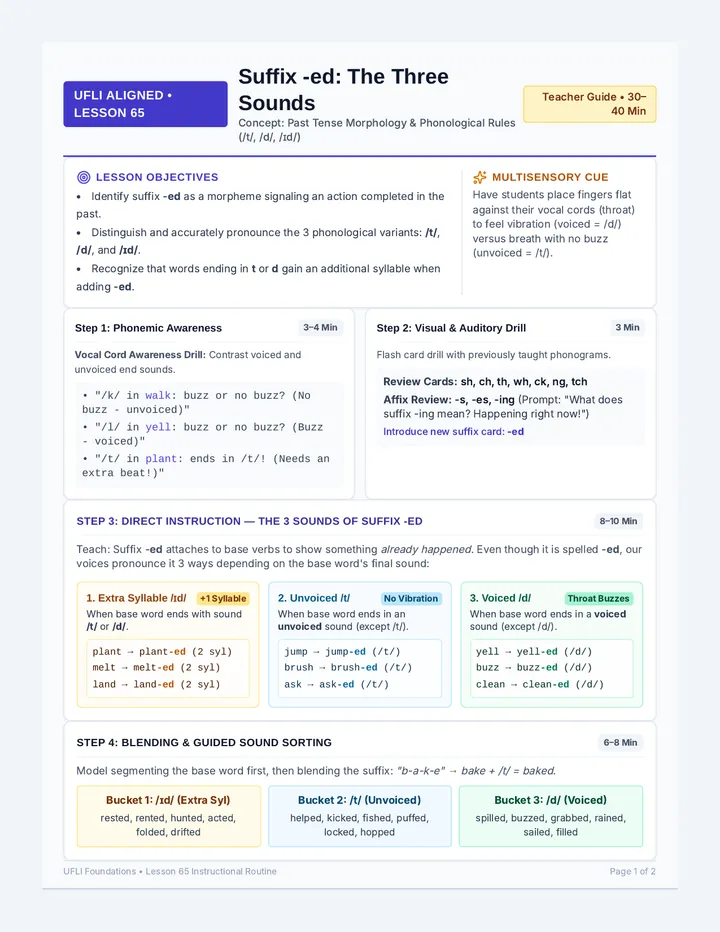
A comprehensive systematic phonics and morphology lesson on suffix -ed aligned with UFLI Lesson 65. Students master past-tense meaning and discover the three phonological pronunciations of -ed (/t/, /d/, /id/) through auditory drills, orthographic mapping, and decodable reading.

AR

Amanda Ramirez

4
Story Sparks Writing Worksheet

Story Sparks Writing Worksheet

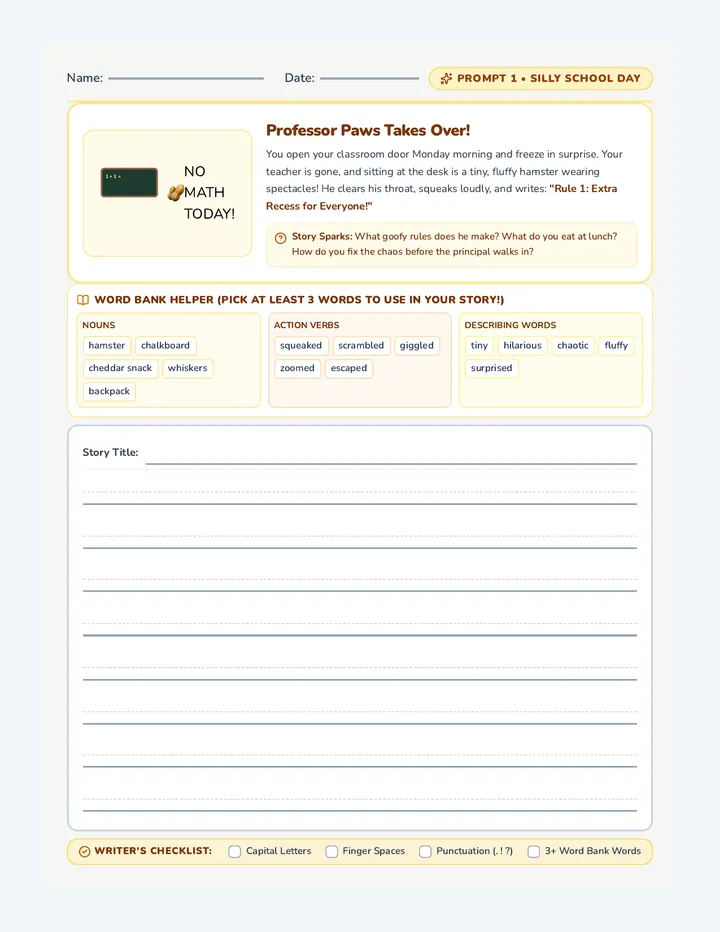
A three-page creative writing prompt packet for second-grade students featuring whimsical cartoon illustrations, structured word banks, primary handwriting guidelines, and self-check rubrics across school, magical, and animal adventure themes.

Lenny Avatar
Lenny
Vowel Team Quest Worksheet

Vowel Team Power

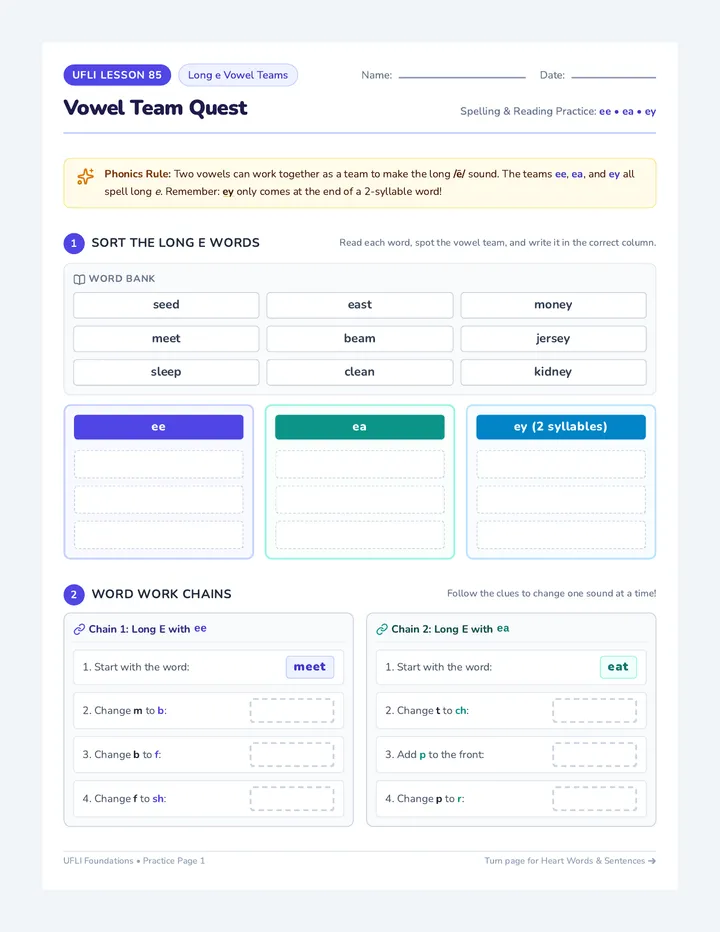
A structured UFLI phonics sequence providing comprehensive individual and full-page practice worksheets for long vowel teams, sound chains, irregular heart words, and decodable sentences.

JW

Jorlian Wynes

17
Magic E Stories Worksheet

Silent E Comprehension

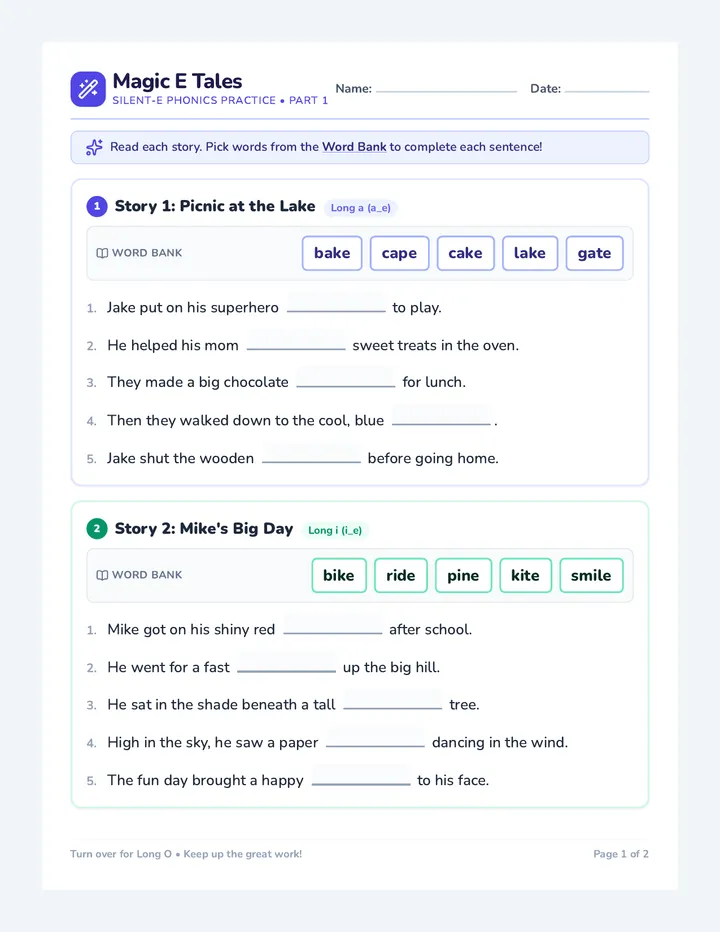
A foundational reading unit featuring silent-e phonics practice, decodable fiction and nonfiction passages, and comprehension exercises focused on main idea, supporting details, and problem and solution.

JA

Jamie Asack

3
Long O Progress Sheet

Long O Progress Sheet

A structured UFLI progress monitoring assessment sheet for Long O vowel teams (oa, ow, oe) and irregular heart words (again, against), featuring an evaluator recording protocol and a student-facing reading stimulus sheet.

JW

Jorlian Wynes

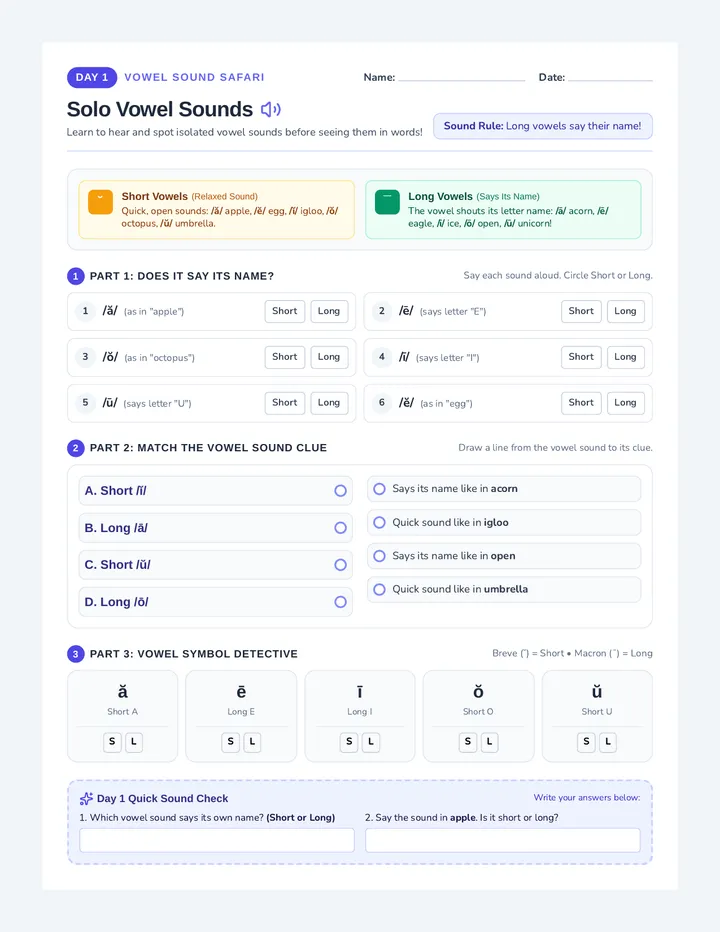
Solo Sounds Worksheet

Vowel Sound Safari

A five-day progressive phonics sequence guiding students from isolated vowel sound recognition to identifying short and long vowel sounds within words and decodable sentences.

K

kconyers

6
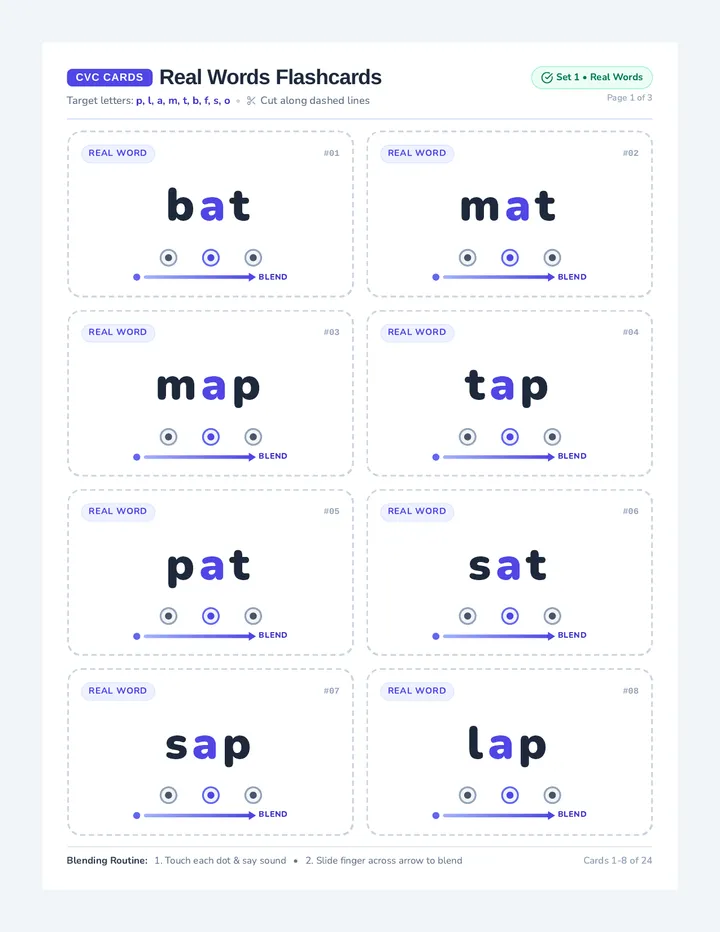
Real Words Flashcards

Sound Blaster Cards

A targeted phonics decoding toolkit focused on the letters p, l, a, m, t, b, f, s, o with high-contrast CVC flashcard sets. Students build phoneme isolation, segmenting, and continuous blending with both real and nonsense word decks.

B

Brittany.Feldman

2
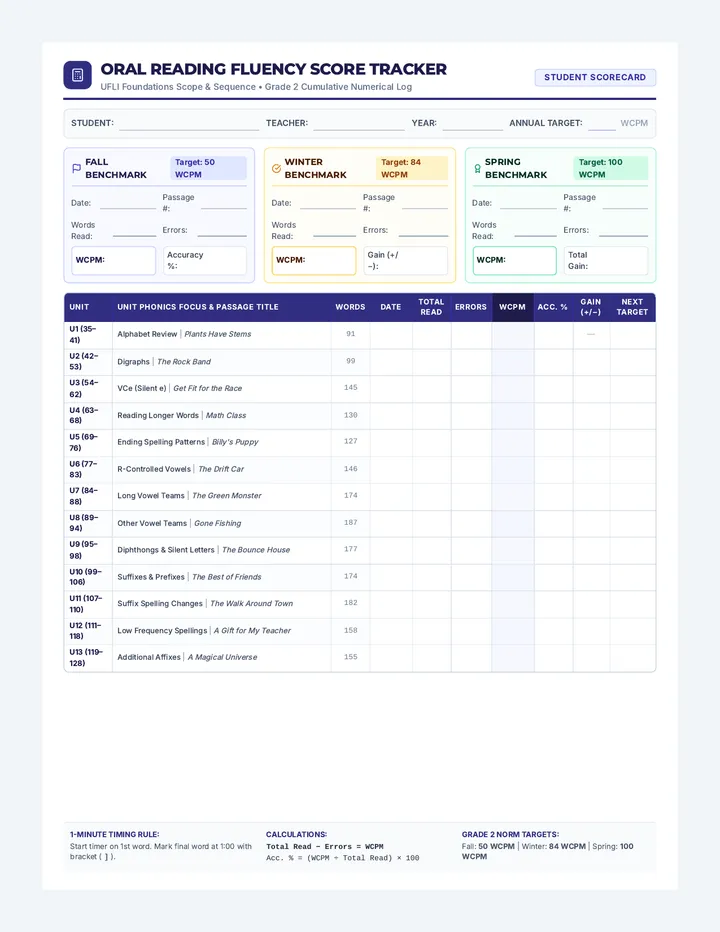
Fluency Progress Monitoring Document

Fluency Progress Monitoring Document

A 3-page progress monitoring document for UFLI Grade 2 oral reading fluency checks. Features an all-numerical student tracking sheet with seasonal benchmark scorecards and a 13-unit WCPM log table (no graphing required), a qualitative diagnostic rubric and intervention action plan, and a whole-class fluency progress grid.

JW

Jorlian Wynes

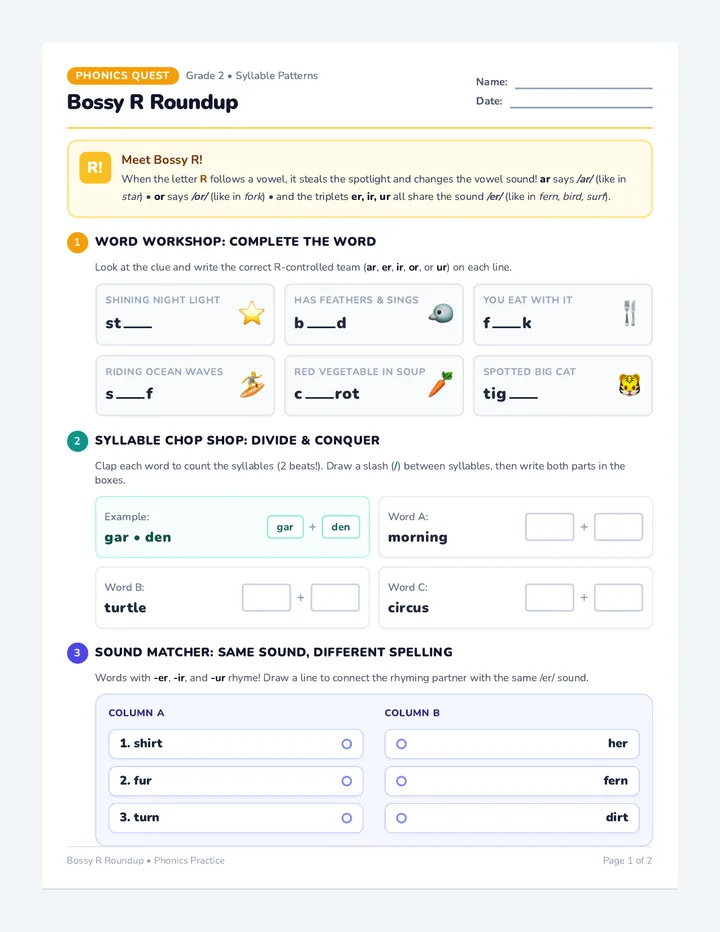
Bossy R Roundup Practice Sheet

Literacy Launchpad

A comprehensive elementary literacy collection spanning foundational phonics mastery and upper-elementary narrative writing development.

MG

Michael Gerstenmaier

3
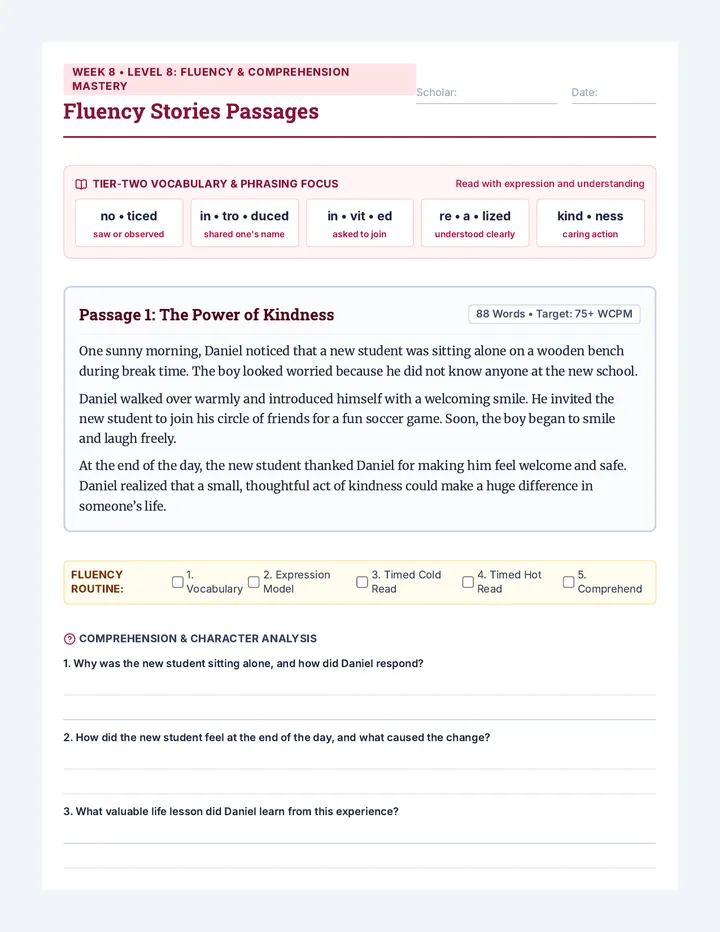
Fluency Stories Passages Worksheet

Fluency Champions

Week 8 synthesizes all decoded phonics skills with an emphasis on phrasing, prosody, reading rate, and higher-order text analysis. Scholars read rich, inspiring stories and complete comprehensive fluency rubrics.

B

Bhoovaragavaswamym

1
Long E Progress Sheet

Long E Progress Sheet

A structured UFLI progress monitoring assessment sheet for Long E vowel teams (ee, ea, ey) and heart words (above, among), including a comprehensive teacher recording form and a clean student reading stimulus card.

JW

Jorlian Wynes