Unmasking Motifs Lesson Plan Unmasking Motifs
Romeo & Juliet Lesson Plan
Objective
Students will be able to identify and analyze key motifs in William Shakespeare's Romeo and Juliet to understand their contribution to the play's themes and character development.
Why This Matters
Understanding motifs helps students uncover deeper meanings and messages within a text. By recognizing these recurring elements, students can analyze complex literary works with greater insight, enhancing their critical thinking and literary analysis skills.
Duration
60 Minutes
Audience
9th Grade ELA
Approach
Guided & Collaborative
Teacher Preparation
Review the Motifs Slide Deck and familiarize yourself with content.
Print copies of the Motif Spotter Worksheet (one per student).
Prepare Motif Match-Up materials (cut out motif and quote cards).
Ensure projector/smartboard is ready to display the slide deck.
Prep Time
15 min
Instructional Flow
5 MIN
Warm-up
What's Your Vibe?
Begin with a quick warm-up. Ask students: "If you had to describe the overall 'vibe' or feeling of Romeo and Juliet so far in one word, what would it be?" Briefly discuss responses to activate prior knowledge about the play's atmosphere.
10 MIN
Intro
Defining the Motif
Use the Motifs Slide Deck to define motifs and differentiate them from symbols or themes. Provide non-literary examples (movie colors, sound effects) before transitioning to literature.
20 MIN
Discovery
The "Big Three" Motifs
Focus on light/dark imagery, opposing forces, and fate. Display quotes and lead discussions on deeper meanings. Students follow along and document examples on their Motif Spotter Worksheet .
15 MIN
Group Work
Motif Match-Up
In groups of 3-4, students match quote cards to motif categories. They must explain their reasoning. Circulate to provide support and facilitate higher-level analysis.
10 MIN
Debrief
Group Sharing & Reflection
Groups share their matches and reasoning. Clarify misconceptions and reinforce the connection between motifs and overarching themes. Conclude with a reflection on how patterns enhance literary appreciation.
Essential Materials
Smartboard or Projector
Motifs in Romeo & Juliet Slide Deck
Markers or Whiteboard Pens
Motif Spotter Worksheet
Motif Match-Up Activity
Motifs Presentation Slides Shakespeare's Romeo & Juliet
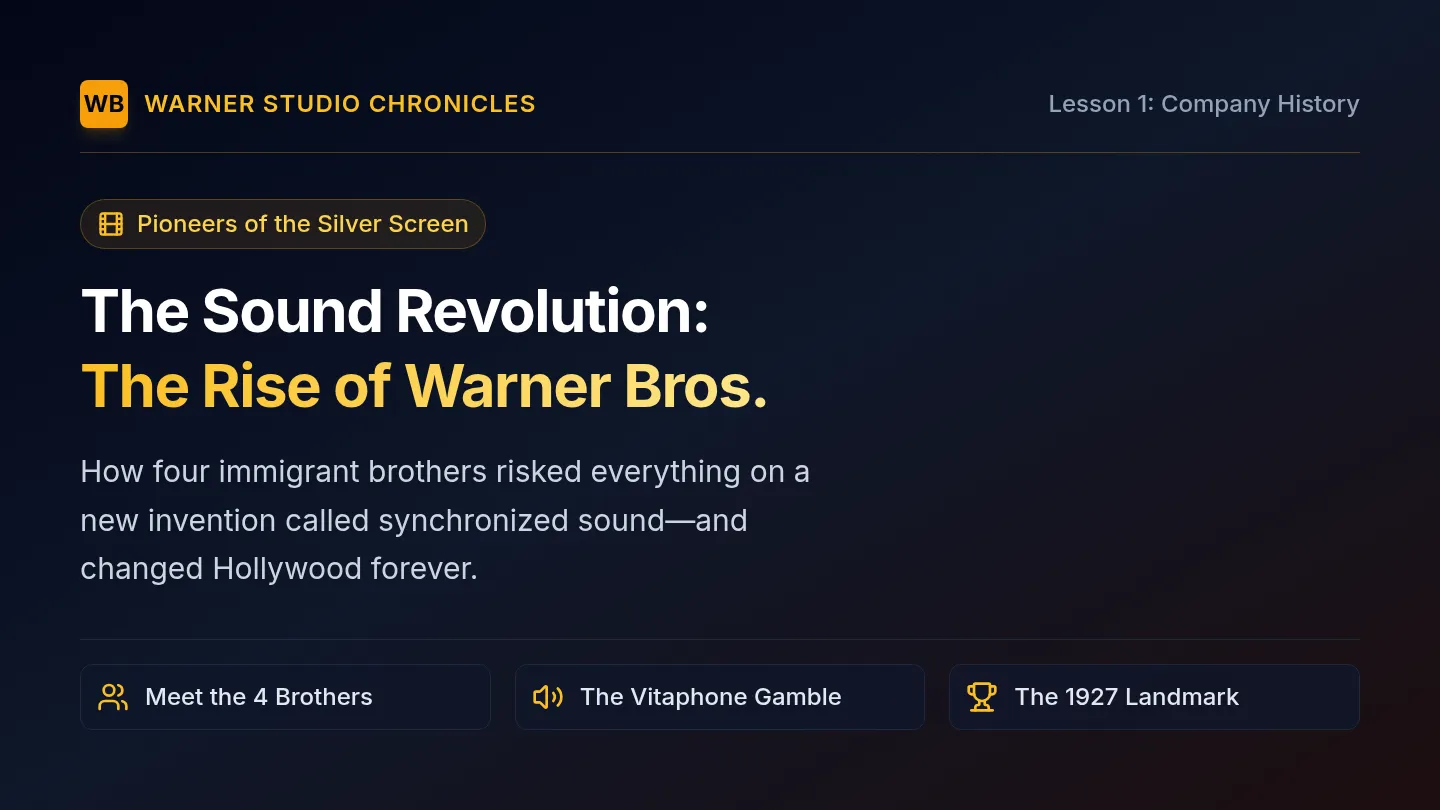
Unmasking Motifs
Exploring the Hidden Threads in Tragedy
Welcome students. Ask: "If you had to describe the overall 'vibe' of the play so far in one word, what would it be?"
What Exactly is a Motif?
Motif (MOH-teef): A recurring image, idea, sound, or action that helps develop the theme or mood of a story.
Think of it like a repeating pattern!
Not just once, but again and again .
Helps us understand the bigger picture.
A motif is a literary fingerprint left behind by the author to guide us toward the truth.
Motifs in Everyday Life
Movies & TV
The sound of a ticking clock in a thriller, or a specific color linked to a villain.
Music
A repeated musical phrase (leitmotif) that announces a character's entry.
Visual Arts
Recurring shapes or colors that create rhythm and meaning in a painting.
Can you think of a pattern from your favorite show?
Why Do Authors Use Motifs?
Reinforce Themes: Drive home the main message.
Create Mood: Set the feeling or atmosphere.
Foreshadow: Hint at future tragic events.
Develop Characters: Reveal inner personalities.
Motif 1: Light and Dark
"But, soft! what light through yonder window breaks? It is the east, and Juliet is the sun."
"More light and light; more dark and dark our woes!"
Symbolic Contrast
Light represents hope, purity, and the lovers' passion.
Darkness represents the secret world of their love, danger, and the coming tragedy.
What happens when the sun rises?
Motif 2: Opposing Forces
"My only love sprung from my only hate!"
"O brawling love! O loving hate!"
"These violent delights have violent ends..."
The Duality of Man
Love vs. Hate Peace vs. War Life vs. Death Youth vs. Age
How do these contrasts drive the story? Are they opposites, or two sides of the same coin?
Motif 3: Fate and the Stars
"From forth the fatal loins of these two foes / A pair of star-crossed lovers take their life."
Motif Spotter Worksheet Motif Spotter
Investigating Patterns in Romeo & Juliet
Name:
Date:
Instructions: As we discuss the motifs in Romeo and Juliet , or as you re-read certain scenes, fill in the table below. For each motif, identify at least two examples from the play (quotes or specific events) and briefly explain how that example represents the motif.
Motif 1: Light and Dark Imagery
This motif often uses images of light (sun, stars, torches) and darkness (night, shadows) to highlight contrasts like love/hate, life/death, or hope/despair.
Example (Quote or Event) Explanation
Motif 2: Opposing Forces / Contrasts
This motif explores the constant conflict and duality present in the play, such as love vs. hate, peace vs. conflict, or individual vs. society.
Example (Quote or Event) Explanation
Motif 3: Fate and the Stars
This motif emphasizes the idea that destiny or a predetermined future influences the characters and events, often through references to stars, fortune, or luck.
Example (Quote or Event) Explanation
Bonus Discovery
Can you find another motif or a different example for one of the above? Explain!
Motif Match-Up Activity Motif Match-Up Challenge
Cut the Cards
Sort the Quotes
Explain Your Choice
Instructions for Groups
Work in your assigned groups of 3-4.
Carefully cut out the Motif Cards and the Quote/Scene Cards .
Match each Quote Card to the Motif Card that it best represents. Some may fit more than one!
On a separate sheet of paper, write a 1-2 sentence explanation for why you made each match.
Prepare to defend your matches during the class debrief.
Part 1: The Motif Categories
Light and Dark Imagery
Opposing Forces / Contrasts
Fate and the Stars
Love and Violence
Time
Wild Card (Add your own!)
Part 2: Quote & Scene Cards
CARD A
"My only love sprung from my only hate! / Too early seen unknown, and known too late!"
(Act 1, Scene 5)
CARD B
"But, soft! what light through yonder window breaks? It is the East, and Juliet is the sun!"
(Act 2, Scene 2)
CARD C
"From forth the fatal loins of these two foes / A pair of star-cross'd lovers take their life;"
(Prologue)
CARD D
"These violent delights have violent ends / And in their triumph die, like fire and powder, / Which, as they kiss, consume."
(Act 2, Scene 6)
CARD E
"O, I am fortune's fool!"
(Act 3, Scene 1)
CARD F
"More light and light; more dark and dark our woes!"
(Act 3, Scene 5)
CARD G
"O brawling love! O loving hate!"
(Act 1, Scene 1)
CARD H
"Ask for me tomorrow, and you shall find me a grave man."
(Act 3, Scene 1)
CARD I
"Come, civil night, Thou sober-suited matron, all in black, And learn me how to lose a winning match..."
(Act 3, Scene 2)
CARD J
"A plague o' both your houses!"
(Mercutio, Act 3, Scene 1)
CARD K
"Hark, how the lark and not the nightingale sings."
(Act 3, Scene 5)
CARD L
"I fear, too early; for my mind misgives / Some consequence yet hanging in the stars / Shall bitterly begin his fearful date / With this night's revels..."
(Act 1, Scene 4)
Motif Match-Up Answer Key Motif Match-Up: Answer Key
Teacher Facilitation Guide
Light and Dark Imagery
Card B: "Juliet is the sun" (Act 2, Sc 2) — Light as beauty/hope.Card F: "More light and light; more dark and dark our woes" (Act 3, Sc 5) — As day breaks, their tragedy deepens.Card I: "Come, civil night..." (Act 3, Sc 2) — Night as a protector of their secret love.Card K: "Lark and not the nightingale" (Act 3, Sc 5) — The birds represent the transition from night to day.
Opposing Forces / Contrasts
Card A: "My only love sprung from my only hate" (Act 1, Sc 5) — Paradox of their origin.Card G: "O brawling love! O loving hate!" (Act 1, Sc 1) — Oxymorons showing emotional conflict.Card J: "A plague o' both your houses!" (Act 3, Sc 1) — Conflict between the two families.
Fate and the Stars
Card C: "Star-cross'd lovers" (Prologue) — Predetermined tragic end.Card E: "O, I am fortune's fool!" (Act 3, Sc 1) — Romeo's feeling of being a puppet of fate.Card L: "Some consequence yet hanging in the stars" (Act 1, Sc 4) — Foreshadowing.
Love and Violence
Card D: "Violent delights have violent ends" (Act 2, Sc 6) — Friar Lawrence's warning about intensity.
Time / Puns
Card H: "Find me a grave man" (Act 3, Sc 1) — Mercutio's pun on death (grave as serious vs. grave as burial site).
Facilitation Tip
Encourage students to argue for "overlap." For example, Card D ("violent delights") is both Love/Violence and Opposing Forces . The quality of their reasoning is more important than the "correct" category.