Students categorize lowercase letters into 'tall' (ascenders), 'small' (middle), and 'fall' (descenders) using a house metaphor for the writing lines.
A foundational phonics lesson focusing on short vowel sounds (a, e, i, o, u) and high-frequency sight words using an adventure-themed "Vowel Valley" concept.
A foundational literacy lesson focusing on short vowel sounds and high-frequency sight words through an engaging 'nature expedition' theme. Students will identify vowel sounds in CVC words and practice common sight words.
Students practice reading comprehension and narrative sequencing by ordering sentences from Aesop's classic fable of the boy who cried wolf. The lesson includes a visual storytelling presentation, printable sentence strips for tactile learning, and a follow-up writing activity.
A collection of worksheets designed to help students write structured biographical paragraphs about historical figures using mind maps and sentence starters. Each worksheet features a unique theme tailored to the figure's profession.
A mini-lesson for a 6th-grade resource room ELA class focusing on Auggie's character traits and his development throughout the first month of school in the novel 'Wonder'. This lesson uses a space-exploration theme and provides high levels of scaffolding.
Students synthesize the entire novel's events, including the final chapter and afterword, to identify themes and analyze the resolution of the plot.
Students examine the setting's impact on the plot and synthesize details from Annemarie's encounter with the soldiers in the woods.
Students analyze character growth and the impact of point of view as Annemarie takes on a dangerous mission in chapters 13 and 14.
Focusing on chapters 11 and 12, students analyze plot elements and practice synthesizing information to summarize the escape to the boat.
Students evaluate plot details and suspense techniques used in chapters 9 and 10, focusing on the mysterious funeral of 'Great-Aunt Birte'.
Students investigate point of view and make deeper inferences about Uncle Henrik's role and the move to the coast in chapters 7 and 8.
Focusing on chapters 5 and 6, students track plot development and practice summarizing the high-tension events of the soldiers' midnight visit.
Students analyze character traits and make inferences about the changing atmosphere in Copenhagen as the Nazi occupation intensifies in chapters 3 and 4.
Students investigate Chapters 1-2, focusing on using 5th grade context clues (TEKS 5.3B) to decipher historical terminology and making logical predictions based on textual evidence (TEKS 5.6C) regarding the intensifying Nazi occupation.
The war ends and the Johansens look toward a future of rebuilding. Students evaluate the resolution of the novel and compare the fictional narrative to the historical facts presented in the Afterword.
The mission reaches its high-stakes climax as Annemarie faces the soldiers and delivers the package that determines the Rosens' survival. Students analyze the plot climax and the author's use of suspense and symbolic resolution.
Annemarie undertakes a dangerous solo journey through the woods to deliver a mysterious package, using her imagination to cope with intense fear. Students analyze character courage and the use of literary devices in suspenseful plotting.
Students synthesize the entire novel's events, including the final chapter and afterword, to identify themes and analyze the resolution of the plot. [5th Grade TEKS 5.7A, 5.8C]
A collection of sequence-wide resources, answer keys, and master documents for the Resistance Chronicles unit.
Students examine the setting's impact on the plot and synthesize details from Annemarie's encounter with the soldiers in the woods. [5th Grade TEKS 5.8A, 5.7C]
Students analyze character growth and the impact of point of view as Annemarie takes on a dangerous mission in chapters 13 and 14. [5th Grade TEKS 5.8B, 5.10E]
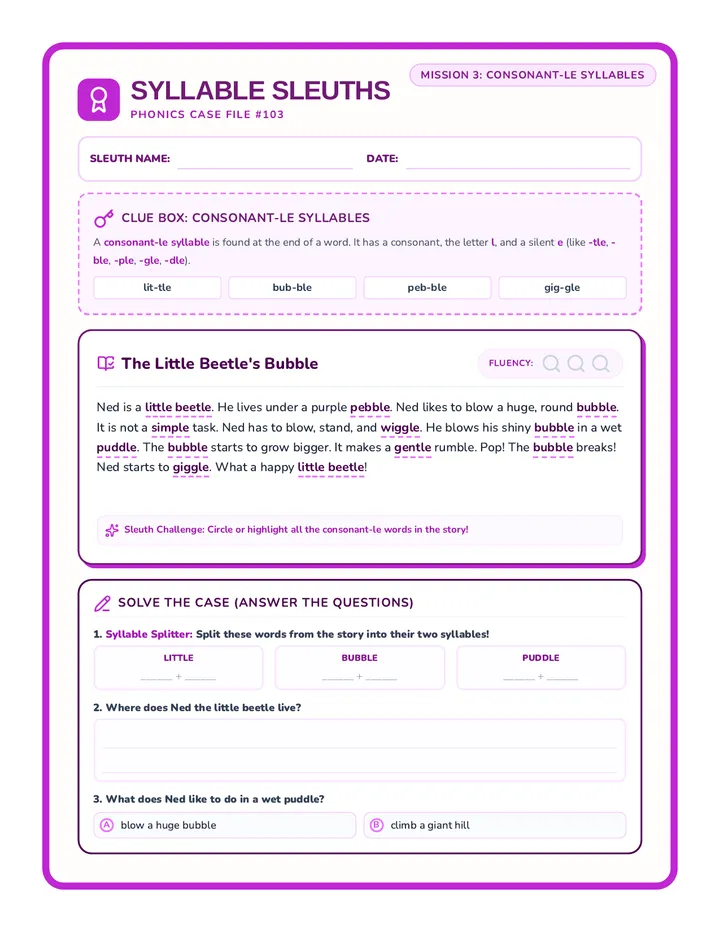
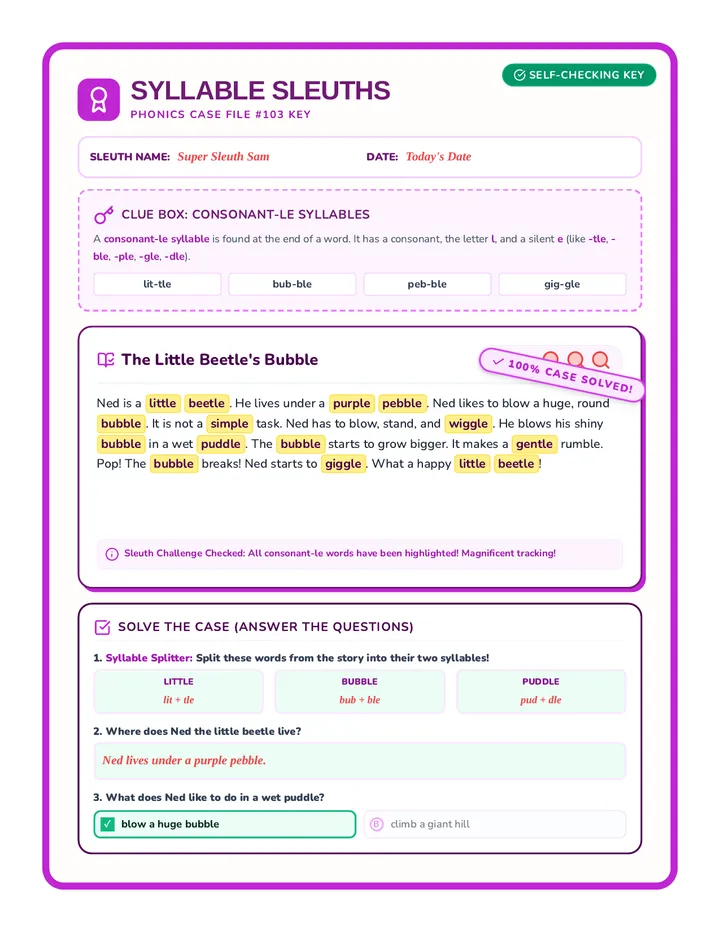
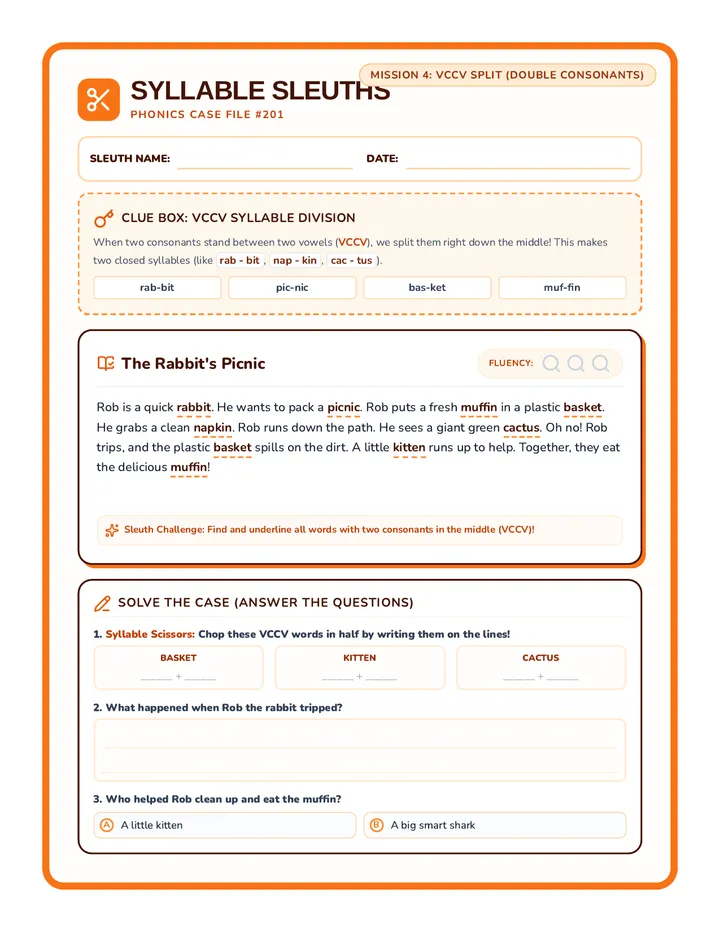
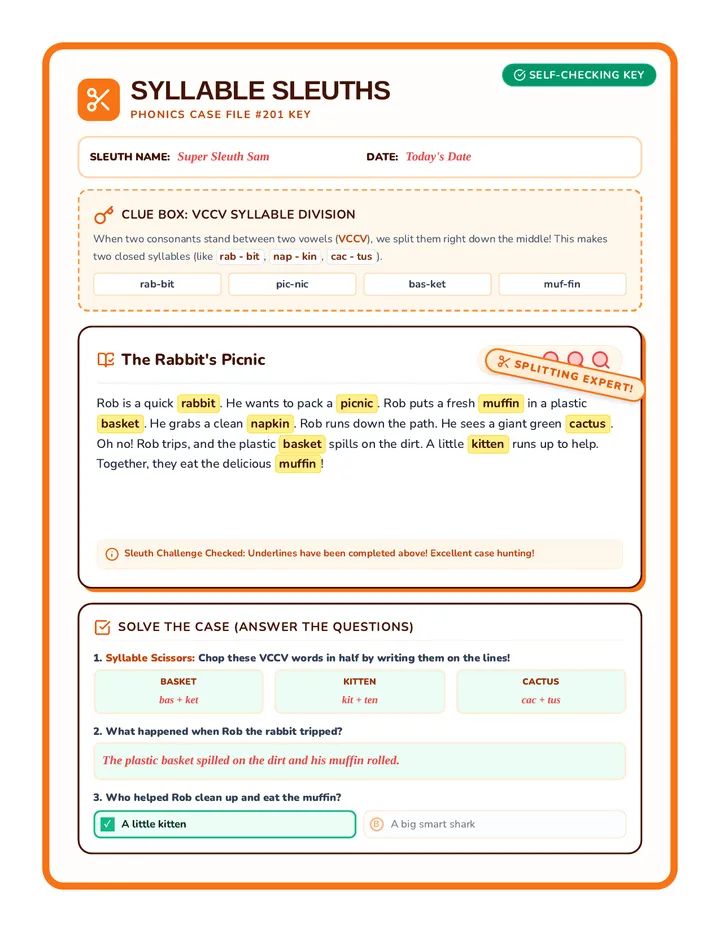
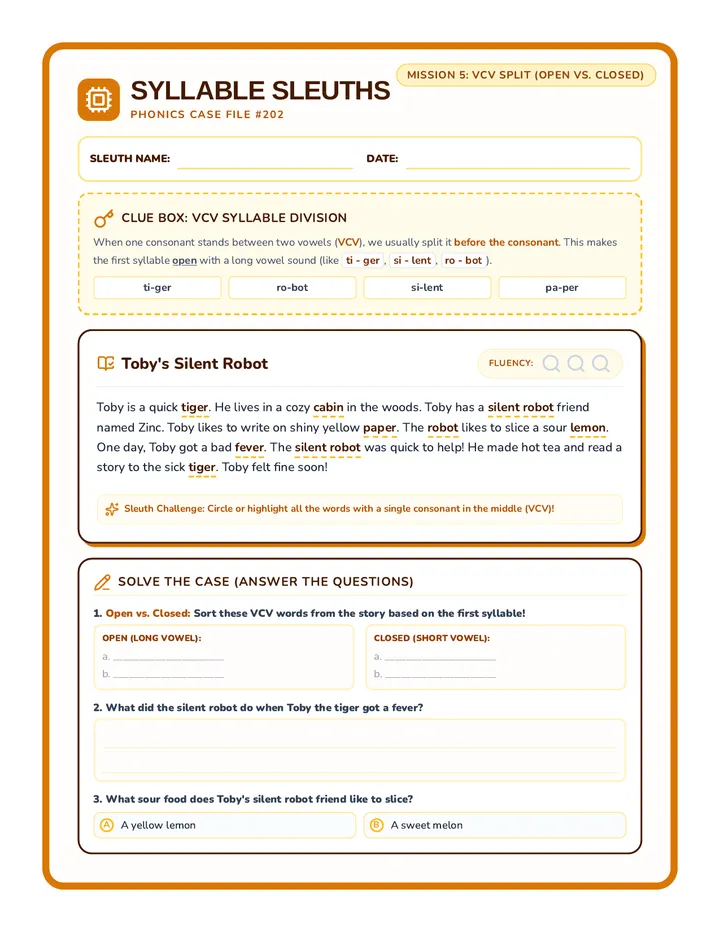
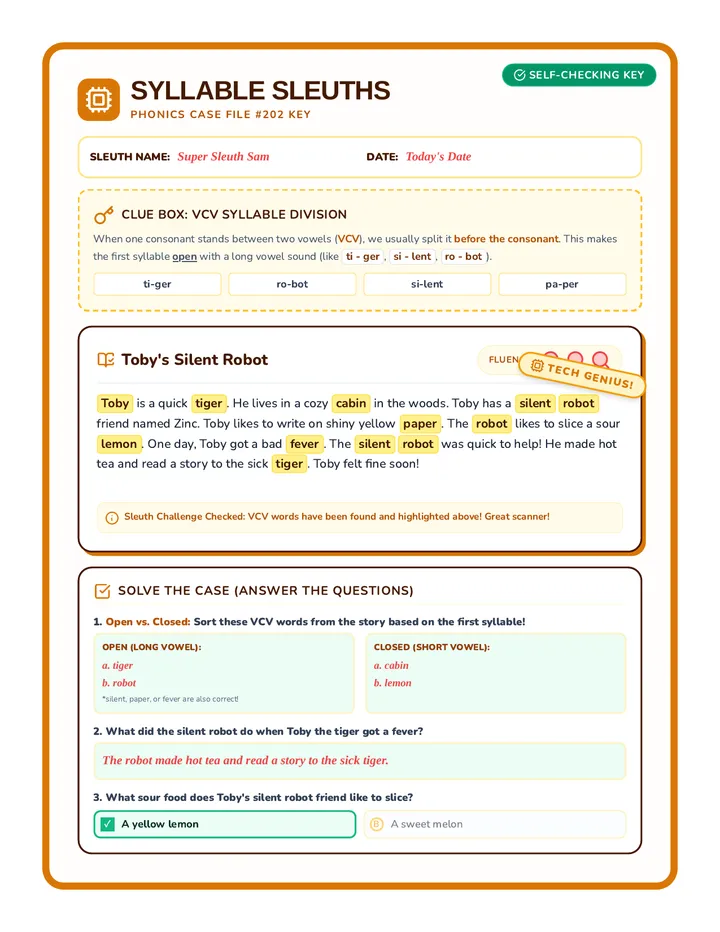
A focused lesson on distinguishing between open and closed syllables through visual coding and step-by-step detective work.
Focusing on chapters 11 and 12, students analyze plot elements and practice synthesizing information to summarize the escape to the boat. [5th Grade TEKS 5.8C, 5.7C]
Students evaluate plot details and suspense techniques used in chapters 9 and 10, focusing on the mysterious funeral of 'Great-Aunt Birte'. [5th Grade TEKS 5.8C, 5.9C]
Students investigate point of view and make deeper inferences about Uncle Henrik's role and the move to the coast in chapters 7 and 8. [5th Grade TEKS 5.10E, 5.8A]
Focusing on chapters 5 and 6, students track plot development and practice summarizing the high-tension events of the soldiers' midnight visit. [5th Grade TEKS 5.8C, 5.7D]
Students analyze character traits and make inferences about the changing atmosphere in Copenhagen as the Nazi occupation intensifies in chapters 3 and 4. [5th Grade TEKS 5.8B, 5.6F]
Students explore the opening chapters of Number the Stars, focusing on using context clues to understand the historical setting and making predictions about the Johansen family's future. [5th Grade TEKS 5.3B, 5.6C]
A comprehensive small-group lesson focused on the foundational skills of retelling and paraphrasing using short fiction. Students use blueprint-themed tools to identify story structure and practice restating ideas in their own words.
This lesson introduces 8th-grade students to the Claim-Evidence-Analysis (CEA) writing framework, focusing on how to construct objective arguments and effectively connect evidence to claims.
A foundational lesson on synonyms and antonyms that explicitly addresses thematic confusion (related vs. similar) using visual sorting activities and text-based practice.
A collection of reflective and creative activities for Memorial Day, including a poppy craft writing activity, a gratitude letter template, and acrostic poems to honor fallen heroes.
Students learn to navigate story structure by becoming 'Plot Pilots,' guiding their narratives through takeoff, cruising, and landing. This lesson covers the essential elements of beginning, middle, and end using an engaging aviation metaphor.
A comprehensive lesson on identifying the letter V, including uppercase and lowercase recognition, sound association, and visual discrimination.
A foundational literacy lesson focusing on the letter V through multi-sensory recognition, tracing practice, and initial sound identification for Van, Vet, and Vest.
A lesson focused on identifying the central message and supporting it with text evidence from the story 'Seasons of Life'.
A comprehensive guide and graphic organizer to help 5th-grade students structure their historical essays with clear evidence and logical flow.
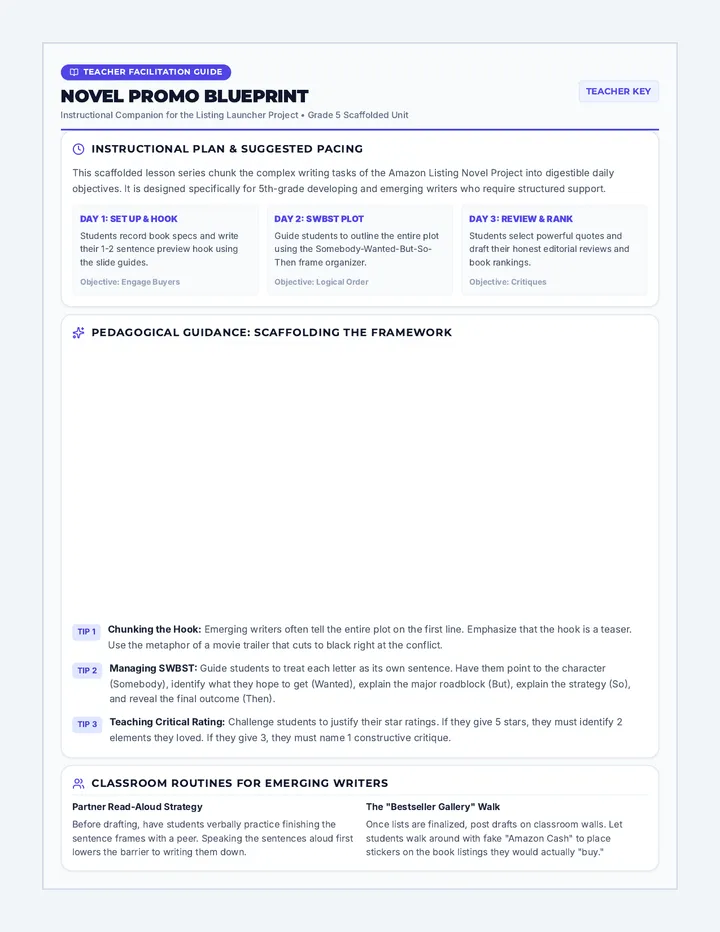
A fun, hands-on lesson for 3rd graders to explore morphology by spinning and combining prefixes, bases, and suffixes. Students learn how affixes change the meaning and tense of base words.
A comprehensive assessment tool for tracking student mastery of 27 essential sight words through recognition tasks.
A lesson designed to help students analyze and sequence fairy tales, focusing on identifying the conflict, resolution, and underlying theme through structured graphic organizers.
A lively introduction to using '-ing' endings to describe actions happening now, featuring engaging visuals and hands-on practice for 1st graders.
A collection of versatile graphic organizers designed to help students analyze fiction and nonfiction picture books. Each organizer focuses on a specific reading skill, providing a structured framework for student response.
A toolkit of success criteria and structured practice materials for IMSE Orton-Gillingham dictation routines, focusing on word mapping and sentence conventions.
A comprehensive lesson on demonstrative pronouns and adjectives (this, that, these, those), focusing on distance and number through a detective-themed investigation.