A lesson focused on building inference skills through the lens of American Revolution history, using context clues to decode high-level vocabulary.
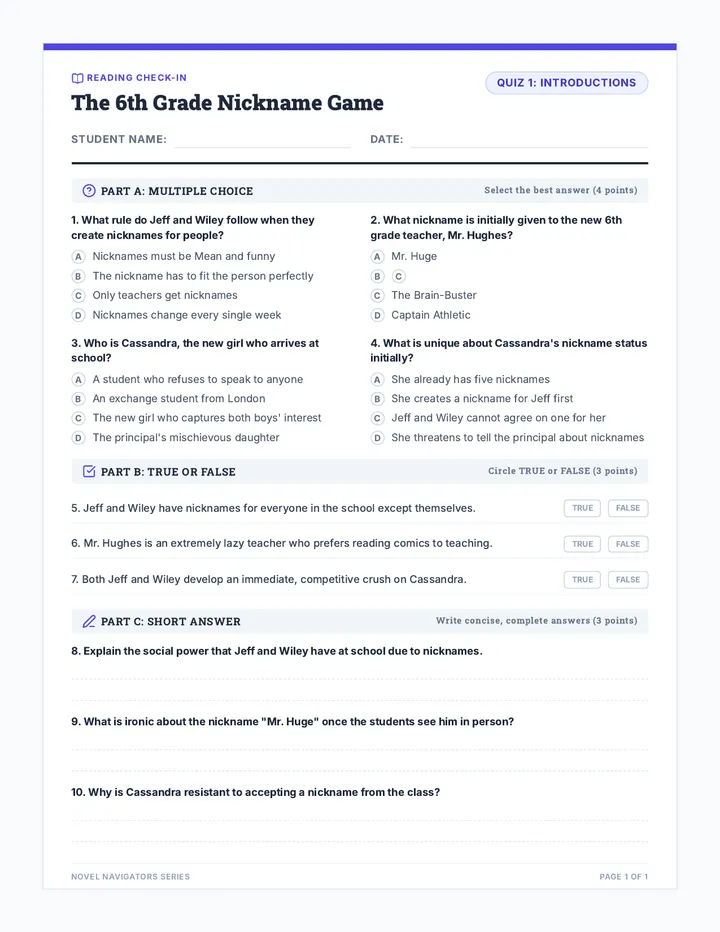
A comprehensive set of reading comprehension check-in quizzes for five popular middle-grade novels. Each novel features two specialized quizzes—one focusing on initial character introductions and the other on major plot resolutions.
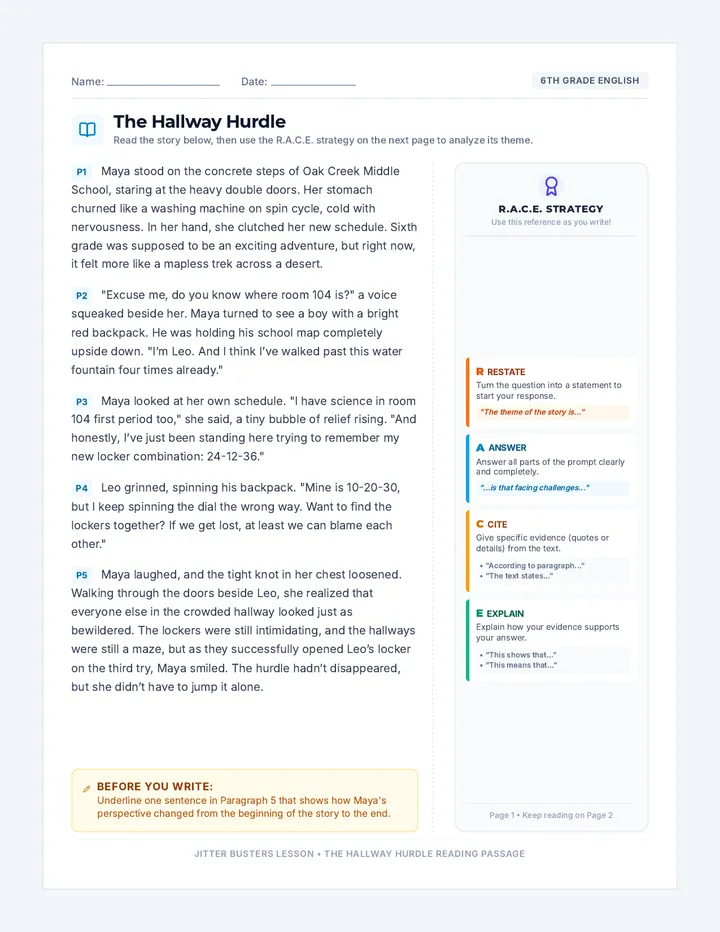
A lesson focusing on identifying the central theme of a text about first-day jitters and using the RACE writing strategy to formulate structured, text-evidence-supported responses.
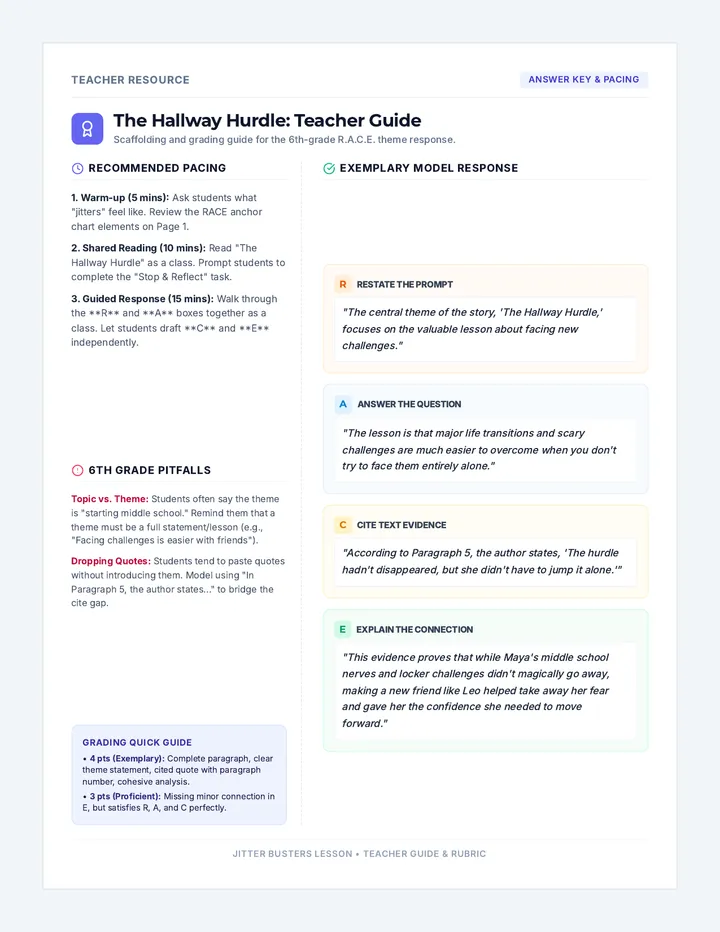
A comprehensive one-page teacher guide and answer key for 'The Hallway Hurdle' worksheet, featuring model RACE responses, a grading rubric, and common student misconceptions.
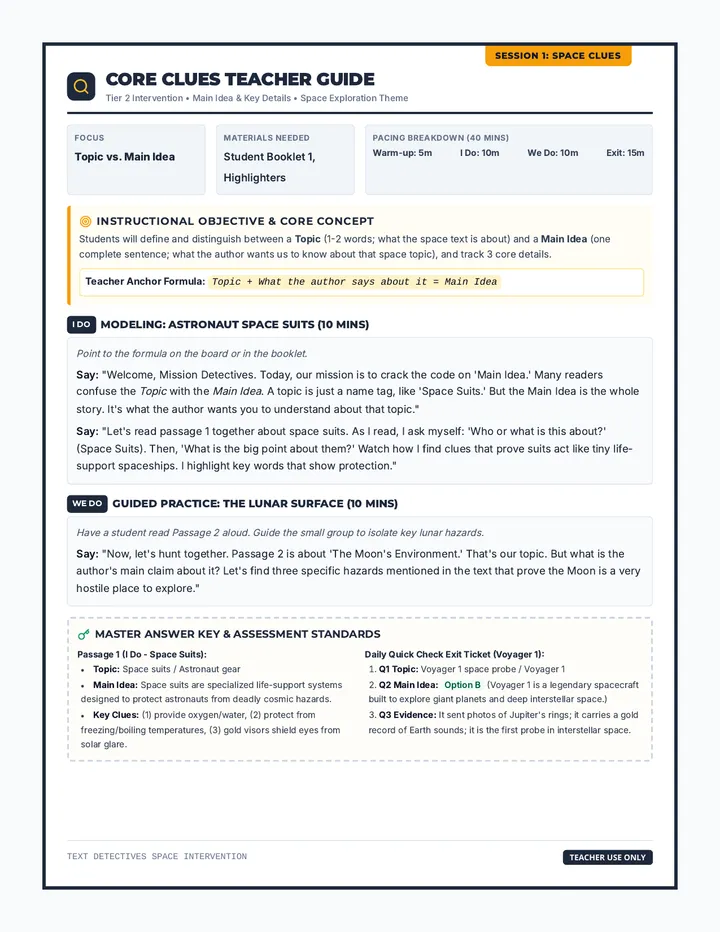
A Tier 2 reading comprehension intervention sequence designed for sixth-grade students. This three-session program utilizes a structured, scaffolded approach to help students identify key details, filter out distracting information, and craft precise main idea summaries.
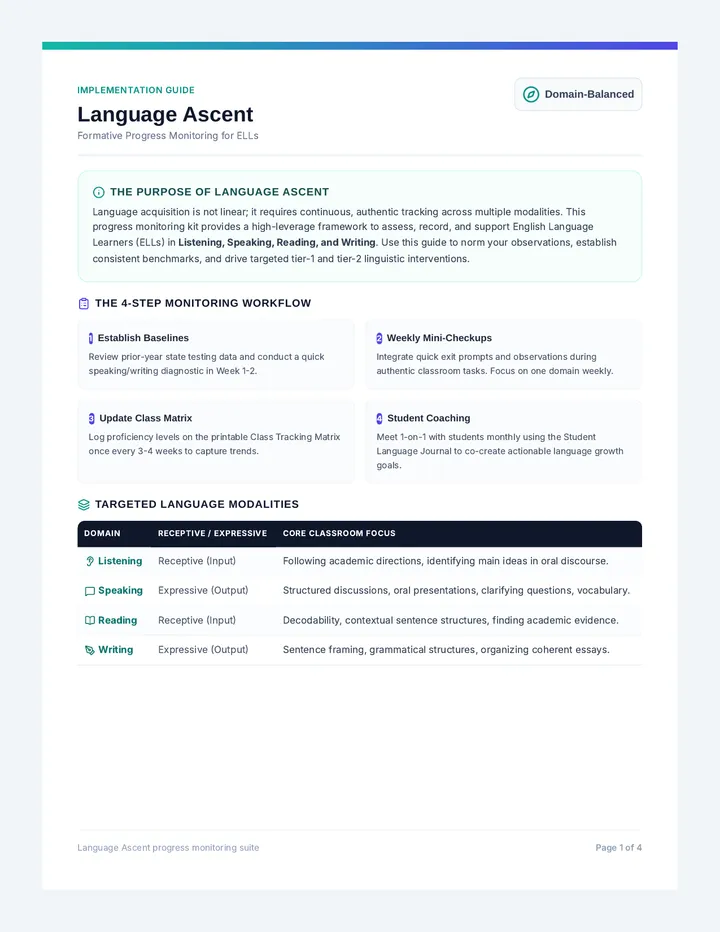
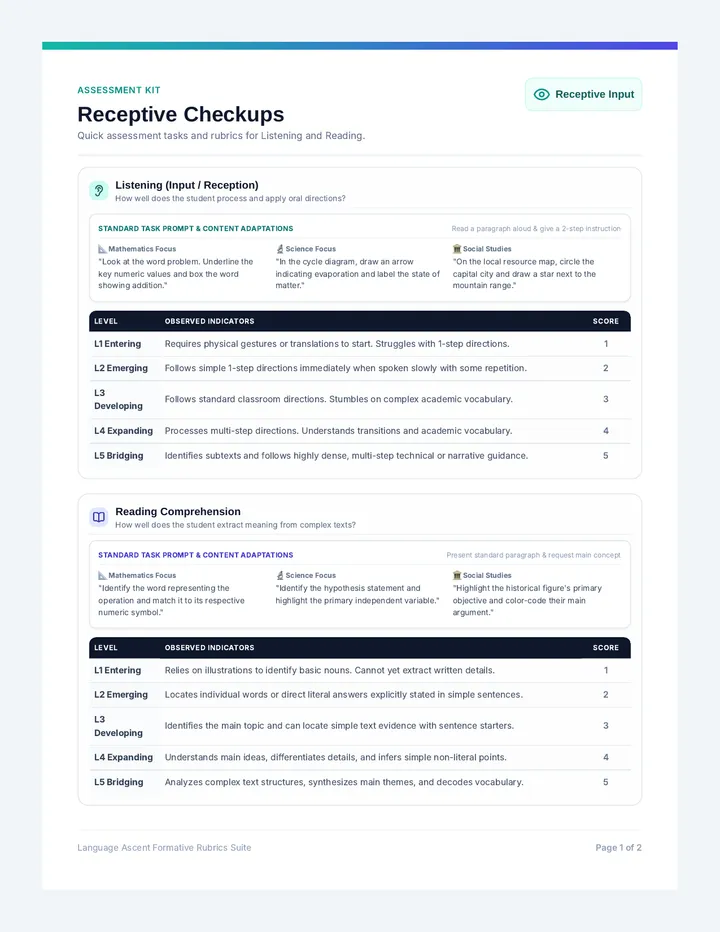
A comprehensive progress monitoring kit for English Language Learners (ELLs) across all four core language domains. Includes step-by-step teacher instructions, a printable class tracking matrix, a student self-monitoring journal, and quick formative assessment rubrics.
A comprehensive three-page student worksheet featuring 'The Hallway Hurdle' short story, a colorful mini-anchor chart based on the RACE writing strategy, step-by-step lined writing boxes, and a guided model page with fill-in-the-blank practice.
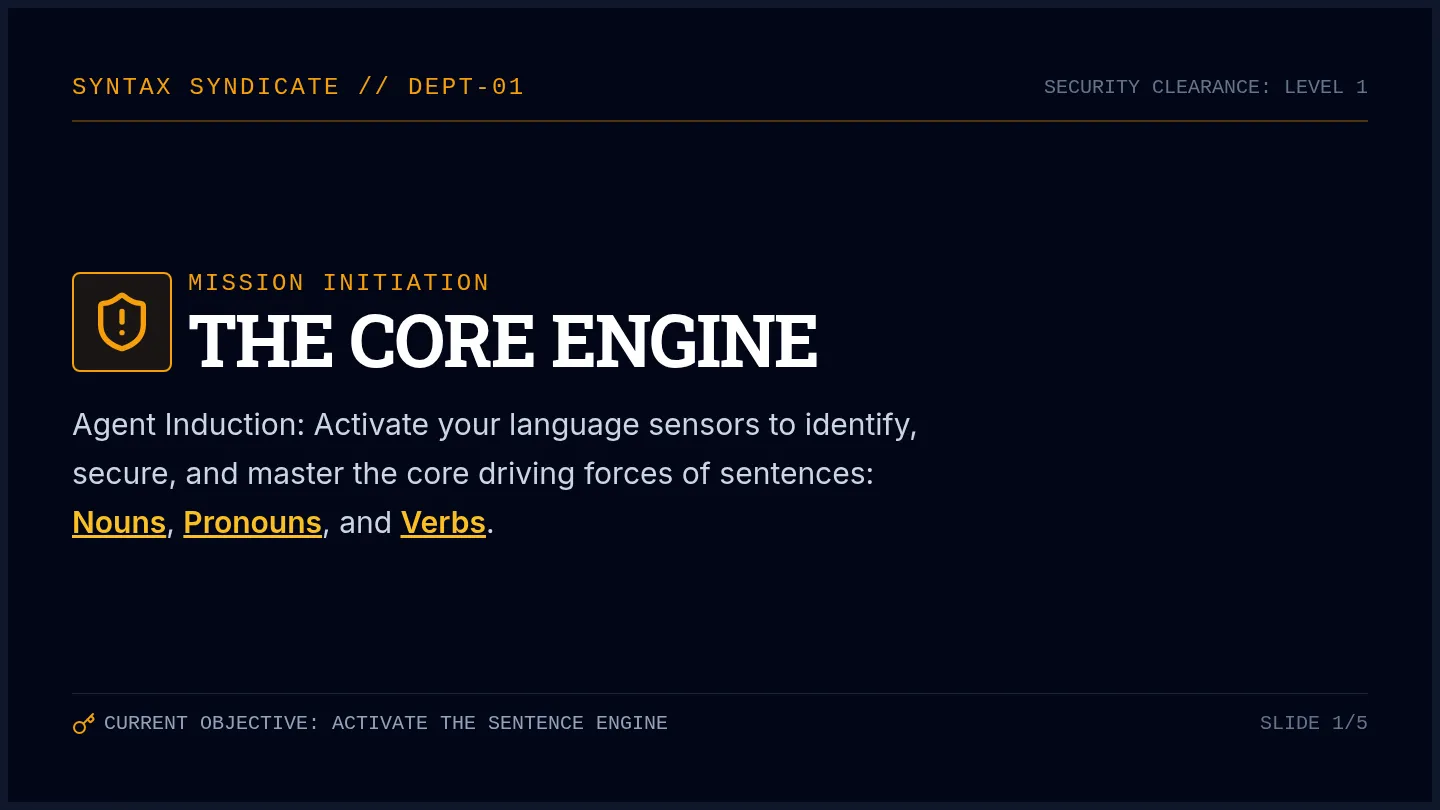
A spy-themed 4-day parts of speech review sequence for 6th and 7th graders. Students become secret agents in the 'Syntax Syndicate', cracking codes and completing missions to master nouns, pronouns, verbs, adjectives, adverbs, prepositions, conjunctions, and interjections, culminating in a collaborative classroom escape room.
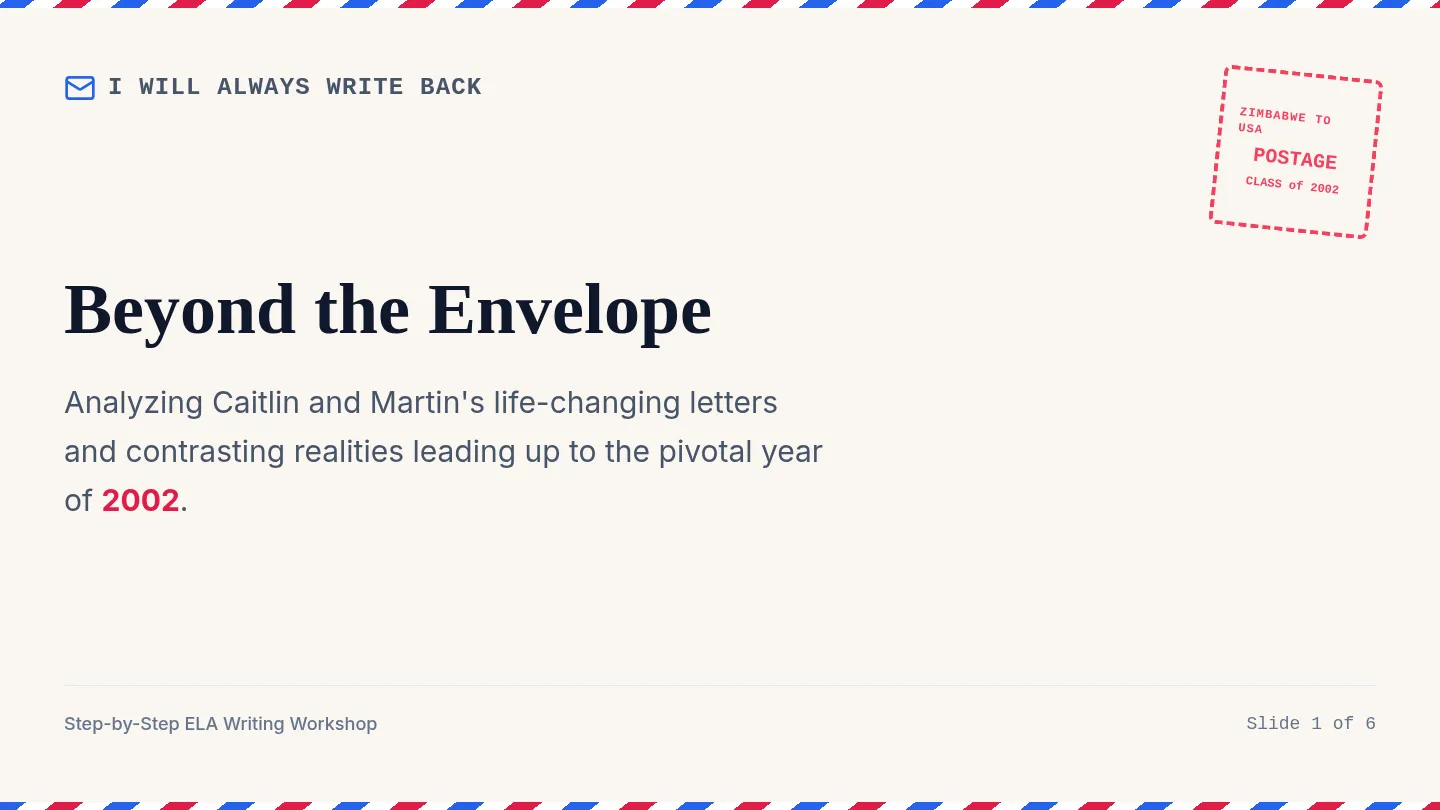
An in-depth writing lesson exploring Caitlin Alifirenka and Martin Ganda's memoir, 'I Will Always Write Back', focusing on their lives, structural barriers, and deepening friendship up to 2002. Students analyze dual perspectives and write a structured, empathetic reflection.
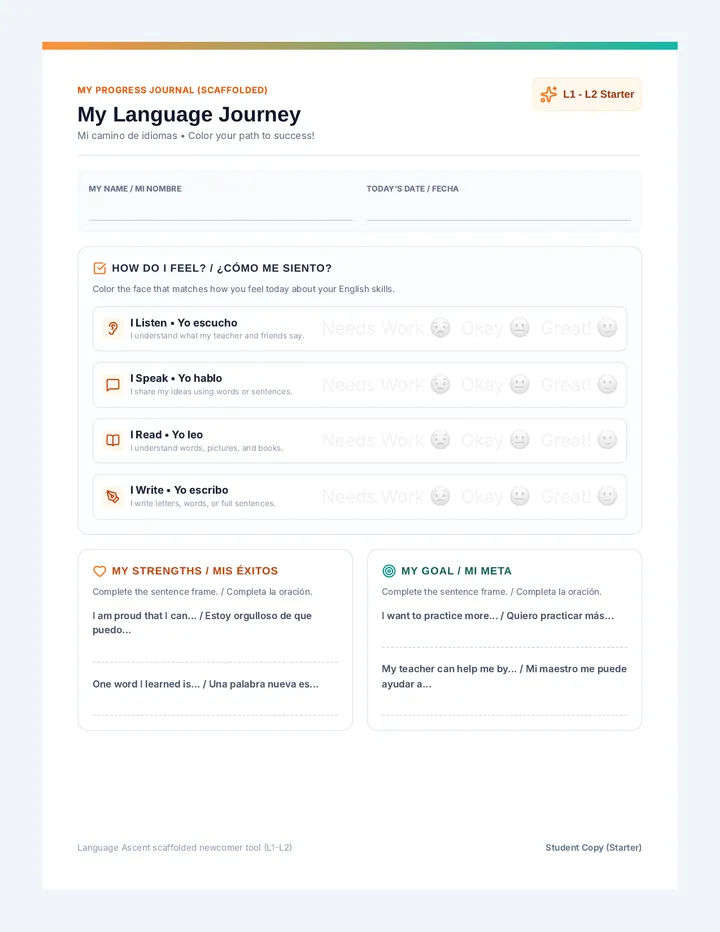
A highly scaffolded, visual, bilingual (English/Spanish) student self-monitoring journal page tailored for early language acquisition levels (L1-L2).
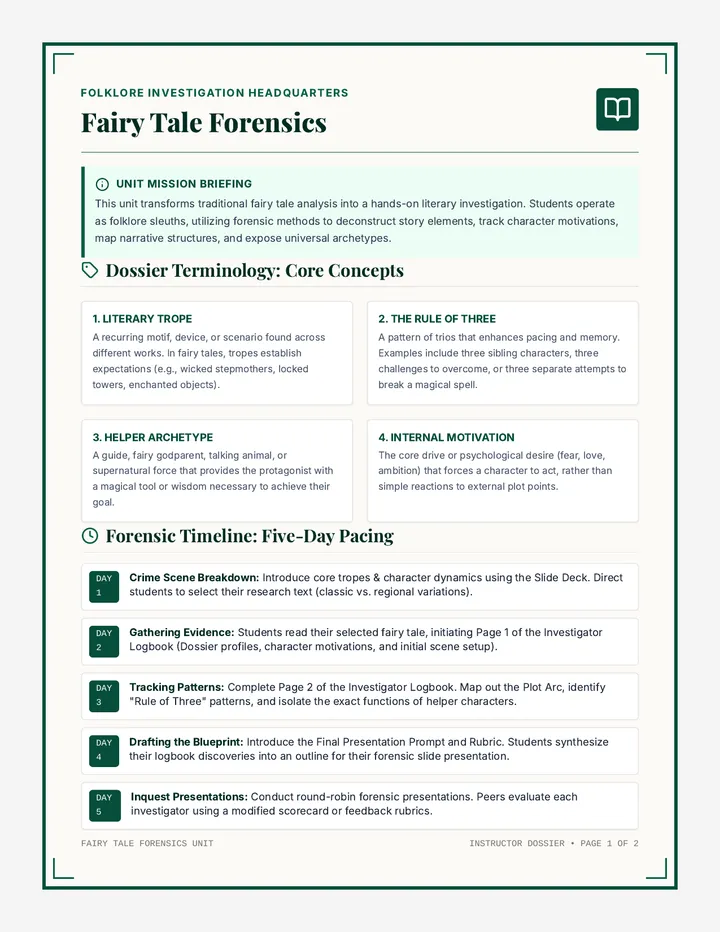
A comprehensive literary research unit designed to guide students through a structural and character analysis of classic and regional fairy tales. Students assume the role of folklore investigators, tracking standard tropes, character motivations, helper archetypes, and plot designs, culminating in an analytical presentation.
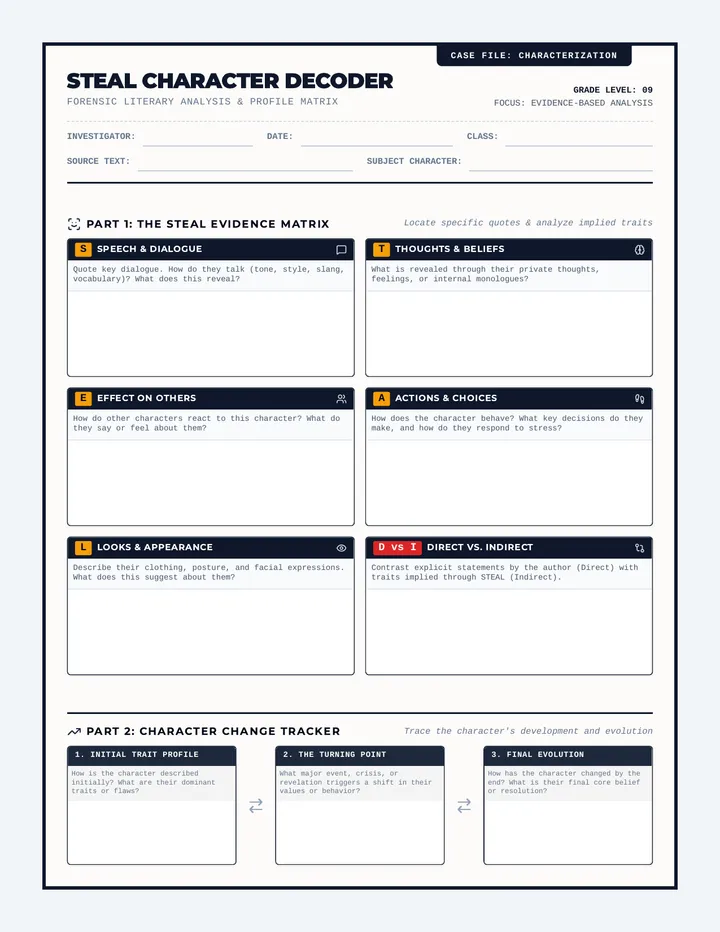
A comprehensive lesson on characterization using the STEAL method, direct versus indirect characterization, and character change tracking. Students analyze how authors construct deep, multi-dimensional characters through evidence-based observation.
Quick formative assessment prompts and rubrics across listening, speaking, reading, and writing domains to facilitate easy, real-time feedback.