Students explore how the conjunction 'and' creates a plural subject effectively 100% of the time, practicing sentence combining and verb conjugation.
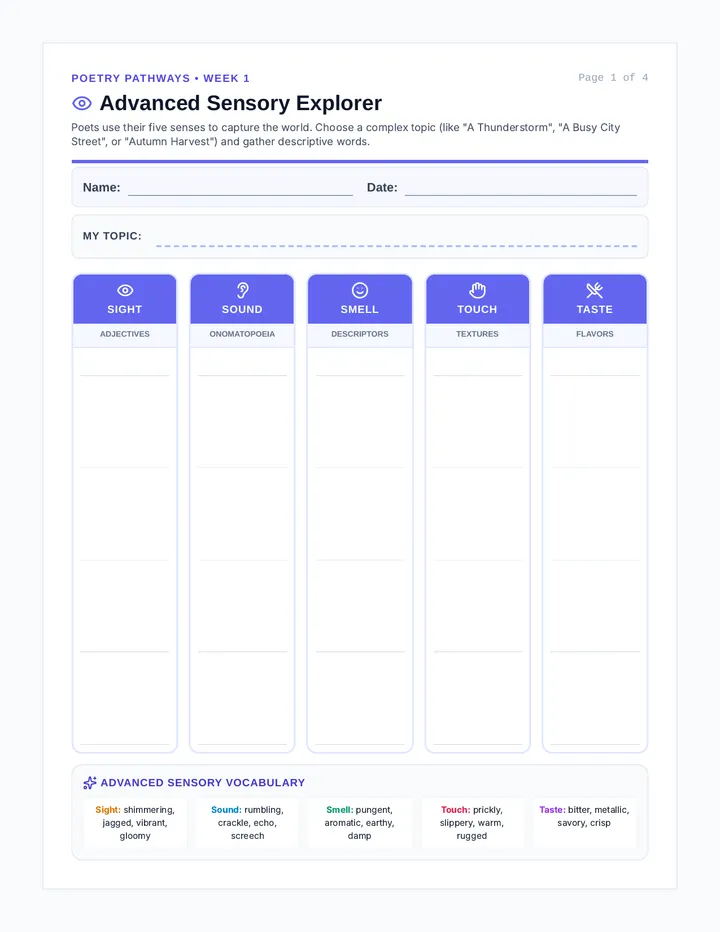
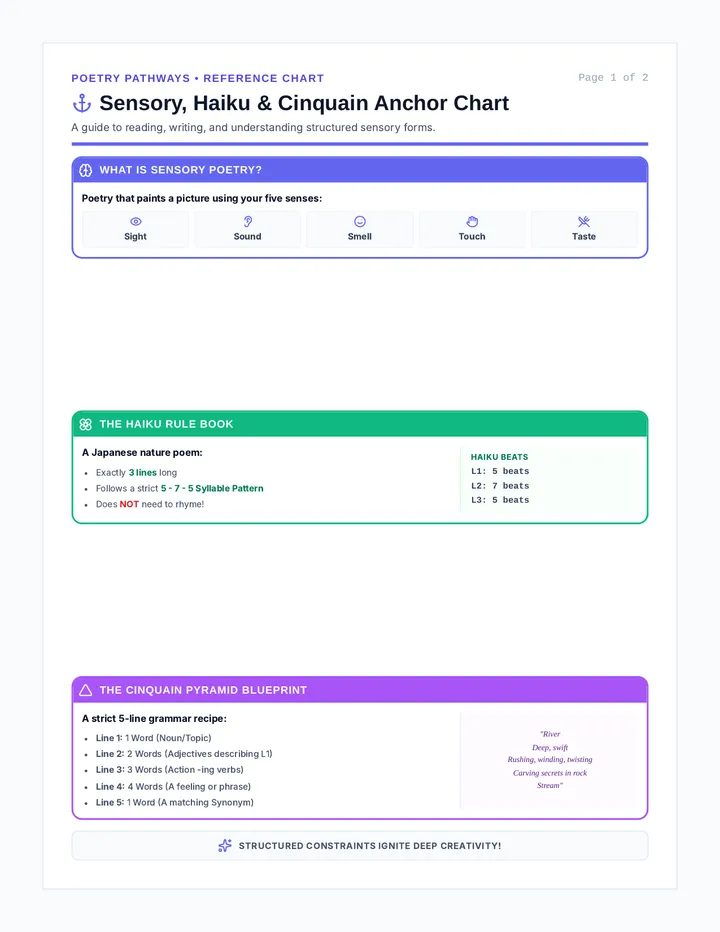
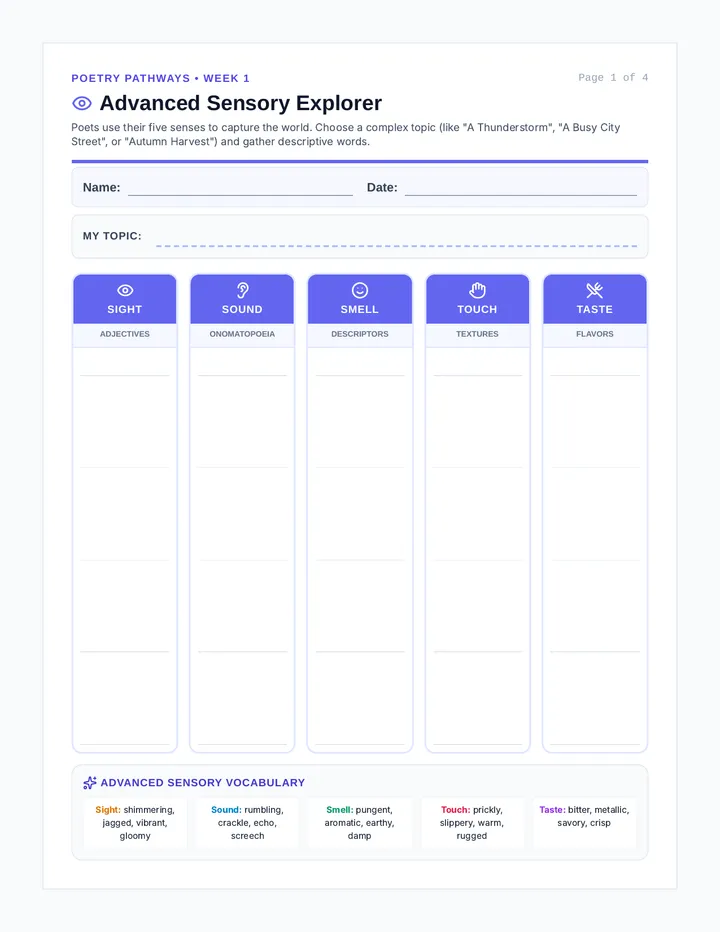
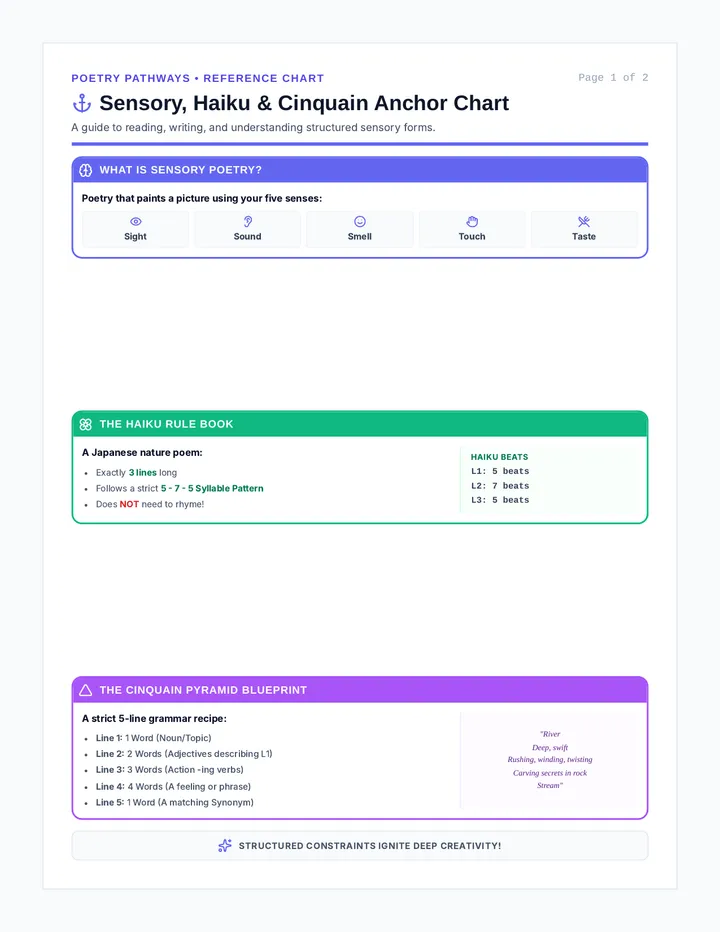
A comprehensive 4-week poetry curriculum designed for students requiring high structure and visual supports. It covers diverse poetry types (Haiku, Color, Acrostic, Couplets, Concrete, Free Verse, and Metaphor/Simile) with scaffolds like word banks, sentence frames, and graphic organizers.
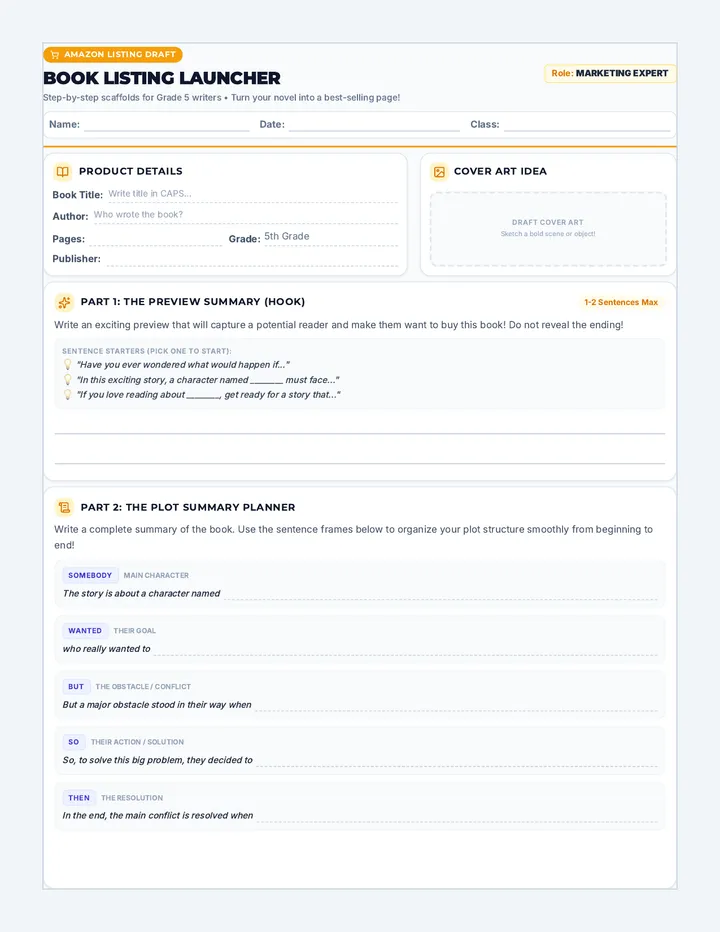
A scaffolded unit designed to help 5th-grade developing and emerging students create a mock e-commerce book listing for a novel they have read. This lesson breaks down complex writing tasks like summaries, quotes, and editorial reviews into structured, bite-sized templates with built-in sentence frames.
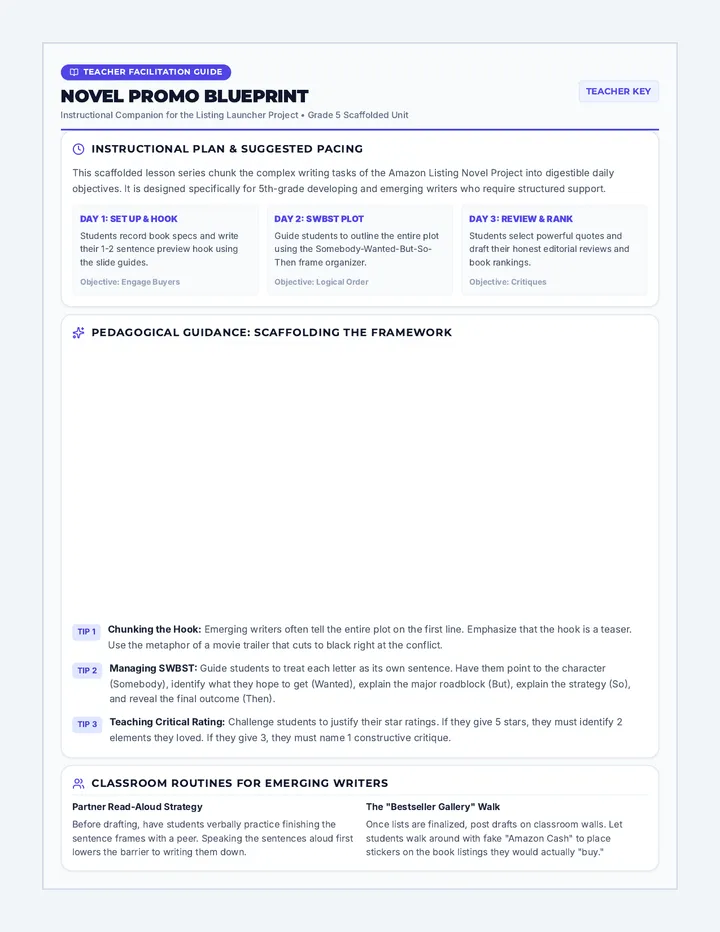
A 2-page instructional guide for teachers containing step-by-step facilitation plans, modeling guides for the sentence frames, a completed exemplar based on the novel Holes, and an asset-based 5th-grade writing rubric.
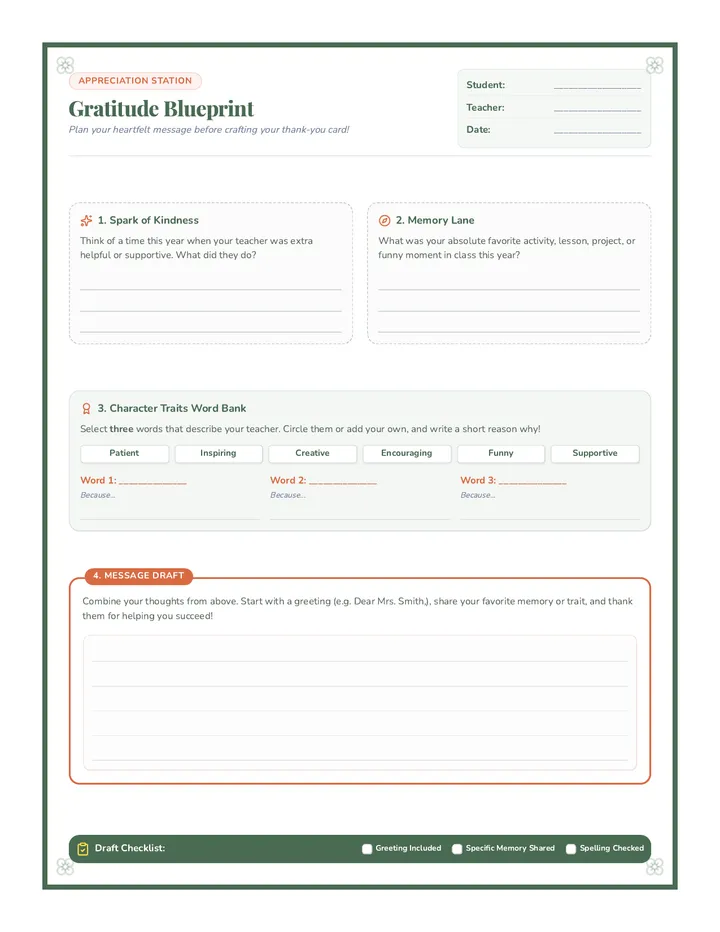
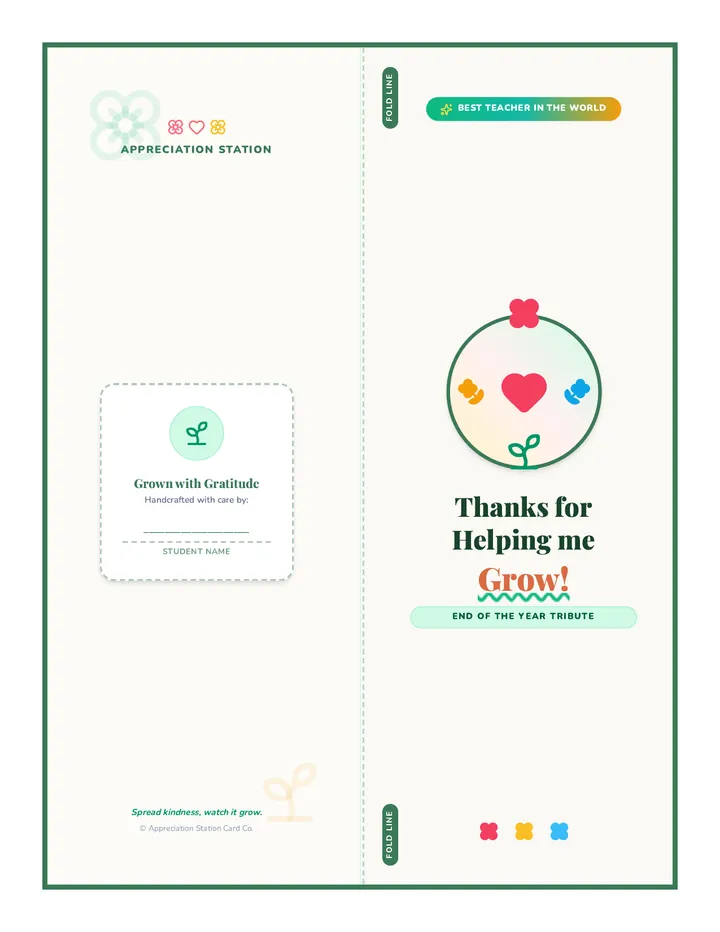
A complete end-of-the-year thank-you card crafting lesson. Students brainstorm specific memories and acts of kindness, draft their messages, and assemble beautifully styled, fold-in-half appreciation cards for their teachers.
A 6-slide instructional presentation to guide students through each section of the Listing Launcher Worksheet. Features colorful step-by-step examples, visual marketing templates, and modeled writing strategies tailored for Grade 5 learners.
An intensive intervention lesson designed to help struggling readers master main idea identification using hands-on, color-coded highlighting strategies. Students learn to dismantle paragraph structures like blueprint architects, physically separating the 'roof' (main idea) from the 'supporting pillars' (details).
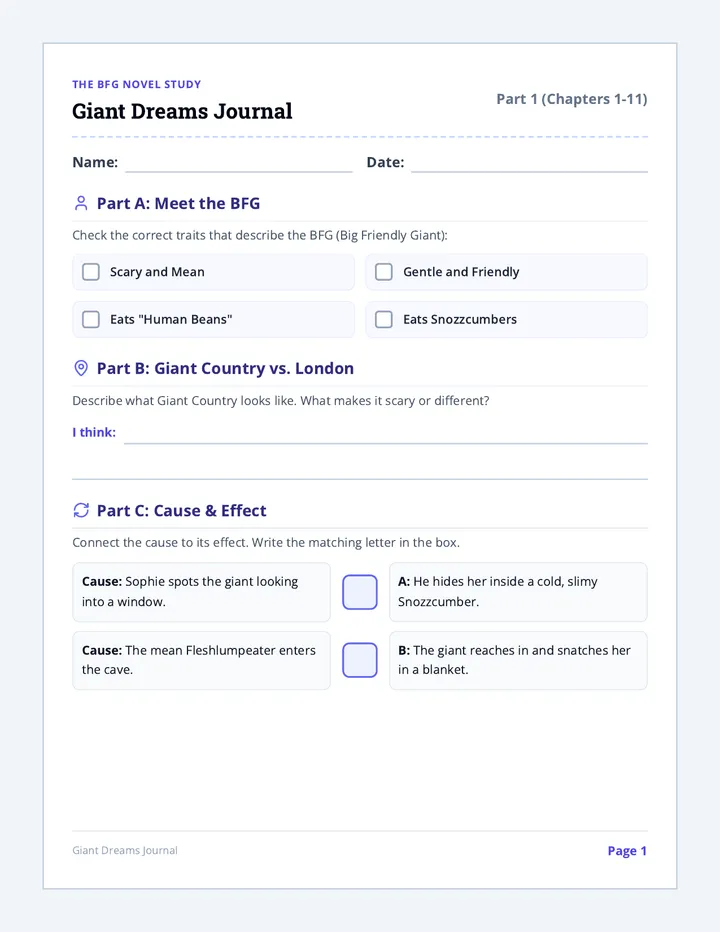
An interactive, SPED-friendly novel study of Roald Dahl's 'The BFG', tailored for upper elementary students (grades 3-5). Features simplified summaries, visual layouts, decoded BFG vocabulary ('gobbledegook'), and interactive class discussion prompts.
A 2-page print-ready scaffolded planner worksheet for Grade 5 developing and emerging writers. It breaks down the Amazon Listing Novel Project into manageable sections, featuring built-in sentence frames for the preview hook, plot summary, quote curators, editorial reviews, and book rankings. This revised version stacks the Somebody and Wanted sections vertically for a cleaner sequential flow.
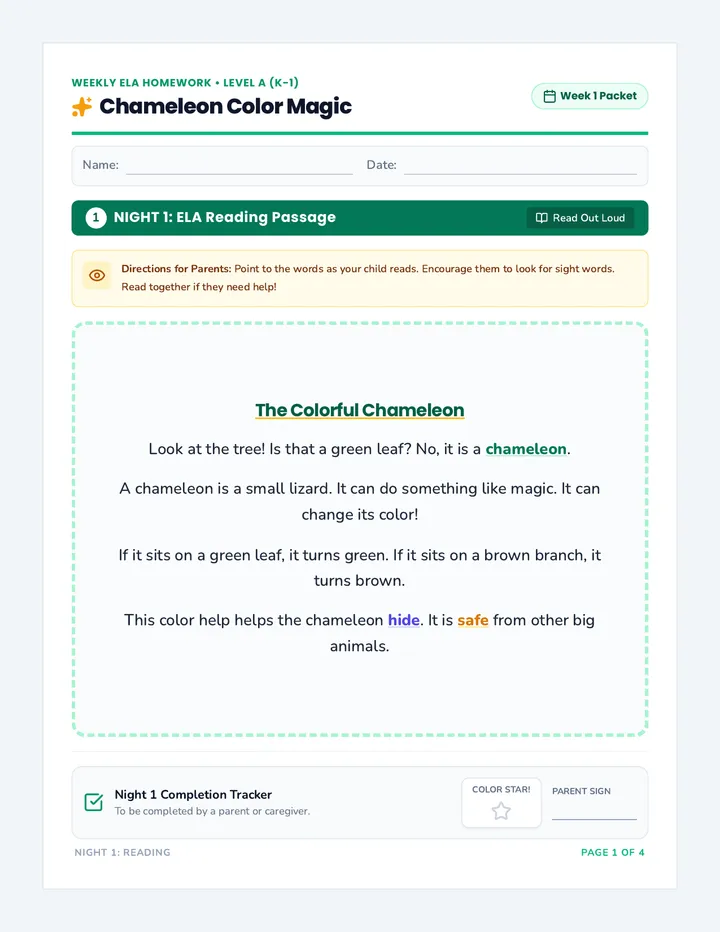
Weekly ELA homework packets focused on high-interest animal adaptations for elementary students (K-5). Each packet contains four nights of structured work: Night 1 (Reading), Night 2 (Vocabulary), Night 3 (Comprehension Activity), and Night 4 (Comprehension Questions), customized with visual icons, sentence frames, and simplified tracking guides for varying reading levels.
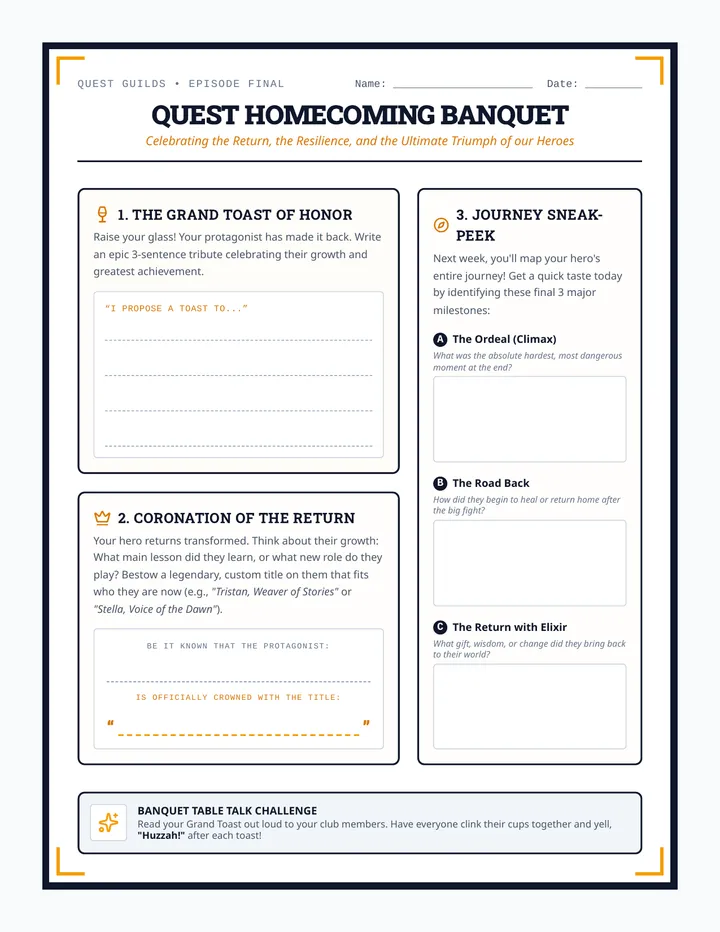
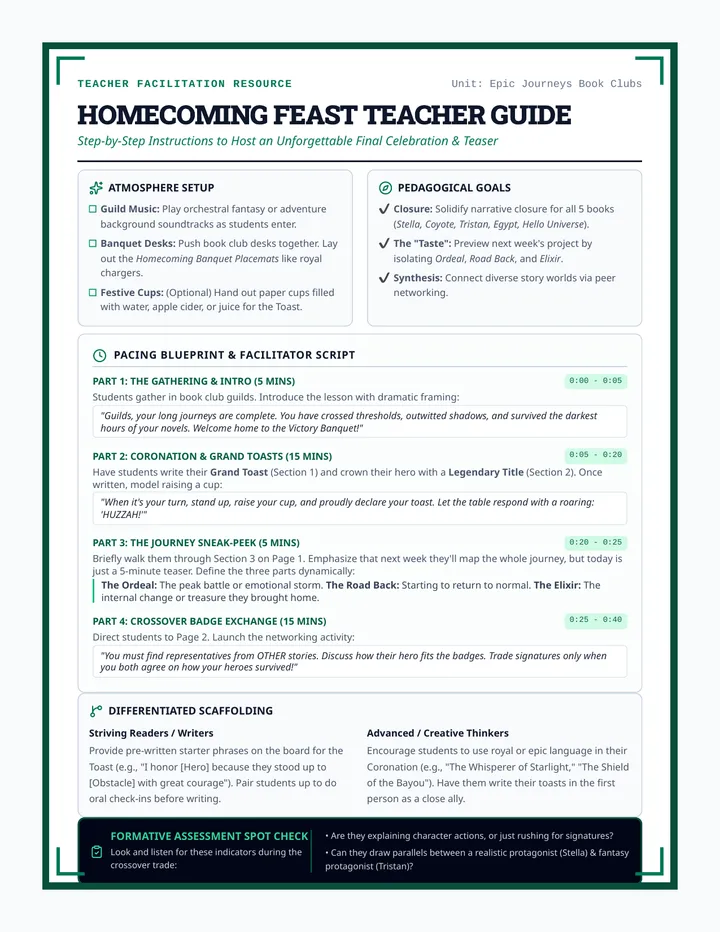
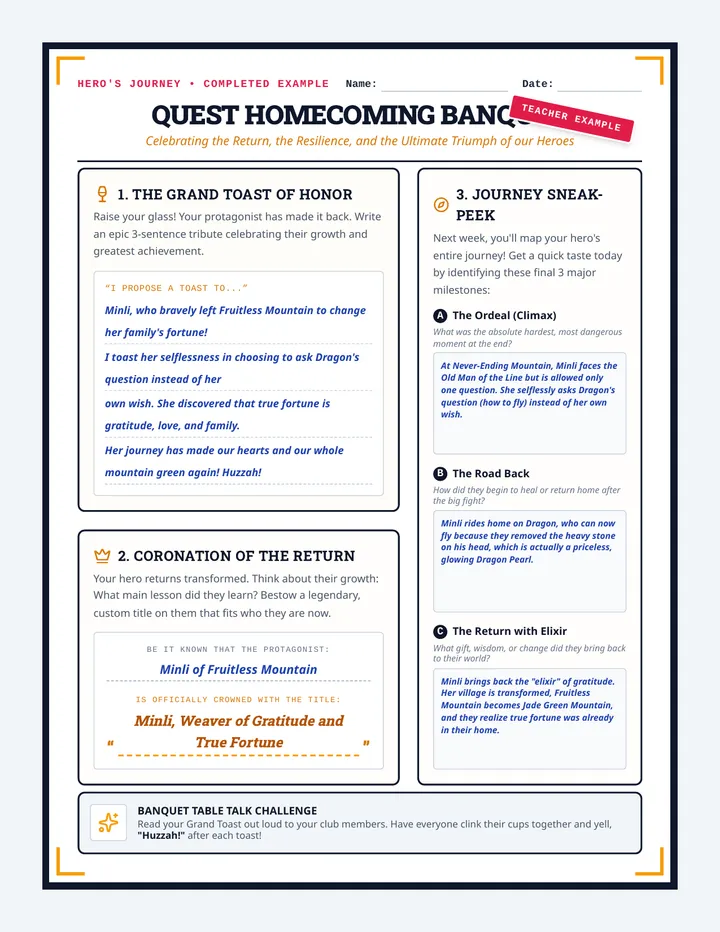
The celebratory final meeting of the book clubs, designed as a festive victory banquet. Students commemorate their protagonist's return through a grand ceremonial toast, active crossover badge trading with other groups, and a high-interest 5-minute teaser of the Hero's Journey mapping project.
A sweet-themed fold-in-half printable thank-you card. The front cover features sweet candy illustrations and a 'Thanks for making this year so sweet!' design, the back includes a custom recipe-style stamp, and the inside features cute 'Recipe for an Awesome Teacher' ingredients, sweet memory prompts, and a classic recipe-card style lined writing space.