A comprehensive lesson focused on CCSS RI.3.9, teaching students to compare and contrast key details between two informational texts about freshwater and saltwater ecosystems using graphic organizers.
A comprehensive lesson exploring the human brain's capabilities and the nature of intelligence, featuring an informational text analysis and a multiple intelligences choice board.
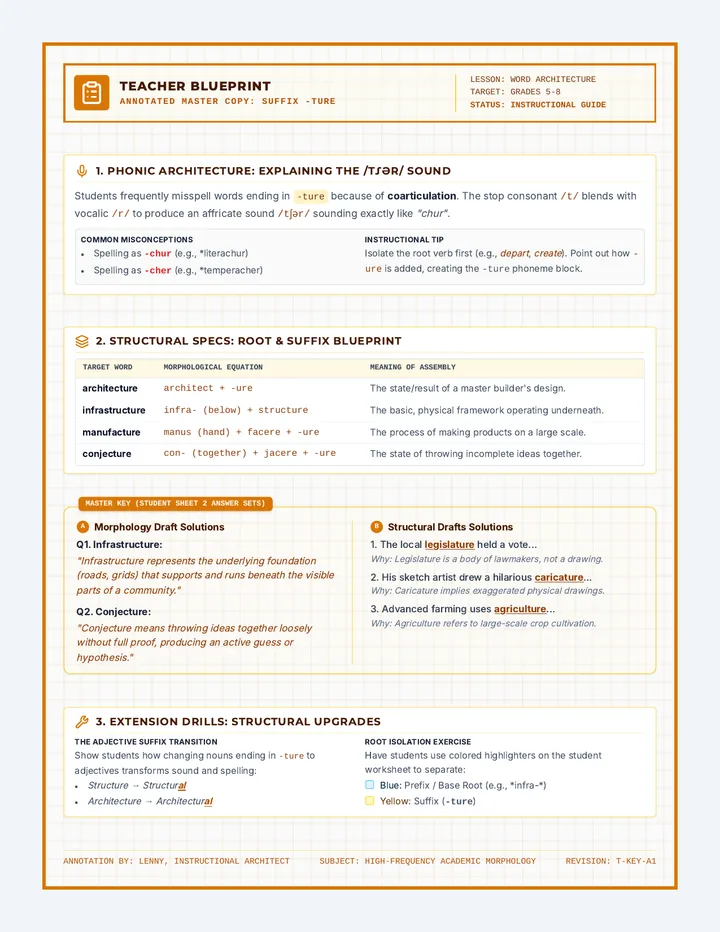
A lesson focused on common prefixes (un-, re-, pre-, dis-) and suffixes (-ful, -less, -er, -ly) using a 'Word Workshop' theme to help students understand how word parts change meanings.
A comprehensive lesson where students learn to use text evidence and background knowledge to make logical predictions about what will happen next in a story.
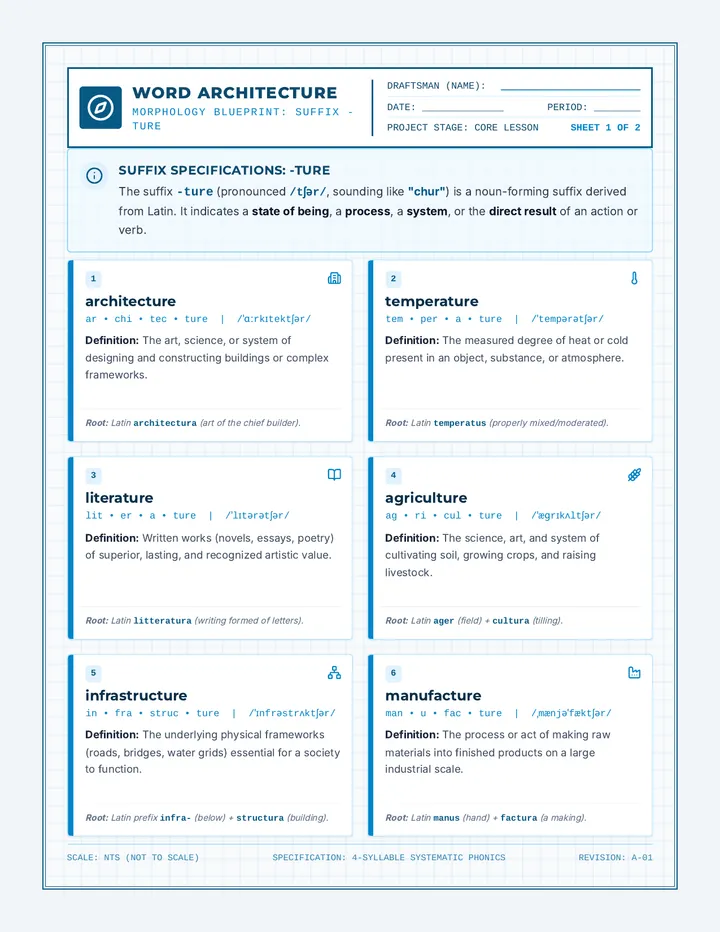
A focused study on the prefix 'RE-', the root 'GEO', and the suffix '-LESS' through the lens of Greek and Roman mythology. Students will read myth-inspired stories and complete activities to master these common word parts.
Day 2 of the Water Worlds unit. Students tackle longer informational texts and transition to using a Venn Diagram strategy to categorize similarities and differences in environmental zones, animal adaptations, and global importance.
A morning work resource focused on reading comprehension and multiple-choice practice within a space exploration theme.
A lesson focused on developing neat handwriting and spacing skills through the transcription of a seasonal poem. Students analyze poetic structure while practicing their penmanship on specialized lined paper.
A 3rd-grade informational reading lesson about how the school system works, focusing on identifying and using text features like headings, bold words, and sidebars.
A final capstone lesson for the elaboration intervention. Students return to their Revolutionary War topic to apply 'Draft Doctor' and 'Build-the-Bridge' techniques to their own writing. Includes a hands-on 'Paragraph Puzzle' and a final drafting 'Power-Up' worksheet.
A fast-paced, hands-on intervention lesson where students apply elaboration techniques to familiar, everyday topics like sports, food, and hobbies. Using a 'Detective' theme, students practice matching thin claims to thick evidence and explanations to build engagement and fluency.
A set of materials designed for small-group intervention focused on helping 4th-grade students elaborate on their informational writing about Revolutionary War Patriots. The lesson introduces the 'Draft Doctor' technique to expand simple sentences into detailed paragraphs using specific evidence and explanation starters.
Students journey to the Sahara Desert to learn about the nomadic Tuareg people, making inferences about desert survival and predicting the arrival of life-sustaining water.