A lesson focused on teaching students how to quote accurately and draw inferences from texts using a clear proficiency scale and learning progression.
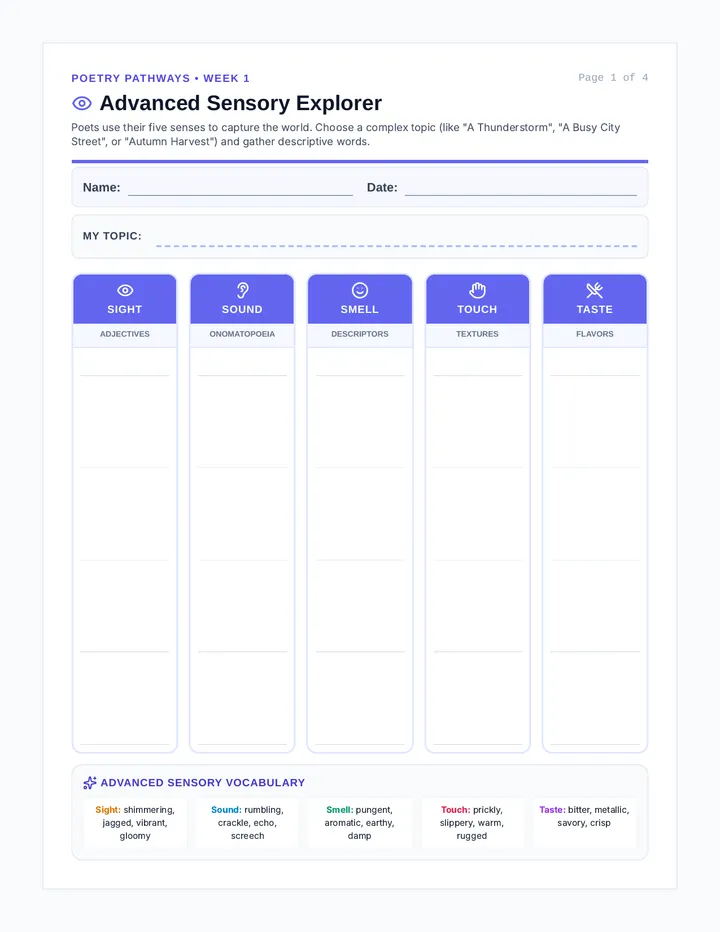
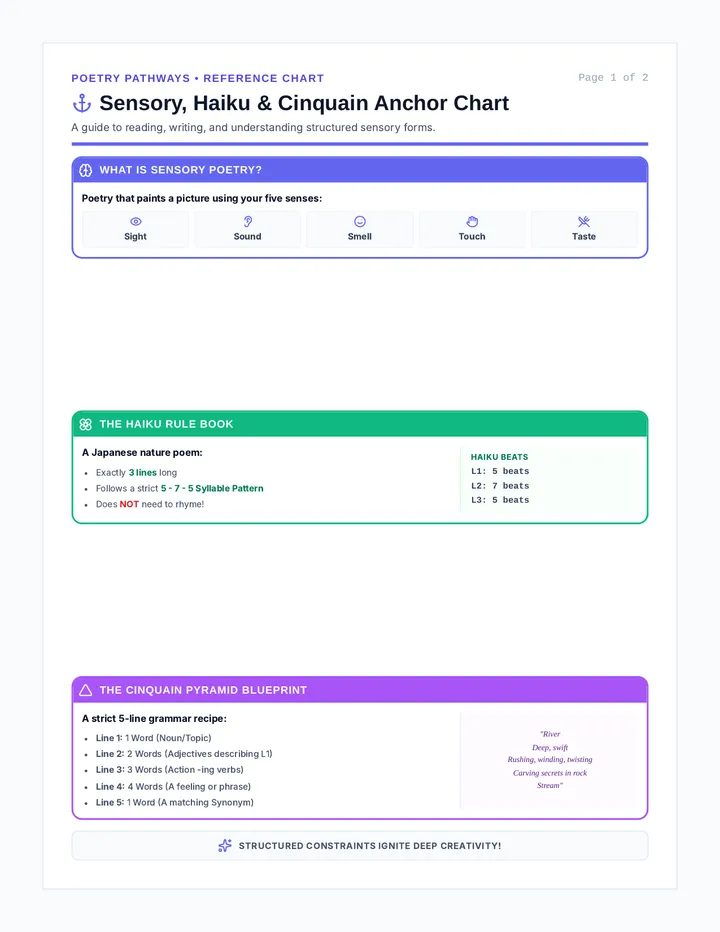
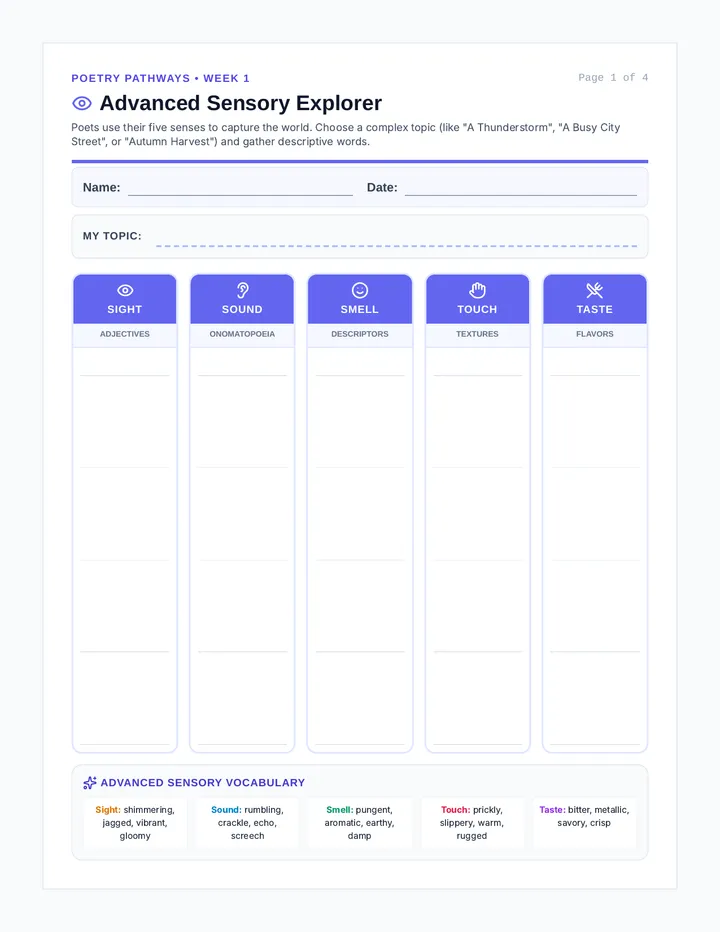
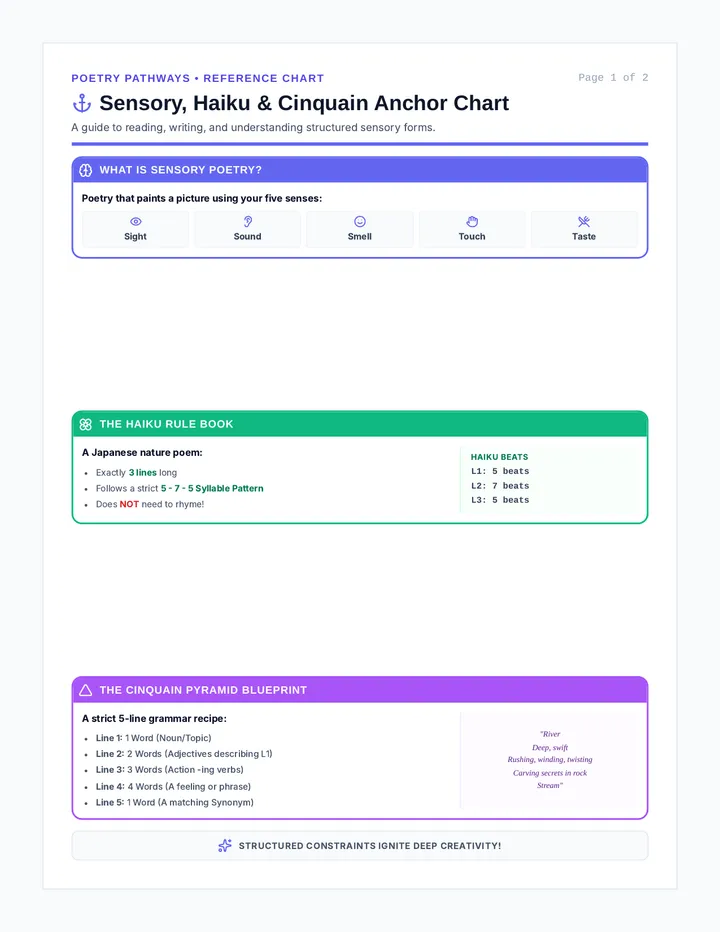
A comprehensive 4-week poetry curriculum designed for students requiring high structure and visual supports. It covers diverse poetry types (Haiku, Color, Acrostic, Couplets, Concrete, Free Verse, and Metaphor/Simile) with scaffolds like word banks, sentence frames, and graphic organizers.
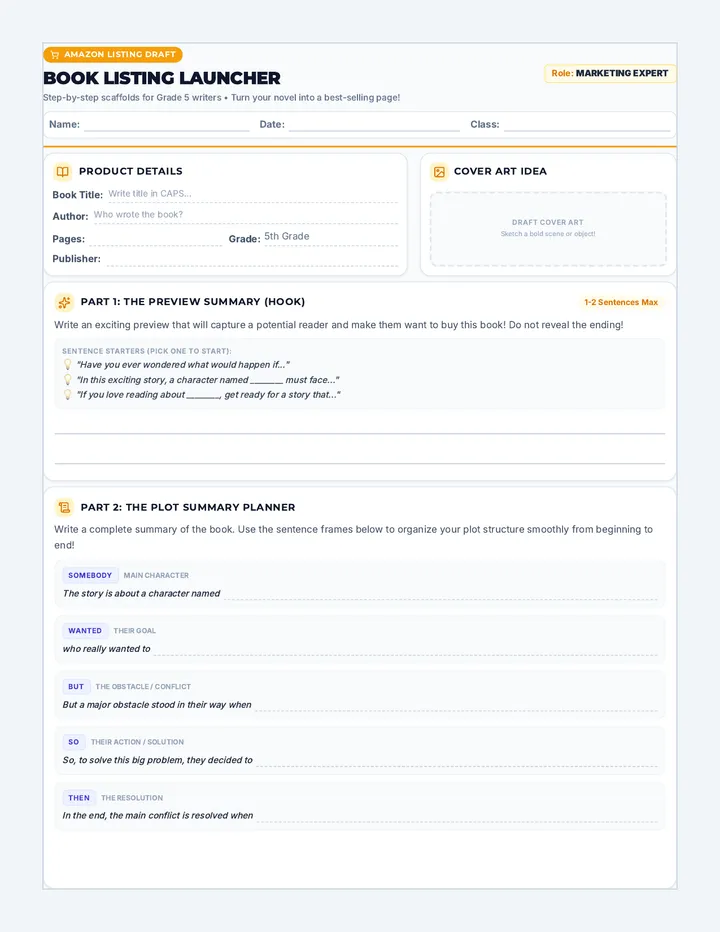
A scaffolded unit designed to help 5th-grade developing and emerging students create a mock e-commerce book listing for a novel they have read. This lesson breaks down complex writing tasks like summaries, quotes, and editorial reviews into structured, bite-sized templates with built-in sentence frames.
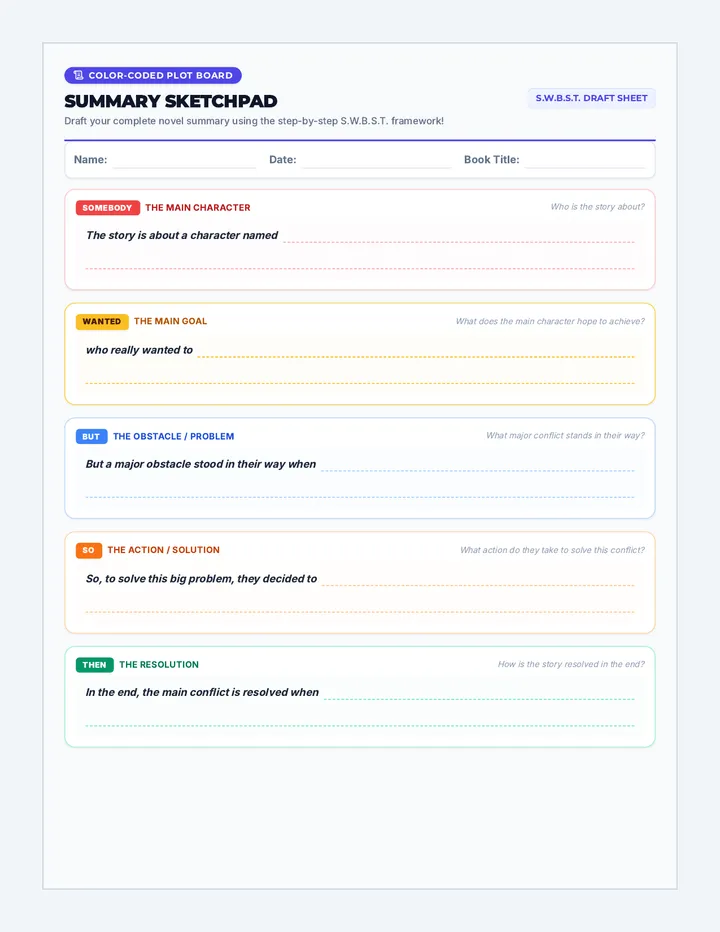
A 1-page student-facing draft worksheet designed for Grade 5 developing writers. It provides generous writing space (2 dashed lines per section) and clear color-coded sentence starters for each part of the Somebody (Red), Wanted (Yellow), But (Blue), So (Orange), Then (Green) summary framework.
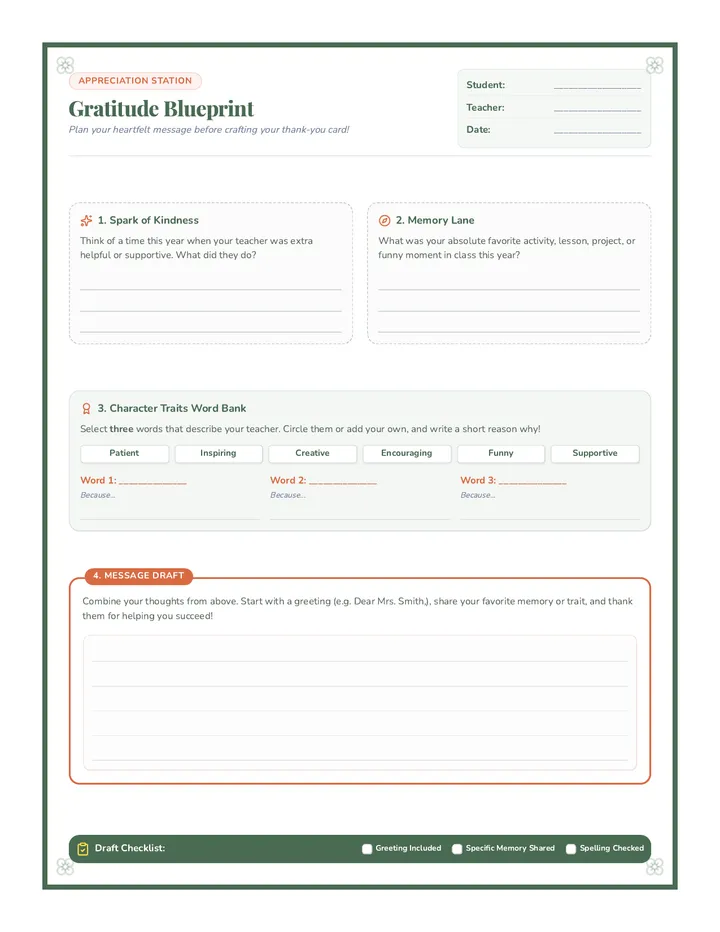
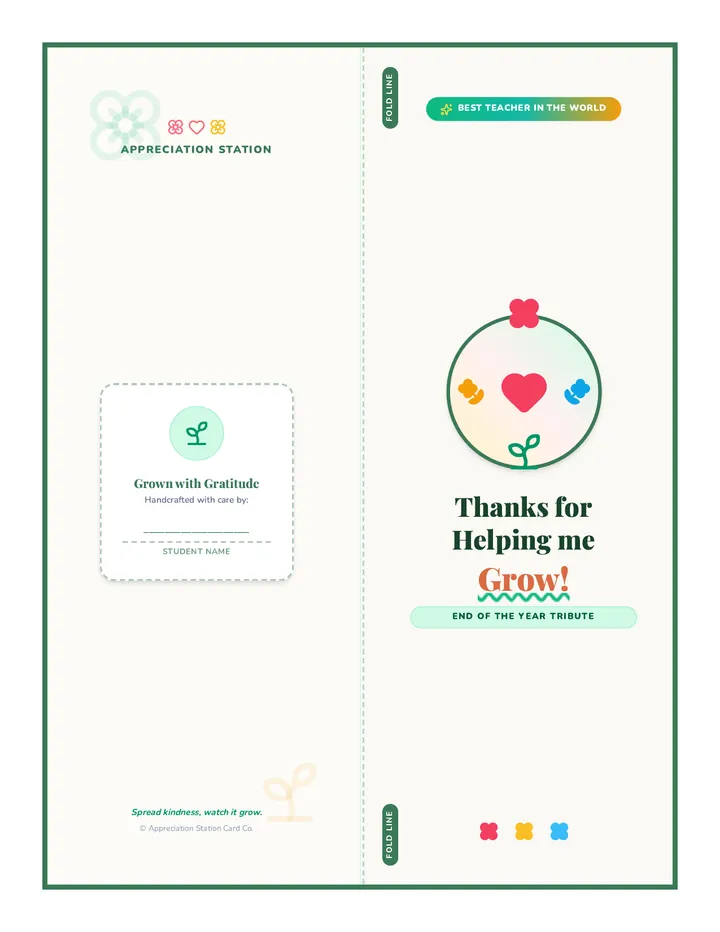
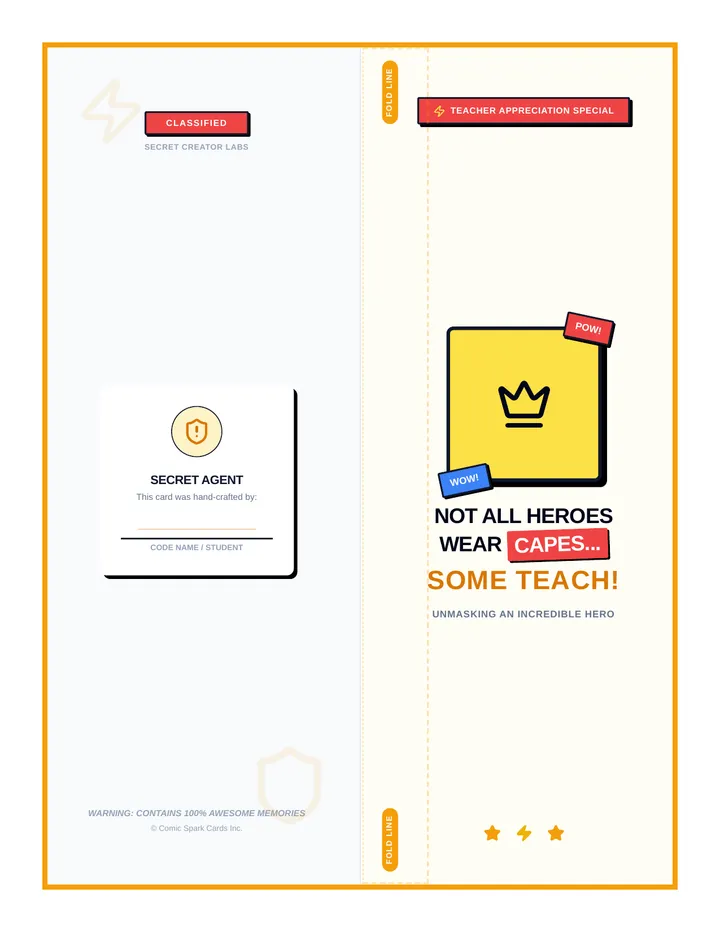
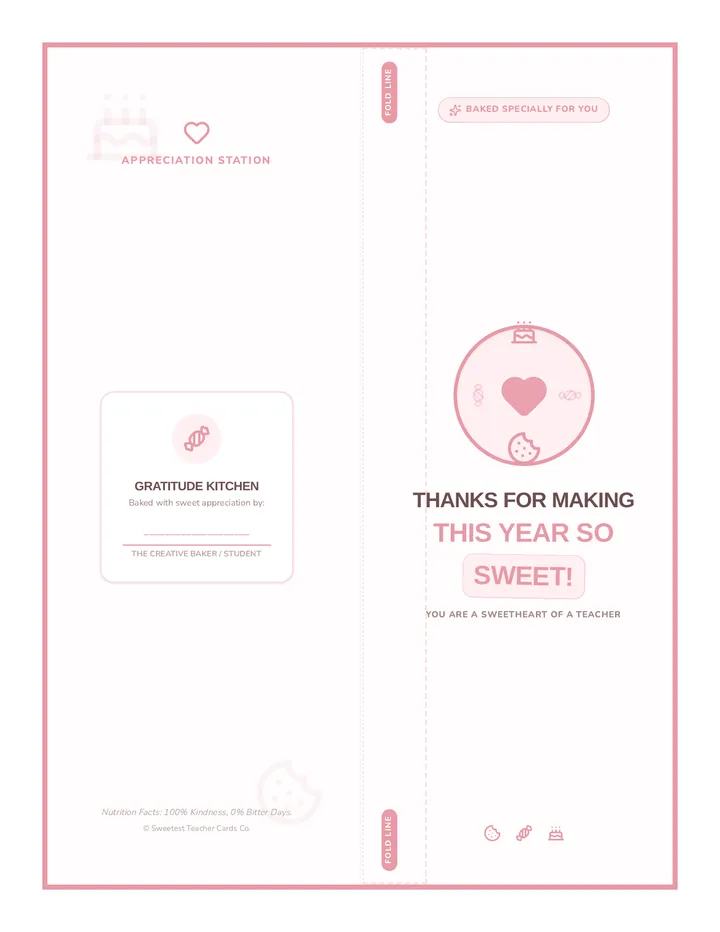
A complete end-of-the-year thank-you card crafting lesson. Students brainstorm specific memories and acts of kindness, draft their messages, and assemble beautifully styled, fold-in-half appreciation cards for their teachers.
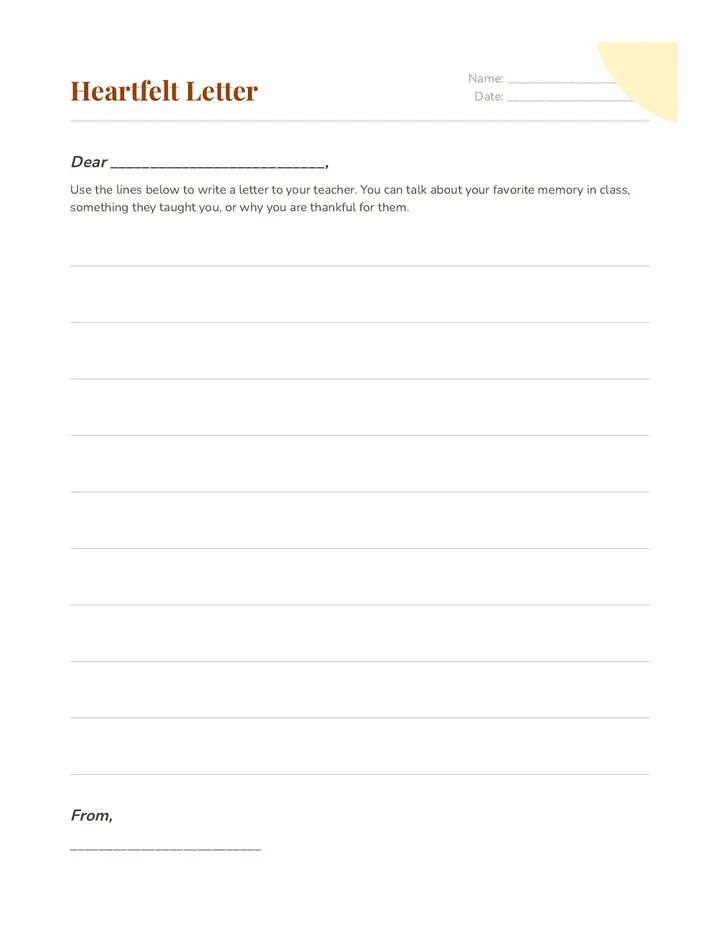
A set of three creative thank-you note templates including a traditional letter, an acrostic poem, and printable postcards for Teacher Appreciation Week.
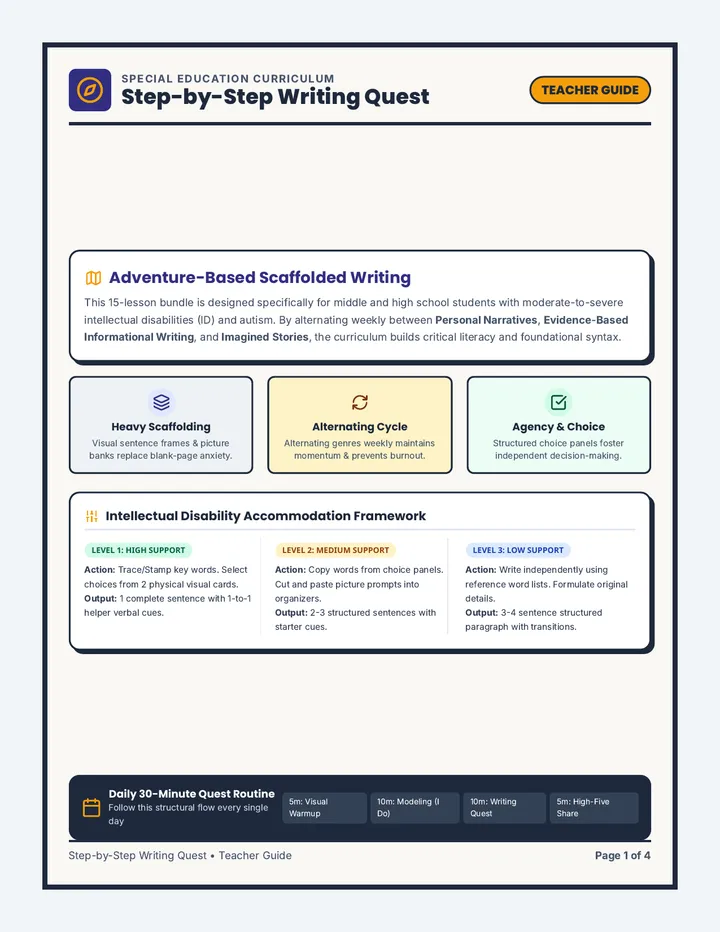
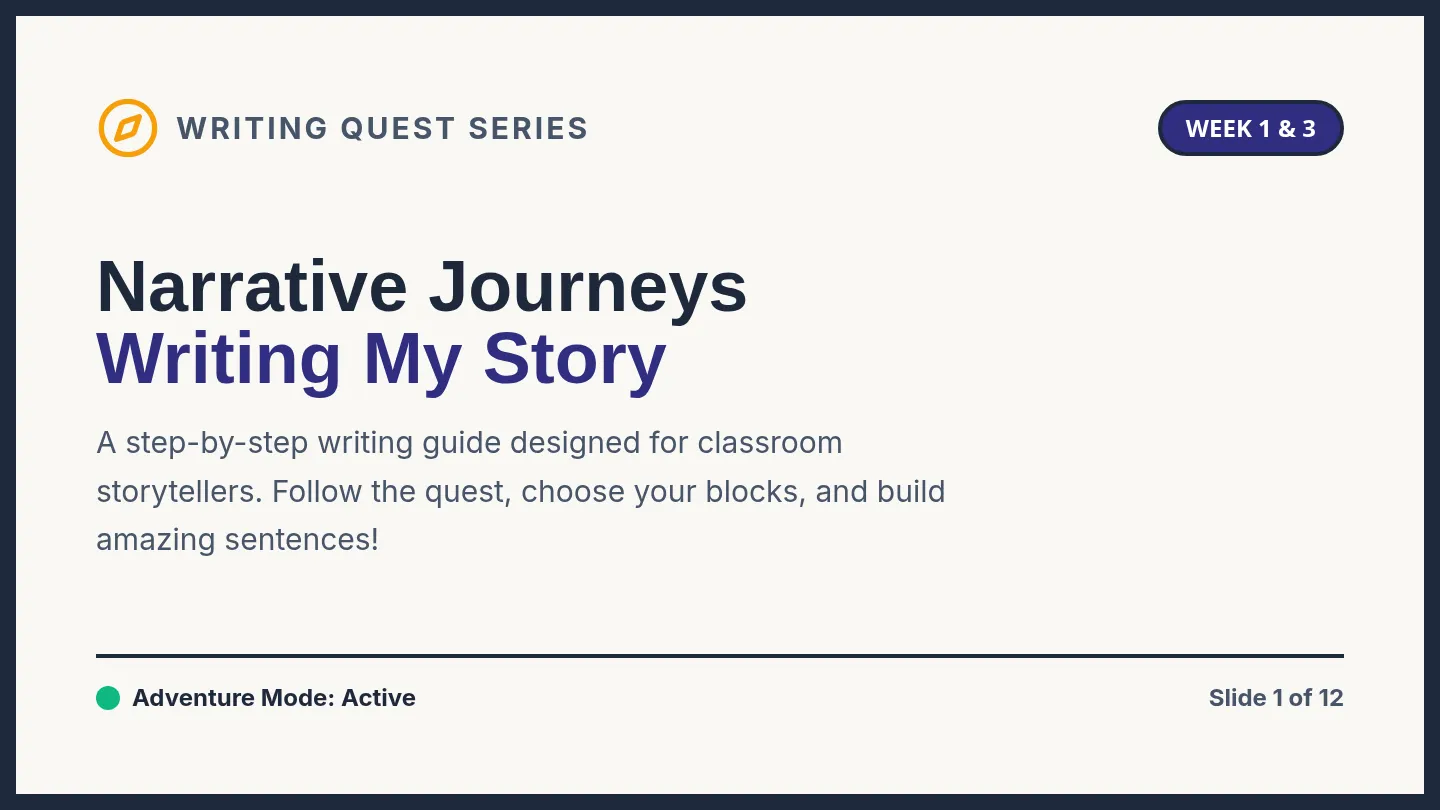
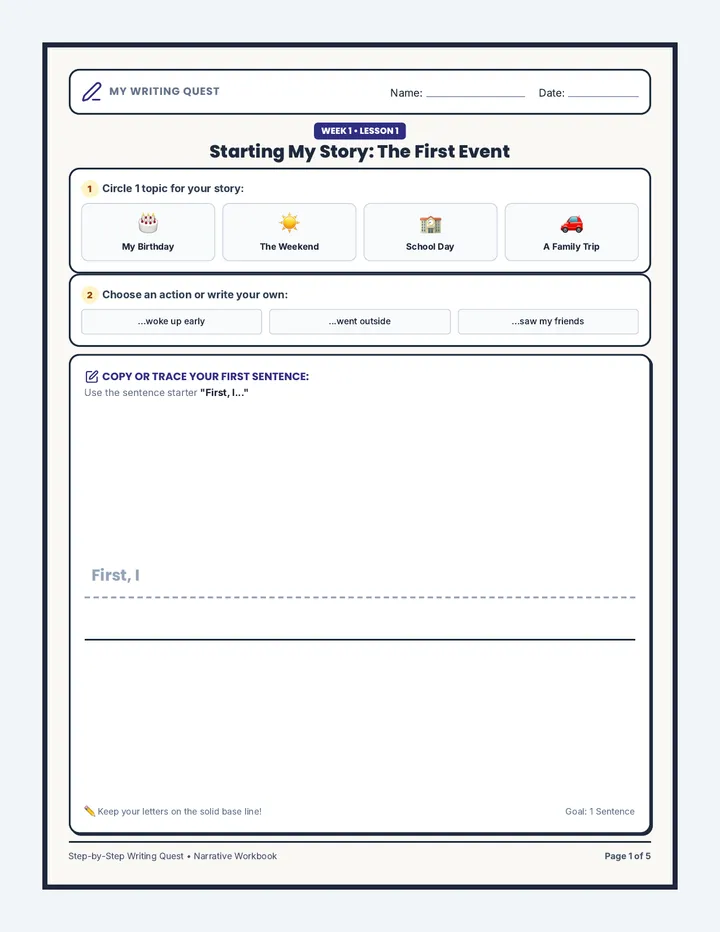
A comprehensive 15-lesson writing curriculum tailored for middle and high school students with intellectual disabilities. The sequence alternates weekly between personal narratives, evidence-based informational writing, and imagined stories, using heavy visual scaffolding, structured sentence frames, and clear graphic organizers.
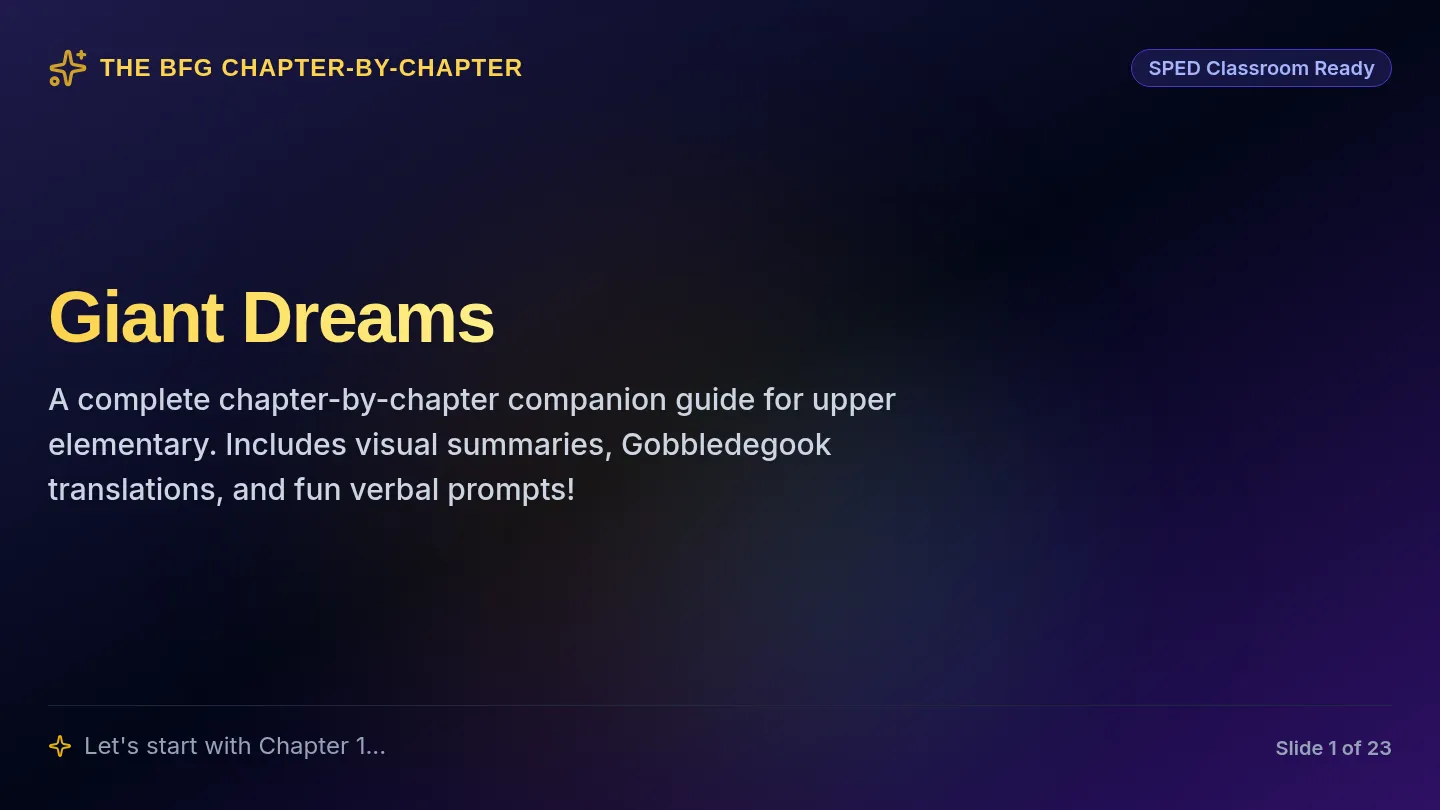
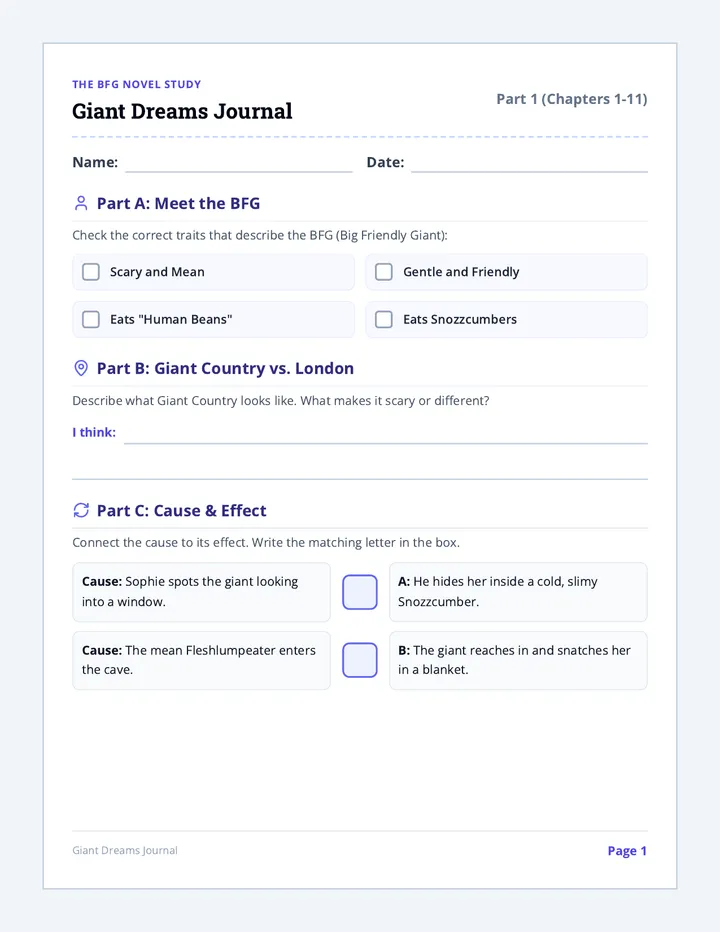
An interactive, SPED-friendly novel study of Roald Dahl's 'The BFG', tailored for upper elementary students (grades 3-5). Features simplified summaries, visual layouts, decoded BFG vocabulary ('gobbledegook'), and interactive class discussion prompts.
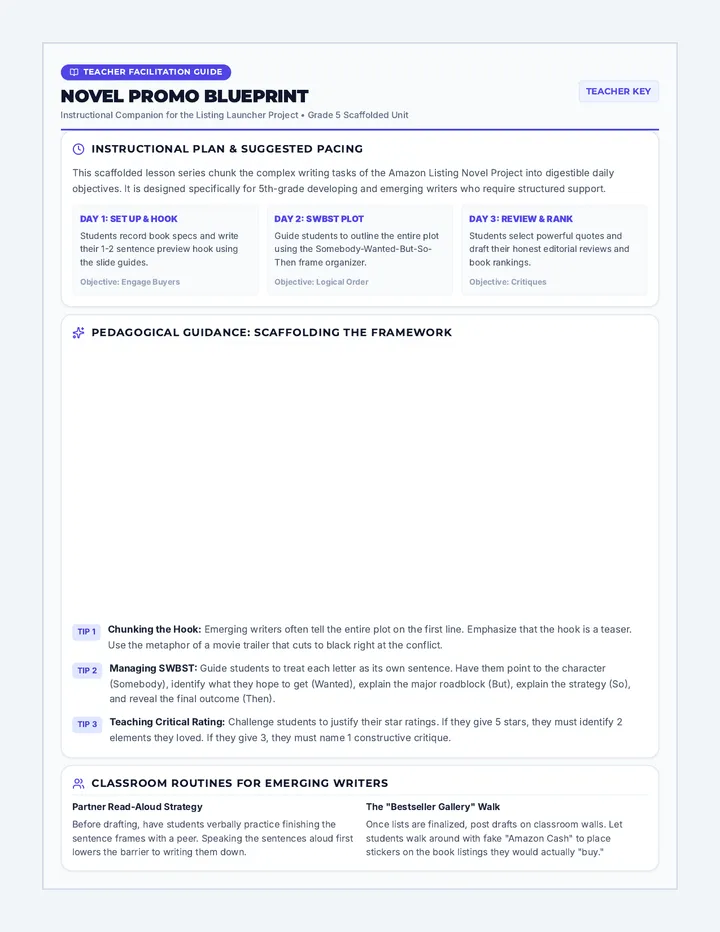
A 2-page instructional guide for teachers containing step-by-step facilitation plans, modeling guides for the sentence frames, a completed exemplar based on the novel Holes, and an asset-based 5th-grade writing rubric.
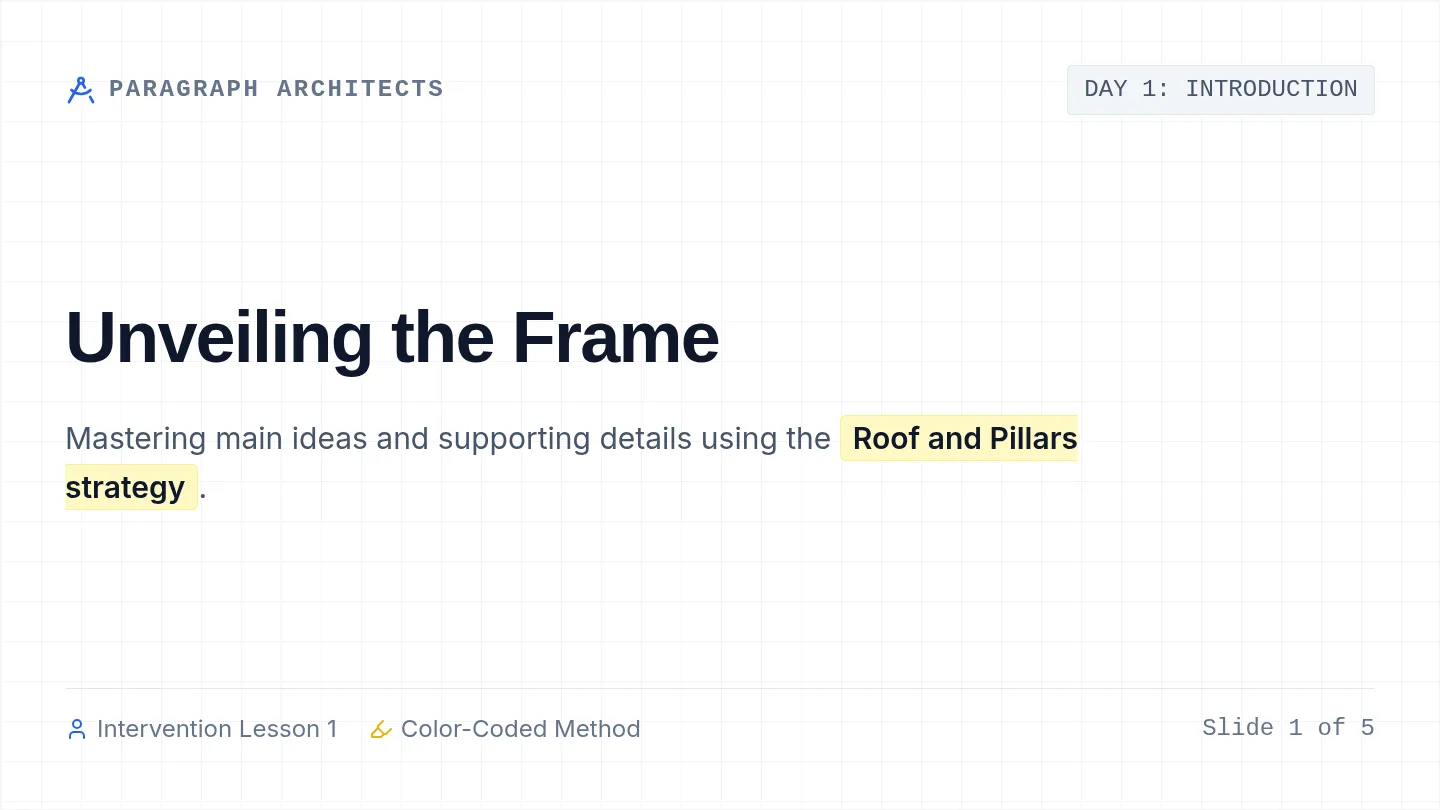
An intensive intervention lesson designed to help struggling readers master main idea identification using hands-on, color-coded highlighting strategies. Students learn to dismantle paragraph structures like blueprint architects, physically separating the 'roof' (main idea) from the 'supporting pillars' (details).
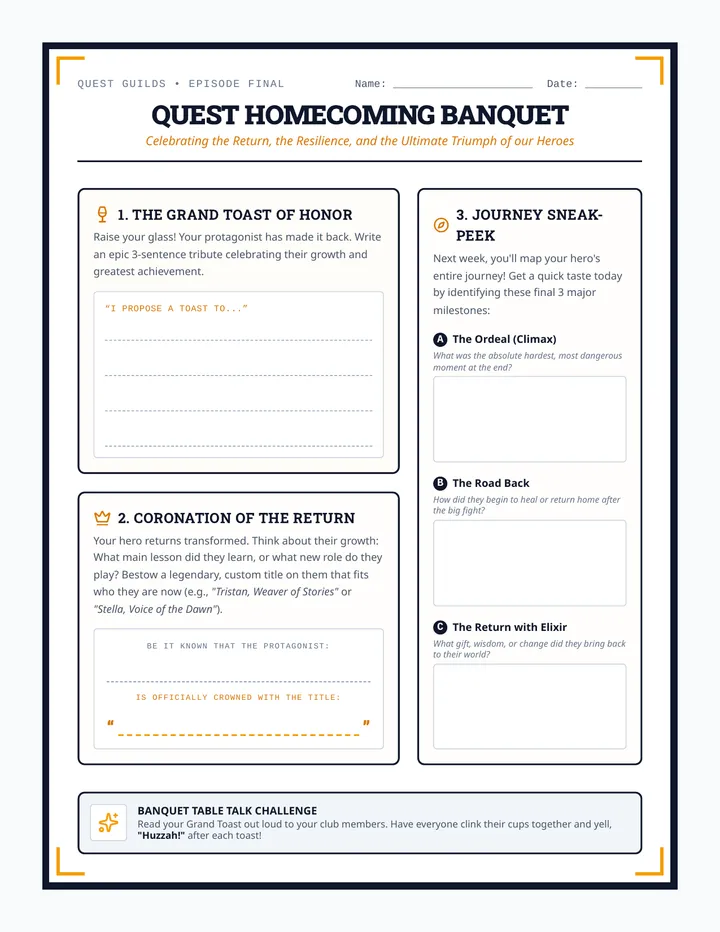
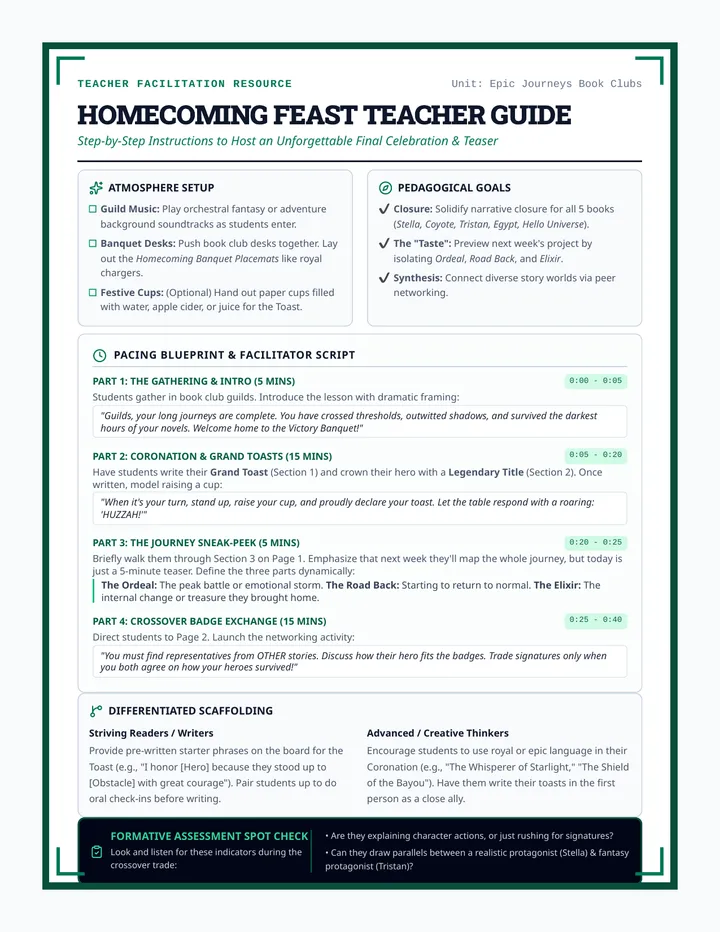
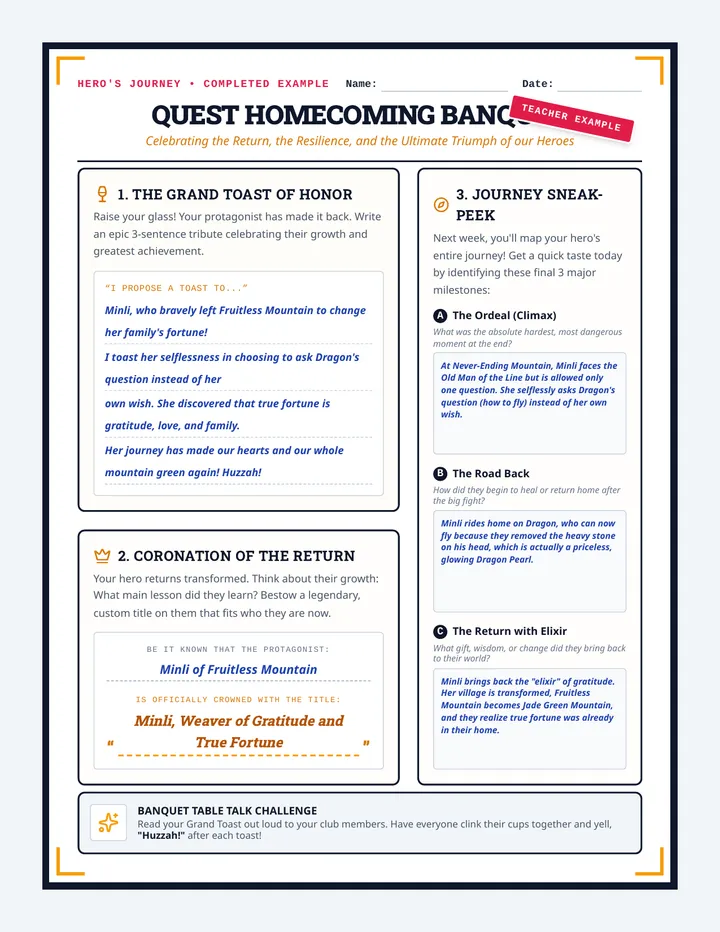
The celebratory final meeting of the book clubs, designed as a festive victory banquet. Students commemorate their protagonist's return through a grand ceremonial toast, active crossover badge trading with other groups, and a high-interest 5-minute teaser of the Hero's Journey mapping project.
A 6-slide instructional presentation to guide students through each section of the Listing Launcher Worksheet. Features colorful step-by-step examples, visual marketing templates, and modeled writing strategies tailored for Grade 5 learners.