Students investigate the mechanics of agentless passives and discuss how omitting the 'doer' affects media bias and focus.
A reading intervention unit targeting the critical spelling changes that occur at suffix boundaries, designed for older struggling readers. The sequence covers final consonant doubling and silent-e dropping logic.
An engaging grammar and nonverbal communication lesson where high school students explore parts of speech, facial expressions, and body language through creative storytelling and mad libs.
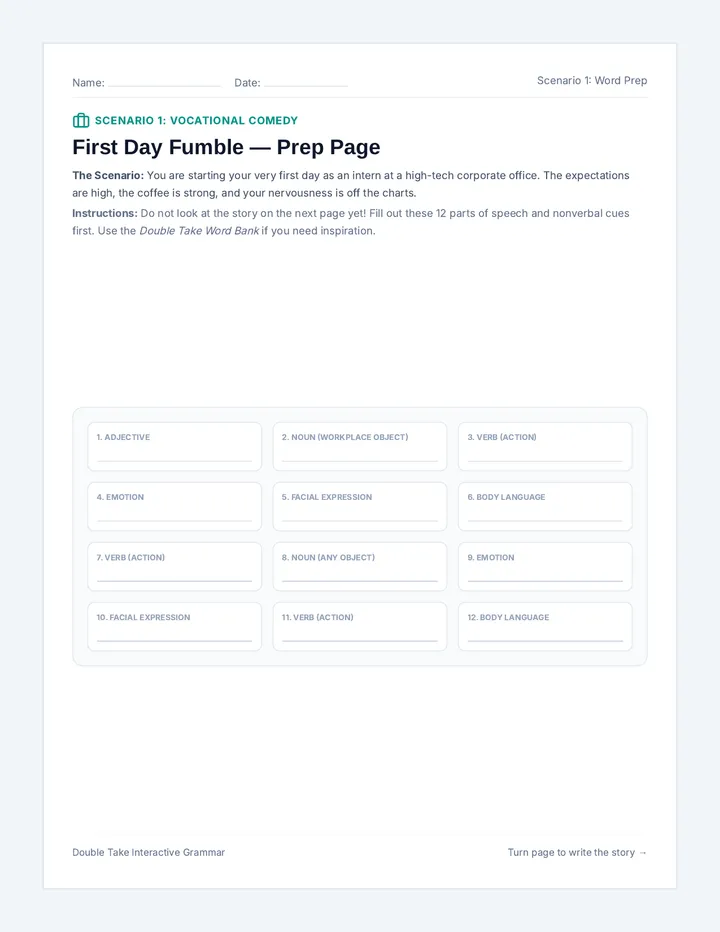
A comprehensive, 10-page Mad Libs packet featuring five high-interest scenarios. Each scenario is a 2-page set including a dedicated Word Prep planning page with 12 vocabulary slots, and a full-page, 500-word narrative with wide handwriting blanks for vocational comedies and high school drama.
A structured reading intervention sequence at Douglas School combining targeted phonic lessons with the multisensory Nessy online literacy system.
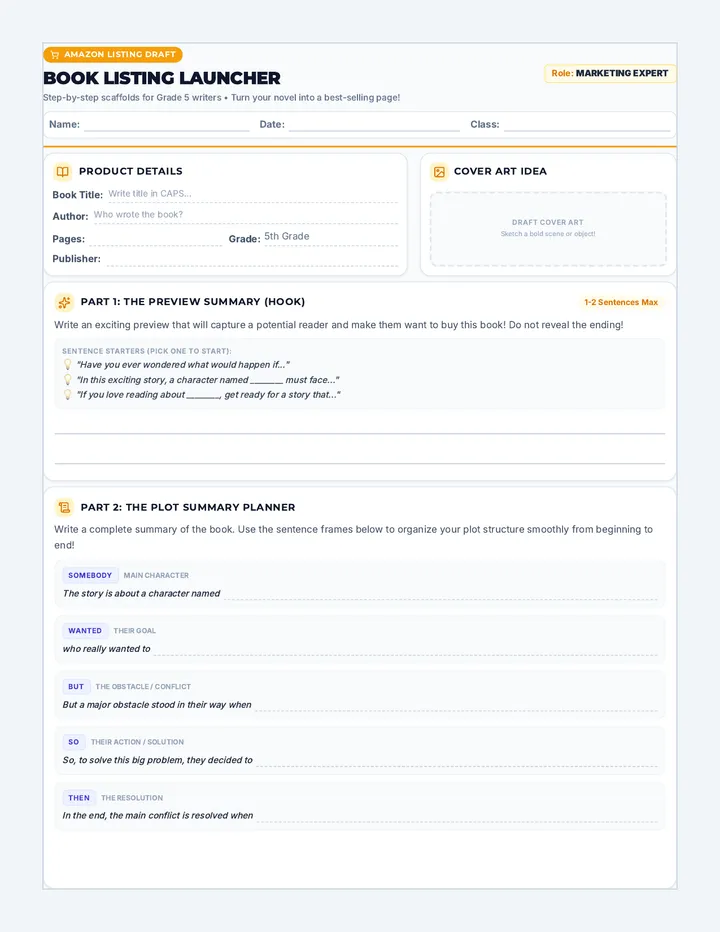
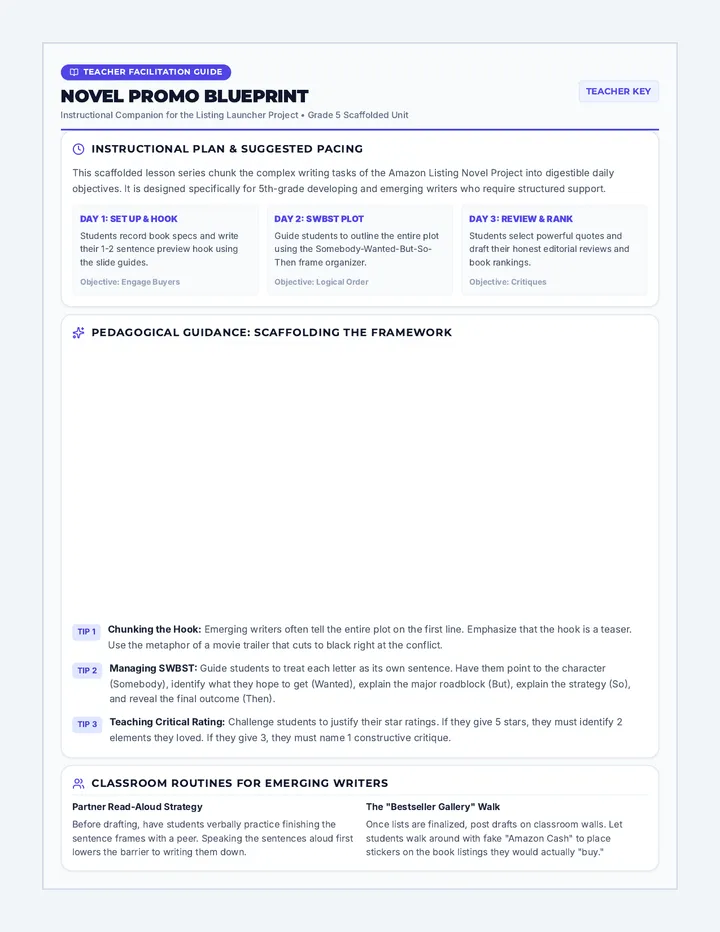
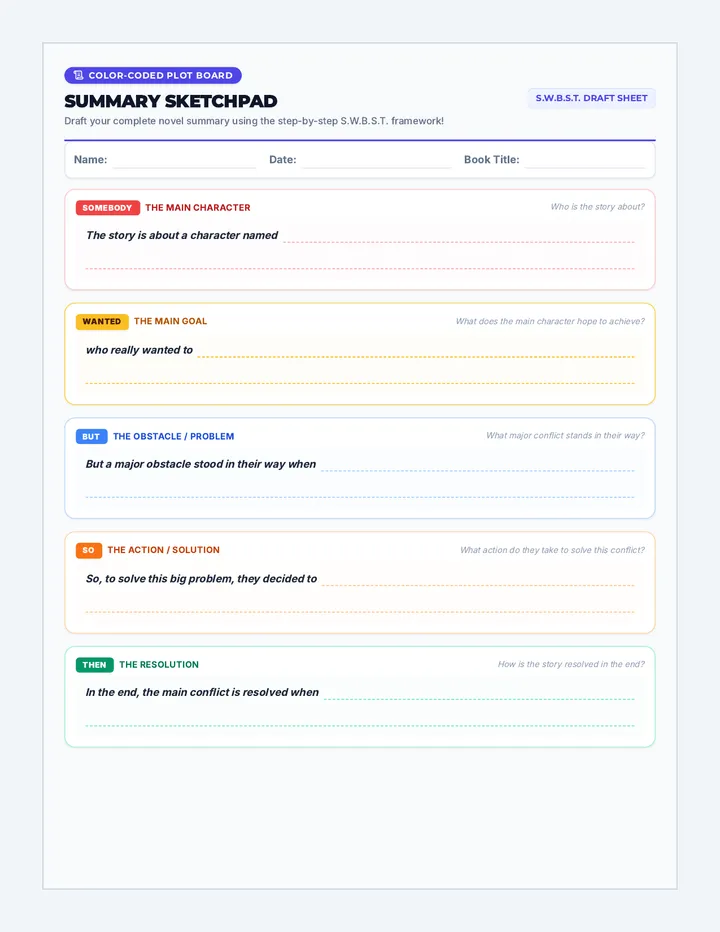
A scaffolded unit designed to help 5th-grade developing and emerging students create a mock e-commerce book listing for a novel they have read. This lesson breaks down complex writing tasks like summaries, quotes, and editorial reviews into structured, bite-sized templates with built-in sentence frames.
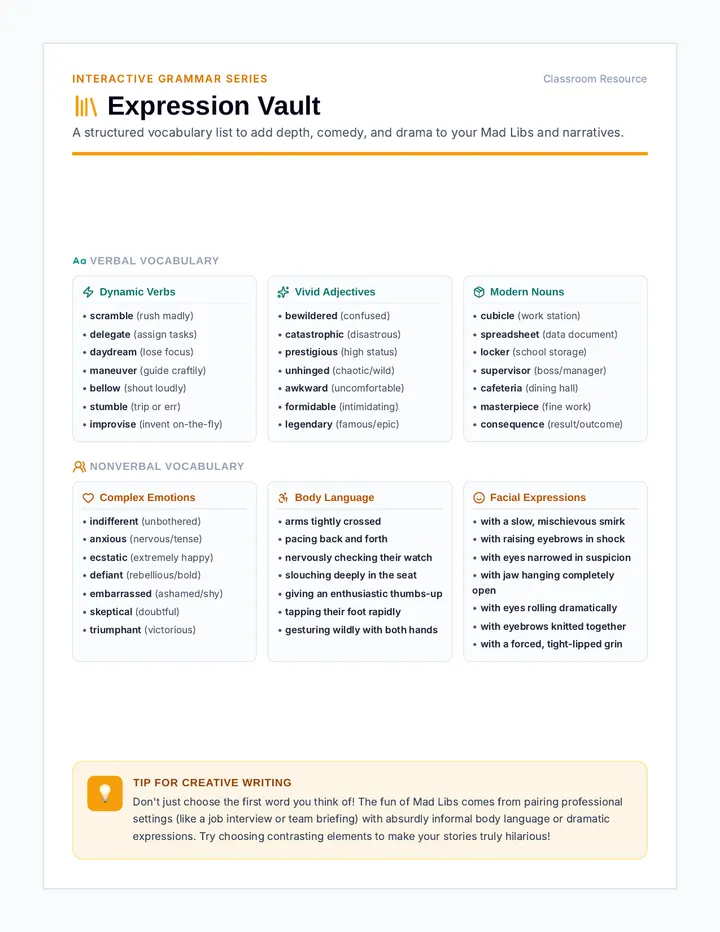
A comprehensive word bank featuring curated, high-interest nouns, verbs, adjectives, emotions, body language, and facial expressions with descriptive icons for high school level writing.
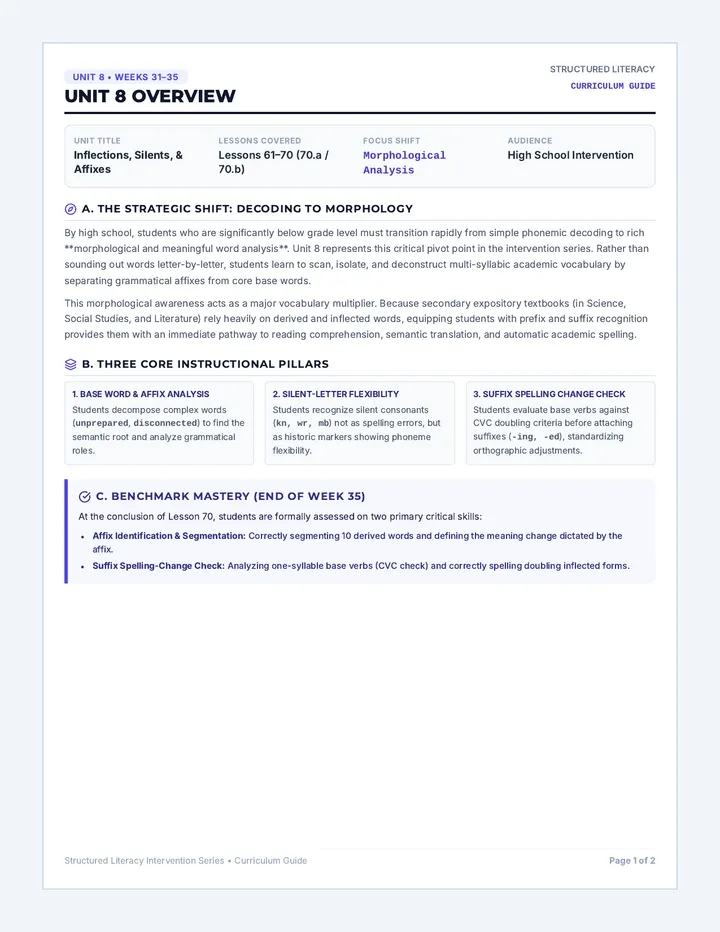
A structured high school reading intervention sequence focusing on silent consonants, orthographic markers, pluralization rules, and academic spelling structures.
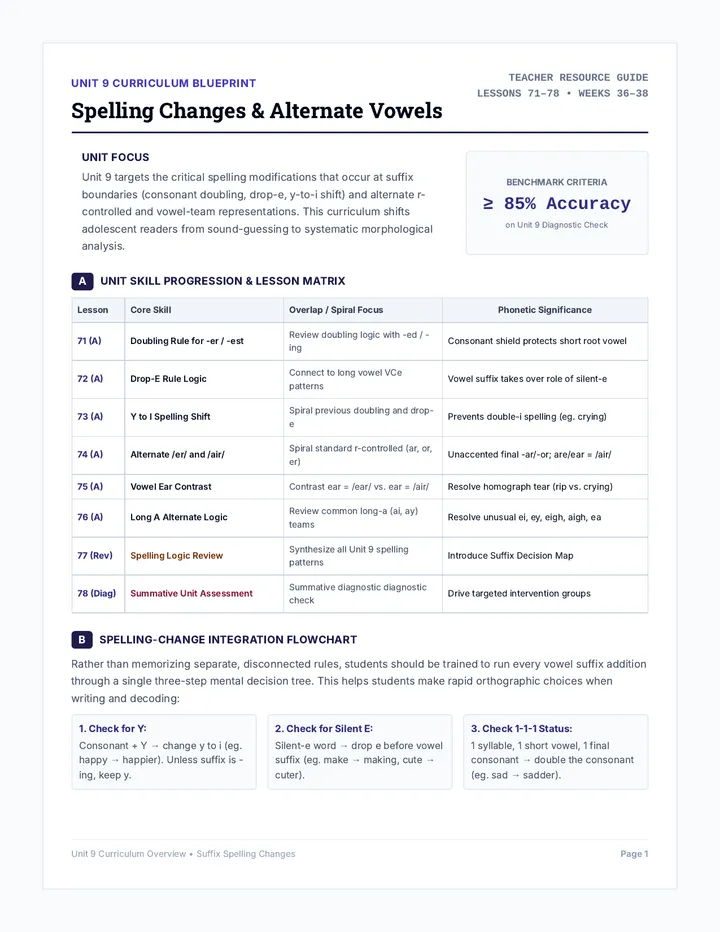
An overall curriculum overview and teacher preparation guide for Unit 9 (Lessons 71–78). This resource maps out the core skills, spiral pathways, cumulative benchmarks, and pacing guides for spelling-change rules and alternate vowel patterns.
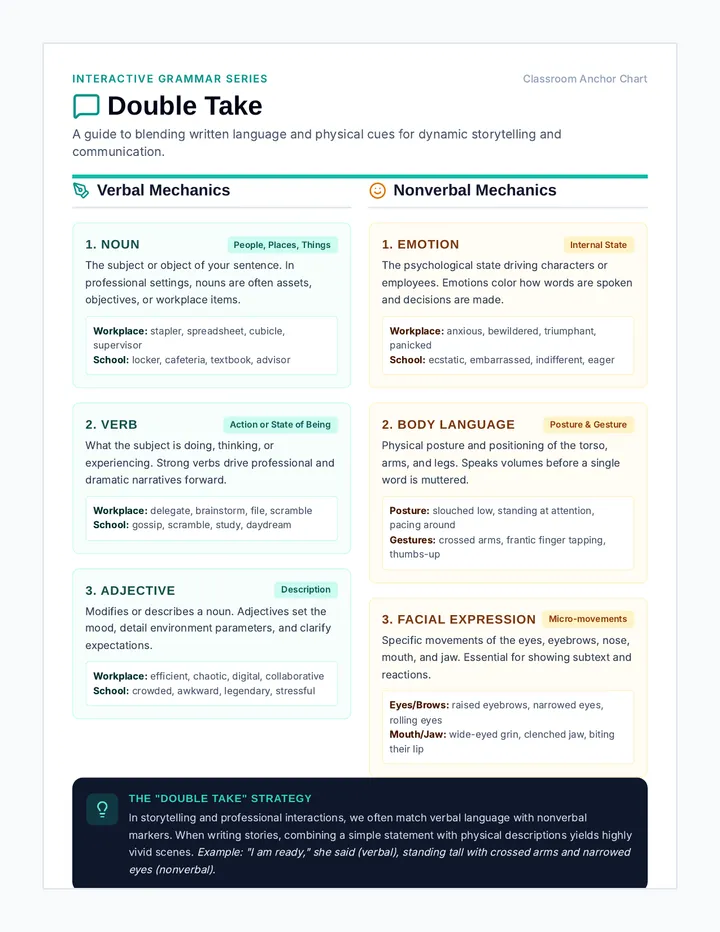
A professional and sleek anchor chart defining parts of speech (nouns, verbs, adjectives) and nonverbal communication elements (emotions, body language, facial expressions) with high-school appropriate definitions and examples.
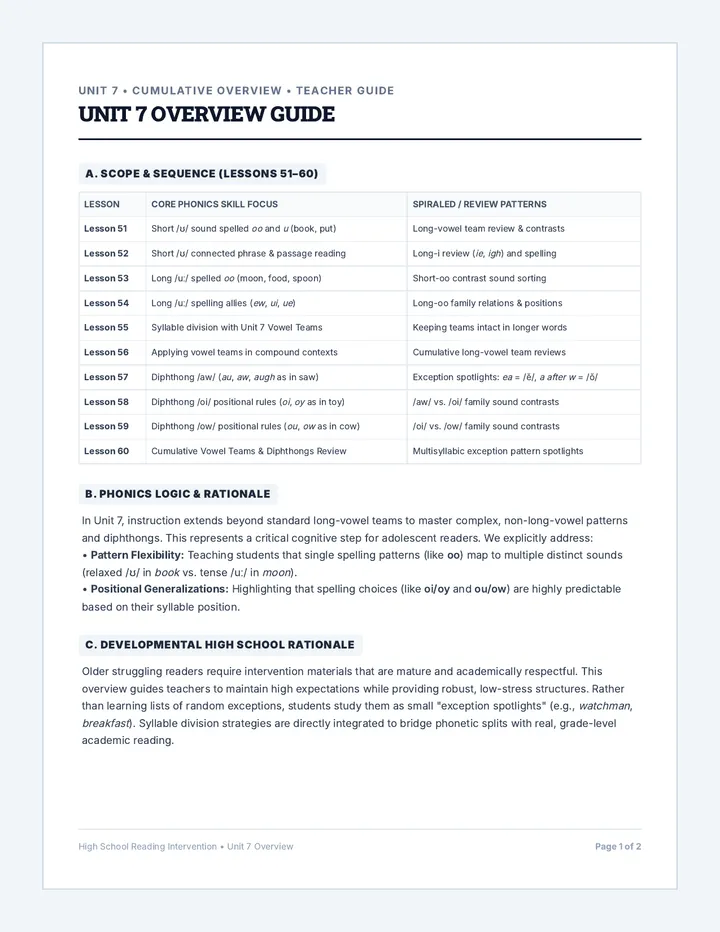
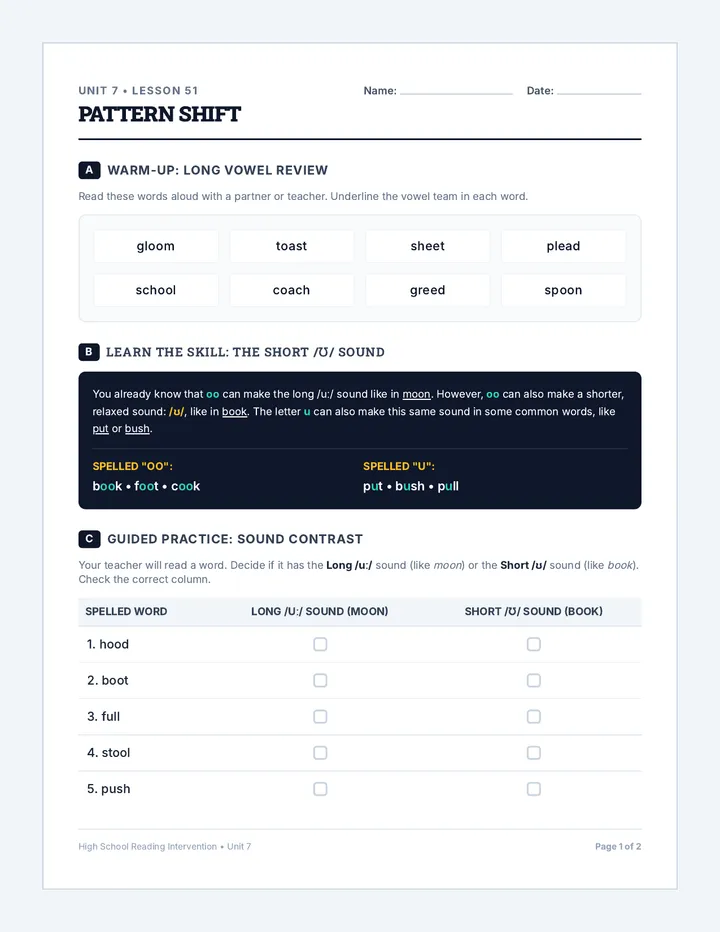
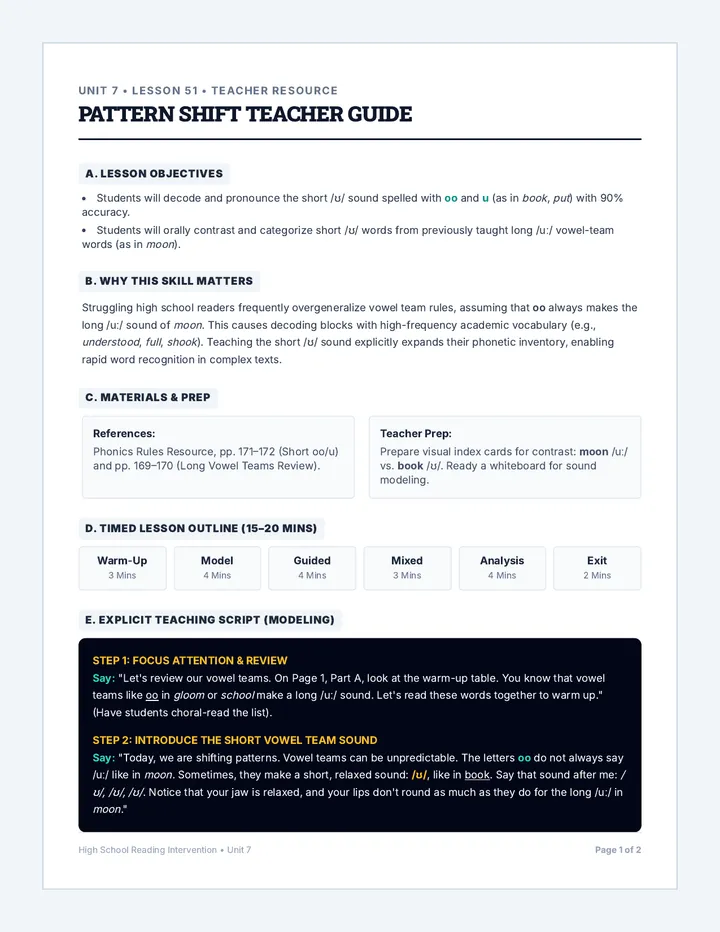
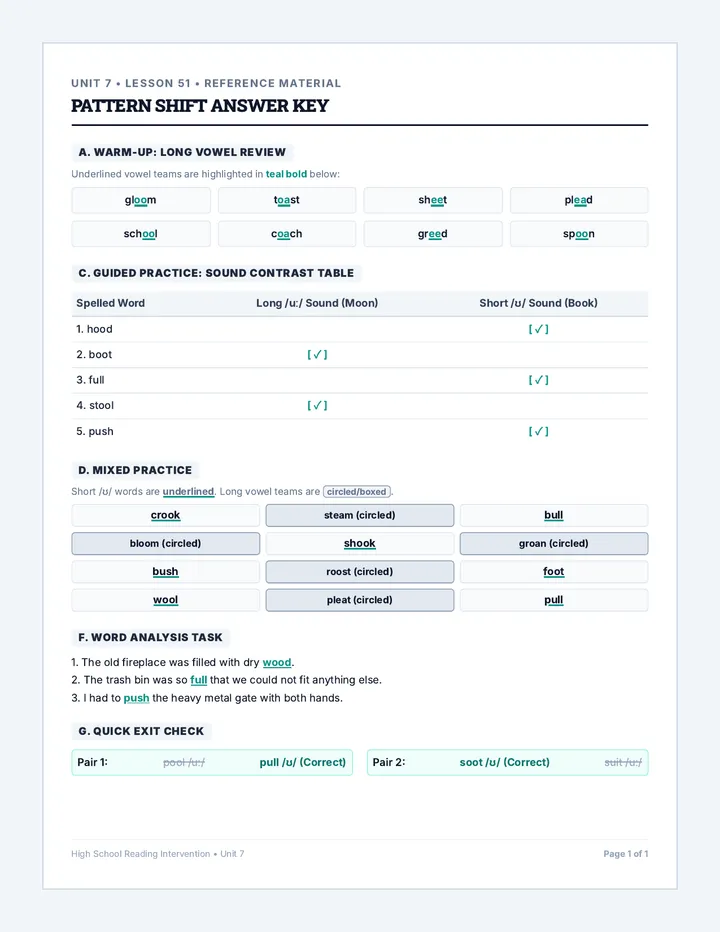
A phonics intervention unit for high school readers focusing on short oo patterns, sound contrasts, and spelling application.
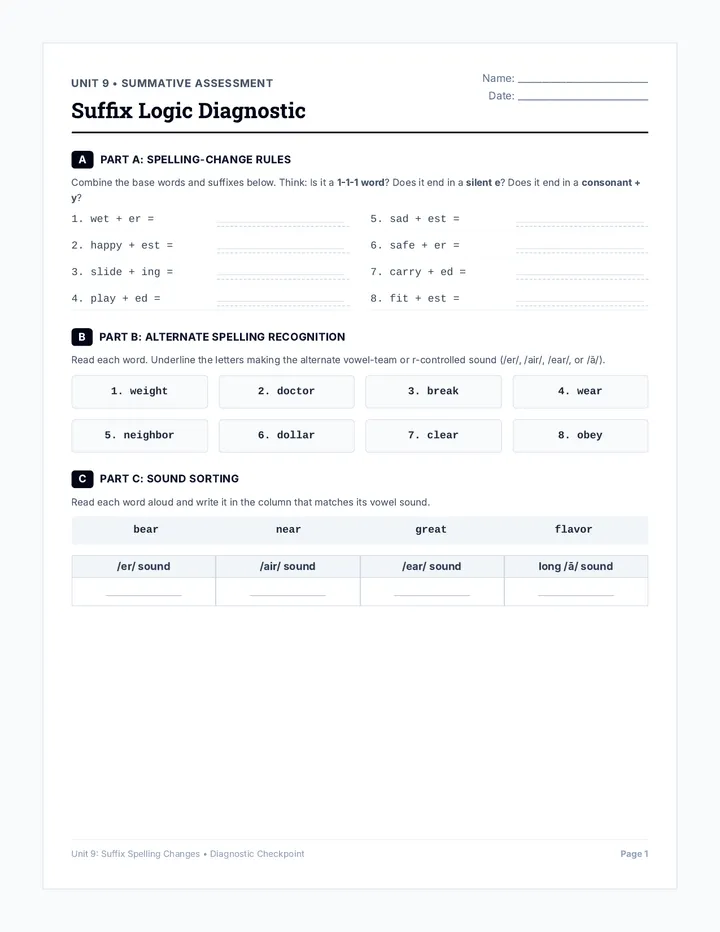
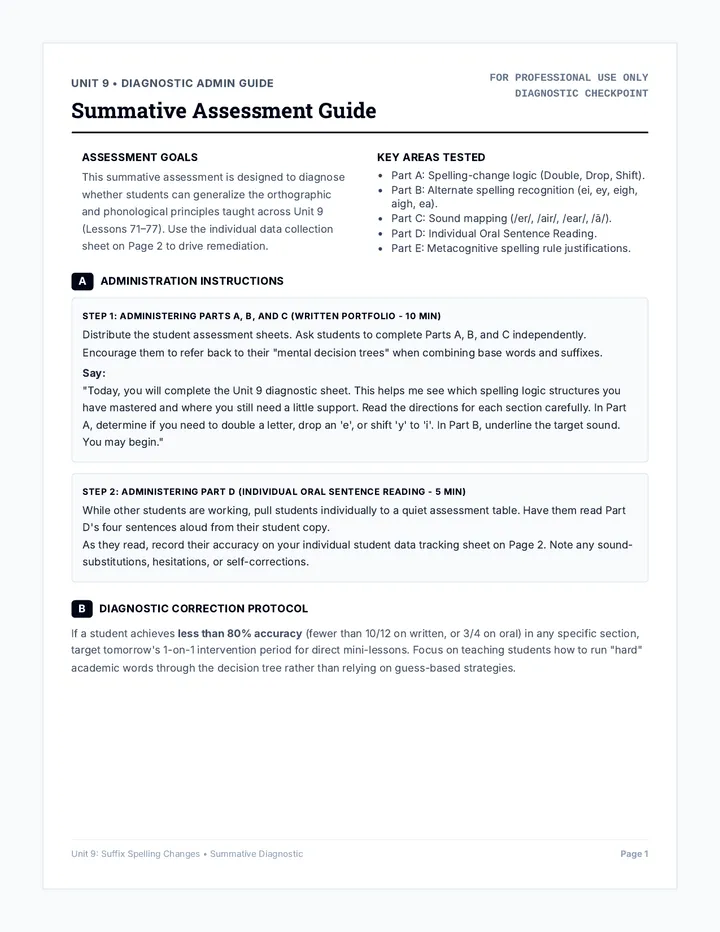
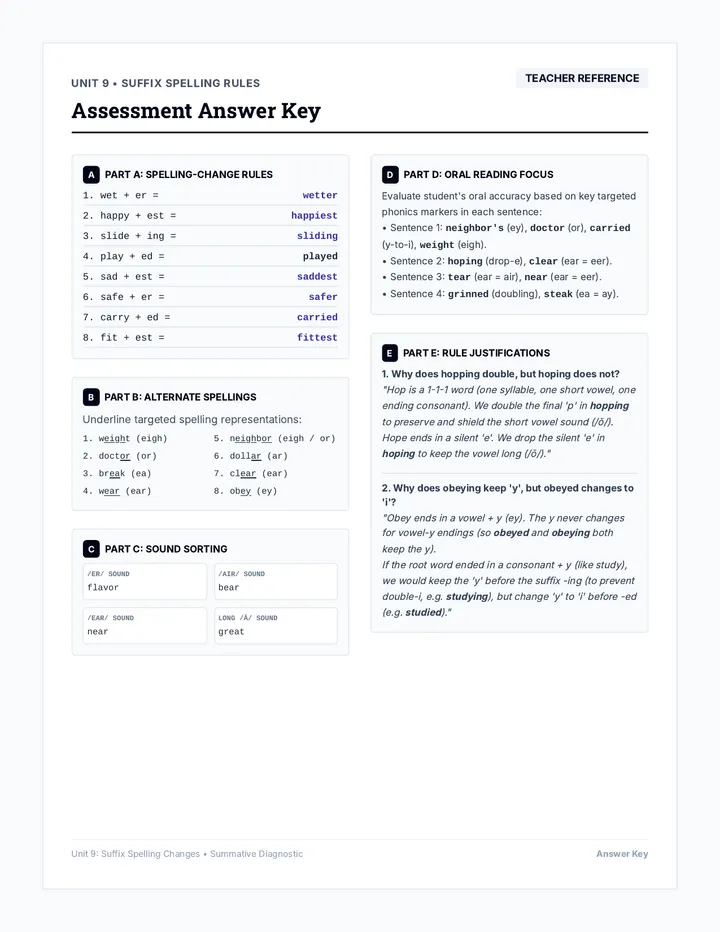
A comprehensive Unit 9 spelling and decoding diagnostic assessment for high school readers. It includes student test sections for spelling-change rules, alternate-spelling recognition, sound-sorting, and sentence reading.
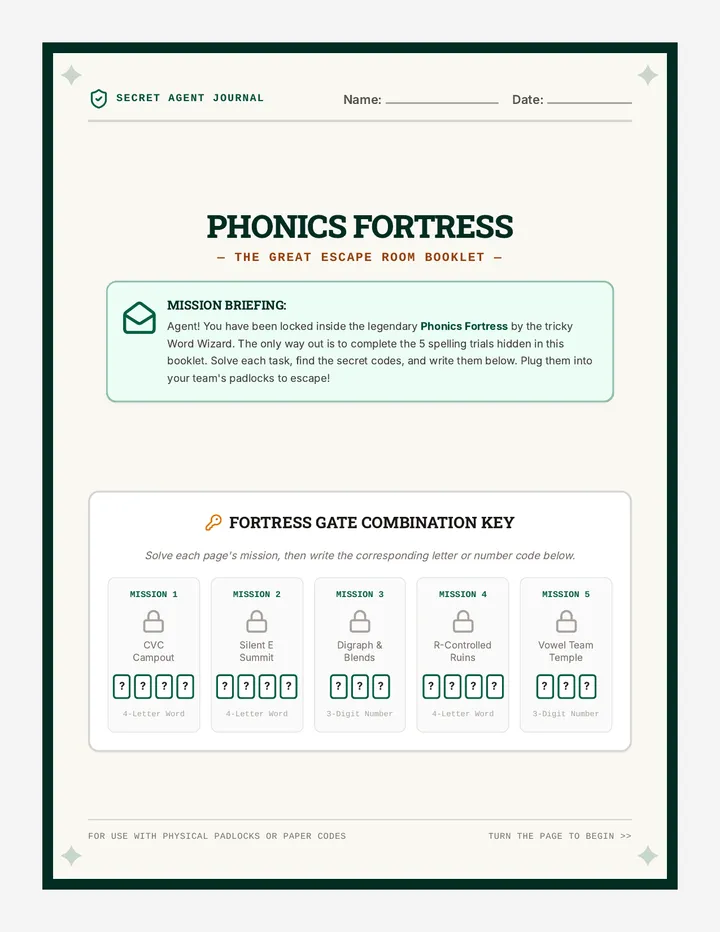
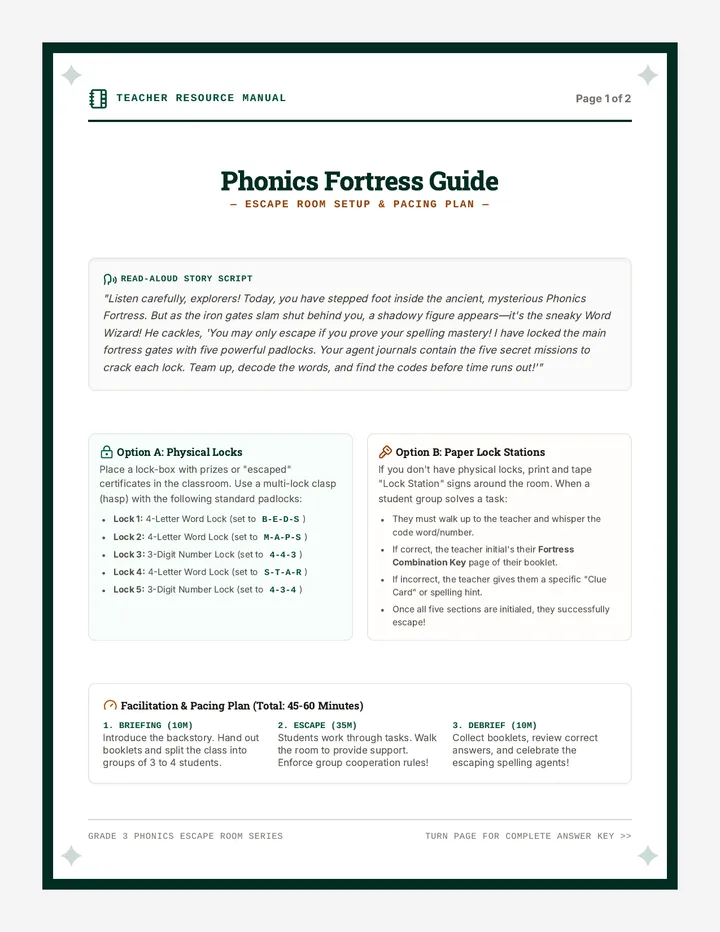
A comprehensive 5-day phonics breakout sequence where students complete daily independent spelling missions to crack codes. Covering CVC, Silent E, Digraphs/Blends, R-controlled vowels, and Vowel Teams, each day represents a new adventure challenge.