Lenny.com
Explore
Create
ActivitiesNewMathEnglish Language ArtsScience & EngineeringSocial StudiesGlobal LanguagesHealth & Physical EducationSpecial EducationCounseling & Life SkillsArts & CreativityESL
Lenny.com
Lenny.com
Explore
Create
ActivitiesNewMathEnglish Language ArtsScience & EngineeringSocial StudiesGlobal LanguagesHealth & Physical EducationSpecial EducationCounseling & Life SkillsArts & CreativityESL
Lenny.com
Lenny.com

Solutions

Lenny for EducatorsLenny for SchoolsLenny for Districts

Product

ExploreSign inCreateSupportAbout

Resources

Getting startedMTSS Acceleration Program

© 2026 Lenny Learning Inc.

TermsPrivacyAccessibility
LinkedInInstagramX
Lenny
English Language ArtsPhonics & Reading FoundationsLetter IdentificationLearn Letters A-ZLowercase and Uppercase LettersConsonants and VowelsLetter-Sound AssociationsLetter-Sound Associations: LowercaseLetter-Sound Associations: UppercaseBeginning and Ending SoundsRhymingBlending And SegmentingShort VowelsShort Vowel SoundsConsonant BlendsConsonant DigraphsBlends, Digraphs, and TrigraphsDigraphs, Blends, and Silent LettersLong Vowel SoundsLong Vowel PatternsShort and Long VowelsShort and Long Vowel PatternsSilent EVowel SoundsVowel TeamsR-Controlled VowelsDiphthongs: Oi, Oy, Ou, OwVariant VowelsVariant, Diphthong, And R Vowel PatternsSoft G And CSight WordsIrregular WordsWord RecognitionSyllablesSyllable TypesTwo-Syllable WordsMultisyllabic WordsPhoneme ManipulationDecodable TextsVocabularyAction WordsQuestion WordsNouns and AdjectivesClassify WordsCompound WordsSynonyms and AntonymsHomophonesHomophones and HomonymsShades of MeaningContext CluesPrefixes and SuffixesGreek and Latin RootsAnalogiesIdioms and AdagesForeign Words and ExpressionsWord Choice and UsageReference SkillsReading ComprehensionRead-Along Literary TextsRead-Along Informational TextsReality vs. FictionStory ElementsCharacterSequenceMain IdeaCause And EffectCompare And ContrastReading StrategiesText StructureAuthor's PurposeAuthor's Purpose And ToneAuthor's PerspectivePoint Of ViewThemeInference And ThemeInference And AnalysisPoetry ElementsLiterary DevicesAnalyzing LiteratureAnalyzing Informational TextsComparing TextsAudience, Purpose, And ToneBusiness DocumentsNovel StudyNonfiction Book StudyGrammar & MechanicsSentencesNounsVerbsAdjectivesPronounsCapitalizationPunctuationContractionsConjunctionsPrepositionsArticlesAdjectives And AdverbsVerb TypesVerb TensePronouns And AntecedentsPronoun TypesSubject-Verb AgreementDirect And Indirect ObjectsSentences, Fragments, And Run-OnsPhrases And ClausesCommasSemicolons, Colons, And CommasDashes, Hyphens, And EllipsesSpellingAbbreviationsFormattingVerb Tense And MoodMisplaced ModifiersWritingDescriptive DetailsCreative WritingOpinion WritingTopic SentencesOrganizing WritingLinking WordsSentence VarietyIntroductions And ConclusionsPersuasive And Opinion WritingExpository WritingPersuasive StrategiesDeveloping And Supporting ArgumentsTopic Sentences And Thesis StatementsSummarizingResearch SkillsEditing And RevisingActive And Passive Voice=Writing Clearly And ConciselyDebate & Public SpeakingPublic Speaking BasicsPersuasive TechniquesClaims and EvidenceTypes of ArgumentsReasoning TypesLogical FallaciesTopic ResearchOrganizing EvidenceDebate Speech OrganizationAttacking and Defending ArgumentsClash and EngagementImpact CalculusQuestioning and Cross-ExaminationCritical ThinkingInformal LogicFormal LogicInductive Reasoning

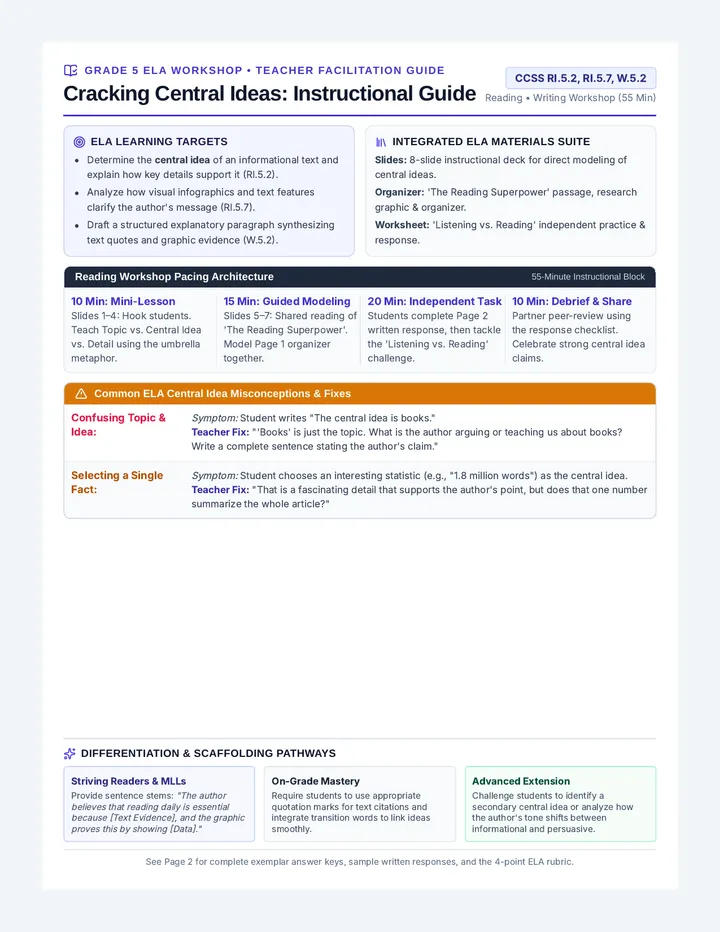
Cracking Central Ideas

A 5th-grade ELA informational reading and writing lesson where students read authentic informational passages paired with visual data graphics to determine central ideas, trace supporting details, and write structured, evidence-based text responses.

Kkarima.dallas

Cracking Central Ideas

A 5th-grade ELA informational reading and writing lesson where students read authentic informational passages paired with visual data graphics to determine central ideas, trace supporting details, and write structured, evidence-based text responses.

Kkarima.dallas

Cite the difference in word exposure between Reader A and Reader C.

Author's Explanation

Explain why print provides richer vocabulary than conversation.

Part 3

Evidence-Based Response Paragraph

Transitions: For example, According to the text, Furthermore, In conclusion

Prompt: In a well-crafted paragraph (4–5 sentences), explain the central idea of "The Reading Superpower." Begin with a clear topic sentence stating the central idea, support your claim with one direct quote from the text and one piece of evidence from the research graphic, and conclude by explaining why daily reading matters.

Writer's Checklist: [ ] Topic Sentence [ ] Text Quote [ ] Graphic Evidence [ ] Concluding Sentence Grade 5 ELA Standards

Continue to Page 2 to complete the Central Idea organizer and your written text synthesis!

Part 2

Central Idea & Evidence Organizer

Independent Practice • Grade 5

Core Central Idea Statement

In Your Own Words

Summarize what the passage and research table prove together about audiobooks and reading comprehension:

Brain Research Quote

Quote what brain scans reveal about narrative comprehension in both formats.

Study Comparison Detail

Cite the percentage score comparing plot comprehension or character empathy.

Unique Audio Advantage

Explain what expressive narration offers that silent print cannot.

Part 3

Written Evidence Synthesis

Transitions: First, The study illustrates, In addition, Ultimately

Prompt: Should teachers and librarians encourage fifth graders to listen to audiobooks alongside print books? Write an evidence-based paragraph (4–5 sentences). Clearly state the central idea, cite evidence from both the passage and Figure 1, and explain why your evidence supports your conclusion.

Criteria: Did you include evidence from both the text and Figure 1? Reading Informational Text Mastery

Challenge students to identify a secondary central idea or analyze how the author's tone shifts between informational and persuasive.

See Page 2 for complete exemplar answer keys, sample written responses, and the 4-point ELA rubric.

Key

Exemplar Keys & Response Rubric

Evaluation Guide • Grade 5 ELA

'The Reading Superpower' Organizer: Exemplar Key

Comprehension Checks: 1. Highlights print as the source of rare vocabulary | 2. Proves 20 min/day yields 1.8M words vs 8,000 for 1 min | 3. Fiction reading trains empathy neural pathways.

Central Idea Target Statement:

"Establishing a daily habit of independent reading transforms brain development by fostering emotional empathy and dramatically accelerating vocabulary acquisition."

Model Constructed Response Paragraph (Part 3):

"In 'The Reading Superpower,' the author demonstrates that daily reading transforms a student's cognitive growth and vocabulary. According to the article, brain scans reveal that reading fiction 'activates the exact same neural pathways as experiencing the events in real life.' Furthermore, the research infographic illustrates that reading 20 minutes a day exposes a student to 1.8 million words each year, reaching the 90th percentile. In conclusion, dedicating time to daily reading provides students with empathy and vocabulary that speech alone cannot match."

'Listening vs. Reading' Practice Worksheet Key

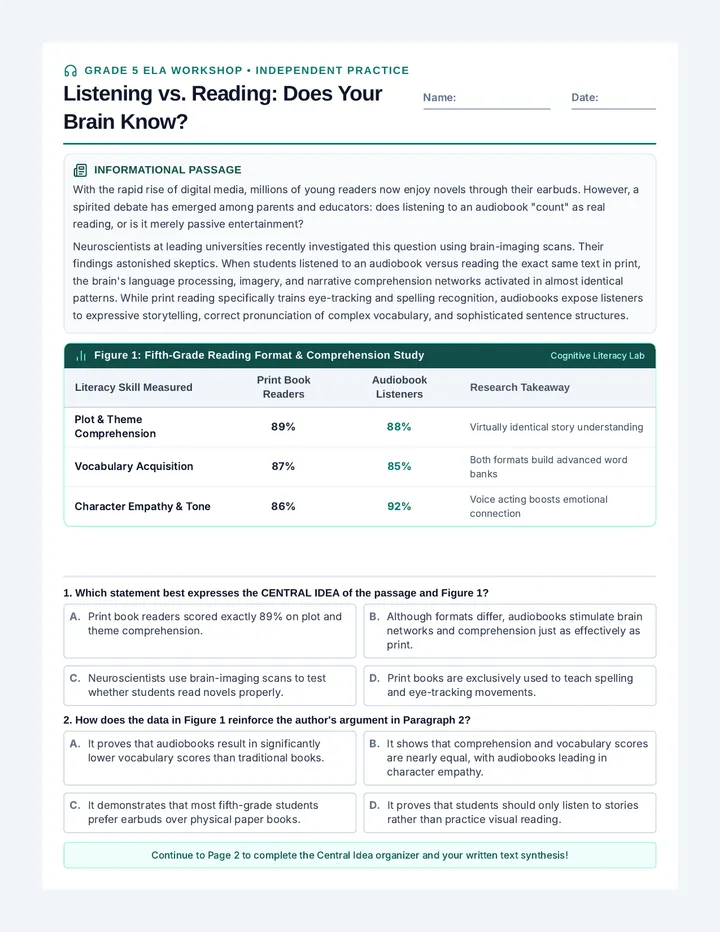
Q1: B (Central Idea)

Audiobooks stimulate narrative brain networks and comprehension just as effectively as print.

Q2: B (Graphic Connection)

Figure 1 reveals nearly identical comprehension (89% vs 88%) and higher empathy for audio (92%).

Model Synthesis Paragraph:

"Teachers and librarians should enthusiastically welcome audiobooks because they provide an equally rigorous literacy experience. The author points out that listening activates the brain's language and narrative networks in almost identical ways as print reading. Additionally, Figure 1 proves that audiobook listeners achieved an 88% comprehension rate and a 92% character empathy score. Therefore, audiobooks serve as an effective pathway to deepen literacy."

4-Point ELA Informational Response Rubric

ScoreCentral Idea StatementTextual & Graphic EvidenceElaboration & Organization
4 - ProficientClear, complete central idea statement combining topic and author's claim.Accurately cites at least 1 direct quote and 1 specific graphic detail.Uses transitions effectively; thoroughly explains how evidence proves the claim.
3 - ApproachingAccurate central idea, but may be slightly simplistic or repetitive.Includes text evidence and graphic detail, but quotation marks or citations may be incomplete.Explains connection between evidence and claim with minor lapses in flow.
2 - DevelopingStates the general topic or a single detail rather than an overarching central idea.Relies on only one source of evidence or quotes details vaguely.Lists facts without explaining their significance; limited transitional words.
1 - BeginningCentral idea is inaccurate, off-topic, or missing entirely.Lacks textual evidence or graphic support.Incomplete paragraph; lacks organization and clear explanatory reasoning.
Standards: RI.5.2 (Central Idea) • RI.5.7 (Text Features/Graphics) • W.5.2 (Explanatory Writing) Reading Workshop Assessment Suite

You might also like

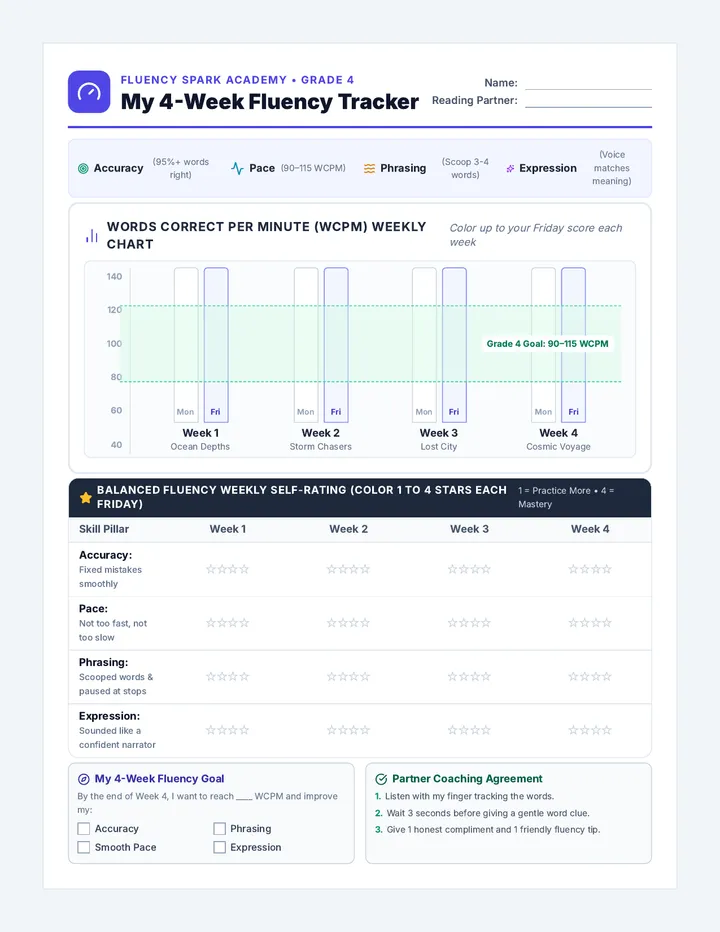
Fluency Flight Tracker Sheet

Fluency Spark Academy

A comprehensive 4-week balanced fluency curriculum designed for 4th-grade students needing targeted support in accuracy, pacing, phrasing, and expression. Structured around quick 5-to-10 minute daily partner and whole-group routines for 20 students, featuring engaging high-interest texts and student self-tracking systems.

KM

Kelly Messer

9
Cosmic Voyage Practice Sheet

Cosmic Voyage Sprint

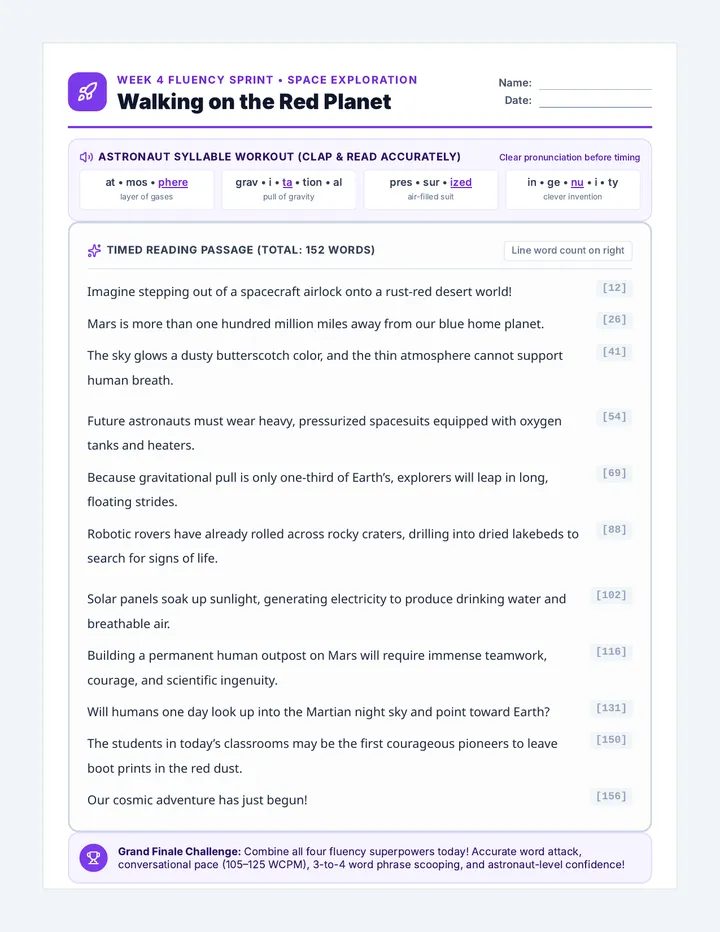
Week 4 culminates in astronaut missions to Mars, testing combined mastery of accuracy, rate, phrasing, and expression with full showcase assessments and celebration.

KM

Kelly Messer

2
Las Almendras Graphic Organizer

Las Almendras Graphic Organizer

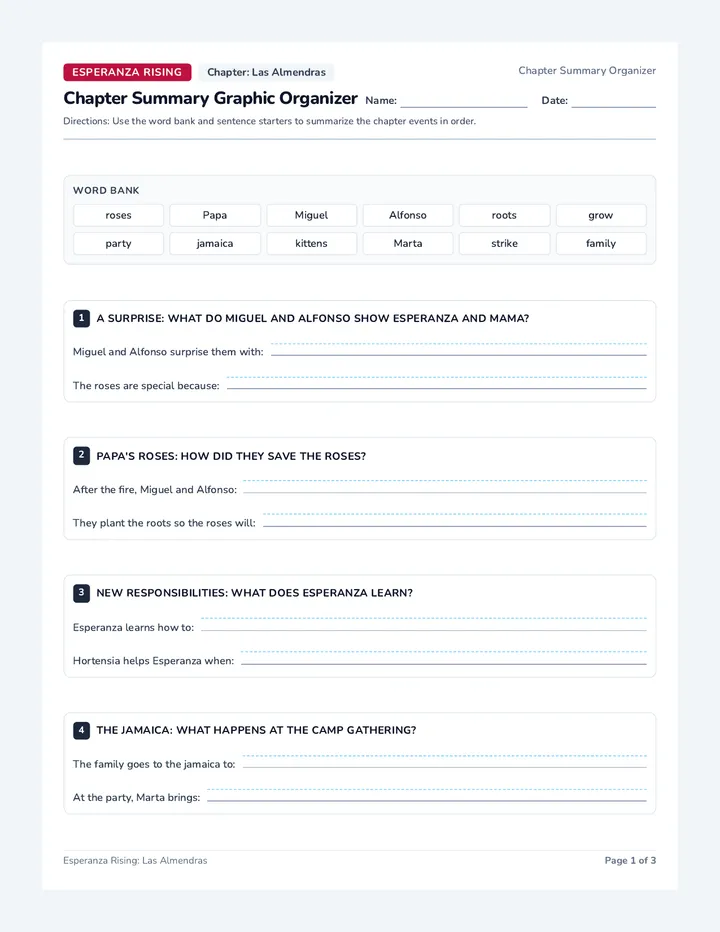
A 3-page scaffolded chapter summary graphic organizer for Esperanza Rising: Las Almendras featuring vocabulary, story sequence starters, an expanded two-line book summary starter, and a full third page of primary writing lines with a self-check rubric.

U

Syllable Division Slides

Word Cipher Academy

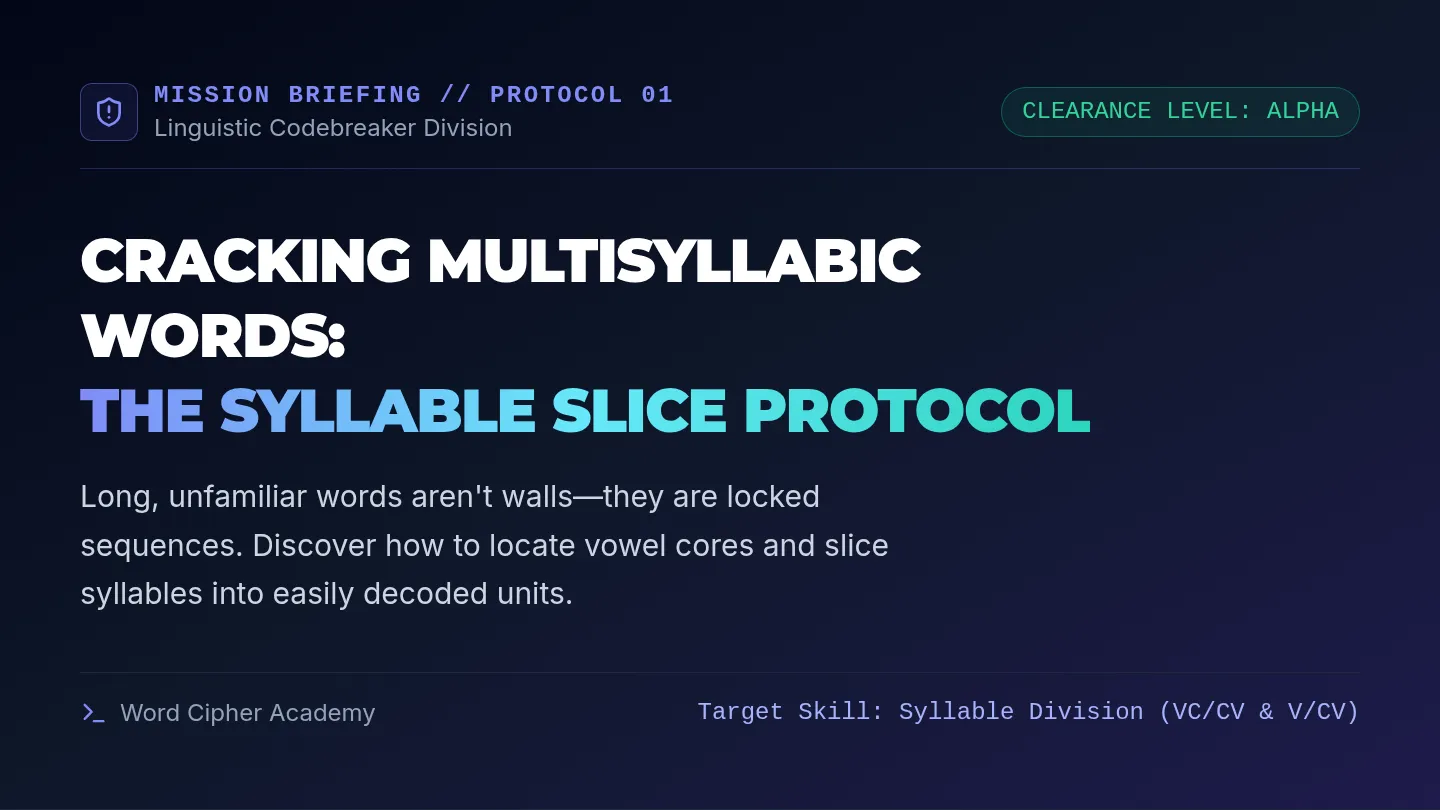
A targeted upper-elementary and middle school phonics intervention sequence designed to decode multisyllabic academic words through syllable division, advanced vowel teams, and morphemic analysis. Structured with a mature codebreaking theme to engage older striving readers without feeling juvenile.

Lenny Avatar
Lenny
9
Lost City Practice Sheet

Lost City Sprint

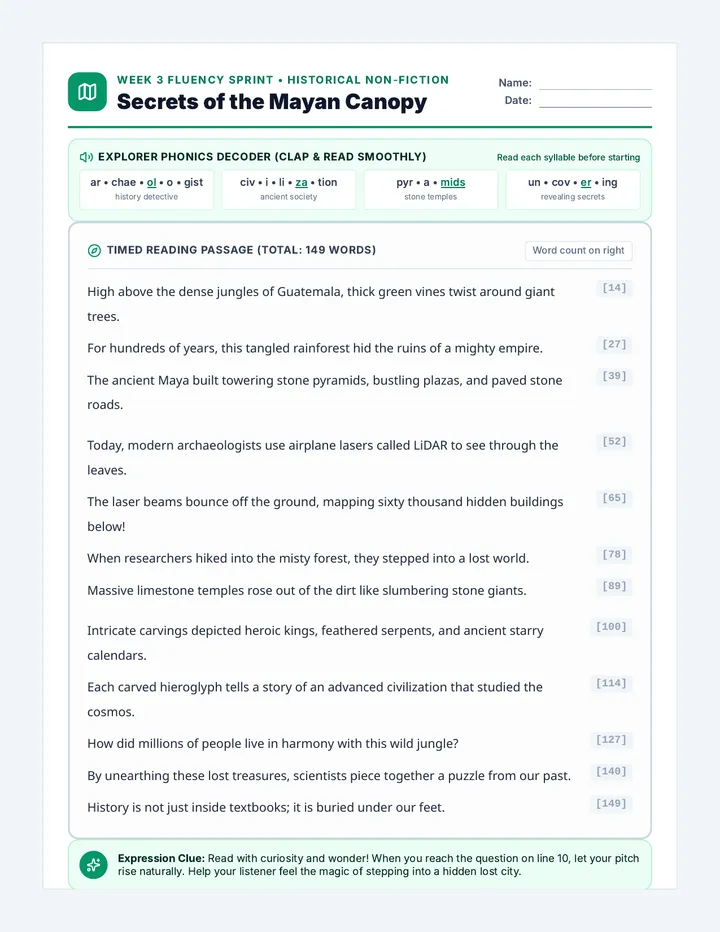
Week 3 emphasizes expressive phrasing, chunking syntax, and bringing informative texts to life through a historical expedition deep inside ancient Mayan rainforests.

KM

Kelly Messer

2
Central Idea Teacher Guide

Central Idea Teacher Guide

A two-page 5th-grade ELA teacher facilitation guide with reading workshop pacing, explicit teacher think-aloud scripts, misconception interventions, differentiation strategies, exemplar answer keys, and a 4-point CCSS-aligned ELA text response rubric.

K

karima.dallas

Signal Seekers Slides

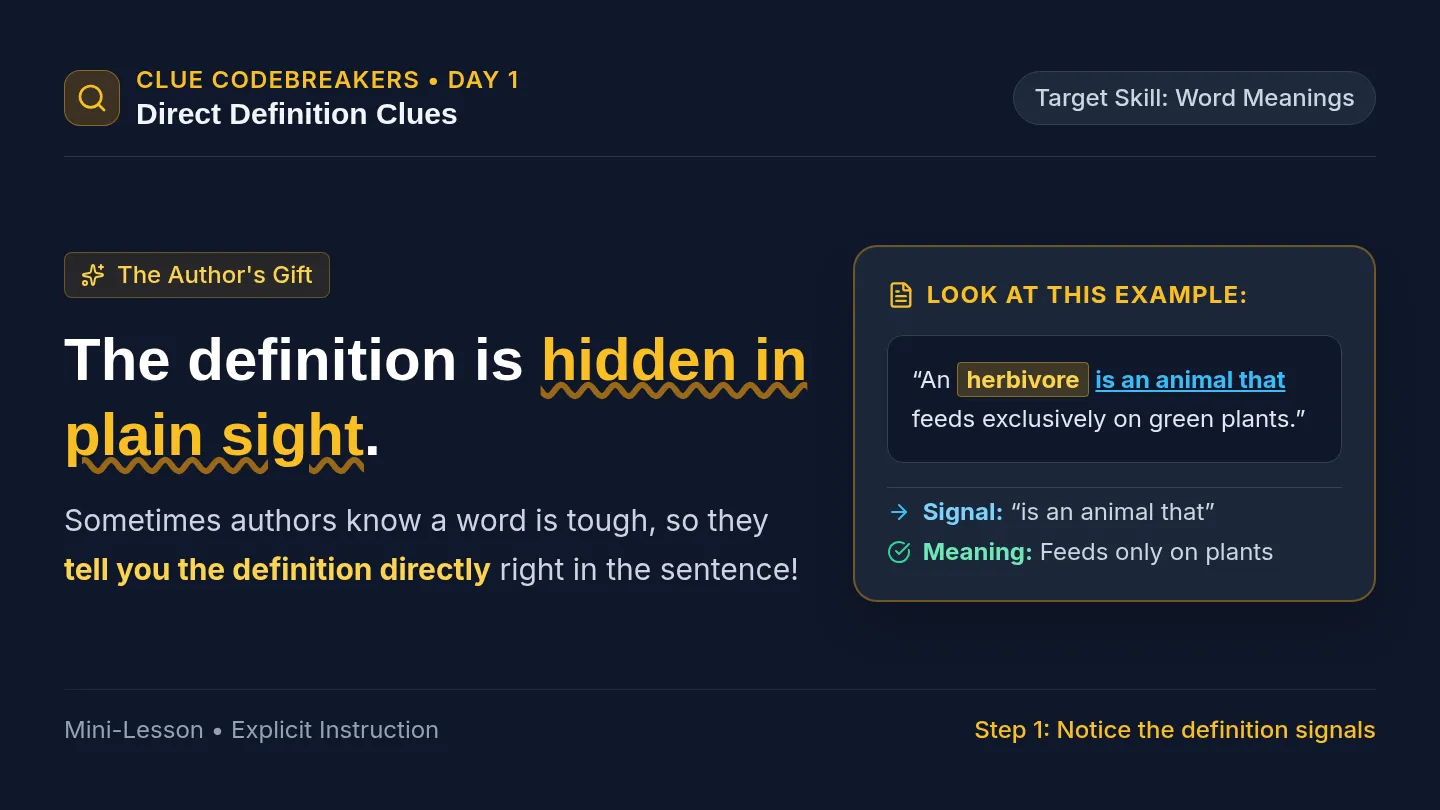
Clue Codebreakers

A 3-session targeted remediation sequence designed to help struggling readers master definition context clues, progressing from explicit signal words to punctuation appositives and independent reading transfer.

E

ewestbrook

6
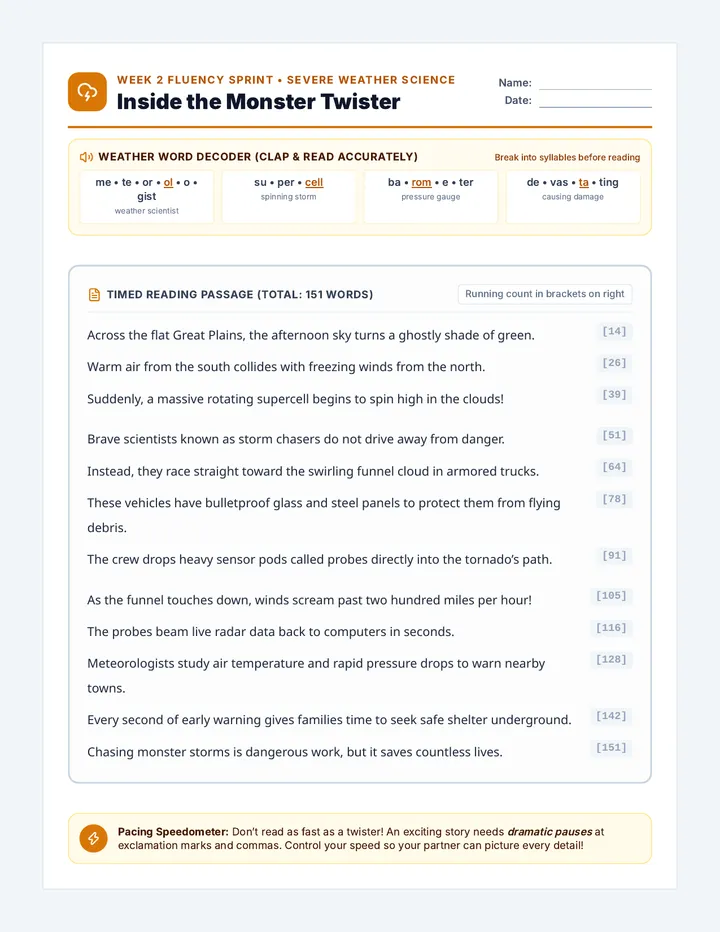
Storm Chaser Practice Sheet

Storm Chaser Sprint

Week 2 focuses on pacing control and punctuation awareness during high-energy non-fiction reading about extreme tornadoes, using whole-class choral slides and partner timing sprints.

KM

Kelly Messer

2
Central Idea Practice Worksheet

Central Idea Practice Worksheet

A two-page 5th-grade ELA independent practice worksheet centered on the informational article 'Listening vs. Reading'. Features an authentic paired comprehension infographic, text-dependent multiple-choice questions, a central idea graphic organizer, and an evidence-based written response.

K

karima.dallas

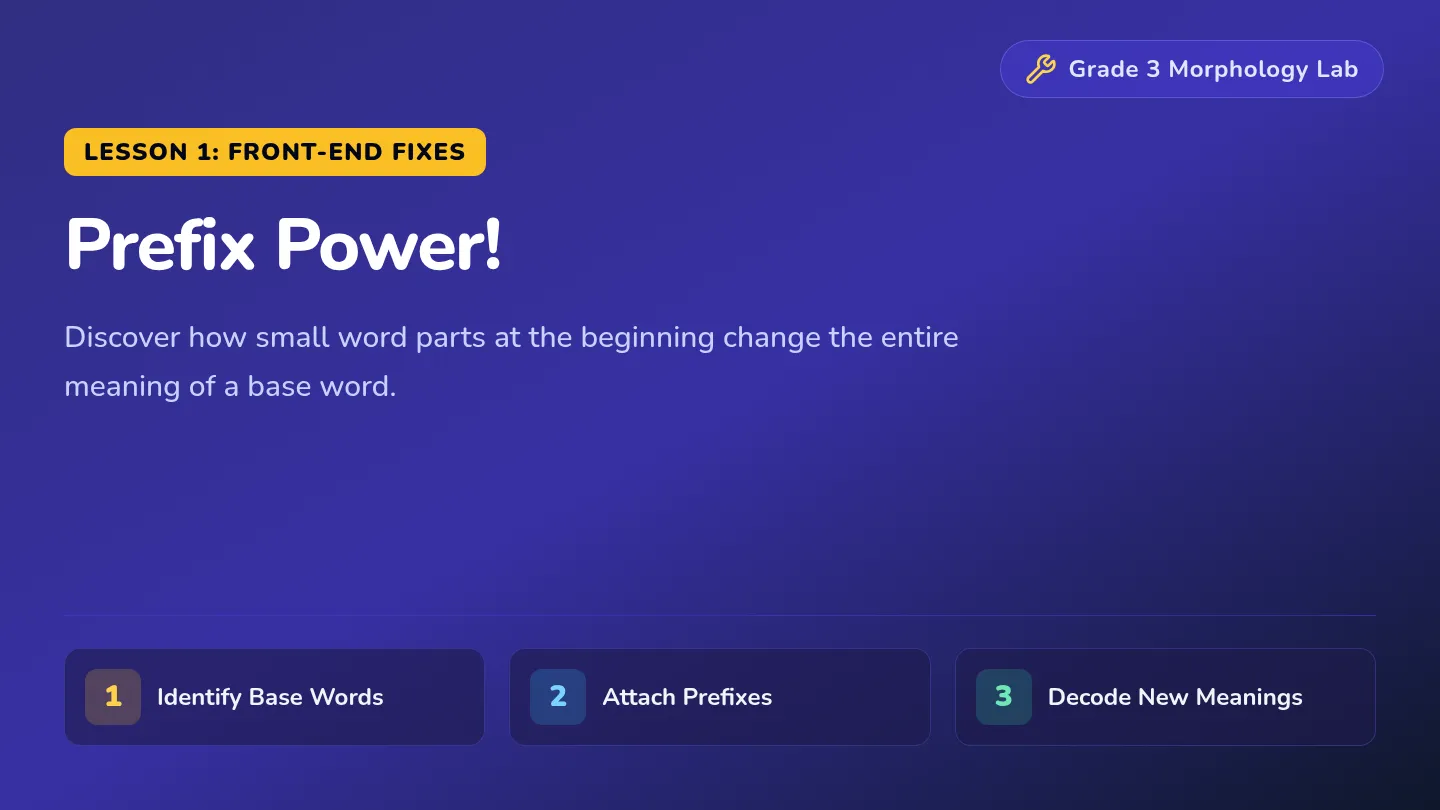
Prefix Power Slides

Word Crafters

A two-part third-grade morphology sequence exploring root and base words, prefixes, and suffixes. Students investigate how affixes transform meanings and build complex words through hands-on decoding and sentence construction.

MM

MaryAnn Mehler

6
Fluency Flight Tracker Sheet

Ocean Depths Sprint

Week 1 introduces the 5-to-10 minute balanced fluency routine, focusing on decoding multisyllabic science vocabulary, scoop phrasing, and baseline WCPM tracking with an ocean exploration passage.

KM

Kelly Messer

3
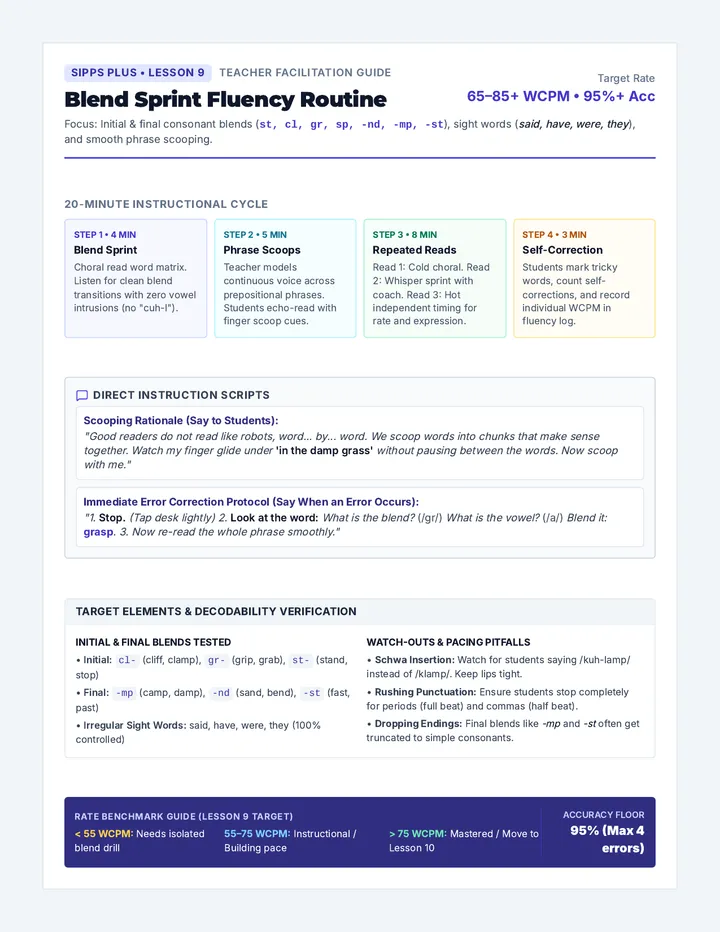
Blend Sprint Teacher Guide

Fluency Launchpad

A targeted multi-lesson reading fluency sequence aligned with SIPPS Plus starting at Lesson 9. Designed for older developing readers, it systematically builds reading rate, decoding accuracy, and self-correction through blend decodability, inflections, phrase scooping, and repeated reading protocols.

ZF

Zach Foster

10