A medical-themed ELA lesson where 2nd grade students perform 'surgery' on word pairs to create contractions, using a heavy-weight metaphor from a video to understand how apostrophes replace missing letters.
A collection of resources to encourage and track reading progress over the summer break for K-3 students, including a parent letter and activity suggestions.
A home-school communication system for K-3 students featuring a homework bag log and an introductory letter for parents, detailing a Monday-Tuesday-Thursday homework schedule.
A lesson focused on teaching third-grade students how to answer 'Wh-' questions in complete sentences by restating the question as a statement. Students will practice this skill using texts about inventors, animal adaptations, and space.
A high-interest lesson where students act as 'Meaning Detectives' to identify and interpret similes, metaphors, idioms, and symbolism in text.
A comprehensive lesson on decoding multisyllabic words using all six syllable types through interactive slides and a multi-page practice packet.
This lesson focuses on identifying and understanding common vowel teams (ai, ay, oa, oe, ow, ee, ea, ey, ie, igh) through targeted fiction and nonfiction reading passages. Students will practice reading words with these patterns in context while developing key comprehension skills like sequencing, inferring, and identifying main ideas.
A comprehensive STAAR-aligned assessment and analysis packet for John Knowles' 'A Separate Peace', focusing on diction, characterization, verbal irony, and conflict.
A fluency practice lesson focused on reading speed and comprehension through the story of Albert Einstein, utilizing a peer-partnered tracking system.
A lesson focused on mastering the 'oi' and 'oy' diphthongs in complex, multisyllabic words, featuring a systematic word sort and visual instruction.
A foundational lesson on temporal sequencing words including 'first', 'next', 'before', and 'after' using a time-traveler theme to engage students in chronological order.
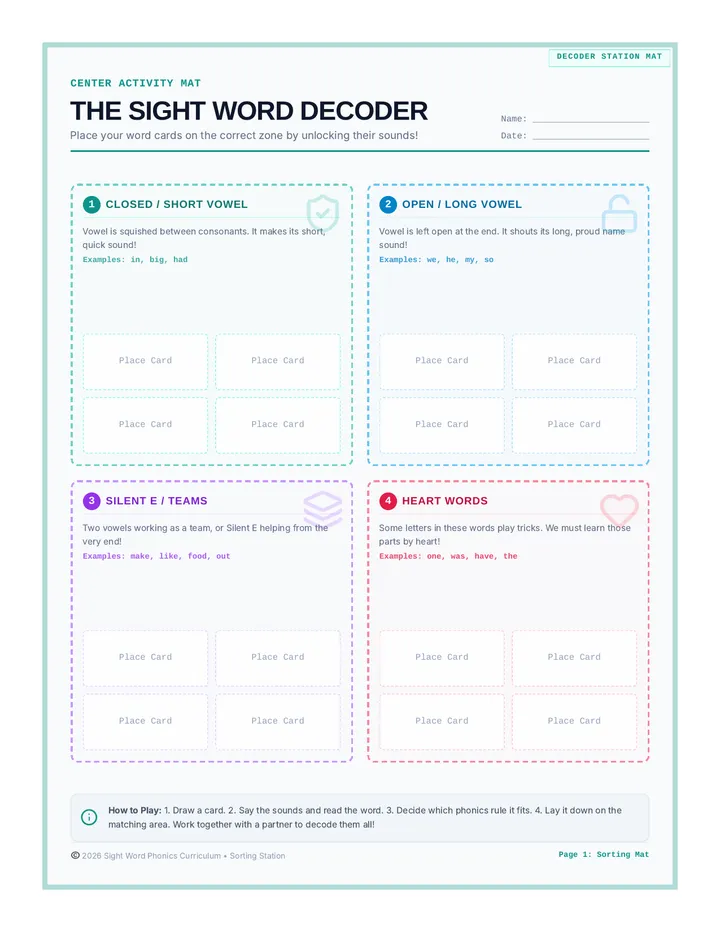
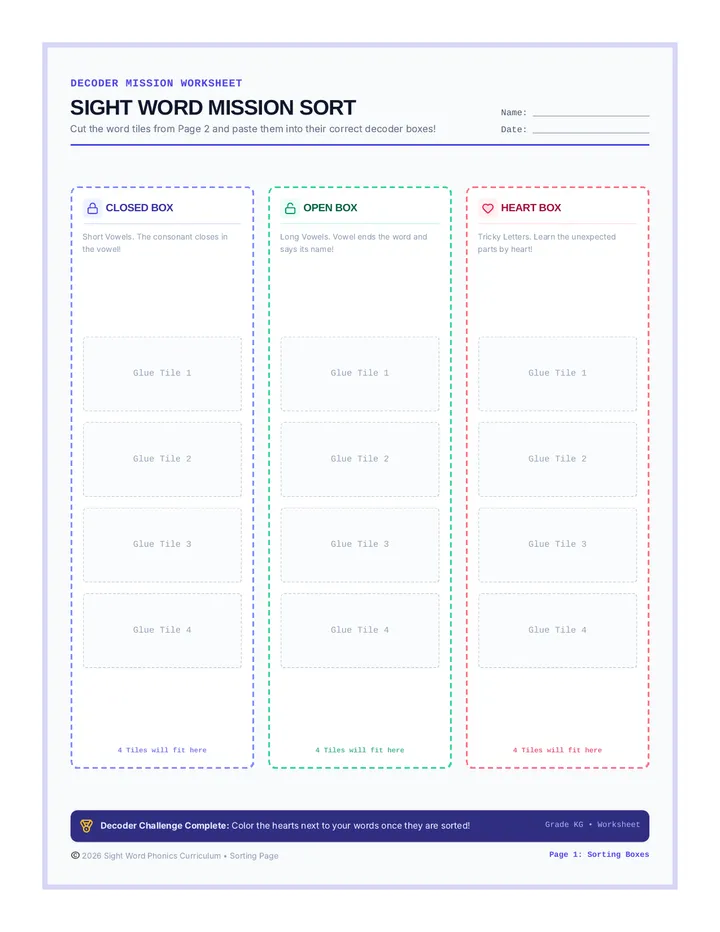
A kindergarten phonics lesson focused on identifying and sorting short vowel sounds through hands-on activities. Students will explore the sounds of a, e, i, o, and u in CVC words.
A reading comprehension lesson centered around a silly story of a T-Rex trying to hide. Focuses on setting, character traits, and key details.
Mastering the final stable syllable 'Consonant-le' found at the end of multi-syllabic words.
Analyzing how the 'Bossy R' influences the sound of the preceding vowel in R-controlled syllables.
Tracking down vowel teams where two vowels work together to create a specific long or unique vowel sound.
Deciphering the Magic E (VCe) pattern where a silent 'e' at the end of a syllable makes the preceding vowel long.
Exploring open syllables that end in a single vowel, which typically makes its long sound.
Investigation of closed syllables where a single vowel is followed by one or more consonants, resulting in a short vowel sound.
A comprehensive assessment on fairy tale elements and plot structures for elementary students, featuring two differentiated levels to meet specific grade-level standards.
A beginner-level reading comprehension lesson focused on zoo animals, featuring simple sentences and key vocabulary for Level E readers.
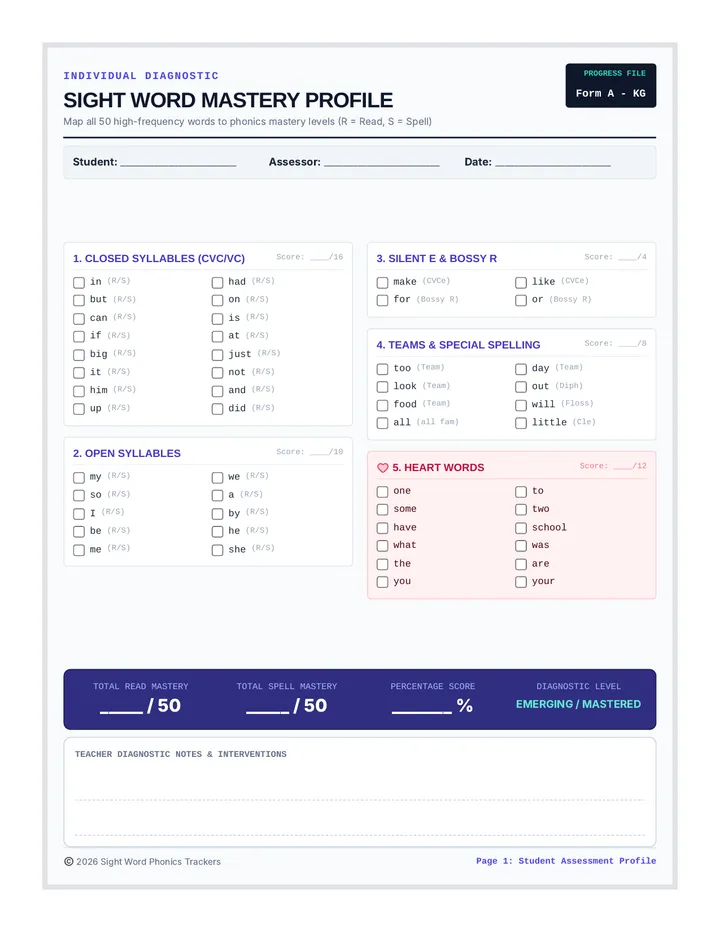
A collection of instructional resources and organizing tools for nonsense word fluency practice across various phonics patterns.
A comprehensive lesson on adding suffixes to multi-syllabic words ending in a silent 'e', focusing on the rules for dropping or keeping the 'e' based on the suffix type.
Conclusion of the fable where Leo chooses honesty. Students determine the central idea and the overarching moral of the story.
Students follow the plot as Leo's lie leads to unexpected consequences, focusing on how character choices drive the story and how those choices make the character feel.
Introduction to the fable 'Leo and the Golden Coin'. Students identify the characters, setting, and the initial problem Leo faces when he finds something that isn't his.
Students explore common prefixes (un-, re-, dis-, pre-, mis-) through an engaging space-themed story and practice activities. They will use context clues to determine the meanings of prefixed words.
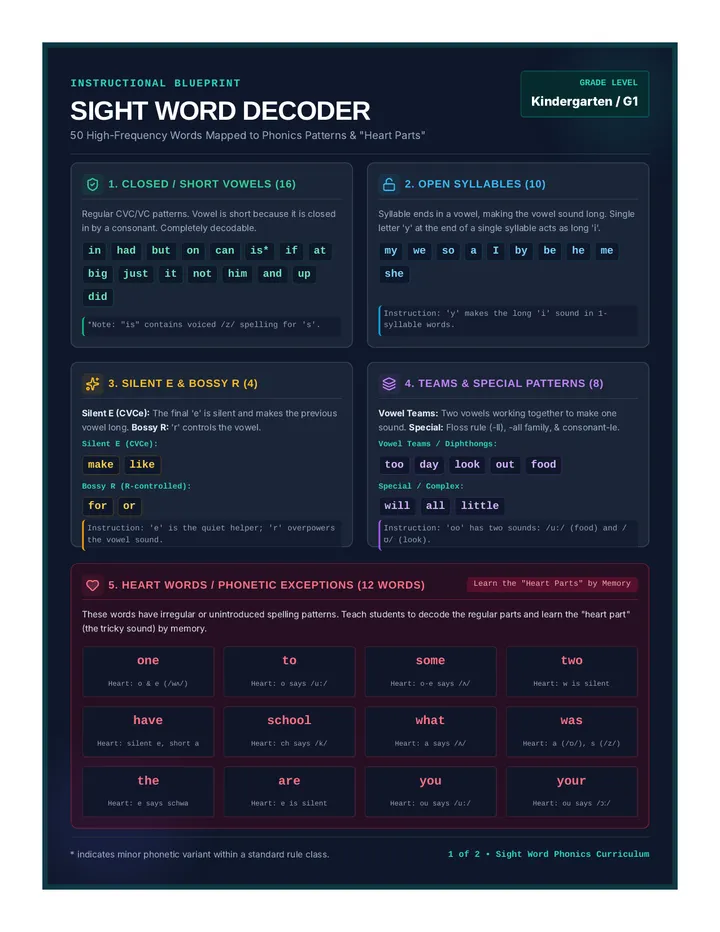
A lesson focused on decoding popular sayings using a variety of phonics patterns including CVC, blends, silent e, vowel teams, R-controlled vowels, and multi-syllabic words.
A guide to understanding and using modern teen slang and contemporary idioms in everyday conversation.
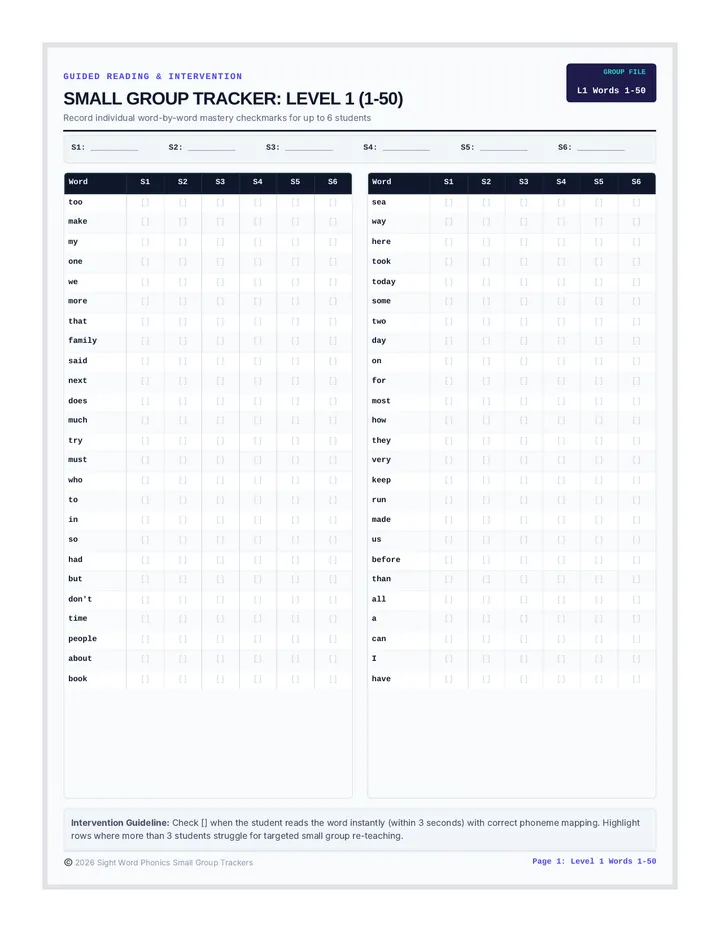
A collection of high-contrast visual resources for mastering the first 30 Fry sight words, designed for clarity and ease of use in flashcard drills and classroom displays.
This lesson focuses on analyzing key literary elements—plot, character, setting, theme, point of view, tone, and figurative language—within a realistic fiction text. Students will read a short story and answer targeted comprehension questions to demonstrate their mastery of these elements.
A lesson on making inferences using the 'Detective Agency' theme. Students learn to combine text evidence with background knowledge to uncover hidden meanings in short stories.
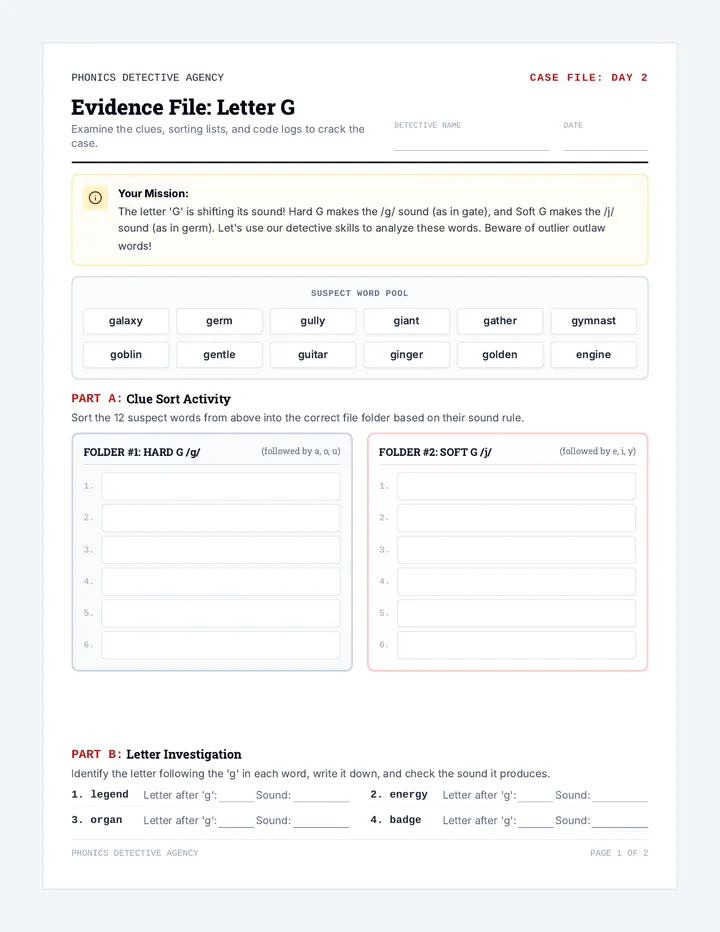
A word study lesson focused on the /oi/ diphthong, teaching the spelling patterns 'oi' and 'oy' through a toy factory theme. Students will learn the positional rules for each spelling and practice through sorting and identification activities.
Explores silent letter patterns including kn, wr, gn, and mb, helping students recognize these tricky consonant pairs.
Students learn to decode two-syllable words where one or both syllables follow the Vowel-Consonant-e pattern.
Focuses on identifying and reading words with the diphthongs ou, ow, oi, and oy in isolation and within a story.
A pair of engaging recording sheets designed for students to track their reading on Epic!, featuring specific templates for both fiction and nonfiction texts.
A final assessment and review day where students demonstrate their mastery of identifying and analyzing all four text structures through a quick check and center activities.
Students explore Problem/Solution and Sequence text structures, identifying key signal words and organizational patterns that authors use to build logical progression.
Students analyze Compare/Contrast and Cause/Effect text structures to understand how authors relate ideas and events in informational texts.
The starting point for all student agents, featuring the mission briefing and essential toolkits for the four program pillars.
Students will learn how to structure an informative essay about the Black Death, focusing on its origins, spread, and impact on medieval society. This lesson provides a guided outline to help 5th graders organize their research into a cohesive multi-paragraph format.