Lenny.com
Explore
Create
ActivitiesNewMathEnglish Language ArtsScience & EngineeringSocial StudiesGlobal LanguagesHealth & Physical EducationSpecial EducationCounseling & Life SkillsArts & CreativityESL
Lenny.com
Lenny.com
Explore
Create
ActivitiesNewMathEnglish Language ArtsScience & EngineeringSocial StudiesGlobal LanguagesHealth & Physical EducationSpecial EducationCounseling & Life SkillsArts & CreativityESL
Lenny.com
Lenny.com

Solutions

Lenny for EducatorsLenny for SchoolsLenny for Districts

Product

ExploreSign inCreateSupportAbout

Resources

Getting startedMTSS Acceleration Program

© 2026 Lenny Learning Inc.

TermsPrivacyAccessibility
LinkedInInstagramX
Lenny
English Language ArtsPhonics & Reading FoundationsLetter IdentificationLearn Letters A-ZLowercase and Uppercase LettersConsonants and VowelsLetter-Sound AssociationsLetter-Sound Associations: LowercaseLetter-Sound Associations: UppercaseBeginning and Ending SoundsRhymingBlending And SegmentingShort VowelsShort Vowel SoundsConsonant BlendsConsonant DigraphsBlends, Digraphs, and TrigraphsDigraphs, Blends, and Silent LettersLong Vowel SoundsLong Vowel PatternsShort and Long VowelsShort and Long Vowel PatternsSilent EVowel SoundsVowel TeamsR-Controlled VowelsDiphthongs: Oi, Oy, Ou, OwVariant VowelsVariant, Diphthong, And R Vowel PatternsSoft G And CSight WordsIrregular WordsWord RecognitionSyllablesSyllable TypesTwo-Syllable WordsMultisyllabic WordsPhoneme ManipulationDecodable TextsVocabularyAction WordsQuestion WordsNouns and AdjectivesClassify WordsCompound WordsSynonyms and AntonymsHomophonesHomophones and HomonymsShades of MeaningContext CluesPrefixes and SuffixesGreek and Latin RootsAnalogiesIdioms and AdagesForeign Words and ExpressionsWord Choice and UsageReference SkillsReading ComprehensionRead-Along Literary TextsRead-Along Informational TextsReality vs. FictionStory ElementsCharacterSequenceMain IdeaCause And EffectCompare And ContrastReading StrategiesText StructureAuthor's PurposeAuthor's Purpose And ToneAuthor's PerspectivePoint Of ViewThemeInference And ThemeInference And AnalysisPoetry ElementsLiterary DevicesAnalyzing LiteratureAnalyzing Informational TextsComparing TextsAudience, Purpose, And ToneBusiness DocumentsNovel StudyNonfiction Book StudyGrammar & MechanicsSentencesNounsVerbsAdjectivesPronounsCapitalizationPunctuationContractionsConjunctionsPrepositionsArticlesAdjectives And AdverbsVerb TypesVerb TensePronouns And AntecedentsPronoun TypesSubject-Verb AgreementDirect And Indirect ObjectsSentences, Fragments, And Run-OnsPhrases And ClausesCommasSemicolons, Colons, And CommasDashes, Hyphens, And EllipsesSpellingAbbreviationsFormattingVerb Tense And MoodMisplaced ModifiersWritingDescriptive DetailsCreative WritingOpinion WritingTopic SentencesOrganizing WritingLinking WordsSentence VarietyIntroductions And ConclusionsPersuasive And Opinion WritingExpository WritingPersuasive StrategiesDeveloping And Supporting ArgumentsTopic Sentences And Thesis StatementsSummarizingResearch SkillsEditing And RevisingActive And Passive Voice=Writing Clearly And ConciselyDebate & Public SpeakingPublic Speaking BasicsPersuasive TechniquesClaims and EvidenceTypes of ArgumentsReasoning TypesLogical FallaciesTopic ResearchOrganizing EvidenceDebate Speech OrganizationAttacking and Defending ArgumentsClash and EngagementImpact CalculusQuestioning and Cross-ExaminationCritical ThinkingInformal LogicFormal LogicInductive Reasoning

Bureaucracy Breakdown

A comprehensive TSIA2 test-preparation lesson focused on reading comprehension, sentence revision, and grammar editing using an informational text on the development of the federal bureaucracy. Students analyze passage structure, vocabulary in context, transitions, and grammatical precision.

Ppsreed75

[¶5] Congress has the power to create, organize, and disband all federal agencies. Most of them are under the control of the President, although few of them actually have direct contact with the White House. So, the bureaucracy has two masters—Congress and the President. The bureaucracy generally falls into four broad types: Cabinet departments, government corporations, independent agencies, and regulatory commissions.

[¶6] The 15 Cabinet departments are each headed by a Secretary who sits on the President's Cabinet. The exception is the Justice Department, which is headed by the Attorney General, who is also a member of the President's Cabinet. The Secretaries are responsible for directing the department's policy and for overseeing its operation. Cabinet secretaries are usually torn between their responsibilities as presidential advisers and heads of their departments.

[¶7] Government corporations do not belong to any department—they stand on their own. Probably the best-known government corporations are the United States Postal Service and Amtrak. They are different from other agencies in that they are businesses created by Congress, and they charge fees for their services.

[¶8] Independent agencies Generally, they have narrower areas of responsibility than do Cabinet departments. Most of these agencies are not free from presidential control and are independent only in the sense that they are not part of a department. Congress creates them as separate agencies for many reasons, practical as well as symbolic. For example, when NASA was established, many members of Congress assumed that it would be a part of the Department of Defense.

[¶9] Regulatory agencies are important parts of the economy, making rules for large industries and businesses that affect the interests of the public. Because regulatory commissions are "watchdogs" that by their very nature need to operate independently, they are not part of a department, and the President does not directly control most of them. Examples of these commissions are the Securities and Exchange Commission, which regulates the stock market, brokers, and investment practices. Another well-known commission is the Federal Reserve Board that governs monetary policy. The EPA serves as a guardian over the nation's environment, making and enforcing standards for industrial and commercial sectors.

Passage Reference • The Development of the Bureaucracy Turn to Page 2 for Questions 1–5 • Page 1 of 3

Part I: Reading Comprehension & Sentence Revision

Items 1–5 of 10

1. Reading: Central Idea (Entire Passage) Main Purpose

Which statement best expresses the primary purpose of the passage?

A. Argue that federal regulatory agencies should be abolished.

B. Describe the history, structure, and functions of the bureaucracy.

C. Prove that 19th-century patronage was superior to merit exams.

D. Examine constitutional disputes among Cabinet secretaries.

Reasoning / Text Evidence: __________________________________________________________________________

2. Reading: Vocabulary in Context (Paragraph 3) Context Clues

As used in paragraph 3, the word "diluted" most nearly means:

A. contaminated with toxic foreign materials

B. weakened in strength, frequency, or dominance

C. dissolved completely into a liquid state

D. officially codified and strengthened by law

Reasoning / Text Evidence: __________________________________________________________________________

3. Reading: Cause & Effect (Paragraph 3) Textual Evidence

According to the passage, what specific event catalyzed the passage of the Pendleton Act?

A. The beginning of the American Civil War

B. The assassination of President James Garfield

C. The emergency expansion of the New Deal

D. The creation of NASA outside the Pentagon

Reasoning / Text Evidence: __________________________________________________________________________

4. Reading: Comparative Analysis (Paragraphs 6 & 9) Categorical Distinction

How do regulatory commissions primarily differ from Cabinet departments?

A. They act as independent watchdogs not under direct presidential control.

B. They charge user fees for business services rather than using taxes.

C. They are created by presidential executive order without Congress.

D. They are headed by Cabinet Secretaries who advise the President.

Reasoning / Text Evidence: __________________________________________________________________________

5. Revising: Redundancy & Word Economy (Paragraph 3) Concise Phrasing

Draft: "The executive branch employs today almost three million people today." Which revision best eliminates wordiness?

A. Today, the executive branch employs almost three million people currently.

B. The executive branch employs today almost three million people at present.

C. Today, the executive branch employs nearly three million people.

D. Almost three million people today are currently employed by the branch.

Reasoning / Elimination Note: ________________________________________________________________________

TSIA2 Student Worksheet • Bureaucracy Breakdown Turn to Page 3 for Questions 6–10 • Page 2 of 3

Part II: Rhetorical Revision & Grammar Editing

Items 6–10 of 10

6. Revising: Sentence Combining (Paragraph 2) Synthesis

Which choice most effectively combines the statements about merit systems and career employee longevity?

A. The transition to merit elevated expertise, but career employees span administrations for stability.

B. By replacing patronage with merit, the bureaucracy elevated expertise while establishing career personnel whose longevity ensures continuity.

C. Because career employees span multiple administrations, the transition to merit was elevated.

D. Expertise was elevated; however, stability is ensured as employees span various presidencies.

Reasoning / Elimination Note: ________________________________________________________________________

7. Revising: Transitional Logic (Paragraph 4) Logical Cohesion

Draft: "[ ___ ], contrary to popular opinion, the bureaucracy did not grow significantly in the late 20th century."

A. As a result

B. Thus therefore

C. In fact

D. In summary

Reasoning / Elimination Note: ________________________________________________________________________

8. Editing: Sentence Boundaries & Run-ons (Paragraph 8) Punctuation

Draft: "Independent agencies Generally, they have narrower areas of responsibility..." Which edit corrects this?

A. Independent agencies, generally they have narrower areas of responsibility.

B. Independent agencies generally have narrower areas of responsibility.

C. Independent agencies; generally having narrower areas of responsibility.

D. Independent agencies: having narrower areas, than do Cabinet units.

Reasoning / Elimination Note: ________________________________________________________________________

9. Editing: Subject-Verb Agreement (Paragraph 6) Agreement

Draft: "Each of the fifteen Cabinet departments [ is / are ] headed by a Secretary..." Which rule applies?

A. Use are to agree with plural "departments."

B. Use is because singular "Each" is the true subject.

C. Use are because "fifteen" indicates plural quantity.

D. Use were to shift the verb into past historical tense.

Reasoning / Elimination Note: ________________________________________________________________________

10. Editing: Apostrophes & Possessives (Paragraph 6) Plural vs. Possessive

Draft: "The [ secretaries ] responsibilities require balancing loyalty with mission." Which form is correct?

A. secretaries

B. secretary's

C. secretaries'

D. secretaries's

Reasoning / Elimination Note: ________________________________________________________________________

Student Performance Self-Audit Track Presentation Review

Reading (Q1–Q4) Score: ____ / 4

Notes: ____________

Revising (Q5–Q7) Score: ____ / 3

Notes: ____________

Editing (Q8–Q10) Score: ____ / 3

Notes: ____________

TSIA2 Student Worksheet • Bureaucracy Breakdown Completed Assessment & Reflection • Page 3 of 3
You might also like

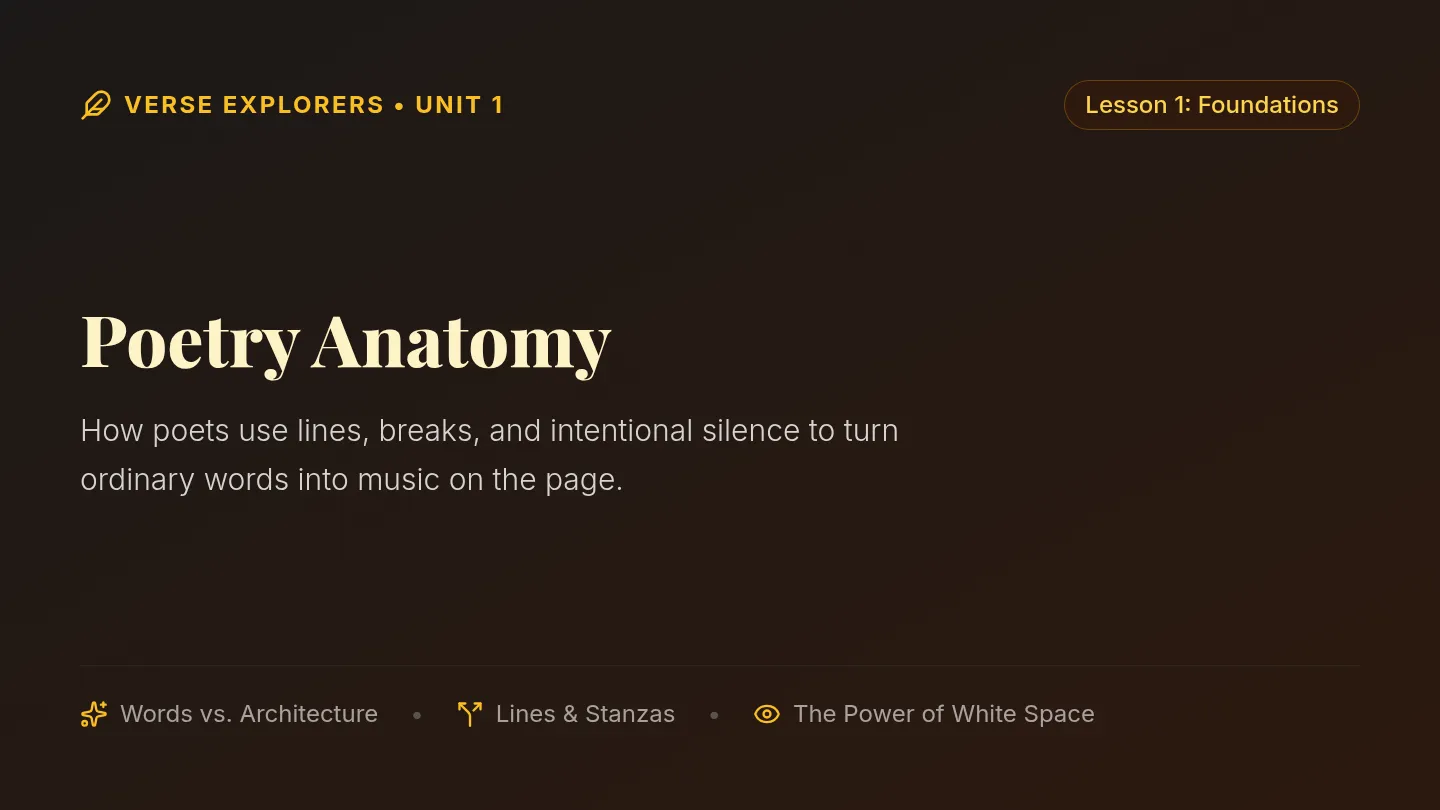
Poetry Anatomy Slides

Verse Explorers

A three-part introductory poetry sequence that guides students through the structural, rhythmic, and musical building blocks of verse. Students contrast poetry with prose, master line breaks and stanzas, tap out meter and poetic beats, and craft original structured stanzas.

NJ

Natalie Johnson

6
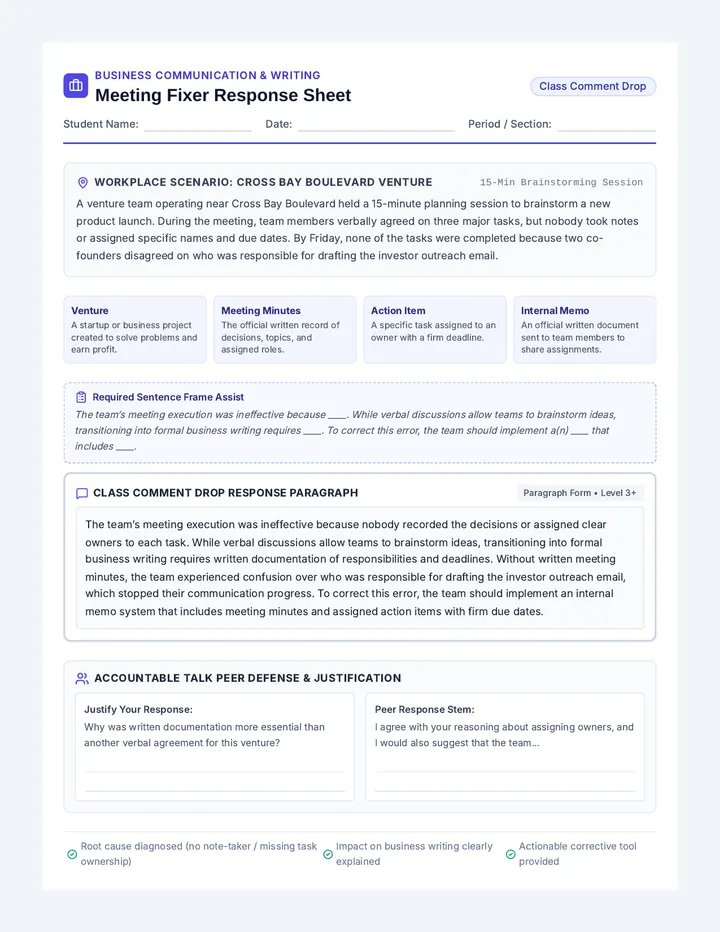
Meeting Fixer Response Sheet

Venture Writing Fundamentals

A foundational business communication lesson guiding students through workplace meeting analysis and document prioritization. Students learn internal accountability and team alignment before drafting external communications to investors and store partners.

Lenny Avatar
Lenny
2
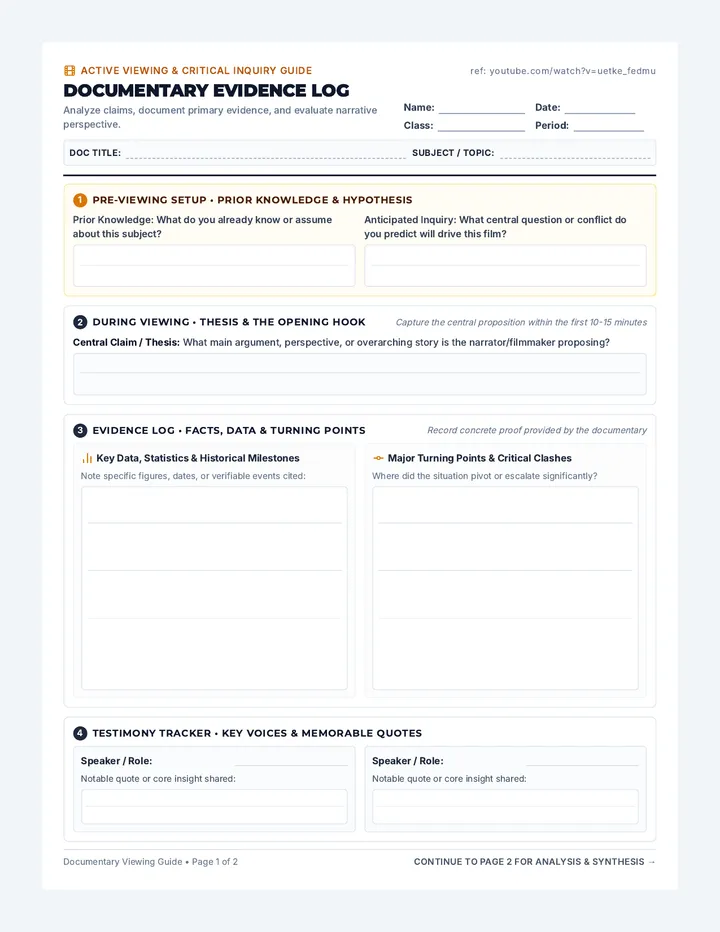
Documentary Detective Viewing Guide

Documentary Detective Viewing Guide

A comprehensive two-page documentary viewing guide designed for active notetaking, evidence tracking, film technique analysis, and critical synthesis. Features structured chronological viewing prompts, quote and expert testimony logs, perspective evaluations, and post-viewing reflection spaces.

BP

Brianna Popp

Week 1 Teacher Guide

Paragraph Pioneers

A comprehensive 4-week intensive English writing program for mid-intermediate English learners. Each week contains two 25-minute sessions focusing on core paragraph-building skills, transitional words, and structured writing prompts with a 4-point rubric.

KJ

Katie Jordan

13
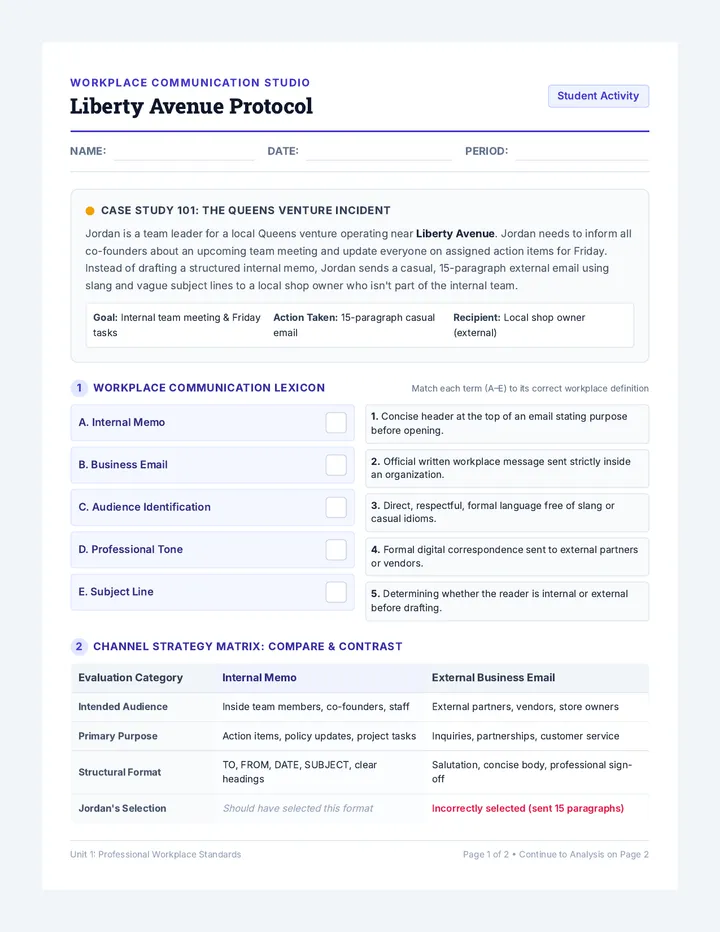
Liberty Avenue Protocol Worksheet

Liberty Avenue Protocol

A high-impact workplace communication lesson where students analyze audience, channel selection, and professional tone through a Queens-based business scenario, producing Level 3+ structured responses and engaging in accountable talk.

Lenny Avatar
Lenny
2
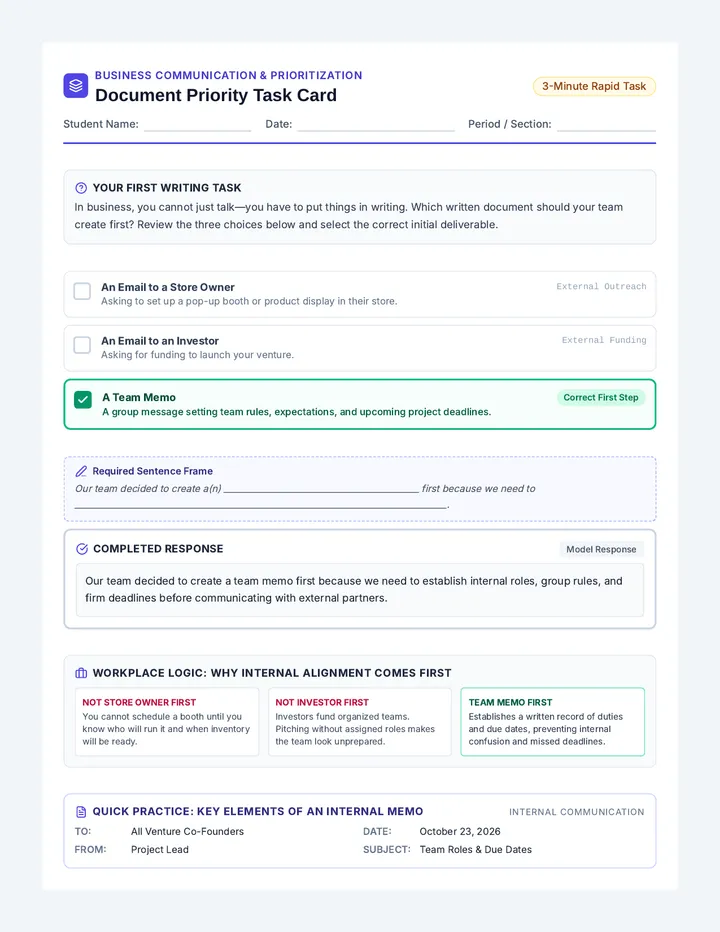
Document Priority Task Card

Document Priority Task Card

A 3-minute rapid business writing task card where students prioritize creating an internal team memo over external emails to store owners or investors, featuring a completed sentence frame and justification.

Lenny Avatar
Lenny
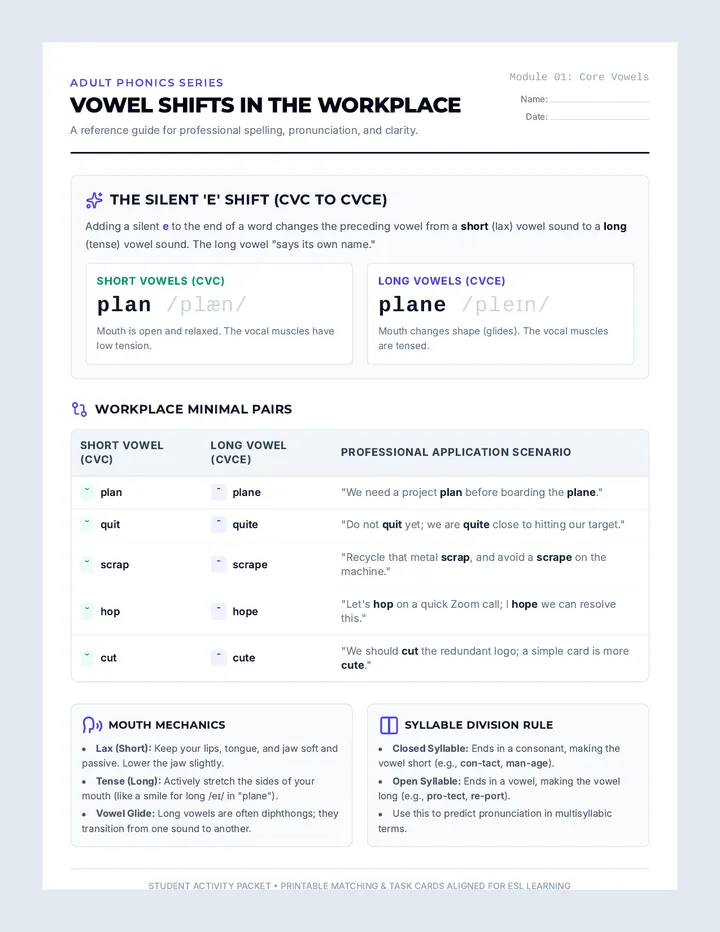
Vowel Shifts Printable Cards

Vowel Decoders

An intensive phonics intervention sequence designed for older struggling readers and English learners. Provides age-appropriate, highly scaffolded decoding practice for long and short vowels across middle school and young adult levels.

MC

Melissa Camasta

4
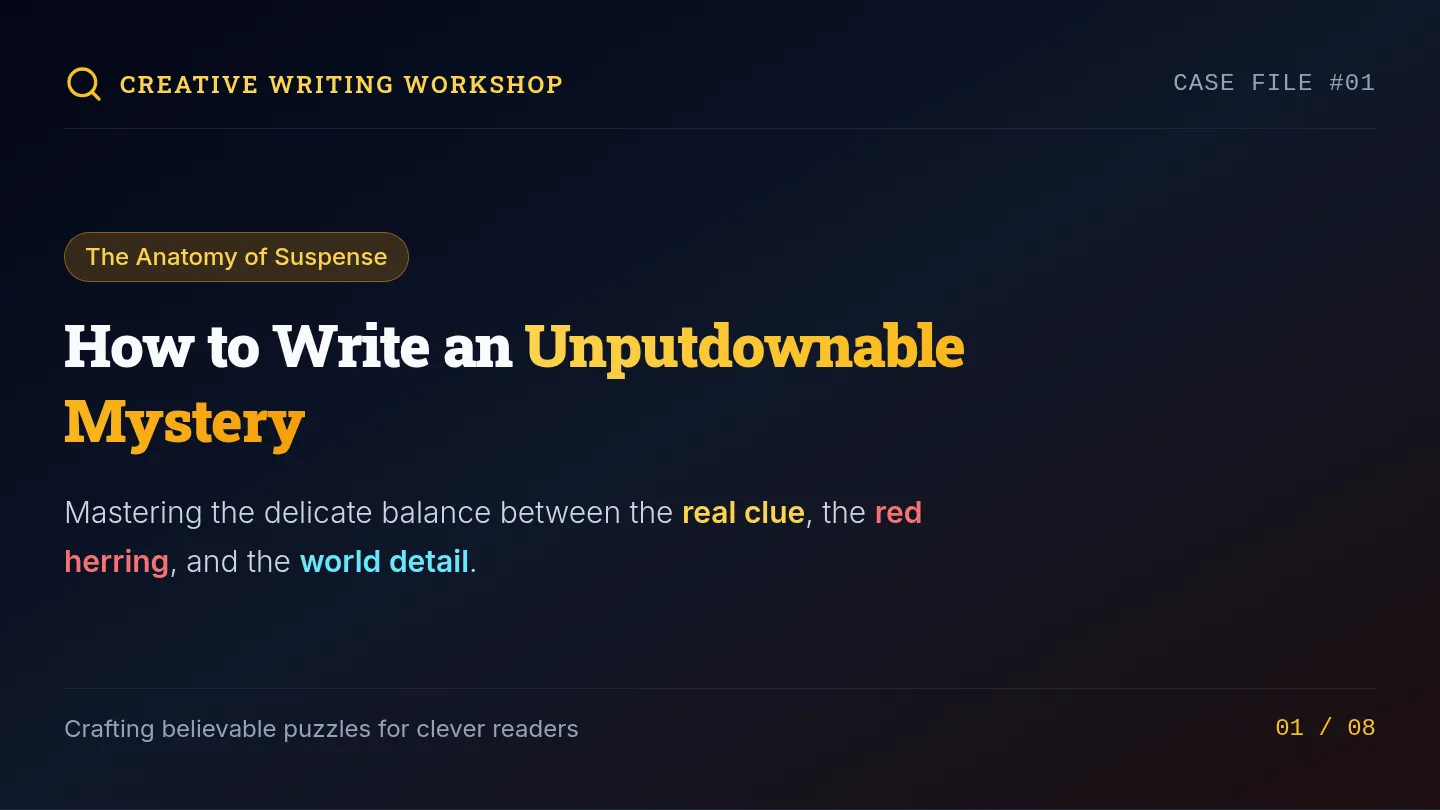
Mystery Crafting Slides

Mystery Crafting

An interactive creative writing lesson guiding students through constructing compelling mysteries using real clues, deceptive red herrings, and atmospheric details.

A

Amy.Kellough

2
Meeting Fixer Response Sheet

Meeting Fixer Response Sheet

A printable workplace scenario response sheet featuring an expanded single-paragraph Level 3+ analysis of the Cross Bay venture team's meeting execution and business writing breakdown, using the required sentence frame without quotations or bold text.

Lenny Avatar
Lenny
TSI 50-Question Practice Packet

TSI Mastery Quest

A comprehensive 50-question training sequence designed to help students conquer the Texas Success Initiative (TSI) English exam. Divided into three rigorous sections: Reading Comprehension, Sentence Revision, and Standard English Conventions.

MT

Meghann Thomas

2
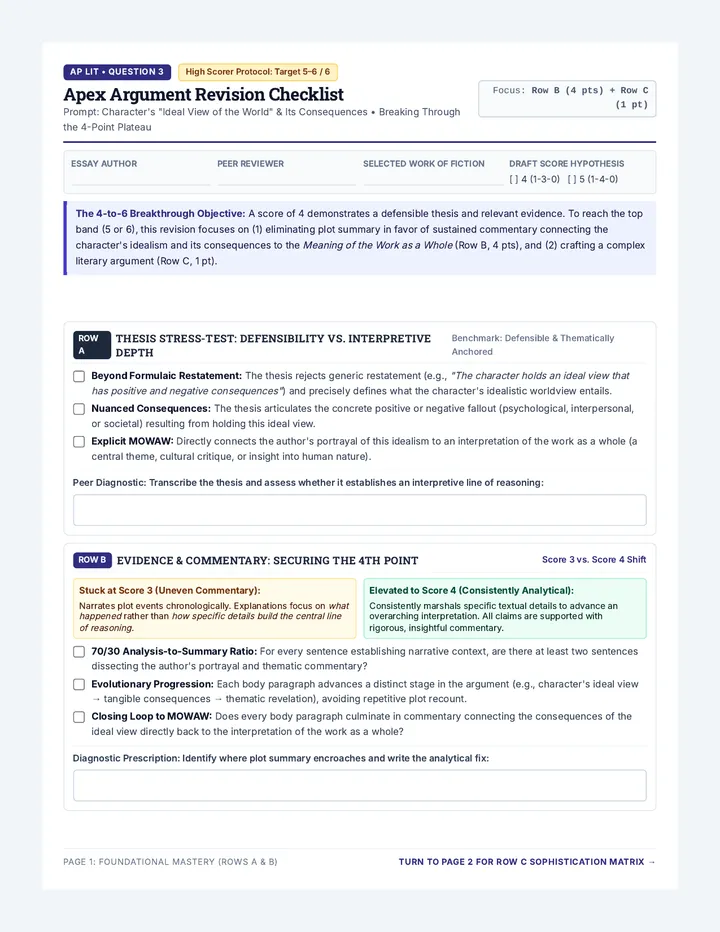
Mastery Essay Revision Checklist

Literary Argument Revision

A collection of specialized peer revision protocols designed to elevate AP Literature Question 3 literary argument essays across higher score bands.

AG

Amanda Gleicher

3
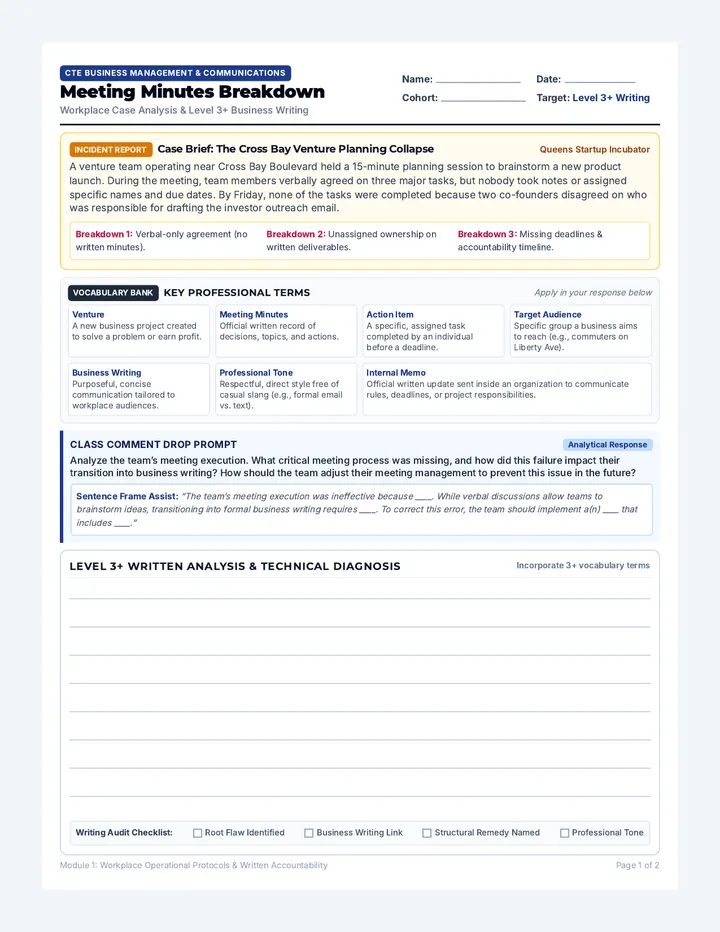
Meeting Minutes Breakdown Worksheet

Meeting Minutes Breakdown Worksheet

A two-page workplace simulation and business writing worksheet analyzing a venture team's meeting breakdown on Cross Bay Boulevard, featuring scenario analysis, vocabulary references, sentence frames, an exemplar dissection, an action item remediation task, and accountable talk discussion protocols.

Lenny Avatar
Lenny