Lenny.com
Explore
Create
ActivitiesNewMathEnglish Language ArtsScience & EngineeringSocial StudiesGlobal LanguagesHealth & Physical EducationSpecial EducationCounseling & Life SkillsArts & CreativityESL
Lenny.com
Lenny.com
Explore
Create
ActivitiesNewMathEnglish Language ArtsScience & EngineeringSocial StudiesGlobal LanguagesHealth & Physical EducationSpecial EducationCounseling & Life SkillsArts & CreativityESL
Lenny.com
Lenny.com

Solutions

Lenny for EducatorsLenny for SchoolsLenny for Districts

Product

ExploreSign inCreateSupportAbout

Resources

Getting startedMTSS Acceleration Program

© 2026 Lenny Learning Inc.

TermsPrivacyAccessibility
LinkedInInstagramX
Lenny

Editing And Revising

Mechanical accuracy in grammar, spelling, and punctuation alongside structural refinements for clarity and coherence. Targets sentence variety, tone, and logical flow across diverse writing formats.

English Language ArtsPhonics & Reading FoundationsLetter IdentificationLearn Letters A-ZLowercase and Uppercase LettersConsonants and VowelsLetter-Sound AssociationsLetter-Sound Associations: LowercaseLetter-Sound Associations: UppercaseBeginning and Ending SoundsRhymingBlending And SegmentingShort VowelsShort Vowel SoundsConsonant BlendsConsonant DigraphsBlends, Digraphs, and TrigraphsDigraphs, Blends, and Silent LettersLong Vowel SoundsLong Vowel PatternsShort and Long VowelsShort and Long Vowel PatternsSilent EVowel SoundsVowel TeamsR-Controlled VowelsDiphthongs: Oi, Oy, Ou, OwVariant VowelsVariant, Diphthong, And R Vowel PatternsSoft G And CSight WordsIrregular WordsWord RecognitionSyllablesSyllable TypesTwo-Syllable WordsMultisyllabic WordsPhoneme ManipulationDecodable TextsVocabularyAction WordsQuestion WordsNouns and AdjectivesClassify WordsCompound WordsSynonyms and AntonymsHomophonesHomophones and HomonymsShades of MeaningContext CluesPrefixes and SuffixesGreek and Latin RootsAnalogiesIdioms and AdagesForeign Words and ExpressionsWord Choice and UsageReference SkillsReading ComprehensionRead-Along Literary TextsRead-Along Informational TextsReality vs. FictionStory ElementsCharacterSequenceMain IdeaCause And EffectCompare And ContrastReading StrategiesText StructureAuthor's PurposeAuthor's Purpose And ToneAuthor's PerspectivePoint Of ViewThemeInference And ThemeInference And AnalysisPoetry ElementsLiterary DevicesAnalyzing LiteratureAnalyzing Informational TextsComparing TextsAudience, Purpose, And ToneBusiness DocumentsNovel StudyNonfiction Book StudyGrammar & MechanicsSentencesNounsVerbsAdjectivesPronounsCapitalizationPunctuationContractionsConjunctionsPrepositionsArticlesAdjectives And AdverbsVerb TypesVerb TensePronouns And AntecedentsPronoun TypesSubject-Verb AgreementDirect And Indirect ObjectsSentences, Fragments, And Run-OnsPhrases And ClausesCommasSemicolons, Colons, And CommasDashes, Hyphens, And EllipsesSpellingAbbreviationsFormattingVerb Tense And MoodMisplaced ModifiersWritingDescriptive DetailsCreative WritingOpinion WritingTopic SentencesOrganizing WritingLinking WordsSentence VarietyIntroductions And ConclusionsPersuasive And Opinion WritingExpository WritingPersuasive StrategiesDeveloping And Supporting ArgumentsTopic Sentences And Thesis StatementsSummarizingResearch SkillsEditing And RevisingActive And Passive Voice=Writing Clearly And ConciselyDebate & Public SpeakingPublic Speaking BasicsPersuasive TechniquesClaims and EvidenceTypes of ArgumentsReasoning TypesLogical FallaciesTopic ResearchOrganizing EvidenceDebate Speech OrganizationAttacking and Defending ArgumentsClash and EngagementImpact CalculusQuestioning and Cross-ExaminationCritical ThinkingInformal LogicFormal LogicInductive Reasoning

Videos

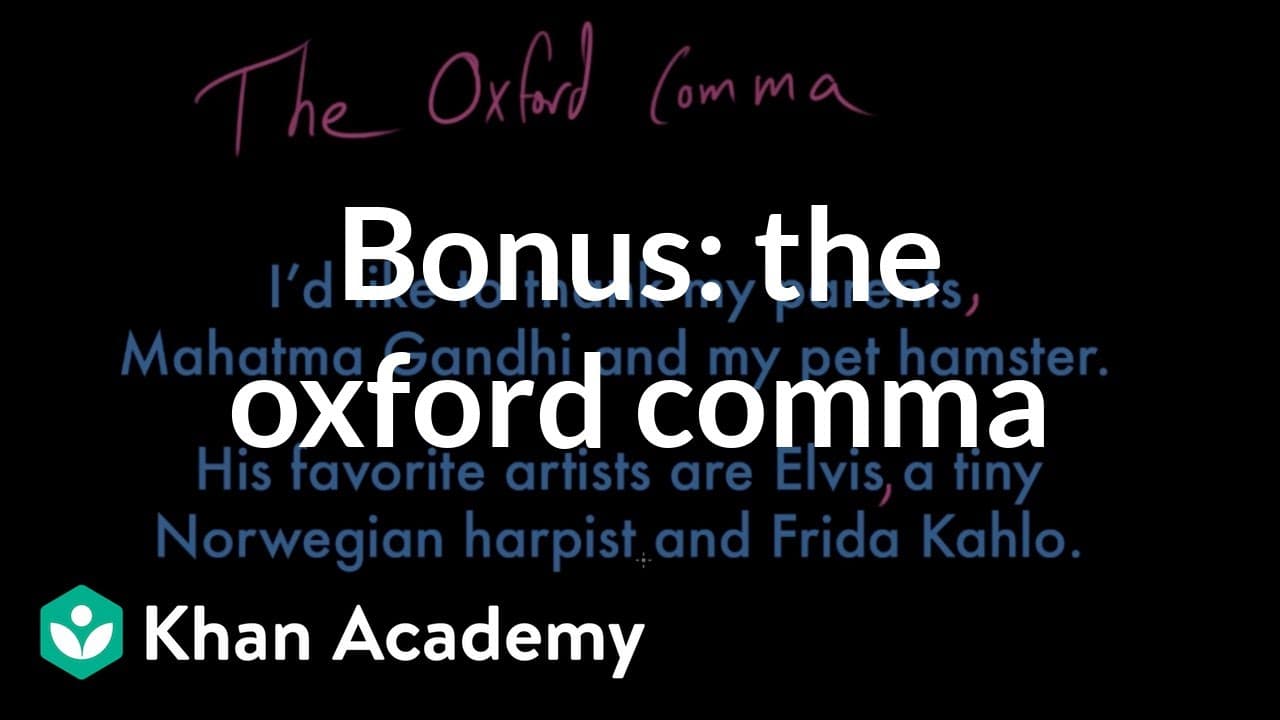
How the Oxford Comma Prevents Confusion

How the Oxford Comma Prevents Confusion

This engaging video explores the function and importance of the Oxford comma (also known as the serial comma) through humorous and memorable examples. Narrators David and Paige explain that while the comma placed before the conjunction in a list is optional in some style guides, its omission can lead to hilarious and confusing misunderstandings. They illustrate this with sentences implying one's parents are Mahatma Gandhi and a hamster, or that Elvis is a tiny Norwegian harpist. The video delves into the nuances of grammatical clarity versus stylistic choice, referencing major style guides like AP (which typically omits it) and Chicago (which includes it). It introduces the grammatical concept of "apposition" to explain why these specific misunderstandings occur. The narrators also offer a sophisticated counter-argument: that rewriting a sentence to change the word order is often a better solution for ambiguity than relying solely on punctuation. For educators, this video serves as an excellent hook for grammar lessons, demonstrating that punctuation is not just about following arbitrary rules but about ensuring clear communication. It provides a non-threatening entry point into complex topics like appositives, ambiguity, and style guides. The humorous examples stick in students' minds, making the concept of the serial comma easier to recall and apply in their own writing.

Khan AcademyKhan Academy

3mins 43s

How to Use Descriptive Language to Bring Stories to Life

How to Use Descriptive Language to Bring Stories to Life

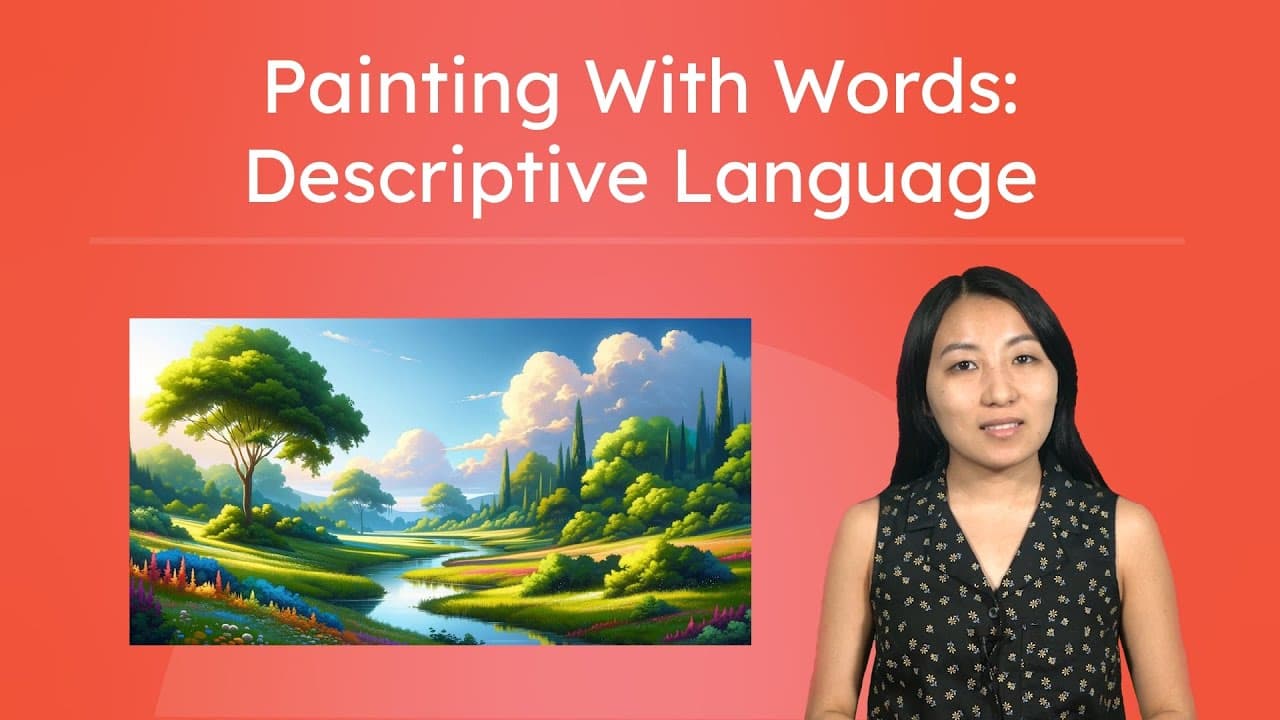
This engaging educational video teaches students how to elevate their writing using descriptive language. Set within a gamified narrative, the host and her robot companion arrive at 'Palette Plains,' a world that has lost its color and turned gray. To restore the vibrancy of the land and earn a 'Crystal Quill fragment,' the viewer must transform a dull, factual paragraph into a vivid, descriptive scene using adjectives, adverbs, and sensory details. The video breaks down the writing process into actionable strategies. It first reviews the roles of adjectives and adverbs before introducing two key techniques: 'Sensory Language' (appealing to the five senses) and 'Emotional Language' (establishing mood and feeling). Through clear examples—such as comparing a boring description of a beach to a vivid one—the narrator demonstrates how specific word choices help readers visualize a setting. The video also models close reading by analyzing a text to find descriptive elements. Ideally suited for upper elementary and middle school English Language Arts classrooms, this resource combines direct instruction with interactive practice. It includes specific pause points where students are prompted to complete tasks in a companion PDF (or on paper), such as matching definitions, analyzing a text, planning sensory details, and rewriting a paragraph. Teachers can use this video to introduce a descriptive writing unit, reinforce the concept of 'showing not telling,' or as a self-paced revision workshop.
Miacademy & MiaPrep Learning ChannelMiacademy & MiaPrep Learning Channel

10mins 4s

Mastering Parallel Structure in Writing

Mastering Parallel Structure in Writing

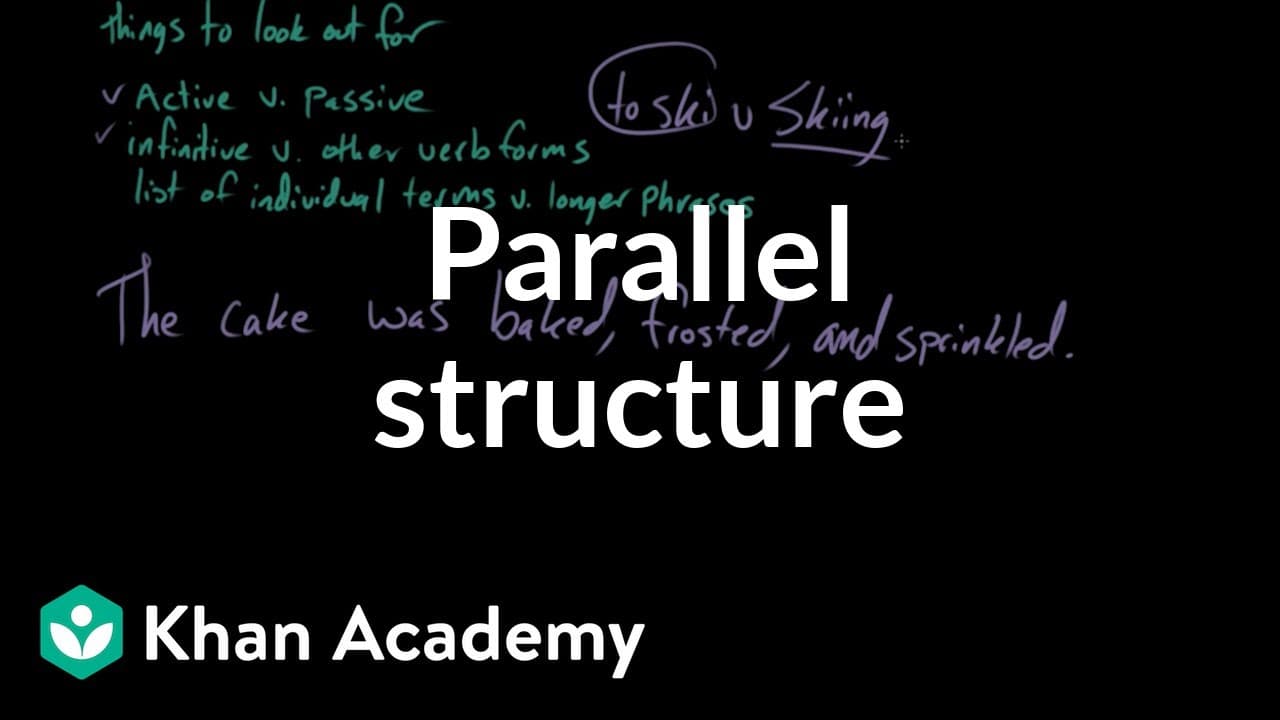
This educational video provides a clear and engaging guide to understanding parallel structure in writing. Hosted by David, Rosie, and Paige, the lesson distinguishes parallel structure as a stylistic choice rather than a strict grammatical rule, emphasizing how it creates harmony and flow in sentences. Through handwritten visual examples on a blackboard, the instructors demonstrate how to align items in a list—whether they are nouns, verbs, or phrases—to ensure they match in form.

Khan AcademyKhan Academy

5mins 5s

Mastering Dialogue: Formatting, Punctuation, and Tags

Mastering Dialogue: Formatting, Punctuation, and Tags

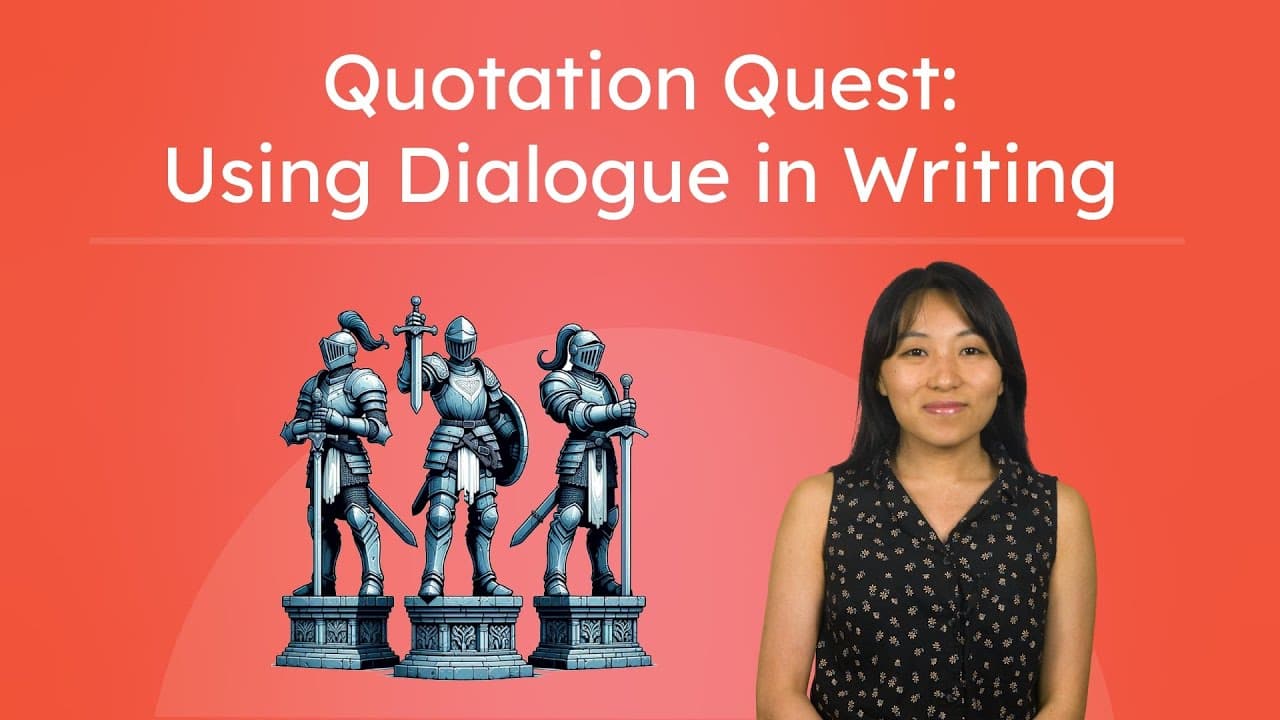
This engaging language arts video invites students into the "Whispering Hall" of Genre Land to master the mechanics of writing dialogue. Through a quest-based narrative featuring three knight statues, the host guides viewers through three distinct challenges: formatting, punctuation, and dialogue tags. The video contrasts confusing, unformatted blocks of text with properly structured dialogue to visually demonstrate the importance of these writing conventions. The content systematically breaks down the technical rules of dialogue writing. Key topics include when to start new paragraphs (paragraph breaks and indentation), how to use quotation marks and other punctuation within speech, capitalization rules for quoted sentences, and the proper use and placement of dialogue tags. It also distinguishes between valid tags (speaking verbs like "said" or "asked") and action beats (like "smiled" or "ran"), clarifying common grammatical errors. This video is an excellent resource for upper elementary and middle school writing workshops. It transforms dry grammar rules into a gamified editing mission, encouraging students to analyze text critically. Teachers can use the specific "bad vs. good" examples to model editing skills, while the clear breakdown of rules provides a solid foundation for narrative writing units. The step-by-step revision of a single story throughout the video offers a cohesive example of the writing process in action.

Miacademy & MiaPrep Learning ChannelMiacademy & MiaPrep Learning Channel

10mins 24s

Finalizing Your Novel Plan for Consistency and Clarity

Finalizing Your Novel Plan for Consistency and Clarity

This engaging instructional video guides students through the critical final stage of pre-writing a novel: creating a comprehensive novel plan. Using a humorous narrative involving a writer and his dramatic alter ego, the video challenges students to gather their scattered ideas from previous lessons and organize them into a cohesive "Writer's Handbook." It emphasizes the importance of bridging the gap between dreaming of a story and actually writing it by having a solid roadmap. The core of the lesson focuses on two key revision strategies: consistency and clarity. Students learn how to evaluate their story elements—setting, character, conflict, and plot—to ensure they support one another logically (consistency) and are understandable to an outside audience (clarity). The video provides practical examples, such as reworking a setting that no longer fits the plot, and encourages peer feedback to identify confusing gaps in the narrative. Ideally suited for creative writing units in middle and high school, this video serves as a bridge between brainstorming and drafting. It models the revision process before drafting even begins, teaching students that planning is iterative. Teachers can use this video to launch a "Novel Planning Workshop" where students compile their work, critique each other's plans, and finalize their outlines before writing their opening chapters.

Miacademy & MiaPrep Learning ChannelMiacademy & MiaPrep Learning Channel

8mins 38s

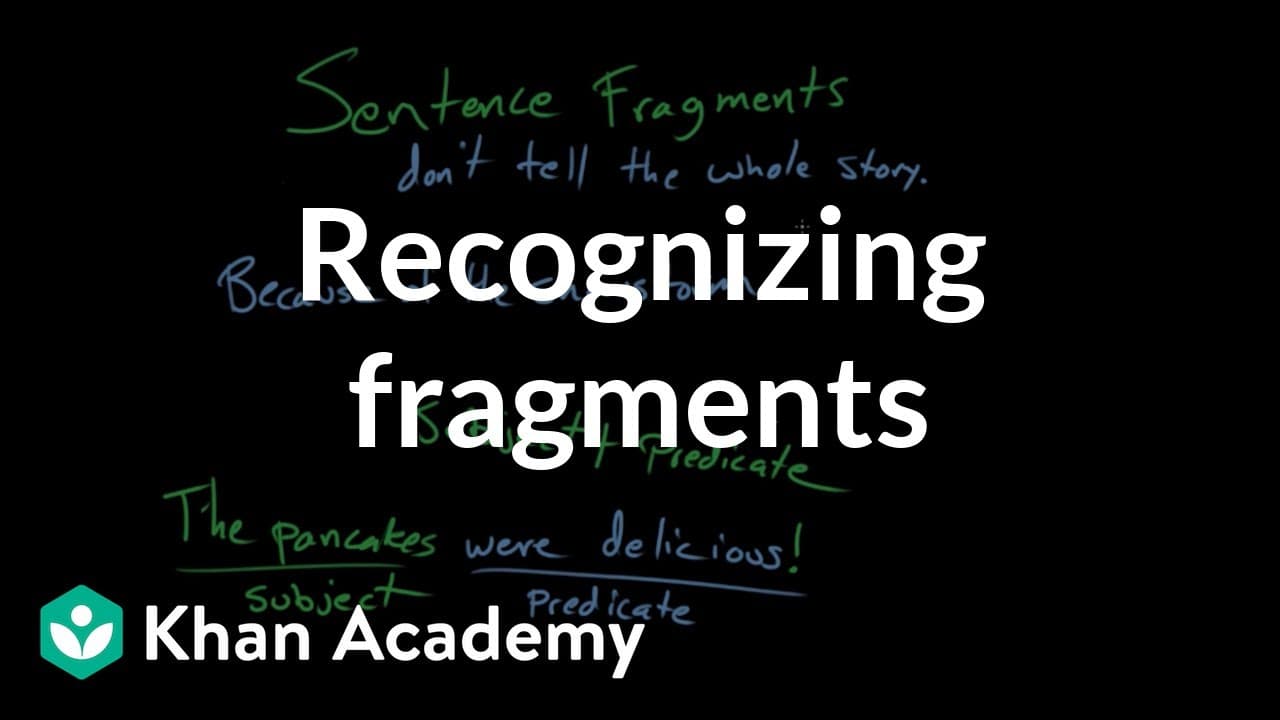
How to Identify and Fix Sentence Fragments

How to Identify and Fix Sentence Fragments

In this engaging grammar lesson, David and his teacher-cousin Beth break down the concept of sentence fragments using a simple, collaborative blackboard style. The video explains that a sentence fragment is an incomplete thought that mimics a sentence by ending with a period but fails to tell the "whole story." Through clear visual examples, the hosts demonstrate the two main causes of fragments: missing a subject (the "who") or missing a predicate (the "what happened"). The video explores three distinct types of fragments: those missing a predicate, those missing a subject, and phrases that lack both (like prepositional phrases standing alone). Using relatable examples like "The pancakes" and "Because of the snowstorm," David and Beth show exactly how to turn these fragments into complete sentences by combining subjects and predicates. The visual use of green and white handwriting on a black background helps distinguish between the naming part (subject) and the telling part (predicate). This resource is highly valuable for upper elementary and middle school language arts classrooms. It provides a non-intimidating entry point into sentence structure, helping students move beyond intuition to understanding the grammatical mechanics of why a sentence is complete. Teachers can use this video to introduce editing skills, support struggling writers who frequently use fragments, or reinforce the fundamental concepts of subject and predicate.

Khan AcademyKhan Academy

3mins 48s

Materials

Argument Pro Rubric

Argument Pro Rubric

A comprehensive 100-point rubric for 10th-grade argumentative essays, featuring detailed criteria for claims, evidence, analysis, and counter-claims. Designed with a clean, professional aesthetic for easy grading and clear student feedback.

D

dmclaurin

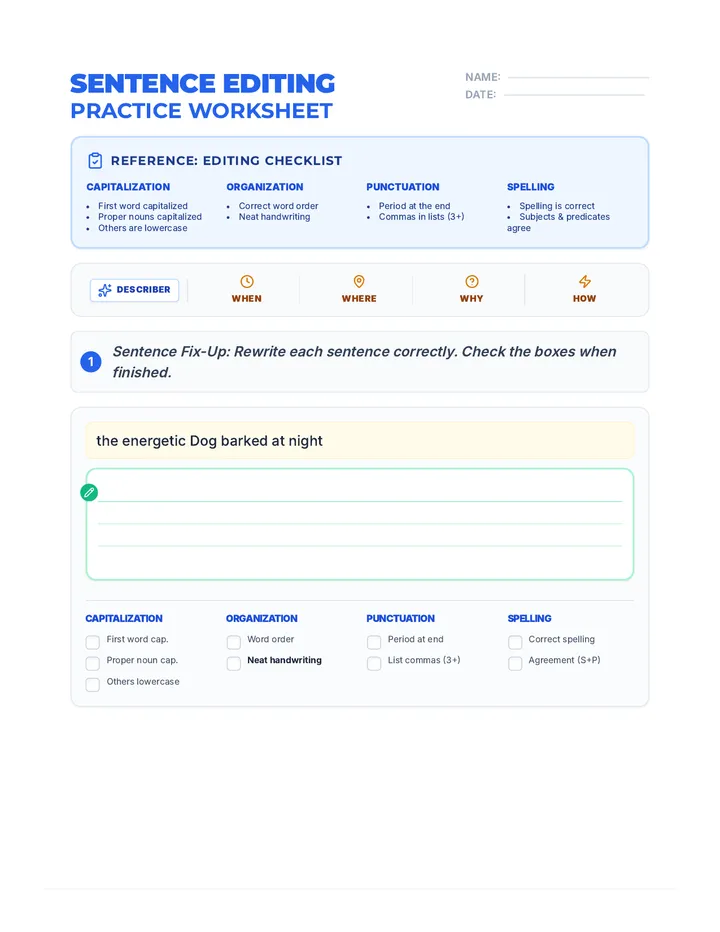
Sentence Editing Practice Worksheet

Sentence Editing Practice Worksheet

An extensive 6-page worksheet for sentence building and correction. Features an editing checklist for review at the top of Page 1, followed by four 'Sentence Fix-Up' items and six complex frames. All tasks include 4 handwriting lines and a standardized checklist with increased font sizes for better legibility. Subtitle removed and font sizes polished for classroom use.

EV

Erin Venuti

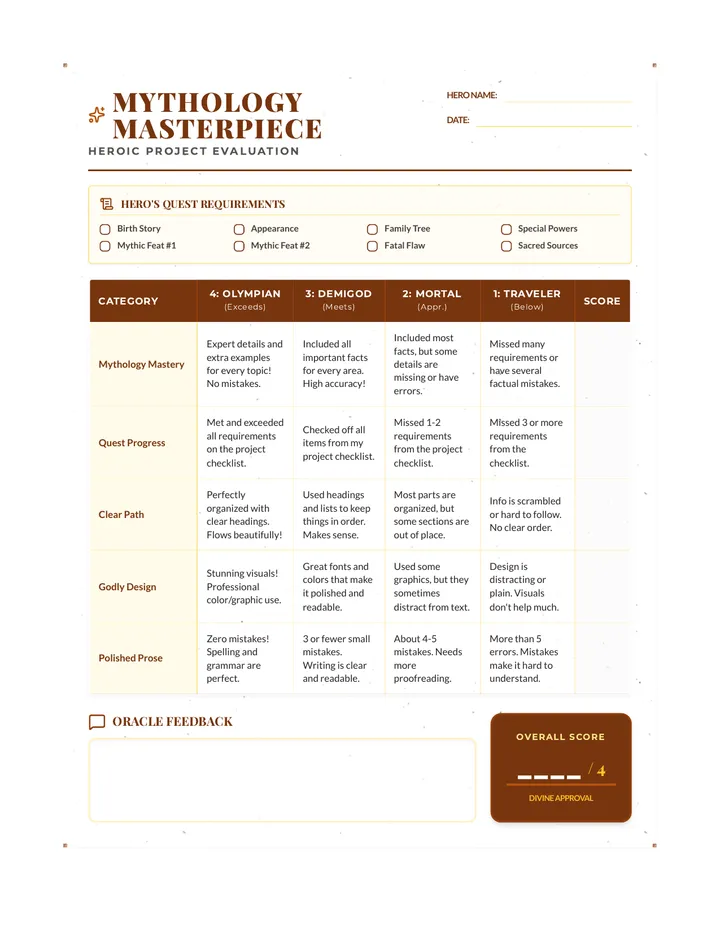
Mythology Masterpiece Rubric

Mythology Masterpiece Rubric

A single-page rubric for the Greek Mythology project, redesigned for space efficiency and readability. It features a horizontal checklist and consolidated footer to ensure the Oracle Feedback and Overall Score sections fit perfectly on one page without sacrificing text size. The final score is now explicitly labeled 'overall score _/4'.

SD

Stephany Durtsche

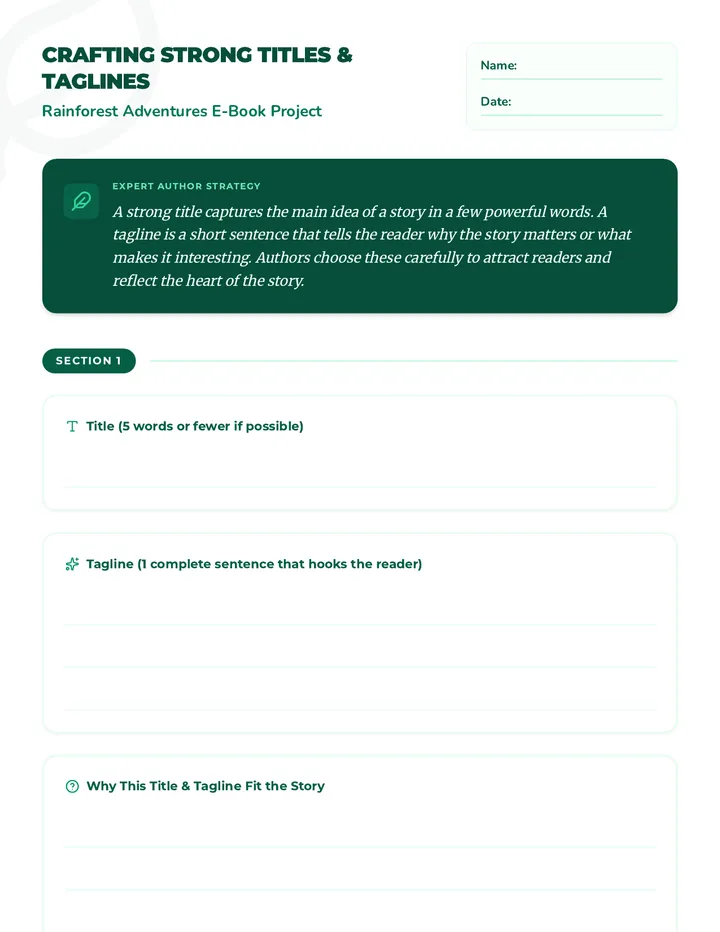
Rainforest Adventure Titles Worksheet Project

Rainforest Adventure Titles Worksheet Project

A professional 2-page printable worksheet for student authors to brainstorm and refine titles and taglines for their rainforest-themed e-books. It features a cohesive rainforest aesthetic across two structured pages, providing space for two distinct draft sections and a final synthesis reflection.

BJ

Brandon Jackson

Dual Text Theme Writing Guide

Dual Text Theme Writing Guide

A student-friendly, STAAR-aligned Extended Constructed Response (ECR) guide comparing themes across 'Thank You, M'am' and 'A Police Stop Changed This Teenager's Life'. Features an accessible, clear prompt, simplified sentence starters, an annotated 5/5 exemplar essay, and a clear scoring rubric with checklist.

TJ

Tasha Jaramillo

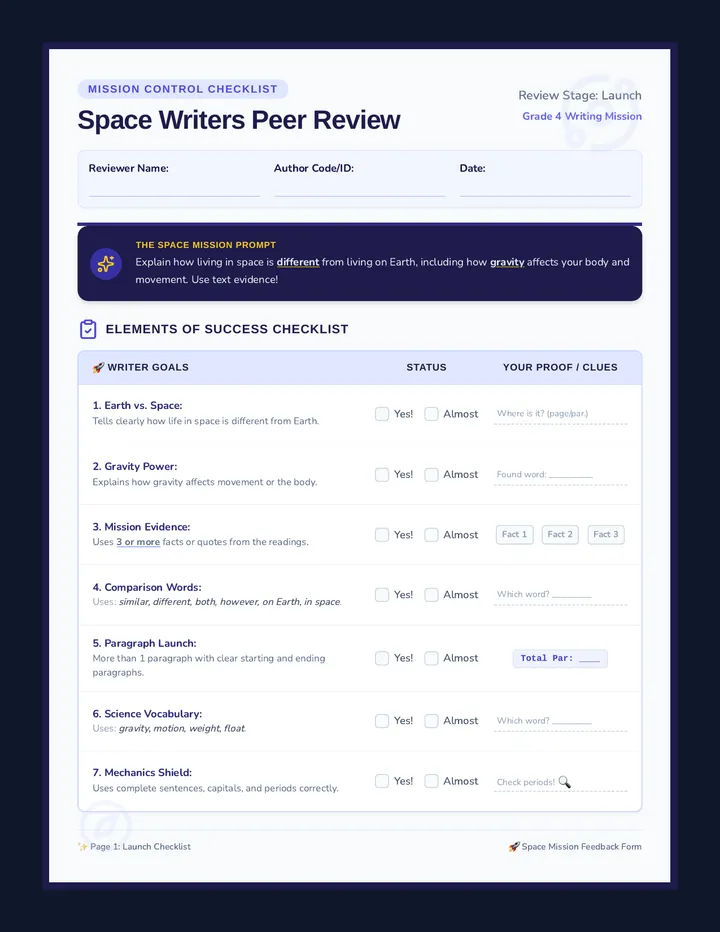
Space Writers Feedback Form

Space Writers Feedback Form

A two-page student peer feedback form styled with an astronaut/space theme. Page 1 contains a spacious visual success checklist for evaluating a writing piece. Page 2 provides expanded writing spaces with generous handwriting lines and color-coded boxes for comprehensive positive and constructive feedback ('Stellar Glows' and 'Cosmic Grows'), accompanied by sentence frames designed for Multilingual Language Learners.

J

jamacleod

Sequences

Invention Quest Slides

Frindle Frenzy Novel Study

A 9-day novel study for 'Frindle' by Andrew Clements, aligned to 3rd Grade ELAR TEKS, focusing on character development, vocabulary, and plot analysis.

LH

Lucy Hellerman

56
Lesson Plan 1 Introduction

Literary Device Detectives

A comprehensive multi-unit sequence for 3rd and 4th grade students covering key literary devices: Introduction to Figurative Language, Onomatopoeia, Similes, Metaphors, Personification, and Idioms. Each unit provides 5 lesson plans, interactive notebook resources, and a wide variety of activities and stories designed to improve descriptive writing and reading comprehension.

JS

Janette Sullivan

105
Prophecy and Power Slides

Shadows and Crowns

A series of lessons exploring Shakespeare's Macbeth, specifically designed for 10th-grade emergent bilingual students to master complex characterization and thematic elements.

DC

Dylan Clark

30
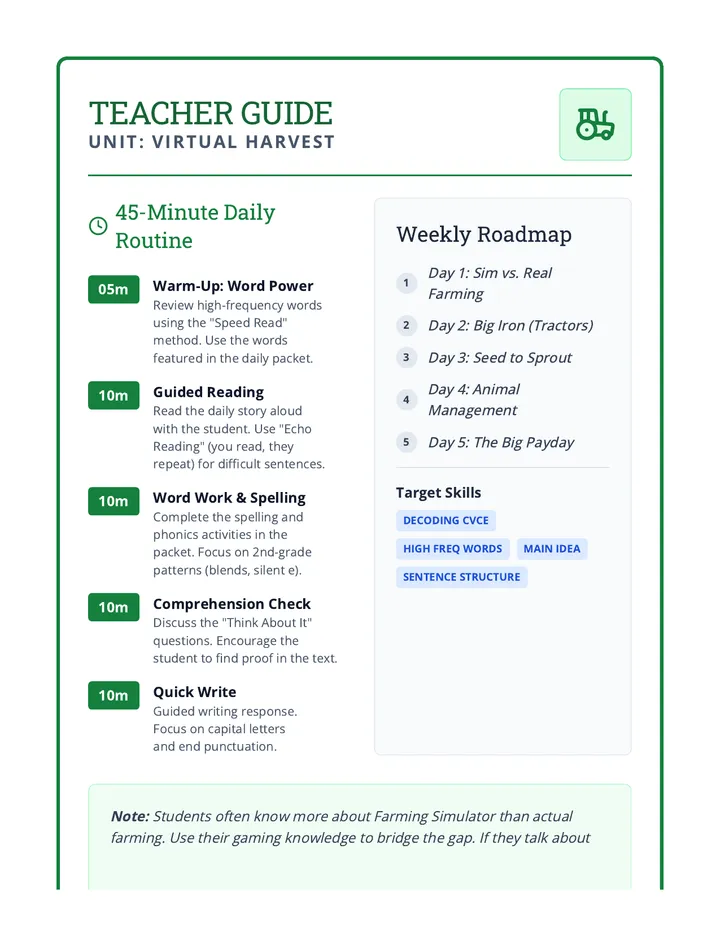
Virtual Harvest Teacher Guide

Digital Dirt

A 5-day reading comprehension and writing unit for struggling readers, blending the world of Farming Simulator with real-world agriculture. Focuses on 2nd-grade level literacy skills within a high-interest 5th-grade context.

CM

carley Martin

30
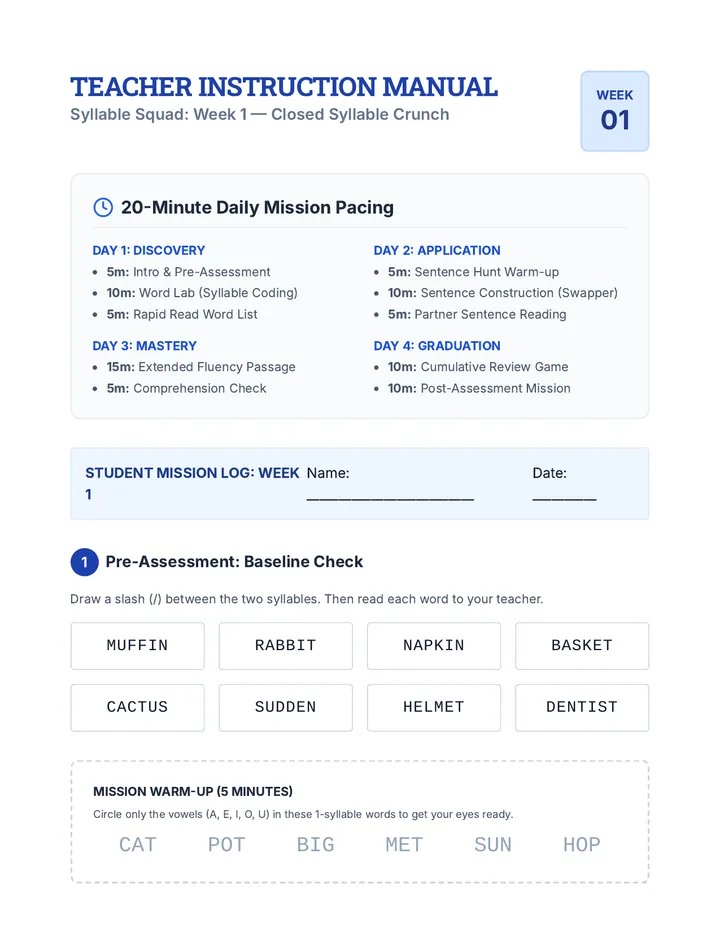
Week 1 Closed Syllable Manual

Syllable Squad Decoding Mission

A comprehensive 5-week phonics intervention focused on decoding two-syllable words across five major syllable types. Each week includes a pre-assessment, daily lessons with specific targets, student practice sheets, and a post-assessment.

KJ

Kelsey Jacobs

29
Question Anatomy Slides

Insight Investigators

A 6-week reading intervention unit for 5th graders focused on making inferences, analyzing questions, and using text evidence. Themes include mysteries, sports (baseball and basketball), and dragons to engage high-interest readers.

MK

Meg Keene

48