Word relationships and logical reasoning patterns including synonyms, antonyms, and part-to-whole connections. Builds vocabulary and critical thinking skills through systematic comparison.
A high-impact, single-page ELA CCSS standards reference poster for 8th-grade Reading. Redesigned with the modern Poppins font for titles and labels, paired with a highly readable body text font. Features color-coded columns for Reading Literature (RL) and Reading Informational Text (RI) with concise, student-focused definitions and clear visual icon associations.
A 4-page print-optimized, ink-friendly 8th-grade ELA figurative language anchor chart set aligned to NYS Next Gen Standard 8R4, designed with crisp high-contrast typography, color-coded device families, mentor text breakdowns, and evidence-based analytical sentence stems.
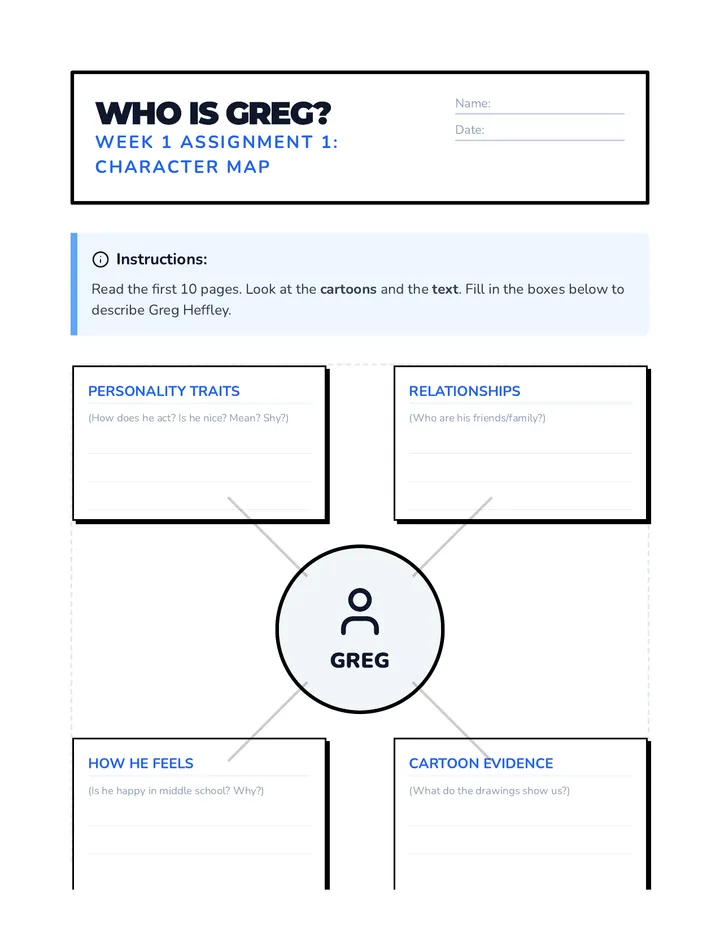
A comprehensive 6-week 8th-grade ELL curriculum split between Book 1 and 'Rodrick Rules'. Students explore narrative voice and a full suite of literary devices (simile, metaphor, alliteration, personification, hyperbole, satire, irony, foreshadowing, symbolism, and oxymoron) through visual literacy and intensive vocabulary building.
A series of grade-banded NC ELA EOG preparation resources, providing students with standardized strategies for both elementary and middle school assessments.
A 3-day intensive deep dive into the core skills of STAAR English I, focusing on Fiction, Informational, and Argumentative genres through the lens of 'The Architect's Blueprint.' Students analyze how authors construct meaning and apply those structures to their own writing.
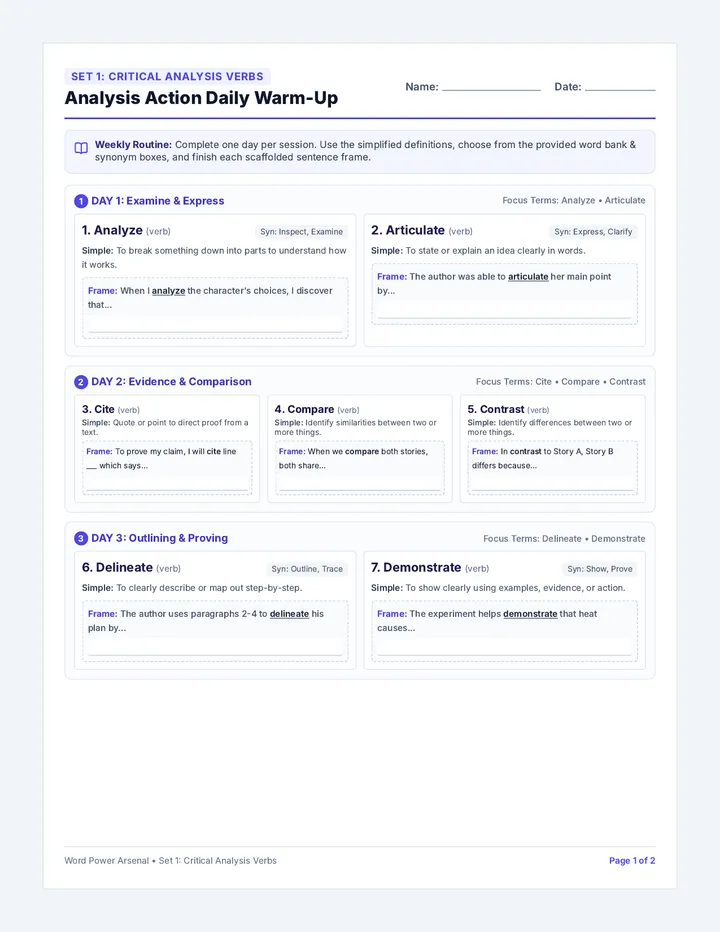
A comprehensive 5-week academic vocabulary mastery curriculum covering 54 critical reading, writing, and analytical terms. Includes daily warm-ups with sentence frames, interactive review task cards, and differentiated mastery assessments for each set.
A 9th-grade sequence focused on decoding complex informational texts by analyzing text features, visual data, metaphors, and specialized vocabulary. Students develop critical reading skills to understand how technical information is communicated to a general audience.
A high-intensity vocabulary sequence for 10th graders focusing on the logic of analogies. Students progress from basic pattern recognition to designing their own complex logic puzzles, treating language as a series of solvable equations.