Lenny.com
Explore
Create
ActivitiesNewMathEnglish Language ArtsScience & EngineeringSocial StudiesGlobal LanguagesHealth & Physical EducationSpecial EducationCounseling & Life SkillsArts & CreativityESL
Lenny.com
Lenny.com
Explore
Create
ActivitiesNewMathEnglish Language ArtsScience & EngineeringSocial StudiesGlobal LanguagesHealth & Physical EducationSpecial EducationCounseling & Life SkillsArts & CreativityESL
Lenny.com
Lenny.com

Solutions

Lenny for EducatorsLenny for SchoolsLenny for Districts

Product

ExploreSign inCreateSupportAbout

Resources

Getting startedMTSS Acceleration Program

© 2026 Lenny Learning Inc.

TermsPrivacyAccessibility
LinkedInInstagramX
Lenny

Main Idea

Identification of central messages and supporting details within informational and narrative texts. Strengthens summarization skills and the ability to distinguish primary points from secondary evidence.

English Language ArtsPhonics & Reading FoundationsLetter IdentificationLearn Letters A-ZLowercase and Uppercase LettersConsonants and VowelsLetter-Sound AssociationsLetter-Sound Associations: LowercaseLetter-Sound Associations: UppercaseBeginning and Ending SoundsRhymingBlending And SegmentingShort VowelsShort Vowel SoundsConsonant BlendsConsonant DigraphsBlends, Digraphs, and TrigraphsDigraphs, Blends, and Silent LettersLong Vowel SoundsLong Vowel PatternsShort and Long VowelsShort and Long Vowel PatternsSilent EVowel SoundsVowel TeamsR-Controlled VowelsDiphthongs: Oi, Oy, Ou, OwVariant VowelsVariant, Diphthong, And R Vowel PatternsSoft G And CSight WordsIrregular WordsWord RecognitionSyllablesSyllable TypesTwo-Syllable WordsMultisyllabic WordsPhoneme ManipulationDecodable TextsVocabularyAction WordsQuestion WordsNouns and AdjectivesClassify WordsCompound WordsSynonyms and AntonymsHomophonesHomophones and HomonymsShades of MeaningContext CluesPrefixes and SuffixesGreek and Latin RootsAnalogiesIdioms and AdagesForeign Words and ExpressionsWord Choice and UsageReference SkillsReading ComprehensionRead-Along Literary TextsRead-Along Informational TextsReality vs. FictionStory ElementsCharacterSequenceMain IdeaCause And EffectCompare And ContrastReading StrategiesText StructureAuthor's PurposeAuthor's Purpose And ToneAuthor's PerspectivePoint Of ViewThemeInference And ThemeInference And AnalysisPoetry ElementsLiterary DevicesAnalyzing LiteratureAnalyzing Informational TextsComparing TextsAudience, Purpose, And ToneBusiness DocumentsNovel StudyNonfiction Book StudyGrammar & MechanicsSentencesNounsVerbsAdjectivesPronounsCapitalizationPunctuationContractionsConjunctionsPrepositionsArticlesAdjectives And AdverbsVerb TypesVerb TensePronouns And AntecedentsPronoun TypesSubject-Verb AgreementDirect And Indirect ObjectsSentences, Fragments, And Run-OnsPhrases And ClausesCommasSemicolons, Colons, And CommasDashes, Hyphens, And EllipsesSpellingAbbreviationsFormattingVerb Tense And MoodMisplaced ModifiersWritingDescriptive DetailsCreative WritingOpinion WritingTopic SentencesOrganizing WritingLinking WordsSentence VarietyIntroductions And ConclusionsPersuasive And Opinion WritingExpository WritingPersuasive StrategiesDeveloping And Supporting ArgumentsTopic Sentences And Thesis StatementsSummarizingResearch SkillsEditing And RevisingActive And Passive Voice=Writing Clearly And ConciselyDebate & Public SpeakingPublic Speaking BasicsPersuasive TechniquesClaims and EvidenceTypes of ArgumentsReasoning TypesLogical FallaciesTopic ResearchOrganizing EvidenceDebate Speech OrganizationAttacking and Defending ArgumentsClash and EngagementImpact CalculusQuestioning and Cross-ExaminationCritical ThinkingInformal LogicFormal LogicInductive Reasoning

Videos

How to Find Multiple Main Ideas in a Text

How to Find Multiple Main Ideas in a Text

This educational video uses the unique analogy of Tuvan throat singing—where a singer produces two notes simultaneously—to explain how a single informational text can contain two or more main ideas. The narrator guides viewers through a specific strategy for identifying these ideas by asking two critical questions: "What is the topic?" and "What does the author want to teach me about the topic?" The video breaks down the process of distinguishing between supporting details and distinct main ideas. Through a guided practice session using a text about pasta (contrasting factory-made macaroni with homemade lasagna), the narrator demonstrates how to determine if one idea supports another or if they are equally important. This distinction is the key test for confirming the presence of multiple main ideas. Ideal for upper elementary and middle school English Language Arts classrooms, this resource clarifies a common point of confusion in reading comprehension. It provides a concrete, step-by-step framework that teachers can immediately apply to longer, more complex nonfiction texts, helping students move beyond simple summarization to deeper textual analysis.

Khan AcademyKhan Academy

4mins

How to Summarize a Story

How to Summarize a Story

This engaging video lesson breaks down the skill of summarizing stories using a clever mix of humor, clear definitions, and a familiar example. The narrator defines a summary as a shorter version of a passage that retells only the main ideas, adopting a "reporter" persona to emphasize efficiency: "Get in, get the facts, get out." The video playfully starts by summarizing itself in ten seconds before diving deeper into the nuances of the skill. Using the fairy tale "The Three Little Pigs," the video demonstrates three types of summaries: the "Just Right" version that captures the characters, decisions, and outcomes; the "Too Little" version that misses the resolution; and the "Too Much" version that gets bogged down in irrelevant details like the pigs' middle school friendships and investment strategies. This "Goldilocks" approach helps clarify exactly what information belongs in a summary and what should be cut. This resource is an excellent tool for upper elementary classrooms working on reading comprehension and narrative writing. It specifically targets the common struggle students have with distinguishing between a summary and a retelling. By providing concrete non-examples (too short vs. too detailed), it gives teachers a shared language to use when guiding student writing. The clear checklist at the end—events in order, characters, and problems—provides a ready-made anchor chart for the classroom.

Khan AcademyKhan Academy

2mins 38s

Using Giant Robots to Explain Text Structure

Using Giant Robots to Explain Text Structure

This engaging educational video uses a unique analogy—a giant battle robot named Voltron—to explain the abstract concept of text structure. The narrator demonstrates how smaller sections of a text (sentences and paragraphs) function like the individual limbs and pilots of a robot: distinct parts that must coordinate perfectly to support the text's central purpose. This metaphorical approach simplifies the complex idea of part-to-whole relationships in writing. The video transitions from the robot analogy to a concrete analysis of an informational article about 10th-century Japanese samurai armor (O-yoroi). By dissecting specific sections of the text, such as the descriptions of the cuirass (breastplate) and kusazuri (skirt), the narrator illustrates how specific details—like a gap in the armor for a bow—directly support the article's main idea that this armor was designed for mounted archers. Teachers can use this video to introduce or reinforce standards regarding informational text analysis and structure. The memorable "battle robot" comparison provides a persistent mental model for students struggling to see how individual paragraphs serve a broader argument. It effectively bridges the gap between sentence-level comprehension and holistic text analysis, making it an excellent resource for language arts instruction.

Khan AcademyKhan Academy

4mins 43s

Exploring African Folktales and Contemporary Literature

Exploring African Folktales and Contemporary Literature

This educational video provides a comprehensive overview of African literary traditions, starting with the oral history of folktales and moving through the colonial, post-colonial, and modern eras of written literature. Set against the backdrop of Lagos, Nigeria, the narrator guides viewers through the cultural significance of storytelling, using the famous trickster character Anansi the Spider as a primary example of folklore that imparts moral lessons and preserves history. The video delves into complex historical themes, explaining how the Colonial and Post-Colonial periods shaped the narratives of African authors. It introduces key literary figures such as Chinua Achebe, Tsitsi Dangarembga, and Chimamanda Ngozi Adichie, categorized by the historical eras they represent. The content breaks down how political events, specifically the struggle for independence and the challenges of rebuilding nations, directly influenced the themes explored in African literature. Designed for middle and high school students, this resource is an excellent tool for Language Arts and World History classrooms. It connects geography, history, and literature, offering students a framework to understand how societal changes impact storytelling. The video includes built-in pause points for reading and reflection, making it ready-made for interactive classroom lessons on world cultures, literary archetypes, and historical analysis.
Miacademy & MiaPrep Learning ChannelMiacademy & MiaPrep Learning Channel

10mins 43s

Using Graphs and Charts to Support Arguments

Using Graphs and Charts to Support Arguments

This educational video explores the relationship between written text and quantitative information, specifically demonstrating how graphs and charts can strengthen written arguments. Using a relatable analogy of describing a galloping horse followed by a practical example of a neighborhood bake sale, the narrator illustrates how visual data provides efficiency and clarity that words alone sometimes lack. The video breaks down the specific roles of text versus visuals: text provides context and severity (e.g., the danger of allergies), while graphs provide specific breakdown and prevalence (e.g., exact numbers of people allergic to specific nuts). The key themes include the efficiency of communication, the synthesis of information from multiple sources, and the function of text features in informational writing. It specifically covers how to read and interpret bar graphs and pie charts in the context of a persuasive argument, highlighting how authors use these tools to back up claims with evidence. For the classroom, this video is an excellent resource for bridging English Language Arts and Math skills (data literacy). It helps students meet standards related to integrating information from diverse formats and evaluating the advantages of using different mediums. Teachers can use this to introduce text features, support lessons on persuasive writing, or help students practice synthesizing quantitative and qualitative data to fully understand a topic.

Khan AcademyKhan Academy

4mins 51s

Exploring Informative Text Types: Descriptive, Comparative, and Procedural

Exploring Informative Text Types: Descriptive, Comparative, and Procedural

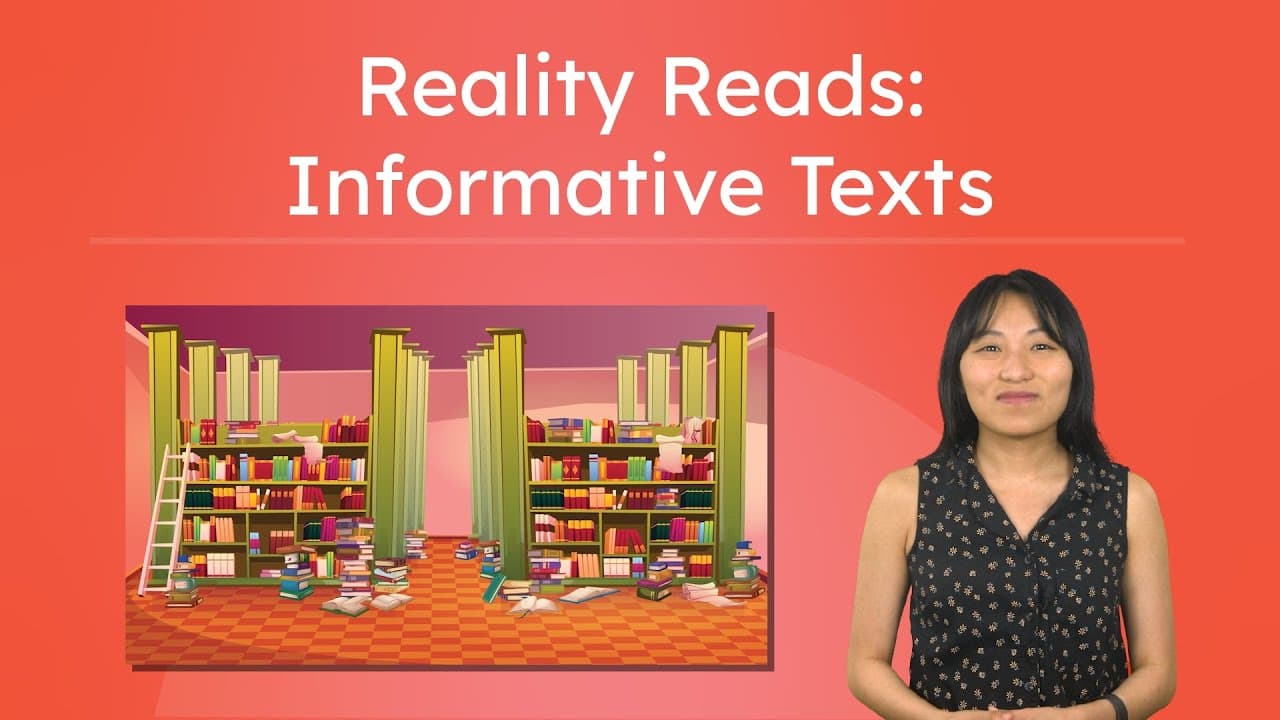
In this engaging Language Arts lesson set in the fictional village of "Informatown," students learn how to analyze and categorize different types of informative non-fiction texts. The video begins by reviewing the general characteristics of informative writing—logical structure, objective central ideas, and precise language—before diving into three specific text structures: Descriptive, Comparative, and Procedural. Through the narrative of organizing a messy library, the host guides viewers in examining three distinct sample texts about Nigerian culture, the Dominican Republic, and Lakota Dreamcatchers. Students learn to identify specific structural clues and transition words that distinguish one text type from another, such as looking for sensory details in descriptive texts, contrasting words in comparative texts, and chronological steps in procedural texts. This video is highly valuable for upper elementary and middle school classrooms as it moves beyond simple reading comprehension to structural analysis. It provides concrete strategies for recognizing how authors organize information to achieve specific purposes. Teachers can use this video to introduce a unit on non-fiction text structures, support lessons on transition words, or as a model for students' own informative writing projects.

Miacademy & MiaPrep Learning ChannelMiacademy & MiaPrep Learning Channel

8mins 48s

Materials

Historia Única Hoja de Trabajo

Historia Única Hoja de Trabajo

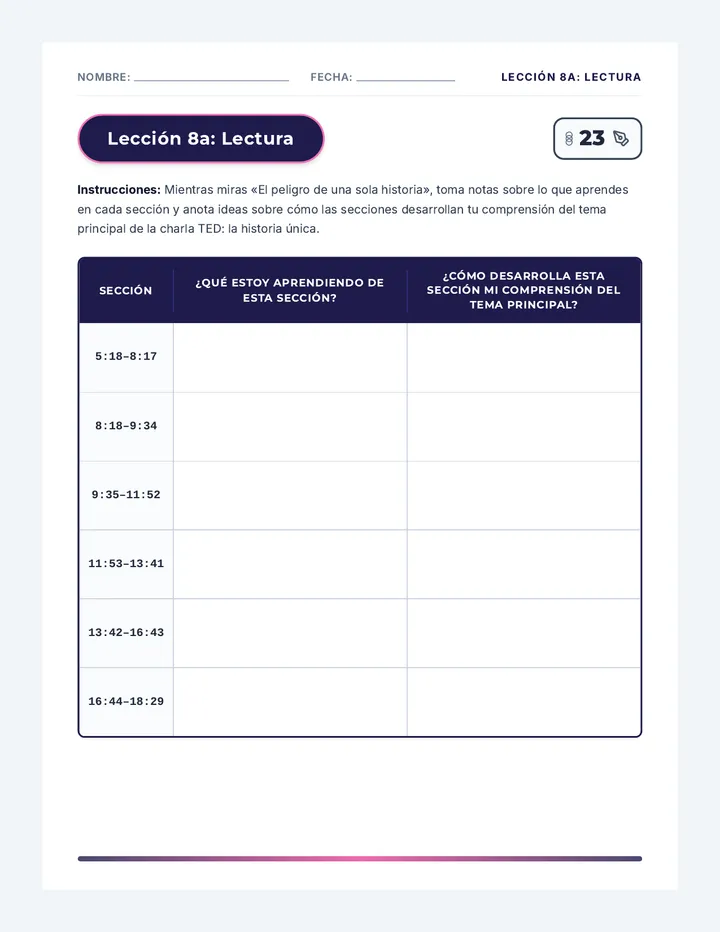
Guía y hoja de trabajo en español para el análisis de la charla TED «El peligro de una sola historia» de Chimamanda Adichie, que incluye una tabla de toma de notas por marcas de tiempo y una consigna de escritura rápida con renglones de respuesta.

N

nlewis

Main Idea Detectives Worksheet

Main Idea Detectives Worksheet

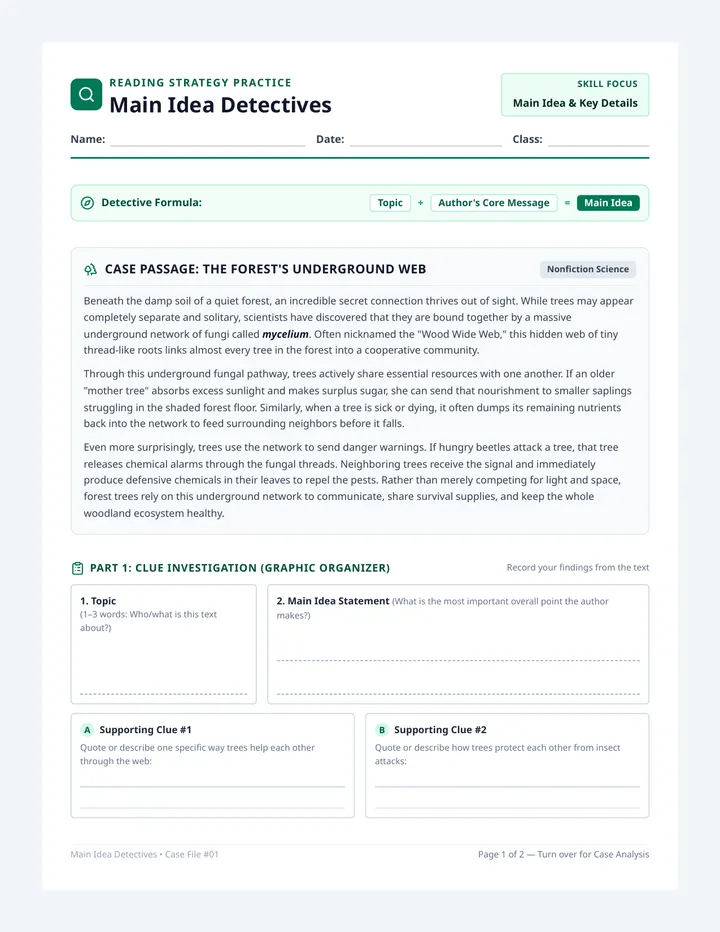
A two-page reading comprehension worksheet focused on identifying main ideas and supporting details. Students read an engaging informational passage about forest fungal networks ('The Wood Wide Web') and complete scaffolded detective-themed graphic organizers, text evidence questions, and written responses.

AM

Amanda McDonnell

Paragraph Puzzle Worksheet

Paragraph Puzzle Worksheet

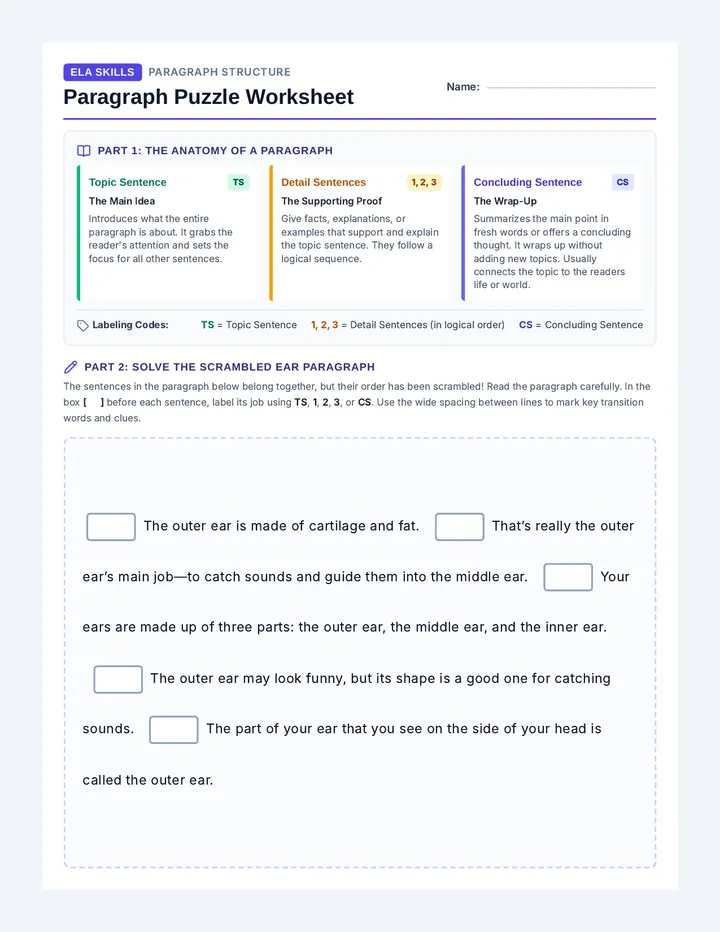
An engaging reading and writing worksheet teaching the roles of topic, detail, and concluding sentences. Students analyze and label a scrambled triple-spaced paragraph about ear anatomy using sentence codes.

LH

Lyndsey Hughes

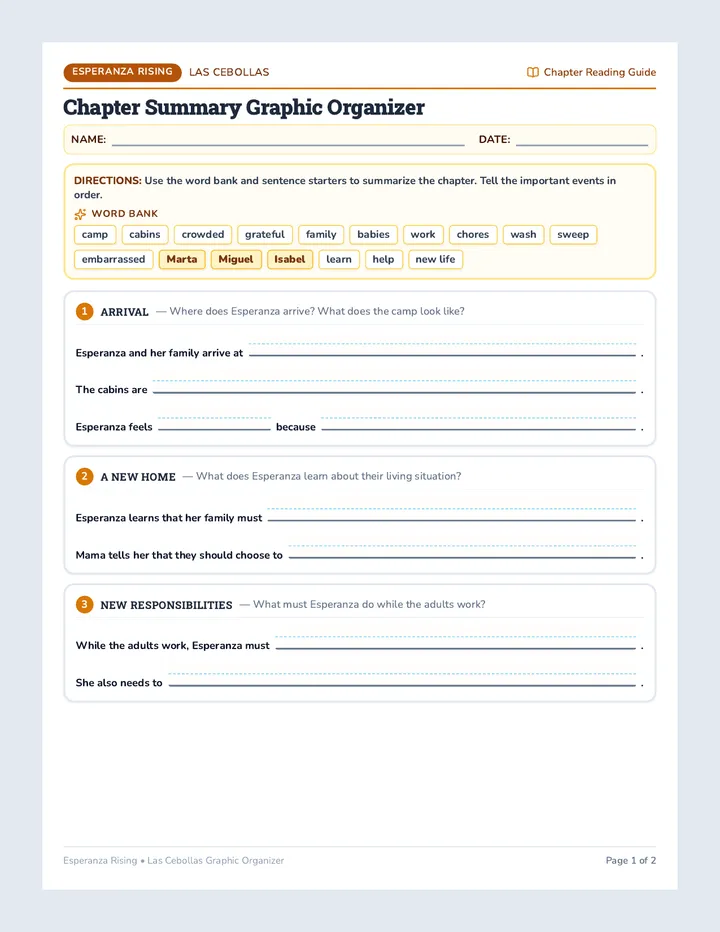
Las Cebollas Summary Organizer

Las Cebollas Summary Organizer

A 2-page print-ready scaffolded chapter summary graphic organizer for *Esperanza Rising: Las Cebollas*, featuring subtle guided handwriting midlines, word bank, Sections 1–6 sentence starters, and a 'Put It All Together' summary section, designed with dignified, grade-neutral language for upper elementary learners needing writing support.

L

lastevens

Text Features Explorer Worksheet

Text Features Explorer Worksheet

A full-page 3rd-grade animal text features worksheet featuring 8 prominent visual picture clues and dedicated answer spaces, with the third column removed to maximize visual clarity and handwriting space.

BA

Becky Arkins

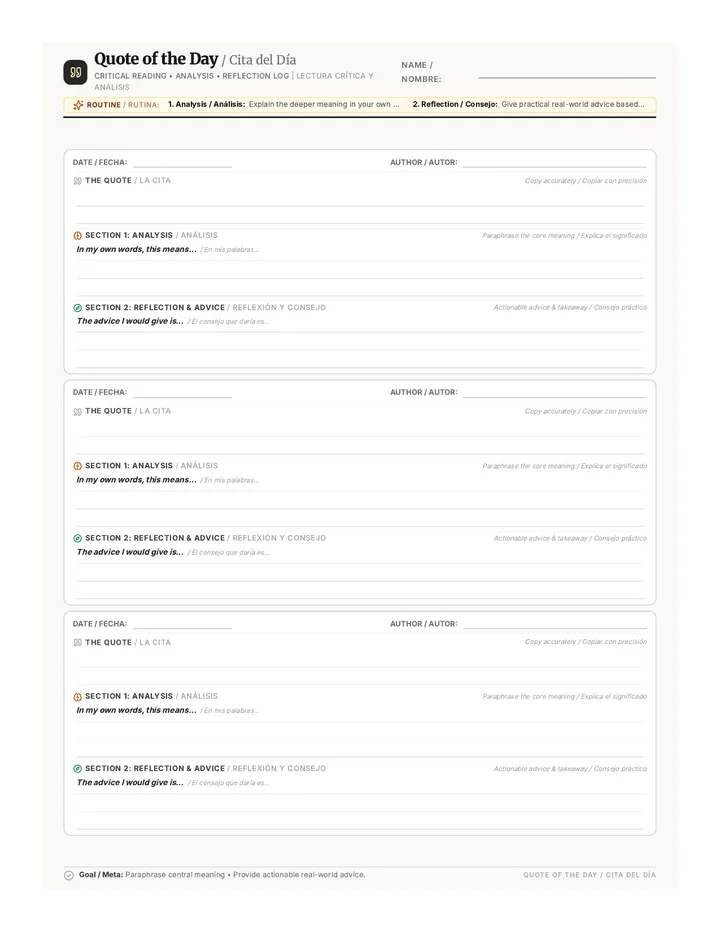
Quote Analysis Log Worksheet

Quote Analysis Log Worksheet

A printable bilingual (English / Spanish) 3-entry quote analysis worksheet featuring separated analysis and reflection sections with expanded 3-line writing spaces and pre-printed sentence starters.

C

Christina

Sequences

Invention Quest Slides

Frindle Frenzy Novel Study

A 9-day novel study for 'Frindle' by Andrew Clements, aligned to 3rd Grade ELAR TEKS, focusing on character development, vocabulary, and plot analysis.

LH

Lucy Hellerman

56
Prophecy and Power Slides

Shadows and Crowns

A series of lessons exploring Shakespeare's Macbeth, specifically designed for 10th-grade emergent bilingual students to master complex characterization and thematic elements.

DC

Dylan Clark

30
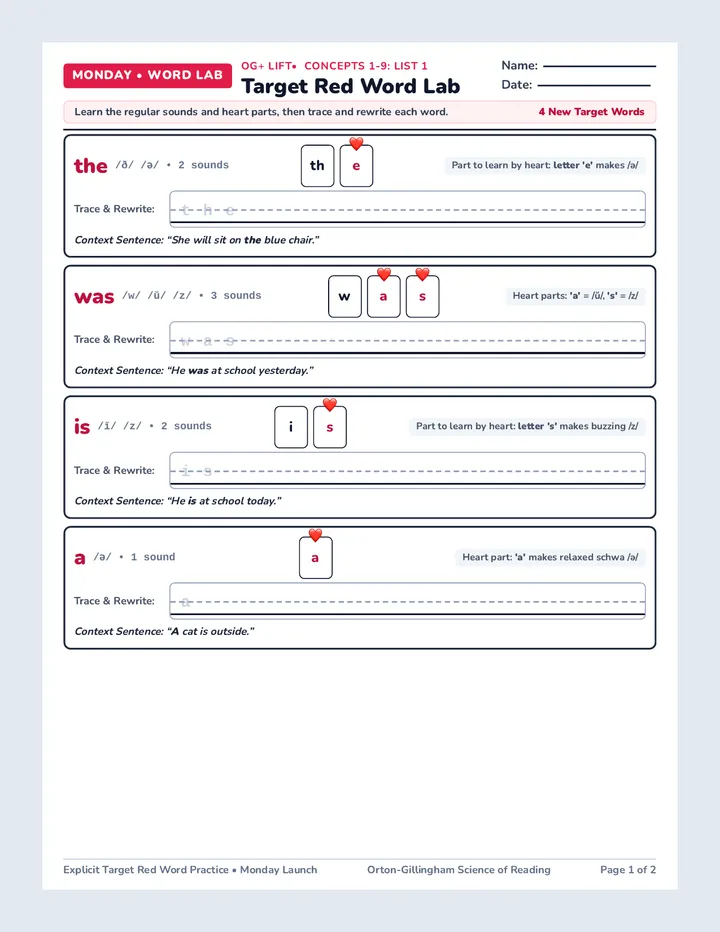
Monday Sentences Worksheet

OG+ LIFT: Red word K-Concepts: Book 1

This comprehensive intervention unit features a weekly scope and sequence targeting high-frequency red words, sound-spelling correspondences, and reading comprehension, directly aligned with Orton-Gillingham Kindergarten Book 1 beginning concepts. Designed for self-contained or intervention settings, it pairs decodable readers and comprehension story mapping with explicit daily paraprofessional guides, fluency routines, scaffolded practice, and weekly assessments.

S

Sara

59
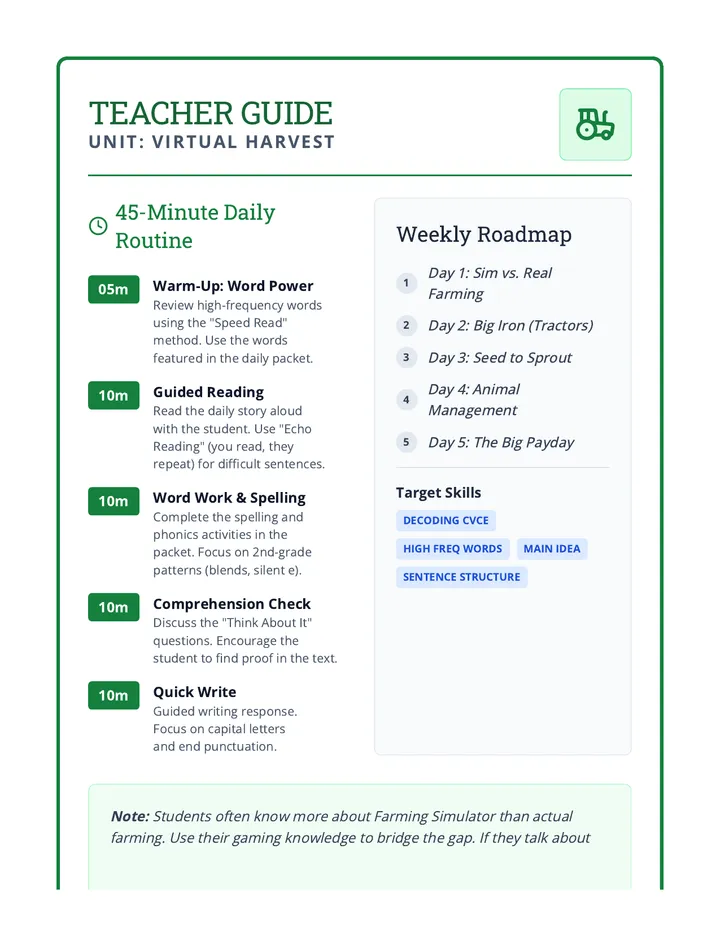
Virtual Harvest Teacher Guide

Digital Dirt

A 5-day reading comprehension and writing unit for struggling readers, blending the world of Farming Simulator with real-world agriculture. Focuses on 2nd-grade level literacy skills within a high-interest 5th-grade context.

CM

carley Martin

30
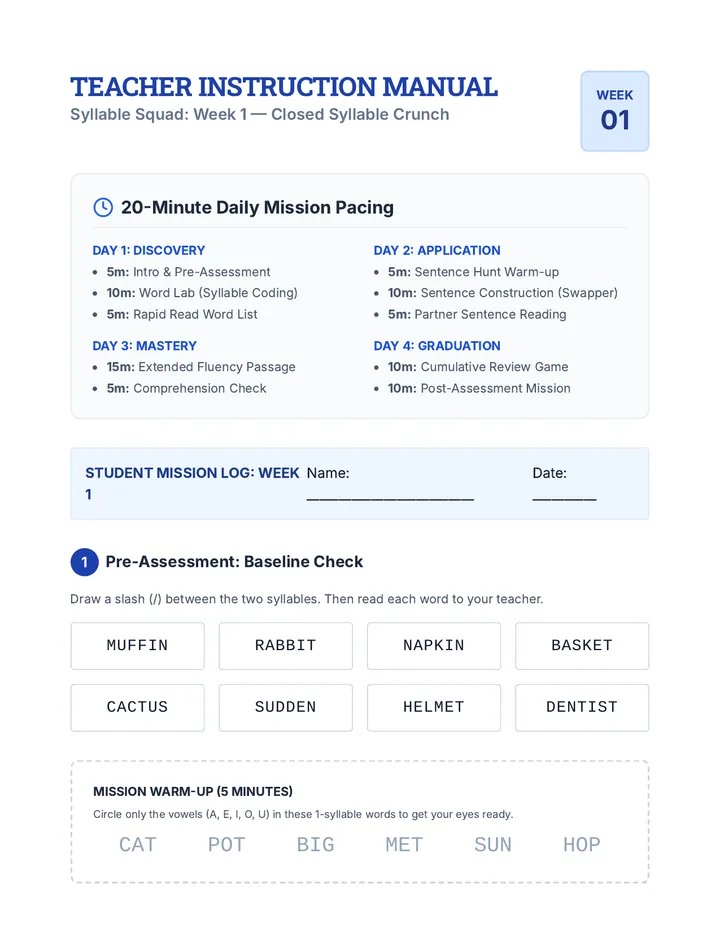
Week 1 Closed Syllable Manual

Syllable Squad Decoding Mission

A comprehensive 5-week phonics intervention focused on decoding two-syllable words across five major syllable types. Each week includes a pre-assessment, daily lessons with specific targets, student practice sheets, and a post-assessment.

KJ

Kelsey Jacobs

29
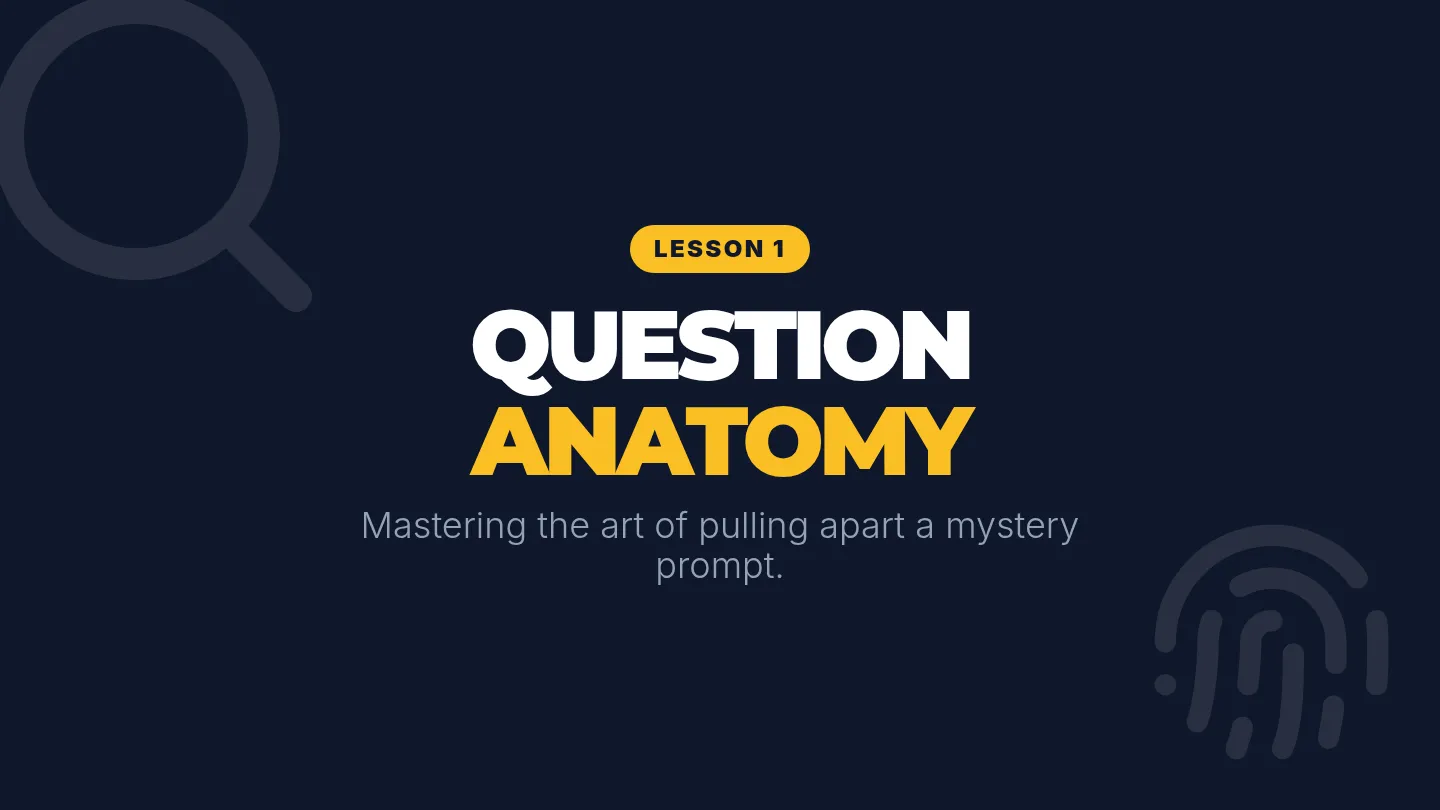
Question Anatomy Slides

Insight Investigators

A 6-week reading intervention unit for 5th graders focused on making inferences, analyzing questions, and using text evidence. Themes include mysteries, sports (baseball and basketball), and dragons to engage high-interest readers.

MK

Meg Keene

48