Lenny.com
Explore
Create
ActivitiesNewMathEnglish Language ArtsScience & EngineeringSocial StudiesGlobal LanguagesHealth & Physical EducationSpecial EducationCounseling & Life SkillsArts & CreativityESL
Lenny.com
Lenny.com
Explore
Create
ActivitiesNewMathEnglish Language ArtsScience & EngineeringSocial StudiesGlobal LanguagesHealth & Physical EducationSpecial EducationCounseling & Life SkillsArts & CreativityESL
Lenny.com
Lenny.com

Solutions

Lenny for EducatorsLenny for SchoolsLenny for Districts

Product

ExploreSign inCreateSupportAbout

Resources

Getting startedMTSS Acceleration Program

© 2026 Lenny Learning Inc.

TermsPrivacyAccessibility
LinkedInInstagramX
Lenny

Verb Tense

Past, present, and future verb forms including regular and irregular conjugations. Builds consistency in writing through tense shift correction and subject-verb agreement practice.

English Language ArtsPhonics & Reading FoundationsLetter IdentificationLearn Letters A-ZLowercase and Uppercase LettersConsonants and VowelsLetter-Sound AssociationsLetter-Sound Associations: LowercaseLetter-Sound Associations: UppercaseBeginning and Ending SoundsRhymingBlending And SegmentingShort VowelsShort Vowel SoundsConsonant BlendsConsonant DigraphsBlends, Digraphs, and TrigraphsDigraphs, Blends, and Silent LettersLong Vowel SoundsLong Vowel PatternsShort and Long VowelsShort and Long Vowel PatternsSilent EVowel SoundsVowel TeamsR-Controlled VowelsDiphthongs: Oi, Oy, Ou, OwVariant VowelsVariant, Diphthong, And R Vowel PatternsSoft G And CSight WordsIrregular WordsWord RecognitionSyllablesSyllable TypesTwo-Syllable WordsMultisyllabic WordsPhoneme ManipulationDecodable TextsVocabularyAction WordsQuestion WordsNouns and AdjectivesClassify WordsCompound WordsSynonyms and AntonymsHomophonesHomophones and HomonymsShades of MeaningContext CluesPrefixes and SuffixesGreek and Latin RootsAnalogiesIdioms and AdagesForeign Words and ExpressionsWord Choice and UsageReference SkillsReading ComprehensionRead-Along Literary TextsRead-Along Informational TextsReality vs. FictionStory ElementsCharacterSequenceMain IdeaCause And EffectCompare And ContrastReading StrategiesText StructureAuthor's PurposeAuthor's Purpose And ToneAuthor's PerspectivePoint Of ViewThemeInference And ThemeInference And AnalysisPoetry ElementsLiterary DevicesAnalyzing LiteratureAnalyzing Informational TextsComparing TextsAudience, Purpose, And ToneBusiness DocumentsNovel StudyNonfiction Book StudyGrammar & MechanicsSentencesNounsVerbsAdjectivesPronounsCapitalizationPunctuationContractionsConjunctionsPrepositionsArticlesAdjectives And AdverbsVerb TypesVerb TensePronouns And AntecedentsPronoun TypesSubject-Verb AgreementDirect And Indirect ObjectsSentences, Fragments, And Run-OnsPhrases And ClausesCommasSemicolons, Colons, And CommasDashes, Hyphens, And EllipsesSpellingAbbreviationsFormattingVerb Tense And MoodMisplaced ModifiersWritingDescriptive DetailsCreative WritingOpinion WritingTopic SentencesOrganizing WritingLinking WordsSentence VarietyIntroductions And ConclusionsPersuasive And Opinion WritingExpository WritingPersuasive StrategiesDeveloping And Supporting ArgumentsTopic Sentences And Thesis StatementsSummarizingResearch SkillsEditing And RevisingActive And Passive Voice=Writing Clearly And ConciselyDebate & Public SpeakingPublic Speaking BasicsPersuasive TechniquesClaims and EvidenceTypes of ArgumentsReasoning TypesLogical FallaciesTopic ResearchOrganizing EvidenceDebate Speech OrganizationAttacking and Defending ArgumentsClash and EngagementImpact CalculusQuestioning and Cross-ExaminationCritical ThinkingInformal LogicFormal LogicInductive Reasoning

Videos

Understanding the Simple Verb Aspect

Understanding the Simple Verb Aspect

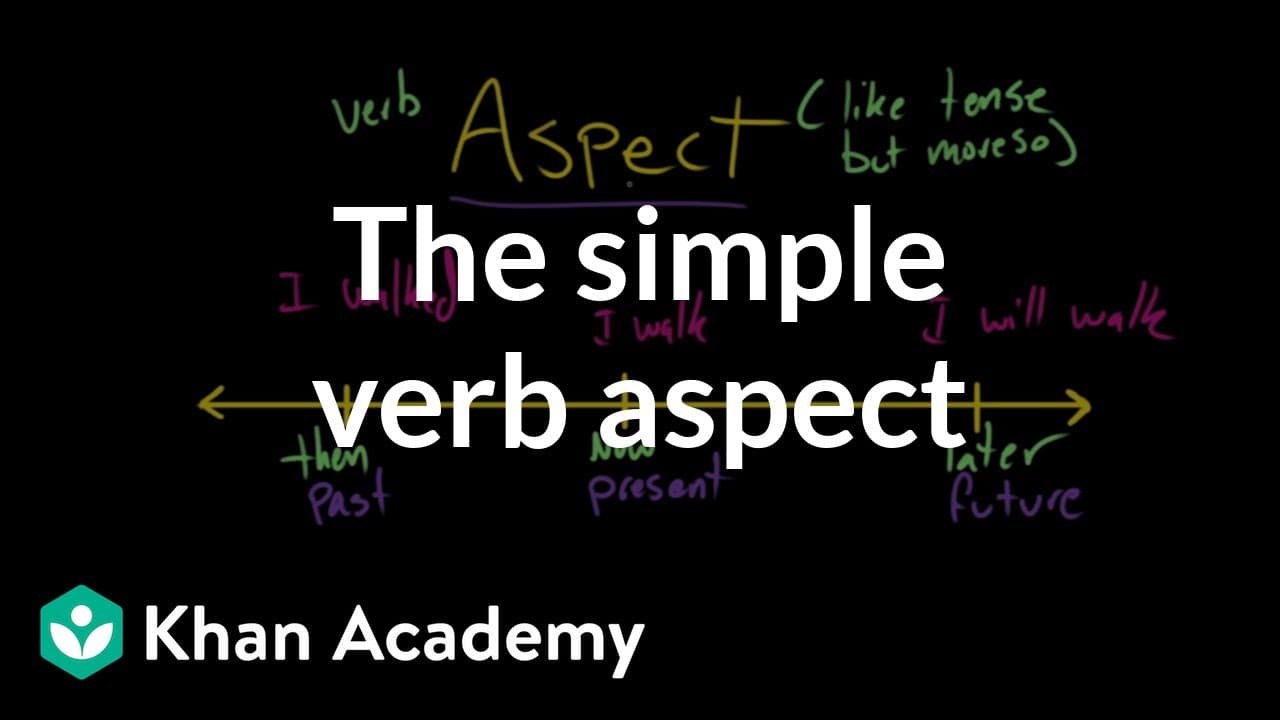
This educational video from Khan Academy explores the concept of the "Simple Aspect" in English grammar. The narrator, David, breaks down the often-confusing term "aspect" by defining it as a way to situate verbs more precisely in time—described metaphorically as "tenses for tenses." Using a visual timeline, the video demonstrates that the simple aspect is essentially the "bare tense" of a verb, devoid of complex helper verbs that might indicate whether an action is ongoing or completed. The video focuses on three primary examples plotted on a timeline: the past ("I walked"), the present ("I walk"), and the future ("I will walk"). Key themes include distinguishing between tense and aspect, recognizing verb conjugations, and identifying helper verbs (or the lack thereof). The content emphasizes that the simple aspect is the most basic form of expression required to convey an idea in a specific timeframe. For educators, this video serves as an excellent tool for demystifying abstract grammatical terminology. It moves beyond simple rote memorization of tenses to help students understand the *function* of verb forms. The visual timeline provides a concrete scaffolding for visual learners to grasp abstract temporal concepts. It is particularly useful for bridging the gap between elementary grammar (identifying verbs) and middle school grammar (analyzing verb structures and nuancing writing).

Khan AcademyKhan Academy

1min 32s

How to Use the Progressive Verb Aspect

How to Use the Progressive Verb Aspect

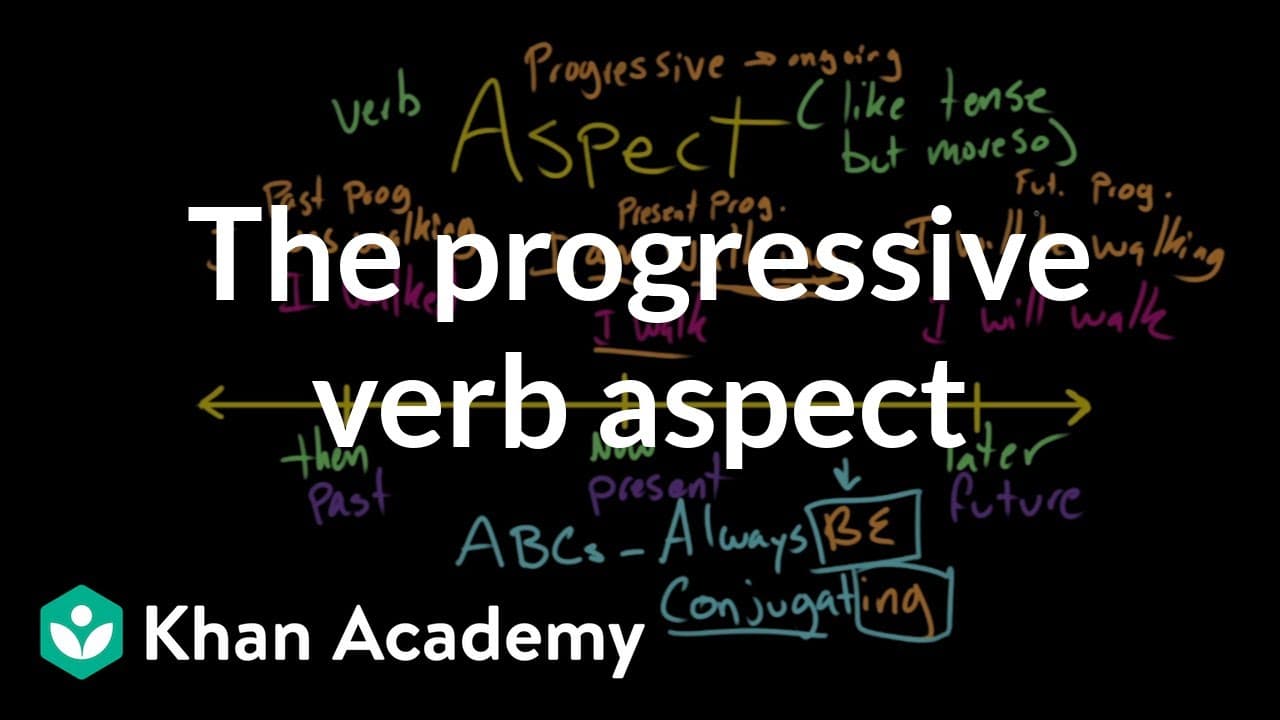
This video provides a clear and visual explanation of the progressive aspect in English grammar, often referred to as continuous tenses. The narrator distinguishes the progressive aspect from the simple aspect by using a timeline to demonstrate that progressive verbs describe actions that are "ongoing" or happening continuously within a specific moment. The lesson covers how to conjugate verbs into the present progressive ("I am walking"), past progressive ("I was walking"), and future progressive ("I will be walking"). Key grammatical themes include the structure of verb phrases using the auxiliary verb "to be" combined with a main verb ending in "-ing." The video emphasizes that while the main verb form remains constant (e.g., "walking"), the helping verb changes to reflect the time of the action. A mnemonic device—"Always Be Conjugating" (ABC)—is introduced to help students remember the necessity of the "be" verb and the "-ing" ending. For educators, this resource is an excellent tool for visualizing abstract grammar concepts. The use of a color-coded timeline helps students spatially understand the difference between a completed action and an ongoing one. It effectively demystifies the technical term "aspect" by connecting it to the familiar concept of "tense," making it a practical addition to lessons on verb forms, narrative writing, and sentence structure.

Khan AcademyKhan Academy

2mins 45s

Exploring the Truly Irregular Verbs in English

Exploring the Truly Irregular Verbs in English

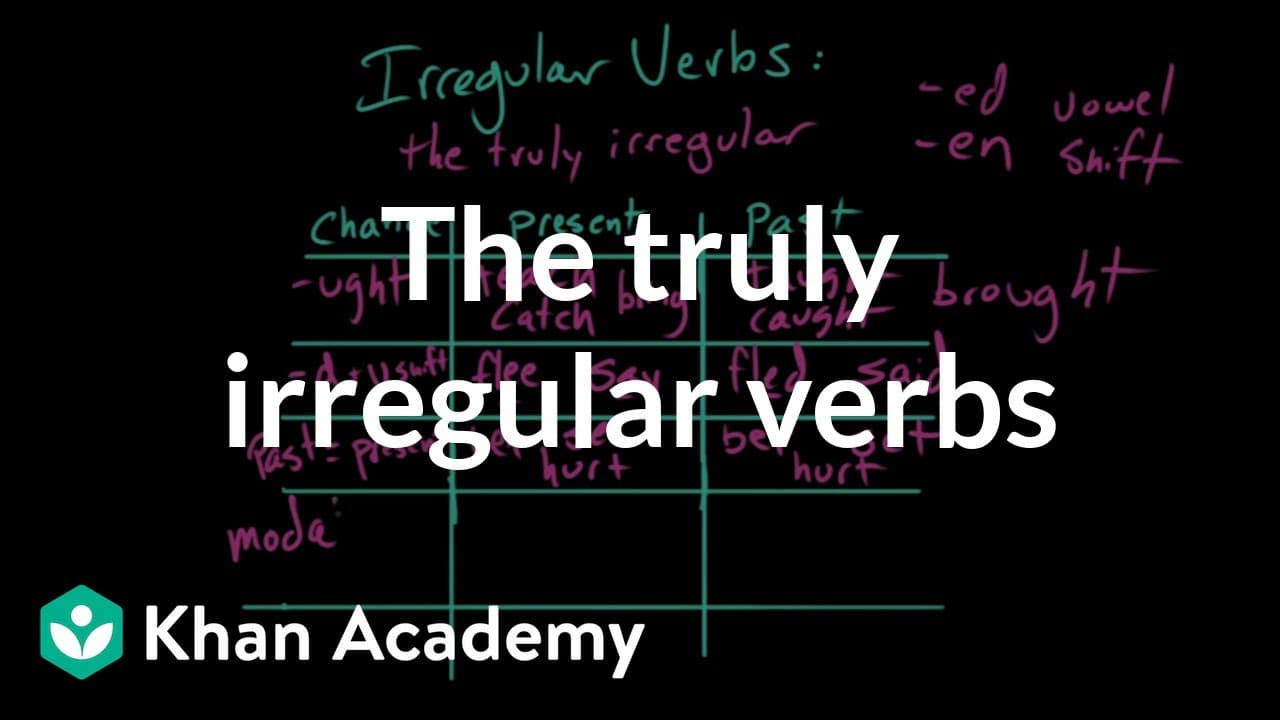
This educational video dives deep into the most unusual and unpredictable irregular verbs in the English language—verbs that don't follow even the standard patterns of irregularity. The narrator, David, categorizes these "truly irregular" verbs into four distinct groups: those ending in "-ught," those with a vowel shift plus a "d" sound, verbs that do not change at all between present and past tense, and the unique modal auxiliary verbs. The video systematically breaks down confusing verb transformations like "teach" to "taught" and "flee" to "fled," while clarifying the pronunciation quirks of words like "said." It also highlights a fascinating group of verbs where "time does not exist" (like "bet" and "hurt"), and explains the silent "l" found in modal verbs like "could," "should," and "would." For educators, this resource is an excellent tool for tackling the rote memorization required for these specific verbs. It provides a logical framework for grouping otherwise random words, making them easier for students to recall. The humorous and encouraging tone helps demystify complex grammar rules, making it perfect for upper elementary students mastering past tense or English Language Learners refining their mechanics.

Khan AcademyKhan Academy

2mins 53s

How to Form the Future Tense

How to Form the Future Tense

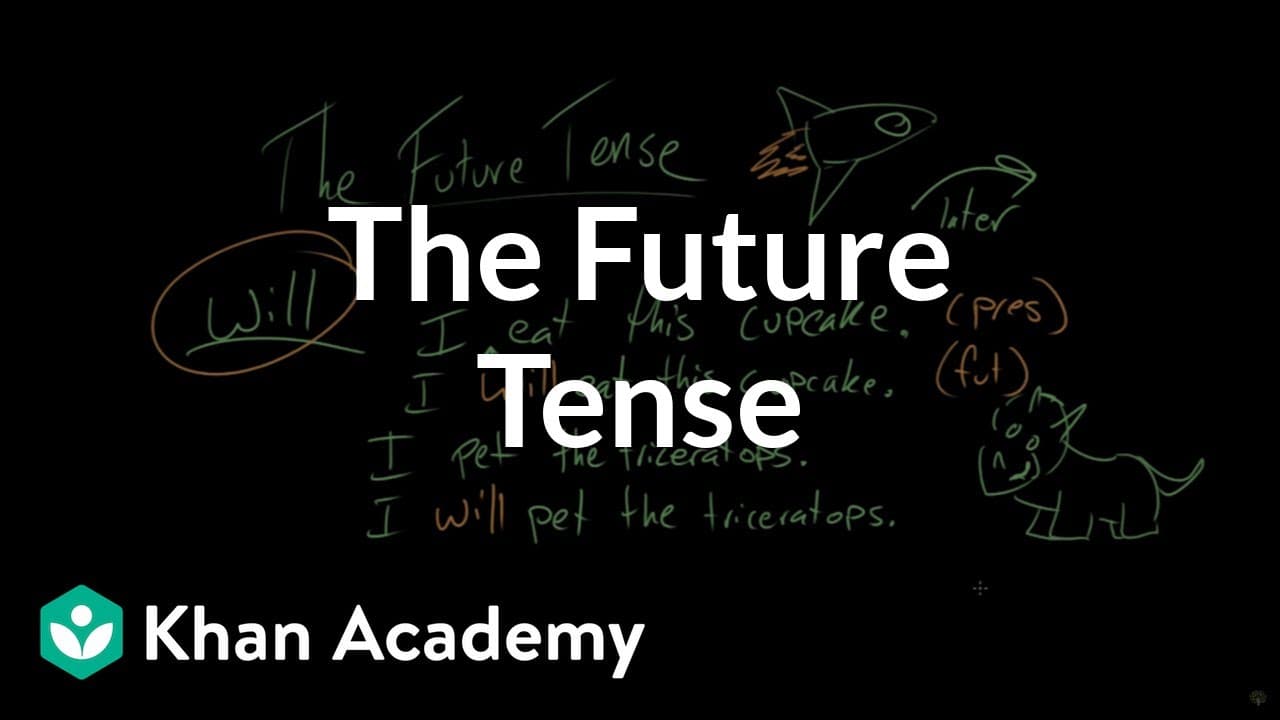
In this engaging grammar tutorial, David introduces students to the future tense, focusing specifically on how to use the auxiliary verb "will." The video uses a blackboard-style animation to visually demonstrate how sentences change from the present tense to the future tense. Through humorous examples involving cupcakes and triceratops, the narrator simplifies the concept of time in language, distinguishing between what happens now versus what happens later.

Khan AcademyKhan Academy

2mins 50s

How to Form and Use the Perfect Progressive Aspect

How to Form and Use the Perfect Progressive Aspect

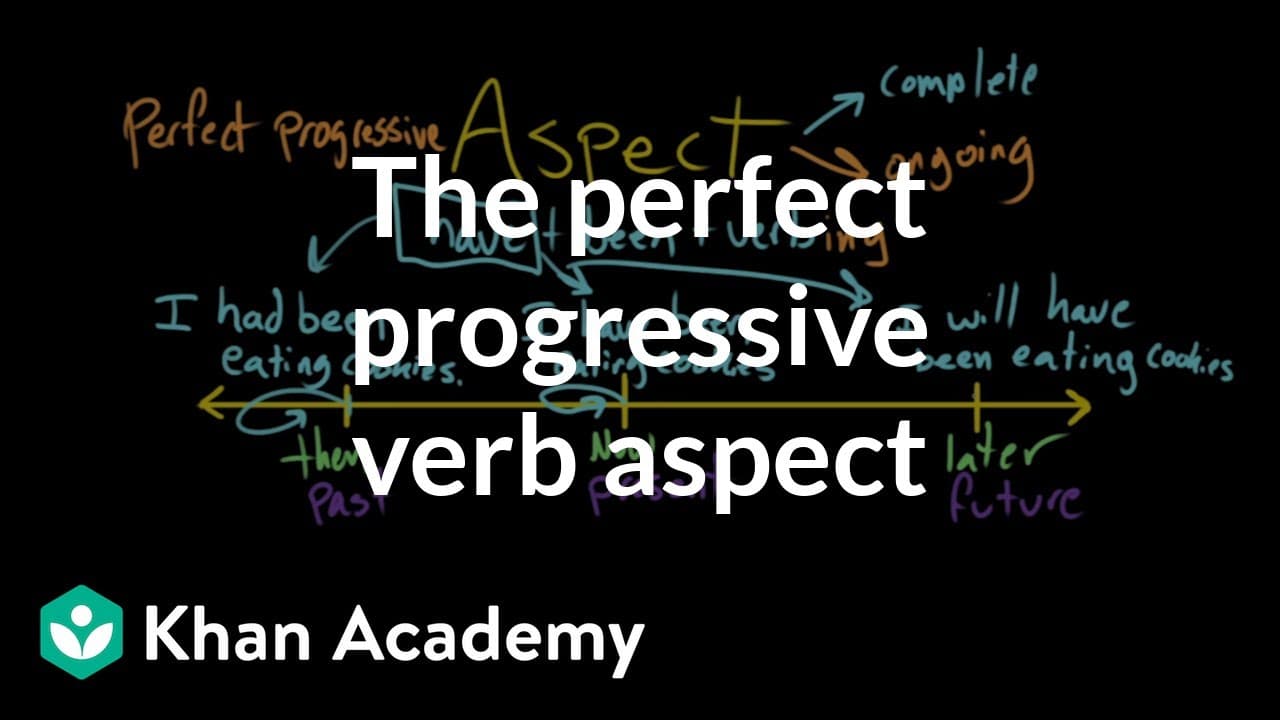
This educational video provides a clear and concise explanation of the Perfect Progressive aspect in English grammar. The narrator, David, builds upon previous knowledge of the simple, perfect, and progressive aspects to explain how this fourth aspect functions as a combination of the latter two. He defines the specific utility of this aspect—expressing actions that have been ongoing for a duration or were ongoing until a certain point—and visually demonstrates its placement on a timeline. The video breaks down the grammatical formula for constructing the perfect progressive: using the auxiliary verb "to have" (which changes based on tense), combined with "been," and followed by the main verb with an "-ing" ending. Through specific examples set in the past, present, and future tenses, the video illustrates how the structure shifts slightly while maintaining the core meaning of continuous action over time. For educators, this resource serves as an excellent tool for demystifying complex verb structures. The use of a visual timeline helps students conceptualize abstract temporal relationships, while the humorous example of "eating cookies" makes the repetitive drill of verb conjugation more engaging. It is particularly useful for visual learners who struggle to understand when to apply complex verb phrases versus simple tenses.

Khan AcademyKhan Academy

2mins 11s

Matching Subjects and Verbs Correctly

Matching Subjects and Verbs Correctly

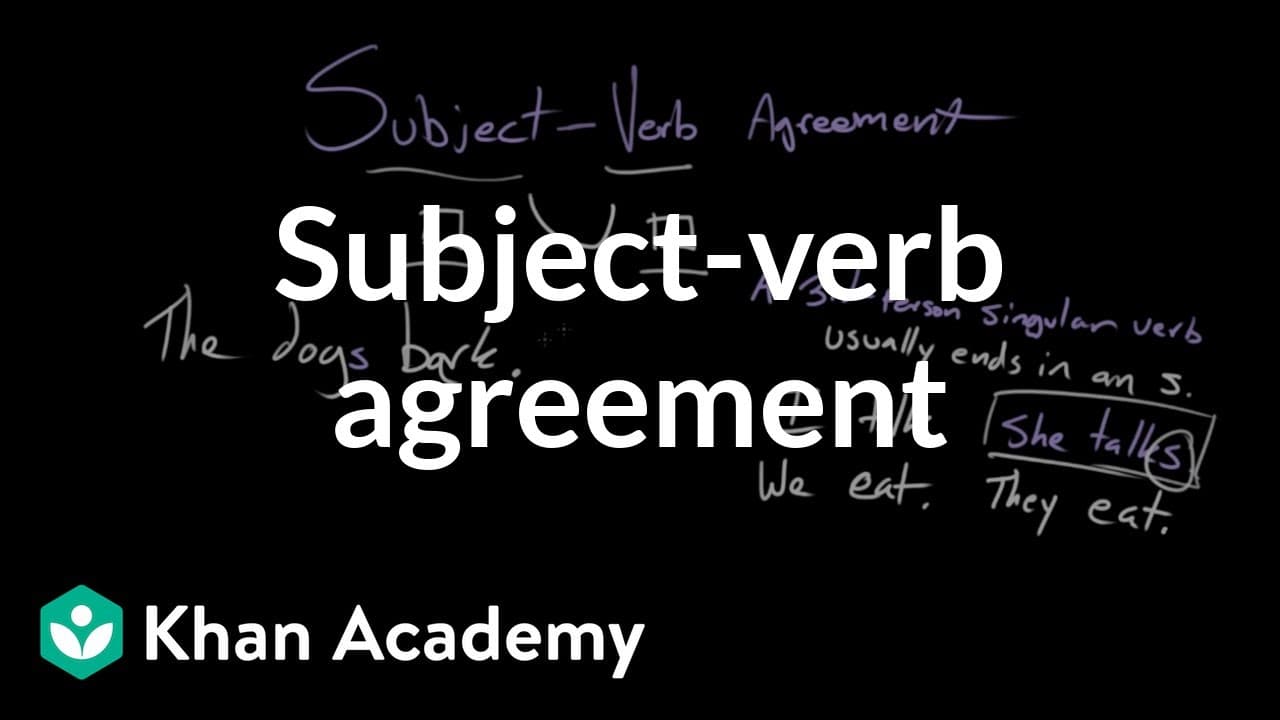
This educational video provides a clear and accessible explanation of subject-verb agreement, a fundamental concept in English grammar. The narrator uses the analogy of a "square peg in a square hole" to illustrate the necessity of matching sentence parts correctly. The video breaks down the differences between singular and plural subjects and how they dictate the form of the verb, specifically highlighting the counter-intuitive rule that while plural nouns often end in "s," third-person singular verbs also end in "s." The video explores key grammatical themes including conjugation, singular versus plural forms, and the specific rules governing third-person singular verbs. It directly addresses the common confusion students face regarding why an "s" is added to verbs for singular subjects (e.g., "The dog barks") but removed for plural subjects (e.g., "The dogs bark"). Additionally, the video touches upon indefinite pronouns like "anyone," explaining why they are treated as singular subjects despite implying a group context. For educators, this video serves as an excellent tool for introducing or reinforcing grammar rules in upper elementary and middle school classrooms. The step-by-step strategy provided—finding the subject, determining if it is singular or plural, and checking for the "s"—gives students a practical method for self-editing. The visual use of a blackboard with clear color-coded text helps visual learners grasp the patterns of agreement, making it a valuable resource for writing workshops and grammar mini-lessons.
Khan AcademyKhan Academy

4mins 53s

Materials

Verb Voyagers Anchor Chart Revised

Verb Voyagers Anchor Chart Revised

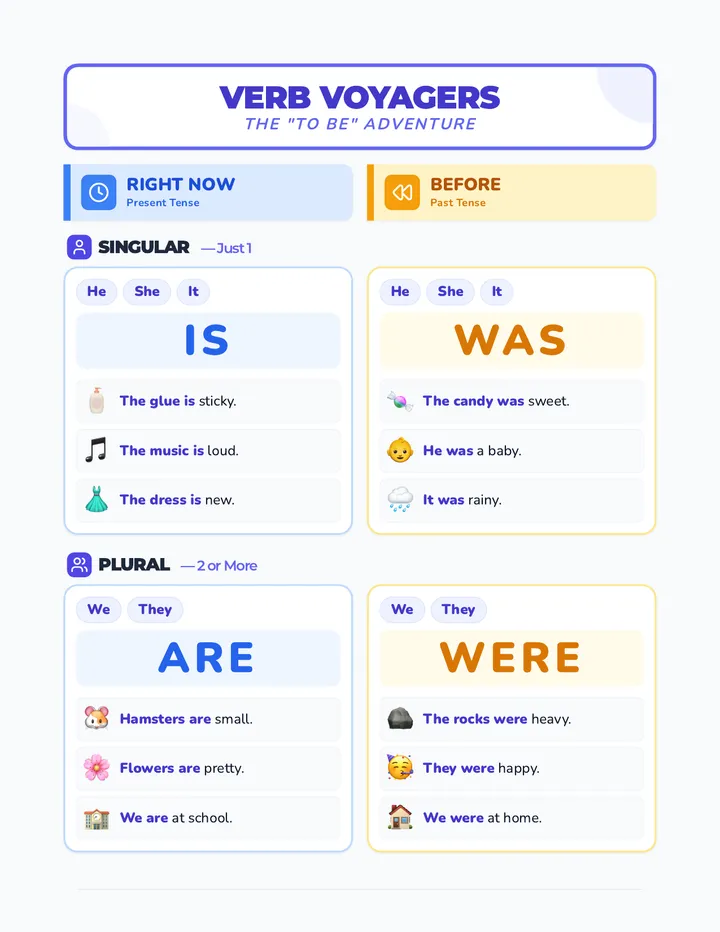
A condensed version of the Verb Voyagers anchor chart, removing student information sections and adjusting spacing and font sizes to ensure it fits perfectly on a single printable page.

T

tdunbar

Outlandish Editors CUPS Worksheet

Outlandish Editors CUPS Worksheet

A 2-page late 4th-grade editing worksheet featuring two outlandish, humorous stories with custom illustrations, line-numbered passages packed with targeted errors, and built-in CUPS self-checking checklists.

L

lwalker

Sentence Repair Ledger

Sentence Repair Ledger

A comprehensive, classroom-ready Teacher Guide Checklist featuring 100 targeted fix-it sentences for struggling fourth-grade students, categorized by error types (capitalization, punctuation, spelling, and verb tense) with complete correction keys and checkboxes for progress tracking.

SM

Shannon Mueller

Poetic Parleys Checklist Handout

Poetic Parleys Checklist Handout

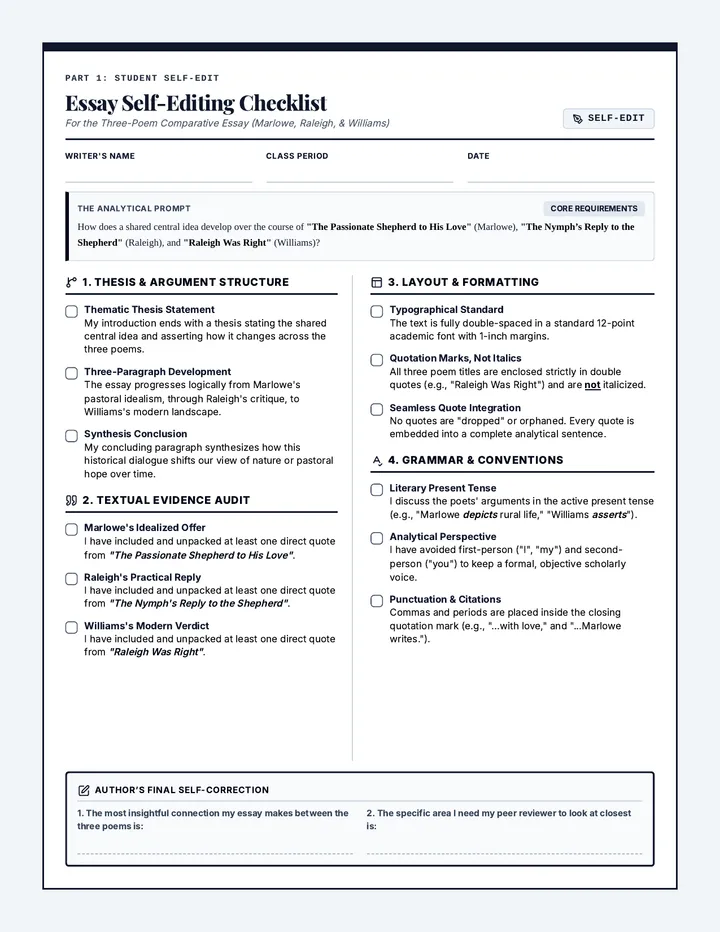
A double-sided printable editing checklist handout optimized for black-and-white printing. Page 1 provides a student self-editing checklist with highly readable checklist items and direct, functional section headers. Page 2 provides a matching peer-editing review sheet with an audit map and constructive feedback spaces. Both pages feature a clean, high-contrast, professional monochrome layout.

F

fgraham

Word Builder Flashcards

Word Builder Flashcards

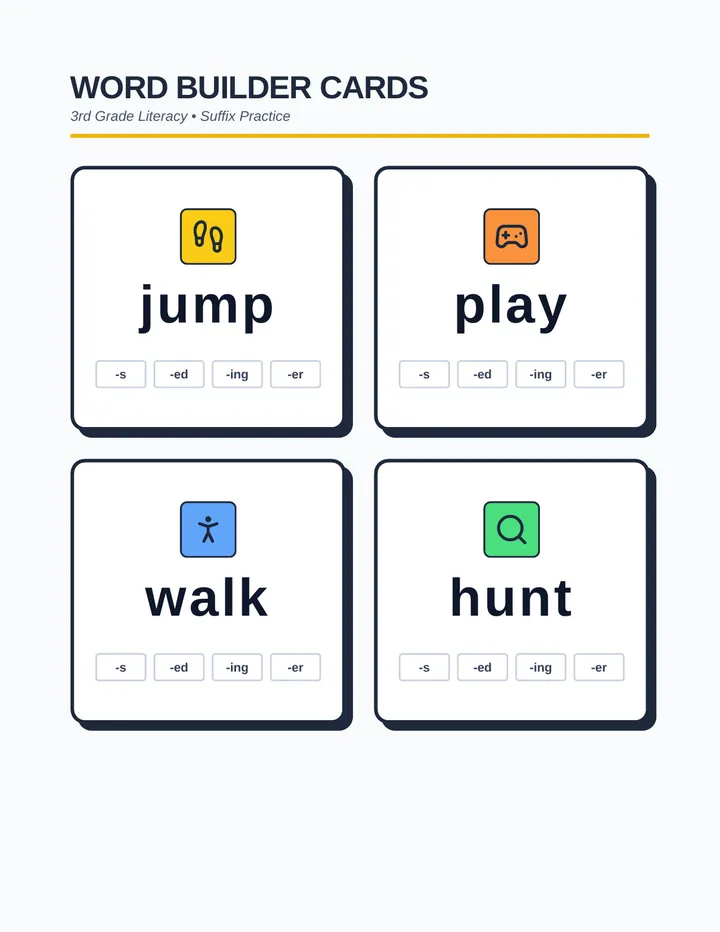
A set of 10 root word flashcards for 3rd grade, featuring words compatible with -ed, -er, -ing, and -s suffixes. Includes 8 printable suffix tiles for interactive word building and visual cues for each root word.

J

Jennifer.Thomas

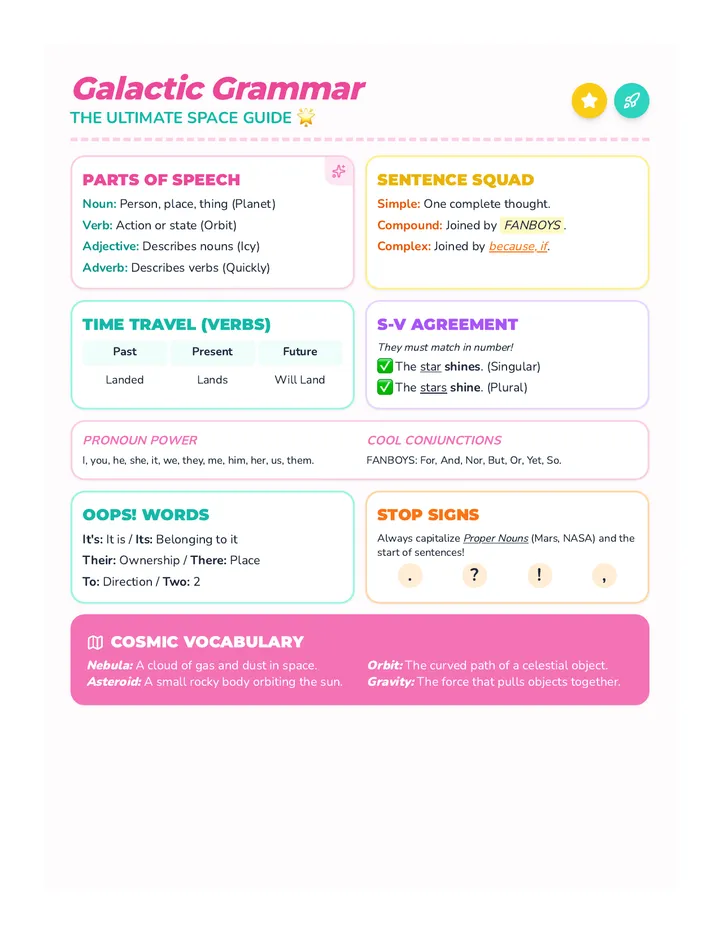
Galactic Grammar Packet

Galactic Grammar Packet

A two-page 5th-grade grammar packet featuring a 'Galactic Grammar' reference guide and a 'Mission Control' practice worksheet. The material uses a bright, preppy aesthetic with space-themed vocabulary and comprehensive coverage of parts of speech, sentence structure, and punctuation.

MA

Madelyne Ashbaugh

Sequences

Prophecy and Power Slides

Shadows and Crowns

A series of lessons exploring Shakespeare's Macbeth, specifically designed for 10th-grade emergent bilingual students to master complex characterization and thematic elements.

DC

Dylan Clark

30
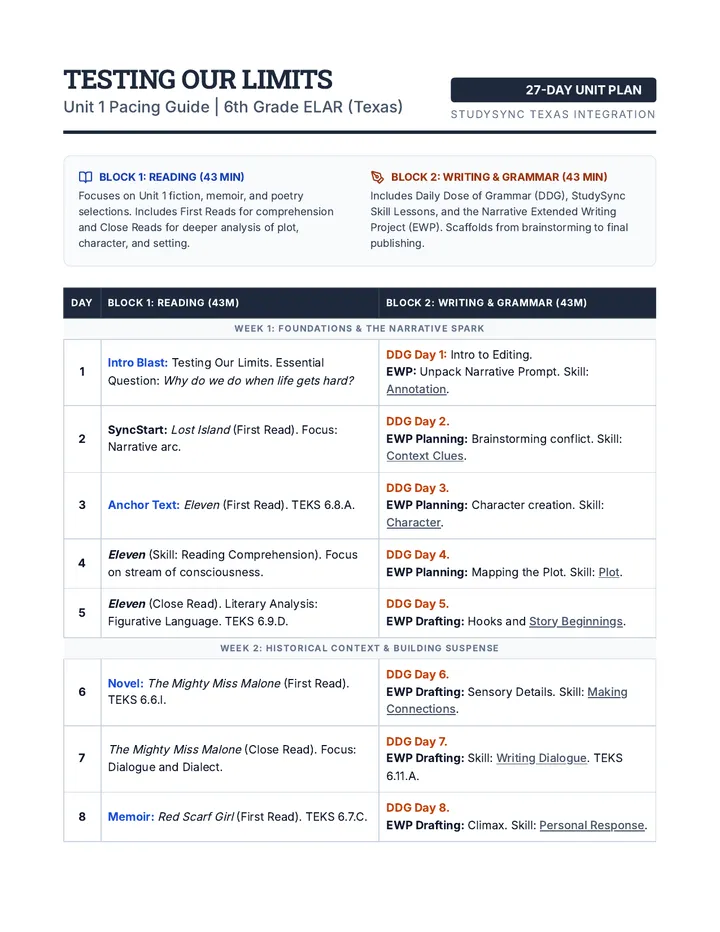
Unit 1 Pacing Guide Document

Testing Our Limits Unit Sequence

A 27-day instructional sequence for 6th Grade ELAR Unit 1: Testing Our Limits, featuring dual blocks for Reading and Writing with daily grammar and skill scaffolding.

DM

Dawn Mustian

81
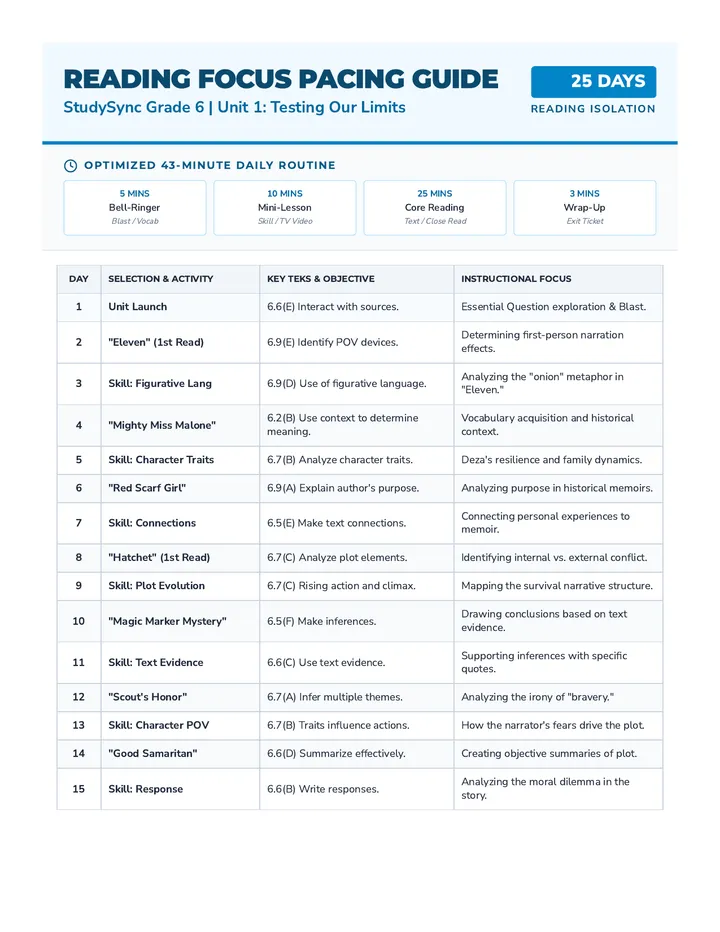
Reading Focus Pacing Guide

Testing Our Limits Unit

A 25-day comprehensive unit for StudySync Grade 6 that explores the theme of courage and resilience through isolated reading and writing tracks, aligned to ELA TEKS.

DM

Dawn Mustian

79
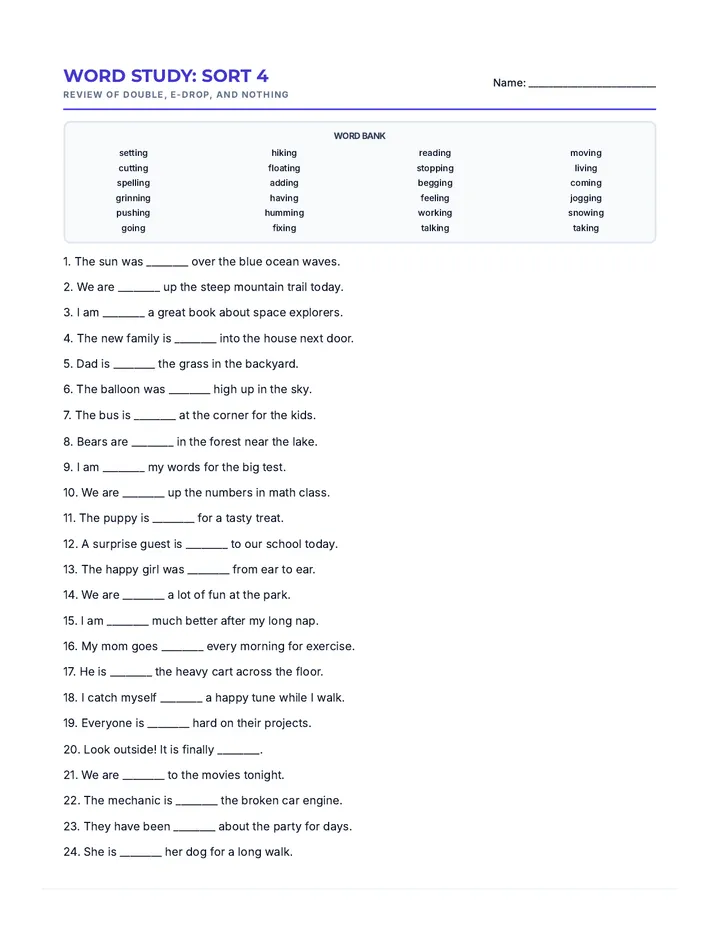
Inflections and Past Tense Worksheets 2 v2

Word Study Master Collection

A comprehensive collection of 56 word study sorts for 4th-grade students, covering everything from basic vowel patterns and inflected endings to advanced syllable junctures, prefixes, and suffixes.

N

nmack

15
Life Legacy Organizer

Curators Quest

A collection of 5th-grade ELA and Grammar resources focusing on biographical research, summary writing, and language mastery.

CO

Catherine Onessimo

30
Grammar Quest Log Worksheet

EOC Geography Review

A 10-day review series that integrates English 1 EOC revising and editing skills with World Geography core content, designed for daily warm-ups.

PR

Penne Reed

3