Lenny.com
Explore
Create
ActivitiesNewMathEnglish Language ArtsScience & EngineeringSocial StudiesGlobal LanguagesHealth & Physical EducationSpecial EducationCounseling & Life SkillsArts & CreativityESL
Lenny.com
Lenny.com
Explore
Create
ActivitiesNewMathEnglish Language ArtsScience & EngineeringSocial StudiesGlobal LanguagesHealth & Physical EducationSpecial EducationCounseling & Life SkillsArts & CreativityESL
Lenny.com
Lenny.com

Solutions

Lenny for EducatorsLenny for SchoolsLenny for Districts

Product

ExploreSign inCreateSupportAbout

Resources

Getting startedMTSS Acceleration Program

© 2026 Lenny Learning Inc.

TermsPrivacyAccessibility
LinkedInInstagramX
Lenny

Capitalization

Proper nouns, sentence beginnings, and standard conventions for formal writing. Targets specific categories including titles, geographical locations, and dates.

English Language ArtsPhonics & Reading FoundationsLetter IdentificationLearn Letters A-ZLowercase and Uppercase LettersConsonants and VowelsLetter-Sound AssociationsLetter-Sound Associations: LowercaseLetter-Sound Associations: UppercaseBeginning and Ending SoundsRhymingBlending And SegmentingShort VowelsShort Vowel SoundsConsonant BlendsConsonant DigraphsBlends, Digraphs, and TrigraphsDigraphs, Blends, and Silent LettersLong Vowel SoundsLong Vowel PatternsShort and Long VowelsShort and Long Vowel PatternsSilent EVowel SoundsVowel TeamsR-Controlled VowelsDiphthongs: Oi, Oy, Ou, OwVariant VowelsVariant, Diphthong, And R Vowel PatternsSoft G And CSight WordsIrregular WordsWord RecognitionSyllablesSyllable TypesTwo-Syllable WordsMultisyllabic WordsPhoneme ManipulationDecodable TextsVocabularyAction WordsQuestion WordsNouns and AdjectivesClassify WordsCompound WordsSynonyms and AntonymsHomophonesHomophones and HomonymsShades of MeaningContext CluesPrefixes and SuffixesGreek and Latin RootsAnalogiesIdioms and AdagesForeign Words and ExpressionsWord Choice and UsageReference SkillsReading ComprehensionRead-Along Literary TextsRead-Along Informational TextsReality vs. FictionStory ElementsCharacterSequenceMain IdeaCause And EffectCompare And ContrastReading StrategiesText StructureAuthor's PurposeAuthor's Purpose And ToneAuthor's PerspectivePoint Of ViewThemeInference And ThemeInference And AnalysisPoetry ElementsLiterary DevicesAnalyzing LiteratureAnalyzing Informational TextsComparing TextsAudience, Purpose, And ToneBusiness DocumentsNovel StudyNonfiction Book StudyGrammar & MechanicsSentencesNounsVerbsAdjectivesPronounsCapitalizationPunctuationContractionsConjunctionsPrepositionsArticlesAdjectives And AdverbsVerb TypesVerb TensePronouns And AntecedentsPronoun TypesSubject-Verb AgreementDirect And Indirect ObjectsSentences, Fragments, And Run-OnsPhrases And ClausesCommasSemicolons, Colons, And CommasDashes, Hyphens, And EllipsesSpellingAbbreviationsFormattingVerb Tense And MoodMisplaced ModifiersWritingDescriptive DetailsCreative WritingOpinion WritingTopic SentencesOrganizing WritingLinking WordsSentence VarietyIntroductions And ConclusionsPersuasive And Opinion WritingExpository WritingPersuasive StrategiesDeveloping And Supporting ArgumentsTopic Sentences And Thesis StatementsSummarizingResearch SkillsEditing And RevisingActive And Passive Voice=Writing Clearly And ConciselyDebate & Public SpeakingPublic Speaking BasicsPersuasive TechniquesClaims and EvidenceTypes of ArgumentsReasoning TypesLogical FallaciesTopic ResearchOrganizing EvidenceDebate Speech OrganizationAttacking and Defending ArgumentsClash and EngagementImpact CalculusQuestioning and Cross-ExaminationCritical ThinkingInformal LogicFormal LogicInductive Reasoning

Videos

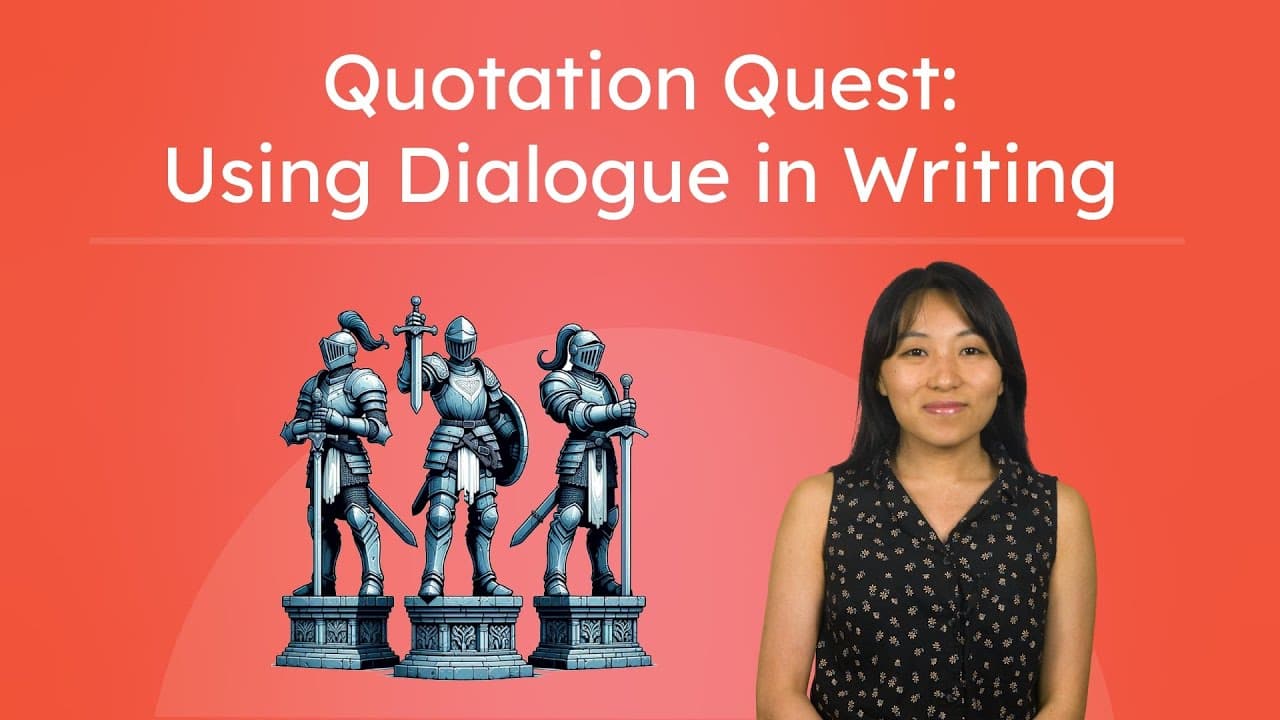
Mastering Dialogue: Formatting, Punctuation, and Tags

Mastering Dialogue: Formatting, Punctuation, and Tags

This engaging language arts video invites students into the "Whispering Hall" of Genre Land to master the mechanics of writing dialogue. Through a quest-based narrative featuring three knight statues, the host guides viewers through three distinct challenges: formatting, punctuation, and dialogue tags. The video contrasts confusing, unformatted blocks of text with properly structured dialogue to visually demonstrate the importance of these writing conventions. The content systematically breaks down the technical rules of dialogue writing. Key topics include when to start new paragraphs (paragraph breaks and indentation), how to use quotation marks and other punctuation within speech, capitalization rules for quoted sentences, and the proper use and placement of dialogue tags. It also distinguishes between valid tags (speaking verbs like "said" or "asked") and action beats (like "smiled" or "ran"), clarifying common grammatical errors. This video is an excellent resource for upper elementary and middle school writing workshops. It transforms dry grammar rules into a gamified editing mission, encouraging students to analyze text critically. Teachers can use the specific "bad vs. good" examples to model editing skills, while the clear breakdown of rules provides a solid foundation for narrative writing units. The step-by-step revision of a single story throughout the video offers a cohesive example of the writing process in action.

Miacademy & MiaPrep Learning ChannelMiacademy & MiaPrep Learning Channel

10mins 24s

Using Proper Nouns to Write Vivid Sentences

Using Proper Nouns to Write Vivid Sentences

This educational video provides a clear and engaging introduction to proper nouns, distinguishing them from basic common nouns. It begins by reviewing the definition of a noun as a person, place, or thing, and then defines proper nouns as the *specific* names for these categories. Through whiteboard-style animation, the narrator demonstrates how proper nouns must always be capitalized, reinforcing the grammatical rule alongside the conceptual understanding.

GrammarSongs by MelissaGrammarSongs by Melissa

3mins 26s

The Difference Between Common and Proper Nouns

The Difference Between Common and Proper Nouns

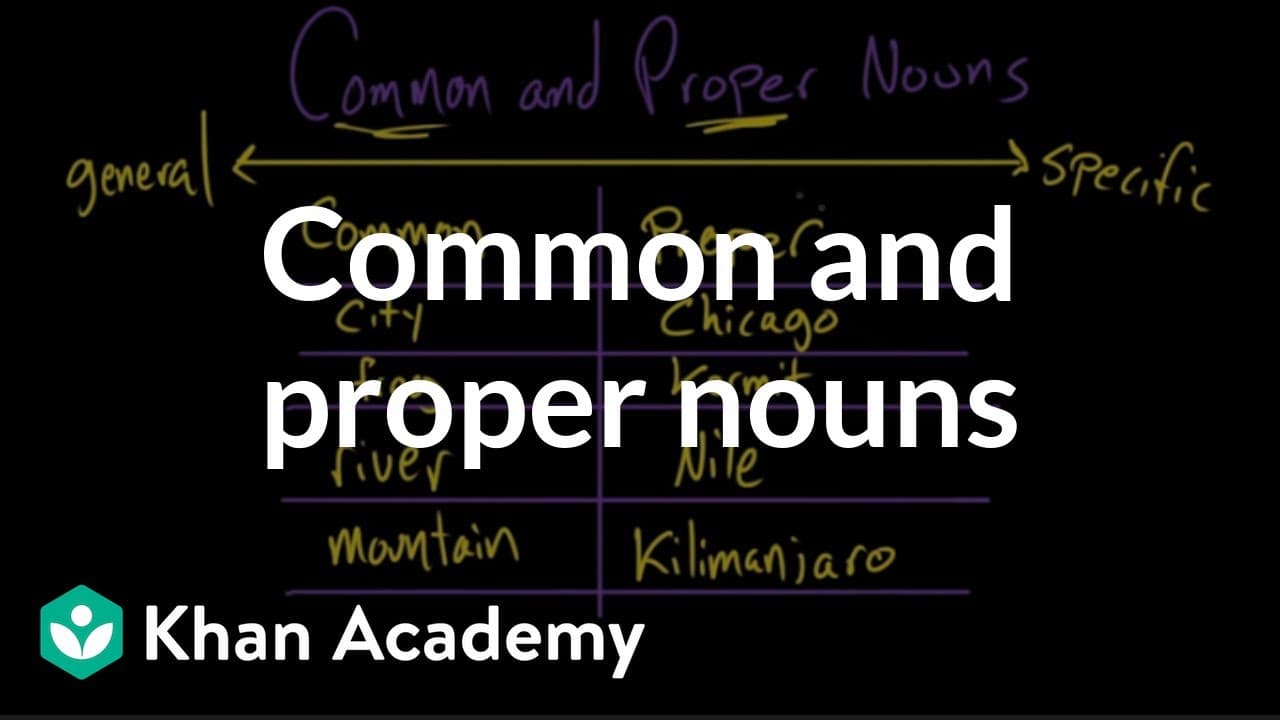
This concise grammar tutorial explains the fundamental difference between common and proper nouns using a clear visual chart and relatable examples. The narrator breaks down the concept into a simple distinction: common nouns refer to general things, while proper nouns act as specific names for those things. Through side-by-side comparisons like "city/Chicago" and "frog/Kermit," the video illustrates the continuum from generic to specific. The video also addresses the crucial mechanics of capitalization associated with these noun types. It explicitly demonstrates the rule that proper nouns are always capitalized, whereas common nouns are only capitalized when they begin a sentence. The narrator provides written sentence examples to show this rule in action, correcting capitalization errors in real-time to model proofreading skills. For educators, this resource serves as an excellent introduction or review of noun types and capitalization rules. It is visually simple, focusing the viewer's attention on the text and the concept of specific vs. general naming conventions. The video supports literacy development by linking grammar concepts to writing mechanics, helping students understand not just what nouns are, but how to treat them correctly in their own writing.

Khan AcademyKhan Academy

2mins 52s

Learning the 4 Rules of Capitalization

Learning the 4 Rules of Capitalization

This engaging educational video introduces elementary students to the fundamental rules of capitalization in English grammar. Through a friendly narrator and a mix of animated characters and real-world photography, viewers learn exactly when and why to use upper-case letters. The video breaks down the concept into four primary rules, making abstract grammatical concepts concrete and easy to understand for young learners.

Homeschool PopHomeschool Pop

9mins 9s

How to Revise and Edit Writing Using ARMS and CUPS

How to Revise and Edit Writing Using ARMS and CUPS

This educational video guides students through the final two stages of the writing process: revising and editing. Hosted in a whimsical "Fact Forest" setting, the narrator distinguishes between revising (improving content and structure) and editing (correcting mechanical errors). The video introduces two powerful mnemonic devices—ARMS (Add, Remove, Move, Substitute) for revision and CUPS (Capitalization, Usage, Punctuation, Spelling) for editing—to help young writers systematically improve their work. Key themes include the distinction between subjective improvements and objective corrections, the importance of audience awareness, and specific strategies for enhancing clarity and engagement. The video demonstrates these concepts using a sample paragraph about Antarctic exploration, modeling exactly how to replace vague words with specific vocabulary, improve sentence flow, and fix grammatical mistakes. It emphasizes that writing is a process that moves from "good to great" through careful review. For educators, this resource serves as an excellent anchor for a writing workshop. It provides concrete, memorable strategies that students can immediately apply to their own drafts. The step-by-step demonstration of correcting a paragraph offers a clear model for students to follow, demystifying the often-abstract concepts of "flow" and "voice." It encourages students to view writing as an iterative craft rather than a one-time task.
Miacademy & MiaPrep Learning ChannelMiacademy & MiaPrep Learning Channel

11mins 6s

The Complete Guide to Grammar Basics

The Complete Guide to Grammar Basics

This comprehensive grammar compilation video serves as an extensive guide to the foundational rules of the English language for elementary students. Through a mix of animation, live-action clips, and humorous character interactions, the video breaks down complex grammatical concepts into digestible segments. It begins by introducing the four main types of sentences—interrogative, exclamatory, declarative, and imperative—helping students understand how punctuation and tone change meaning. It then moves into sentence structure, teaching students how to identify and fix common writing errors like sentence fragments and run-on sentences.

Homeschool PopHomeschool Pop

58mins 54s

Materials

Proofreader Press Exit Ticket

Proofreader Press Exit Ticket

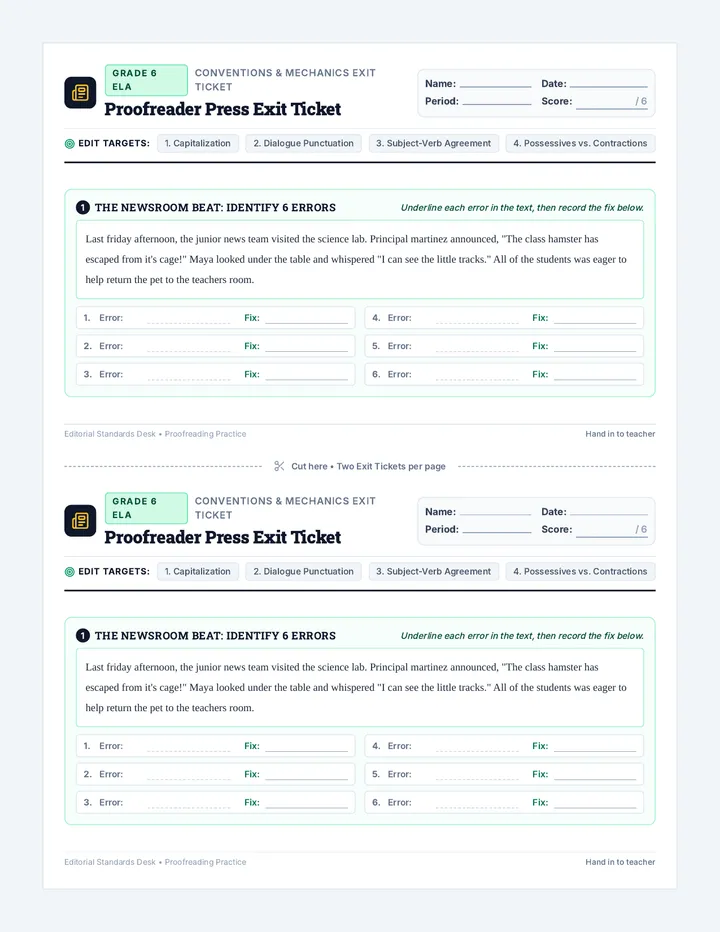
A print-ready 2-up half-sheet exit ticket for Grade 6 containing the newsroom editing passage with 6 targeted errors covering capitalization, dialogue punctuation, subject-verb agreement, and possessives.

TE

Tesa Etchieson

Quotation Harvest Slides

Quotation Harvest Slides

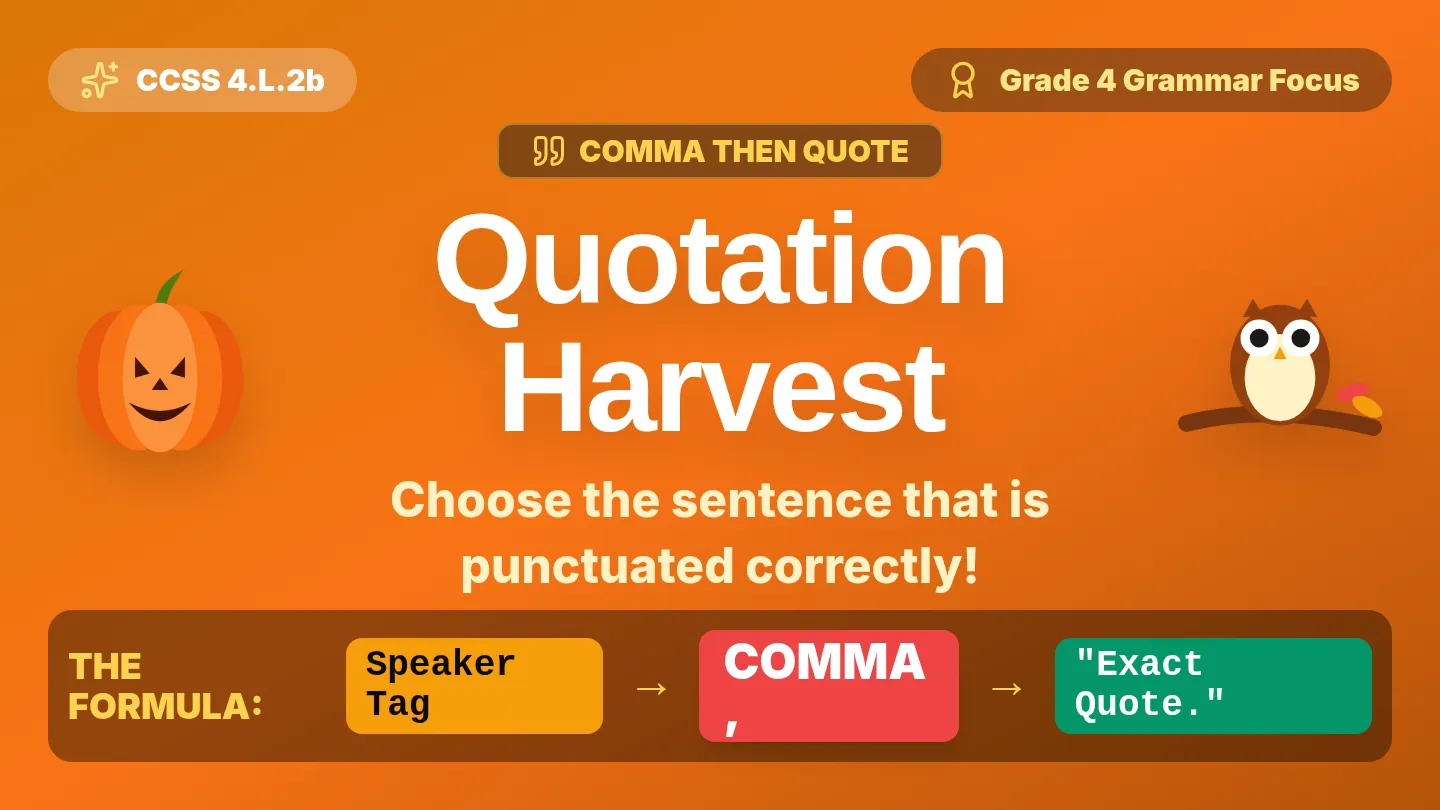
Comprehensive 34-slide fall-themed presentation for 4.L.2b featuring an expanded, balanced distribution of answer choices including multiple D options across 15 practice challenges and solutions.

MS

Mallory Stradley

ILEARN Caminos Blueprint Guide

ILEARN Caminos Blueprint Guide

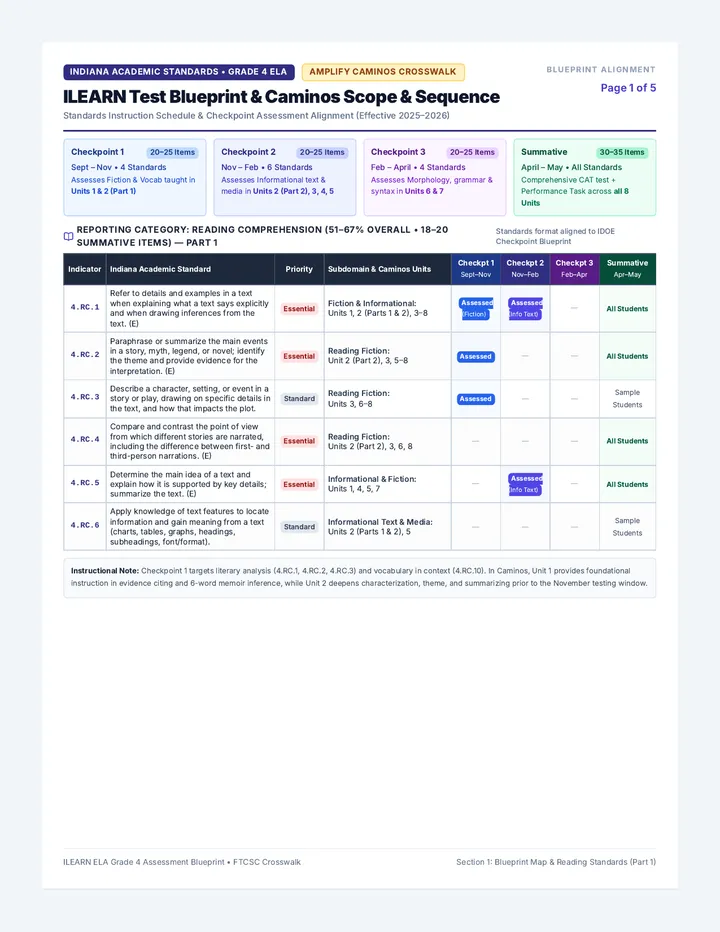
Comprehensive Grade 4 ILEARN Test Blueprint and Amplify Caminos Scope & Sequence crosswalk. Formatted to match the state ILEARN checkpoint blueprint, showing exactly when Indiana Academic Standards (Reading, Vocabulary, Writing, Grammar, and Communication) are taught across Units 1–8 and assessed in Checkpoints 1, 2, 3, and the Summative Assessment.

A

Amy.Hacker

Biomimicry Probe Worksheet

Biomimicry Probe Worksheet

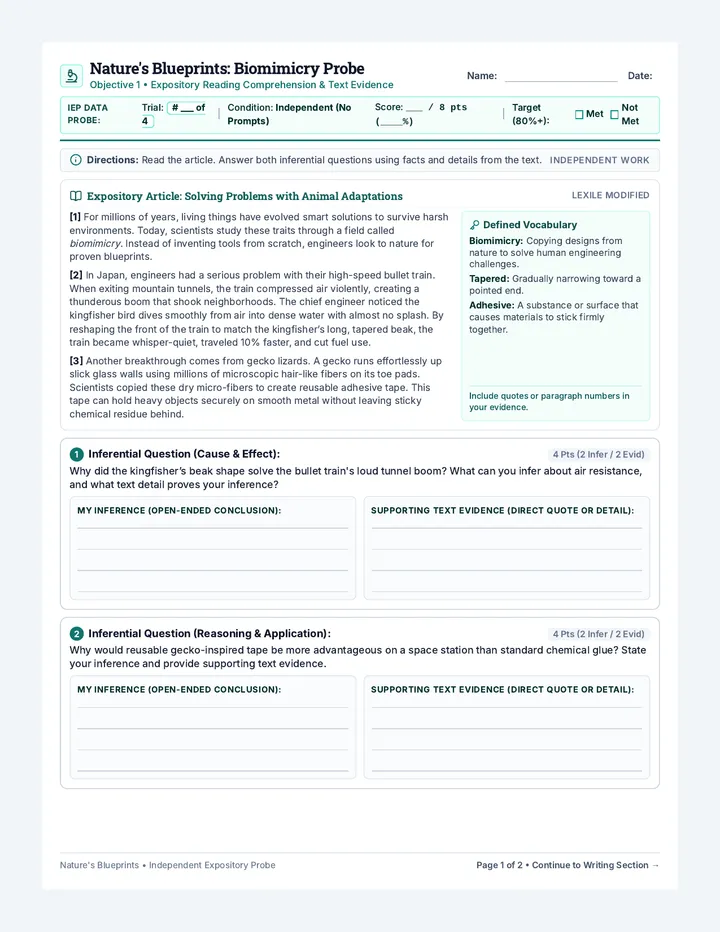
A two-page independent progress monitoring worksheet assessing expository reading inference with supportive text evidence, elaborative paragraph writing with two or more supporting details, and single-skill editing mechanics, featuring expanded student writing space and streamlined header data tracking.

A

amanda_raboin

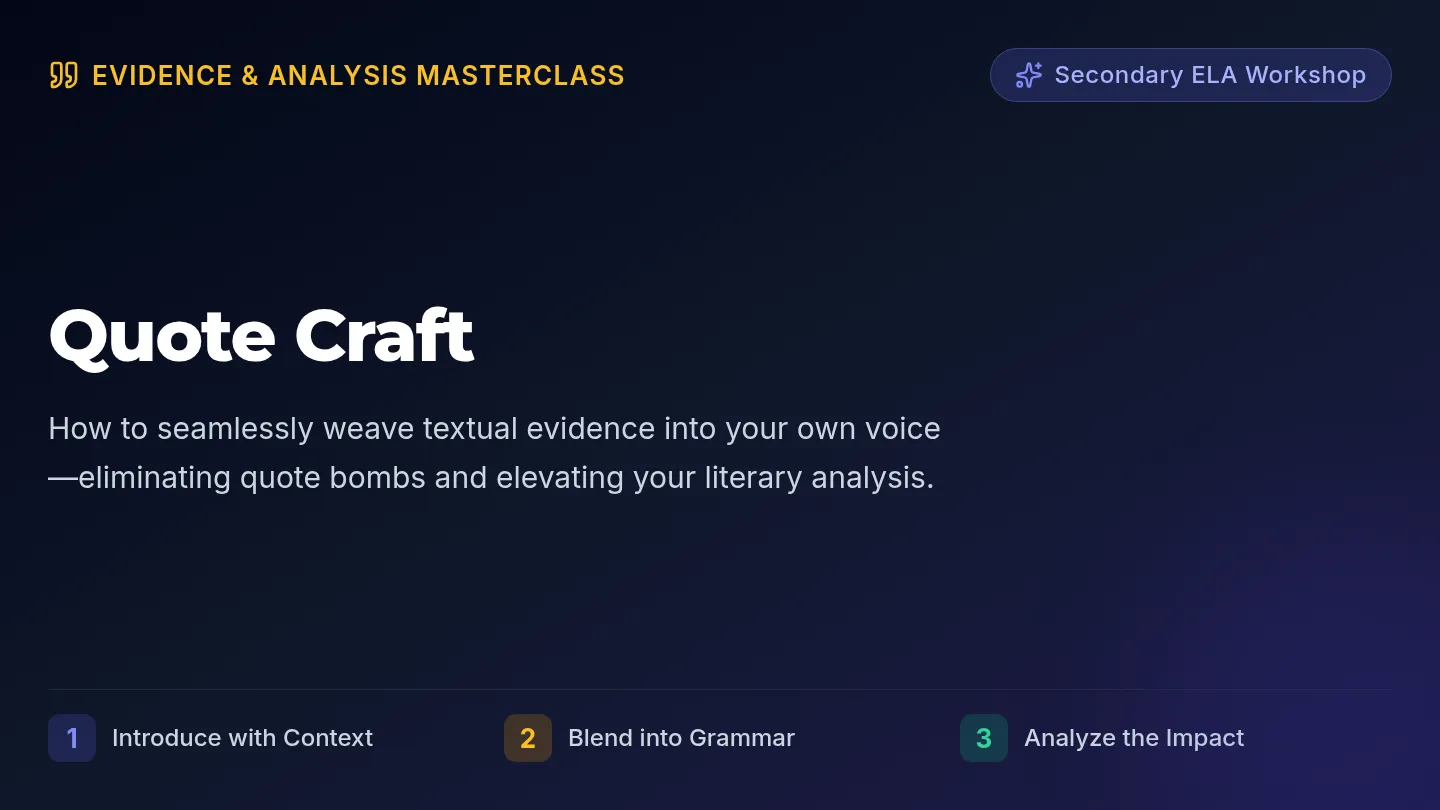
Quote Craft Slides

Quote Craft Slides

An instructional slide deck designed for middle and secondary English language arts classrooms to teach seamless quotation integration. The presentation guides students through common quotation errors, the Introduce-Cite-Explain framework, syntactic blending strategies, punctuation rules, and analytical follow-up.

JT

Jennifer Tzall

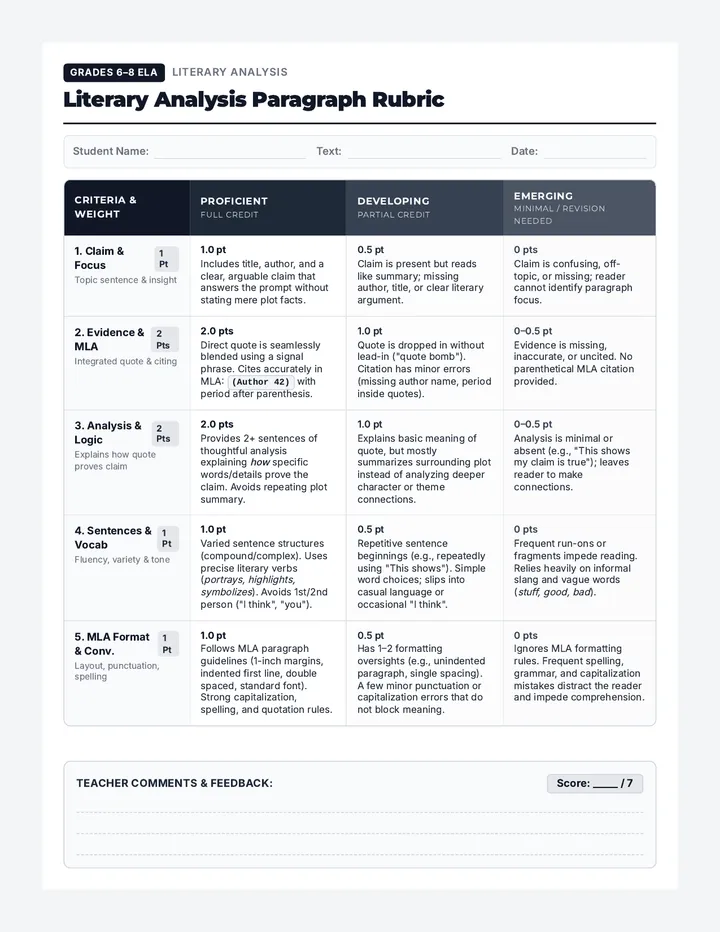
Analysis Architect Rubric

Analysis Architect Rubric

A grayscale 7-point middle school literary analysis paragraph rubric evaluating claim strength, MLA citation, evidence integration, analytical depth, and sentence craft.

KD

kathy dale

Sequences

Invention Quest Slides

Frindle Frenzy Novel Study

A 9-day novel study for 'Frindle' by Andrew Clements, aligned to 3rd Grade ELAR TEKS, focusing on character development, vocabulary, and plot analysis.

LH

Lucy Hellerman

56
Prophecy and Power Slides

Shadows and Crowns

A series of lessons exploring Shakespeare's Macbeth, specifically designed for 10th-grade emergent bilingual students to master complex characterization and thematic elements.

DC

Dylan Clark

30
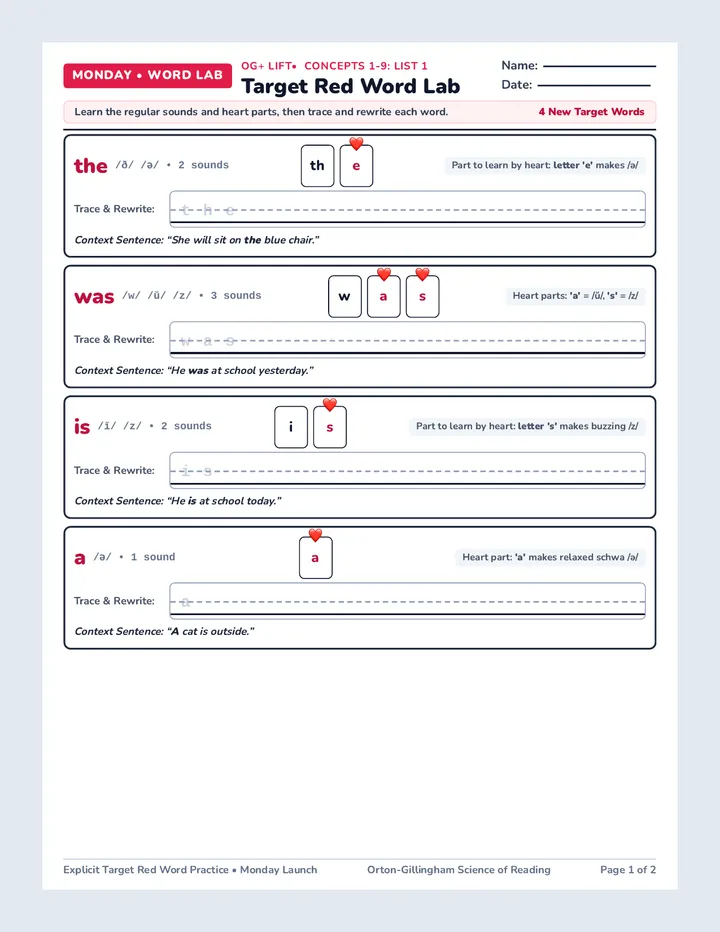
Monday Sentences Worksheet

OG+ LIFT: Red word K-Concepts: Book 1

This comprehensive intervention unit features a weekly scope and sequence targeting high-frequency red words, sound-spelling correspondences, and reading comprehension, directly aligned with Orton-Gillingham Kindergarten Book 1 beginning concepts. Designed for self-contained or intervention settings, it pairs decodable readers and comprehension story mapping with explicit daily paraprofessional guides, fluency routines, scaffolded practice, and weekly assessments.

S

Sara

59
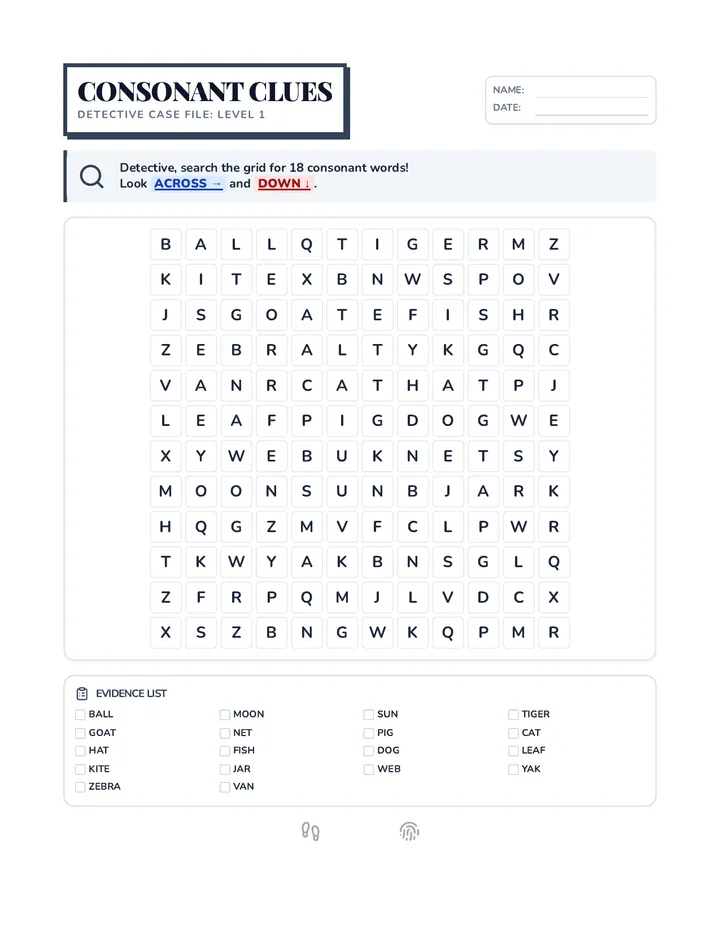
Consonant Clues Word Search

Sound Detective Workbook

A complete phonics journey covering letter-name alphabetic spelling stages, featuring randomized word sort practice through interactive sentence completion.

N

nmack

57
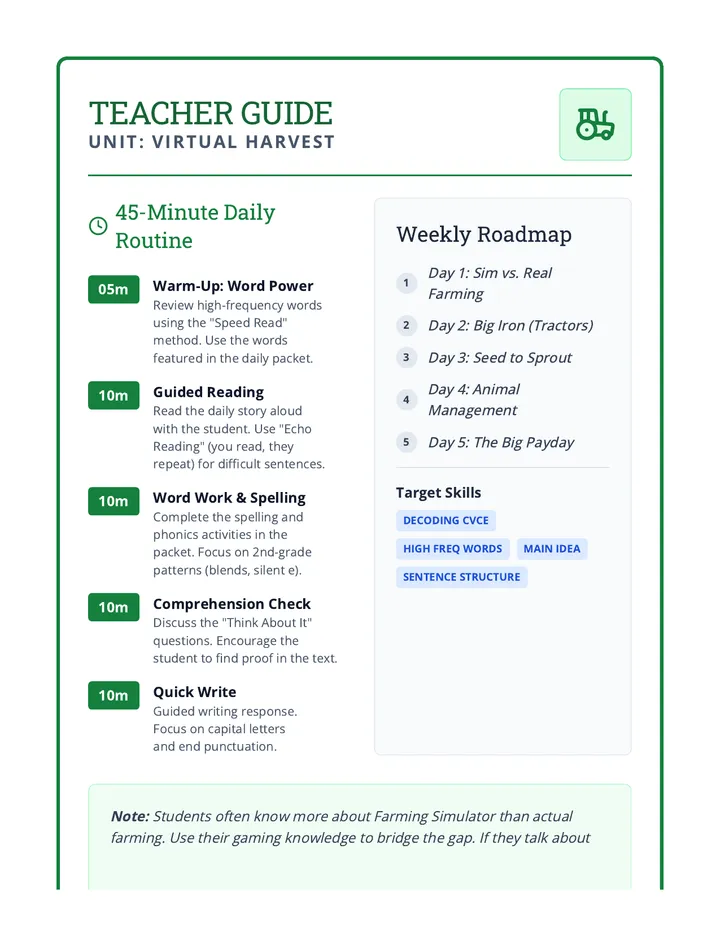
Virtual Harvest Teacher Guide

Digital Dirt

A 5-day reading comprehension and writing unit for struggling readers, blending the world of Farming Simulator with real-world agriculture. Focuses on 2nd-grade level literacy skills within a high-interest 5th-grade context.

CM

carley Martin

30
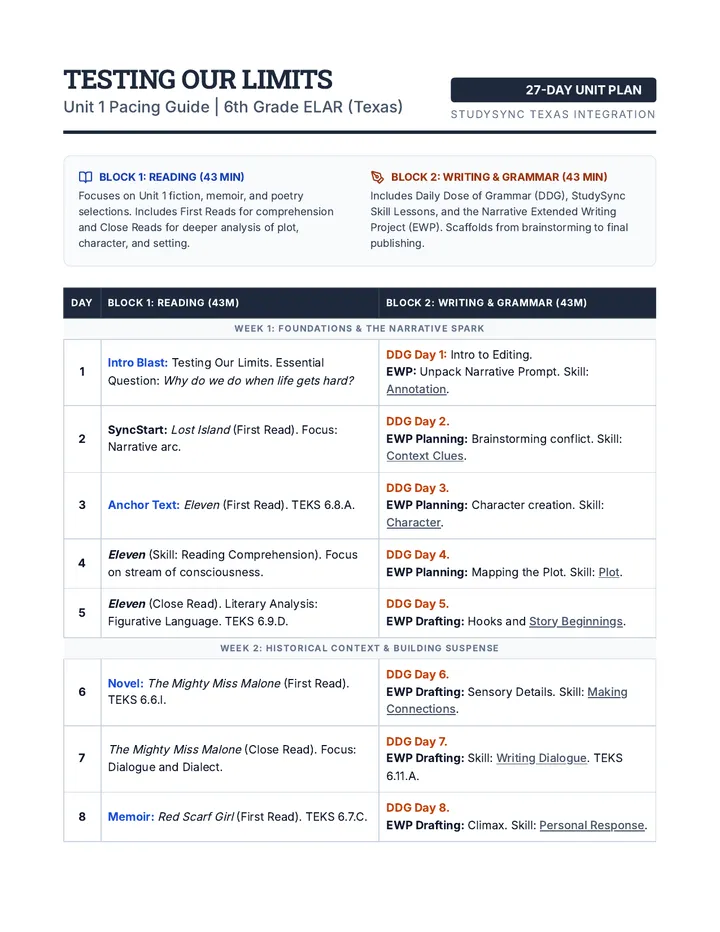
Unit 1 Pacing Guide Document

Testing Our Limits Unit Sequence

A 27-day instructional sequence for 6th Grade ELAR Unit 1: Testing Our Limits, featuring dual blocks for Reading and Writing with daily grammar and skill scaffolding.

DM

Dawn Mustian

81