Lenny.com
Explore
Create
ActivitiesNewMathEnglish Language ArtsScience & EngineeringSocial StudiesGlobal LanguagesHealth & Physical EducationSpecial EducationCounseling & Life SkillsArts & CreativityESL
Lenny.com
Lenny.com
Explore
Create
ActivitiesNewMathEnglish Language ArtsScience & EngineeringSocial StudiesGlobal LanguagesHealth & Physical EducationSpecial EducationCounseling & Life SkillsArts & CreativityESL
Lenny.com
English Language ArtsPhonics & Reading FoundationsLetter IdentificationLearn Letters A-ZLowercase and Uppercase LettersConsonants and VowelsLetter-Sound AssociationsLetter-Sound Associations: LowercaseLetter-Sound Associations: UppercaseBeginning and Ending SoundsRhymingBlending And SegmentingShort VowelsShort Vowel SoundsConsonant BlendsConsonant DigraphsBlends, Digraphs, and TrigraphsDigraphs, Blends, and Silent LettersLong Vowel SoundsLong Vowel PatternsShort and Long VowelsShort and Long Vowel PatternsSilent EVowel SoundsVowel TeamsR-Controlled VowelsDiphthongs: Oi, Oy, Ou, OwVariant VowelsVariant, Diphthong, And R Vowel PatternsSoft G And CSight WordsIrregular WordsWord RecognitionSyllablesSyllable TypesTwo-Syllable WordsMultisyllabic WordsPhoneme ManipulationDecodable TextsVocabularyAction WordsQuestion WordsNouns and AdjectivesClassify WordsCompound WordsSynonyms and AntonymsHomophonesHomophones and HomonymsShades of MeaningContext CluesPrefixes and SuffixesGreek and Latin RootsAnalogiesIdioms and AdagesForeign Words and ExpressionsWord Choice and UsageReference SkillsReading ComprehensionRead-Along Literary TextsRead-Along Informational TextsReality vs. FictionStory ElementsCharacterSequenceMain IdeaCause And EffectCompare And ContrastReading StrategiesText StructureAuthor's PurposeAuthor's Purpose And ToneAuthor's PerspectivePoint Of ViewThemeInference And ThemeInference And AnalysisPoetry ElementsLiterary DevicesAnalyzing LiteratureAnalyzing Informational TextsComparing TextsAudience, Purpose, And ToneBusiness DocumentsNovel StudyNonfiction Book StudyGrammar & MechanicsSentencesNounsVerbsAdjectivesPronounsCapitalizationPunctuationContractionsConjunctionsPrepositionsArticlesAdjectives And AdverbsVerb TypesVerb TensePronouns And AntecedentsPronoun TypesSubject-Verb AgreementDirect And Indirect ObjectsSentences, Fragments, And Run-OnsPhrases And ClausesCommasSemicolons, Colons, And CommasDashes, Hyphens, And EllipsesSpellingAbbreviationsFormattingVerb Tense And MoodMisplaced ModifiersWritingDescriptive DetailsCreative WritingOpinion WritingTopic SentencesOrganizing WritingLinking WordsSentence VarietyIntroductions And ConclusionsPersuasive And Opinion WritingExpository WritingPersuasive StrategiesDeveloping And Supporting ArgumentsTopic Sentences And Thesis StatementsSummarizingResearch SkillsEditing And RevisingActive And Passive Voice=Writing Clearly And ConciselyDebate & Public SpeakingPublic Speaking BasicsPersuasive TechniquesClaims and EvidenceTypes of ArgumentsReasoning TypesLogical FallaciesTopic ResearchOrganizing EvidenceDebate Speech OrganizationAttacking and Defending ArgumentsClash and EngagementImpact CalculusQuestioning and Cross-ExaminationCritical ThinkingInformal LogicFormal LogicInductive Reasoning

Adjectives And Adverbs

Identification and usage of modifiers to enhance sentence detail. Distinguishes between adjectives describing nouns and adverbs modifying verbs, adjectives, or other adverbs.

Lenny.com

Solutions

Lenny for EducatorsLenny for SchoolsLenny for Districts

Product

ExploreSign inCreateSupportAbout

Resources

Getting startedMTSS Acceleration Program

© 2026 Lenny Learning Inc.

TermsPrivacyAccessibility
LinkedInInstagramX
Lenny

Videos

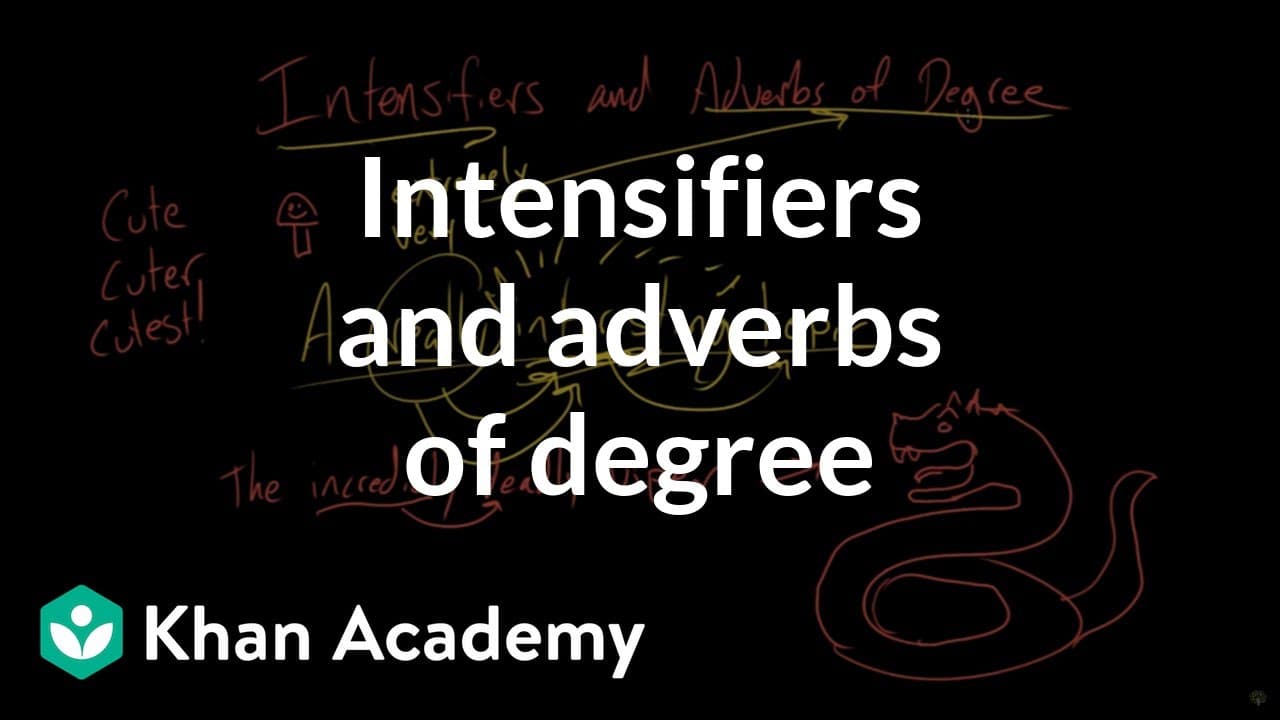
How Intensifiers and Adverbs of Degree Work

How Intensifiers and Adverbs of Degree Work

This animated grammar lesson explores the function and usage of intensifiers and adverbs of degree. The narrator explains how these specific types of adverbs modify adjectives to express intensity or extent, distinguishing them from simple comparative modifiers. Using clear handwritten text and simple illustrations, the video demonstrates how adding words like "really," "very," and "extremely" can double down on a description. The video uses engaging and humorous examples, such as the "Incredibly Deadly Viper" from Lemony Snicket's *A Series of Unfortunate Events*, to visualize abstract grammatical concepts. By altering the viper's description to "somewhat deadly" and "barely deadly"—and adjusting the drawing's teeth accordingly—the narrator concretely shows how adverbs of degree shift meaning along a spectrum. Teachers can use this video to help students move beyond basic descriptions in their writing. It provides a accessible framework for understanding how language can be precise regarding "how much" or to what extent something is true, moving from binary descriptions to a nuanced scale of meaning using modifiers.

Khan AcademyKhan Academy

5mins 14s

How to Use Descriptive Language to Bring Stories to Life

How to Use Descriptive Language to Bring Stories to Life

This engaging educational video teaches students how to elevate their writing using descriptive language. Set within a gamified narrative, the host and her robot companion arrive at 'Palette Plains,' a world that has lost its color and turned gray. To restore the vibrancy of the land and earn a 'Crystal Quill fragment,' the viewer must transform a dull, factual paragraph into a vivid, descriptive scene using adjectives, adverbs, and sensory details. The video breaks down the writing process into actionable strategies. It first reviews the roles of adjectives and adverbs before introducing two key techniques: 'Sensory Language' (appealing to the five senses) and 'Emotional Language' (establishing mood and feeling). Through clear examples—such as comparing a boring description of a beach to a vivid one—the narrator demonstrates how specific word choices help readers visualize a setting. The video also models close reading by analyzing a text to find descriptive elements. Ideally suited for upper elementary and middle school English Language Arts classrooms, this resource combines direct instruction with interactive practice. It includes specific pause points where students are prompted to complete tasks in a companion PDF (or on paper), such as matching definitions, analyzing a text, planning sensory details, and rewriting a paragraph. Teachers can use this video to introduce a descriptive writing unit, reinforce the concept of 'showing not telling,' or as a self-paced revision workshop.

Miacademy & MiaPrep Learning ChannelMiacademy & MiaPrep Learning Channel

10mins 4s

Mastering Confusing Words: Hear vs. Here and Accept vs. Except

Mastering Confusing Words: Hear vs. Here and Accept vs. Except

This educational video provides a clear and engaging guide to mastering two sets of frequently confused words: "hear" vs. "here" and "accept" vs. "except." The narrator, David, breaks down these homophones (or near-homophones) by defining their parts of speech and meanings, ensuring students understand not just how to spell them, but how they function grammatically within a sentence. The video explores key themes of spelling, grammar, and mnemonic strategies. For each word pair, the narrator provides specific memory aids: finding the word "ear" inside "hear," rhyming "here" with "near," linking the "ex" in "except" to "exclude," and connecting the "ac" in "accept" to "access." These cognitive hooks are designed to help learners permanently distinguish between the spellings. For educators, this video is an excellent resource for strengthening vocabulary and writing skills. It directly addresses common pitfalls in student writing and offers practical, visual tools for self-correction. The content is versatile enough to be used as a flipped classroom assignment, a review before a spelling test, or a reference tool for editing workshops, empowering students to proofread their work with greater confidence.
Khan AcademyKhan Academy

3mins 14s

Exploring the Vocabulary Words Recently and Voyage

Exploring the Vocabulary Words Recently and Voyage

In this engaging vocabulary lesson, the narrator introduces students to two specific words: "recently" and "voyage." Through a blend of humor, storytelling, and simple illustrations, the video breaks down the definitions, parts of speech, and grammatical rules associated with each word. Specifically, it explains how the suffix "-ly" transforms adjectives into adverbs and how a single word like "voyage" can function as both a noun and a verb. The video explores key grammatical concepts in an accessible way. It defines "recently" as an adverb meaning "happening a short time ago" and demonstrates how adjectives like "happy" and "quick" become adverbs with the addition of "-ly." It then defines "voyage" as a long journey, providing examples of its use as a noun (taking a trip) and a verb (the act of traveling). The narrator uses humorous example sentences involving astronomers and astronauts craving tamales to solidify understanding. For educators, this video is a valuable tool for reinforcing parts of speech and expanding vocabulary. It can be used to introduce the concept of suffixes, specifically how word endings change grammatical function. The clear definitions and contextual examples make it an excellent resource for ELA lessons focused on grammar, reading comprehension, and creative writing, encouraging students to use new vocabulary in their own sentences.

Khan AcademyKhan Academy

2mins 29s

Using Commas with Introductory Elements

Using Commas with Introductory Elements

This educational video provides a clear and engaging guide to using commas with introductory elements in sentences. The narrators, David and Paige, break down complex grammatical concepts into easy-to-understand rules, specifically focusing on dependent clauses and sentence adverbs. Through handwritten examples and visual analogies, viewers learn exactly when a comma is required to separate an introduction from the main body of a sentence. The video explores three main scenarios: identifying dependent clauses at the start of sentences, understanding why commas aren't needed when the clause order is reversed, and how to punctuate sentence adverbs like "Initially" or "Basically." The narrators use color-coding to distinguish between clause types and provide memorable metaphors, such as comparing a dependent clause to a ladder leaning against a tree, helping students visualize the relationship between sentence parts. Teachers can use this video to introduce or reinforce specific punctuation rules within a writing curriculum. It is particularly valuable for helping students move beyond simple sentence structures to more complex, varied syntax. The conversational tone and clear visual aids make abstract grammar rules concrete, supporting students in editing their own writing for proper punctuation and clarity.

Khan AcademyKhan Academy

4mins 35s

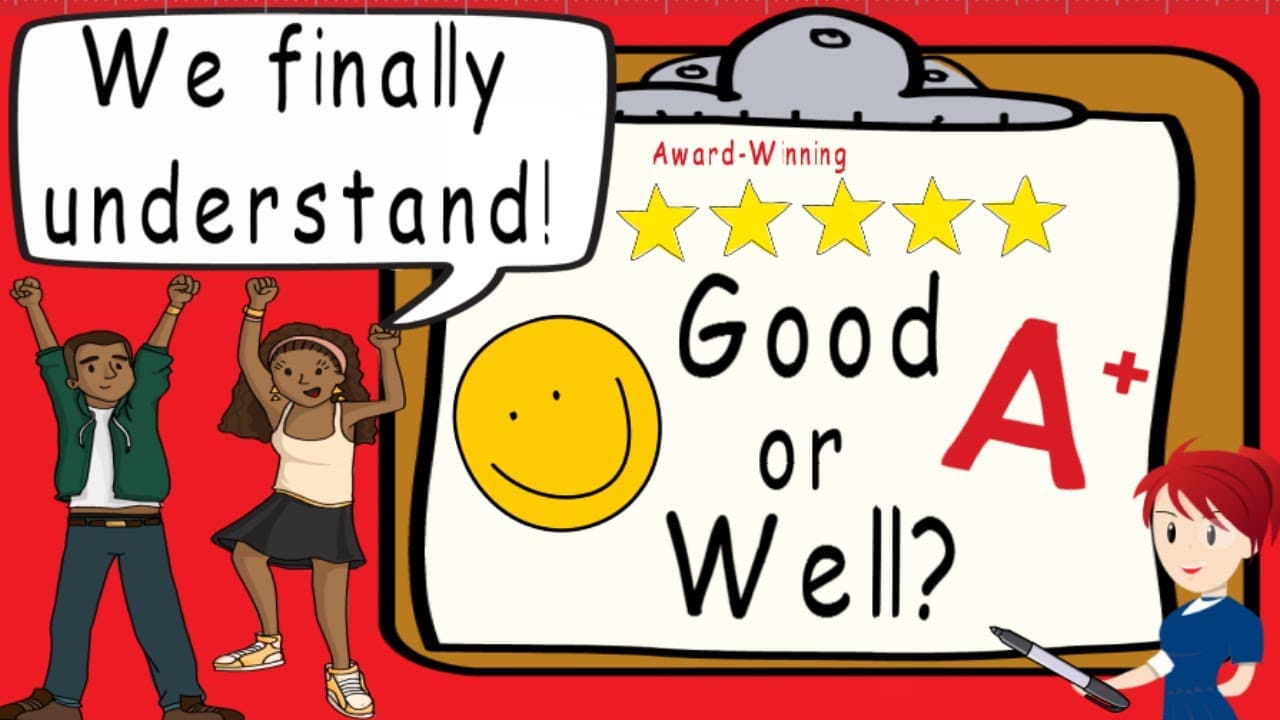
How to Correctly Use Good and Well

How to Correctly Use Good and Well

This animated grammar lesson clarifies the confusing distinction between the words "good" and "well," a common stumbling block for students and adults alike. The video breaks down the fundamental grammatical roles of each word, defining "good" as an adjective that modifies nouns and "well" as an adverb that modifies action verbs. Through clear visual examples, it demonstrates how to identify whether a sentence is describing a subject or an action. The content dives deeper into specific rules regarding verb types, explaining that linking verbs and verbs related to the five senses (look, sound, smell, feel, taste) require the adjective "good," while action verbs typically pair with the adverb "well." The narrator introduces helpful substitution strategies—like replacing a verb with "was" or "seemed"—to help learners verify their word choice in tricky situations. Ideal for English Language Arts instruction, this video includes guided practice sessions where viewers analyze sentences step-by-step. By examining the subject and the type of verb used, students learn a reliable process for selecting the correct word. The lesson concludes with a summary review, making it a practical resource for improving both spoken and written communication skills.

GrammarSongs by MelissaGrammarSongs by Melissa

4mins 54s

Materials

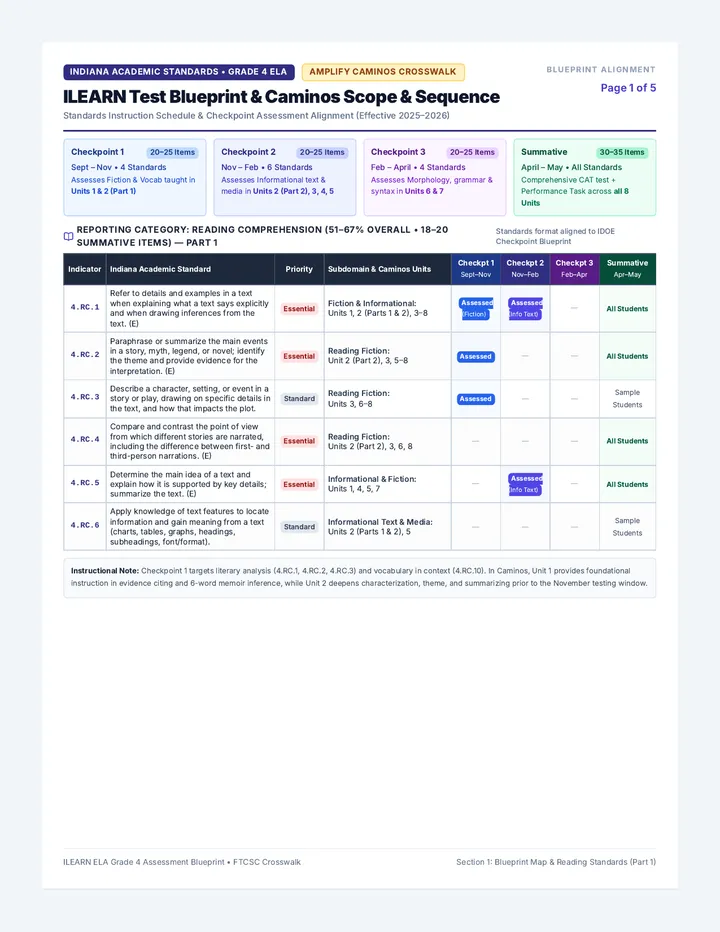
ILEARN Caminos Blueprint Guide

ILEARN Caminos Blueprint Guide

Comprehensive Grade 4 ILEARN Test Blueprint and Amplify Caminos Scope & Sequence crosswalk. Formatted to match the state ILEARN checkpoint blueprint, showing exactly when Indiana Academic Standards (Reading, Vocabulary, Writing, Grammar, and Communication) are taught across Units 1–8 and assessed in Checkpoints 1, 2, 3, and the Summative Assessment.

A

Amy.Hacker

Book Jacket Studio Worksheet

Book Jacket Studio Worksheet

A comprehensive 2-page book jacket and front-matter design worksheet where students craft their own book cover illustration, back cover blurb, endorsements, dedication, table of contents, chapter names, preface, and interior illustration.

MG

MICHELLE GRIMALDI

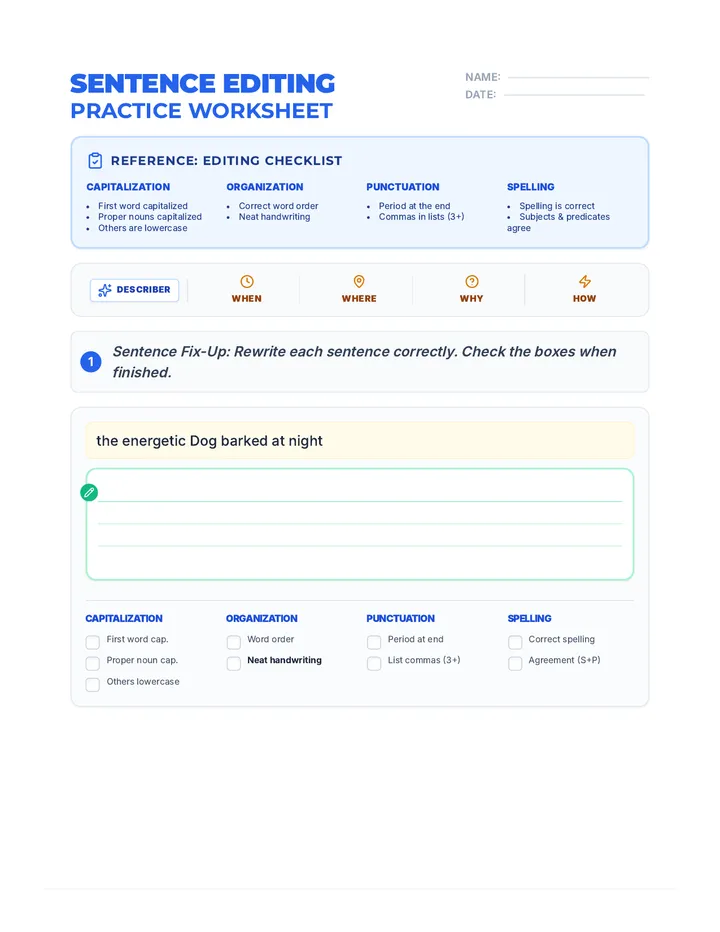
Sentence Editing Practice Worksheet

Sentence Editing Practice Worksheet

An extensive 6-page worksheet for sentence building and correction. Features an editing checklist for review at the top of Page 1, followed by four 'Sentence Fix-Up' items and six complex frames. All tasks include 4 handwriting lines and a standardized checklist with increased font sizes for better legibility. Subtitle removed and font sizes polished for classroom use.

EV

Erin Venuti

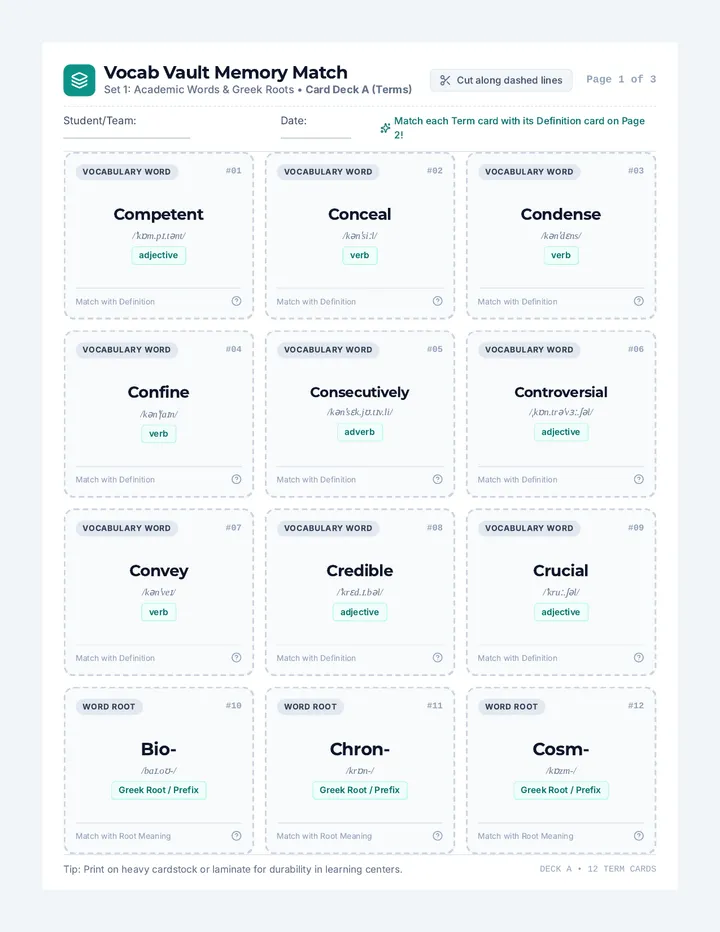
Vocab Vault Memory Cards

Vocab Vault Memory Cards

Printable 24-card memory matching set featuring 9 academic vocabulary words and 3 Greek roots. Word definitions have been simplified to be direct and accessible for students while maintaining academic clarity and matching rigor.

MC

Makaela Carias

Grammar Detectives Activity

Grammar Detectives Activity

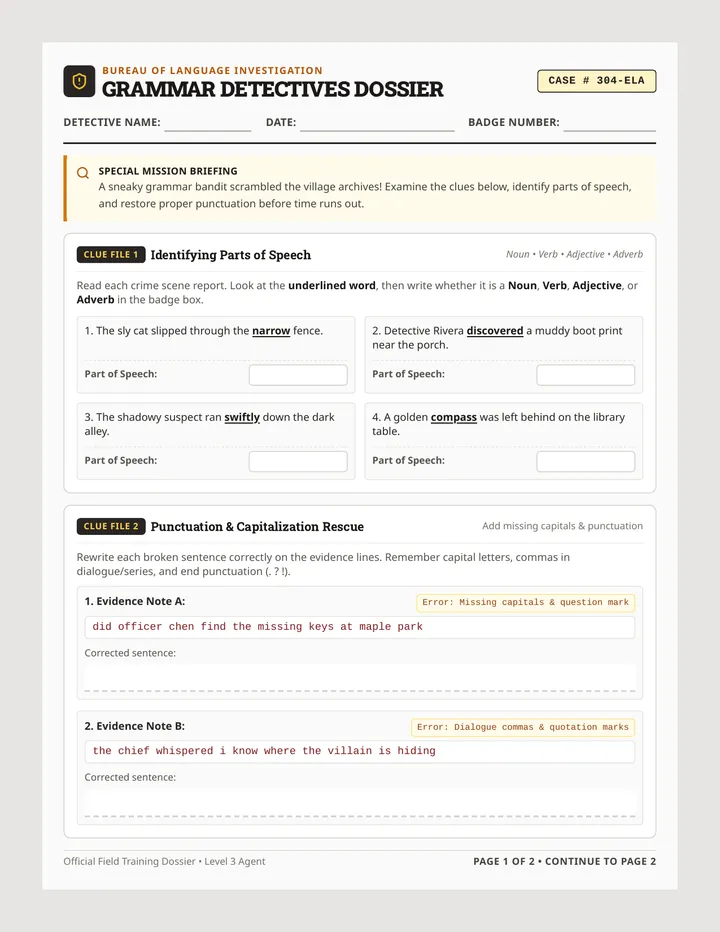
An engaging 3rd grade grammar printable activity structured as a two-page detective case file. Students investigate parts of speech, repair run-on sentences and fragments, combine sentences with conjunctions, and compose their own classified mystery sentences.

SS

Samantha Slentz

Spooky Words Reference Sheet

Spooky Words Reference Sheet

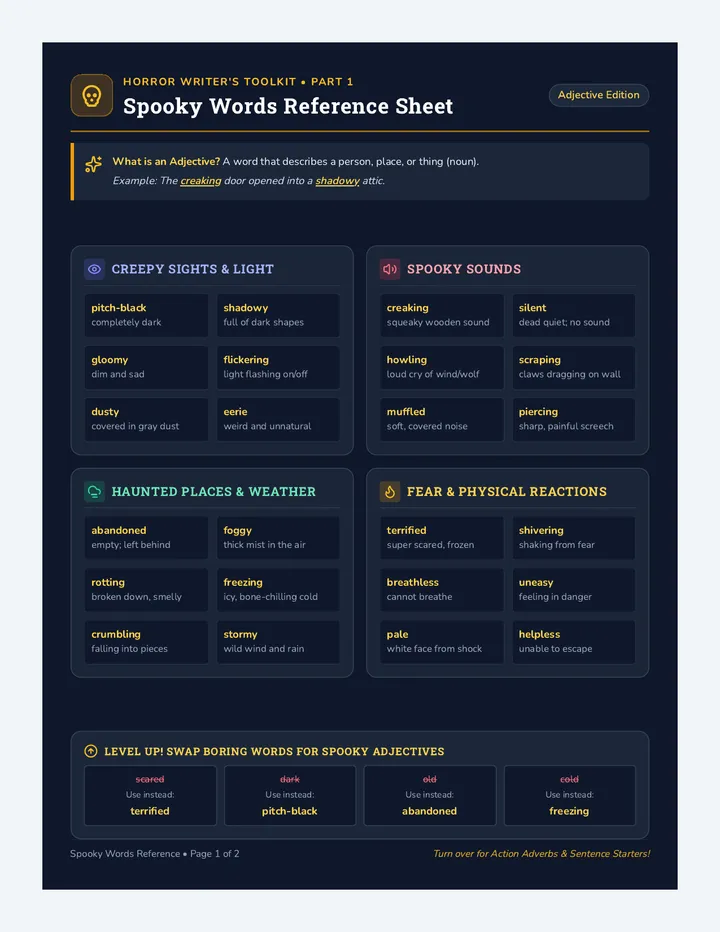
A two-page print-ready horror story vocabulary toolkit and reference sheet designed for low-level and striving writers. Features categorized sensory adjectives, action-enhancing adverbs with kid-friendly definitions, a "Word Upgrade" swap chart, and scaffolded sentence frames.

S

SaWashburn

Sequences

Prefix Power Sort 1 Worksheet

Word Wizard Packet

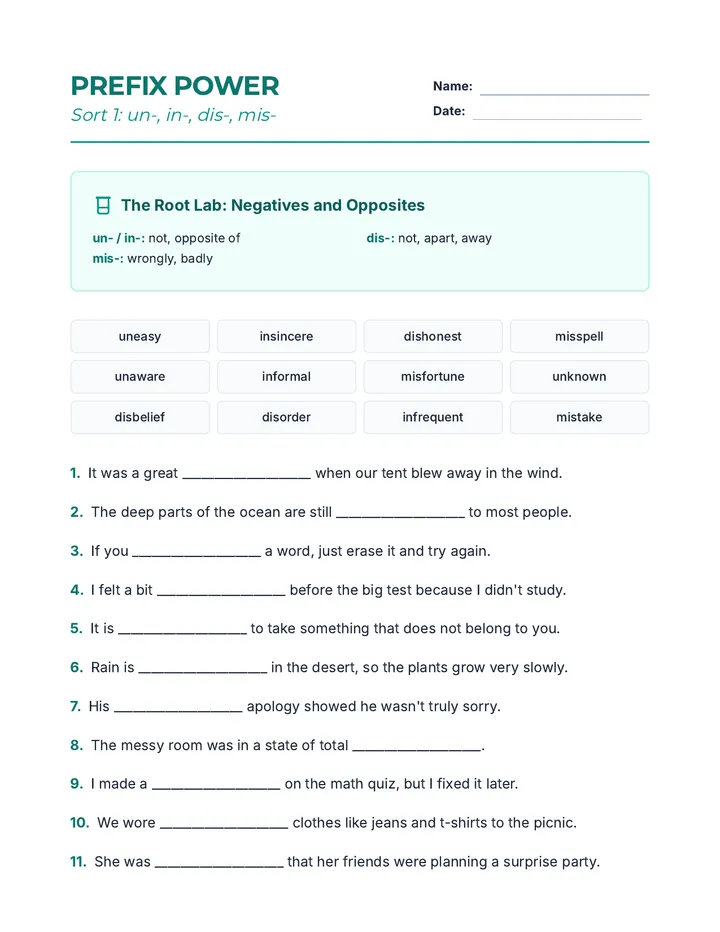
A comprehensive vocabulary and morphology curriculum covering prefixes, suffixes, Latin roots, and Greek roots through fill-in-the-blank exercises and engaging word puzzles.

N

nmack

137
Invention Quest Slides

Frindle Frenzy Novel Study

A 9-day novel study for 'Frindle' by Andrew Clements, aligned to 3rd Grade ELAR TEKS, focusing on character development, vocabulary, and plot analysis.

LH

Lucy Hellerman

56
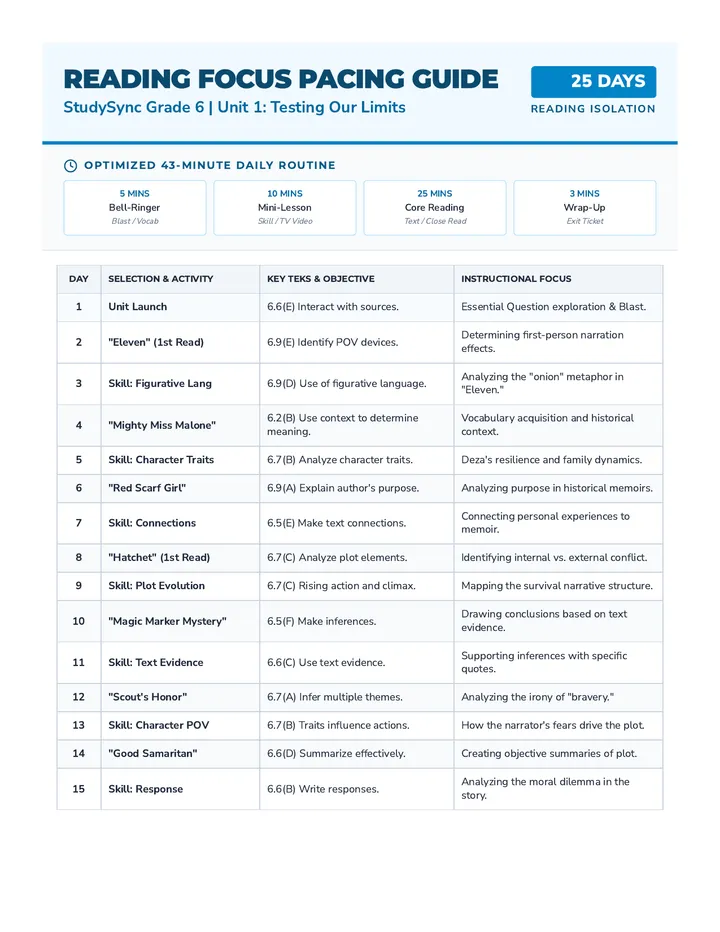
Reading Focus Pacing Guide

Testing Our Limits Unit

A 25-day comprehensive unit for StudySync Grade 6 that explores the theme of courage and resilience through isolated reading and writing tracks, aligned to ELA TEKS.

DM

Dawn Mustian

79
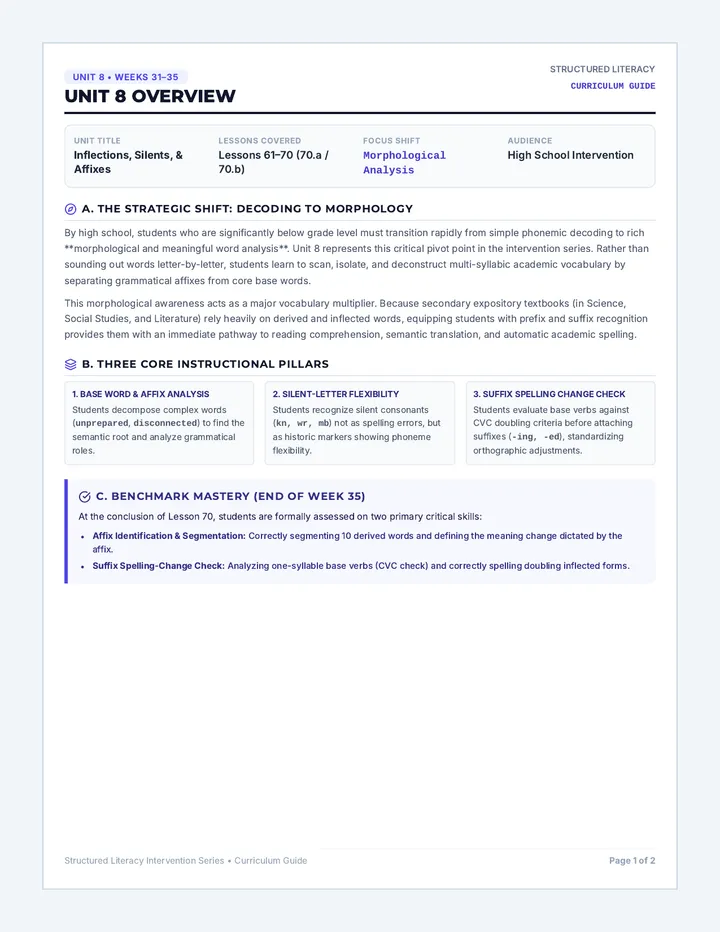
Unit Overview Teacher Guide

Linguistic Signals

A structured high school reading intervention sequence focusing on silent consonants, orthographic markers, pluralization rules, and academic spelling structures.

AP

Alexis Paolini

36
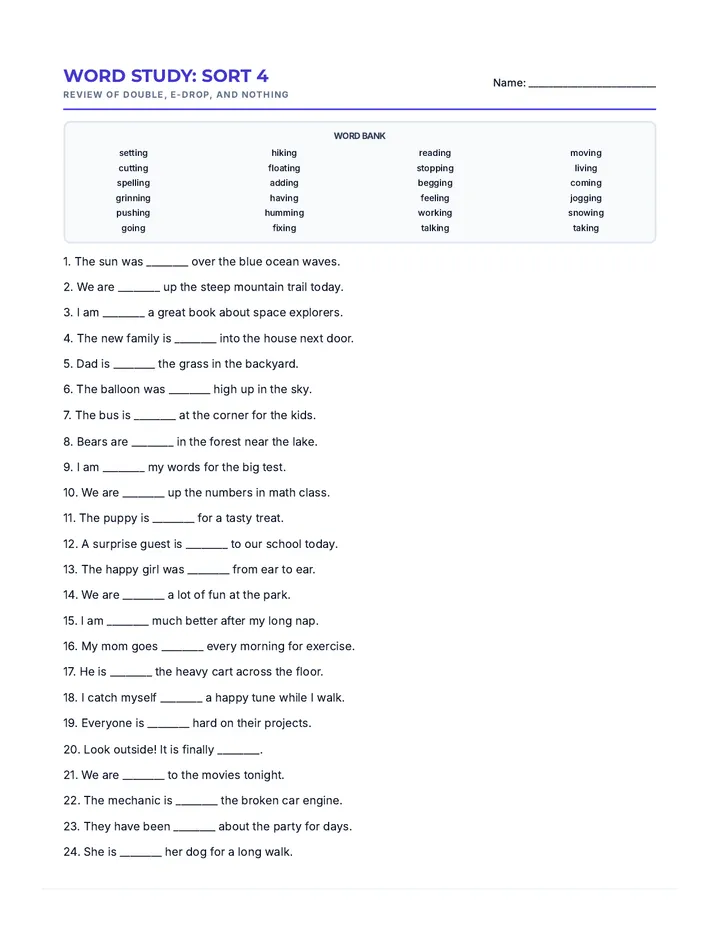
Inflections and Past Tense Worksheets 2 v2

Word Study Master Collection

A comprehensive collection of 56 word study sorts for 4th-grade students, covering everything from basic vowel patterns and inflected endings to advanced syllable junctures, prefixes, and suffixes.

N

nmack

15
Life Legacy Organizer

Curators Quest

A collection of 5th-grade ELA and Grammar resources focusing on biographical research, summary writing, and language mastery.

CO

Catherine Onessimo

30