A comprehensive 10-week academic vocabulary program for 6th grade students, themed as a 'Linguistic Lab' where students analyze and master essential Tier 2 words.
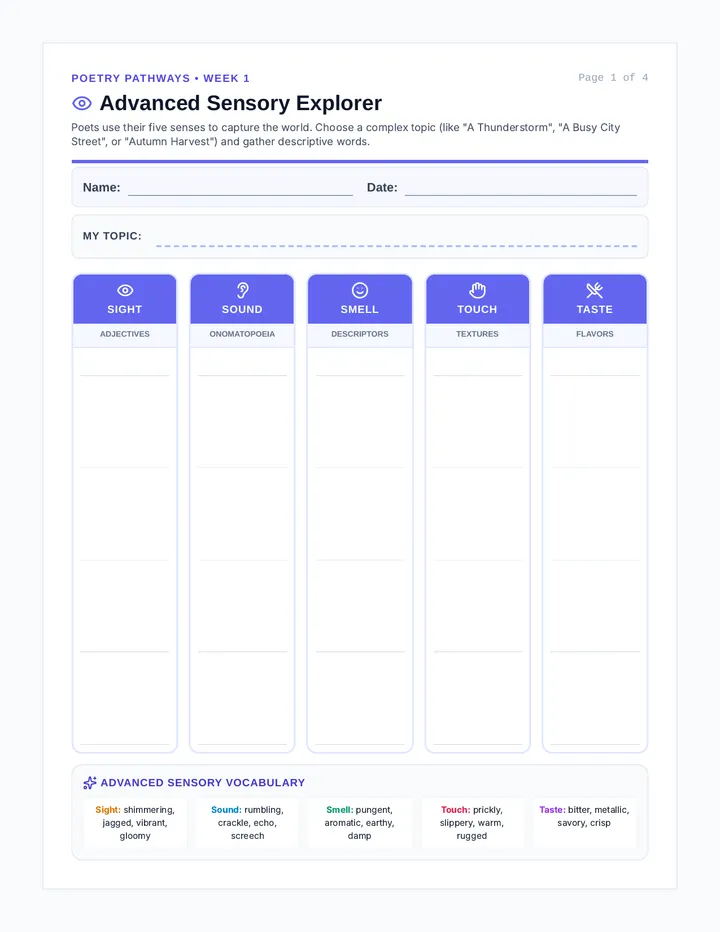
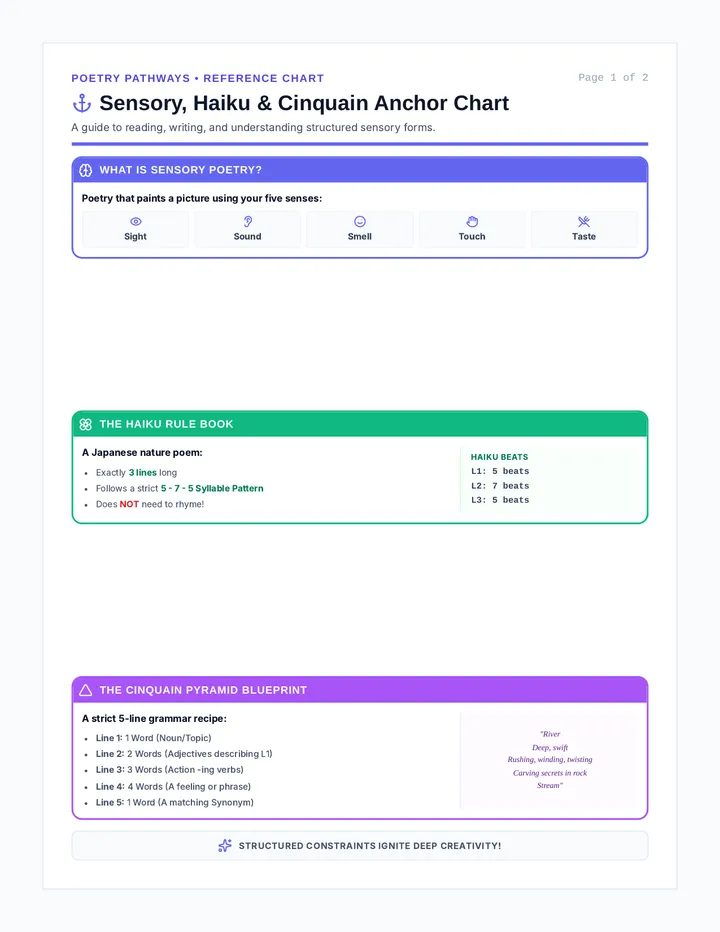
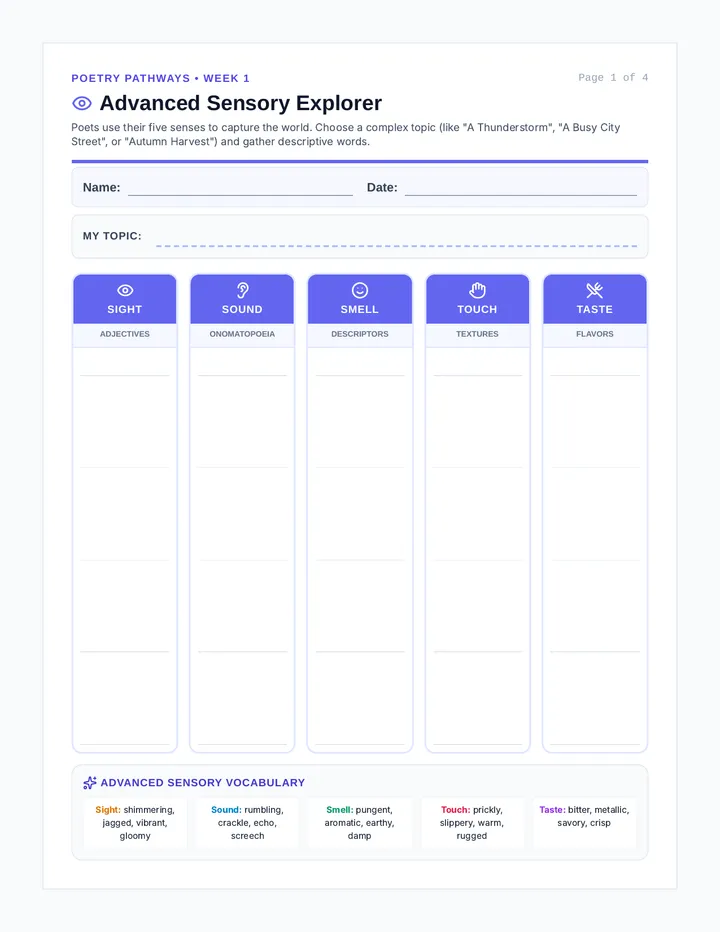
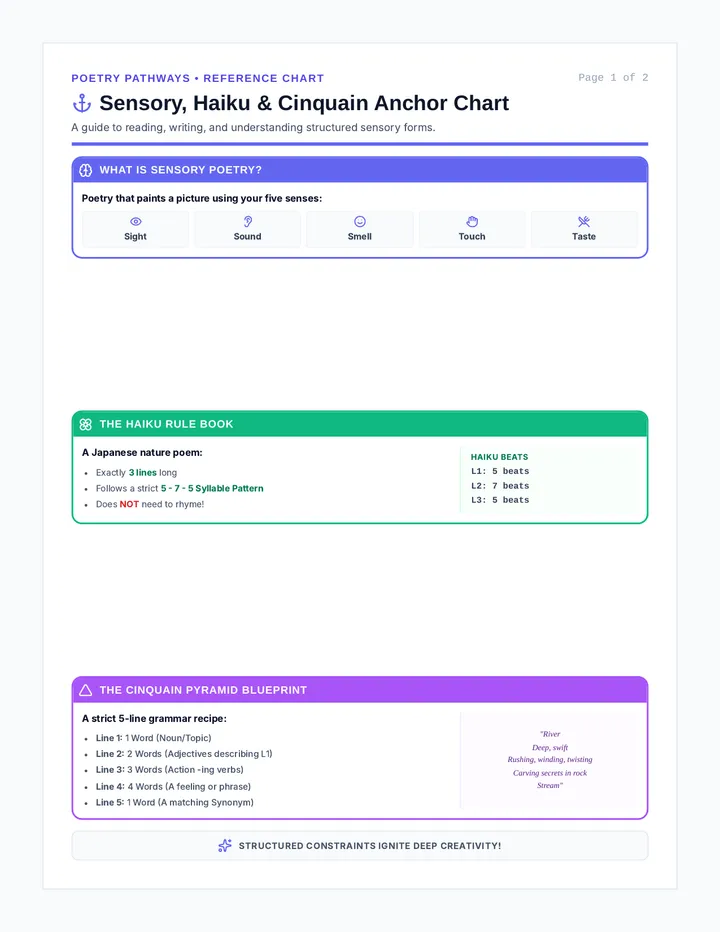
A comprehensive 4-week poetry curriculum designed for students requiring high structure and visual supports. It covers diverse poetry types (Haiku, Color, Acrostic, Couplets, Concrete, Free Verse, and Metaphor/Simile) with scaffolds like word banks, sentence frames, and graphic organizers.
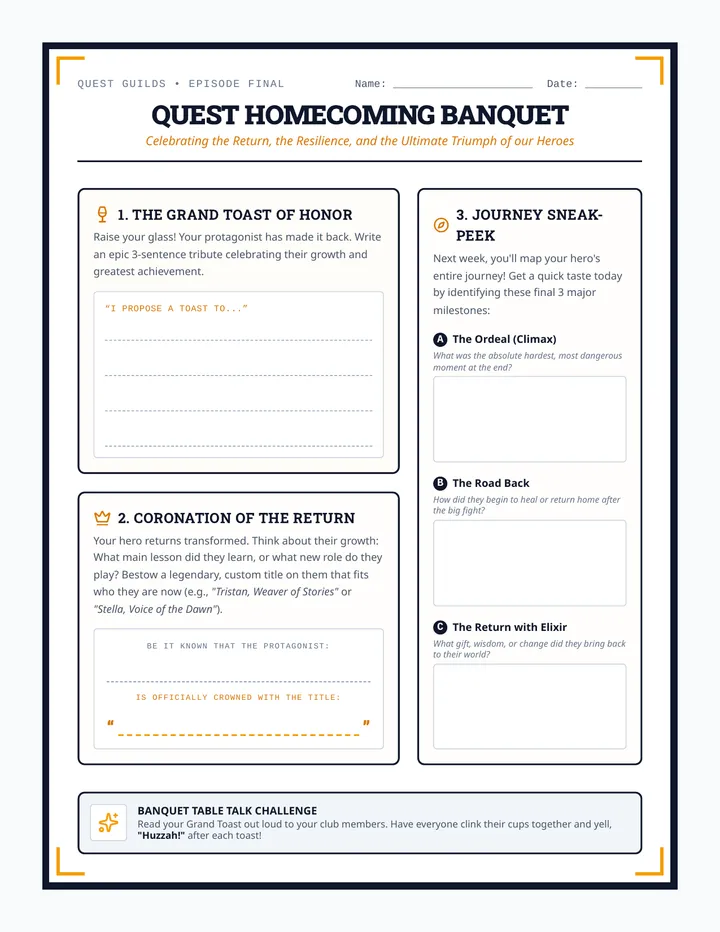
The celebratory final meeting of the book clubs, designed as a festive victory banquet. Students commemorate their protagonist's return through a grand ceremonial toast, active crossover badge trading with other groups, and a high-interest 5-minute teaser of the Hero's Journey mapping project.
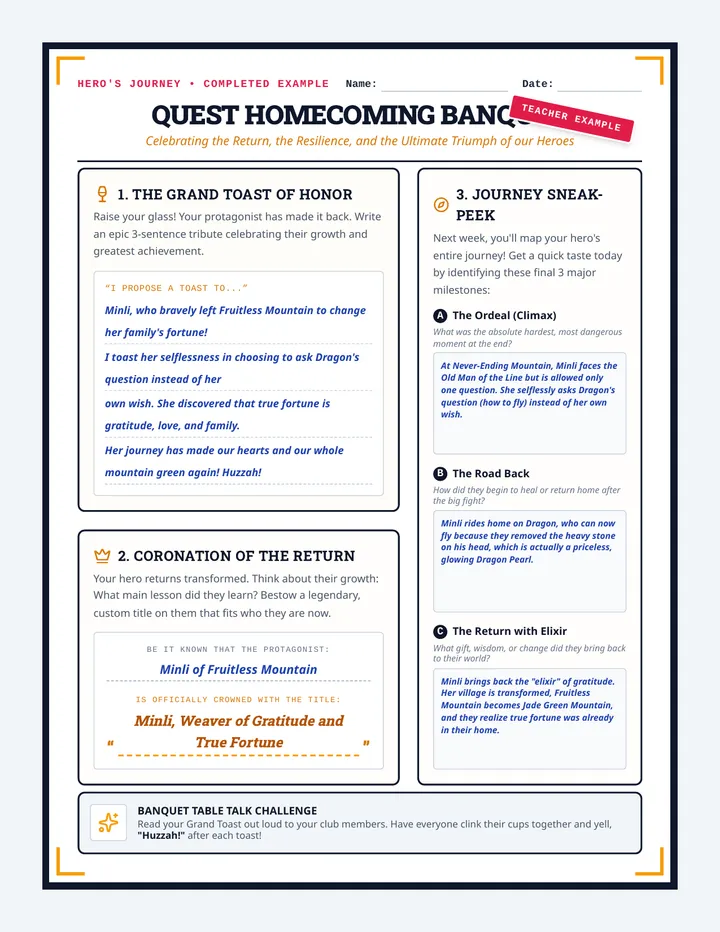
A completed 2-page teacher example of the Homecoming Banquet Placemat for the novel "Where the Mountain Meets the Moon" by Grace Lin. Features specific, high-quality sample student responses mapping Minli's journey while leaving classmate names and signatures blank for pedagogical modeling.
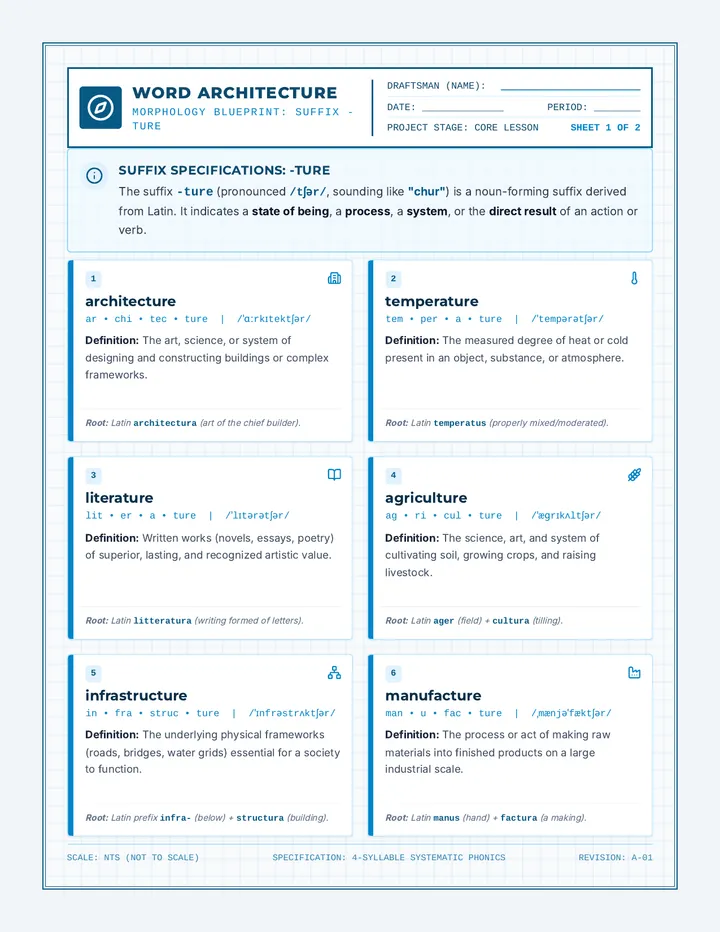
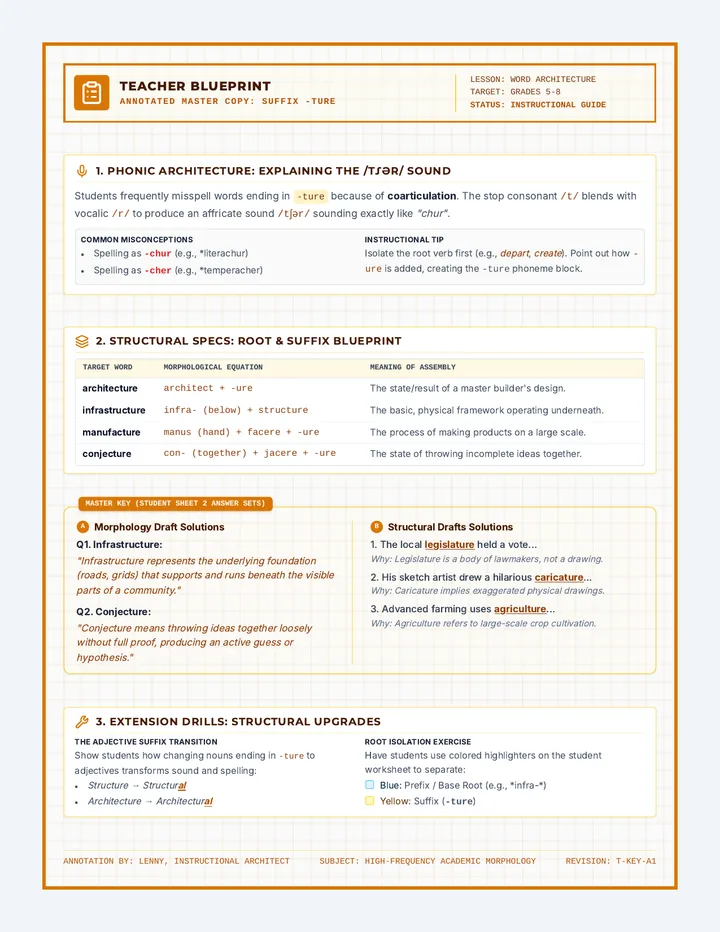
A middle school vocabulary lesson exploring 3-to-4 syllable academic words ending in the suffix -ture. Students examine pronunciation, morphological structure, definitions, and applications through a technical drafting/blueprint theme.
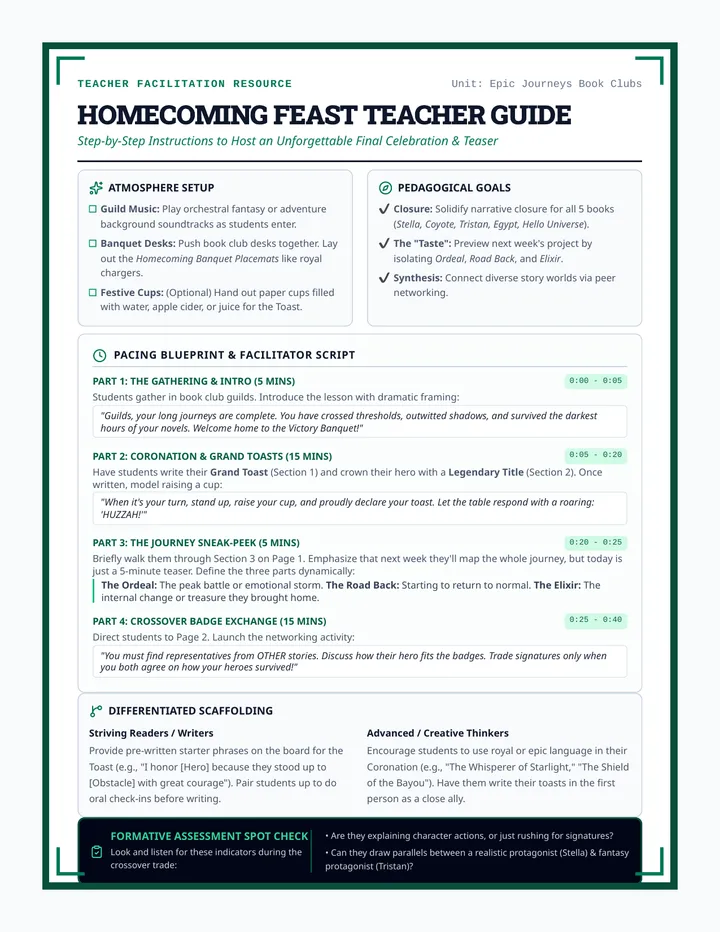
A 1-page teacher facilitation guide for running the final book club celebration meeting. Features a 45-minute step-by-step lesson plan, classroom setup checklist, teacher talk scripts for a theatrical 'Toast Ceremony', and instructions for scaffolding both the Hero's Journey preview and the crossover networking activity.
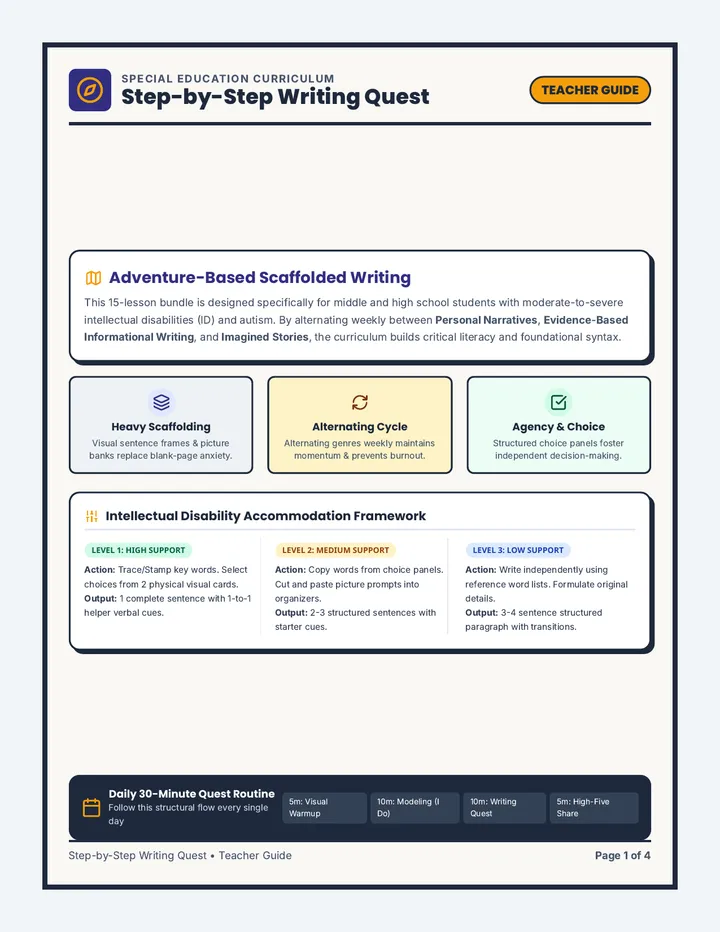
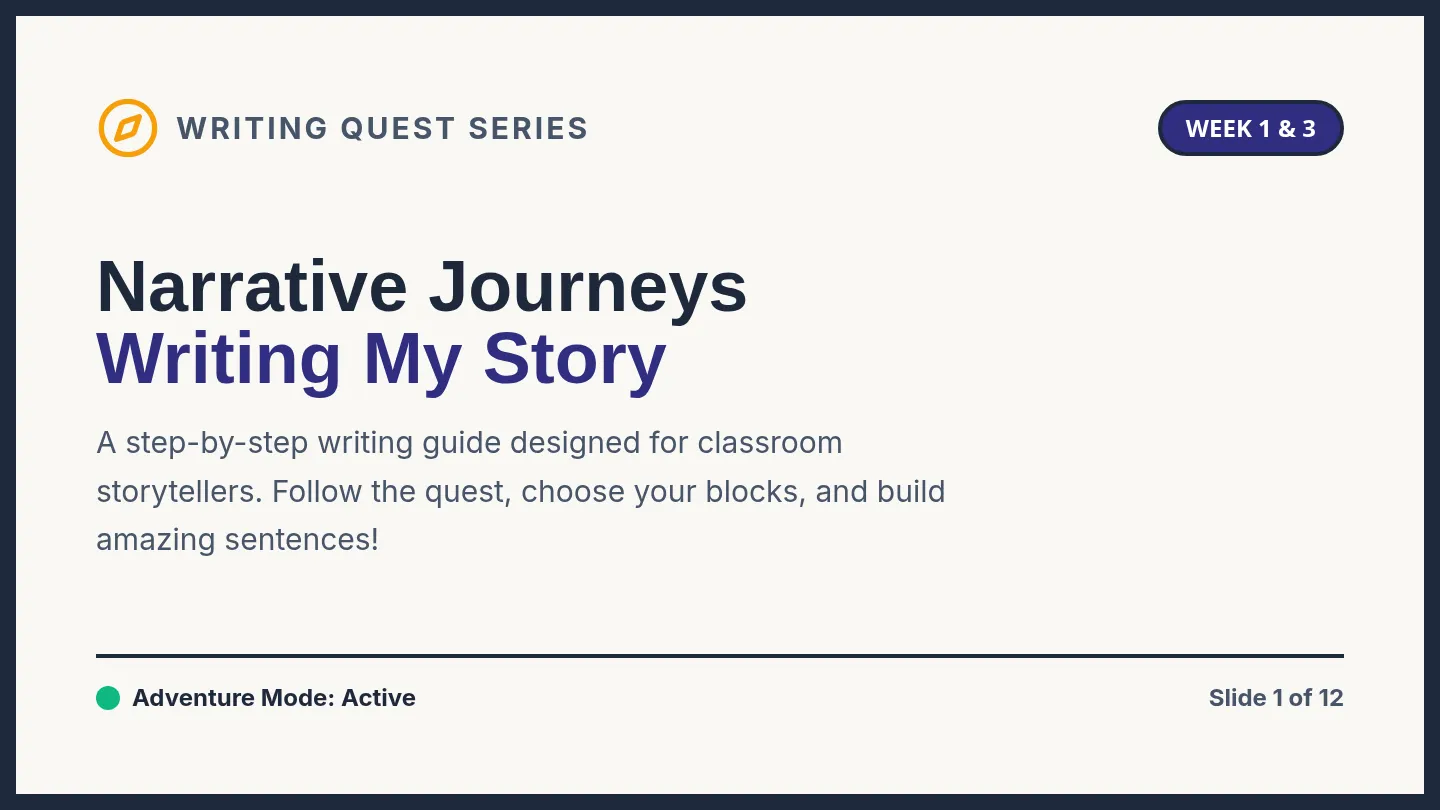
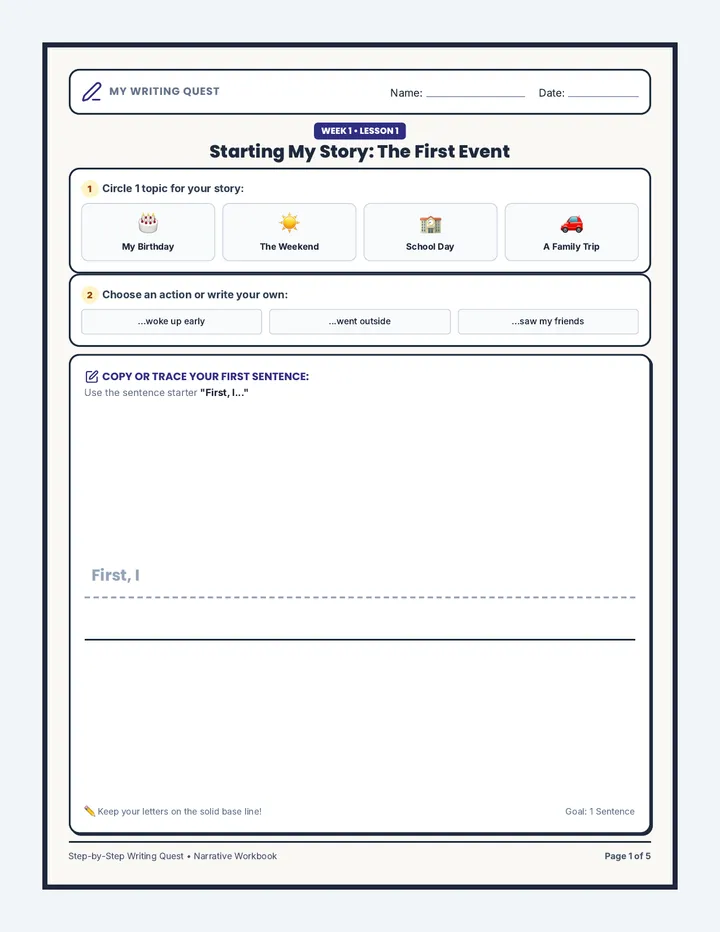
A comprehensive 15-lesson writing curriculum tailored for middle and high school students with intellectual disabilities. The sequence alternates weekly between personal narratives, evidence-based informational writing, and imagined stories, using heavy visual scaffolding, structured sentence frames, and clear graphic organizers.
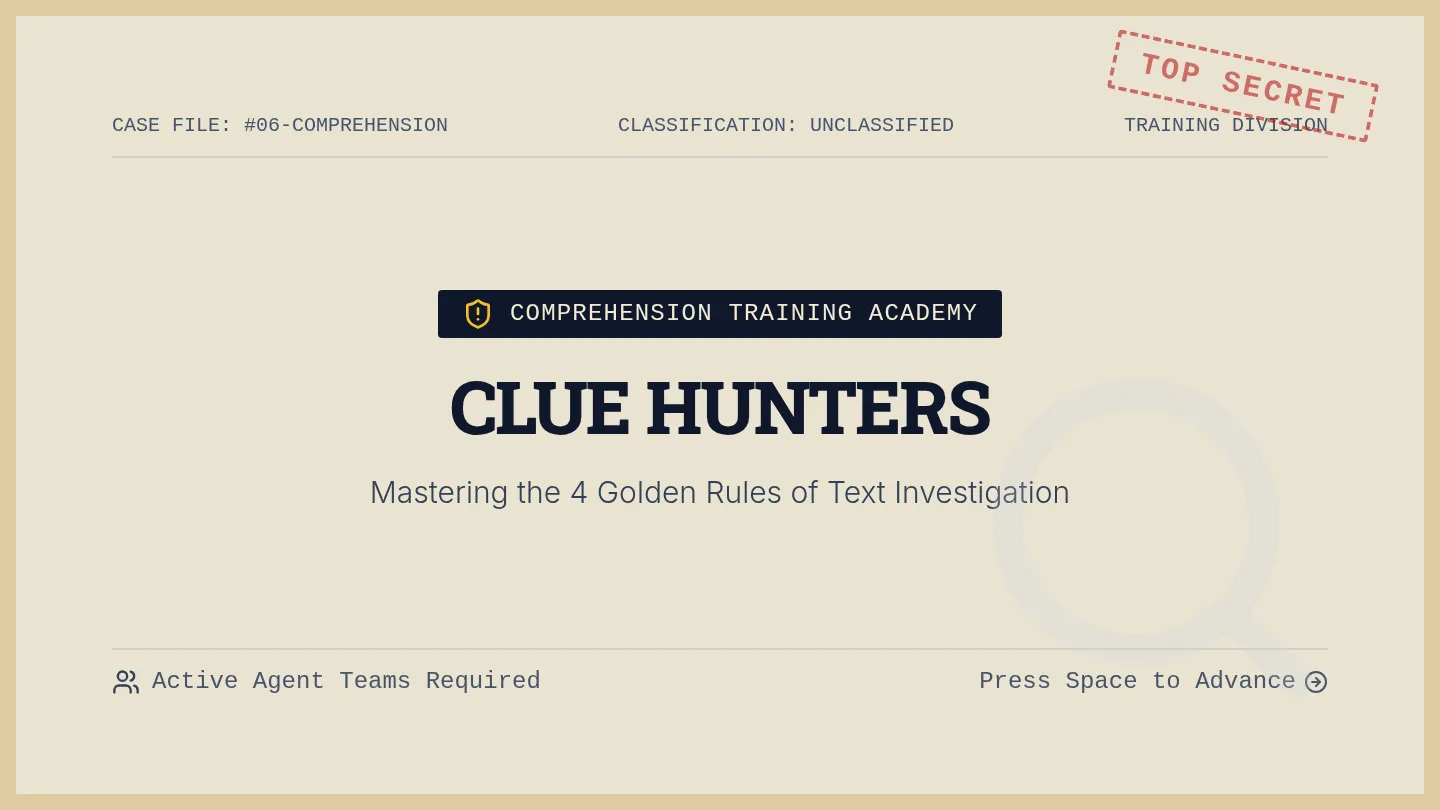
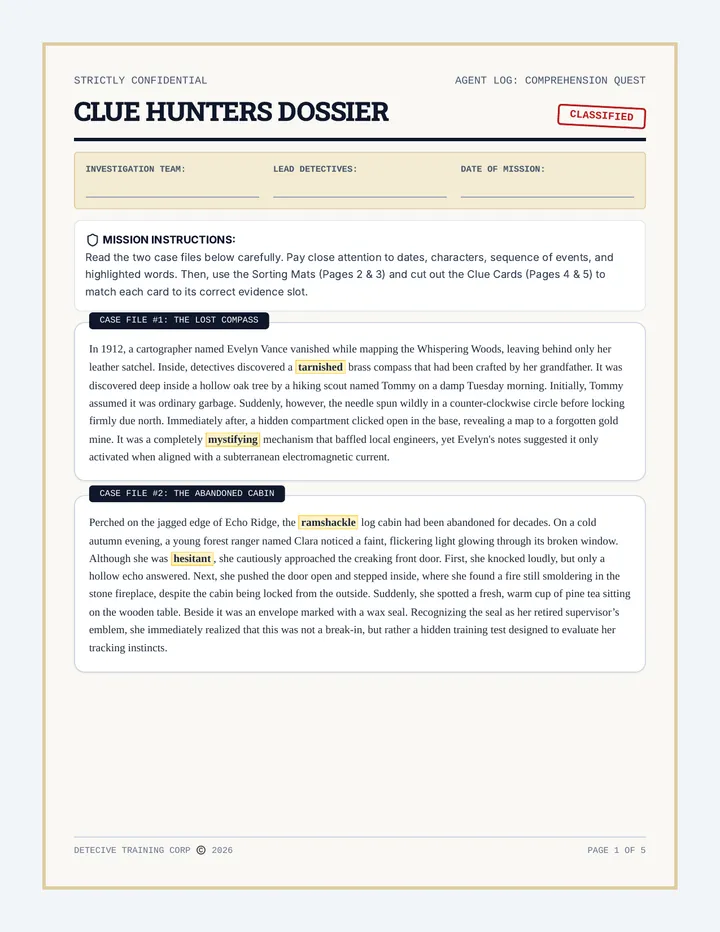
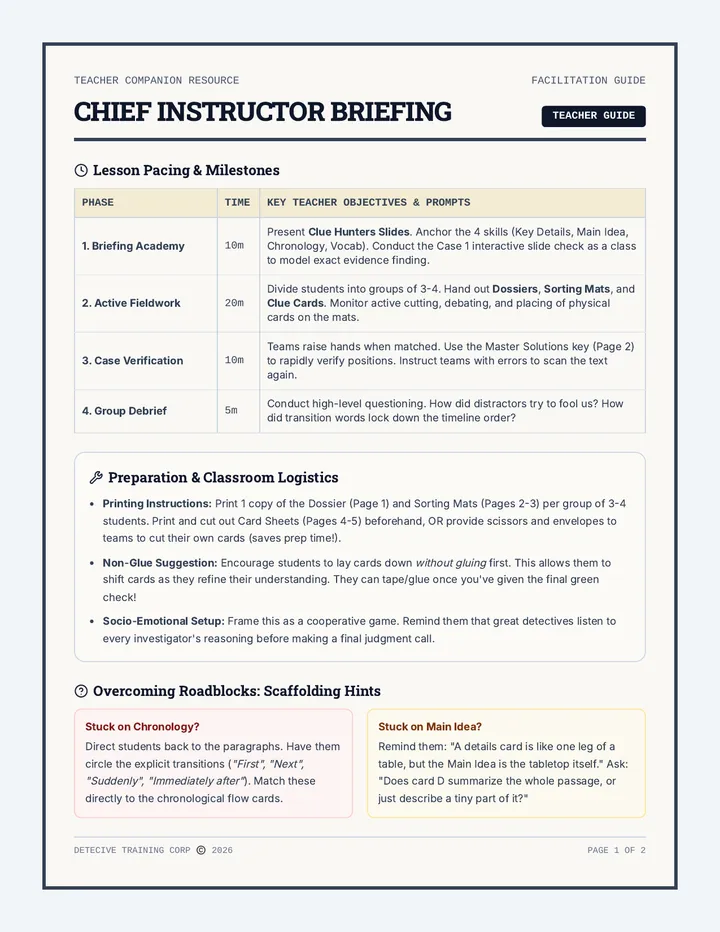
A hands-on, collaborative game-based lesson where students master core 6th-grade reading comprehension skills—finding key details, main ideas, sequencing, and vocabulary in context—by solving text-based mysteries using sorting mats and clue cards.
A 2-page celebratory student worksheet for the final book club meeting in a light, celebratory banquet theme. Page 1 features an epic toast-writing activity, a refined Coronation of the Return block with explicit directions and perfectly aligned CSS-dashed writing lines, and a 3-step Hero's Journey roadmap with Hero's Journey branding. Page 2 features a gamified crossover badge exchange board with responsive CSS-dashed layout borders for neat student handwriting alignment under the Hero's Journey brand.
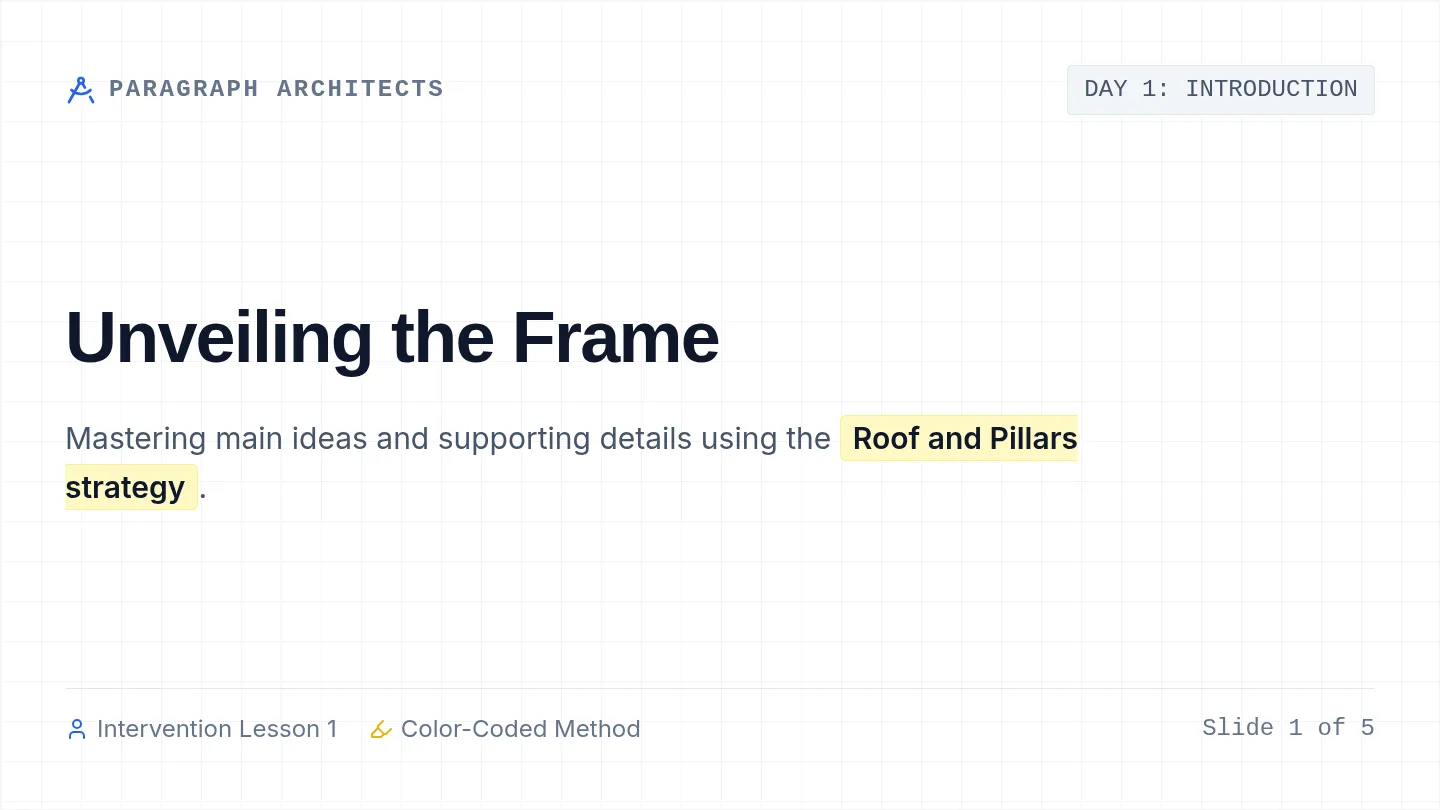
An intensive intervention lesson designed to help struggling readers master main idea identification using hands-on, color-coded highlighting strategies. Students learn to dismantle paragraph structures like blueprint architects, physically separating the 'roof' (main idea) from the 'supporting pillars' (details).
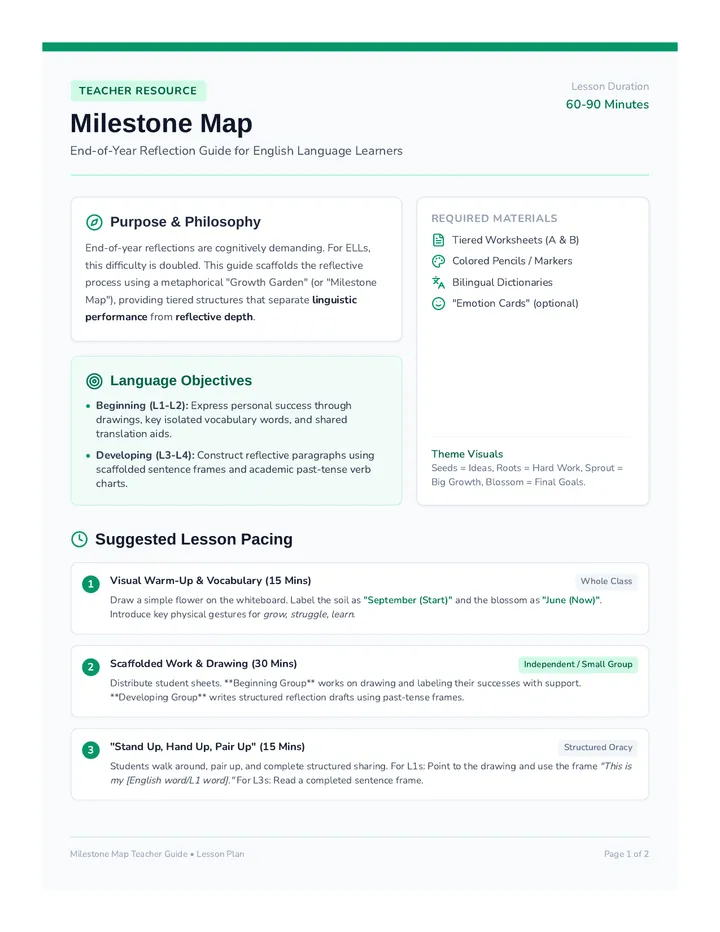
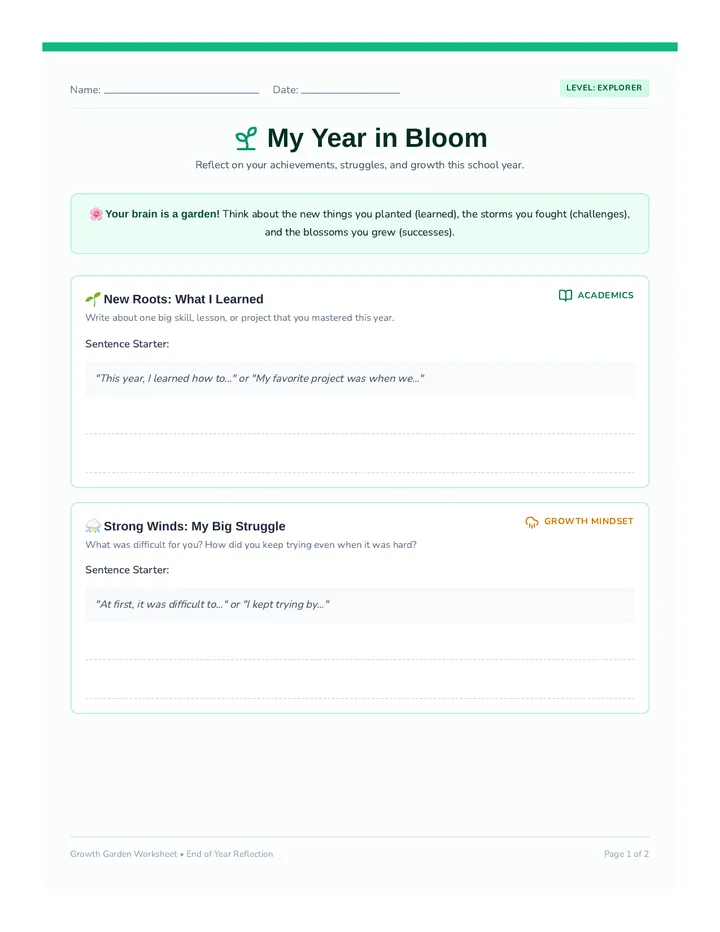
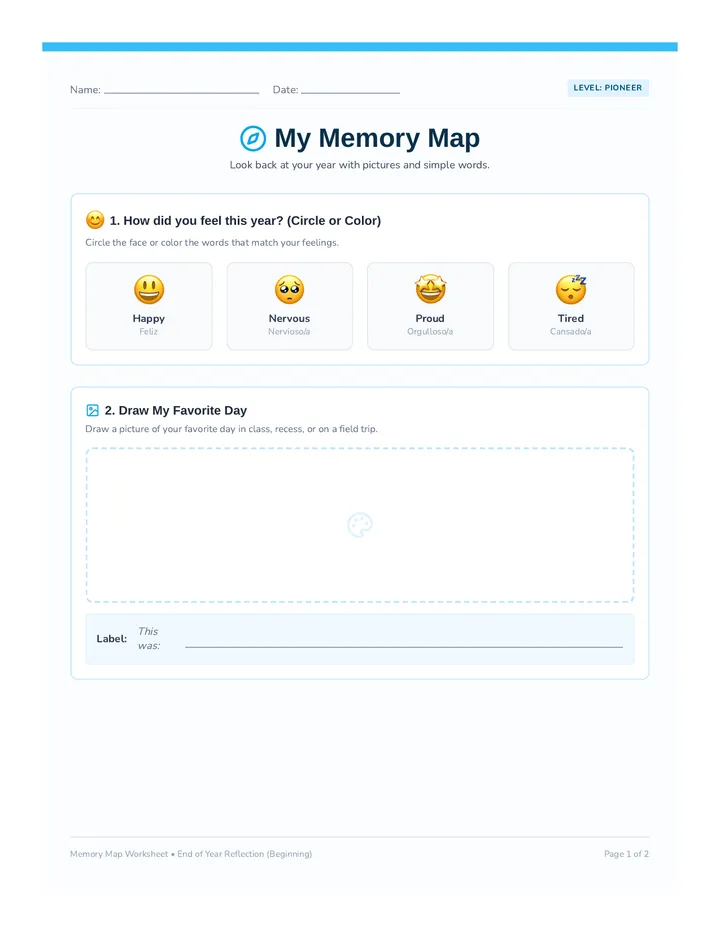
An end-of-year reflection lesson designed specifically for English Language Learners, featuring tiered worksheets for Beginning/Entering and Developing/Expanding levels, supported by a detailed facilitator guide.
A teacher-facing lesson guide and master answer key with morphological breakdowns, pronunciation teaching strategies for the /tʃər/ sound, and lesson extensions. Styled with a warm amber draft annotation aesthetic.